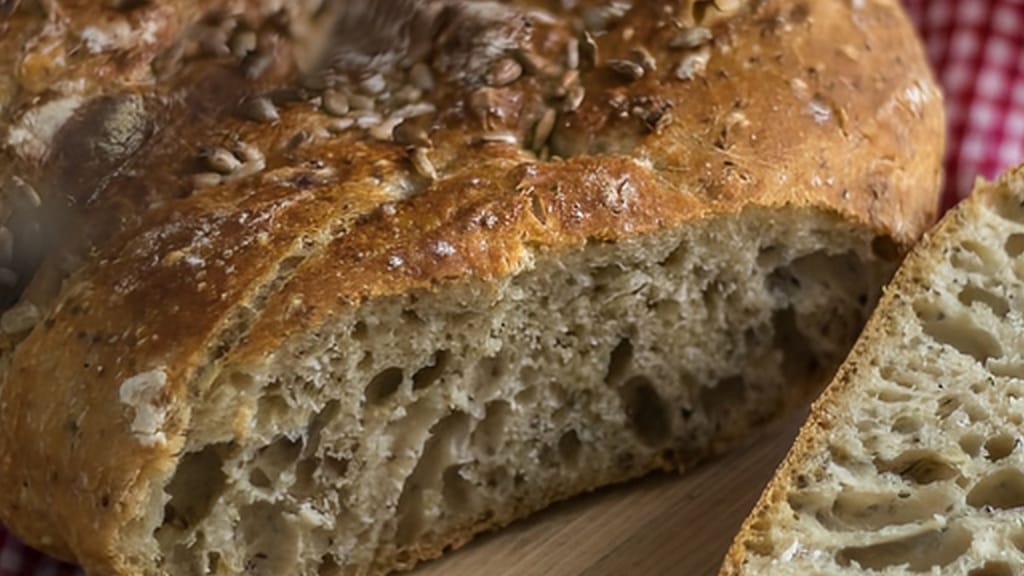
Homemade bread
Types of Flour and What They're For: Plain, Strong White, Coarse, Bread, Spelt & Wholemeal
Updated Oct 6, 2026
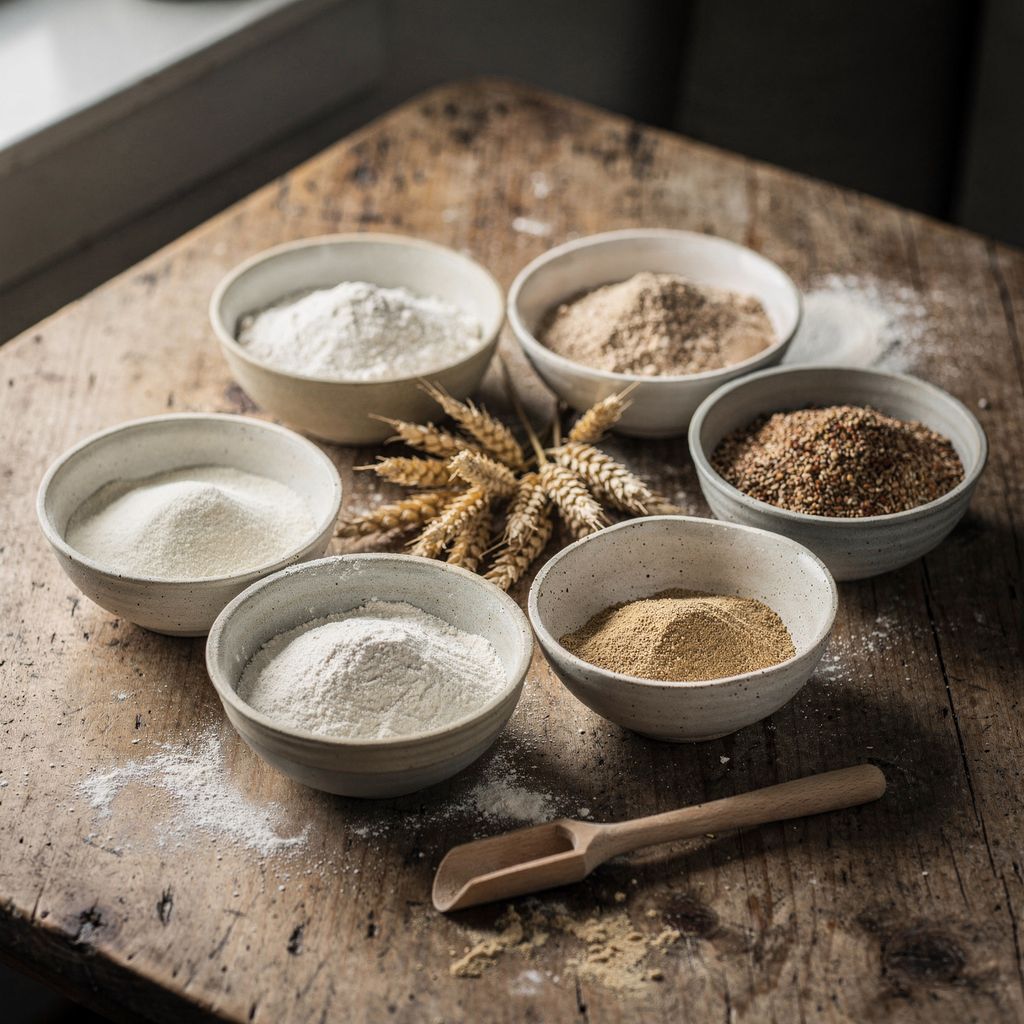
In Czech shops, flour is sorted mainly by how finely it's milled (plain, strong white, coarse) and by how much of the whole grain remains in it (white, bread, wholemeal). In short: plain flour is for sauces, sponges and bundt cakes; strong white flour is for yeasted and short pastry doughs; coarse flour is for dumplings, noky and halušky; bread flour is for bread; spelt flour is for when you want a subtly nutty flavour; and wholemeal flour is for when you want more flavour and fibre. Below you'll find out why that is, what numbers like T650 on the packaging actually mean, and when you can swap one flour for another without a second thought.
Plain flour is for sauces and sponges, strong white flour is for yeasted and short pastry doughs, coarse flour is for curd cheese and potato doughs, and bread flour is for bread. In more detail:
Plain flour – sauces and roux, sponge cakes, bundt cakes, pancakes, coating meat.
Strong white (semi-coarse) flour – yeasted doughs (buchty buns, vánočka, kolache), shortcrust and sweet pastry, bread dumplings.
Coarse flour – curd cheese dough and potato dough, dumplings (noky and halušky), škubánky (potato dumplings).
Bread flour (T1050) – yeasted and sourdough bread, darker baked goods.
Spelt flour – gingerbread, waffles, biscuits, bread and pastries with a nutty flavour.
Wholemeal flour – bread, tortillas, quiche, gingerbread; best combined with white flour.
If in doubt, reach for strong white flour. It's the most versatile flour in Czech baking – it handles yeasted, short, and whisked doughs alike.
Plain, strong white and coarse flour differ only in particle size, not in the grain used – all three are typically white wheat flour. Czech regulation No. 18/2020 Coll. specifies that at least 96% of particles must pass through a sieve:
plain: up to 257 µm (roughly a quarter of a millimetre), with most particles even finer,
strong white: up to 366 µm,
coarse: up to 485 µm, with only a small proportion at the finest end.
Everything else follows from the particle size. Fine flour absorbs liquid quickly, which is why a sauce thickens instantly and a sponge turns out soft. Coarser flour absorbs more slowly, leaving the dough looser and less sticky – exactly what you need with moist curd cheese or potato, otherwise the dough would stick to your hands and the worktop.
You can tell the difference without the packaging: rub a pinch between your fingers. Plain feels velvety and holds a fingerprint, strong white has a slight rustle to it, and coarse feels distinctly sandy, almost like fine semolina.
Plain flour is the finest, which is why it belongs anywhere you want a smooth texture with no lumps. It combines with liquid quickly, so you can make a roux or thicken a sauce in just a few minutes.
Use it for:
roux and sauces – 1–2 tablespoons (about 10–20 g) is usually enough for 0.5 l of sauce,
sponge cakes and whisked batters – the crumb comes out fine and tender, as in a fluffy Génoise sponge or a curd-cheese bundt cake, "Dvěstěpadesátka",
pancakes and pourable batters – mixes in without lumps, as in fluffy oven-baked Dutch Baby pancake,
coating schnitzels and fish – a thin layer that holds the egg wash well.
On the packaging you'll find plain flour labelled as white (T530) or semi-white (T650). The white type is paler and gives the finest result, while the semi-white has a touch more flavour and also works for baked goods. Plain flour works fine in yeasted dough too, just expect a stickier dough that needs slightly less liquid.
Thickening a sauce but want to skip the flour? Check out how to thicken a sauce without flour.
Strong white (semi-coarse) flour is ideal for yeasted doughs (buchty buns, kolache, vánočka), shortcrust and sweet pastry, and bread dumplings, because it absorbs liquid more slowly than plain flour. Yeasted dough made with it is easy to work, doesn't stick, and bakes up fluffy while still holding its shape. That's why it shows up most often in Czech recipes.
Use it for:
yeasted doughs – buchty buns, kolache, vánočka, rolls, like these soft buchty buns with egg custard sauce,
shortcrust and sweet pastry – biscuits spread less and stay crisper,
bread dumplings – they hold together well and stay soft.
With yeasted dough, the yeast matters too – if you're not sure yours still works, read how long yeast lasts and how to tell it's gone bad. In practice, you can swap strong white flour for plain in most sweet baking and vice versa, with only a small difference. The exceptions are sponge cakes (where plain wins) and curd cheese or potato doughs (where coarse flour is the one to use).
Coarse flour is the coarsest wheat flour and belongs in moist doughs that must hold together. Because it absorbs slowly, you won't overload the dough with flour, so the result stays light rather than rubbery.
Use it for:
curd cheese dough – fruit dumplings, like apricot dumplings made with curd cheese dough,
potato dough – dumplings, rolls, škubánky, like plum dumplings made with potato dough,
noky and halušky – the dough cuts off cleanly and doesn't fall apart in the water.
Tip: with potato or curd cheese dough, add coarse flour gradually and let the dough rest for 5–10 minutes. In that time the coarse flour finishes absorbing the moisture, and you'll often find you don't need those extra few spoonfuls after all. Too much flour is the most common reason dumplings turn out tough.
Don't use coarse flour in a sponge or sauce – the sponge will turn grainy and the sauce will taste floury.
The number after the letter T is the type number: it indicates the ash content – the mineral residue left after burning the flour – in the dry matter, multiplied by a thousand (T650 ≈ 0.65%). So T650 flour contains roughly 0.65 g of ash per 100 g of flour dry matter.
The higher the number, the more of the bran and outer layers of the grain remain in the flour:
T530 – white plain flour, the palest with the mildest flavour,
T650 – semi-white plain flour, an all-rounder for both baked goods and bread,
T1050 – wheat bread flour, bolder flavour, with more minerals and fibre,
wholemeal – the whole grain, including bran and germ.
Regulation No. 18/2020 Coll. sets upper limits for ash in the dry matter: white flour no more than 0.60%, semi-white 0.75%, bread flour 1.15%, and wholemeal 1.90%.
A practical rule of thumb: a lower number means lighter, fluffier baked goods; a higher number means more flavour but a denser crumb. The type number and the fineness of milling are two separate things – plain flour can be either white or semi-white.
Bread flour is worth reaching for when making bread, darker baked goods, and rustic pizza, since it contains more of the grain's outer layers and gives a fuller flavour. On the packaging it's labelled wheat bread flour T1050; bread made with it has a fuller, slightly nutty flavour and stays moist for longer.
What to use it for:
yeasted and sourdough bread, often combined with rye flour (classic Czech everyday bread is a wheat-and-rye blend),
darker rolls and dalamánky – like these crispy fennel-scented dalamánky rolls,
pizza and focaccia, when you want a more rustic dough – try it half-and-half with plain flour, whether you're baking perfect homemade pizza or homemade focaccia.
Bread flour typically absorbs a bit more water than white flour. If you're substituting it for plain flour in a recipe, expect the dough may need a few extra spoonfuls of water. It's not suited to sweet yeasted baking – its flavour overpowers butter and vanilla.
We cover how long to bake a loaf, at what temperature, and how to tell it's done in how long to bake bread, at what temperature, and how to tell it's ready.
Homemade bread
Homemade bread – a recipe for trying out bread flour
Spelt flour is milled from spelt, an ancient relative of wheat, and has a subtly nutty flavour. It's sold as both white (plain) and wholemeal, and in most recipes you can swap it in for wheat flour at a 1:1 ratio.
What you need to know:
Spelt gluten is weaker and more extensible than wheat gluten – the dough can easily be over-kneaded and slacken. Knead it for less time and don't let it overproof.
It absorbs slightly less water. When switching from wheat flour, cut the liquid by roughly 5–10% so the dough doesn't turn gummy.
It shines in bold-flavoured bakes – gingerbread, waffles, biscuits, and bread.
Try, for instance, honey gingerbread made with spelt flour, plum jam and raspberries or waffles made with wholemeal spelt flour.
Note: spelt is wheat and does contain gluten. It's not suitable for a gluten-free diet.
Wholemeal flour contains the whole grain – bran, germ and endosperm – so it has more fibre, B vitamins and minerals than white flour. In the kitchen, though, it behaves differently, and it's worth planning for that.
It absorbs more water. The bran soaks up liquid, so the dough needs roughly 10% more water or milk, plus a short rest before you shape it.
It rises less well. The sharp bran particles "cut through" the gluten network, making baked goods denser. For a lighter result, replace only 30–50% of the white flour with wholemeal.
It goes stale faster. The fat in the germ turns rancid over time, so store wholemeal flour in a sealed container in a cool place and use it up within a few months.
Where it works brilliantly: bread, tortillas, biscuits, savoury tarts like wholemeal quiche with broccoli and smoked ham, and spiced bakes like wholemeal gingerbread. It's best avoided in sponge cakes or delicate shortcrust pastry.
Always weigh flour rather than measuring it by volume. A cup of plain flour weighs differently from a cup of coarse or wholemeal flour, and in a single dough that difference can easily be 20–30 g – exactly the amount that separates soft dumplings from tough ones.
Got an old recipe written in cups? See how to convert a cup-based recipe into grams. And if you're baking gluten-free, you can't substitute wheat flour 1:1 – you'll find the right blend ratios in what to use instead of flour in gluten-free biscuits.
Yes, in most buns, cakes and yeasted doughs you can replace strong white flour with plain flour at a 1:1 ratio. Since plain flour absorbs liquid faster, hold back about 5% of the milk or water (roughly 1–2 tablespoons per 500 g of flour) and add it only if the dough still feels stiff after a few minutes of kneading. Don't use plain flour for curd cheese or potato dough – that's a job for coarse flour.
Czech white plain flour (T530), or flour sold as "hladká světlá speciál 00", comes closest to Italian 00 flour. Both are very finely milled and pale in colour. For pizza with a longer rise, look for a flour with a higher protein content, around 12–13%.
No, spelt flour contains gluten because spelt is a type of wheat. It's not suitable for people with coeliac disease or a wheat allergy. Gluten-free baking calls for blends of rice, buckwheat or corn flour and starches instead.
White wheat flour kept dry in a sealed container generally lasts until the date on the pack, often 6–12 months. Wholemeal flour keeps for less time, since the fat in the germ turns rancid – store it in a cool place and use it up within a few months. Throw out any flour that smells bitter or musty, or that shows signs of pantry moths.
Sifting is only really worth it for sponge cakes, choux pastry and delicate creams – it breaks up lumps and helps the flour fold more easily into whisked eggs. You can skip sifting for yeasted doughs, dumplings and bread. There's no point sifting coarse flour either: it doesn't clump, and its grainy texture is exactly what you want to keep in the dough.
One recipe worth heating the oven for, one tip, and one deal from the shop. Nothing else.