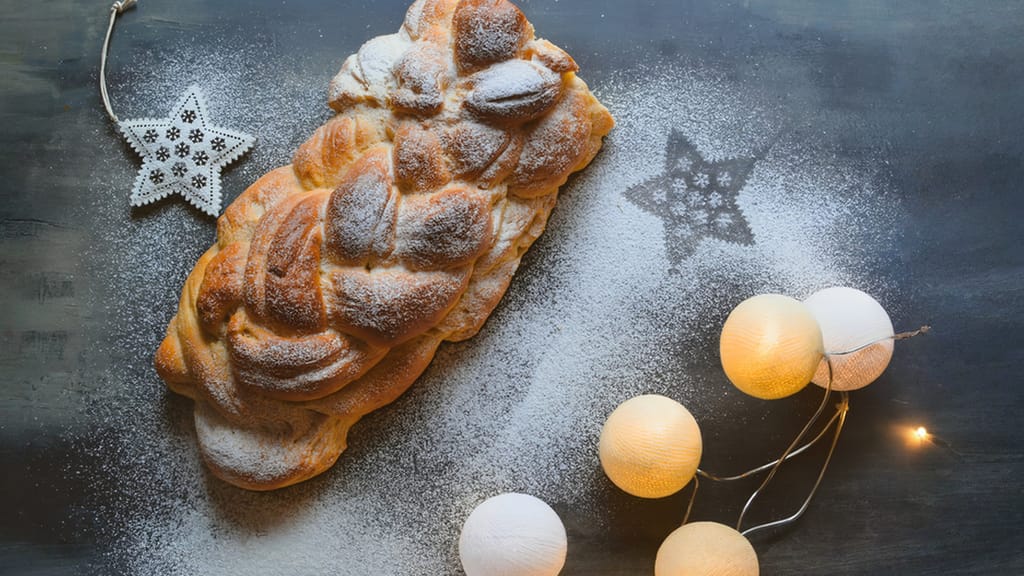
Homemade butter christmas braid
Which Flour and Sugar for Vánočka: Semi-Coarse, Fine, Granulated or Icing Sugar
Updated Nov 3, 2026
Which flour for vánočka, the Czech Christmas braided bread? Use light wheat flour, either semi-coarse (polohrubá) or fine (hladká). Semi-coarse gives a sturdier braid, fine gives a softer crumb, and both work, even half and half. Don't use bread flour, whole-grain flour or coarse flour. Which sugar? Fine granulated or icing sugar, roughly 60–100 g per 500 g of flour, and for a softer loaf you can swap 20 g of it for invert sugar syrup. Below you'll find what each flour and sugar does to the dough, and when to add the sugar.
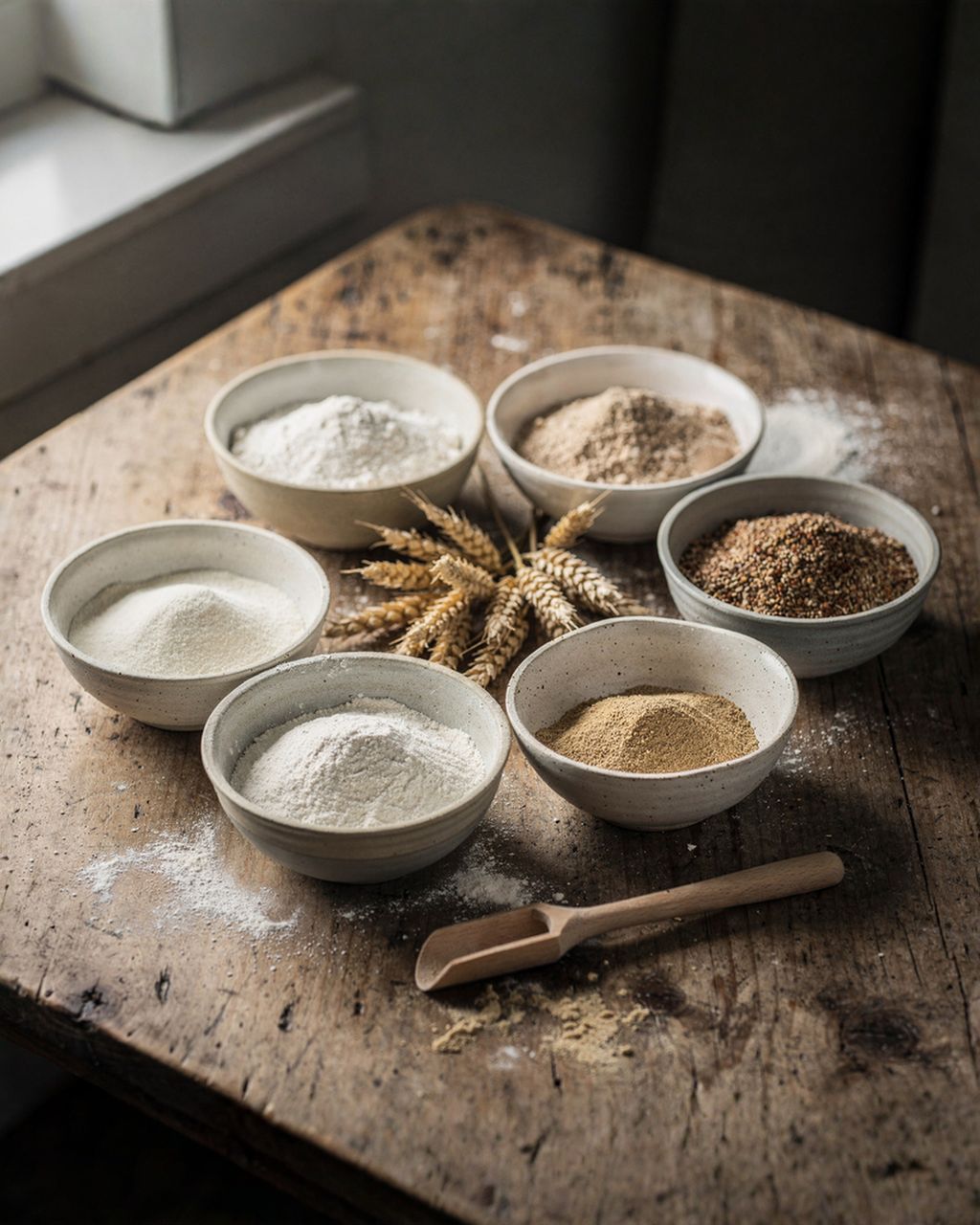
The best flour for vánočka is light wheat flour, either semi-coarse (polohrubá) or fine (hladká). Both have enough gluten for the dough to trap gas and hold the shape of the braid, and they differ mainly in how coarsely they're milled:
Semi-coarse flour absorbs liquid more slowly, so the dough is less sticky and the braid holds its shape. It's the most common choice in Czech vánočka recipes.
Fine light flour combines with liquid faster and gives a finer, silkier crumb. The dough is stickier and needs slightly less liquid.
Half and half gets you both: the braid holds and the crumb is fine. If you're not sure, start here.
Between flours of the same type, compare the protein figure on the package and pick the one with the higher number. More protein means more gluten, which makes a stronger network that traps air and keeps the vánočka from spreading. For how flours differ under Czech regulations and what the numbers T530 or T650 mean, see our article on types of flour and what they're good for.
How to soften gingerbread that’s gone hard, when to fill Linzer cookies and how to tell the carp is done. One recipe and one tip a week. Unsubscribe in one click.
Coarse, bread and whole-grain flours don't belong in vánočka. Each one takes away something the loaf depends on:
Coarse flour absorbs liquid slowly and unevenly, so the crumb turns out coarse and crumbly. It belongs in dumplings and noki.
Bread flour (T1050) has a pronounced flavour that overpowers the butter and vanilla, and the crumb is darker and denser.
Whole-grain flour contains bran, which cuts through the gluten network. The vánočka rises less and turns out heavy.
Spelt flour can be used, but its gluten is weaker and the dough is easily overworked or runs loose. Replace no more than half of the wheat flour with it, and watch the shape.
A gluten-free vánočka has to be built quite differently, with binders instead of gluten; you'll find out how in our article on gluten-free vánočka and mazanec.
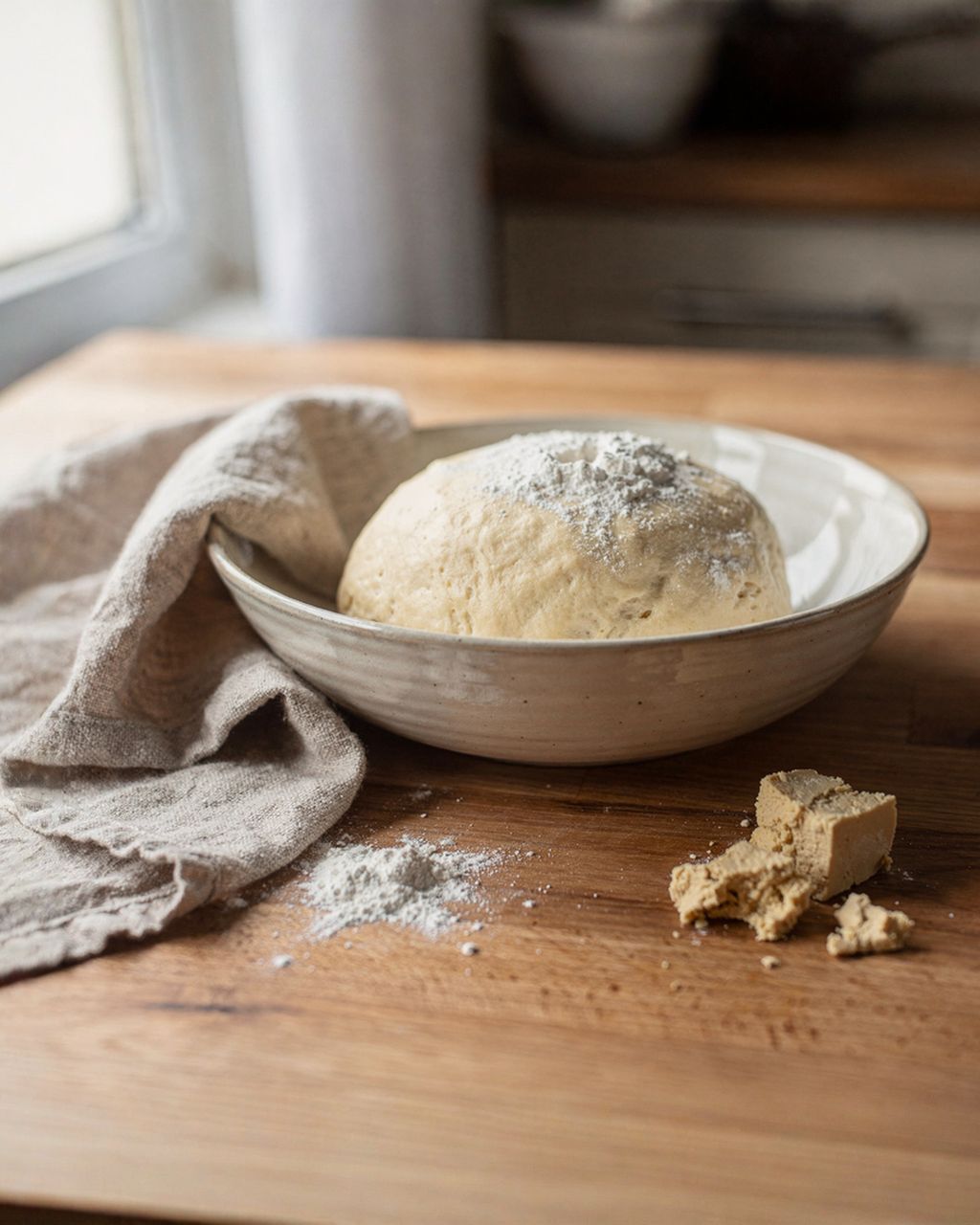
Always weigh the flour for vánočka and use exactly the amount the recipe calls for; after kneading, the dough should stay soft and slightly sticky. The most common mistake is to keep adding flour until the dough stops sticking. Every extra spoonful (about 10 g) makes the vánočka drier.
Use room-temperature flour. Cold flour from a chilly pantry cools the dough and slows the rise.
Sift it. It breaks up lumps, and the flour combines more evenly with the liquid.
Hold back 15%. Add it only after a few minutes of kneading, and only if the dough is really too loose. The gluten develops as you knead and the dough tightens up by itself.
Don't dust the surface for braiding. Lightly oil the board instead; extra flour would get worked into the strands.
For how much liquid, butter and egg yolk per 500 g of flour makes a soft dough, see the softest vánočka.
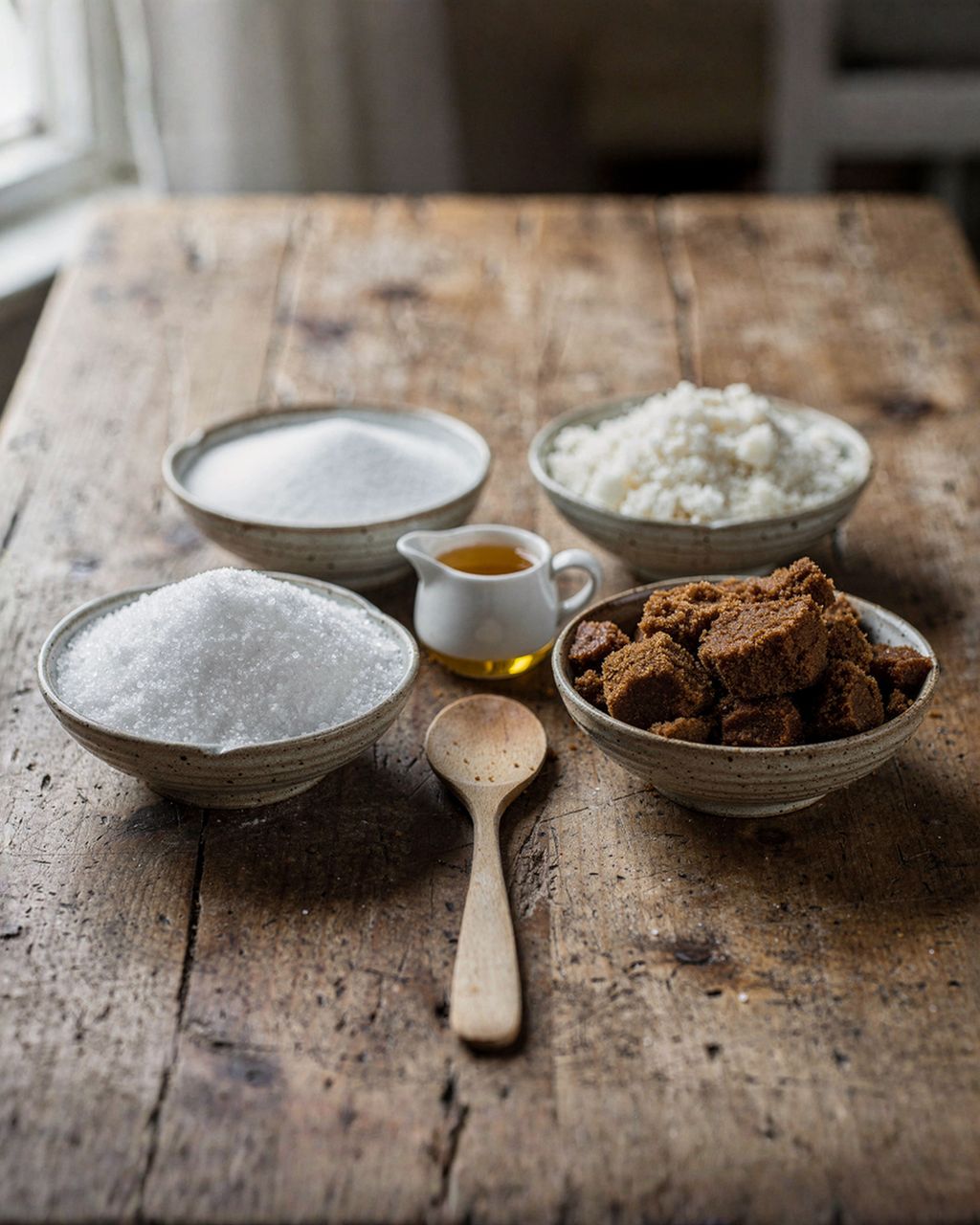
Use fine granulated or icing sugar in vánočka; both dissolve quickly in warm milk and in the dough. You have five options:
Fine granulated sugar (krupicový) is the classic. Stir it into part of the lukewarm milk and it dissolves completely.
Icing (powdered) sugar dissolves fastest. It contains up to 3% anti-caking starch, which you won't notice in the dough. Swap it for granulated sugar 1:1 by weight, not by volume.
Coarse crystal sugar works too, just dissolve it in the milk first, or you'll be left with grains in the dough.
Cane sugar gives the vánočka a light caramel flavour and a darker crumb, and the crust browns faster with it.
Honey can replace part of the sugar, but it brings its own flavour and darkens the crust.
The difference between granulated and icing sugar is explained in detail in icing sugar or granulated sugar.
For a vánočka made with 500 g of flour, use roughly 60–100 g of sugar. The low end gives a loaf that goes well with ham or cheese; the high end is the sweet vánočka most families know.
More sugar doesn't just mean a sweeter loaf:
The rise slows down. Sugar binds water that the yeast would otherwise use. Above roughly 100 g per 500 g of flour, allow a longer rise or add a little more yeast.
The crust browns faster. Cover a sweeter vánočka with baking paper earlier, usually after 20 minutes.
The crumb is softer and stays moist longer, because sugar holds moisture. That's the good side of it.
For a sponge (pre-ferment), add only a teaspoon of sugar and put the rest in the dough. That way the yeast gets going quickly and doesn't have to fight a large dose of sugar right away. For how long to bake the vánočka and at what temperature, see how long to bake vánočka.
In a dough made with 500 g of flour, replace roughly 20 g of sugar, about one heaped spoonful, with invert sugar syrup. Invert syrup is a mixture of glucose and fructose that binds water strongly, so the crumb dries out more slowly and the vánočka stays soft a day longer.
You replace the sugar, you don't add it on top. The liquid syrup contains water, so a 1:1 swap sweetens about the same.
Stir it into the lukewarm milk so it spreads evenly through the dough.
The crust browns slightly faster with it, so watch the colour.
In the Czech Republic you'll find it as liquid invert sugar for baking. For how much to use in other doughs, see invert sugar instead of sugar.
Use 1 vanilla pod per 500 g of flour, or 1½ pods if vanilla should be the main aroma. Vanillin sugar tastes only sweet and flat; vanilla sugar made with real vanilla is better, but it can't match the aroma of a pod. The difference is explained in vanilla sugar or vanillin sugar.
Infuse the seeds in the milk. Heat the milk with the pod and seeds until just below boiling, cover and leave for 20–30 minutes. Then let it cool to lukewarm before crumbling in the yeast.
Choose a pod that can take the baking. Madagascar Bourbon is the classic, sweet and creamy vanilla; Uganda is more pronounced and handles long baking even better.
For more quantities for creams and cookies, see how much vanilla for cookies, cream and vánočka. You'll find all our pod varieties in the vanilla category.
You can test everything above on a classic butter dough. Choose the flour and sugar to suit the vánočka you want, and keep the ratio of liquid and fat as the recipe gives it.
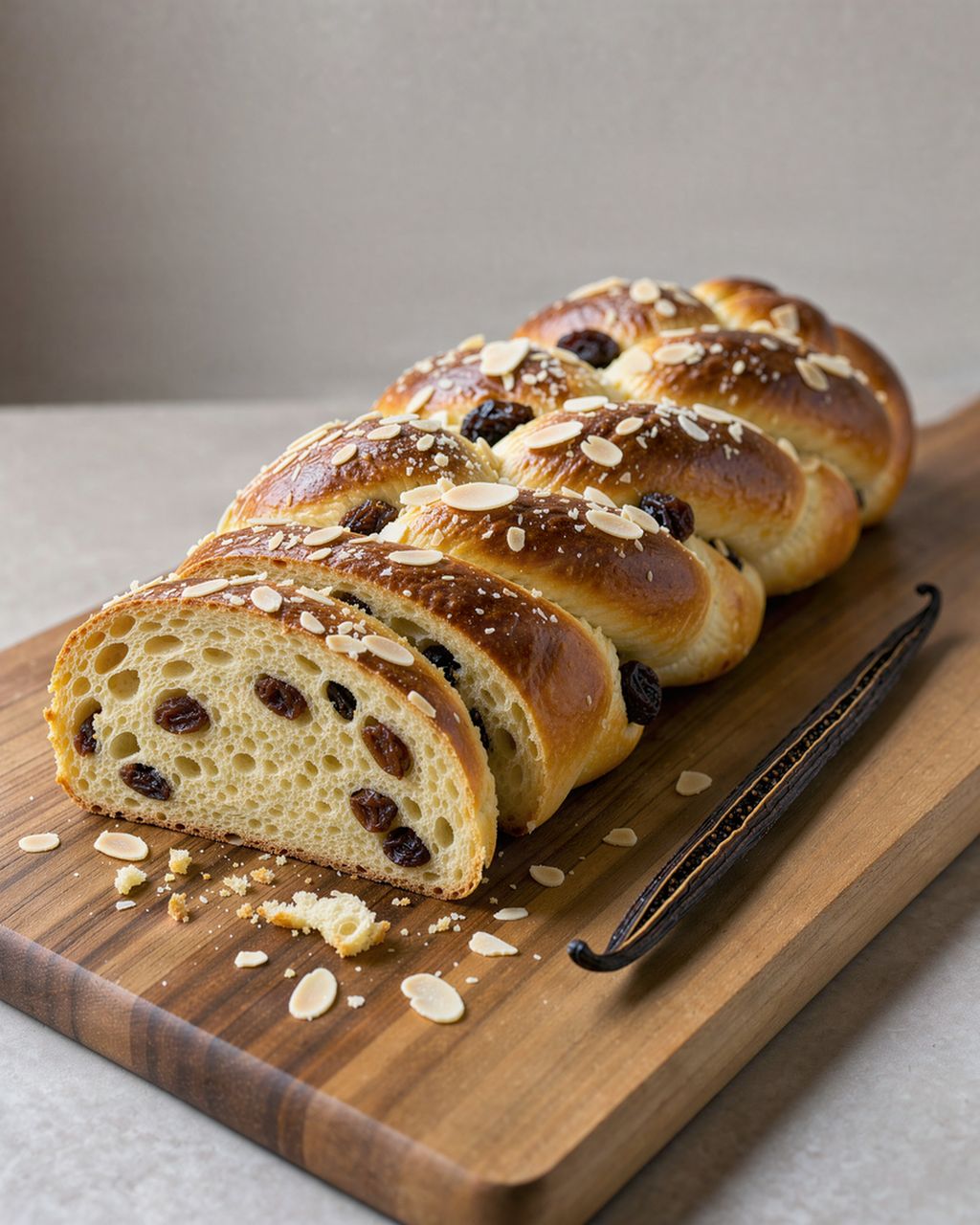
Homemade butter christmas braid
Mum's Vánočka: Traditional Butter Vánočka Recipe
Patisdécor
Uganda Vanilla Beans, 2 pcsYes. A fine light flour labelled 00, or one sold specially for vánočka, works just like regular fine light flour. Higher-protein pizza flour gives a sturdier braid, but the dough may need a spoonful more liquid and longer kneading.
For 1 kg of flour, use roughly 120–200 g of sugar, which is double the amount for 500 g. A big, sweet vánočka needs a longer rise, and you should cover the crust earlier because it browns faster.
You don't have to, but it pays off. Sifted flour has no lumps and combines more evenly with the milk, so the dough comes together faster. More important than sifting is to weigh the flour and not sprinkle in extra while kneading.
You can, but the vánočka will be less sweet, with a paler crust and a crumb that dries out faster. Sugar in vánočka doesn't just sweeten; it holds moisture and helps the crust brown. With less sugar, bake it for a shorter time and keep an eye on the internal temperature.
One recipe worth heating the oven for, one tip, and one deal from the shop. Nothing else.