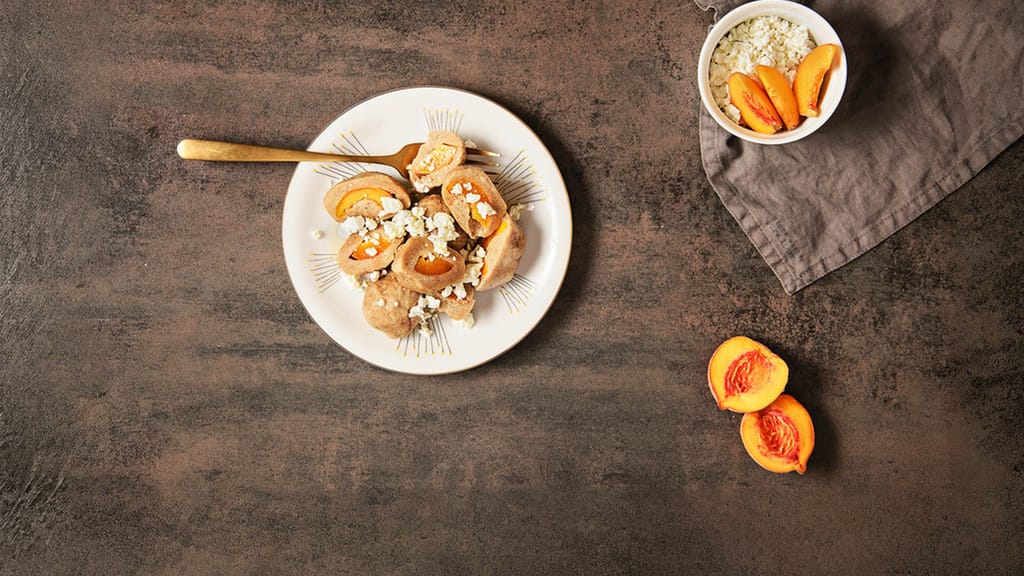
Buckwheat dumplings with peaches and curd cheese
Gluten-Free Flour Guide: Rice, Buckwheat, Corn, and Coconut — What Each One Is Best For
Updated Oct 17, 2026
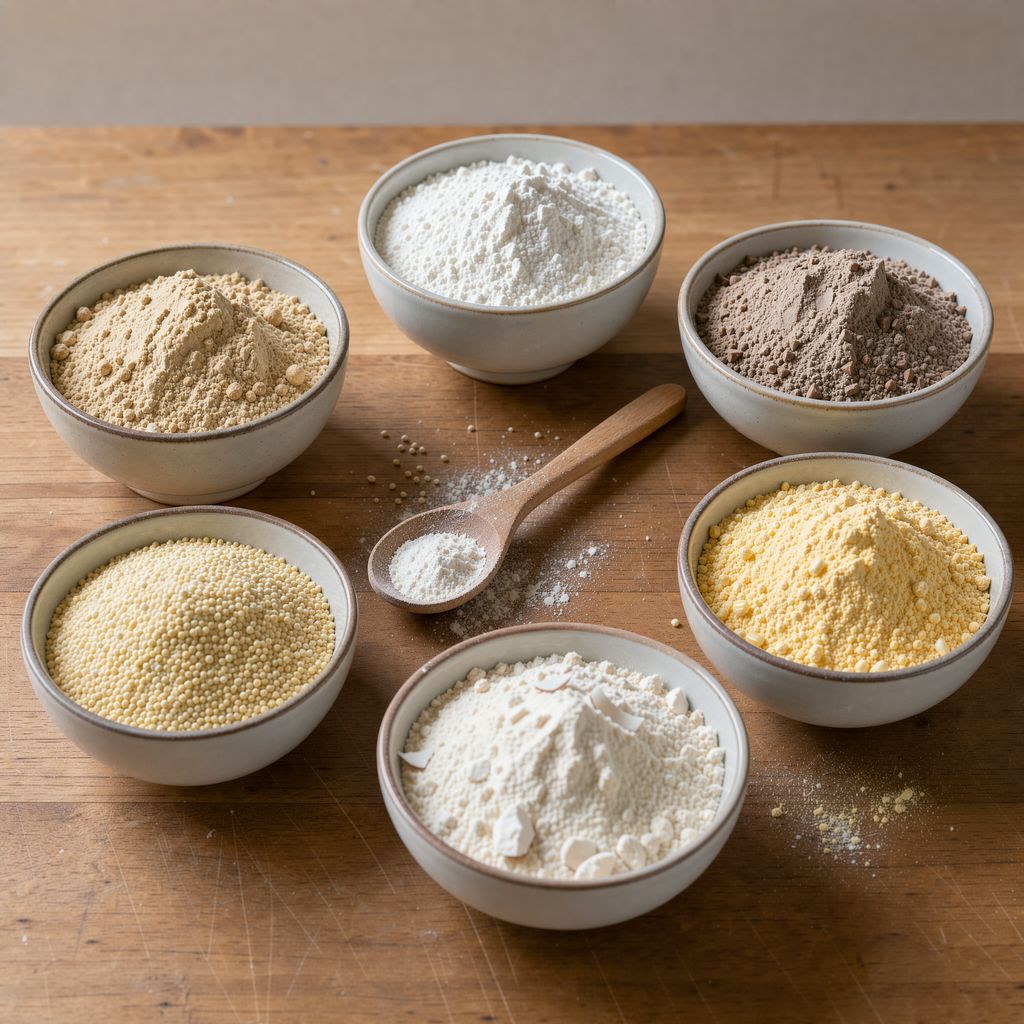
Gluten-free flour isn't one flour but a whole family: rice, buckwheat, corn, coconut, millet, legume, nut, and oat flours (oat only if it's explicitly labeled gluten-free). Each one absorbs liquid differently, tastes different, and holds its shape differently, and none of them can replace wheat flour 1:1 on its own. A blend works most reliably — roughly 60–80% flour and 20–40% starch, plus a little binder (xanthan gum or psyllium). Below, you'll find each flour on its own: its texture, how much liquid it needs, how it tastes, and what to use it for. At the end, there are three simple blends with weights.
Gluten-free flour doesn't work like wheat flour 1:1 because it lacks gluten — the protein network that holds water, gas, and shape in wheat dough. Without it, dough can't form an elastic structure, so it crumbles, doesn't rise as high, and dries out faster.
Three rules follow from this, and they apply to every gluten-free flour:
Blend, don't rely on a single flour. Flour gives flavor and body; starch gives lightness and softness. Rice flour alone bakes hard and gritty, and starch alone bakes gummy.
Add a binder. Xanthan gum or psyllium takes over part of gluten's job — it holds the dough together and traps water.
Give the dough time. Gluten-free flours absorb liquid more slowly. Let the dough or batter rest for 20–30 minutes before baking; the grittiness disappears and the mixture thickens to the right consistency.
One more thing: gluten-free doughs are usually looser and stickier than wheat ones. That's not a mistake, it's just their nature — don't keep adding flour until the dough "looks normal," or you'll bake a brick.
Seasonal baking plans, tested recipes and kitchen tricks that save you time. Unsubscribe in one click.
The main types of gluten-free flour are rice, buckwheat, corn, coconut, millet, sorghum, oat, legume, and nut flours — and each suits something different:
Rice — a neutral base for everything, low absorbency.
Buckwheat — bold, nutty, and earthy; pancakes, bread, gingerbread.
Corn — sweet, yellow, tender; cookies, flatbreads, cornbread.
Coconut — extremely absorbent, only as an add-in up to 20–25% of a blend.
Millet and sorghum — delicate and mild; bread and cakes as part of a blend.
Oat — only if explicitly labeled gluten-free; soft and tender, for cakes and flatbreads.
Legume (chickpea, pea, lentil) — high in protein and good at binding; mainly for savory dishes.
Almond and other nut flours — fat and moisture; tender doughs, cookies, cakes.
All of these except oat are naturally gluten-free; oats are often contaminated with wheat, so use only certified oat flour. Whether the other flours in the bag are truly gluten-free is a different question — we cover it below.
Rice flour is the most widely used gluten-free flour because it hardly tastes of anything and doesn't add color. That's why it forms the base of most blends — usually 40–60% of the weight.
White rice flour — pale, fine, low absorbency. Good for sponge cakes, Bundt cakes, muffins, and tender doughs.
Brown (whole-grain) rice flour — more fiber, a slightly nutty flavor, and it absorbs a little more. Better for bread and darker cakes.
Finely ground vs. coarser — a difference you can feel on your tongue. Coarser rice flour gives a gritty impression. Buy the finest you can find, and if yours is coarser, let the dough rest for 30 minutes.
Glutinous rice flour (sometimes sold as mochiko) — made from sticky rice, and despite the misleading name, it contains no gluten. It adds springiness and chew, and in small amounts it improves how well a blend holds together.
Rice flour on its own bakes hard and crumbly. Always combine it with a starch.
Buckwheat flour is gluten-free even though it has "wheat" in its name — buckwheat isn't a grain but a plant from the knotweed family. It has a distinctive earthy, slightly bitter, nutty flavor and a gray-brown color.
Absorbency: medium to high; the batter thickens quickly.
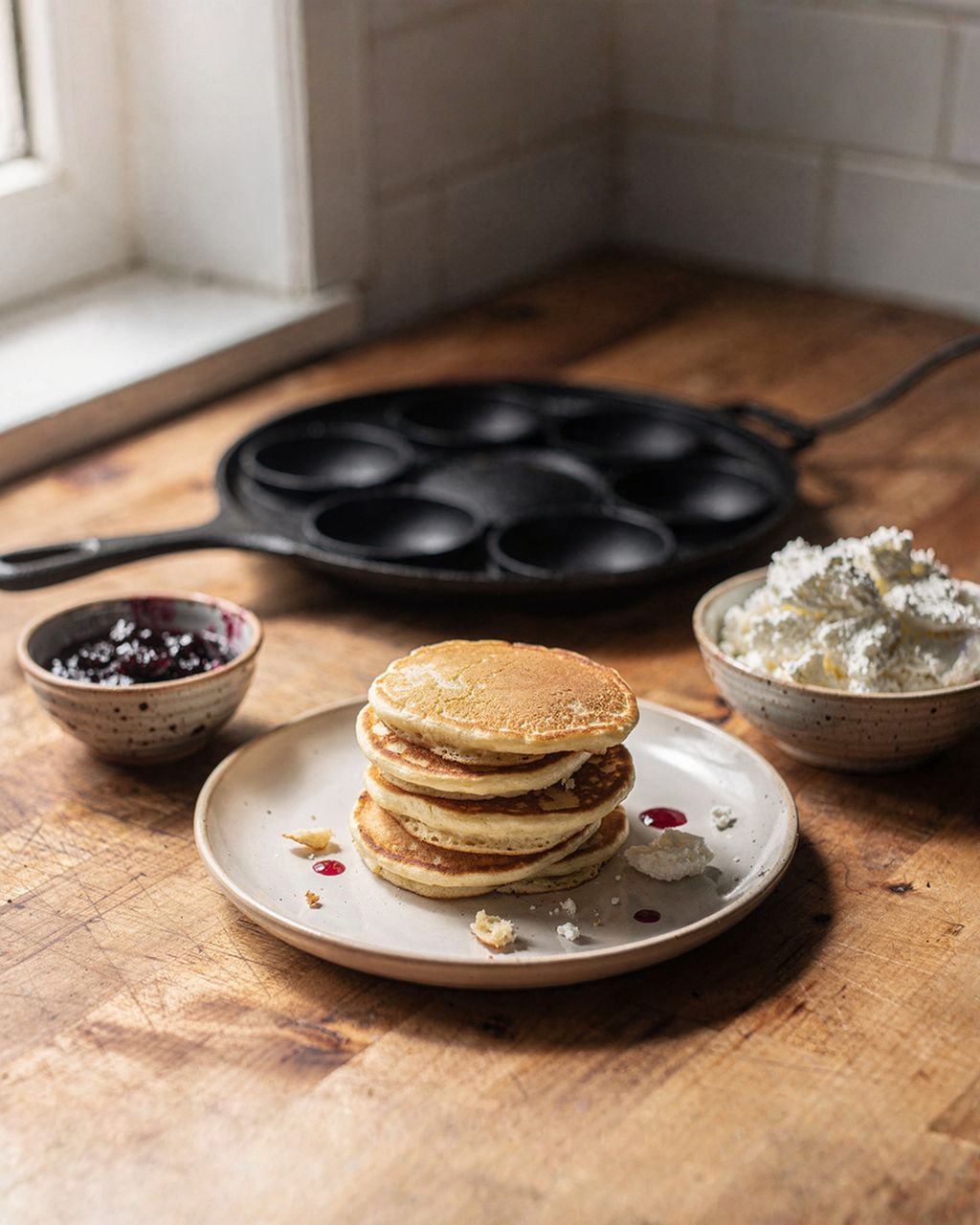
Best for: pancakes and fritters (the classic Breton galettes), bread, gingerbread, dark muffins, dumplings. Buckwheat flour in practice: buckwheat dumplings with peaches and quark.
How much: in sweet baking, 20–40% of the blend; more will overpower the other flavors. For pancakes, you can happily use 100%.
Light vs. dark: flour from unroasted (green) buckwheat is milder and lighter; flour from roasted buckwheat smells strongly and works in sweet baking only with cocoa, spices, or honey.
Buckwheat binds well, so buckwheat dough holds together better than rice-based dough.
Buckwheat dumplings with peaches and curd cheese
Buckwheat dumplings with peaches and quark — buckwheat flour in fruit dumplings
Corn flour is finely ground whole corn — yellow, lightly sweet, and tender. Be careful not to mix them up; three different products sit side by side in the store:
Corn flour — yellow, fine, with a corn flavor. Good for cookies, flatbreads, cornbread, and as 15–30% of a blend for golden color and crispness.
Cornstarch (such as Maizena or Gustin) — white, flavorless, pure starch. It thickens and adds tenderness, but gives neither flavor nor body. It belongs in the "starches" category.
Cornmeal / polenta — coarse, for porridge and polenta; in baking only for texture (a crunchy crust, a dusting on top).
Corn flour has low to medium absorbency, and doughs made with it tend to be more crumbly — in cakes, keep it under a third of the blend.
Coconut flour is defatted, dried, and ground coconut meat — and it soaks up liquid like a sponge, many times more than rice flour. If you swap it for another flour 1:1, you'll end up with a dry, crumbly mass.
How much: no more than 20–25% of the flour weight in a blend. As the only flour, it works only in recipes written specifically for it.
Extra liquid: for every 10 g of coconut flour, count on roughly 15–20 ml of extra liquid, and on one extra egg for every 30 g or so.
Flavor: mildly coconutty and lightly sweet; it disappears in chocolate and fruit cakes.
Best for: muffins, cookies, chocolate and fruit cakes, coating mixes.
Always let coconut batter stand for 10 minutes — only then will you see its true thickness.
Millet, sorghum, and oat flours are delicate and mild, so they work well as a "second flour" alongside rice flour — they add flavor and softness without overpowering the others.
Millet flour — yellowish and lightly sweet, but it turns bitter quickly because it contains fat. Buy small packs and store them somewhere cool. Good for bread, cakes, and flatbreads, at 20–30% of a blend.
Sorghum flour — less well known in the Czech Republic, but one of the best: mild, lightly sweet, and easy to bake with. Good for bread and cakes, up to 30–40% of a blend.
Oat flour — soft and fragrant, but oats are often contaminated with gluten from wheat. Only oat flour explicitly labeled gluten-free is safe. Some people with celiac disease can't tolerate even that because of a protein called avenin — so add oats only after talking to your doctor.
Legume flours are high in protein, so they bind well — they behave a bit like eggs. Raw, though, their flavor is distinctly "beany," and it fades only with thorough baking.
Chickpea flour — yellowish and nutty. For savory flatbreads, pancakes (socca, farinata), and coating vegetables; in cakes, up to 15%.
Pea flour — stronger-tasting, for crackers and savory bakes. Try pea flour crackers.
Lentil flour — milder when made from red lentils, and it bakes through quickly. Try lentil flour flatbreads.
Never taste legume-flour dough raw — it tastes bitter and unpleasant, and once baked it's an entirely different flour.
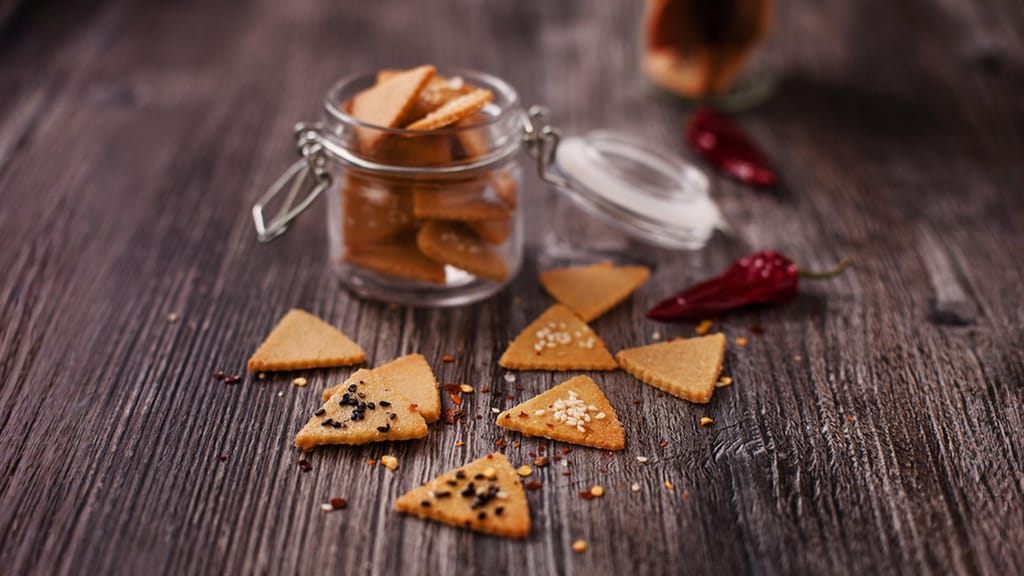
Pea flour crackers
Pea flour crackers — crunchy savory bakes made with legume flour
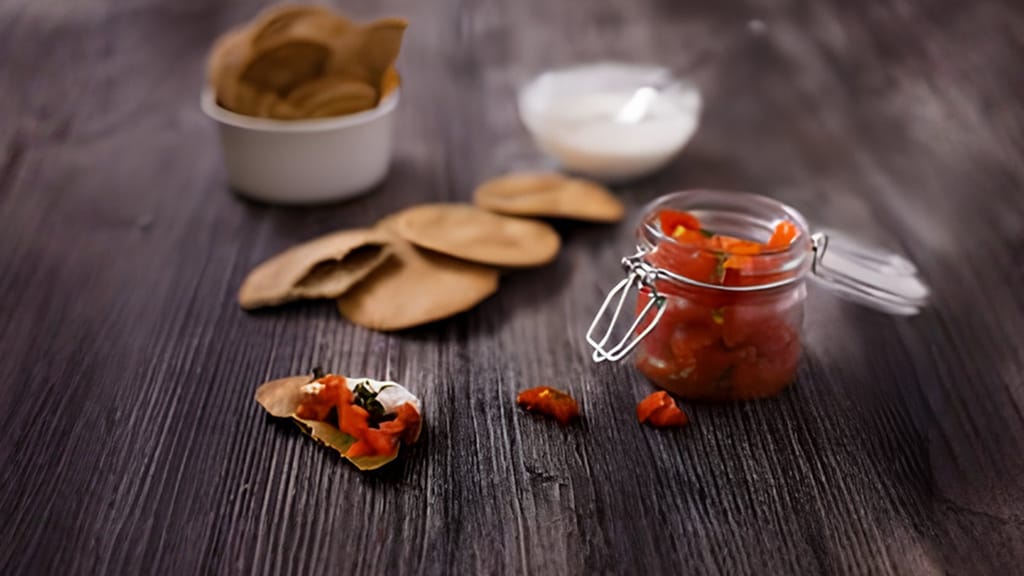
Lentil flour crackers
Lentil flour flatbreads — quick gluten-free savory flatbreads
Almond flour brings fat, moisture, and tenderness — and almost no starch, so it can't build structure on its own. In a gluten-free blend it works as an add-in at 20–35% for tender doughs, cookies, and cakes that should stay juicy.
How almond flour differs from ground almonds and what to substitute for it is covered separately in our article Almond flour: how it differs from ground almonds and what to use it for. Hazelnut and cashew flours behave similarly.
Starches give gluten-free baking the lightness, softness, and springiness that flours can't manage on their own. In a blend they usually make up 20–40% of the weight. Each one does something a little different, though:
Tapioca starch — springiness, chew, and a crisp, golden crust. Good for bread, pizza, and cheesy bakes (such as Brazilian cheese puffs, pão de queijo).
Potato starch (Solamyl) — the moistest, softest crumb, and it lifts well. Good for Bundt cakes, sponge cakes, and bread. Note: potato starch is not the same as potato flour (which is made from whole potatoes, is heavy, and smells of potatoes).
Cornstarch (Maizena, Gustin) — tenderness and fineness. Good for cookies, delicate Christmas cookies, and sponge cakes.
More than 50% starch in a blend starts to hurt your baking — it comes out gummy and goes stale quickly.
A binder replaces gluten by holding the dough together and trapping water in it. The amount is calculated from the weight of the whole flour and starch blend:
Xanthan gum — 0.5–1% for cakes, muffins, and pancakes (2.5–5 g per 500 g of blend); 1.5–2% for yeasted dough. More than 2% makes baking gummy.
Psyllium (soluble fiber from plantain seed husks) — the best helper for gluten-free bread: around 3–5% of the flour weight. It binds a lot of water, so add extra liquid too, and let it swell in water for 5–10 minutes first.
Eggs — a natural binder and leavener. In cakes with more eggs (sponge, Bundt), you can get by with a smaller amount of xanthan gum.
No binder is needed for tender doughs, cookies, and crumble toppings — there, crumbliness isn't a problem, quite the opposite.
For bread and its typical problems (collapsing, a wet crumb), we have a separate article: Gluten-free bread in a bread machine: why it collapses and how to fix it.
Three tried-and-tested homemade gluten-free flour blends are: a light one for sweet baking, a darker one for bread and pancakes, and a tender one for cookies and crumble toppings. All of them are built on a ratio of 60–80% flour to 20–40% starch, and you add a binder as the recipe calls for it. The more springiness and softness you want (Bundt cake, bread), the closer you go to 30–40% starch; the tender blend has only 20% starch, because almond flour brings fat and tenderness on its own, and more starch would make the cookies hard and gummy.
Mix a larger batch in a container, whisk it well, and always weigh it — measuring cups are unreliable with gluten-free flours, because each one has a different density.
The light blend for sweet baking (Bundt cakes, muffins, sponge cakes, cakes) has a 70:30 ratio:
250 g fine white rice flour
100 g corn flour or sorghum flour
150 g potato starch
when baking, add 0.5–1% xanthan gum
You can use a blend mixed this way for, say, gluten-free banana chocolate Bundt cake.
The darker blend for bread and pancakes also has a 70:30 ratio:
200 g brown rice flour
100 g buckwheat flour
50 g millet or sorghum flour
150 g tapioca starch
for bread, 3–5% psyllium; for pancakes, none
The tender blend for cookies and crumble toppings has an 80:20 ratio:
250 g fine rice flour
150 g almond flour
100 g cornstarch
no binder
When you swap one flour for another, keep the weight the same and watch the absorbency: use coconut flour only up to 20–25%, and as soon as you add it, add extra liquid too. For Christmas baking with specific ratios, you'll find the details in the article What to replace flour with in gluten-free Christmas cookies.
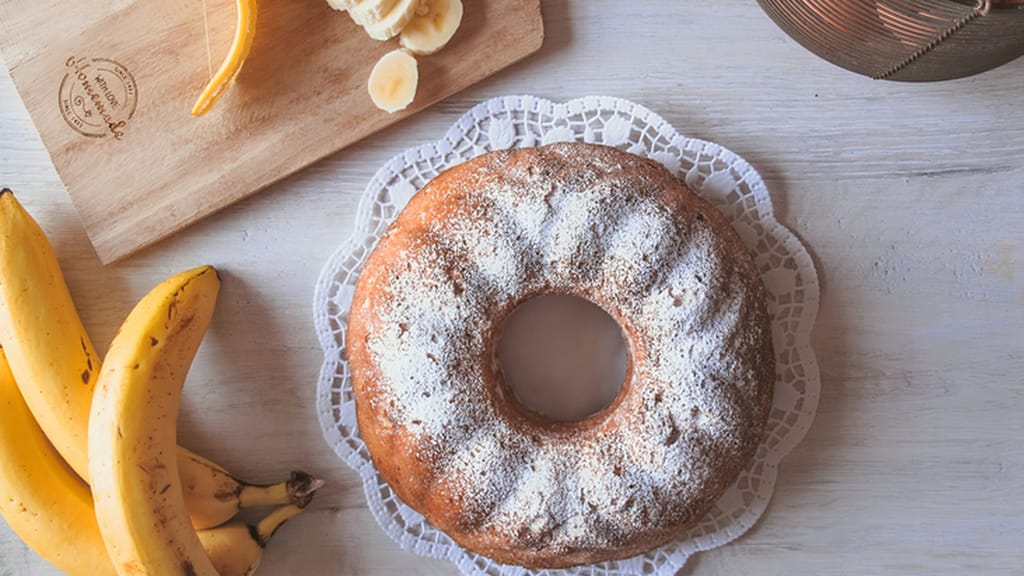
Gluten-free banana bundt cake with chocolate
Gluten-free banana chocolate Bundt cake — try the light gluten-free flour blend on it
Flour is safely gluten-free only when it's explicitly labeled that way — with the words "gluten-free" or the crossed grain symbol. Under European rules (EU Regulation No. 828/2014), such a product may contain no more than 20 mg of gluten per kilogram.
Buckwheat, rice, corn, and millet are naturally gluten-free, but mills and packing plants often process them on the same lines as wheat. For most people that doesn't matter; for someone with celiac disease it's critical. So if you have celiac disease, buy only certified ingredients — you'll find an overview among the gluten-free ingredients.
Check just as carefully whatever else goes in with the flour: baking powder, vanilla sugar, sprinkles, rolled oats, and spice blends may contain wheat starch or traces of gluten.
With a homemade gluten-free flour blend, you can bake a Bundt cake, fritters, braided Christmas bread, and gingerbread cookies — each has its own weak spot (a drier crumb, crumbling, collapsing), and these guides tackle them:
White rice flour and starches keep for a year in a dry, airtight container. Whole-grain gluten-free flours (brown rice, buckwheat, millet, nut flours) keep for only a few months because they contain fat and go rancid. Store these somewhere cool, ideally in the fridge, or freeze them. A bitter or rancid smell means the flour belongs in the bin — millet flour turns bitter fastest.
Yes. Rice flour or starch works best for thickening sauces and soups. Rice flour behaves much like wheat flour in a roux, and a sauce made with it freezes well. Cornstarch thickens strongly and stands up to boiling. Potato starch thickens fastest but thins out with long cooking, so stir it into cold water and add it at the very end.
No. A ready-made “all-purpose gluten-free flour” is usually a blend of rice flour, starches, and often a binder. That's why it behaves differently in recipes than plain rice flour, and it usually doesn't need any added xanthan gum. Check the ingredients: if it already contains a binder, don't add more, or your baking will turn out gummy.
Gluten-free baked goods go stale faster because the starch retrogrades after baking and there's no gluten network to hold on to moisture. It helps to add more moisture to the batter (psyllium, yogurt, grated apple), store the bake in an airtight container, and freeze sliced bread or cake as soon as it has cooled. You can revive a dry slice by toasting it briefly in a toaster or the oven.
Yes, you can bake yeasted dough with gluten-free flour — it just won't rise like wheat dough. It needs a binder (psyllium or 1.5–2% xanthan gum), more liquid, and a shorter rise — usually one rise of 30–45 minutes at most, because without gluten the dough collapses if it over-proofs. Shape it with wet hands or a dough scraper rather than kneading.
One recipe worth heating the oven for, one tip, and one deal from the shop. Nothing else.