Homemade bread
How Long to Bake Bread, at What Temperature, and How to Tell It's Done
Updated Oct 6, 2026
How long should you bake bread? A loaf of about 1 kg (2 lb) needs 45–55 minutes: the first 15–20 minutes at 240–250°C (465–480°F) with steam, the rest at 200–220°C (390–430°F) without steam. It's done when the centre reaches 88–99°C (190–210°F) — sourdough, wholegrain and rye loaves should go to the higher end, while sweet enriched doughs are ready around 82–88°C (180–190°F) — the crust is a deep golden brown, and the bottom sounds hollow when tapped. Below you'll find times for every size, why the temperature changes partway through baking, and what to do if the centre comes out gummy.
Bake a loaf of about 1 kg (2 lb) for 45–55 minutes, a 500 g (1 lb) loaf for 30–40 minutes, and a baguette for 20–25 minutes; the exact time depends mainly on weight and shape. The bigger and taller the loaf, the longer it takes for the heat to reach the centre. Here are rough times for an oven preheated to 240–250°C (465–480°F), which you then turn down to 200–220°C (390–430°F) after 15–20 minutes:
Small rolls (60–80 g / 2–3 oz): 15–20 minutes, baked throughout at 220–230°C (430–445°F)
Baguette (250–300 g / 9–10 oz): 20–25 minutes, baked throughout at 240–250°C (465–480°F)
500 g (1 lb) loaf: 30–40 minutes
1 kg (2 lb) loaf: 45–55 minutes
1.5 kg (3 lb) loaf: 55–70 minutes
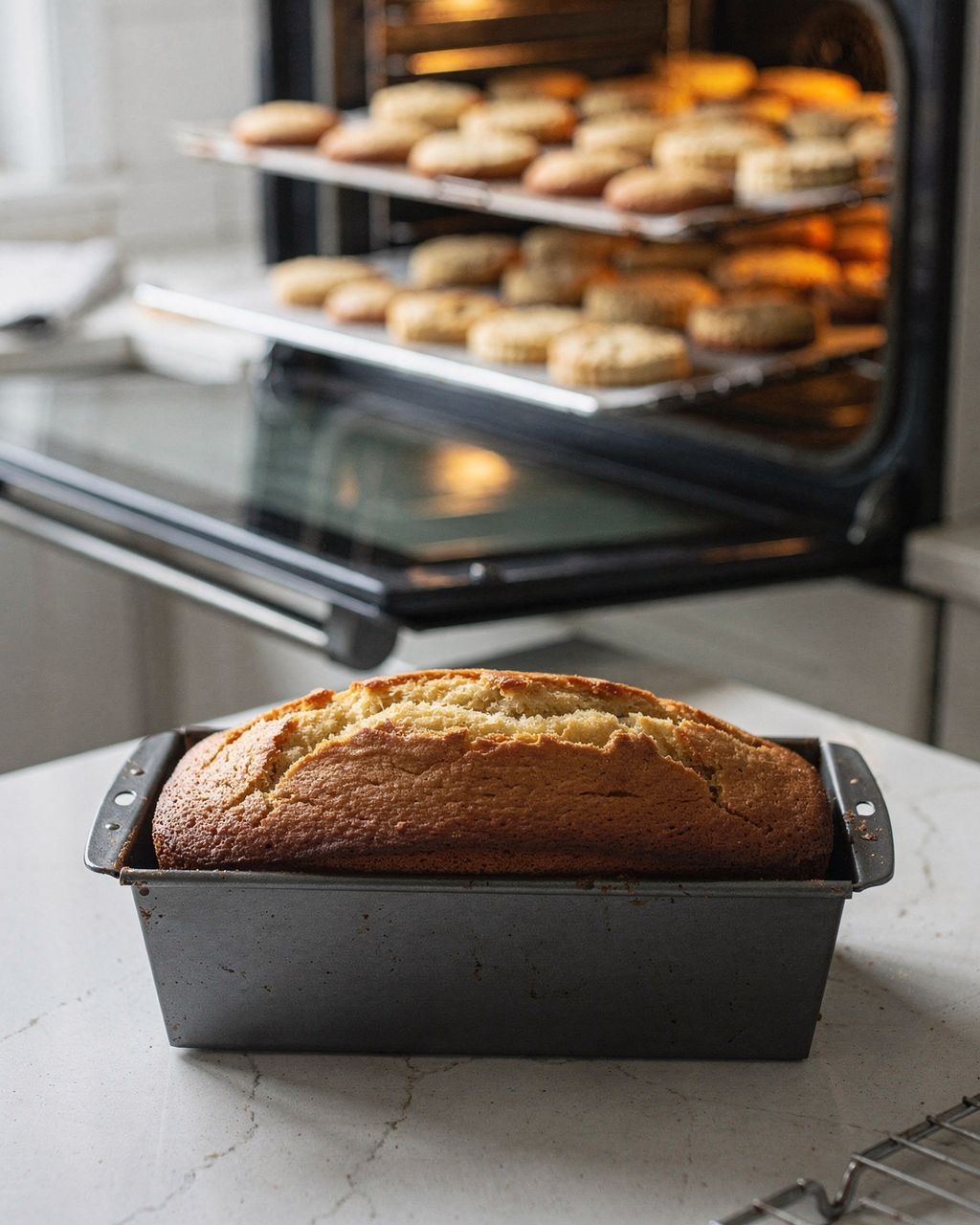
Loaf baked in a tin (1 kg / 2 lb): 50–60 minutes at 200–210°C (390–410°F) — the tin shields the sides, so it bakes more slowly
Loaf baked in a Dutch oven (1 kg / 2 lb): 20–25 minutes with the lid on at 250°C (480°F), then 20–25 minutes with the lid off at 220–230°C (430–445°F)
Rye bread (1 kg / 2 lb, mostly rye flour): 60–75 minutes — rye dough holds more water and needs longer baking
Sweet enriched doughs (buttery, egg-and-sugar doughs like Christmas bread, Easter sweet bread, brioche): 160–180°C (320–355°F); a loaf of about 1 kg (2 lb) takes roughly 40–50 minutes
Treat these as a guide, not a stopwatch. Every oven bakes differently, which is why the doneness tests below matter more than the number in a recipe.
Bake bread in two stages: start at 240–250°C (465–480°F), then after 15–20 minutes turn it down to 200–220°C (390–430°F). The strong initial blast of heat expands the gases in the dough and the loaf shoots upward (bakers call this oven spring). The lower temperature then cooks the centre through without burning the crust.
Preheat properly: at least 30 minutes, or 45–60 minutes if you're using a baking stone or Dutch oven. The oven light switches off long before the walls are actually hot enough.
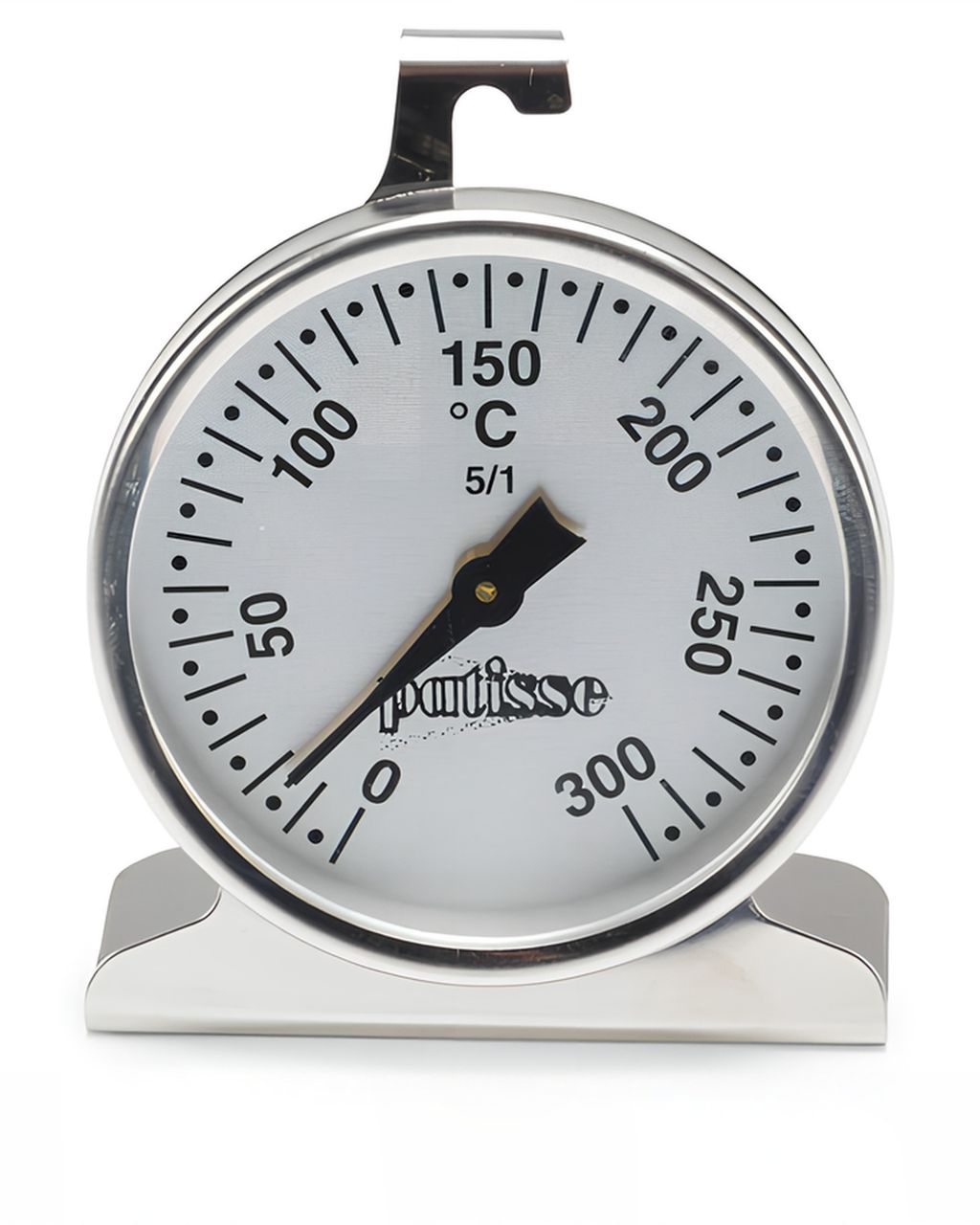
Ovens often run 10–20°C (20–35°F) off from what the dial says. A cheap oven thermometer tells you the real temperature — and explains why a recipe sometimes "doesn't work."
Fan/convection heat bakes more intensely, so set it roughly 20°C (35°F) lower. For bread, though, conventional top-and-bottom heat usually works better: a fan dries out the surface and the crust sets before the loaf has a chance to rise fully.
Sweet enriched doughs (with butter, eggs and sugar) should bake at a lower 160–180°C (320–355°F). Sugar caramelises quickly, and the crust would turn black before the centre finished baking.
Steam in the first 15–20 minutes keeps the surface of the dough supple so the loaf can expand fully, giving you a crust that's glossy, thin and crisp. Without steam, the surface dries out fast, the loaf cracks in random spots, and the crust turns out dull and tough.
How to create steam at home:
Place an old baking tray or a cast-iron pan on the oven floor while it preheats.
As soon as the bread goes in, pour 100–200 ml (⅓–¾ cup) of boiling water onto it (or toss in a handful of ice cubes), then shut the door quickly.
After 15–20 minutes, remove the tray, or crack the door open for a few seconds to let the steam escape. The crust only browns and crisps up once the air is dry.
A lidded Dutch oven does the same job on its own: the moisture released by the dough stays trapped inside. That's why bread turns out so well baked this way.
You can tell bread is baked through by its internal temperature, sound, colour and weight — and it's best to check at least two of these:
Internal temperature: 88–99°C (190–210°F) for lean bread without fat or sugar, with sourdough, wholegrain and rye loaves baked to the higher end (96–99°C / 205–210°F); sweet enriched doughs are done around 82–88°C (180–190°F).
A hollow sound when you tap the bottom of the loaf.
A deep golden-brown to chestnut crust, including on the bottom.
The loaf feels noticeably lighter in your hand than it looks — it loses roughly 10–20% of its water weight during baking.
A fully baked lean bread (without fat or sugar) reaches roughly 88–99°C (190–210°F) in the centre; dense loaves — sourdough, wholegrain and especially rye — should be baked to the top of that range, 96–99°C (205–210°F). Sweet enriched doughs with butter, eggs and sugar, like Christmas bread, Easter sweet bread or brioche, are done earlier, around 82–88°C (180–190°F) — any hotter and the soft crumb would dry out needlessly.
Temperature is the one test that never lies, and baking authorities (such as King Arthur Baking or thermometer maker ThermoWorks' baking guides) agree on these ranges.
How to measure it:
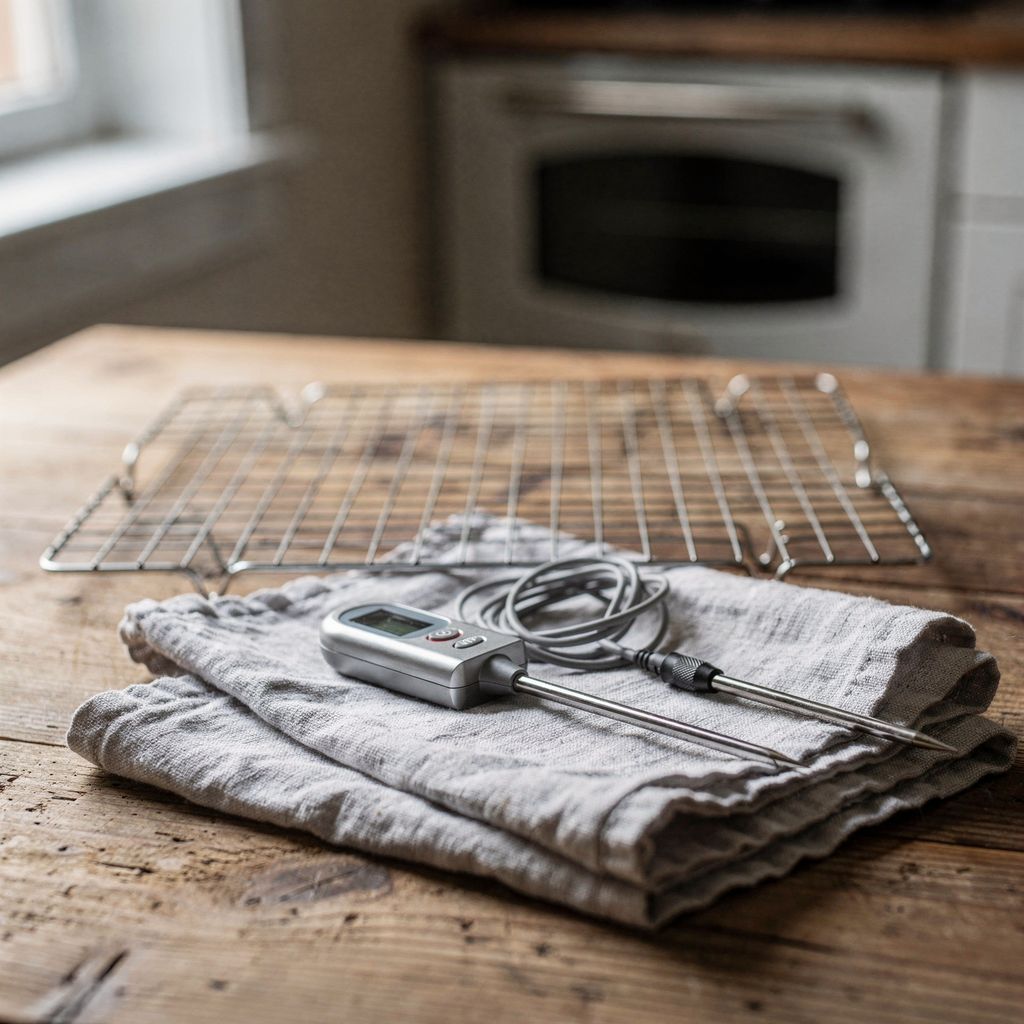
Use an instant-read digital thermometer and insert it from the bottom or the side, straight into the centre of the loaf — a hole on top would spoil its appearance.
Measure at the thickest point. For a baguette, the side is fine; for a large loaf, really aim for the middle.
If it's a few degrees short, pop the bread back in for 5–10 minutes and check again.
Fully baked bread sounds hollow and dry when you tap the bottom — like an empty box; a dull, "wet" sound means the centre is still damp.
How to do it: turn the loaf over (it's hot, so use a tea towel) and tap the bottom with your knuckles.
Tapping is a great quick test for smaller wheat loaves. But with large, rye or very moist breads, it can be misleading: the crust may sound hollow even if the centre isn't done. In those cases, trust the thermometer instead.
A baked bread crust should be a deep golden brown, even verging on chestnut — that colour carries a large part of the flavour (thanks to the Maillard reaction and caramelisation). A pale, yellowish crust almost always means the bread came out too early. Don't be afraid of a darker colour, as long as it isn't black.
For bread baked in a tin, turn it out and press the sides: they should feel firm and spring back. Soft, pale sides? Put it back in the oven without the tin, directly on the rack, for 5–10 minutes.
Bread turns out gummy inside when you slice it while hot, pull it out of the oven too soon, the dough wasn't proofed enough, or it's too wet or rye-heavy.
You sliced it while hot. The most common culprit — see the note above.
You took it out too soon. The crust looked done, but the centre hadn't even reached 88°C (190°F). Either the oven was running cooler than it showed, or it wasn't preheated enough.
The dough was under-proofed. Dense dough without enough air bubbles conducts heat poorly, leaving the crumb heavy and damp.
The dough was too wet, or made with rye flour. Rye holds a lot of water and will never be as airy as wheat — it needs longer baking and longer cooling.
If you find a damp centre in a whole, unsliced loaf, put it back in for 10–15 minutes at 200°C (390°F) directly on the rack. For bread that's already been cut, this only helps so much.
Loosely cover the bread with foil and lower the temperature by 10–20°C (20–35°F) — the crust will stop darkening and the centre can finish baking undisturbed. It also helps to:
move the tray or rack down a level, further from the top element,
bake sweet enriched doughs (with sugar, honey, eggs) at a lower 160–180°C (320–355°F) from the start,
check your oven with a thermometer — if the crust burns every time, your oven is probably running hotter than it shows.
Homemade bread
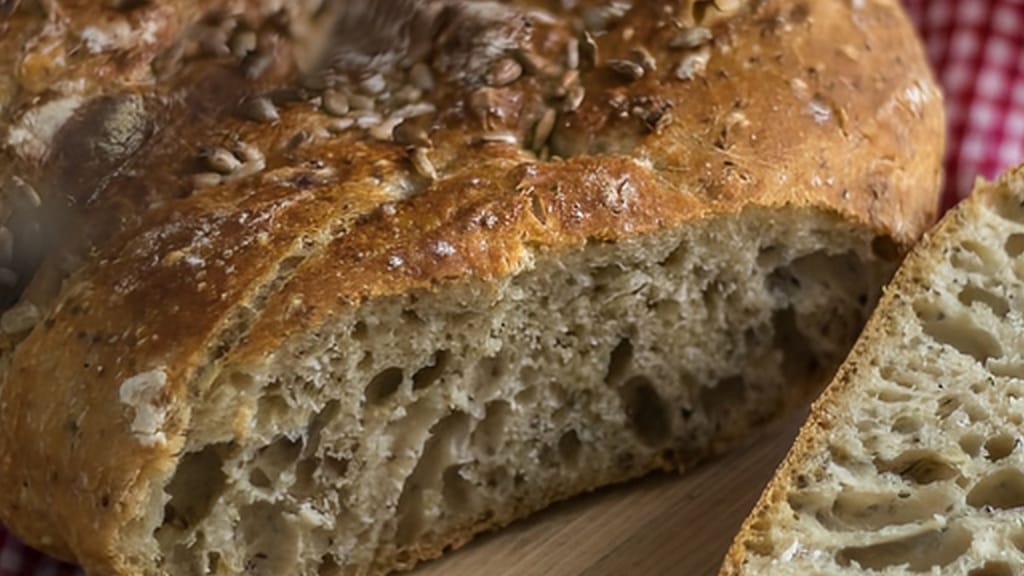
Homemade bread — try out the times and temperatures from this guide on your first loaf
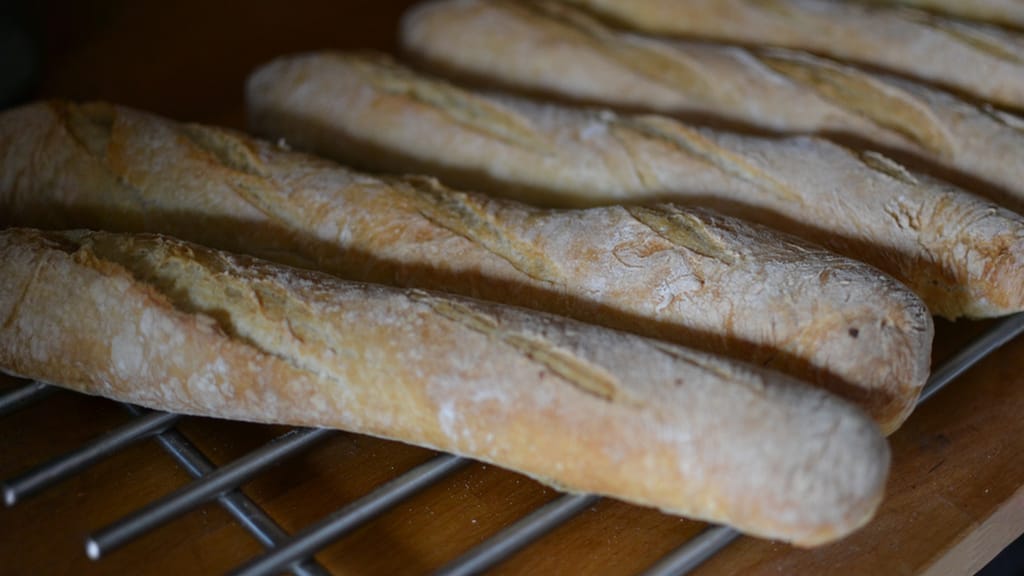
The best baguettes, according to a baking fanatic
Homemade baguettes — a short bake at high heat with steam
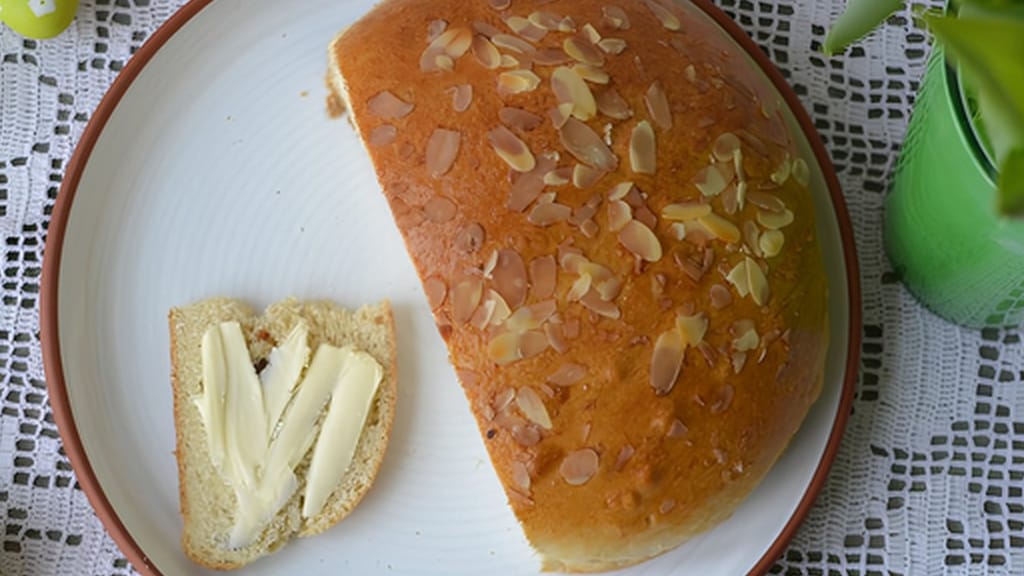
Easter classic: fragrant mazanec bread
Fragrant Easter sweet bread — an enriched dough baked at 160–180°C (320–355°F)
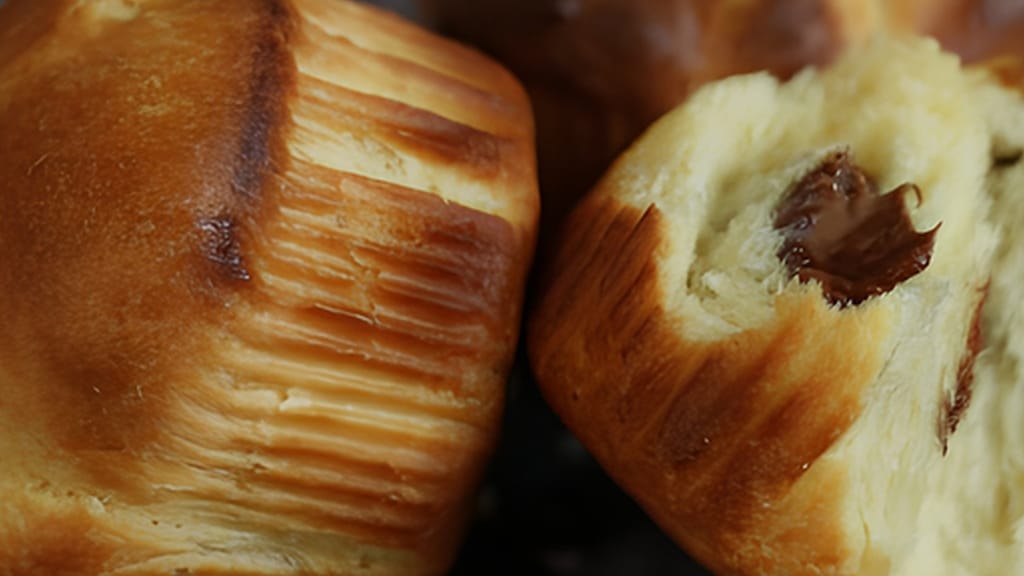
Brioche buns
Buttery brioche — done once the inside reaches 82–88°C (180–190°F)
Reheat frozen bread in the oven at 180–200°C (355–390°F): a whole loaf takes 15–25 minutes, slices take 3–5 minutes. For a whole loaf, it's best to let it thaw first for 2–3 hours in its bag at room temperature, then just 8–10 minutes in the oven to crisp the crust back up.
Bread cracks on the side when it expands during baking and has nowhere to go — usually because it was under-proofed, or wasn't scored deep enough (roughly 0.5–1 cm / ¼–½ in). Steam in the first few minutes also helps, since it keeps the surface pliable so the loaf opens up exactly where you scored it.
Baking on a preheated stone or in a cast-iron pot gives you a taller loaf with a crispier bottom, because it gets intense heat from below right from the first second. A regular baking tray works fine too — just preheat it along with the oven and slide the bread onto it on a sheet of baking paper.
Store baked bread at room temperature in a paper bag, a cloth bread bag, or a bread bin, cut side down on a board. In a plastic bag the crust goes soft by the next day, and in the fridge bread goes stale even faster. Slice and freeze whatever you won't eat within 2–3 days.
One recipe worth heating the oven for, one tip, and one deal from the shop. Nothing else.