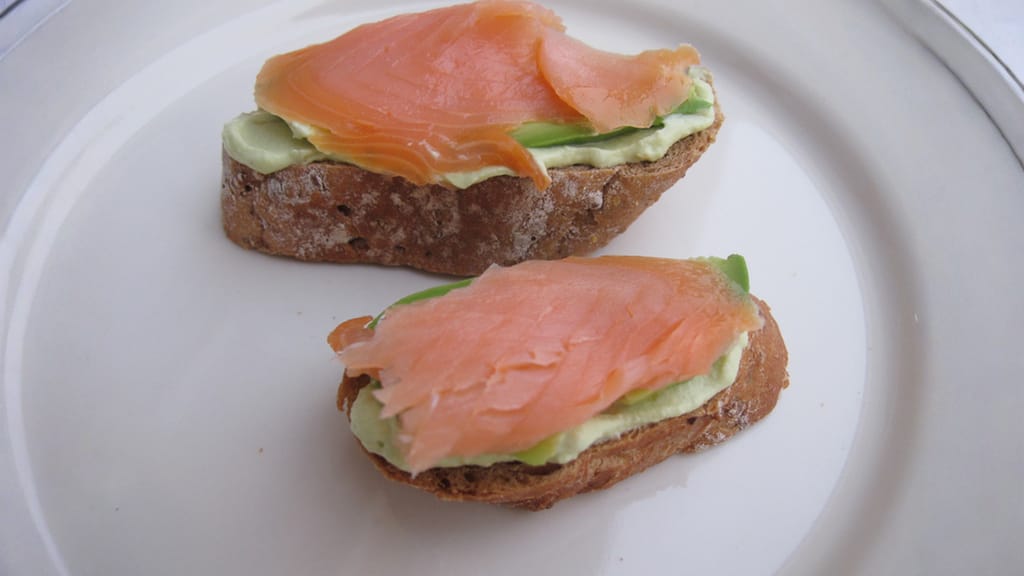
Avocado canapés with smoked salmon
New Year's Eve Canapés: 15 Ideas and How to Prep Ahead
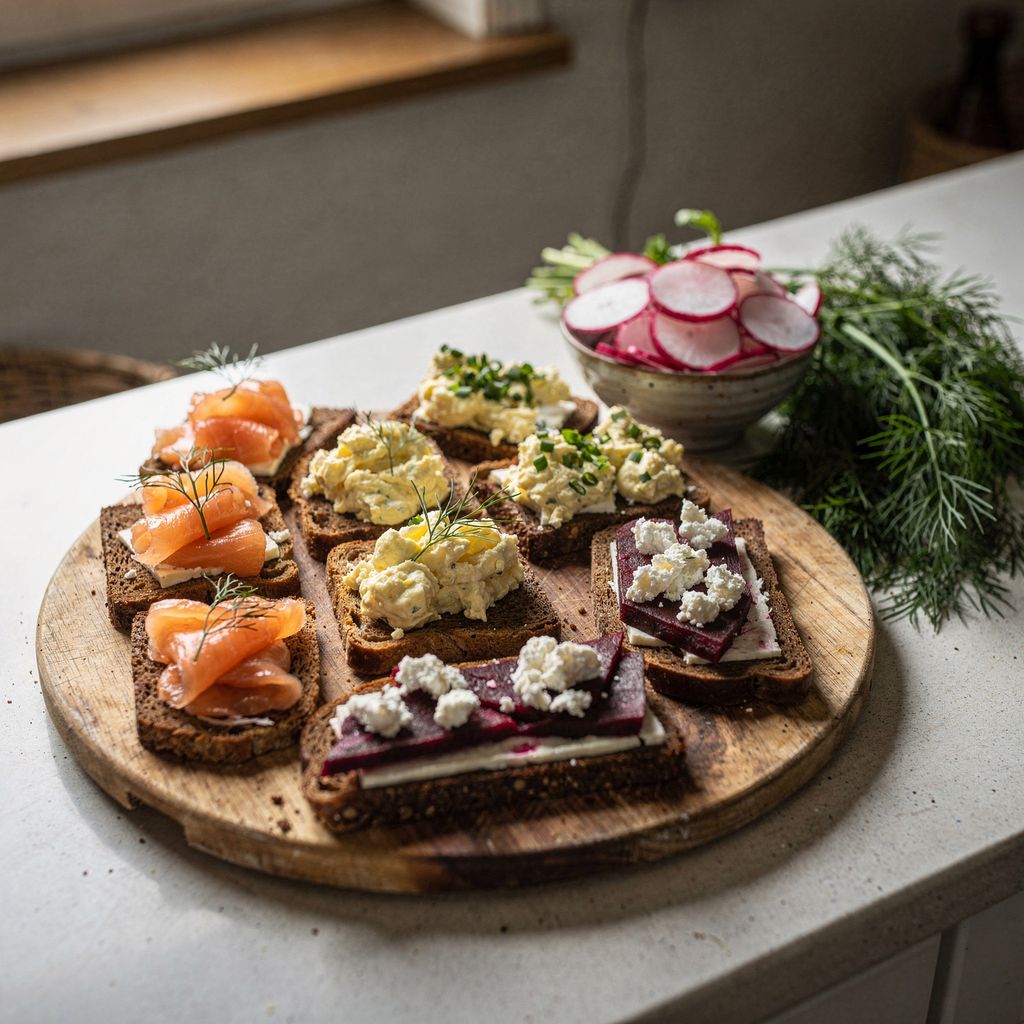
Updated Sep 18, 2026
New Year's Eve canapés rest on three layers: a sturdy base, a fat barrier that keeps it from going soggy, and a thick filling with a contrasting garnish. Plan on 8–12 pieces per person, make the spreads a day or two ahead, and assemble the canapés no more than three to four hours before your guests arrive. Here are 15 combinations, from crowd-pleasing classics to a few you won't often see on a typical spread — plus the technique that keeps them just as good at eleven at night as they were at six.
Plan on 8–12 canapés per person if they're the main event of the evening, and 5–6 if you're rounding them out with open sandwiches, a hot dish or a bowl of salad. Standard catering guidelines for a regular buffet suggest around 6 pieces per guest, but New Year's Eve is a six-hour marathon — hence the higher numbers.
A handy breakdown:
6 guests — 60–70 pieces, 4 varieties
10 guests — 100–120 pieces, 5 varieties
15 guests — 150–180 pieces, 6 varieties
20 guests — 200–240 pieces, 6 varieties
Go for 5–6 varieties rather than a dozen. Three full trays of each kind look generous, while twelve varieties with six pieces each will look picked-over within the hour — and you'll spend the whole day spreading.
A ratio that works: roughly half classics, a third vegetable-based or vegan, and the rest, about a sixth, warm or gluten-free. Vegetable spreads disappear just as fast as the meaty ones, and there's always someone at the party who doesn't eat meat.
A canapé has three layers: a sturdy base, a fat barrier, and a thick filling with a garnish. That middle layer decides whether it's still crisp after three hours or gone stale and soft.
The base. Baguette-style bread, dark rye, or sandwich bread sliced about 1 cm thick, then cut into rounds 4–5 cm across — any bigger won't fit in one bite. Soft, fresh baguette is the worst choice: it soaks through in minutes. Bread from the day before holds up better than fresh.
The fat barrier. Spread softened butter in a thin layer right out to the edges, not just in the middle. Butter is a water-in-fat emulsion — the continuous film it forms on the bread is made of fat, and that fat keeps the moisture from the topping from reaching the crumb. Take it out of the fridge 20 minutes ahead; cold butter tears the bread and leaves gaps that let moisture through.
The filling. It needs to be thick, not runny — it should hold its shape on a knife. Thin out a runny spread with a spoonful of quark or grated hard cheese. Keep the height ratio of bread to filling roughly 1:1; pile the filling any higher and it'll slide off with the first bite.
The garnish. It shouldn't just be decoration — it should be contrast. Pair a creamy spread with something tangy (capers, pickled onion), crunchy (radish, toasted seeds), or sharp (horseradish, chilli). It also works as a label: guests can tell what they're picking up just by looking.
Fifteen combinations that work on a New Year's Eve spread: egg spread with radish, salmon spread with capers, avocado with smoked salmon, homemade herb cheese, ham with horseradish, carrot hummus with roasted chickpeas, roasted beetroot with goat cheese, guacamole with chilli, sun-dried tomatoes with olives, black salsify spread, puff pastry parcels, cheese straws wrapped in ham, bacon-wrapped stuffed mushrooms, pea-flour crackers, and caprese skewers. Below, each group comes with the reason it works and a link to the recipe.
The classics — egg spread, salmon spread, avocado with smoked salmon, herb cheese, and ham with horseradish — disappear from the tray first, so make about half your total batch from this group. These are the pieces guests reach for without a second thought and without asking what's in them.
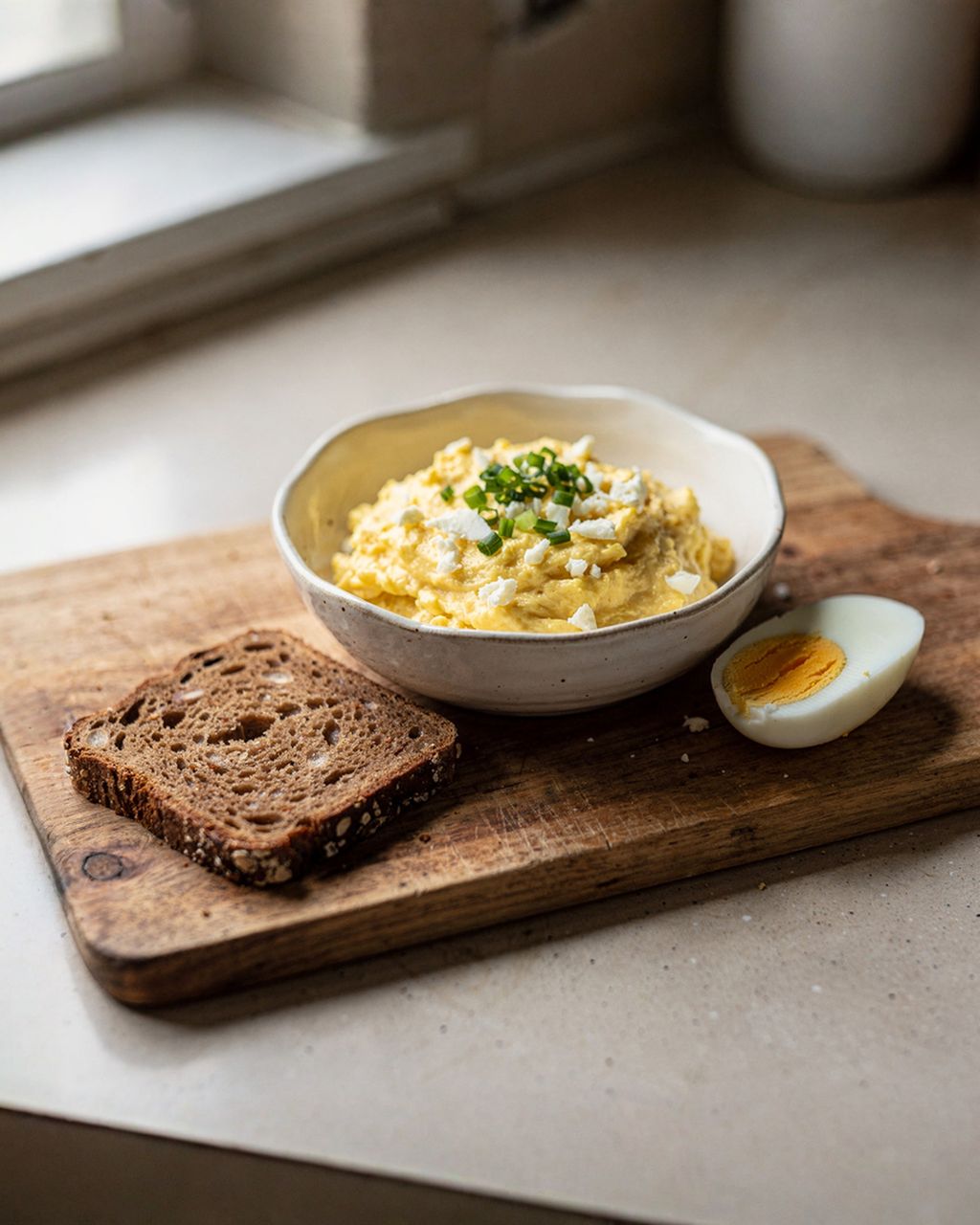
Egg spread with chives and radish. The safest bet of the night. The key is not to blitz it into a paste: chop the eggs coarsely so there's still something to bite into. This egg spread for canapés comes together in ten minutes.
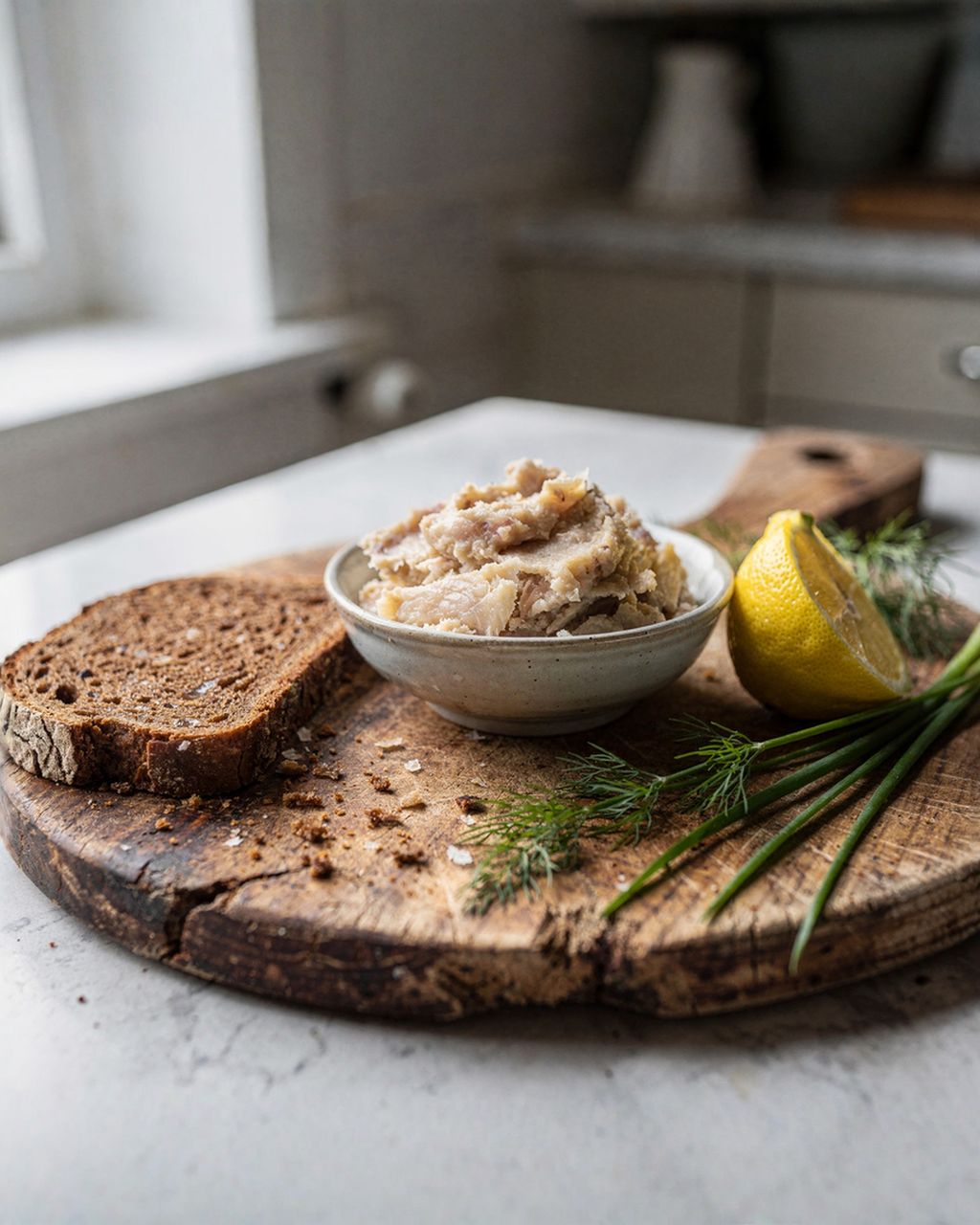
Salmon spread with capers and dill. Salty smoked salmon, tangy capers, the richness of cream cheese — exactly the flavour triangle that makes you reach for another piece. Go for this salmon canapé spread.
Avocado with smoked salmon and lime. The most elegant piece on the tray and also the fastest to make — nothing gets blended, just layered.
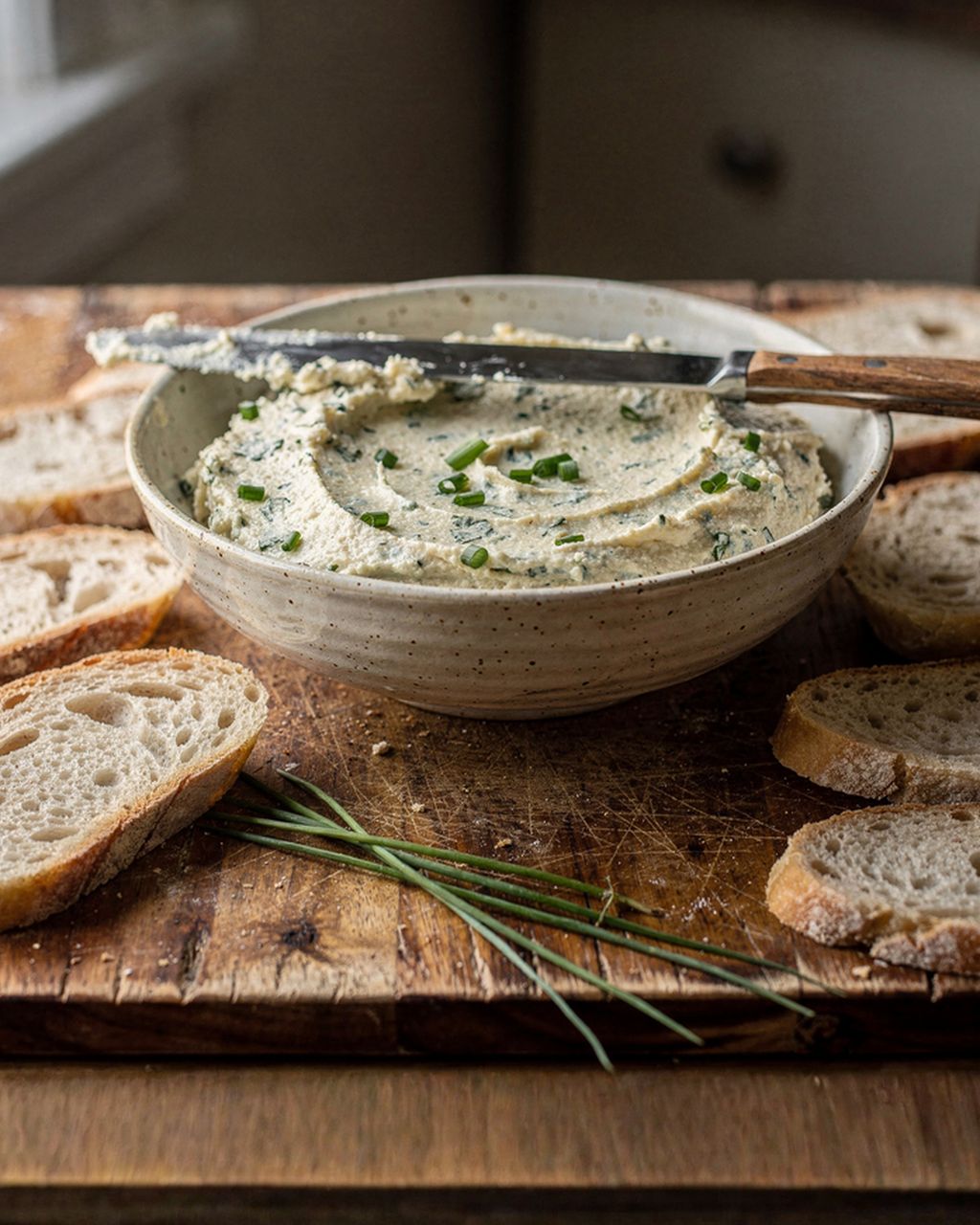
Homemade herb cheese with radish. Herb cheese made from just two ingredients takes five minutes and tastes better than the shop-bought kind. It's ideal for canapés because it's thick and won't run.
Ham, horseradish and cream cheese. A slice of ham rolled into a little rosette, with cream cheese mixed with a teaspoon of horseradish underneath. The kick comes through even after your fourth glass.
Avocado canapés with smoked salmon
Avocado canapés with smoked salmon — the fastest festive bite for your New Year's Eve tray
Vegetable and vegan canapés — carrot hummus, roasted beetroot with goat cheese, guacamole, sun-dried tomatoes with olives, and black salsify spread — make up the colourful third of the tray and keep longer in the fridge than the egg- or fish-based ones, so make these the furthest ahead.
Carrot hummus with roasted chickpeas. Carrot hummus has a rich orange colour that really stands out on dark bread, and crunchy roasted chickpeas on top add the texture hummus usually lacks.
Roasted beetroot with goat cheese. The boldest colour on the whole table. This roasted beetroot spread is sweet, and the goat cheese on top balances it out with salt and acidity.
Guacamole with chilli and lime. Make guacamole thicker for canapés than you would for nachos, and only spread it on in the final half hour — I explain why below, under avocado.
Sun-dried tomatoes with olives. This sun-dried tomato and olive spread is the saltiest thing on the tray, which makes it the perfect match for bubbly.
Black salsify spread with hazelnuts. This is the one guests will ask about. Black salsify spread has a mild, asparagus-like flavour, and the hazelnuts add crunch.
Warm canapés from the oven — puff pastry parcels, ham-wrapped cheese straws, and bacon-wrapped stuffed mushrooms — bring out around ten in the evening, once the cold spread starts to feel repetitive. Together with the gluten-free options, they make up the last sixth of the tray. All three can be prepped ahead and baked on the spot— which is exactly their appeal.
Puff pastry parcels. Fill and roll them in the afternoon, keep them on a tray in the fridge, and pop them in the oven twenty minutes before you want to serve.
Cheese straws wrapped in ham. These easy cheese straws can be baked in the morning; wrap them in a slice of ham once cooled, any time up to the evening. They taste just as good cold as warm, so timing isn't an issue.
Bacon-wrapped mushrooms stuffed with cheese. The most filling bite of the night, and the only one that can genuinely stand in for a hot dinner.
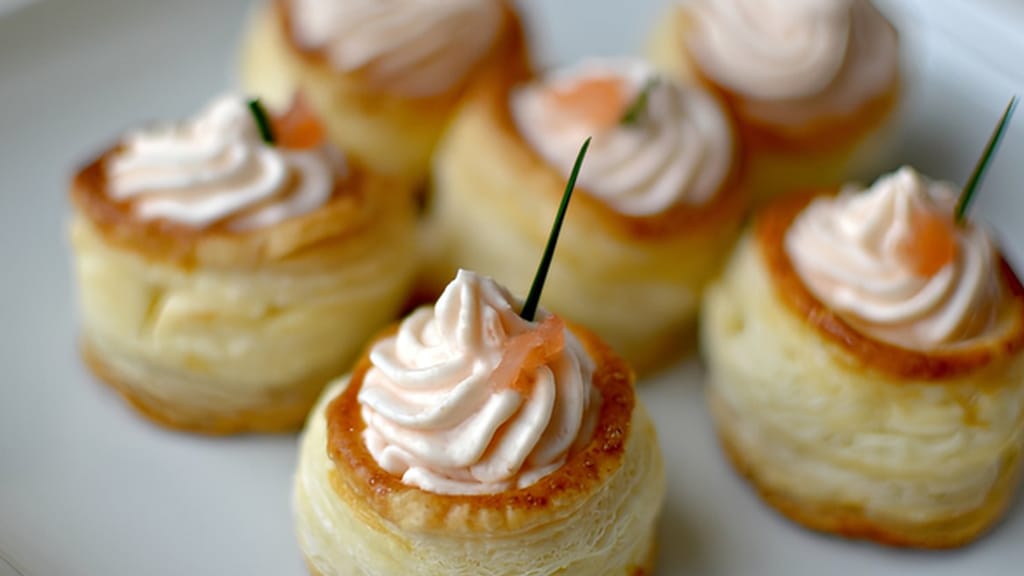
Puff pastry bites
Puff pastry parcels — a warm New Year's Eve canapé you prep ahead and bake in the evening
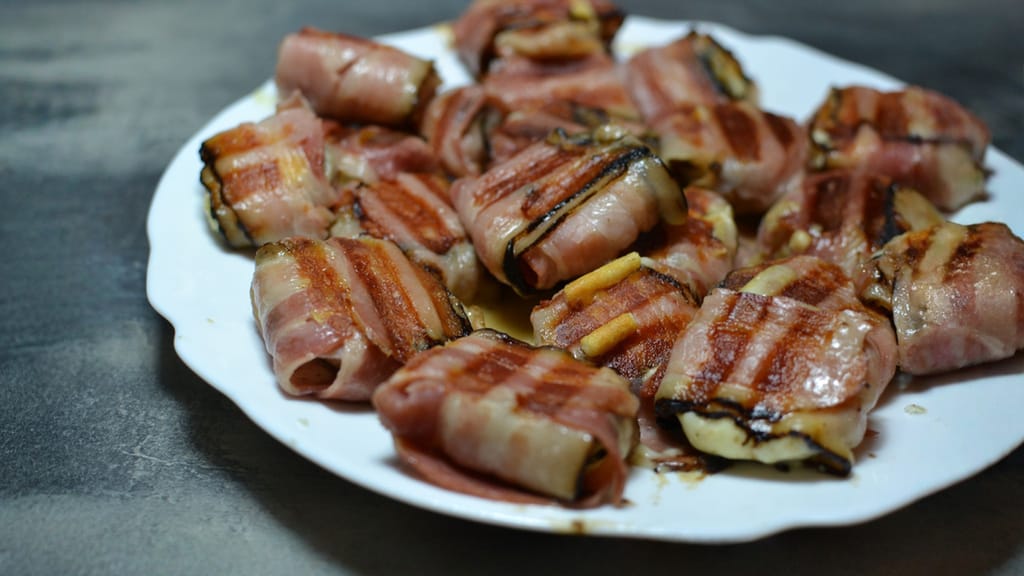
Blue cheese-stuffed mushrooms wrapped in bacon
Bacon-wrapped cheese-stuffed mushrooms make a hearty warm canapé
Build gluten-free canapés on crackers made from certified gluten-free flour or on a cocktail-stick skewer — both cover guests on a gluten-free diet and add a different shape to the tray besides the usual round.
Pea-flour crackers with spread. Pea-flour crackers are firmer than bread, so they hold their shape even under a thicker filling. Spread them right before serving, though — moisture from the spread takes their crunch away faster than it would with bread. If you're making these for a guest with a gluten-free diet, use flour from a certified gluten-free mill: peas themselves don't contain gluten, but the mill often processes grains too, which can cause cross-contamination.
Caprese skewers. A cherry tomato, a mozzarella ball, a basil leaf, a drop of olive oil. No bread, no spreading, ten minutes for the whole tray. Pat the tomatoes completely dry first, or the oil will pool all over the tray.
Make the spreads 1–2 days ahead, slice the bread on the morning of 31 December, and assemble the canapés no more than 3–4 hours before guests arrive. Not earlier — even a well-built canapé loses half its charm after five hours in the fridge.
A schedule that works:
29–30 Dec — make the vegetable spreads (hummus, beetroot, sun-dried tomato). They keep 3–4 days in a sealed container in the fridge.
Evening of 30 Dec — bake the cheese straws and crackers, store in a tin at room temperature.
Morning of 31 Dec — make the egg and salmon spreads. Keep these fresh, no earlier than the morning of.
Morning of 31 Dec — slice and cut out the bread, lay it out on a tray, cover with a tea towel. Slightly dried-out bread holds up better.
Afternoon of 31 Dec (4–5 pm) — butter the bread, add the fillings, get the trays ready in the fridge.
final half hour — avocado, guacamole, fresh herbs, radish.
9:30 pm — put the prepped pastry parcels and mushrooms in the oven.
Keep the warm pieces unbaked in the fridge and bake them off through the evening as needed. That gives you a second wave of food right when the cold tray starts losing its appeal.
Canapés go stale because water evaporates from both the crumb and the surface of the spread — wrapping them in a bag won't stop that, but moist air around them and cold will.
A shallow tray, not a deep bowl.Don't stack canapés on top of each other. If you must layer them, put baking paper between the layers.
Press clingfilm directly onto the surface of the spread in the bowl, not over the rim. An air pocket above the spread is exactly what dries it out and gives it a crust.
Damp, not wet, a tea towel. Cover the finished tray with clingfilm, then lay a tea towel wrung out almost dry on top. The towel holds moist air around the canapés, and the clingfilm stops them from actually getting wet.
Fridge set to 4°C or below. Not the balcony, not a cool pantry — temperatures there fluctuate too much.
Take them out 20–30 minutes before serving. Ice-cold butter and quark have no flavour to speak of; at room temperature, the flavour opens up.
Avocado and guacamole need special handling. They brown because of an enzyme called polyphenol oxidase: cutting breaks the cells open, letting the enzyme reach the phenols and the air. Acid from lemon or lime lowers the pH on the surface — polyphenol oxidase works best around neutral pH and pretty much stops below pH 4. Vitamin C from citrus also converts already-browned compounds back to their colourless form. In practice: squeeze citrus over cut avocado right away and don't put it on the canapés until the final half hour.
Watery vegetables — radish, cucumber, tomato — leak water into the spread. Slice them, salt and let them drain for 10 minutes on a paper towel, or add them on top only at the very last minute.
Serve in batches of 20–30 pieces per tray and top up from the fridge as you go. One giant tray looks great for fifteen minutes and picked-over after that — three smaller trays rotated through the evening keep the table looking good right up to midnight.
One variety per row. Don't mix varieties together. Guests should be able to tell at a glance what they're picking up, without having to ask.
The garnish is the label. That's why each variety gets a different one — a caper, a radish, a herb. It works better than little name cards.
Put vegan and gluten-free pieces on their own tray, not at the edge of a shared one. A shared tray means bread crumbs ending up between the crackers.
Cocktail sticks for the warm, greasy pieces only, not for everything. A small bowl for used sticks next to the tray saves your glasses from filling up with rubbish.
Dark bread under a pale spread and vice versa. Contrast does more for the look of the tray than any garnish could.
A canapé is a one-bite piece — a base about 4–5 cm across, topped with a spread and a single garnish. An open sandwich is bigger, usually a lengthwise slice of baguette-style bread loaded with several toppings and salad, meant to be eaten with a knife and fork or in two or three bites. A finger sandwich is essentially the same idea as a canapé, just under a French name, and is often made on toasted bread. For New Year's Eve, stick with canapés: guests are standing, holding a glass, with no free hand and no plate.
Don't freeze assembled canapés — the spread releases water as it thaws, and the bread turns damp and gummy. But you can freeze the components: sliced and cut-out bread keeps in the freezer for months and thaws in half an hour, unbaked puff pastry parcels can go straight from freezer to oven (just add 5 minutes to the baking time), and baked cheese straws can be freshened up in the oven for five minutes after thawing. Spreads made with mayonnaise and egg aren't worth freezing — they split once thawed.
The closest swap is quark, 1:1, though it's tangier and drier — stir in a tablespoon of soured cream or soft butter per 250 g so it spreads easily. Ricotta works too, just drain it in a sieve first or the spread will turn watery. Use Greek yogurt for at most half the quantity, topping up the rest with quark, since yogurt alone is too runny for canapés. For a vegan version, blend cashews soaked for 4 hours in water with a tablespoon of lemon juice.
Yes — swap the mayonnaise for quark or soured cream 1:1 and add a teaspoon of Dijon mustard to make up for the flavour mayonnaise would otherwise bring. The result is milder, thicker, and actually works better on canapés than the classic version because it won't run. Without mayonnaise, though, the spread dries out faster, so keep it under clingfilm pressed onto the surface and mix it fresh the morning of the party.
Toss any canapés that have been sitting out for more than two hours — especially ones with egg, fish or mayonnaise. Anything untouched that went straight into the fridge can be eaten the next day, though the bread will have softened. It's smarter not to put everything out at once: keep one tray unassembled in the fridge and finish it in the morning with fresh bread and the leftover spreads. Spreads on their own, in a sealed container at 4°C or below, keep for 3–4 days if vegetable-based, or 1–2 days if made with egg or fish.
One recipe worth heating the oven for, one tip, and one deal from the shop. Nothing else.