Party Platter: How Much Per Person, How to Arrange It and What to Prep the Day Before
How Long Do Chlebíčky and Canapés Last in the Fridge and on the Table – and When to Toss Them
Updated Nov 16, 2026
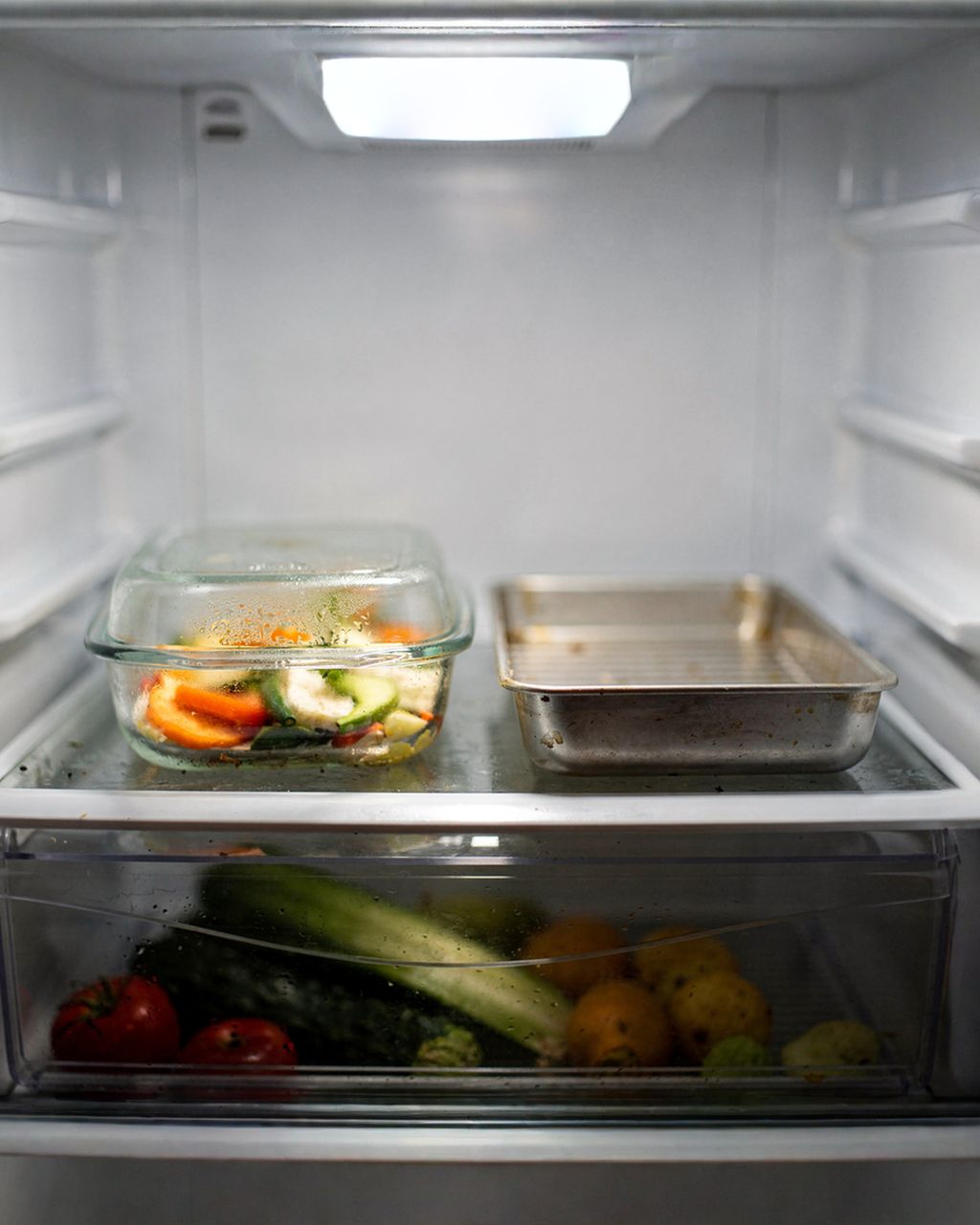
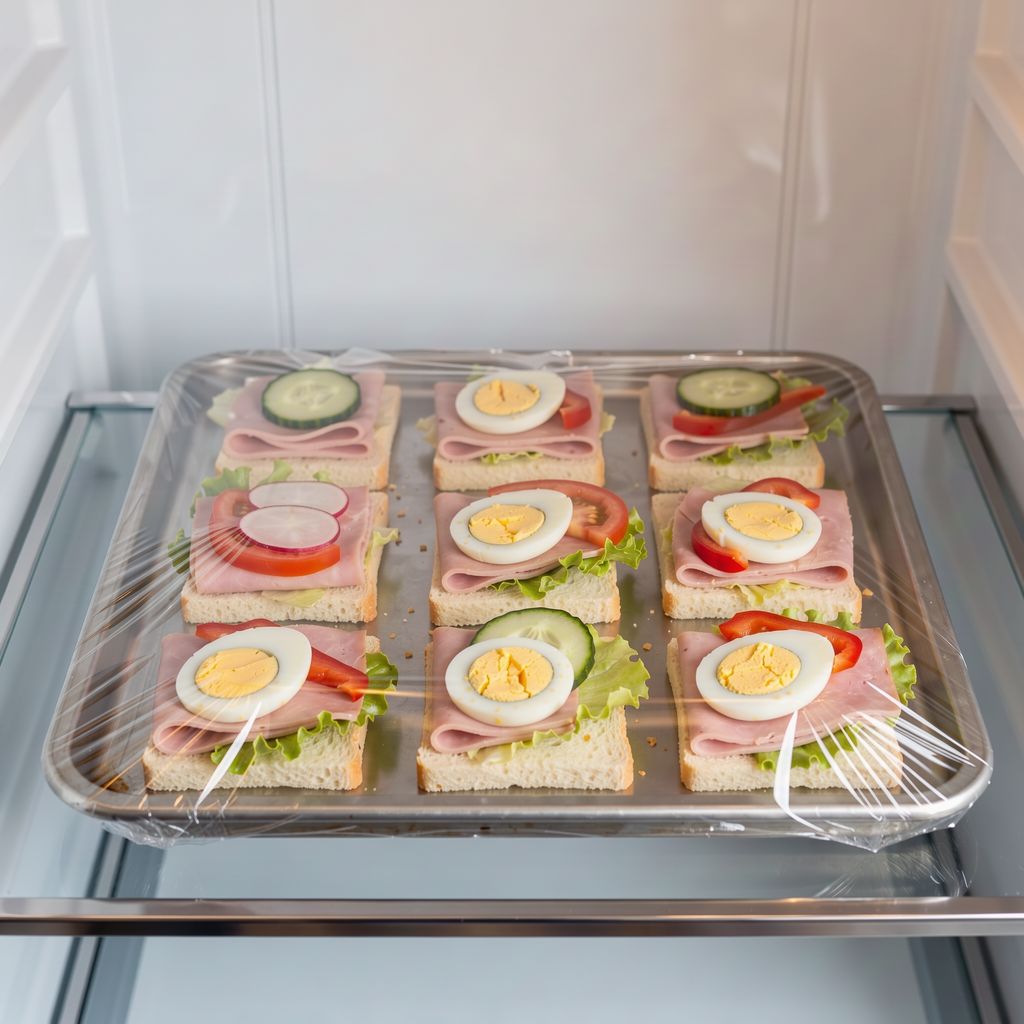
Count on about 24 hours in a fridge at or below 4°C (40°F) for chlebíčky (Czech open-faced sandwiches) and canapés (jednohubky), counted from the moment they're topped. That's the window Czech delis use for their counter chlebíčky, and we recommend the same margin for homemade ones. Out of the fridge, don't leave them longer than 2 hours, or just 1 hour in heat above 32°C (90°F) (the US USDA/FSIS rule). Past that point the question isn't whether they taste good but whether they're safe. Toss them even if they look fine. Below you'll find which toppings spoil first, how store-bought differ from homemade, and what to do with New Year's Eve leftovers.
Count on keeping topped chlebíčky and canapés in a fridge at or below 4°C (40°F) for about 24 hours. There's no official limit behind that number: it's what Czech delis usually give their counter chlebíčky, and our recommendation for homemade ones is based on that practice. Counter chlebíčky in Czech shops often carry a label saying „skladujte při 0–5 °C, spotřebujte do 24 hodin“ (store at 0–5°C / 32–41°F, use within 24 hours), while the US USDA works with 4°C (40°F), so stick to the lower figure.
Why so short, when ham keeps for several days in the fridge? Because a chlebíček is one unit, and its shelf life is set by the shortest-lived ingredient. On top of that, it gets handled while it's being sliced, decorated and served. According to the US government's chart for storing refrigerated foods (FoodSafety.gov), these keep:
egg, ham or pasta salad 3–4 days
opened sliced ham and cold cuts 3–5 days
hard-boiled eggs 1 week
But those are figures for the ingredients on their own in a sealed container. A topped chlebíček spends longer exposed to air, has been through more hands and its ingredients touch one another. That's why we count on 24 hours. If you're making them the evening before, you'll find how to store them so they neither dry out nor turn soggy in our article on making chlebíčky a day ahead.
Seasonal baking plans, tested recipes and kitchen tricks that save you time. Unsubscribe in one click.
Chlebíčky and canapés can stay out of the fridge for 2 hours at most in total, or just 1 hour if the room is above 32°C (90°F). That's the guidance of the US food safety agency USDA/FSIS. Between 4 and 60°C (40–140°F) lies what it calls the "danger zone", where bacteria multiply fastest. Their numbers can double in as little as 20 minutes.
A few things that matter in practice:
The time adds up. An hour on the table, then back in the fridge, then another hour on the table: that's your two hours used up.
A warm living room isn't a cold place. At 22–24°C (72–75°F) you're still in the danger zone. A balcony in December may be cold, but you can't control the temperature there, and a platter outside is unattended (animals, dirt).
Serve in smaller batches. Put out only as much as will be eaten in an hour and refill from the fridge. That way you don't have to remember when each chlebíček came out.
A bowl of ice helps. A tray set on a larger bowl of ice stays cold longer, which matters most for canapés with salmon or cheese.
The riskiest are mayonnaise salads, eggs, smoked salmon, ham, soft cheeses and aspic. Each is risky for a slightly different reason:
Mayonnaise salads (vlašský, egg, potato): Store-bought mayonnaise is acidic and usually isn't a problem on its own. The risk comes from the potatoes, meat and eggs mixed into it, which nobody reheats after mixing. A layer of salad on bread also warms up faster than salad in a bowl. Don't put salads made with homemade mayonnaise from raw egg yolks on chlebíčky, as they can carry salmonella. If you want homemade mayonnaise, make it with pasteurized yolks.
Hard-boiled eggs: A peeled, sliced egg is high in protein and water, which makes it ideal for bacteria. On its own it keeps a week in the fridge; on a chlebíček the same limit applies as for the whole thing. The greenish-gray ring around the yolk comes from longer cooking and says nothing about safety.
Smoked salmon: Cold-smoked salmon isn't cooked, which is why the US FDA lists it among the foods with a listeria risk. Listeria multiplies even in the fridge. The date on the package applies only to an unopened pack. Once opened, use it according to the „po otevření spotřebujte do…“ (use within… after opening) instruction on the label, usually within 1–2 days of opening. Topping doesn't extend the salmon's shelf life: eat the chlebíček within 24 hours of topping and within the salmon's after-opening window, whichever comes first. How to prepare canapés with salmon and other toppings ahead of time is covered in our article on New Year's Eve canapés and making them ahead.
Ham and cold cuts: According to FoodSafety.gov, opened sliced ham keeps 3–5 days, but ham sliced at the deli counter tends to keep for less. If a slice is darkening at the edge, feels sticky or smells sour, it doesn't belong on a chlebíček anymore.
Soft cheeses (brie, camembert, niva blue cheese, fresh cheeses from unpasteurized milk): They're on the same listeria-risk list as salmon. For chlebíčky, choose ones made from pasteurized milk and be stricter with them on the table. For pregnant women, brie, camembert and niva aren't suitable, even when made from pasteurized milk, unless they're cooked.
Aspic: Aspic starts to soften at around 27°C (81°F) and melts at about 35°C (95°F); in a warm room near the oven or candles, that isn't far off. Aspic protects the topping only from drying out, not from bacteria: gelatin is made of protein and water, and bacteria multiply in it just as well as in the ham or egg beneath. Put chlebíčky with aspic out last and return them to the fridge first.
For store-bought chlebíčky, go by the date on the package („spotřebujte do“, use by); for homemade ones, count on 24 hours from topping. Store-bought chlebíčky are made in a chilled facility and the manufacturer has verified the date. But that holds only if they stayed cold the whole time. If the trip from the shop, the car and the hallway took you an hour, that's the first hour of your two.
Store-bought: Carry them home in a cooler bag, put them in the fridge right away and treat the „spotřebujte do“ date as a ceiling. The date applies only to an unopened pack stored as directed.
Homemade: They have no label, so keep track of the time yourself. It helps to write the hour you topped them on the plastic wrap. Be as strict about cleanliness as a food producer: clean hands or gloves, one clean cutting board for ham and another for vegetables.
Deli-counter ones: These are usually meant to be eaten within 24 hours. If you're not sure, ask in the shop when they were made.
A chlebíček that went soggy in the fridge is a flavor problem. One that sat on the table all night is a safety problem. Don't mix the two up.
A soggy roll or dried-out edge after a night in the fridge means that water from the salad moved into the bread or that the chlebíček wasn't covered properly. It's unpleasant but safe, as long as it stayed cold and didn't pass 24 hours.
A chlebíček left out overnight can look and smell completely normal. The bacteria that multiply in warmth often change neither appearance nor smell. On top of that, some of them, such as Staphylococcus aureus, produce toxins that, according to the USDA, aren't destroyed even by heating. That's why neither returning it to the fridge nor baking it in the oven fixes anything.
A bad smell, a sour taste or a slimy surface warns you that it's too late. But their absence doesn't mean everything is fine. Here, time and temperature decide safety, not appearance.
Leftover chlebíčky and canapés from New Year's Eve can be eaten only if they went back in the fridge within 2 hours of being put out. Then eat them on New Year's Day, at the latest 24 hours after topping. Throw out all the chlebíčky that sat on the table from the evening until morning, even if it feels like a waste.
Make a plan in advance: Keep just one tray on the table and the rest in the fridge. Swap the tray on the table for a fresh one after 2 hours at the latest; throw out whatever sat out longer. Around midnight, when everyone heads outside for the fireworks anyway, is a good time to clear the table.
Sort out what can still be saved: Untopped components that stayed in the fridge the whole time (salad in a bowl, sliced ham in a container) follow their own shelf lives, not the chlebíčky's.
Don't freeze: Topped chlebíčky don't survive freezing. The salad separates, the vegetables turn watery and the eggs go rubbery. Only the bread on its own can be frozen.
Make less next time: If half is left over, it's more a matter of planning. We've worked out how to estimate amounts in our article on how many chlebíčky and canapés per person. You'll find more ideas for cold party food in the party appetizers section.
You can make canapés in the morning for an evening party if you cover them right away, keep them in the fridge at 4°C (40°F) or below and eat them within 24 hours of assembly. They taste better, though, if you only prep the components in the morning (slice the cheese and cold cuts, boil the eggs, mix the spread) and assemble them an hour or two before the guests arrive, so the bread doesn't go soggy and the toppings don't dry out.
Don't leave chlebíčky out on the balcony overnight, even covered with plastic wrap. You can't control the temperature there: it may climb above 4°C (40°F) during the night, or frost may spoil them. Only the fridge is safe.
You can put chlebíčky from the fridge back on the table the next day only if their total time out of the fridge across both days stays within 2 hours and no more than 24 hours have passed since they were topped. Time on the table adds up, so chlebíčky that already sat out for two hours the first evening don't belong on the table the next day.
Chlebíčky with cold-smoked salmon aren't recommended for pregnant women, because the US FDA lists it among the foods with a listeria risk unless it's cooked. For pregnancy, choose toppings without salmon, mold-ripened and soft cheeses (brie, camembert, niva blue cheese – even when made from pasteurized milk) and deli-counter cold cuts.
Don't eat store-bought chlebíčky after the „spotřebujte do“ (use-by) date. For chilled deli items it's a safety limit, not a guideline like a „minimální trvanlivost“ (best-before) date. Once it has passed, throw them out.
One recipe worth heating the oven for, one tip, and one deal from the shop. Nothing else.