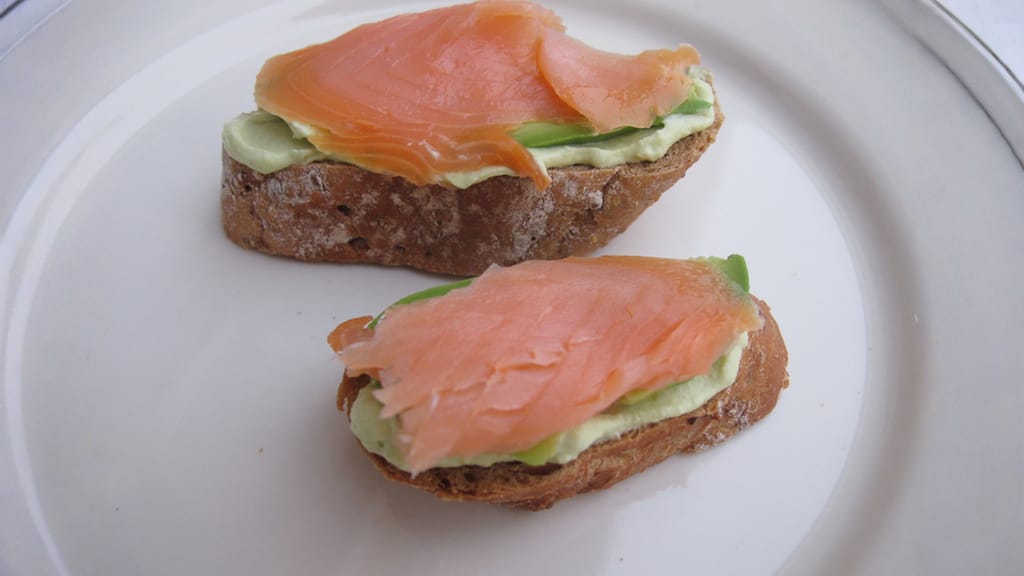
Avocado canapés with smoked salmon
Bread for Chlebíčky and Canapés: Veka, Baguette, Sandwich Bread or Loaf Bread – and How to Slice It
Updated Nov 16, 2026
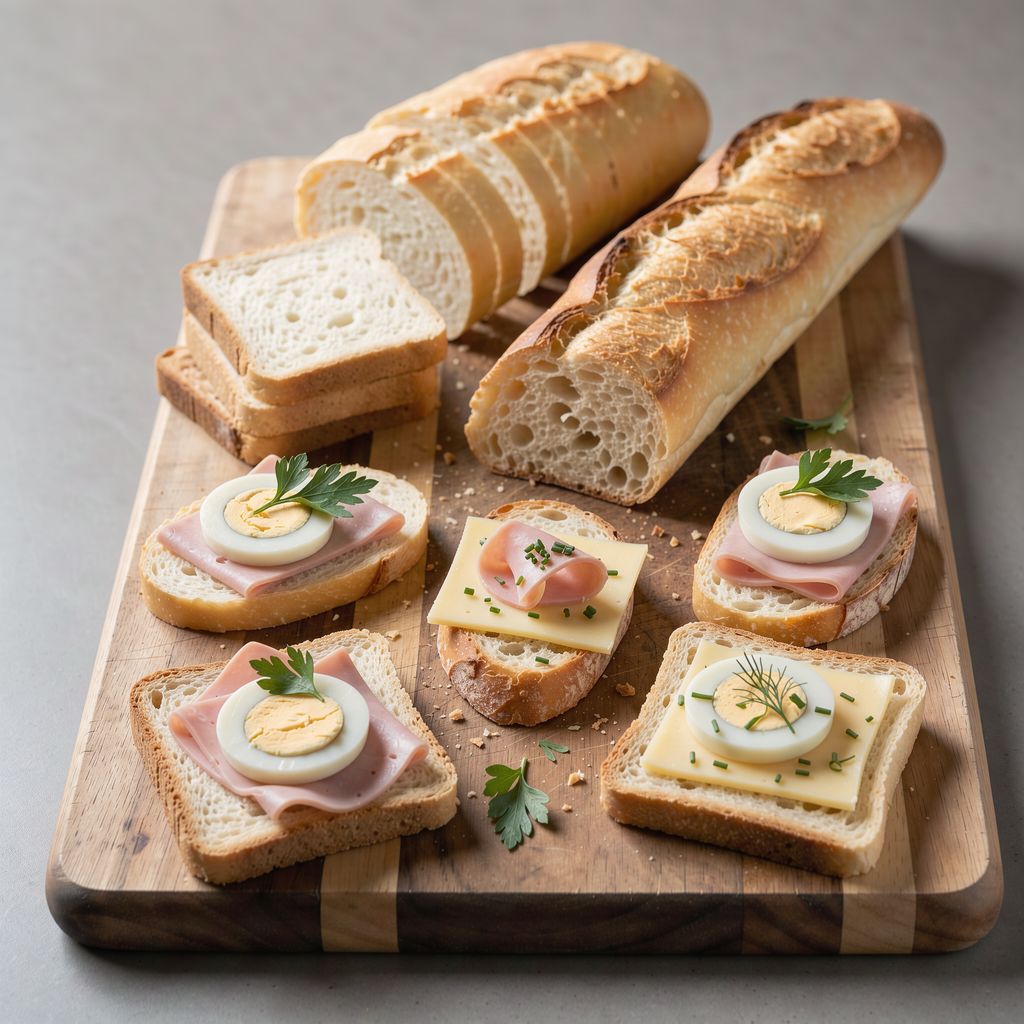
Choose the bread for chlebíčky (Czech open-faced sandwiches) and jednohubky (Czech one-bite canapés) by what's going on top. For classic chlebíčky with a spread, veka (a Czech white loaf) sliced 10–12 mm thick works best; for canapés, baguette at 8–10 mm or rohlík (a Czech white roll) at 10–15 mm; for moister toppings, toasted sandwich bread; and for smoked fish and strong cheeses, rye bread or pumpernickel in thin slices. A thicker slice holds more, but you end up eating a sandwich; a thinner one sags quickly under a moist spread. Below you'll find a breakdown by type of bread, how many pieces one veka or baguette gives you, when to toast, and why the base turns soggy.
Eight bases work for chlebíčky and canapés: veka, baguette, sandwich bread, whole-grain or rye bread, pumpernickel, rohlík, crackers and gluten-free bread. Each one holds up to something different – here's a quick overview of what goes with what and how thick to slice it.
Veka – the classic chlebíček base. It has a fine, dense crumb without big holes, so the spread doesn't seep through. Slice it 10–12 mm thick, on the diagonal. It holds potato salad, vlašský salát (Czech mayonnaise-based vegetable salad), ham and egg, and cheese spreads.
Baguette – for canapés and smaller chlebíčky. Crisp crust, airier crumb. Slice it 8–10 mm, at a slight angle. It holds thicker spreads, cheeses, ham and smoked salmon best; runnier salads run off it.
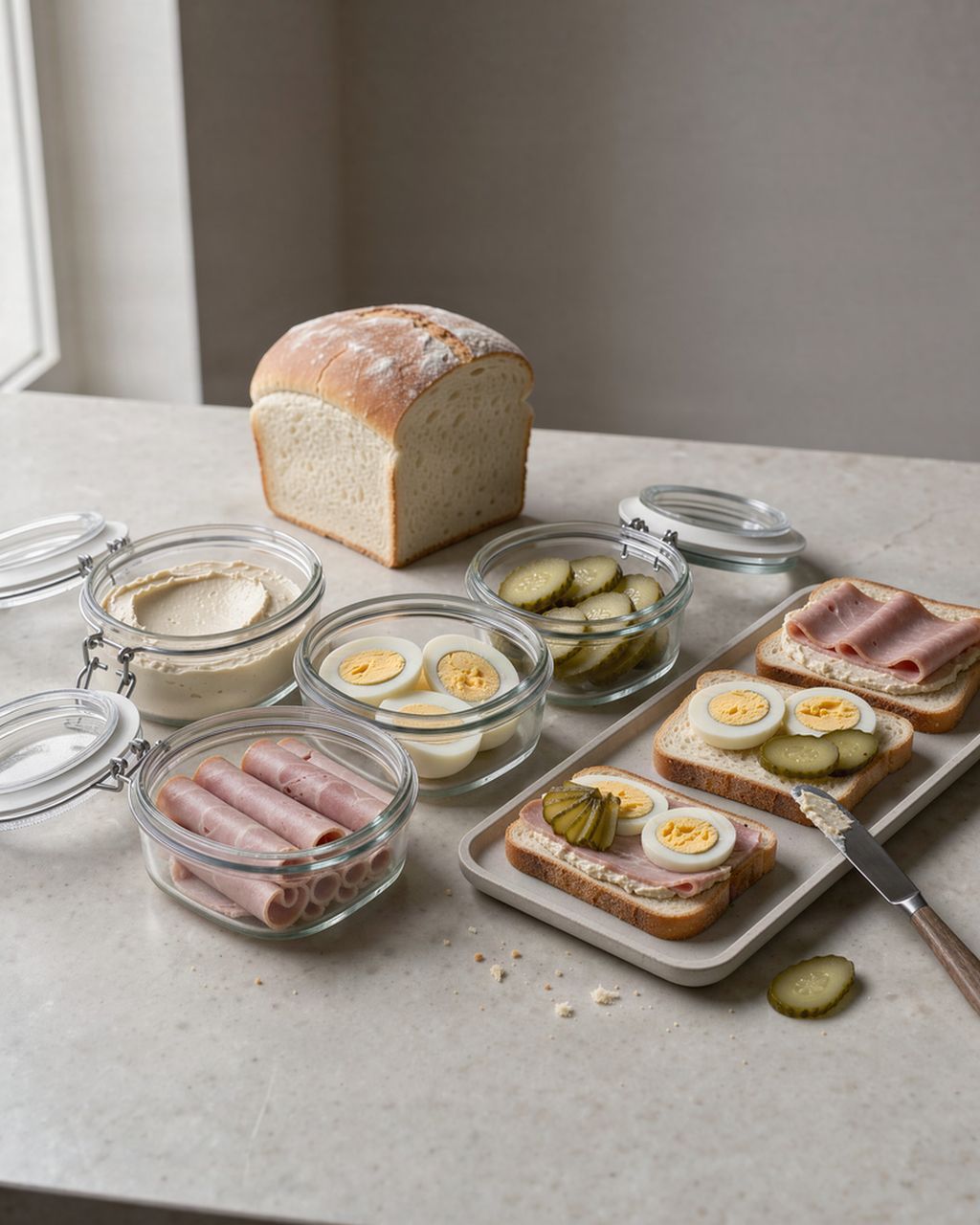
Sandwich bread – the softest, most even base. The slices come about 10–12 mm thick from the bakery, so there's no slicing: just trim off the crusts and cut into squares, triangles or rounds. Fresh, it turns soggy quickly, so toast it under moister toppings.
Whole-grain or rye bread – for chlebíčky made with bread and a stronger flavor: quark (tvaroh, a Czech fresh curd cheese) and egg spreads, smoked meat, pickled vegetables. Slice it 8–10 mm; dense sourdough bread can handle an even thinner slice. Spread the topping right out to the edge over any big holes in sourdough bread, or the topping will leak through them.
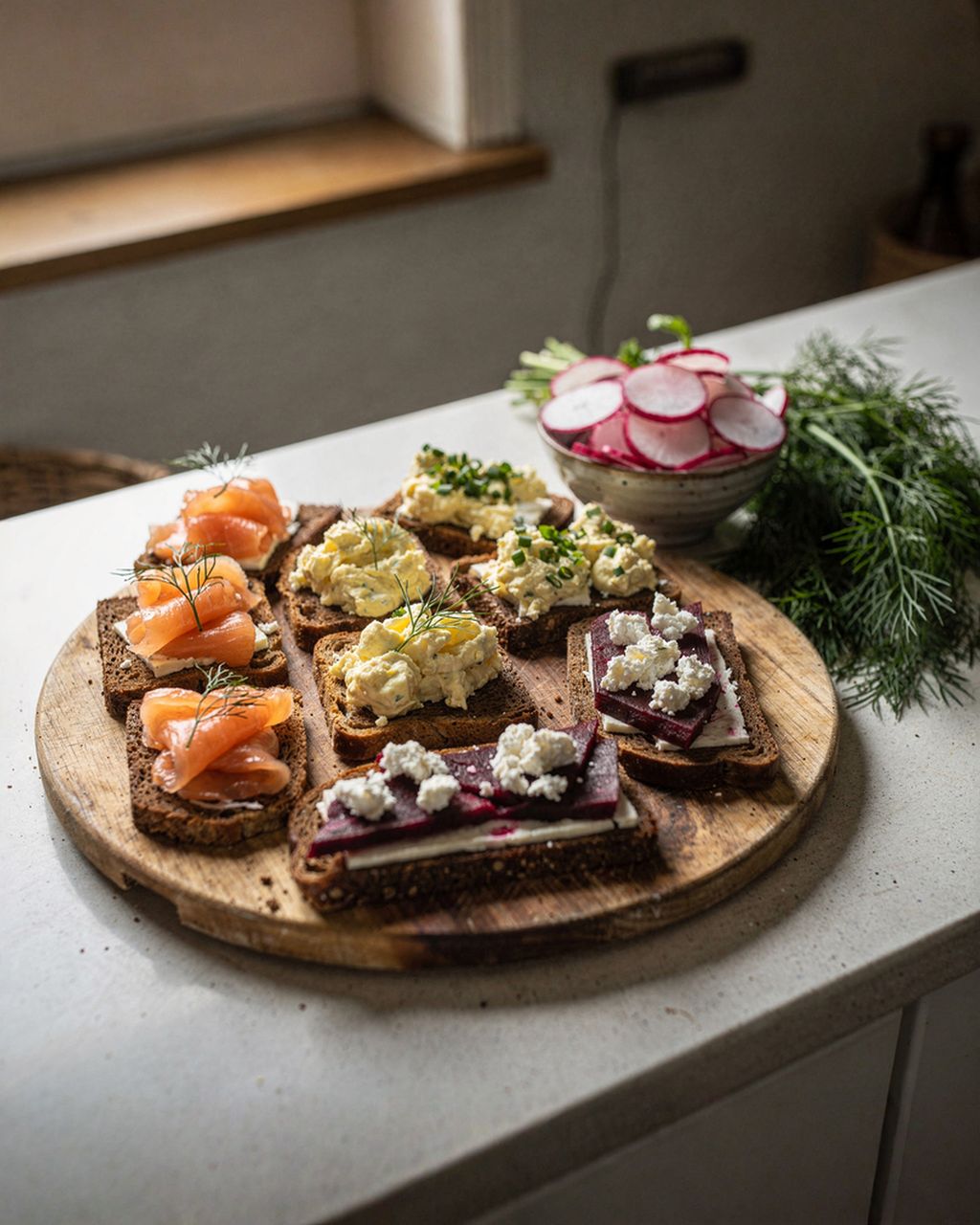
Pumpernickel – dark, dense, slightly sweet rye bread, sold already sliced thin. Ideal under smoked fish, horseradish, onion and spicy cheeses. It's so dense that it hardly goes soggy.
Rohlík – the quickest base for canapés. Cut it into rounds 10–15 mm thick so they don't fall apart. It suits a thick spread with a small decorative piece on top.
Crackers – a crisp base with no slicing. They have to go to the table right away, because they soften fastest of all in contact with moisture; top them with a thick topping applied just before serving.
Gluten-free bread – for guests with celiac disease, use only products labeled “gluten-free” (under Implementing Regulation (EU) No 828/2014 they may contain at most 20 mg of gluten per kilogram), ideally with the crossed-grain symbol. Always ask a guest with celiac disease what they can safely eat. Gluten-free bread tends to crumble, so slice it thicker, 12–15 mm, and toast it briefly.
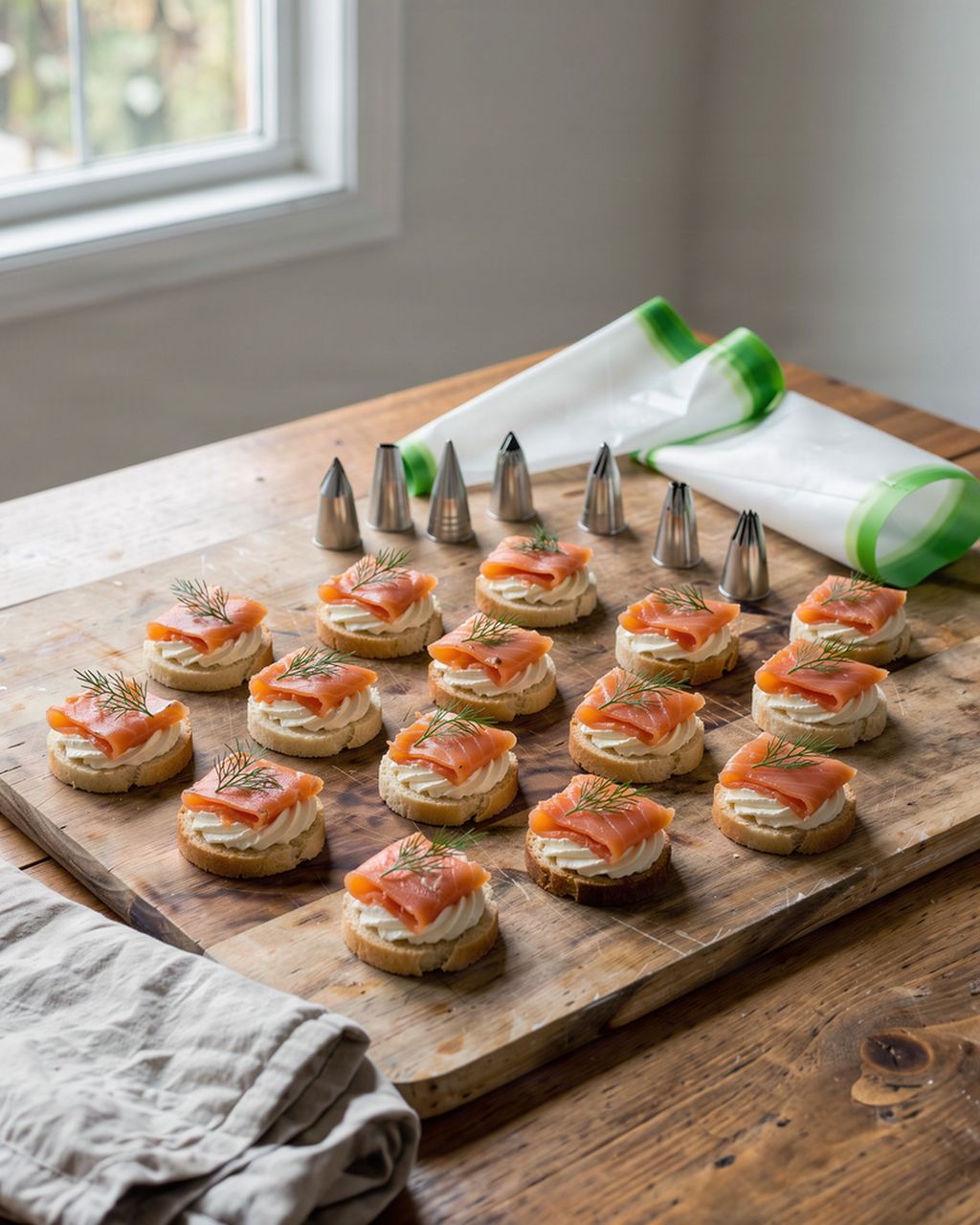
Smoked salmon goes best on pumpernickel, rye bread or toasted baguette – dense, dark bread balances its richness and saltiness, while toasted baguette adds the crunch that soft salmon lacks. Spread a thin layer of butter or cream cheese with horseradish under the salmon, and add a squeeze of lemon only just before serving so the fish doesn't turn gray. Don't serve cold-smoked salmon to pregnant women, seniors or people with weakened immunity: according to EFSA, it is among the foods with the highest risk of listeriosis. You'll find a ready-made combination in the recipe avocado canapés with smoked salmon.
Avocado canapés with smoked salmon
Avocado canapés with smoked salmon
Bread is gluten-free only if the package carries the “gluten-free” label – the package decides, not the type of bread. None of the usual bases for chlebíčky is gluten-free on its own:
Veka, baguette, rohlík, sandwich bread – made from wheat, so they contain gluten.
Rye and whole-grain bread, pumpernickel – wheat, rye and spelt all contain gluten, and the dark color of the bread changes nothing about that.
Crackers – most are made from wheat flour. Even crackers made from rice, corn or legume flour can be cross-contaminated during production, so for a guest with celiac disease use only those labeled “gluten-free”.
Gluten-free bread – only with the “gluten-free” label on the package.
Prepare the gluten-free chlebíčky first, on a clean board and with a clean knife, and keep them on a separate platter. A few crumbs of baguette on gluten-free bread are enough to make the whole piece no longer gluten-free. Always ask a guest with celiac disease in advance what they can safely eat – they know best what to watch out for.
Seasonal baking plans, tested recipes and kitchen tricks that save you time. Unsubscribe in one click.
Slice veka with a sharp serrated knife on the diagonal, at a slight angle, into slices 10–12 mm thick – a diagonal cut gives a longer, oval chlebíček with more surface for the topping. Don't press the knife down; just saw it back and forth. Pressure squashes the crumb and leaves the slice thinner at the crust than in the middle.
Day-old veka slices better than one fresh from the oven – the crumb firms up a little and doesn't squash. That's why you should buy it a day ahead; what else you can get done a day in advance is covered in the article chlebíčky a day ahead.
Cut off the ends and save them for breadcrumbs or croutons; they don't belong on the platter.
Baguette for canapés should be sliced 8–10 mm thick, either straight into rounds or at a slight angle into smaller ovals. Thinner than 8 mm sags under the spread; thicker than 12 mm can't be eaten in one bite.
Slice on the day you serve, ideally a few hours ahead. Keep the cut slices under a kitchen towel or in a bag; in the open air they dry out in under an hour.
If you want to bake baguette at home, follow Maškrtnice's homemade baguettes – for canapés, let it rest for a day so it slices into thin rounds.
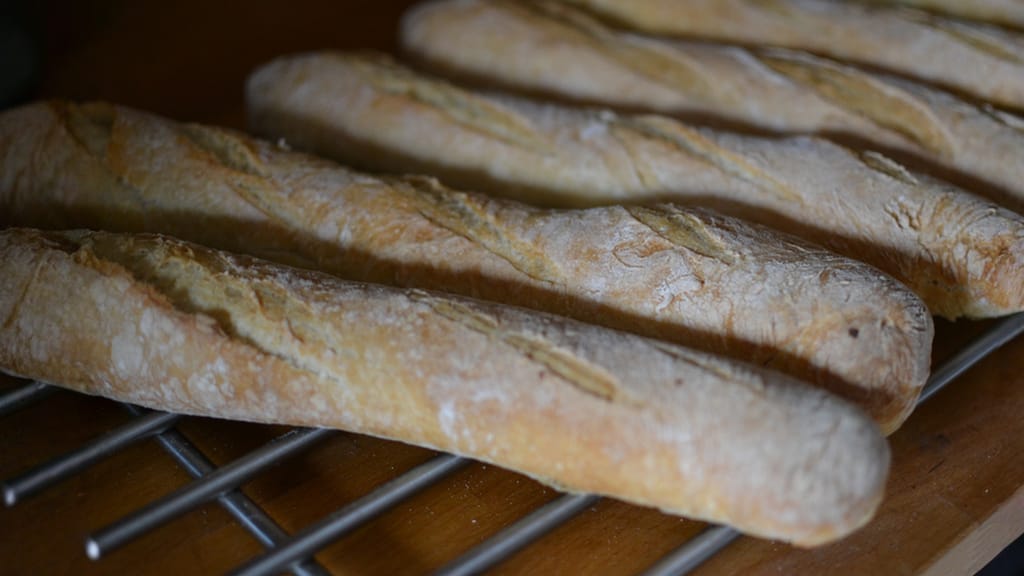
The best baguettes, according to a baking fanatic
Maškrtnice's homemade baguettes for canapés
You don't slice sandwich bread; you just trim off the crusts and cut each slice into 2–4 pieces. Slice loaf bread 8–10 mm thick and cut the large slice in half or into quarters. With sandwich bread it goes like this:
Trim the crusts all the way around with a sharp knife, or the chlebíček tears when you bite into it.
One slice makes 2 rectangular chlebíčky, 4 small squares or 4 triangles for canapés, or 4 rounds cut with a cutter about 4 cm in diameter.
Canapés from sandwich bread should go on a toasted base – fresh bread under a spread turns to mush within an hour.
Chlebíčky made with loaf bread (an everyday, rye or sourdough loaf) suit a more rustic platter. Slice a large slice 8–10 mm thick and then cut it in half or into quarters – one slice from a loaf gives you 3–4 chlebíčky or 6–8 canapés. Leave the crust on; it holds the shape. If you want your own bread, homemade bread will do – slice it the day after baking for chlebíčky, because fresh bread crumbles.
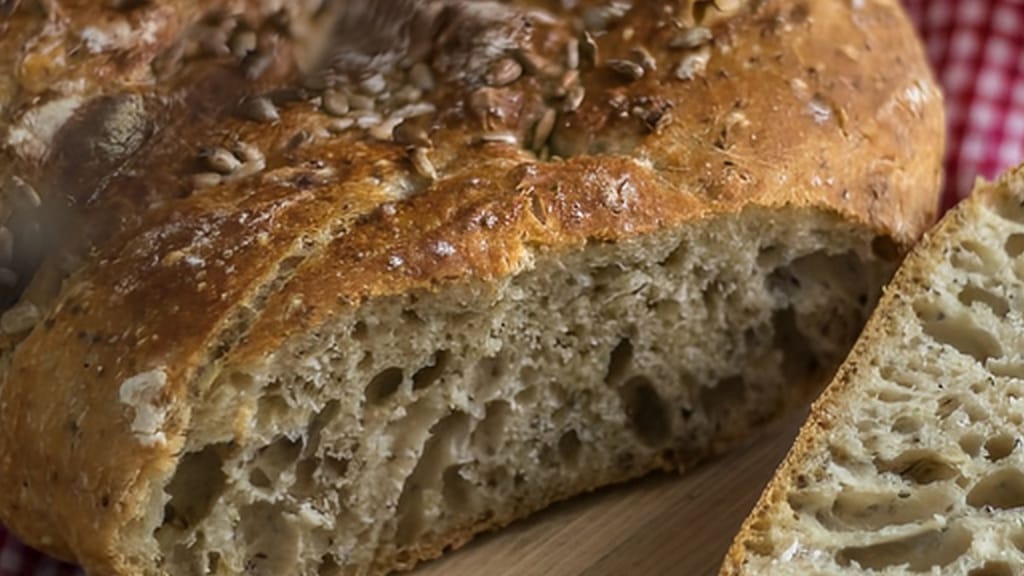
Homemade bread
Homemade bread for chlebíčky
One standard 400 g veka makes 20–25 chlebíčky and a baguette makes 35–70 canapés, depending on its length. The numbers apply to the thicknesses above, with the ends cut off:
Veka (standard 400 g), slices 10–12 mm, on the diagonal at a slight angle: 20–25 chlebíčky.
Baguette (40–60 cm depending on the type), rounds 8–10 mm: 35–70 canapés – about 35–45 from a short baguette around 40 cm, about 55–70 from a long French one around 60 cm.
Sandwich bread, 1 slice: 2 chlebíčky or 4 canapés.
Pumpernickel, 1 slice: 4 canapés (cut into quarters).
Loaf bread, 1 large slice: 3–4 chlebíčky or 6–8 canapés.
To work out how many you need for a party by number of guests and type of event, see the article how many chlebíčky and canapés per person.
A classic veka chlebíček isn't toasted – the soft, tender crumb under the spread is the whole point. Toasting is worth it for sandwich bread, for baguette under moister toppings, and for gluten-free bread.
When to toast: sandwich bread under canapés, baguette under tomatoes or mozzarella, anything that will sit on the table for more than an hour.
How: in the oven at 180°C (350°F) for 6–8 minutes, on a baking sheet in a single layer, turned once halfway. You can brush the baguette lightly with oil beforehand. The slice should be dry and firm on the surface but not hard as a rusk – otherwise it snaps when you bite and the topping slides off.
In a skillet, dry, 1–2 minutes per side, when you're making only a few pieces.
Always let it cool on a rack. A warm slice steams under the spread and goes soft faster than if you hadn't toasted it at all.
A toasted base stays crisp longer, but not forever: under a moist topping it softens within a few hours too. That's why even toasted canapés should be topped only on the day you serve them.
Chlebíčky go soggy because water from the topping seeps into the dry crumb – the bread soaks it up like a sponge. The biggest water-releasers are cucumber, tomato, pickled vegetables, runny salads, and spreads made with yogurt or quark.
A fat barrier: spread the bread with a thin layer of softened butter all the way to the edge (mayonnaise works too, but makes a weaker barrier). An unbroken layer of fat keeps the water out, and the moister ingredients then sit on it rather than directly on the bread. Quark, egg and yogurt spreads don't make such a barrier – they contain a lot of water themselves, so spread butter under them separately.
A thick spread: the runnier it is, the faster it soaks into the bread. The consistency to aim for and the ratios to mix are covered in the article spreads for chlebíčky: ratios and consistency.
Dry the vegetables: lay cucumber and tomato slices on a paper towel for a few minutes, and scoop the seeds out of the tomatoes.
Drain the salads: let potato salad or vlašský salát drain before you spread it, so no liquid is left at the bottom of the bowl.
Moist ingredients on top, not underneath: tomato goes on the ham or cheese, not directly on the bread.
The right bread for the topping: a runnier salad on a dense veka, never on an airy baguette or a cracker.
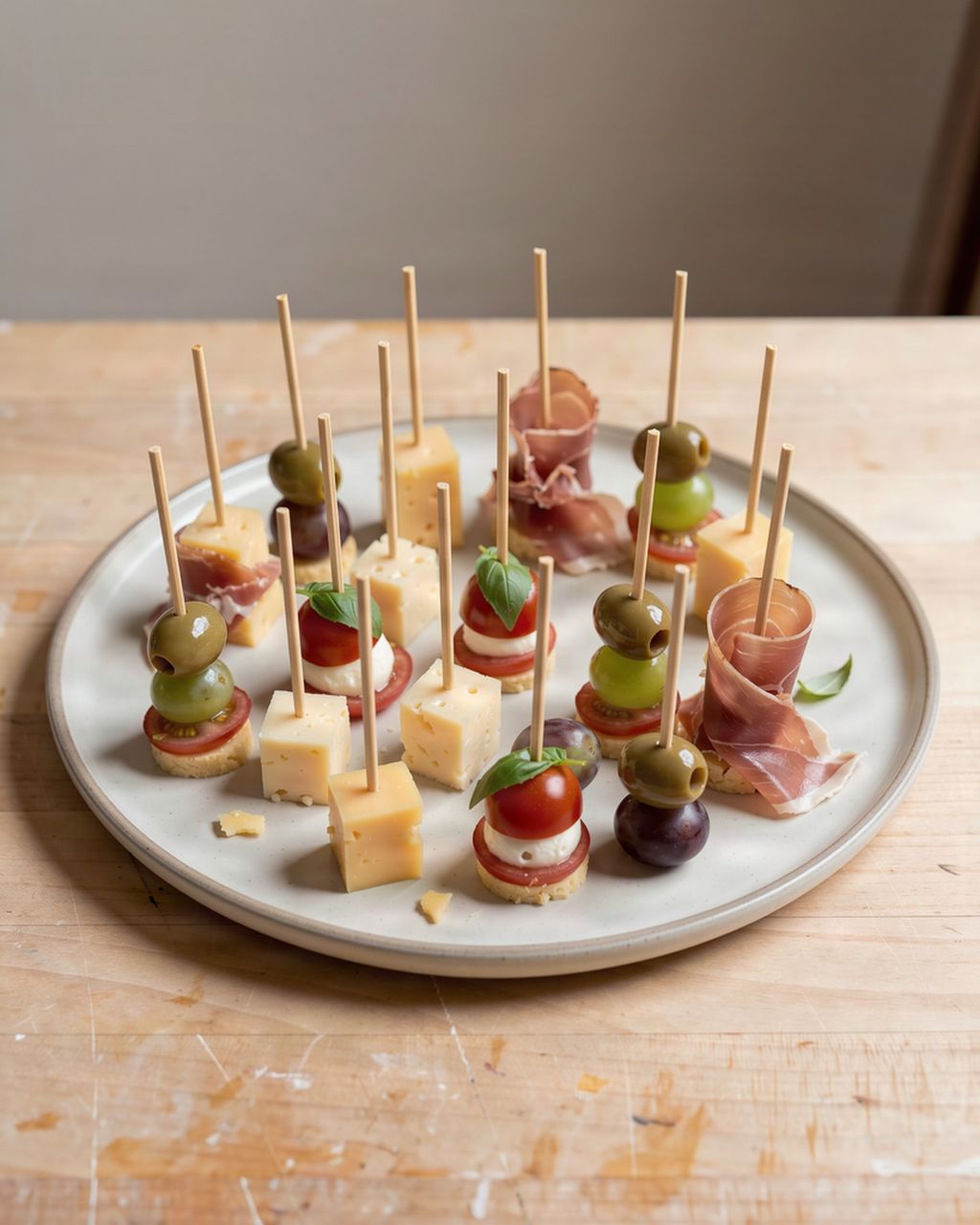
You can make canapés without rohlík on cucumber or zucchini rounds, egg halves, cherry tomatoes, slices of roasted pumpkin or squash, or chicory leaves – or with no base at all, on a toothpick or in a small glass.
Cucumber sliced 8–10 mm thick, patted dry, with a thick cheese or fish spread.
Zucchini sliced 8–10 mm thick, raw or briefly browned in a dry skillet; pat it dry with a paper towel before topping.
Hard-boiled egg halves – cut a thin slice of white off the underside so the half stands on the platter and doesn't roll. You can scoop out the yolk, mix it into the spread and put it back.
Cherry tomatoes – cut off the top, scoop out the seeds and let them drain briefly upside down on a paper towel, then fill with a thick spread.
Roasted pumpkin or squash in slices or rounds 8–10 mm thick, roasted until tender but still holding its shape; top it only once it has cooled.
Chicory or romaine lettuce leaves as little lettuce boats.
On a toothpick or skewer – cheese, ham, olives, cherry tomatoes and grapes, which hold together without any bread.
In a small glass or cup – nothing goes soggy, because there's no bread.
On a platter, these variations also suit guests who don't eat bread. For a guest with celiac disease, though, prepare them separately and serve them on their own platter, because spreads, cold cuts and breaded cheese balls can contain gluten, and crumbs from a shared platter are enough. For specific party ideas see the article New Year's Eve canapés, and for more inspiration browse the category canapés and appetizers.
Yes, you can freeze a whole veka or baguette and let it thaw wrapped in a bag at room temperature, about 2–3 hours. Freezing sliced bread isn't worth it: it sweats as it thaws and the edges dry out. A half-thawed veka, though, slices very neatly into thin, even slices.
The closest substitute for veka is a wider white baguette or sandwich bread with the crusts removed. Slice the baguette on the diagonal at 10 mm and top it with thicker spreads; toast the sandwich bread briefly if you're using moister salads.
Top chlebíčky and canapés only on the day you serve them – even a toasted base goes soft within a few hours under a moist topping. You can buy the veka a day ahead and prepare the other components; our article on making chlebíčky a day ahead covers everything you can get done in advance.
Toast stale slices of veka or baguette in the oven at 180°C (350°F) until crisp and use them as croutons for soup or as a base for canapés with a thick spread. Dry out the ends of the veka and grind them into breadcrumbs.
One recipe worth heating the oven for, one tip, and one deal from the shop. Nothing else.