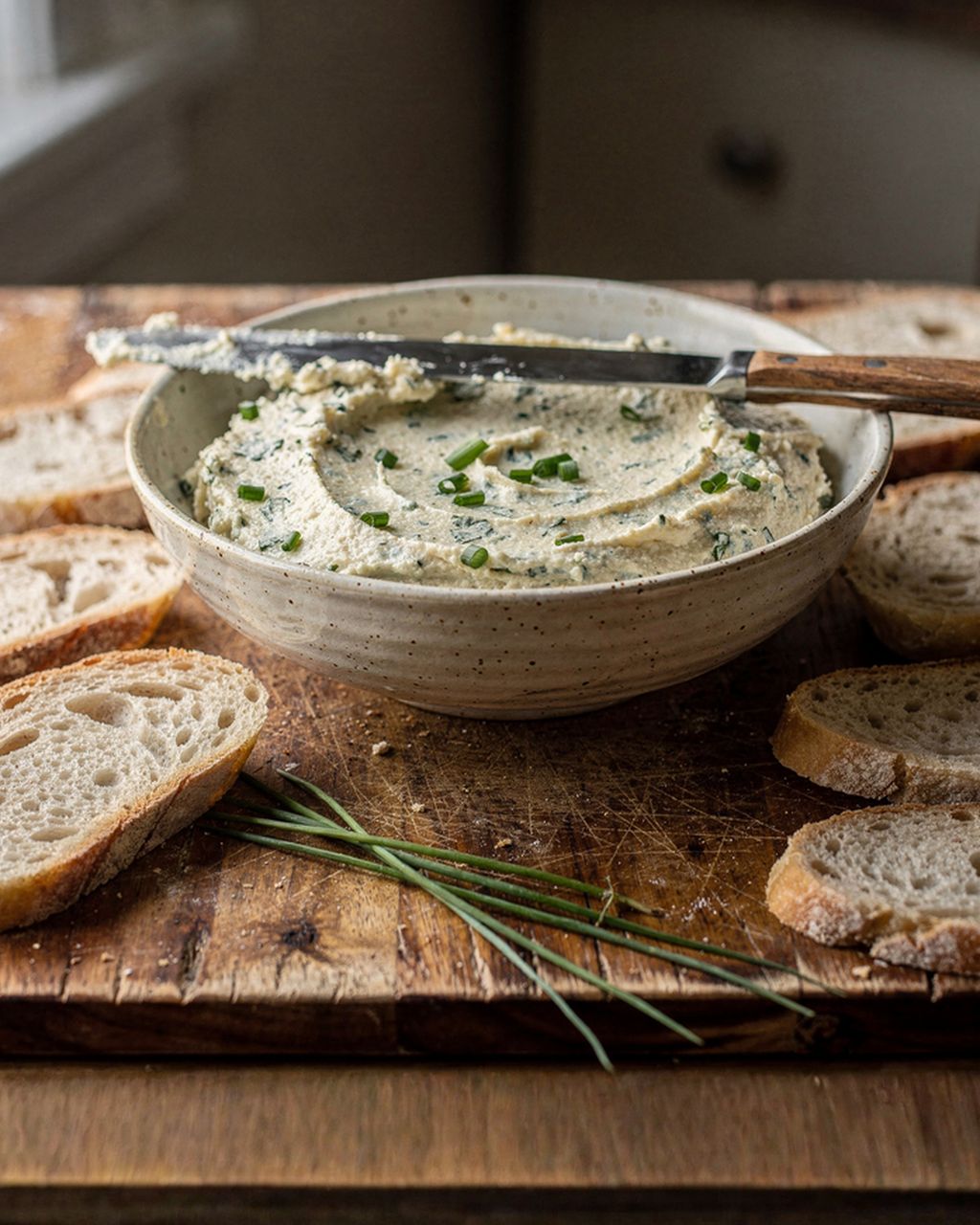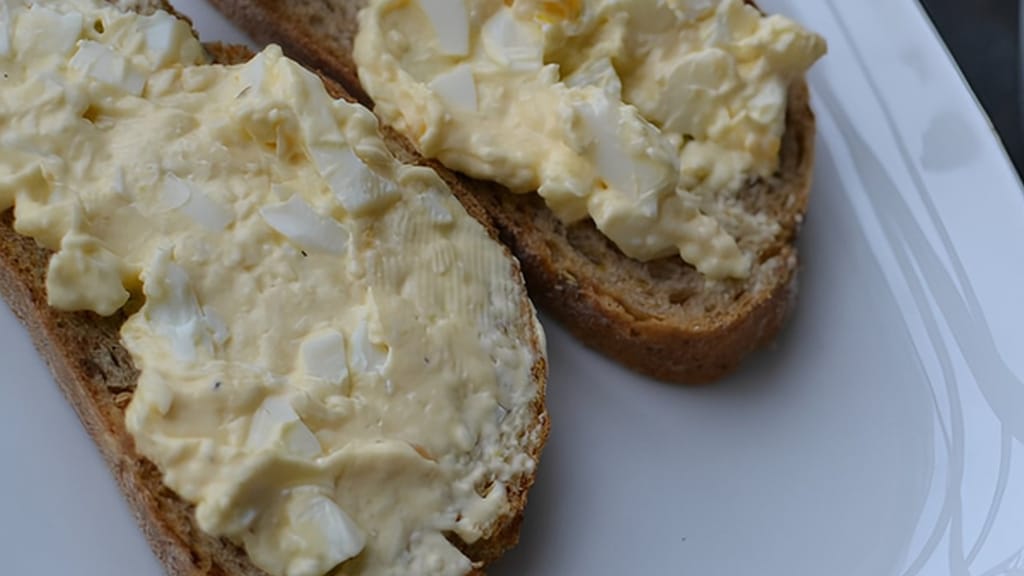
Egg spread – easy and unbelievably good
Egg Spread: How to Make It So It's Not Runny
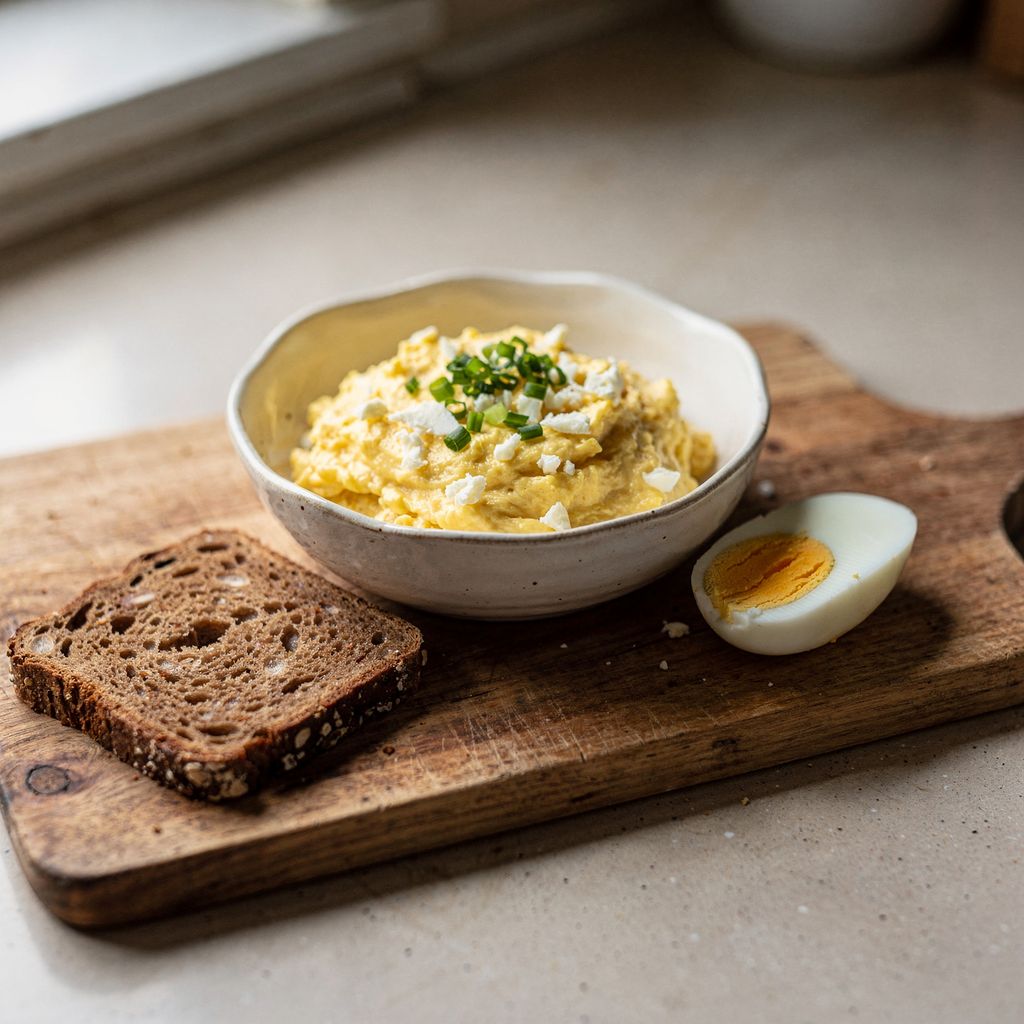
Updated Sep 18, 2026
Egg spread turns runny for pretty much four reasons: you blend it instead of chopping it, you mix in eggs that are still warm, you use more fat than the eggs can carry, and you salt it too early. Fix all four and you get a spread that holds its shape on a knife, where you can actually tell the white from the yolk, and that hasn't gone watery two hours later in the fridge. Here's the right ratio, the right texture, the method — and four ways to rescue a batch that's already turned soupy in the bowl.
Egg spread goes runny for four reasons: blending instead of chopping, warm eggs, too much soft fat, and salt added too early. Almost always it's a combination of all of them:
A blender or stick blender. It purées the egg white into a fine paste, and the yolk merges with the fat into one uniform emulsion. You lose everything that makes an egg spread an egg spread, and you're left with a smooth, sticky paste.
Warm eggs. Butter softens fast above 20–25°C and starts melting at 32–35°C, and mayonnaise breaks down in the warmth too. The spread then looks loose and won't firm back up even in the fridge.
Too much soft fat.Fresh cream cheeses and curd cheeses, along with traditional dairy spreads (the old-style 'spreadable butter'), are often over 50% water. Add a lot of them and you're mostly adding water, not body.
Salt added too soon. Osmosis pulls water out of both the egg white and chopped onion. Leave it an hour in the fridge and you'll find a puddle at the bottom of the bowl and a spread that slides around.
All four are fixable without buying a single extra ingredient. You just need to change the order of steps and the temperature.
For 6 large hard-boiled eggs (about 350g without shells), use 110–130g of fat — that works out to roughly 3 parts egg to 1 part base. Go below that ratio and the spread turns dry; go above it and it starts to run.
What to use as the base, and what it does to the spread:
Mayonnaise with at least 70% fat (110g) — holds together best, at only around 20% water. The safest bet if you want the spread to survive a whole evening on canapés.
Firm curd cheese (120g) — the thickest option of all, and gratable. Add 1 tablespoon of mayonnaise or cream to it, or the spread will turn crumbly.
10% Greek yogurt (80g) + mayonnaise (40g) — a lighter, tangier version. Don't use yogurt on its own; it holds too much water.
Traditional dairy spread (110g) — once sold as 'spreadable butter', now labelled as a dairy spread with 31–36% milk fat. Mild flavour, but the highest water content: cut it to 90g and make up the difference with an extra grated egg.
Softened butter (110g) — best for canapés, since it firms up enough in the fridge to slice cleanly. It has to be beaten with cooled eggs, though, or it will turn runny.
6 eggs plus 110g of base gives you about 460g of spread — roughly 15 canapés at 30g each, or 8 generously topped slices of bread.
Boil them for 10 minutes in boiling water, then move them straight into an ice bath. Ten minutes gives you a yolk that's firm but still slightly soft — exactly the texture that binds the spread together without turning crumbly.
Take the eggs out of the fridge 10 minutes beforehand, bring the water to a boil, and lower the eggs in with a spoon. Eggs going straight from the fridge into boiling water tend to crack, while starting them in cold water stretches the cooking time out too much and overcooks the yolk.
Turn the heat down to a gentle simmer (just a lazy bubble) and time it for 10 minutes. At 12 minutes or more, a grey-green ring of iron sulphide starts forming around the yolk — it's harmless, but the yolk next to it tastes sulphurous and turns mealy.
Lift the eggs into a bowl of water and ice and leave them there for at least 10 minutes. This stops the cooking and shrinks the white away from the shell, so they peel more easily.
Once peeled, put the eggs back in the fridge for another 20 minutes. Egg spread needs the eggs cold, not lukewarm — it's the one step most people skip, and then wonder why the spread's gone wrong.
Eggs that are 5–7 days old peel noticeably more easily than very fresh ones. If you're using your own eggs or ones from a farm, let them sit for a few days first.
Grate on the coarse side of the grater (around 4mm), or chop with a knife. Never blend. This one choice affects the final texture more than anything else.
The reason is simple: cooked egg white is a firm protein network that holds its shape. A knife or grater breaks it into pieces that stay as separate particles within the spread — those pieces are what give it that 'body' that doesn't collapse into mush. A blender smashes it into microscopic fragments that disappear into the fat, and the yolk turns into an emulsifier that binds everything into one paste. Over-blending is the single most common reason egg spread ends up as a sticky purée.
The method that works best in practice:
Coarsely grate the whites or chop them into roughly 5mm cubes.
Mash the yolks with a fork straight into the fat — this makes a cream that binds everything together.
Only then fold in the whites and mix just until they're coated. Ten folds with a spatula, not a proper mixing or whisking.
An egg slicer or a fork for mashing aren't bad choices, they just squash the white more than a knife does. If you prefer using them, go easy on the pressure — the goal is to break it up, not crush it.
The fastest fix for a spread that's gone soupy is one more hard-boiled egg and two hours in the fridge. Work through these in order:
Grate in another 1–2 hard-boiled eggs. The single best fix there is — it adds body without diluting the flavour. For a 6-egg batch, one extra egg is usually enough.
Add 30–50g of grated firm curd cheese. It soaks up loose water and adds body while keeping the flavour neutral.
Chill it in the fridge for 2 hours. If the base is butter or mayonnaise, the fat firms up in the cold and the spread pulls itself back together. There's no point judging it before at least 30 minutes have passed.
Drain off the water. If a puddle forms at the bottom, tip the spread into a fine sieve over a bowl for a few minutes, or blot it gently with a paper towel.
Don't add starch to a cold spread. It's sometimes suggested, but neither cornflour nor potato starch will thicken anything without being heated first — it just sits as a powdery coating on your tongue, and the spread ends up tasting raw. The same goes for breadcrumbs: they'll add bulk but kill the flavour.
The backbone of the flavour is mustard, acidity, and salt added right at the end. Eggs are pretty bland on their own, but it's easy to oversalt them — so season a little at a time, and taste it cold, since cold dulls flavour.
Wholegrain or regular mustard, 1 teaspoon per 6 eggs — does two jobs at once: adds acidity and helps the emulsion hold together, so the spread is less likely to loosen up.
An acidic element — a few drops of lemon juice or pickle brine. It cuts through the fatty richness that's often as much to blame for that 'gloopy' feel as the texture itself.
Chives or spring onion, 2 tablespoons chopped — add these right before serving, or they'll turn dark.
Freshly ground pepper and a pinch of smoked paprika — go easy on the paprika, a pinch at a time, or it'll tint the whole spread orange.
Salt right at the very end, ideally once it's chilled. Add it early and it'll pull water out of the egg white, undoing the exact problem you just fixed.
With fresh onion, cucumber, or pepper, always chop, salt, and let sit for 10 minutes first, then squeeze out in a tea towel. Otherwise they'll release their water into the finished spread instead.
Three days in an airtight container on the coldest shelf, meaning at 4°C or below. The USDA lists a range of 3–5 days for egg salads generally, but with fresh onion or herbs mixed into a homemade batch, stick to the shorter end.
What helps it keep longer:
Transfer it into a glass or ceramic container with a lid, rather than a bowl covered with cling film — air degrades both flavour and texture fastest.
Store it at the back of the bottom shelf, not in the door. Door temperatures swing by several degrees.
Always scoop it out with a clean spoon. A spoon that's touched bread will introduce crumbs and bacteria.
Add herbs and onion only to the portion you're about to eat. The spread keeps noticeably longer without them mixed in.
A basic egg spread is 6 hard-boiled eggs to 110g of base, at a 3:1 ratio — that gives you about 460g, or roughly 15 canapés, and takes about 40 minutes start to finish, including chilling the eggs.
The ratios and method above will work for any version, but if you want a sure thing on your first go, start with our basic egg spread recipe and then adapt it to your own taste from there.
Egg spread – easy and unbelievably good
Egg Spread — the basic recipe with the right ratio of eggs to fat
It works best on bread with some tang and a firm crumb — rye sourdough, dark wholegrain, or toasted sandwich bread. Sweet bread (like a brioche or sweet roll) will overpower the egg flavour.
For canapés use the butter or mayonnaise version, and chill it before spreading. A firm spread goes on smoothly with a spatula and won't dribble down the sides.
For breakfast toast feel free to go with the lighter yogurt version — it doesn't need to hold its shape, so you can afford a bit more tang.
For stuffed eggs mash the spread finer than usual and pipe it into the egg white halves. Here a smoother texture is actually what you want.
In a wrap or baguette add cucumber and cress — the crunch balances out the softness.
Fresh homemade bread turns an everyday spread into the kind of snack people come back to the kitchen for.
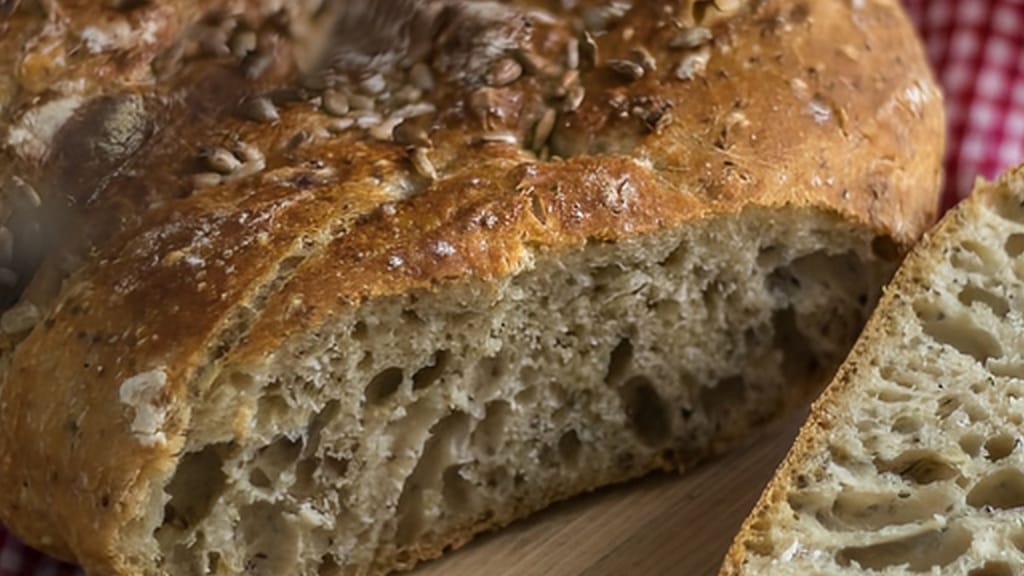
Homemade bread
Homemade bread — a sourdough crumb sturdy enough to carry egg spread
Don't freeze egg spread — cooked egg white weeps water and turns rubbery once thawed, and the mayo-based emulsion splits into oil and curds. The only thing you can freeze is plain cooked, grated egg with no fat added, and even that comes out noticeably wetter after thawing. Treat egg spread as a three-day fridge item instead, and just make smaller batches.
Figure on 30g of spread per canapé and 2–3 canapés per person, so for 10 people you'll need roughly 750g of spread — that's 10 eggs and 180–200g of fat. If the canapés are just one part of a bigger spread at a party, cut that down to 2 per person. Make the spread a day ahead; it firms up overnight in the fridge and spreads far more easily.
Swap the mayonnaise for firm curd cheese (quark-style) at a 1:1 ratio, and stir in 1 tablespoon of sour cream or a little olive oil so it doesn't turn crumbly. Mashed ripe avocado also works (about 120g per 6 eggs) with a squeeze of lemon — just know it will darken by the next day. Skip plain yogurt on its own; it's around 85% water and will reliably water the spread down.
Trust your nose above all: spoiled egg spread smells sharply sulphurous or sour, not just eggy. Other warning signs are watery liquid that's separated out and won't stir back in, a sticky or slimy surface, and any shift in colour toward grey or green. If you're in any doubt, bin it — hard-boiled egg mixed with mayonnaise isn't a food worth gambling on.
The calorie count depends almost entirely on the base you use, not the eggs. A 50g portion made with mayonnaise works out to roughly 135–150 kcal, while one made with firm curd cheese comes in at about 70–85 kcal. A single large egg (about 60g) has roughly 85 kcal and around 7g of protein on its own. These are ballpark figures from standard food-composition tables — check the packaging of whatever you actually use for exact numbers.
One recipe worth heating the oven for, one tip, and one deal from the shop. Nothing else.