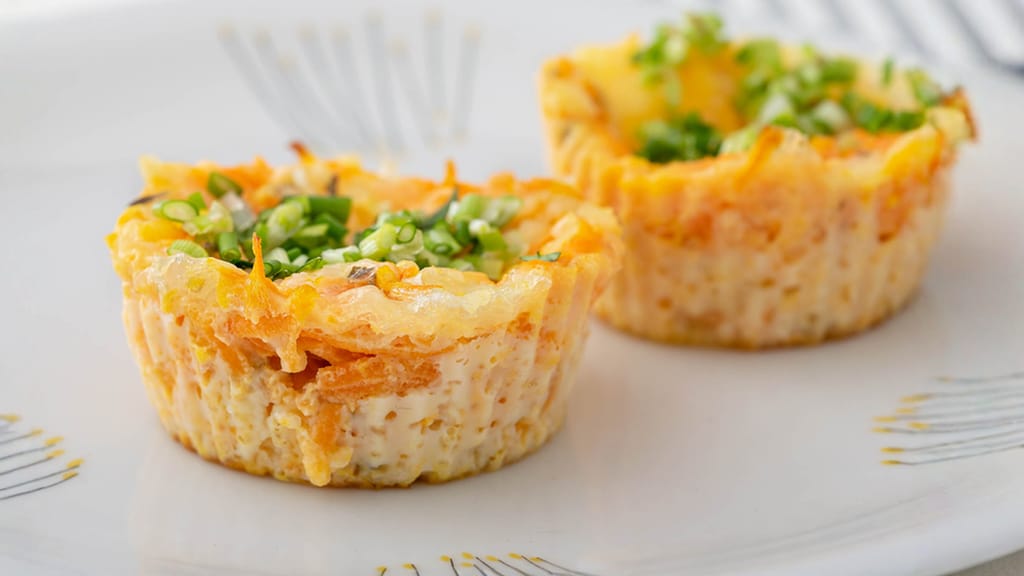
Veggie & cheese muffins
Savoury Muffins for a Party: The Base Batter, Flavour Combos and Make-Ahead Plan
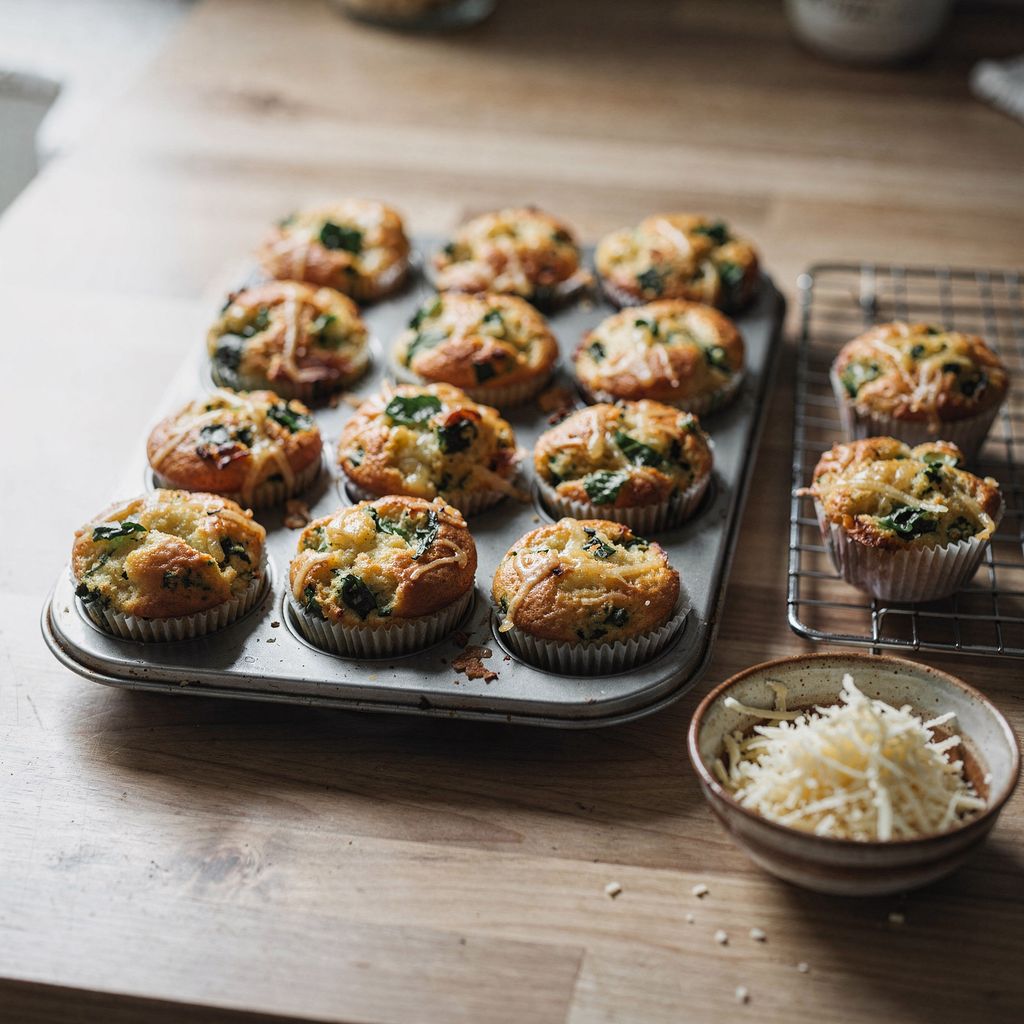
Updated Sep 18, 2026
Savoury muffins are the easiest way to get warm, hand-held food onto a party table that won't fall apart. You'll learn one basic batter ratio for 12 muffins that you can fold practically anything into — cheese, bacon, olives, sautéed vegetables — plus baking times for both mini and standard sizes, and a plan for baking them a day ahead and serving them as if fresh.
For a party, you want savoury muffins that hold their shape once cool, don't weep liquid, and can be eaten in two bites — so cheese, bacon or ham, sautéed vegetables, olives and sun-dried tomatoes, herbs, or pulses all work well. What doesn't work is batter with very wet raw filling (fresh tomatoes, raw courgette, spinach that hasn't been squeezed out), because it'll turn soggy from the inside after a couple of hours on the table.
Three things to look for when choosing:
Eaten cold. Pick a cheese that doesn't turn rubbery once cool — cheddar, gouda, edam, feta, blue cheese. Mozzarella firms up the most once it cools.
No dripping. Filling cut into 5–10 mm cubes, not grated into a mush.
Holds up to reheating. Batter made with oil instead of butter stays moist even on the second day.
Size matters more than flavour here: on a table already crowded with ten other things, mini muffins — about 4–5 cm across — are the right call. Standard 7 cm muffins are a portion in themselves, and guests will only take one each.
The base ratio is 250 g flour : 250 ml liquid : 2 eggs : 80 ml oil, plus 10 g baking powder and 1 teaspoon of salt — this makes 12 standard muffins or 32–36 mini ones. Layer 150–200 g of filling on top of this base and you're done.
Dry ingredients:
250 g plain or fine wholemeal-style flour
10 g baking powder (2 teaspoons)
1 teaspoon salt, ½ teaspoon ground pepper
optional: 1 teaspoon dried herbs (oregano, thyme)
Wet ingredients:
2 medium eggs
250 ml buttermilk, kefir or milk
80 ml rapeseed or olive oil
Filling: 150–200 g total, ideally 100 g of hard cheese and 50–100 g of something else (bacon, vegetables, olives).
Two things this ratio tolerates: using buttermilk instead of milk gives a softer crumb, since the acid reacts with the baking powder faster. And you can swap 150 g of the flour for cornmeal — this gives you a crumblier, cornbread-style version that pairs better with chilli and dips than the classic one.
Don't add more filling than that. Above 200 g, the batter can no longer support it, the muffins will sink, and the base will stay gummy.
Combine the dry and wet mixtures with no more than 10–12 turns of a spoon, and stop while you can still see flour lumps in the batter. This is called the muffin method, and it's the single step that decides whether you get a fluffy muffin or a rubbery one: mixing develops gluten in the flour, and overworked batter bakes up into a dense crumb riddled with long tunnels.
A method that works every time:
In one bowl, mix together everything dry, including the baking powder and salt.
In another, whisk the eggs with the buttermilk and oil.
Toss the filling (cheese, bacon, vegetables) in the dry mix — this stops it sinking to the bottom.
Pour the wet mixture into the dry all at once and stir just until combined. Lumps are fine.
Divide into the tin, ideally with an ice cream scoop, so all the muffins end up the same size.
Fill each cup three-quarters full. Savoury batter doesn't rise as much as sweet batter, and if you only fill it halfway, you'll end up with a flat muffin with no proper dome.
One last thing before the oven: let the batter rest for 10 minutes. The flour absorbs the liquid, the batter thickens, and the filling won't sink to the bottom during baking.
Eight tried-and-tested fillings for the base batter: bacon and cheddar, ham with cheese and chives, olives with sun-dried tomatoes and feta, sautéed courgette with goat's cheese, blue cheese with walnuts, corn with spring onion and chilli, wild garlic with three cheeses, and roasted pepper with smoked cheese. Each one fits within the 150–200 g filling range for 12 muffins.
Bacon and cheddar — 100 g of bacon, fried until crisp and patted dry, 100 g of grated cheddar. The safest bet for a mixed crowd.
Ham, cheese and chives — 80 g of diced ham, 100 g of gouda, a handful of chives. A hit with kids, even served cold.
Olives, sun-dried tomatoes and feta — 60 g of halved olives, 50 g of drained sun-dried tomatoes, 80 g of crumbled feta. Use some of the tomato oil in place of part of the oil in the batter.
Courgette and goat's cheese — 150 g of grated, squeezed-out courgette, 80 g of goat's cheese, thyme. This exact combination is tested in the Vegetable and Cheese Muffins recipe right below the list.
Blue cheese and walnuts — 80 g of crumbled blue cheese, 50 g of chopped walnuts, a pinch of honey in the batter. The boldest of the eight — make fewer of these.
Corn, spring onion and chilli — 150 g of drained corn, 2 spring onions, ½ teaspoon of chilli flakes. Best made with the cornmeal version.
Wild garlic and three cheeses — 50 g of chopped wild garlic, 100 g of a three-cheese blend. A spring thing — in season from March to May.
Roasted pepper and smoked cheese — 100 g of jarred roasted pepper (or home-roasted), 100 g of smoked cheese.
For a single party, two or three varieties are enough — not eight. Pick one safe crowd-pleaser (bacon and cheddar), one meat-free option, and one bolder flavour — more varieties just means leftovers of everything.
Veggie & cheese muffins
Vegetable and Cheese Muffins — a tried-and-tested savoury muffin recipe with vegetables and cheese, easy to make a day ahead
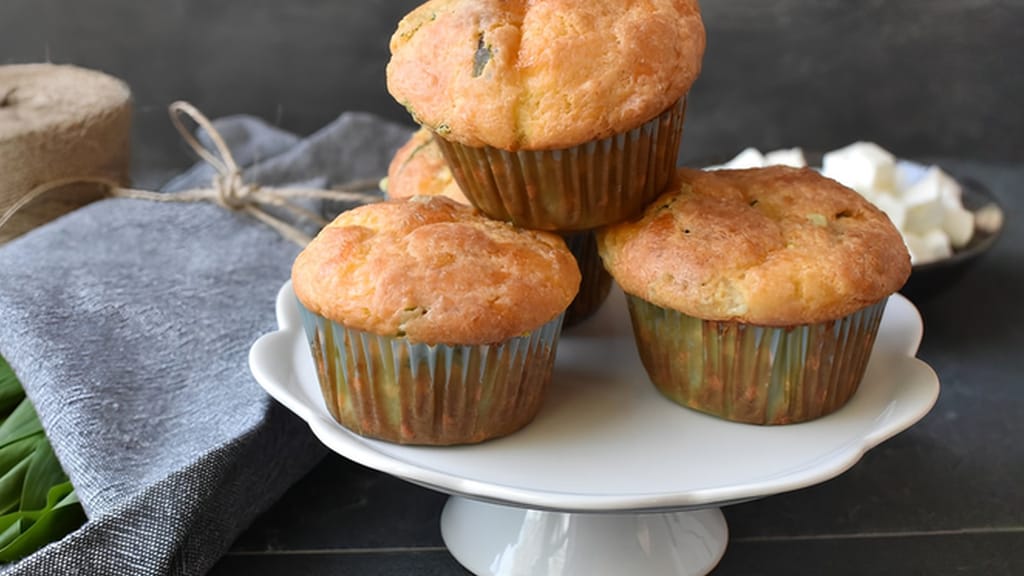
Wild garlic muffins with three cheeses
Wild Garlic and Three-Cheese Muffins — a spring take on party savoury muffins, in season March to May
Bake savoury muffins at 180°C (conventional, top and bottom heat): 20–25 minutes for standard size, 12–15 minutes for mini. Put the tin into a preheated oven, otherwise the baking powder starts working before the batter has a chance to set.
Mini (4–5 cm across, about 25 g of batter each): 180°C, 12–15 minutes, one batch makes 32–36 mini muffins
Standard (7 cm across, about 70–75 g of batter each): 180°C, 20–25 minutes, one batch makes 12 muffins
Fan oven: drop to 165°C and start checking 3 minutes earlier
One batch weighs roughly 850–900 g including the filling, so about three mini muffins are equivalent to one standard one. Use that to plan how many tins you'll need.
You'll know they're done when a skewer inserted in the centre comes out clean and the top springs back under your finger. If you're using a thermometer, the centre should read 92–96°C.
Two things that ruin the base: a dark metal tin bakes the bottom faster than a silicone one, so take muffins out at the shorter end of the time range when using one. And leave them in the tin for only 5 minutes, then move them to a wire rack — steam condenses underneath them in a hot tin and turns the liner soggy.
Feel free to bake savoury muffins a day ahead — just let them cool completely and store them according to their filling: meat-free ones (vegetable, herb) keep for 2 days in a sealed container at room temperature, 3–4 days in the fridge, or 2–3 months in the freezer. Warm them up for 8–10 minutes at 150°C before serving and they'll taste freshly baked.
Muffins with bacon, ham or a creamy filling should go into the fridge within 2 hours of cooling — meat and dairy shouldn't sit at room temperature any longer than that. Keep them in the fridge for no more than 3–4 days, then move them to the freezer.
Three plans, depending on how much time you have:
A day ahead: bake, cool, then store in a lidded container lined with paper towel to soak up condensation. Leave meat-free ones on the counter, put the rest in the fridge.
A week ahead: bake, cool, freeze individually on a tray, then transfer to a bag once frozen solid. They won't stick together this way.
Half an hour ahead: straight from frozen into the oven at 160°C for 12–15 minutes — no need to thaw first.
Always warm muffins up after the fridge — cold dries out the crumb, and a cold muffin tastes tougher than it actually is.
What not to do: don't microwave them for longer than 15 seconds. The starch in the flour overheats quickly, and once it cools the muffin turns rubbery.
Don't mix the batter ahead of time. Baking powder starts reacting the moment it hits the buttermilk, and after an hour in the fridge the muffins won't rise properly anymore.
For a party with other food on offer, plan on 3–4 mini muffins or 1–2 standard ones per person. If they're the main savoury item on a table that's otherwise all sweets and crisps, bump that up to 5–6 mini muffins per person.
A handy conversion (1 batch = about 32–36 mini or 12 standard muffins):
10 guests, muffins as one of five dishes: 1 batch of batter is enough
10 guests, muffins as the main savoury dish: 1.5 batches = about 50 mini muffins
20 guests, a big spread: 2 batches in two varieties
You can multiply the batch up to three times without changing the ratio. Beyond three batches, mix in stages — one bowl can't handle the volume within 12 turns, and you'll end up overworking the gluten.
If one of your guests is gluten-free, swap the flour for a 1:1 gluten-free blend with xanthan gum and add 20 ml more liquid — gluten-free blends absorb more water than wheat flour. Let the batter rest for 10 minutes before baking so the blend has time to hydrate.
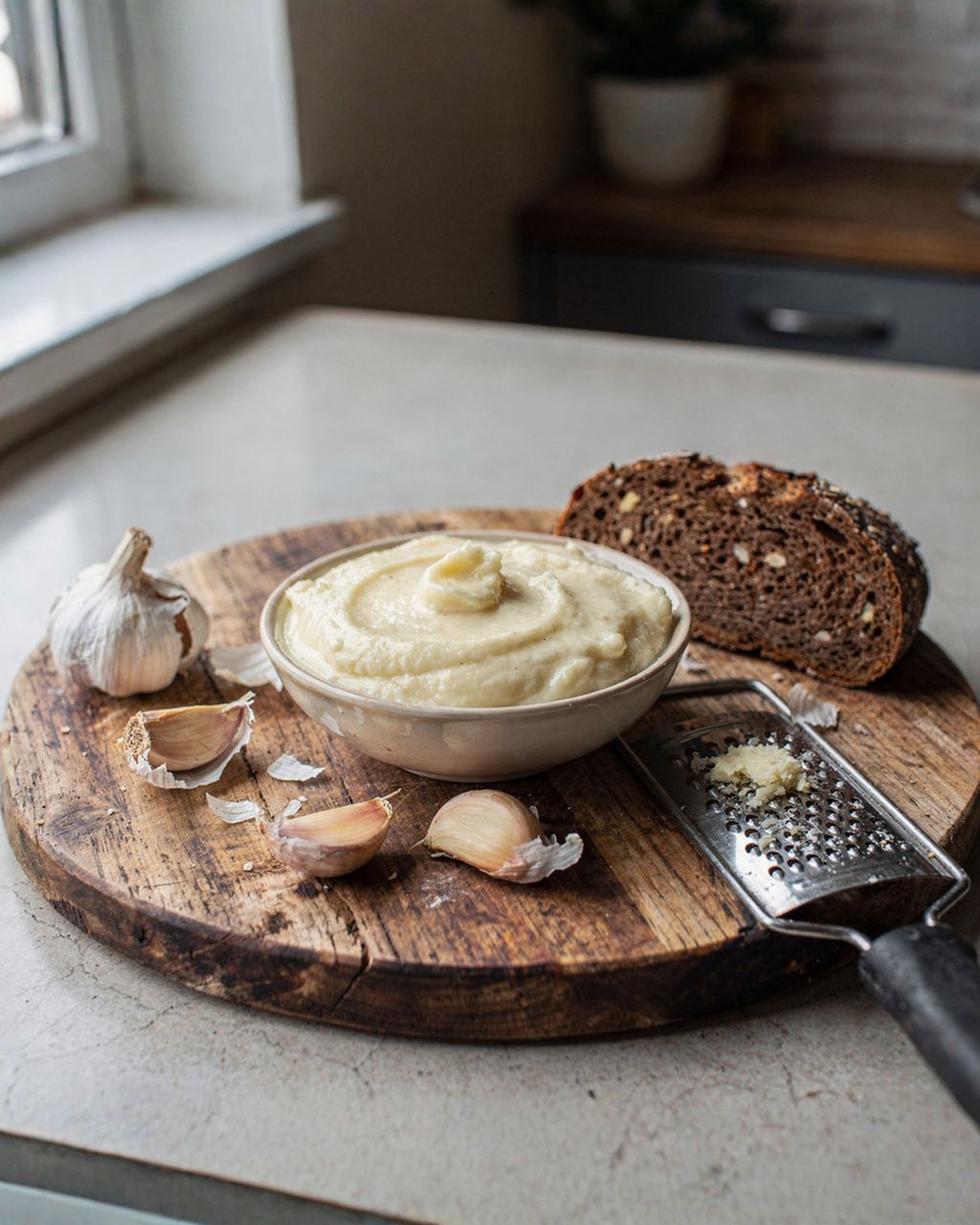
Serve savoury muffins with one thick dip, not three thin ones — the muffin is already filling on its own, and no sauce should be dripping off it. Herb cheese, a mayo-free garlic spread, and a thick lemony yogurt dip all work best.
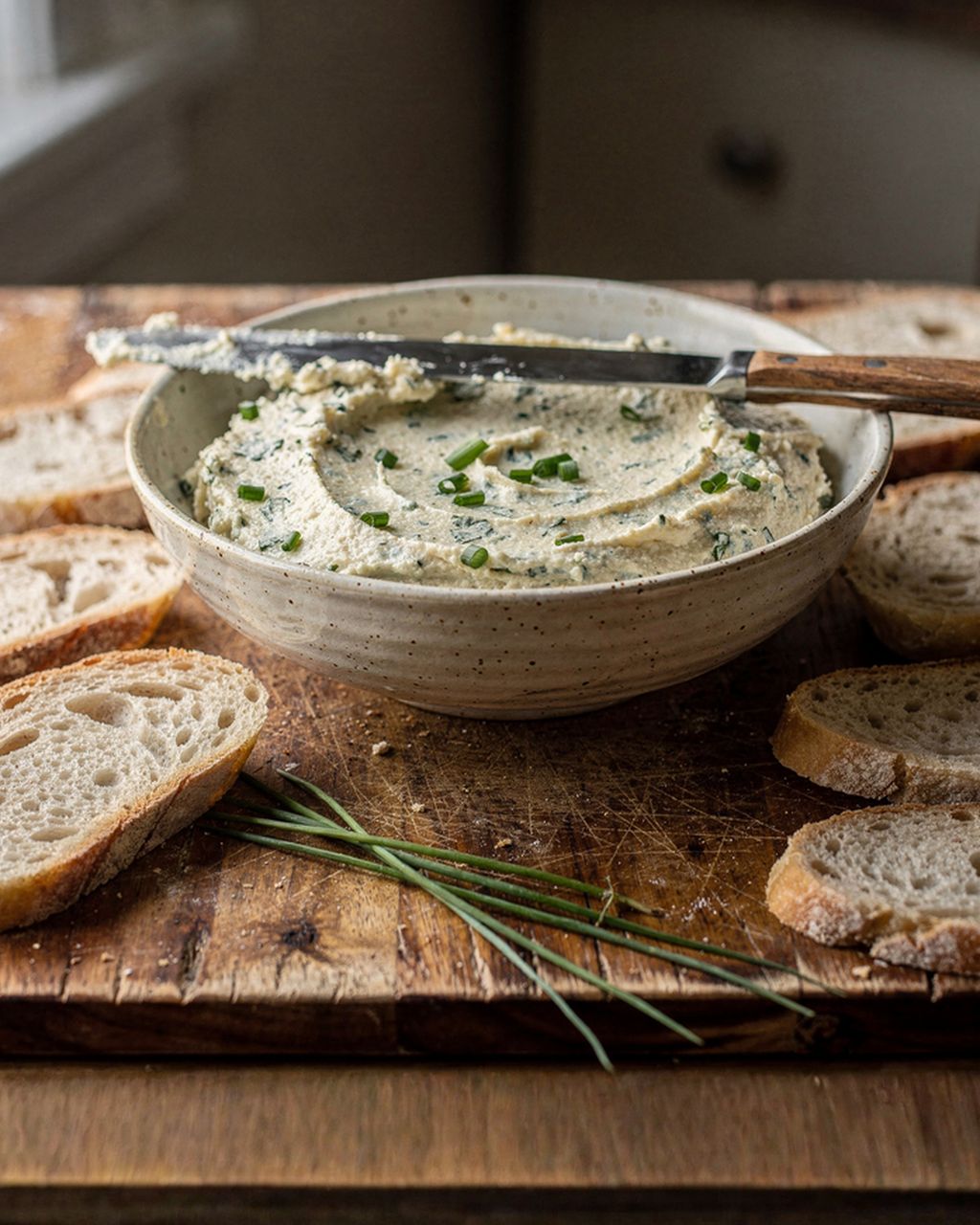
Herb cheese — make your own two-ingredient homemade herb cheese, which goes well with all the cheese and bacon versions.
Yogurt dip — Greek yogurt with lemon and dill, salted. Best with the courgette and feta muffins.
Pickled vegetables — pickled gherkins and peppers cut through the richness of the cheese better than any dip.
If you're putting together a full spread, round out the muffins with something cold and bite-sized, plus one spread for crackers or bread. Three textures — warm baked goods, crunchy vegetables, creamy spread — turn the table into a proper course.
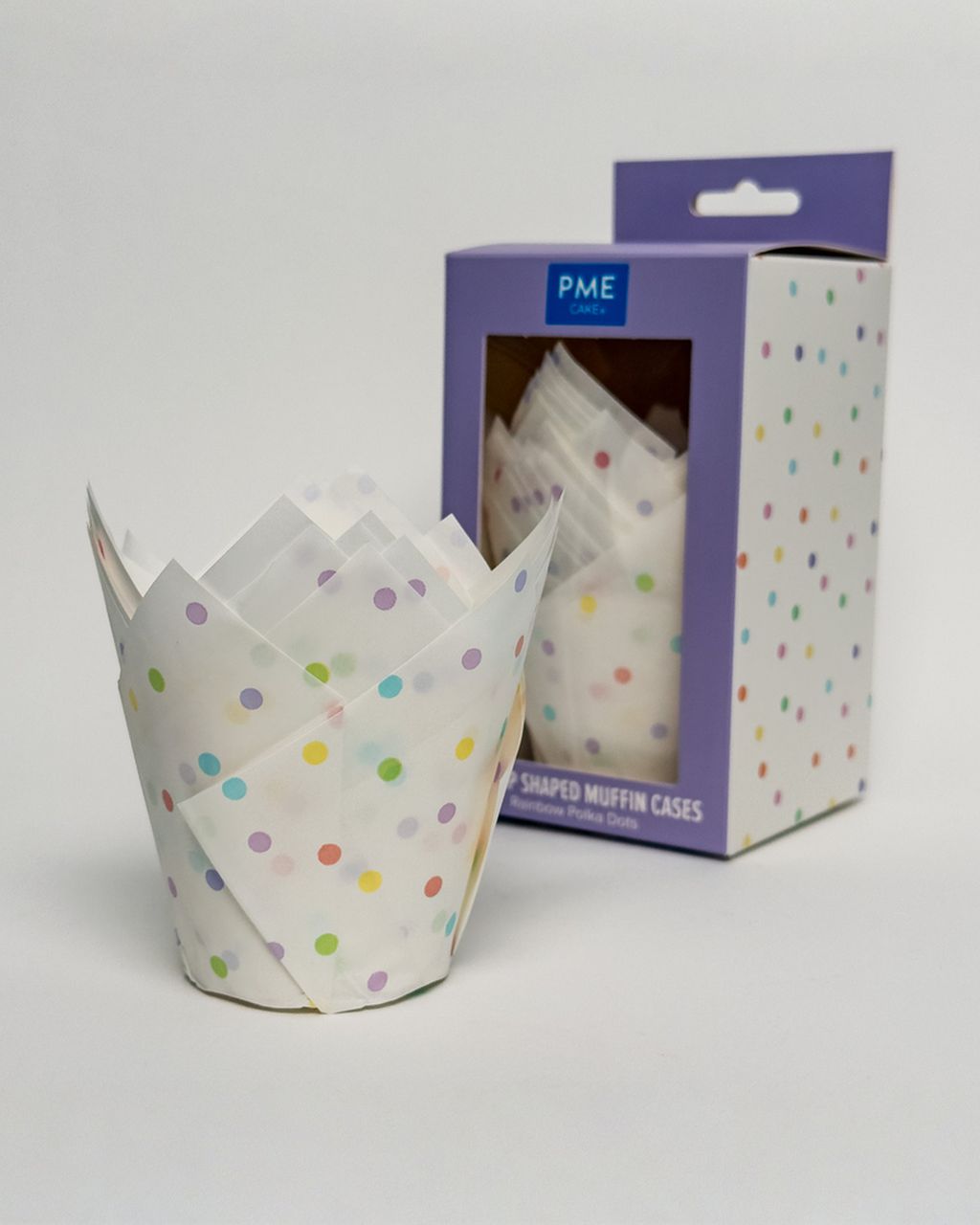
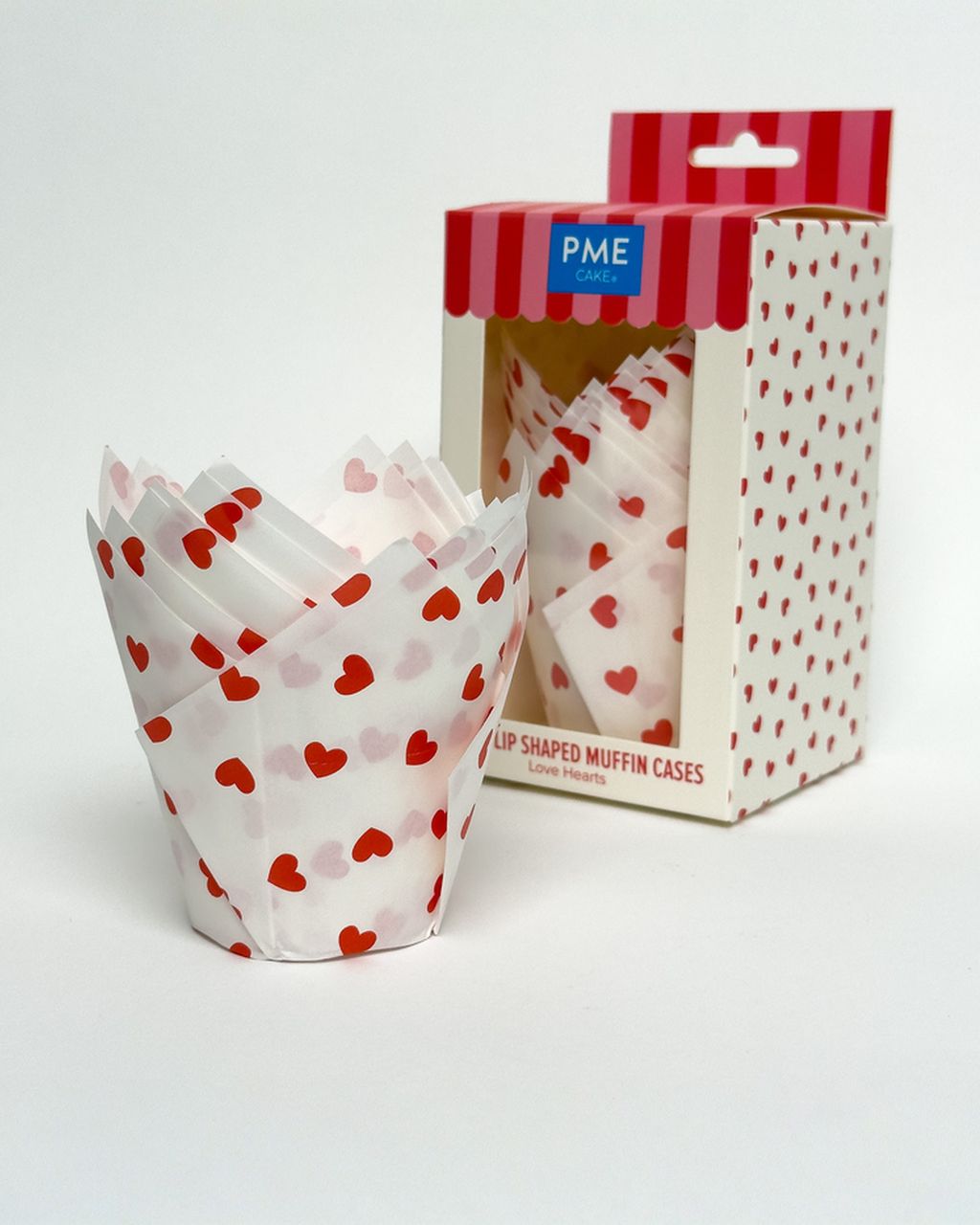
Usually because you took them out of the tin too soon — the batter hadn't set enough and stuck to the paper. Leave the muffins in the tin for 5 minutes, then move them to a wire rack and only peel off the liners once they're completely cool. A higher fat content helps too: with 80 ml of oil per 250 g of flour, the paper peels away cleanly; with only 50 ml, it won't. Tulip-style and silicone liners stick the least.
Yes — replace 10 g of baking powder with ½ teaspoon of baking soda, but only if your batter contains an acidic liquid, such as buttermilk, kefir or yogurt. Baking soda on its own, without acid, won't leaven the batter and will leave a soapy aftertaste. It doesn't work with plain milk — unless you add 1 tablespoon of lemon juice or vinegar and let it sit for 5 minutes to sour.
Replace two eggs with 2 tablespoons of ground flaxseed mixed into 6 tablespoons of water, left to gel for 10 minutes. This works better than in sweet muffins, since the crumb in savoury muffins is held together mainly by cheese and the starch in the flour. Another option is 120 g of plain yogurt or 100 g of blended tofu — use either in place of the eggs and reduce the liquid in the batter by 30 ml.
A sunken centre usually means either too much filling or opening the oven door too early. Above 200 g of filling per 12 muffins, the batter can't support the weight and the middle drops as soon as steam escapes from the oven. Don't open the oven for the first 15 minutes of baking — the temperature drops by 15–30°C and the risen dome collapses. A third culprit is old baking powder: a year after opening, it no longer leavens reliably.
Yes, but only in sturdy tulip-style or double paper liners set close together on a baking tray — a single flimsy paper liner will spread out flat under the weight of the batter. Another option is to bake the batter in a 20 × 30 cm baking dish at 180°C for 30–35 minutes and cut it into 24 squares. The flavour is the same, you just won't get that crisp edge around each individual piece.
One recipe worth heating the oven for, one tip, and one deal from the shop. Nothing else.