Avocado canapés with smoked salmon
Smoked Salmon Canapés: What Pairs With Salmon, What to Serve It On and How to Keep It From Drying Out
Updated Nov 16, 2026
For smoked salmon canapés, plan on 10–15 g of salmon per piece, so roughly 300–450 g for 10 guests (about 3 pieces per person when salmon is one of several kinds), and stick to three pairings that always work: cream cheese + dill, avocado + lime, and horseradish + apple. Salmon is salty, rich and gently smoky, so it needs something creamy to hold it up and something sharp or tangy to cut through it. Below you'll find whether to make rolls, slices or a spread, which salmon to buy, and how far ahead you can assemble the canapés so the salmon doesn't dry out or darken on the platter.
For one canapé, 10–15 g of smoked salmon is enough – that's one smaller slice folded into a ripple, or two to three slices of a salmon roll. More salmon per bite doesn't add flavor, only salt.
Per piece: 10–15 g salmon, 5–8 g creamy base (cream cheese, butter, spread)
For 10 guests, salmon as one of several kinds: 30 pieces, so 300–450 g salmon
For 10 guests, salmon as the main nibble: 50 pieces, so 500–750 g salmon
Spread: 200 g salmon and 250 g cream cheese will cover about 40 canapés
It's better to buy one pack too many than one too few: unopened salmon keeps in the fridge until the date printed on the package.
Seasonal baking plans, tested recipes and kitchen tricks that save you time. Unsubscribe in one click.
Three combinations you can rely on: cream cheese + dill, avocado + lime and horseradish + apple. Each does the same job in its own way – it gives the salmon fat or creaminess to soften the salt, plus acidity or bite to freshen the smoke.
Cream cheese + dill. The surest choice and a base you can build on. Whip the cheese with a little lemon zest, pepper and chopped dill. The cheese also acts as a barrier that stops moisture from soaking into the bread.
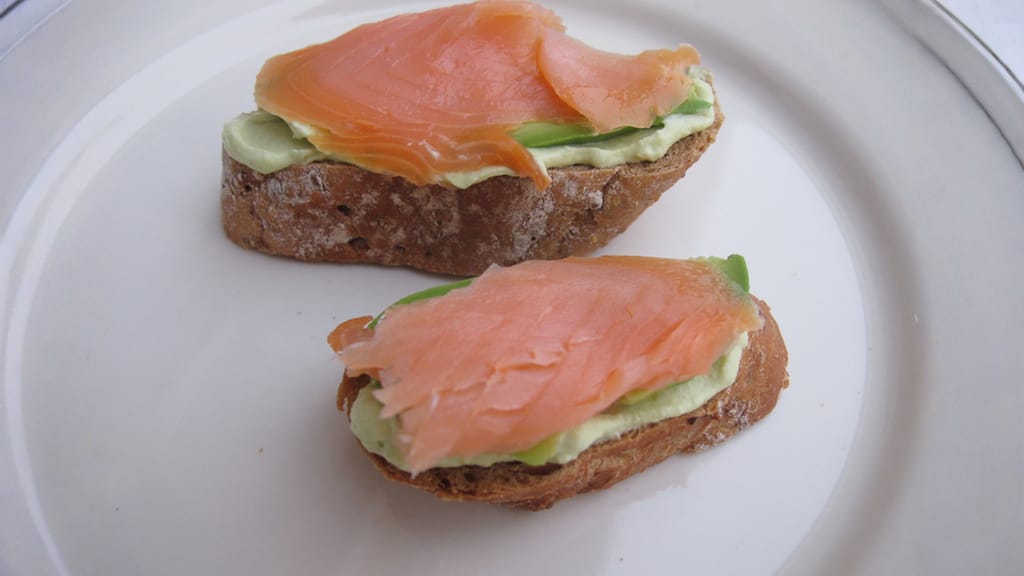
Avocado + lime. Buttery avocado with lime juice and a pinch of salt is fresher than cheese. We have a finished version as a recipe: avocado canapés with smoked salmon. To keep the avocado from browning on the platter, see what really works against browning in avocado spread.
Horseradish + apple. A Nordic classic. Stir grated horseradish into sour cream or cream cheese and top with a thin matchstick of tart apple (Granny Smith, for example). The horseradish cuts through the fat, while the apple adds crunch and sweetness.
If you want a variation: capers and red onion (sharp and salty), cucumber with dill (fresh), or a few peppercorns and a drop of honey in mustard (sweet and sharp, in the spirit of gravlax sauce).
Avocado canapés with smoked salmon
Avocado canapés with smoked salmon – recipe
Slices look best but dry out fastest; rolls keep longest and can be made a day ahead; the spread is the most economical and the most forgiving. Choose based on how much time and how much salmon you have.
Slices (ripples, rosettes). Salmon folded loosely into a ripple on a round of bread spread with cheese. The most elegant, but it has the most surface exposed to the air, so assemble it at the last minute. Use 12–15 g per piece.
Rolls. Overlap salmon slices on plastic wrap, spread with cream cheese and dill, roll up tightly into a log, wrap it and chill for at least 2 hours (overnight is fine). Slice the firmed-up roll with a sharp knife into rounds 1–1.5 cm thick. The salmon is protected by the cheese and the wrap, so it doesn't dry out. Use about 10 g per round.
Salmon spread. Best for leftovers and trimmings, and for hot-smoked salmon that breaks into flakes. You can mix it a day ahead – try our recipe for salmon spread. Use 5–8 g of salmon per piece. How salmon behaves in a spread compared with tuna and other fish is covered in the article fish and tuna spread.
Rolls, by the way, are ideal on a toothpick – they hold their shape and don't fall apart. For more combinations that stay together on a pick, see the article on canapés on toothpicks and skewers.
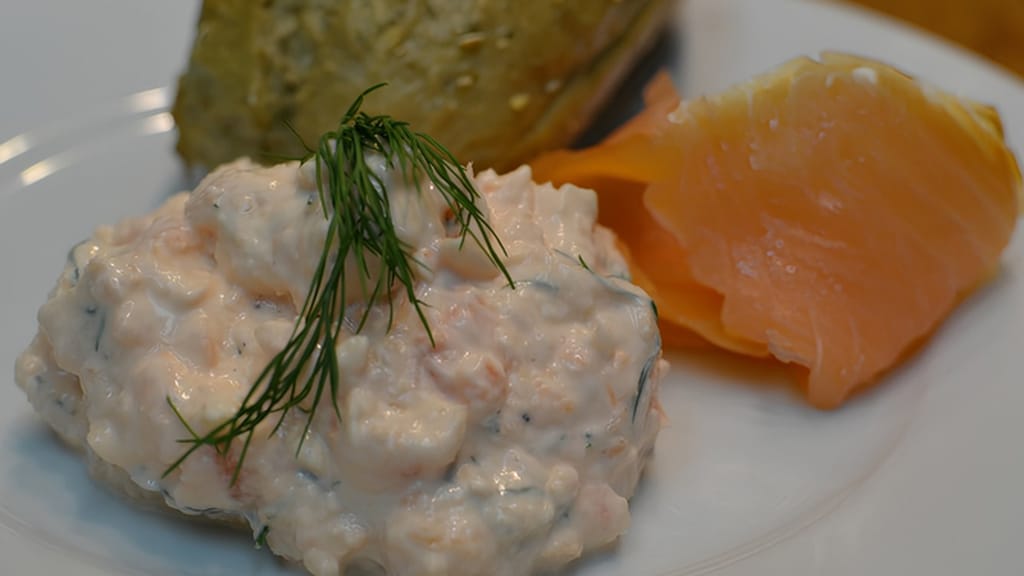
Smoked salmon spread
Salmon spread for canapés – recipe
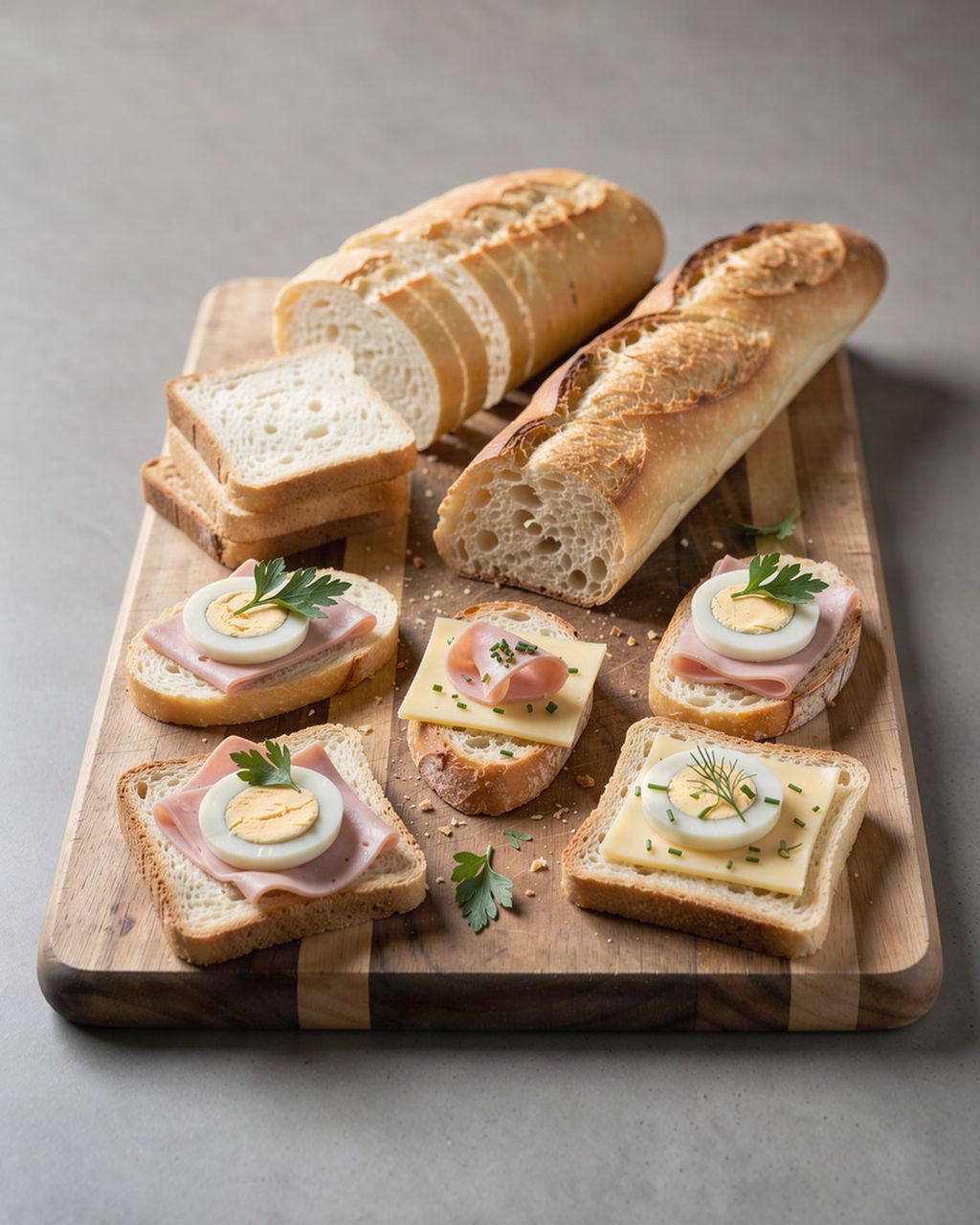
Salmon goes best with a neutral, slightly crisp base: a baguette or Czech veka (a small white loaf) cut into 1 cm rounds, dark rye bread (pumpernickel) or thin blini. The bread must not overpower the delicate flavor of the salmon or turn soggy under it.
Baguette / veka – neutral, inexpensive and holds its shape well. You can lightly toast the rounds in a dry pan so they stay crisp longer.
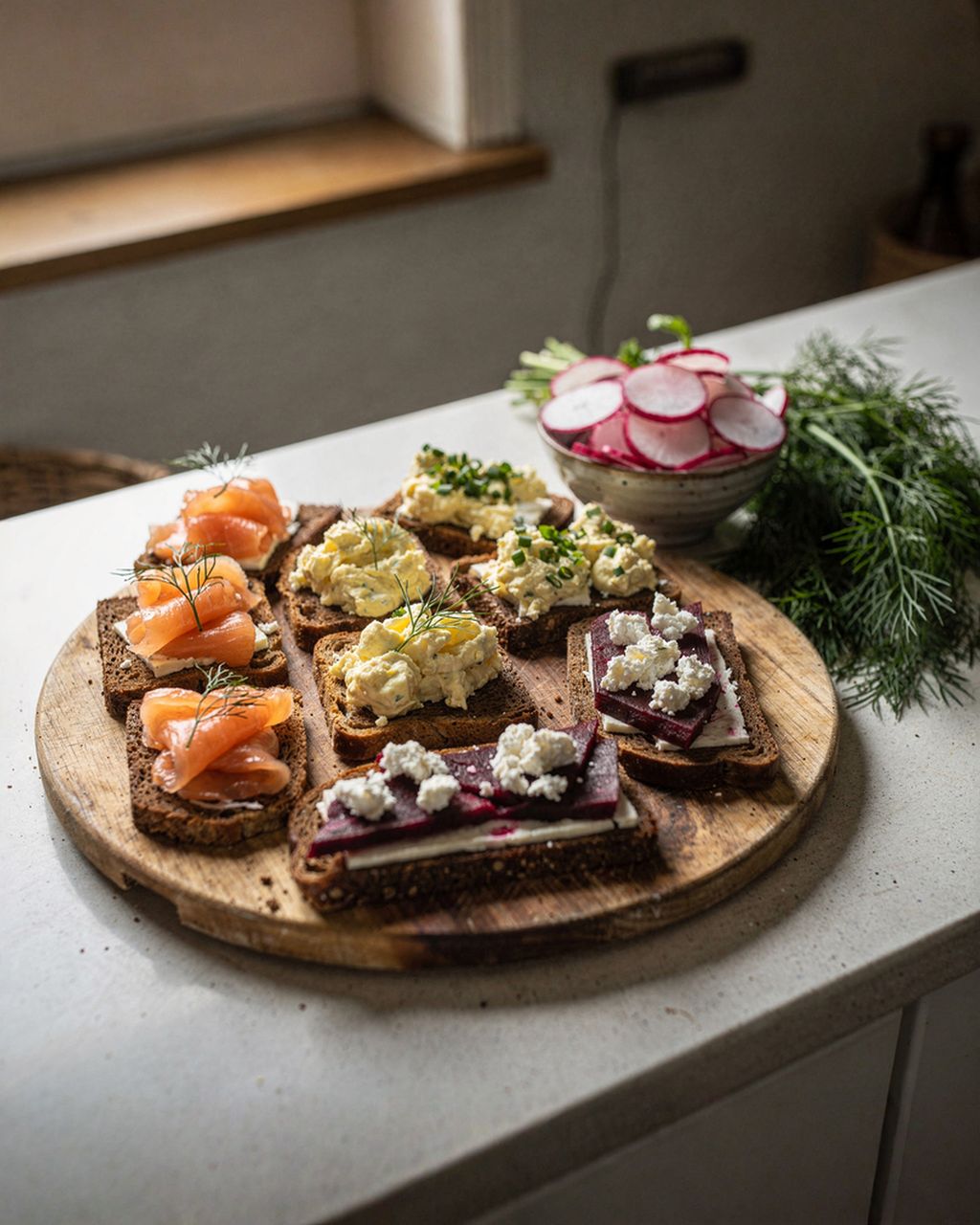
Rye bread or pumpernickel – dark and slightly sweet, great with horseradish and apple. Cut out rounds or slice 4 × 4 cm squares.
Blini and lívanečky (small Czech pancakes) – the most festive option. In place of bread, cucumber sliced 1 cm thick also works when you want a fresh, bread-free version.
Which bread to buy and how to slice it so it doesn't crumble is covered separately in the article what to use as a base for chlebíčky and canapés. The same applies to chlebíčky (Czech open-faced sandwiches) with salmon – just allow 25–30 g of salmon per chlebíček.
For slices and rolls, buy cold-smoked salmon; for a spread, hot-smoked works too. They differ in texture and in whether the salmon has been heat-treated.
Cold-smoked salmon is smoked at up to about 30 °C (86°F), so the flesh stays raw – silky, translucent and sliced thin. This is the classic sliced salmon for canapés.
Hot-smoked salmon is smoked at about 60–80 °C (140–176°F) until the flesh is cooked through; it's dull pink and falls apart into flakes. It's not suited to slices but is ideal for a spread.
With cold-smoked salmon, look for slices that are glossy and springy and smell of the sea and smoke. Salmon that has dulled at the edges, darkened and turned sticky doesn't belong on the table.
Lay salmon slices on the bread no more than 2–3 hours before serving; rolls and spread can be made a day ahead, with slicing and spreading left for the day of the event. Salmon dries out in the open air, not in the fridge under plastic wrap.
The day before: roll and wrap the rolls, mix the spread or creamy base, and slice and toast the bread (store it separately in a dry container).
2–3 hours before: spread the bread with an unbroken layer of cheese or butter right to the edge – this is the barrier that keeps the bread from going soggy. Place the salmon on top.
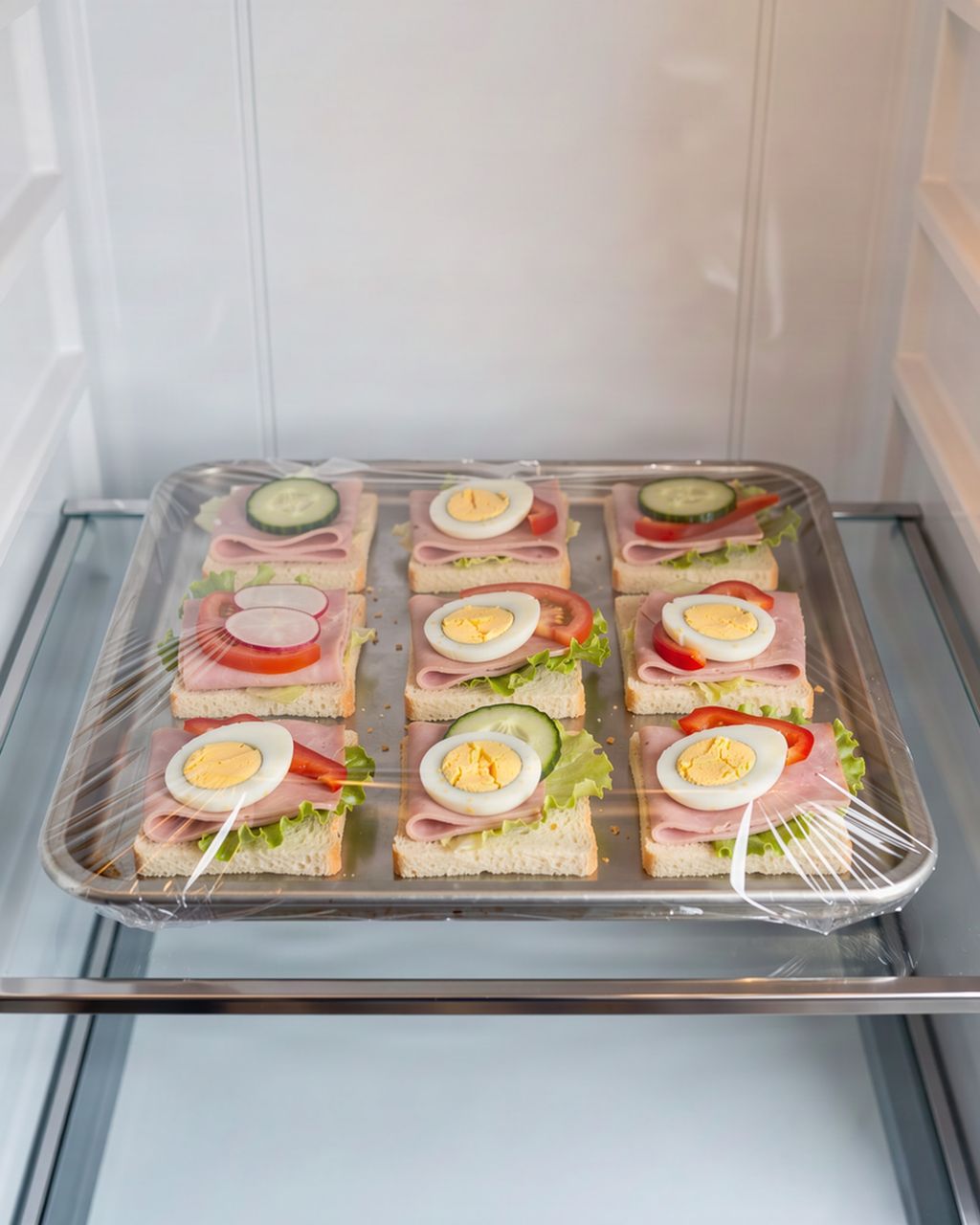
Right after assembling: cover the platter with plastic wrap, ideally laid loosely right on the canapés so no air can reach the salmon, and refrigerate.
Just before serving: lemon, lime, dill and capers. Acid must not sit on the salmon for long – the proteins turn opaque, the salmon goes gray and the dill wilts.
Store smoked salmon in the coldest part of the fridge, ideally at up to 4 °C (39°F), and stick to the temperature stated on the package – listeria keeps multiplying slowly in the cold. Use an opened pack according to the manufacturer's instructions, usually within 1–2 days. Leave finished canapés out on the table for no more than 2 hours, and in heat above 32 °C (90°F) for only 1 hour (the American USDA/FSIS rule). How long chlebíčky and canapés keep in the fridge and on the table, and when to throw them away, is covered in the article on the shelf life of chlebíčky and canapés.
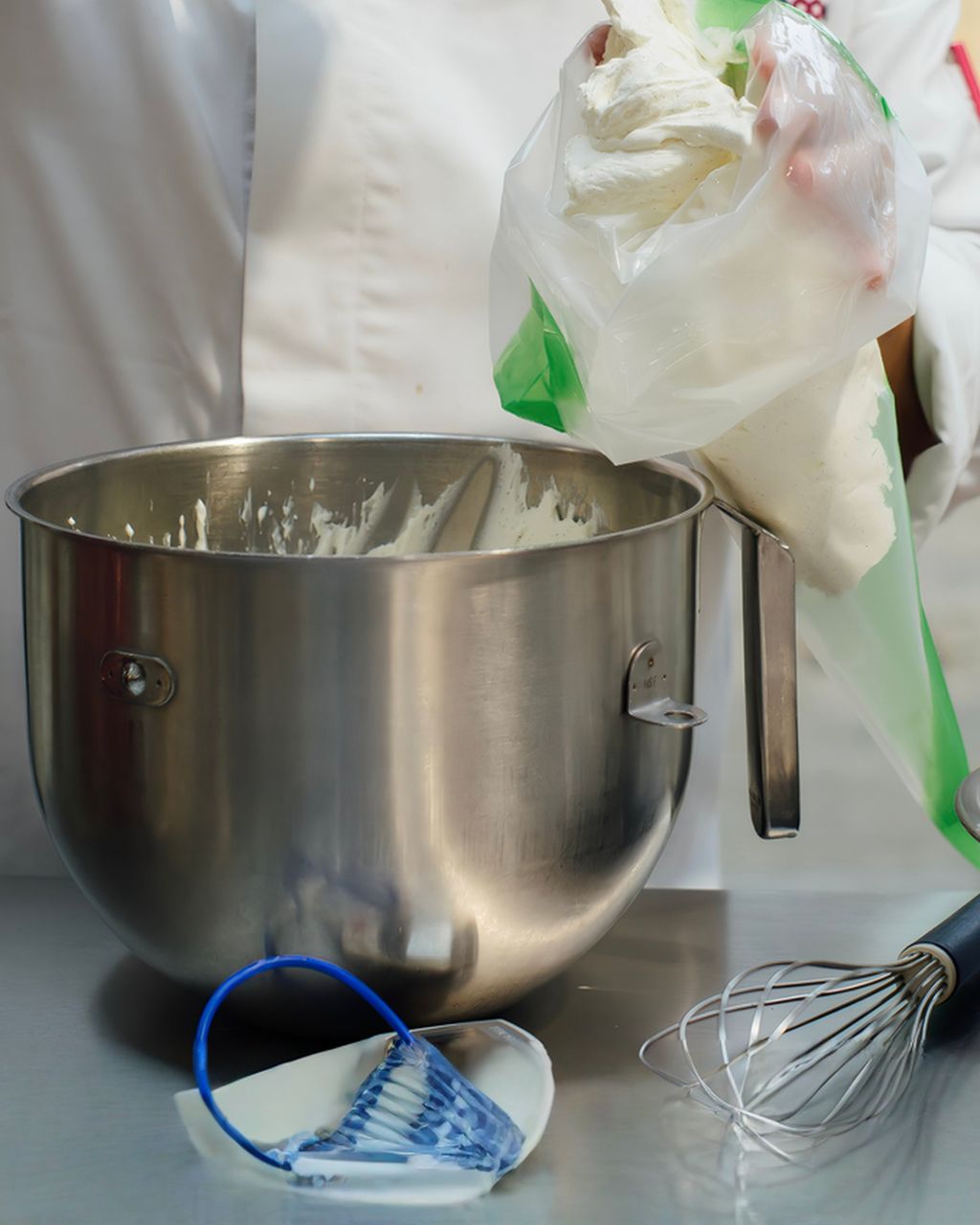
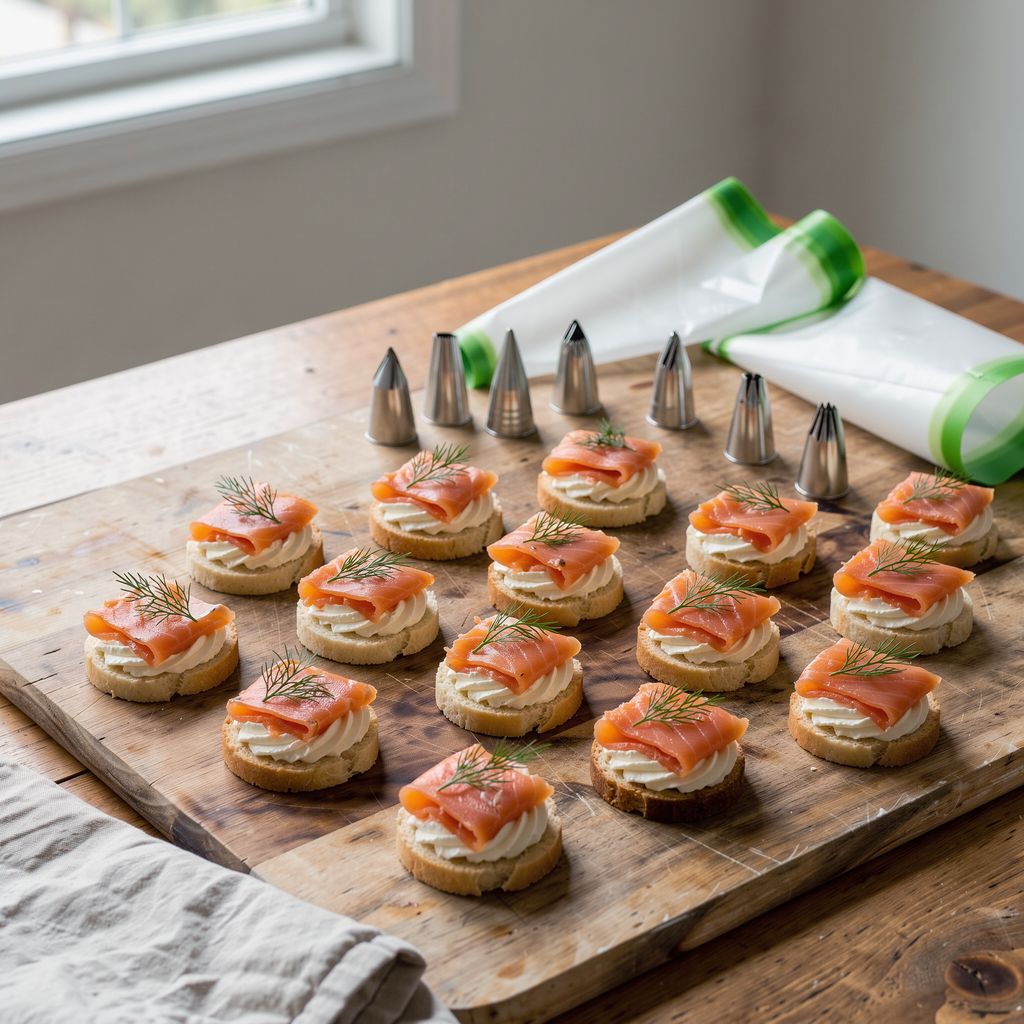
The creamy base looks best when you apply it with a piping tip and piping bag instead of a knife: every canapé gets the same portion, the edges stay clean, and under the salmon you get a neat rosette that holds its shape.
Let the cream cheese soften at room temperature for 15 minutes and whip it smooth with a little cream – cold, thick cheese fights the tip.
A star piping tip with an opening of about 1 cm suits salmon. Chop the dill really finely, otherwise it will clog the tip – or sprinkle it on top instead.
5–8 g of cheese is enough for each round, which is one small rosette. Then lay the salmon next to it or wrap it around the rosette.
The piped cheese is also the barrier that keeps the bread dry, so this step saves both time and nerves.
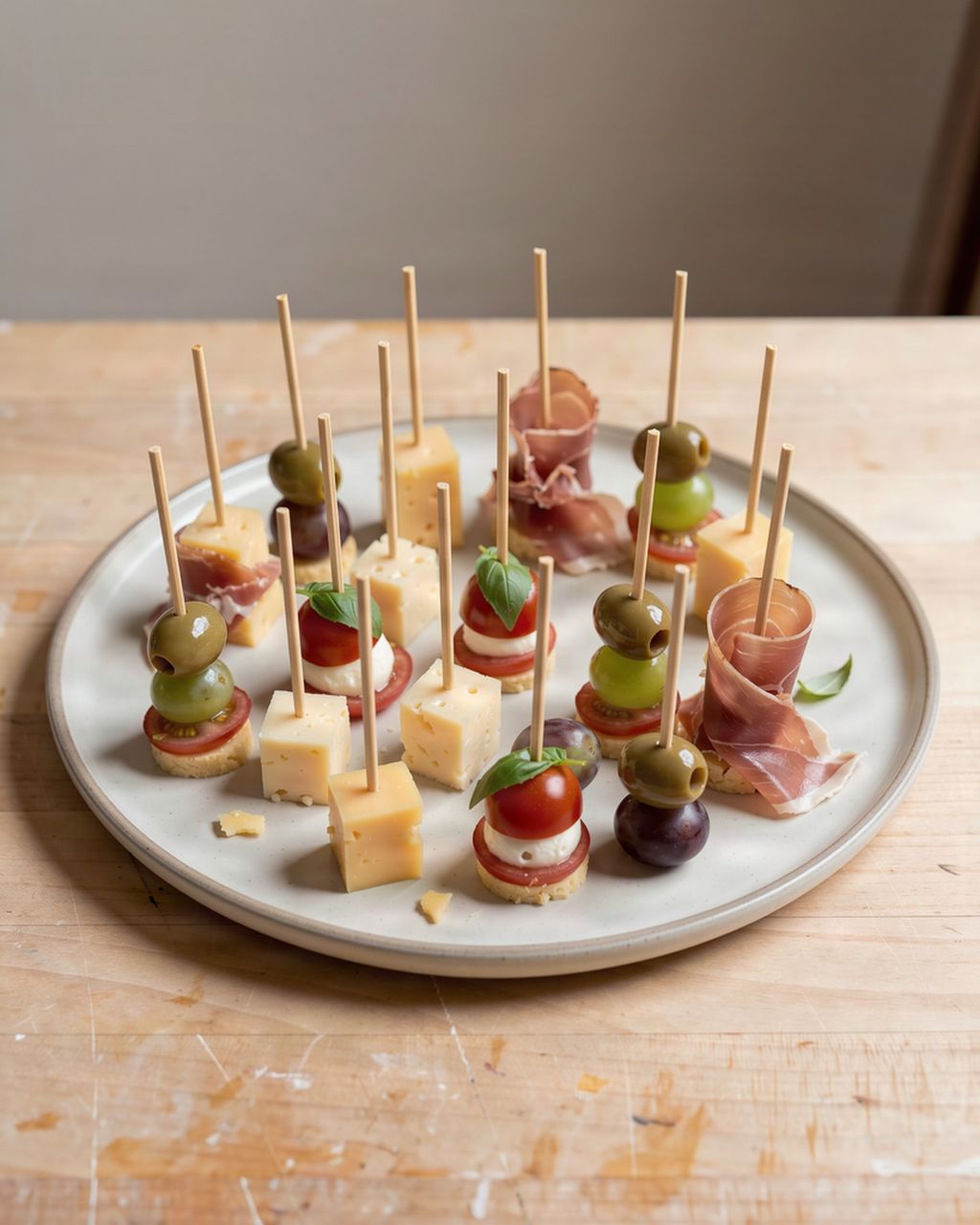
Alongside salmon canapés, a platter works best with nibbles built around a different main flavor – cheese, ham or vegetable – so the platter isn't all fish and every guest finds something they like. You'll find ideas in the canapés and appetizers section, and if you're planning a New Year's Eve party, take inspiration from our New Year's Eve canapés, with a plan of what to prepare when.
Finished smoked salmon canapés can't be frozen: the bread turns soggy after thawing and the cream cheese separates. Only unopened smoked salmon in its original packaging can be frozen; thaw it slowly overnight in the fridge and use it within 24 hours.
You can replace cream cheese on salmon canapés with butter, mascarpone or thick Greek yogurt mixed with a little ricotta. Butter makes the best barrier against soggy bread; yogurt is fresher-tasting but thinner, so serve those canapés soon after spreading.
Slice smoked salmon straight from the fridge while it's cold, using a long, sharp knife in one smooth stroke rather than sawing. To make rounds, you can cut it out with the same cutter you used for the bread, or snip slices with scissors dipped in cold water.
Gravlax isn't smoked: it's raw salmon cured for about 2–3 days in salt, sugar and dill, with no smoke. On canapés it behaves like sliced cold-smoked salmon, just tastier in a sweeter, more herbal way, and because it's raw too, the same warning applies for pregnant women, older people and anyone with a weakened immune system.
Dry, crisp white wine or sparkling wine suits smoked salmon canapés well: sekt, crémant, Riesling or Sauvignon Blanc. The acidity and bubbles cleanse the richness and salt of the salmon much like lemon does, while heavy oaked wines tend to overpower the smoky flavor.
One recipe worth heating the oven for, one tip, and one deal from the shop. Nothing else.