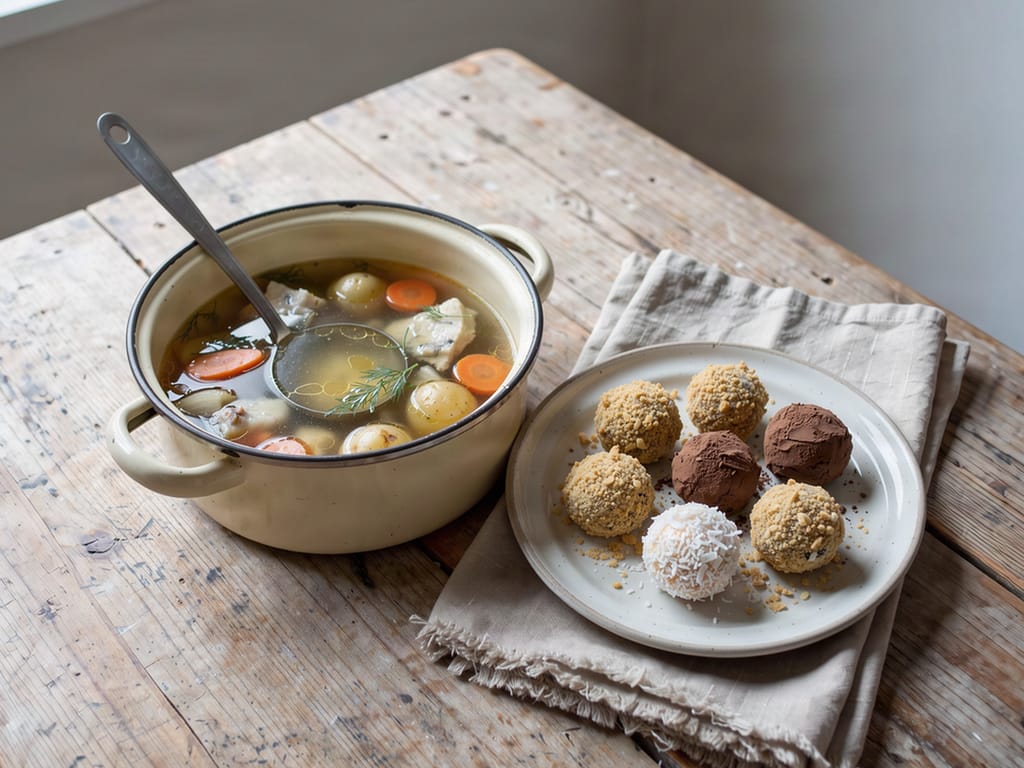
Mom's christmas fish soup with mushrooms
What to Do with Christmas Leftovers: Carp, Potato Salad, Goose, Cookies, Vánočka and Vegetables
Updated Nov 19, 2026
Christmas leftovers are the best ingredients of the whole year – you just have to work with them quickly and in the right order. Safety first: refrigerate within two hours, eat within three to four days, reheat to 74 °C (165 °F). Then the order: fish and potato salad go first, goose and boiled potatoes come next, while raw vegetables, the freezer and dry Christmas cookies can wait. Below you'll find what to cook from what, how long everything keeps and how to build a meal plan for December 25–30.
Refrigerate Christmas leftovers within 2 hours of cooking, eat them within 3–4 days, and reheat them until they reach 74 °C (165 °F) inside. That's what the US food safety agency USDA FSIS recommends for cooked food, and it applies to meat, sides, sauces and soups. The Christmas table has two exceptions, though, where our articles allow a shorter time: fish and salad with mayonnaise.
Fridge within 2 hours. According to the FSIS, perishable food shouldn't stay at room temperature for more than 2 hours, or just 1 hour if it's above 32 °C (90 °F). A Christmas Eve table that stands from six to half past ten has long since passed that limit. Put smaller bowls on the table and keep the rest in the fridge.
Fridge at 4 °C (40 °F) or lower. The FSIS time limits assume this temperature. If you don't know what yours is, leave a simple thermometer in it overnight. A fridge overstuffed for Christmas cools worse, because air can't circulate between the containers.
Eat within 3–4 days. That's the FSIS figure for cooked leftovers in the fridge. Count from the day the food was cooked, not from when it went into the container.
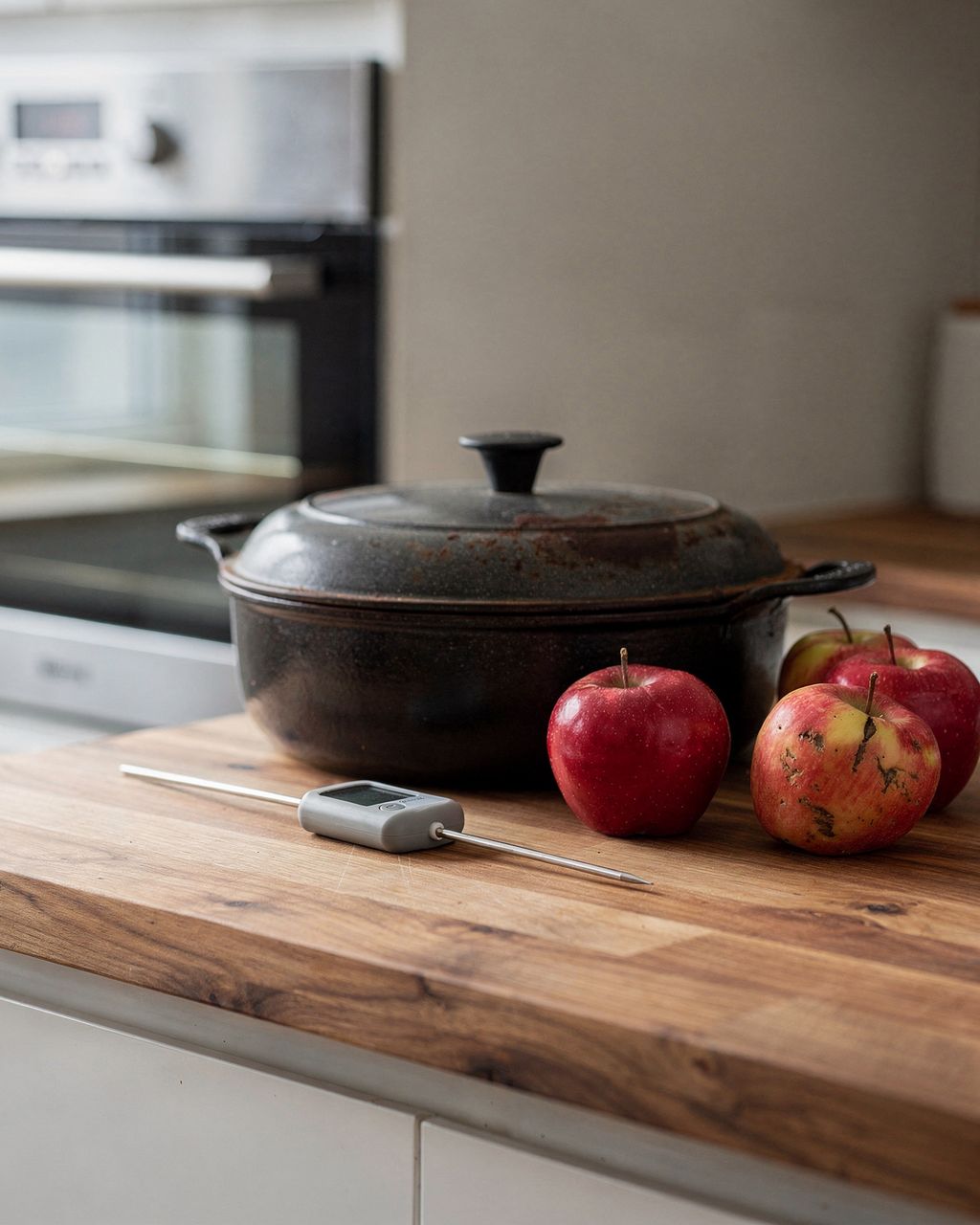
Reheat to 74 °C (165 °F) inside. The FSIS advises reheating leftovers to 74 °C (165 °F) and checking with a thermometer at the thickest spot; soups, sauces and pan juices should be brought to a boil. Reheat only the portion you'll eat – our articles on carp and goose recommend reheating food just once.
Fish only 2–3 days. For cooked carp, our article Carp in the Fridge: How Long It Keeps and How to Store It gives 2–3 days in a closed container at up to 4 °C (40 °F). So Christmas Eve carp is for December 25 and 26, December 27 at the latest.
Potato salad at most 2 days with mayonnaise. Our article How Long Potato Salad Keeps in the Fridge gives 1–2 days for salad with homemade mayonnaise, 2 days with store-bought, and 3–4 days for a vinegar or oil dressing without mayonnaise.
A big pot of soup or a full roasting pan cools slowly. That's why the FSIS advises dividing large amounts of food into shallow containers, so they reach a safe temperature as quickly as possible. In practice: pour soup into two or three smaller pots or containers, take the meat off the bone right after dinner rather than the next morning, and don't stack containers in the fridge until they've cooled.
Freeze everything you won't eat by day three – and do it right away, not on the morning of day four. The FSIS says frozen leftovers stay safe indefinitely, but keep their best flavor and juiciness for 3–4 months. The freezer stops bacteria from multiplying but doesn't bring freshness back: food that has already spent three days in the fridge has no margin left after thawing.
Freezes well: broth and soups without cream, picked goose and duck meat covered with broth or pan juices, braised cabbage, sauces and dry Christmas cookies.
Don't freeze: potato salad with mayonnaise – according to our article, the mayonnaise separates and the potatoes turn watery. Not breaded fried carp either, because the coating turns soggy after thawing; if you must, freeze only the picked meat without the coating.
Thaw in the fridge. The FSIS recommends thawing in the fridge, in cold water or in the microwave, never on the counter. Soup from the freezer can go straight into a pot and be brought to a boil.
Label the container. Write the contents and the cooking date, not the freezing date. In February you won't remember whether it's goose broth or fish soup.
How to soften gingerbread that’s gone hard, when to fill Linzer cookies and how to tell the carp is done. One recipe and one tip a week. Unsubscribe in one click.
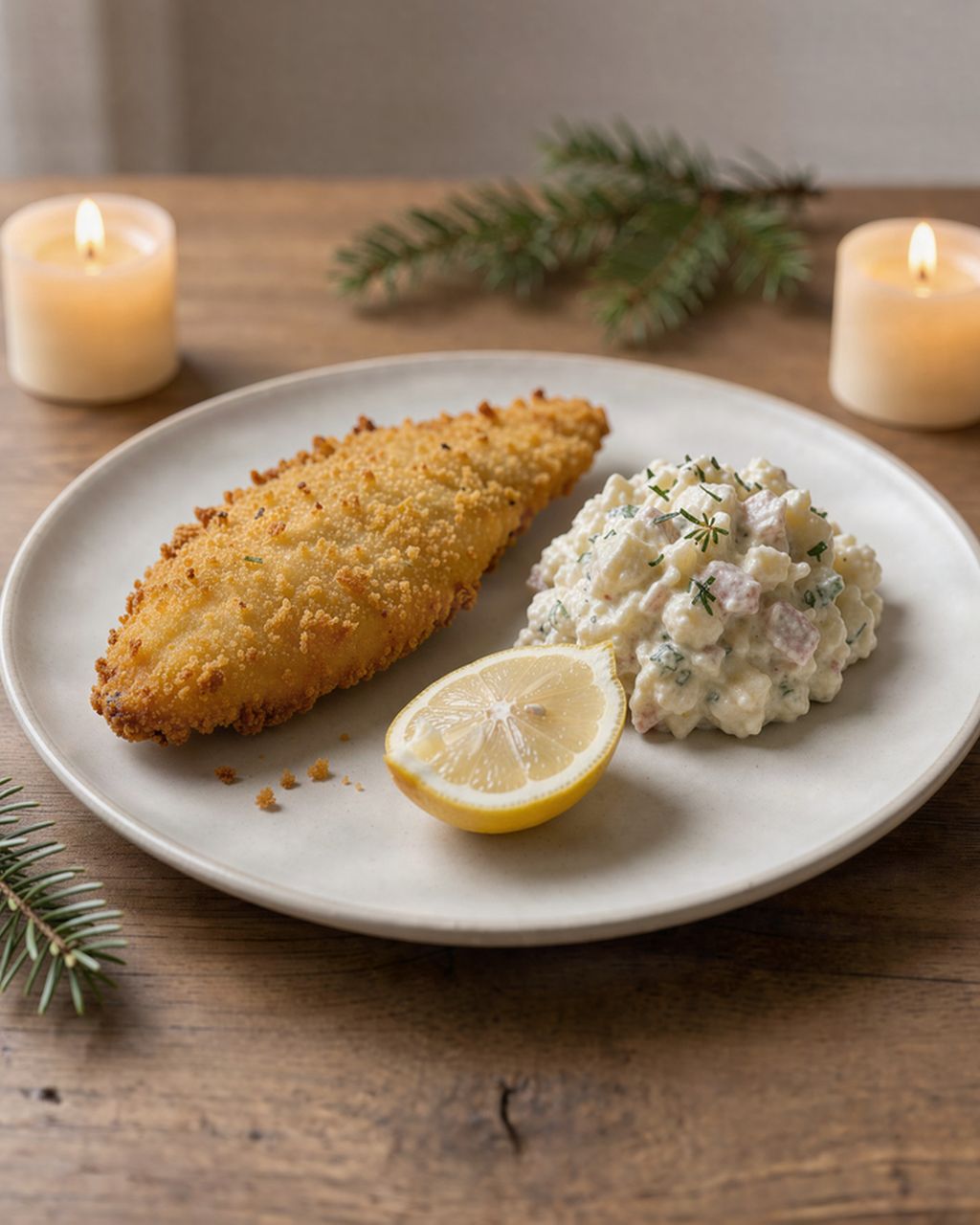
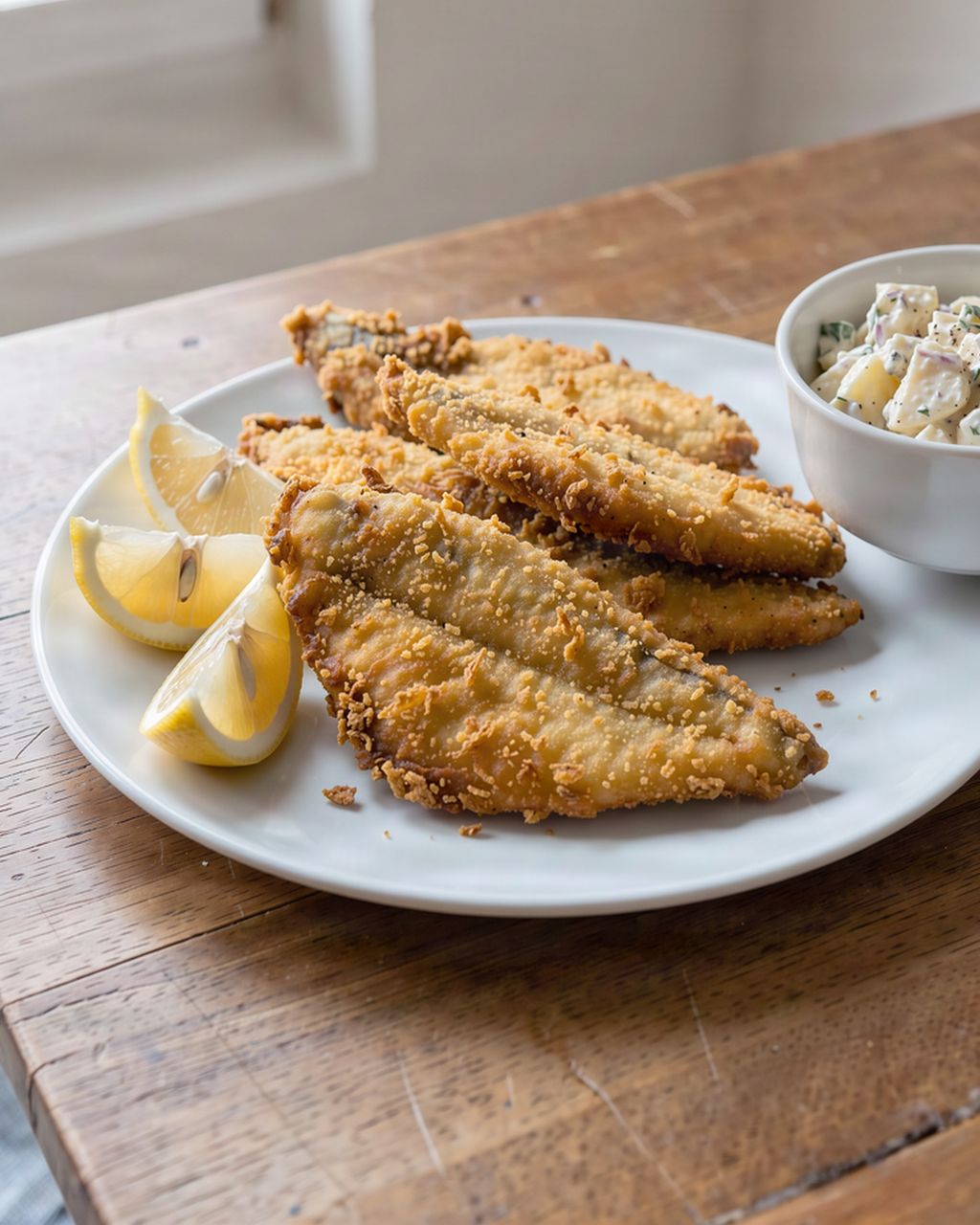
Leftover carp becomes three dishes: fish spread, fish soup and fish cakes. They all start the same way – with picked, boneless meat – and you should finish them all within 2–3 days of Christmas Eve, which is how long cooked carp keeps according to our article on storing carp in the fridge. Fried and baked carp work equally well; with fried carp, just peel off the coating, which goes soggy in the fridge and doesn't belong in a spread or fish cakes.
Carp is a fattier fish with a sweet, slightly muddy flavor, so in leftover dishes it benefits from acidity and sharpness: mustard, lemon, pickles, onion, dill. Carp doesn't have to end on December 25, though – if you want fresh fish later, reach for a skin-on carp fillet. It has no backbone or ribs, so there's no picking from the carcass – but even here, run your fingers through the meat for the small Y-bones. How to choose, clean and prepare carp fried, baked, with caraway and in the black (dark) style is covered in Carp for Christmas.
Pick carp cold and with your fingers, not a fork. Besides the backbone and ribs, carp has around a hundred tiny Y-shaped bones in the flesh, and they're the trickiest in a mashed spread or a fish cake, because you can't see them.
Put the cold fish on a plate and remove the coating (fried carp) or the skin (baked carp).
Set the backbone with the ribs aside in one piece and break the meat into flakes along the grain.
Rub each flake between your thumb and forefinger. You'll feel the Y-bones as hard little forks; pull them out.
Put the picked meat in a clean container with a lid, not back on the plate with the bones, and return it to the fridge right away.
Don't throw away the raw head and skeleton left over from cleaning – you can make a broth for soup from them (below). Bones from plates after dinner, though, belong in the trash, not the pot.
Fish spread is the quickest way to use up leftover carp, and it suits breakfast on December 25 or 26. For 200 g of picked meat, count 100 g of softened butter or lučina (a Czech soft fresh cheese), a teaspoon of whole-grain mustard, one small finely chopped onion, two diced pickles, salt, pepper and a few drops of lemon. Mash the meat with a fork, not a blender – this keeps the texture, and any overlooked bone can still be felt – and stir in the rest. Chill it for 30 minutes so the flavors come together, and serve on dark bread or fried toast with chives.
The spread doesn't get a new time limit: eat it within the 2–3 days of the carp it was made from, so by December 26–27 at the latest. For inspiration, use our salmon spread – substitute picked carp for the salmon.
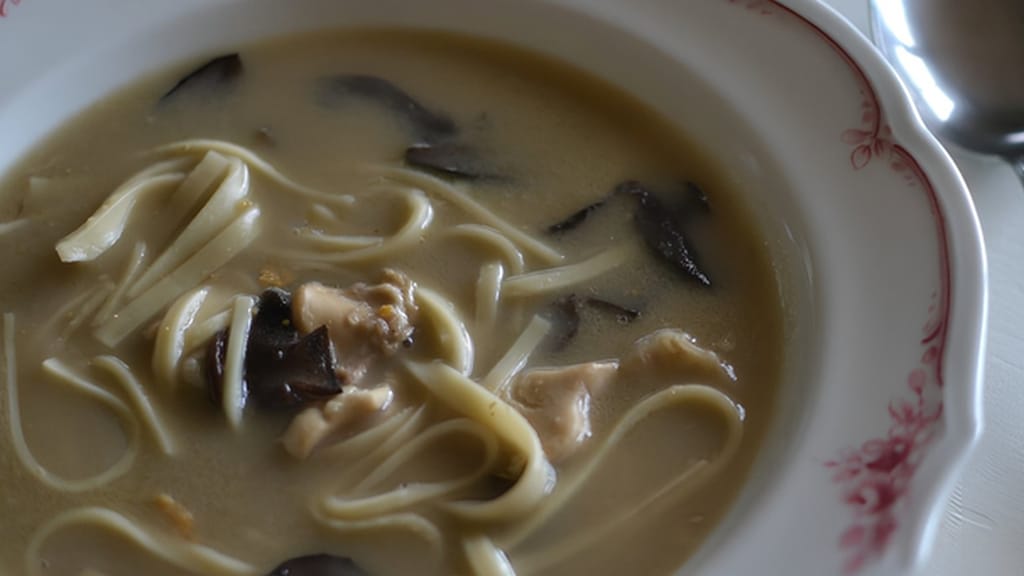
You can make fish soup from leftover carp even without the head and skeleton: add the picked meat at the very end to a finished root-vegetable base and warm it for 5 minutes below a simmer so it doesn't fall apart into strands. If you have the raw head and skeleton from cleaning, simmer them separately, only gently, strain the broth through cheesecloth and use it instead of water – the soup will be fuller and more fishy. You'll find the whole method in the recipe Mom's Christmas Fish Soup with Mushrooms.
Fish soup is still fish: eat it within the carp's time limit and bring it to a boil every time you reheat it, as the FSIS advises for soups.
Mom's christmas fish soup with mushrooms
Christmas carp fish soup with mushrooms – recipe
Carp fish cakes turn the rest of the fish into a proper lunch for December 26 or 27, and they use up some of the boiled potatoes too. Mix 300 g of picked meat with 200 g of cold boiled potatoes grated finely, 1 egg, a spoonful of mustard, chopped dill, salt and pepper; if the mixture is too soft, add 2–3 tablespoons of breadcrumbs. Shape patties about 1.5 cm thick, coat them in breadcrumbs and fry in a thin layer of oil over medium heat until golden.
The fish has already been cooked once, so a fish cake is really a reheated leftover: according to the FSIS it should reach 74 °C (165 °F) inside, so check with a probe thermometer in the thickest one. Serve with tartar sauce, lemon and the rest of the potato salad, if it's still within its time limit. Our salmon cakes with tartar sauce make a good template – picked carp replaces the salmon.
Eat leftover potato salad cold, as it is, and only until the end of its time limit: according to our article How Long Potato Salad Keeps in the Fridge, that's 1–2 days with homemade mayonnaise, 2 days with store-bought, and 3–4 days with a vinegar dressing without mayonnaise. The limit counts from when it was made, not from Christmas Eve – a salad made on December 23 is a day older than you think. The best thing you can do is serve it again with something fresh:
With the fish cakes from the previous section. A hot patty and cold salad are a classic pair, and you use up two leftovers at once.
With a fresh schnitzel. Pork, chicken or veal schnitzel with salad is a Czech classic even between the holidays – how to cook each kind of meat is covered in Schnitzel: How to Fry Pork, Chicken and Veal Schnitzel.
On an open-faced sandwich (chlebíček). Spread a thin layer of salad on a slice of baguette, add a slice of ham or boiled egg and a piece of pickle. Eat it right away – overnight in the fridge it goes soggy, and the salad keeps aging on it.
What not to do with the salad:
Don't reheat it or fry patties from it. Heating won't bring it evenly to a safe temperature – it only keeps it for a while in the 4–60 °C (40–140 °F) range that the FSIS calls dangerous, and the mayonnaise melts in the heat.
Don't freeze it. According to our article, the mayonnaise separates after thawing and the potatoes turn watery.
Don't extend it with fresh ingredients. A new egg or pickle doesn't reset the time limit of an old salad; it's counted from the oldest ingredient.
Don't put a bowl that sat out all evening back in the fridge. Anything that was out for more than 2 hours, throw away.
If you have salad left over every year, make less next time – how much per person is worked out in How Much Carp and Potato Salad per Person. You'll find the classic method and a version with yogurt and no mayonnaise (the longest-lasting one) in Potato Salad.
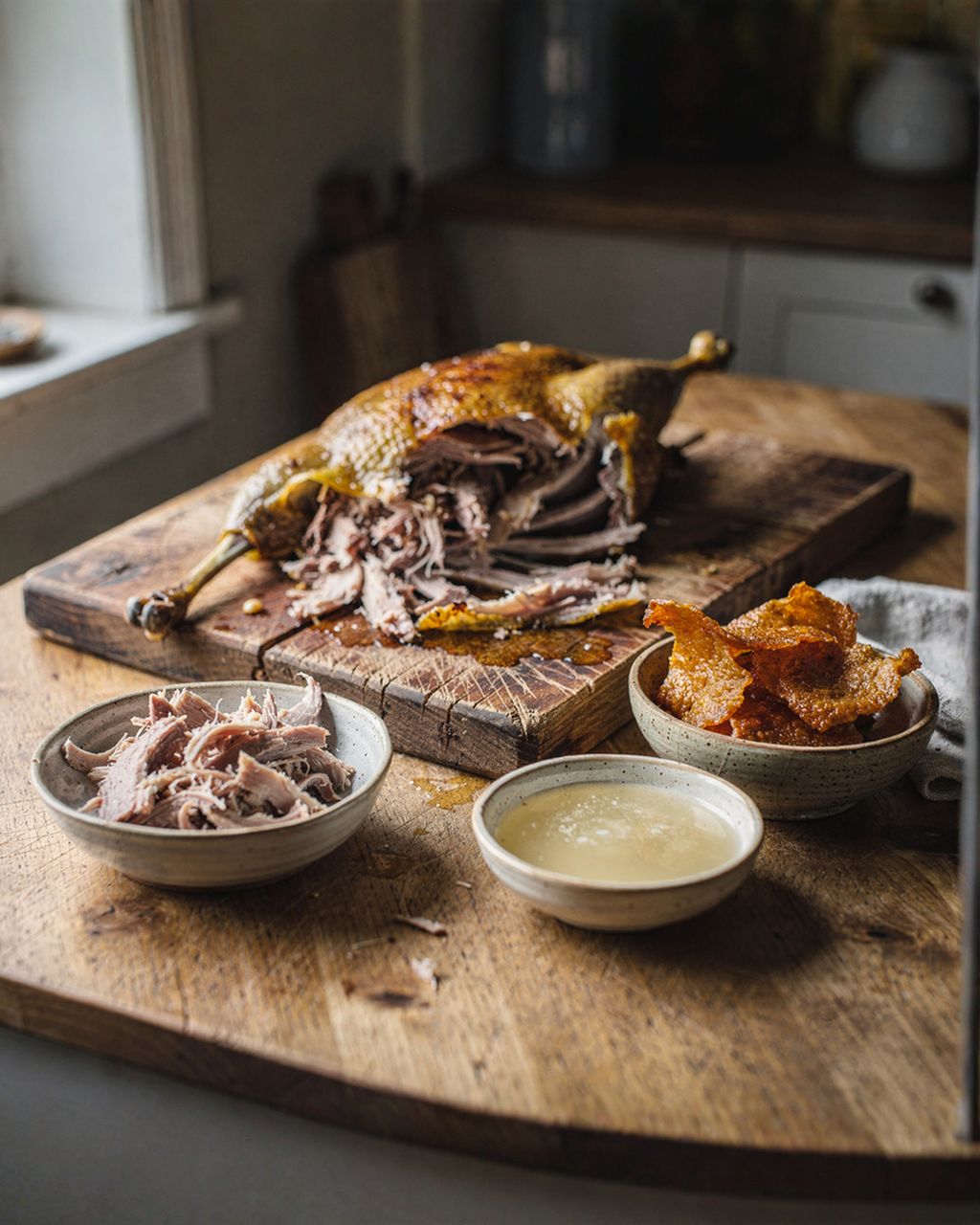
Don't reheat leftover roast goose or duck whole – right after the holiday lunch, break it down into meat, skin, carcass, fat and pan juices, and use each part differently: add picked meat to dishes at the very end of cooking, make 1.5–2 liters of broth from the carcass in 4–5 hours of gentle simmering, render the skin in a dry pan into cracklings, and strain the fat into a clean jar for frying potatoes. According to our article, roast poultry keeps 3–4 days in the fridge and 3–4 months in the freezer, so the goose from Christmas Day has until December 28–29. For specific dishes, times and temperatures for each part, see Leftover Roast Goose and Duck: What to Do with the Meat, Carcass, Skin and Fat.
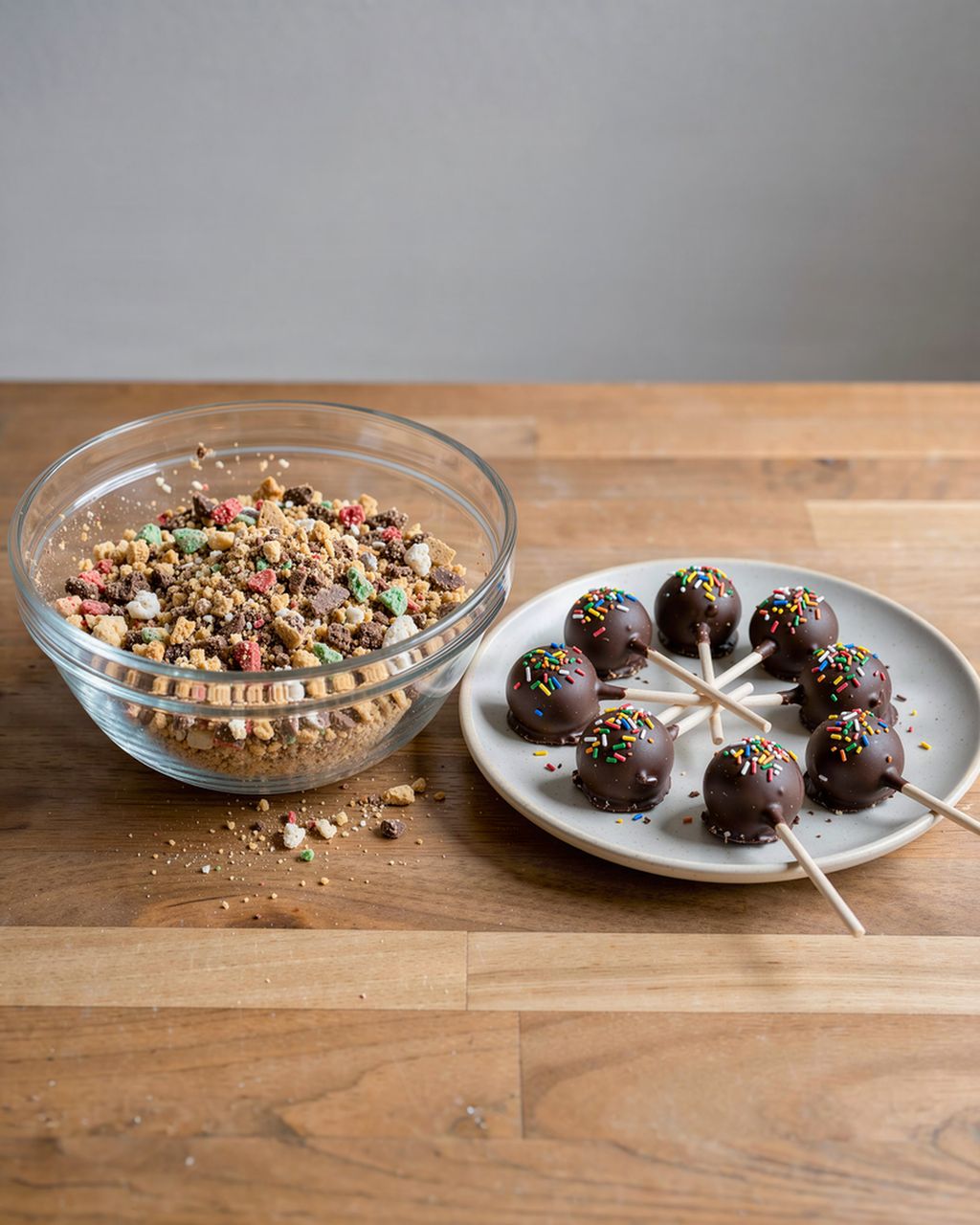
Leftover Christmas cookies split into two groups: dry ones (Linzer cookies, vanilla crescents, nut and coconut types) keep, according to our article, 2–3 weeks in a closed tin at room temperature and 8–12 months in the freezer, while cream-filled ones belong in the fridge and should be eaten within 3–4 days. So eat the cream-filled ones first and use dry ones that have lost their crispness as an ingredient. Crumb balls are the simplest: mix 300 g of crushed cookies with 80–100 g of softened butter, 2–3 tablespoons of rum and 1–2 tablespoons of cocoa, shape into balls of 15–20 g and let them firm up in the fridge for 30 minutes. For more ideas and proper storage, see What to Do with Leftover Christmas Cookies: Cake, Balls and Cake Pops.
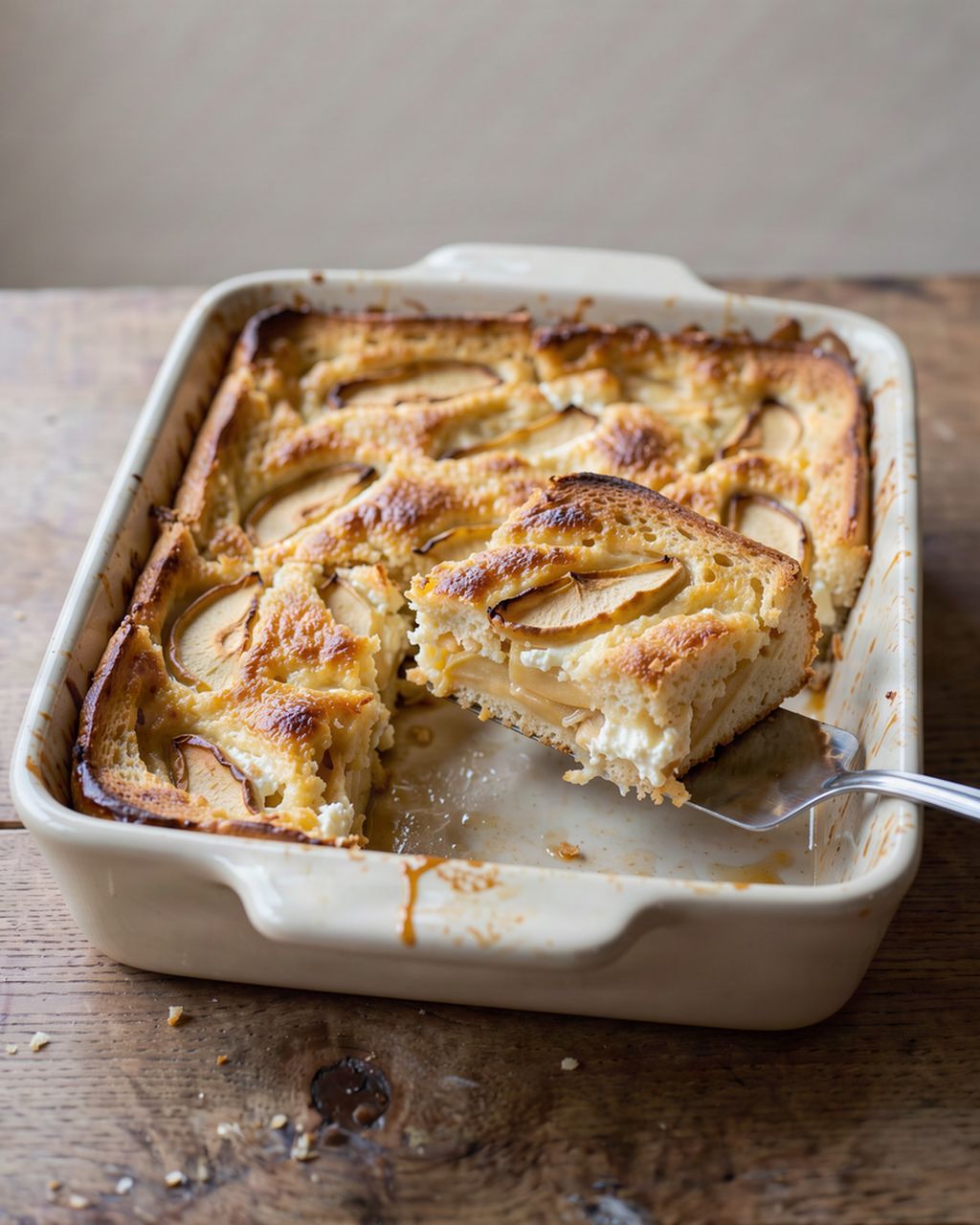
Stale vánočka (Czech braided Christmas bread) is a ready-made ingredient for žemlovka (a Czech baked bread-and-apple pudding), French toast or bread pudding – you'll find the methods in What to Do with Stale Vánočka.
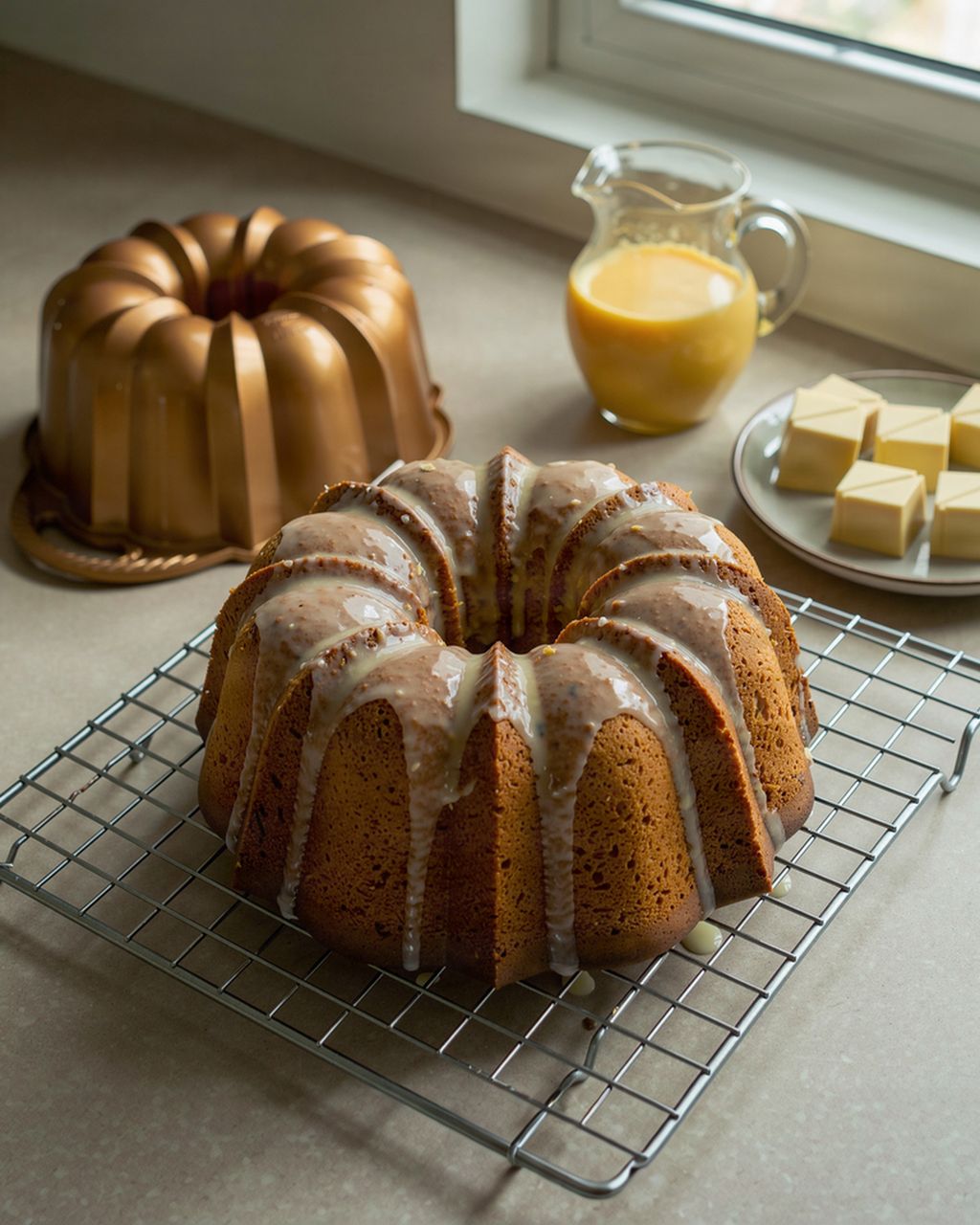
Put leftover eggnog into a bundt cake, cake filling or pralines, use egg yolks in creams and homemade mayonnaise, and melt leftover chocolate again for a glaze or chop it into dough. These aren't leftovers from the feast but from the baking – and we have a separate article for each of them.
Eggnog. Homemade eggnog (Czech vaječný koňak, a thick egg liqueur similar to advocaat) doesn't have to be finished off after the holidays: it goes into a bundt cake, a cake filling or pralines. You'll find the methods in What to Do with Leftover Eggnog.
Egg yolks. After meringues, snow-white cookies and coconut cookies, plenty of yolks remain in the fridge, and raw yolks have a short time limit. How long they keep is covered in Raw Egg Yolks in the Fridge, and what to cook with them in What to Do with Leftover Egg Yolks: Recipes from Custards to Mayonnaise.
Chocolate. Leftover glaze, melted chocolate and chocolate figures are covered in What to Do with Leftover Chocolate: 8 Ways to Use It Up.
From leftover vegetables and potatoes you can make potato soup, baked potatoes, a frittata, cream of celery soup and a roasted vegetable salad. After making the salad and soup, you're usually left with raw root vegetables, a cut celery root and boiled potatoes. Boiled potatoes fall under the general FSIS limit for cooked leftovers, which is 3–4 days, so they go right after the fish and the salad. Store raw carrots and celery in a bag in the crisper drawer and leave them for last.
From leftover boiled potatoes you can make potato soup, baked potatoes and a potato frittata. Store them unpeeled in a closed container and use them within 3–4 days of cooking, so by December 27 at the latest if they were boiled on the 23rd, or by December 28 if on the 24th.
Potato soup. Add diced boiled potatoes to a finished base – ideally one made with goose broth from the carcass – and just simmer them briefly; mash some so the soup thickens. Serve with cracklings from the goose skin; the base is in quick potato soup.
Baked potatoes. Slice them and layer with picked goose meat or smoked meat; since they're already cooked, they only need to bake golden in the oven. Follow the recipe for classic baked potatoes.
Potato frittata. Fry diced boiled potatoes with onion and leftover vegetables in an ovenproof pan, pour over beaten eggs, let the bottom set and finish in the oven. Our egg frittata with baby spinach and fresh cheese makes a good base.
How to boil potatoes so they hold together for salad and turn out floury for mash is covered in How to Boil Potatoes.
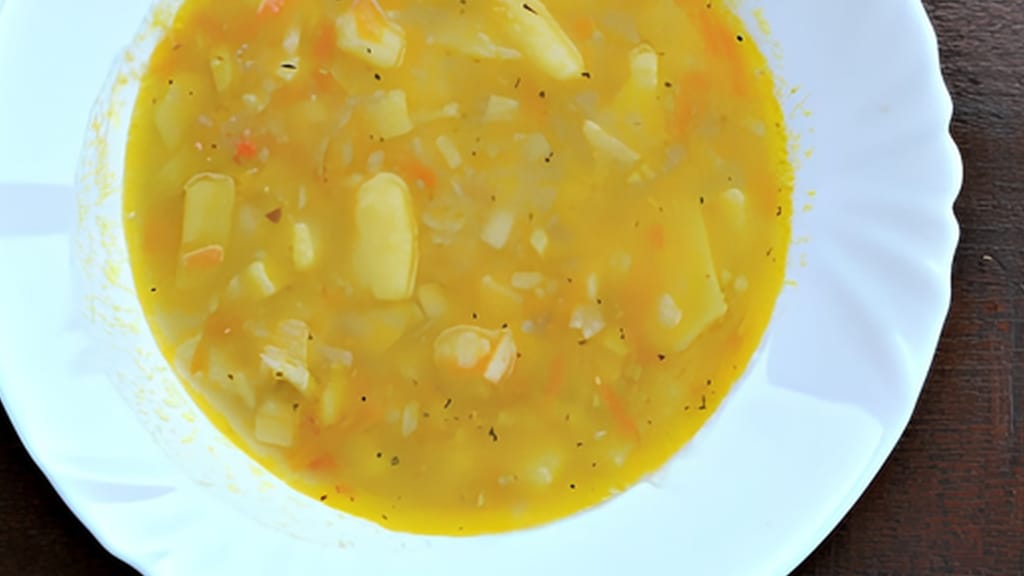
Quick potato soup
Quick potato soup in half an hour – with leftover boiled potatoes, you just shorten the cooking
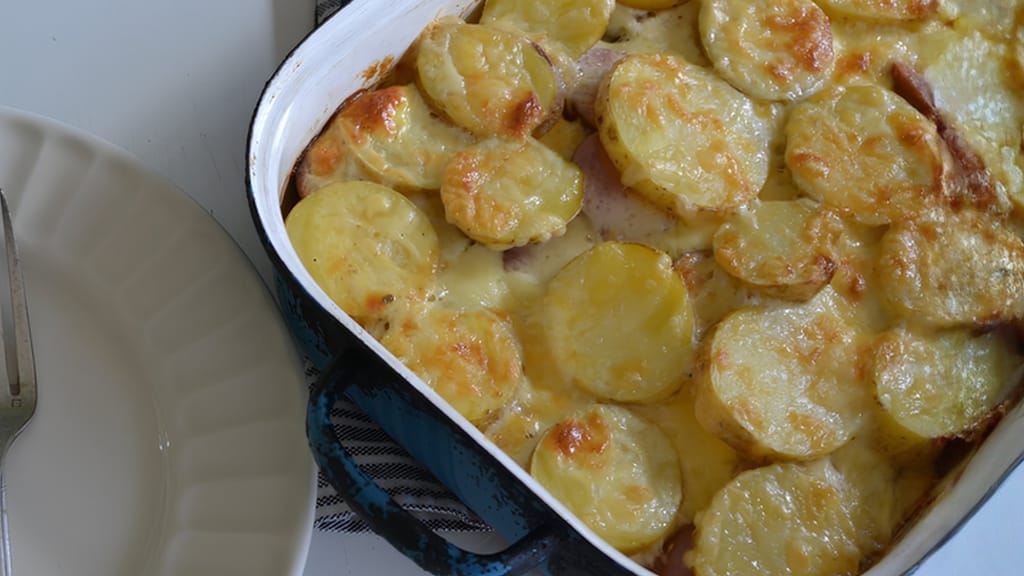
Classic baked potato gratin
Baked potatoes with špekáčky sausages – a recipe for leftover boiled potatoes
From leftover root vegetables, celery and cabbage you can make three dishes: cream of roasted celery soup, a roasted vegetable salad and reheated braised cabbage. Carrots, parsley root and celery left over from the salad and soup turn out best in the oven: roasting brings out the sugars and turns plain vegetables into a main course.
Cream of roasted celery soup. Roast leftover celery in cubes until it starts to brown at the edges, then blend with broth – roasted celery has a nutty sweetness that boiled celery lacks. You'll find the proportions in the recipe for cream of roasted celery soup.
Roasted vegetable salad. Cut carrots, parsley root and celery into equal pieces, roast them and sprinkle with vinegar while still warm; with salad greens and feta, it's a fresh lunch after the heavy holidays. For inspiration, see roasted vegetable salad with feta.
Braised cabbage. Leftover cabbage from the goose is one of the few things that tastes better the next day. Reheat it under a lid with a spoonful of water or pan juices over low heat, stirring constantly, until it reaches 74 °C (165 °F) inside; freeze what you won't eat within 3–4 days in containers. For fresh cabbage, the recipe sweet-and-sour braised red cabbage works well.
Opened jars of pickles and sauerkraut from the salad have their own rules – you'll find them in Jarred Pickles and Sauerkraut: How Long They Keep After Opening.
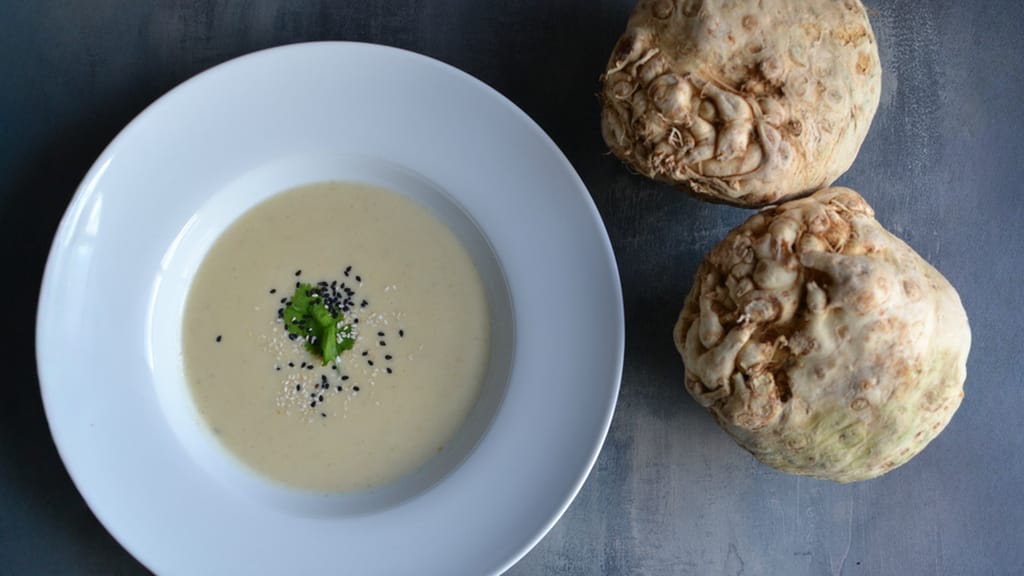
Creamy roasted celeriac soup
Cream of roasted celery soup – a recipe for leftover vegetables after Christmas
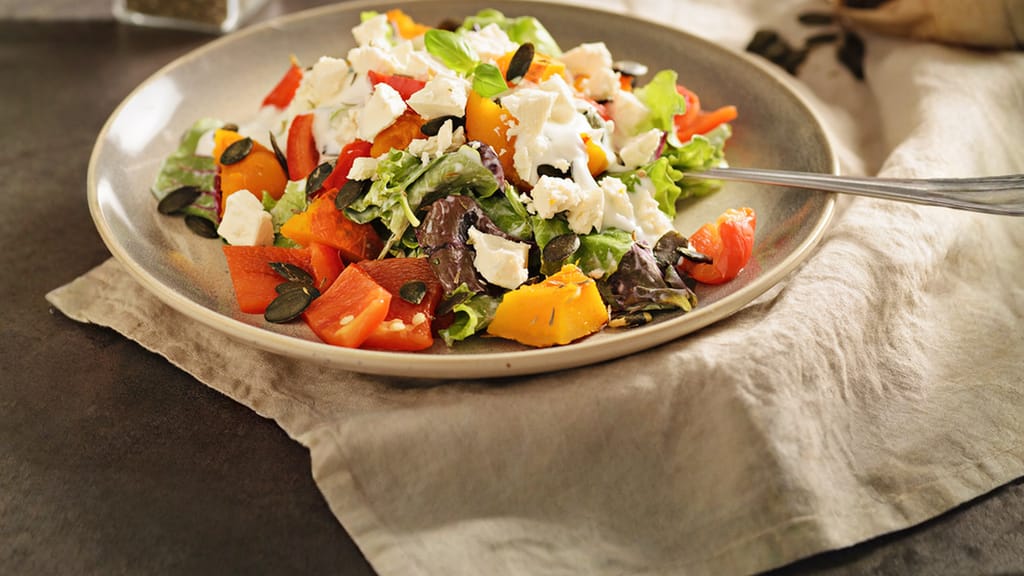
Roasted vegetable salad with feta
Roasted vegetable salad with squash and feta – the method also suits leftover root vegetables
Shelf life sets the order, not taste: fish and salad first, then boiled potatoes and poultry, and finally raw vegetables, the freezer and dry Christmas cookies. The plan below assumes the classic Czech scenario – potatoes and salad on December 23–24, carp on the 24th, goose or duck on the 25th – and the time limits we covered above. What to cook for the holidays themselves is covered in Christmas Menu at Home.
You pick the carp on December 24, right after Christmas Eve dinner.
December 25–26 – prepare the leftovers for the days ahead. Pick the goose after lunch on the 25th; build a broth from the goose carcass and a fish broth from the raw carp head (on the 25th at the latest, otherwise freeze the head). Fish spread for breakfast, fish soup for dinner on the 26th. Finish salad with homemade mayonnaise by December 25 at the latest (if made on the 23rd) or the 26th (if made on the 24th). Salad with store-bought mayonnaise follows the same rule, by the 25th or 26th. Eat cream-filled cookies over these two days.
December 27 – the last fish day. Carp fish cakes for lunch, and if you have salad without mayonnaise made on December 24, finish it today; salad with mayonnaise no longer belongs here. Throw out whatever fish is left. Potatoes boiled on December 23 have their last day today – whatever doesn't go into the fish cakes goes into potato soup in the evening.
December 28 – goose and potato day. Goose broth with noodles, leftover meat with cabbage for lunch, and baked potatoes with picked meat or potato soup on goose broth in the evening. Use up all the boiled potatoes from December 24 today. The goose and cabbage from the 25th are at the end of their 3–4 days, so whatever you won't eat, freeze today in containers with broth or pan juices.
December 29 – vegetable day. Raw root vegetables and celery: cream of roasted celery soup or roasted vegetable salad. Don't use cooked holiday leftovers today – if you want potatoes, cook fresh ones. In the evening, move a container of goose broth or meat from the freezer to the fridge for tomorrow.
December 30 – freezer and dry Christmas cookies. Bring the thawed goose broth or meat to a boil, with crumb balls from cookies alongside. Go through the fridge: throw out containers with no date, partly eaten sauces and anything older than four days, and free up space for New Year's Eve.
For New Year's Eve, cook from fresh. Everything left from December 24 and 25 is by now either eaten or in the freezer with a date on the lid.
No, you can put warm food in the fridge right away – the FSIS advises dividing it into shallow containers and refrigerating or freezing it immediately. Waiting for food to cool on the counter is actually worse, because it spends more time in the temperatures where bacteria multiply. So don't put a big pot of soup or a roasting pan of meat in the fridge whole. Divide it into smaller containers so it doesn't warm up the fridge and cools quickly.
Better not, unless you have a thermometer on the balcony and are sure the temperature stays between 0 and 4 °C (32–40 °F). The FSIS time limits assume a fridge at 4 °C (40 °F) or below, and balcony temperatures in December swing a lot – one sunny morning or a thaw is enough for a closed container to warm up more than you'd expect. If the fridge isn't enough, put things on the balcony that matter less: drinks, unopened jars of preserves, raw vegetables.
Always reheat only the portion you're going to eat, and ideally only once – that's what our articles on storing carp and leftover goose recommend. Each reheating and cooling takes the food through the temperature range where bacteria multiply again, and the meat dries out a little more every time. So don't reheat the whole pot of soup: pour just what you'll eat into a small saucepan and bring it to a boil.
Cover the food, stir or turn it halfway through, and finish by checking the temperature – it must reach 74 °C (165 °F) inside, as the FSIS advises. A microwave heats unevenly, so the edge of the plate can be boiling while the middle is still lukewarm. Spread the food in an even layer, add a spoonful of water to thicker dishes, and let it stand for a minute after heating so the heat evens out.
Yes, if it was thawed in the fridge – according to the FSIS, food thawed in the fridge is safe to refreeze, though it may lose some flavor and texture. Anything you thawed in cold water or the microwave should first be thoroughly reheated – only then can you freeze it again, or just eat it right away. In practice, you avoid refreezing by freezing leftovers in single portions, so you only take out what you'll eat.
One recipe worth heating the oven for, one tip, and one deal from the shop. Nothing else.