Mom's christmas fish soup with mushrooms
Christmas Menu at Home: What to Cook for Christmas Eve Lunch and Dinner, Christmas Day and St. Stephen's Day, with a Prep Plan
Updated Nov 19, 2026
A Czech Christmas menu at home follows a clear order: something light and meatless for lunch on Christmas Eve, then soup, fried carp or schnitzel with potato salad for dinner, followed by Christmas cookies. Christmas Day brings roast goose, duck or svíčková (Czech beef in a root-vegetable cream sauce), and St. Stephen's Day pork or whatever is left over. Below you'll find a short method for each dish (how long, what temperature, what to serve it with), Christmas Eve dinner variations without carp, without meat and for kids, and a prep plan from the cookies to Christmas Eve itself: what to do a week ahead, what the day before and what only on the night. At the end, we cover how long potato salad and fish can sit out of the fridge.
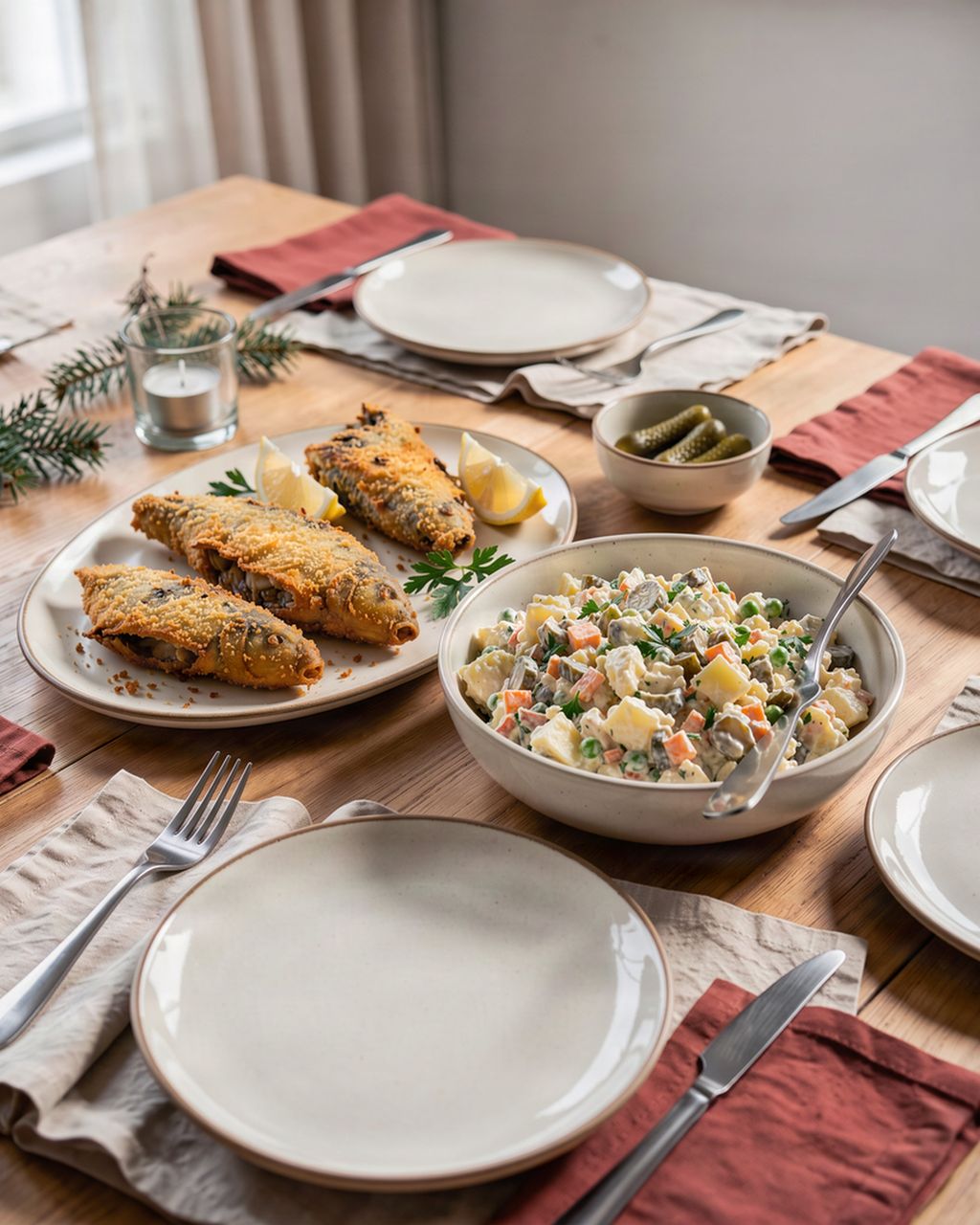
A traditional Czech Christmas Eve dinner has four courses in this order:
Soup: fish soup made from the carp, or pea soup in families that don't eat fish.
Main course: fried carp or schnitzel.
Potato salad as the only side dish.
Christmas cookies, along with vánočka (Czech braided Christmas bread), though that is traditionally sliced mainly in the morning at breakfast.
By custom, dinner is eaten "after the first star appears," but in practice it's usually between five and seven in the evening, so the kids don't have to wait too long for their presents. People fast all day beforehand, at least from meat, which is why lunch has its own light menu (more on that below). The table is dressed with a festive tablecloth, a carp scale under each plate for luck, and often an extra place setting for an unexpected guest.
On Christmas Eve, the soup is fish soup made from carp, or pea soup where fish isn't eaten.
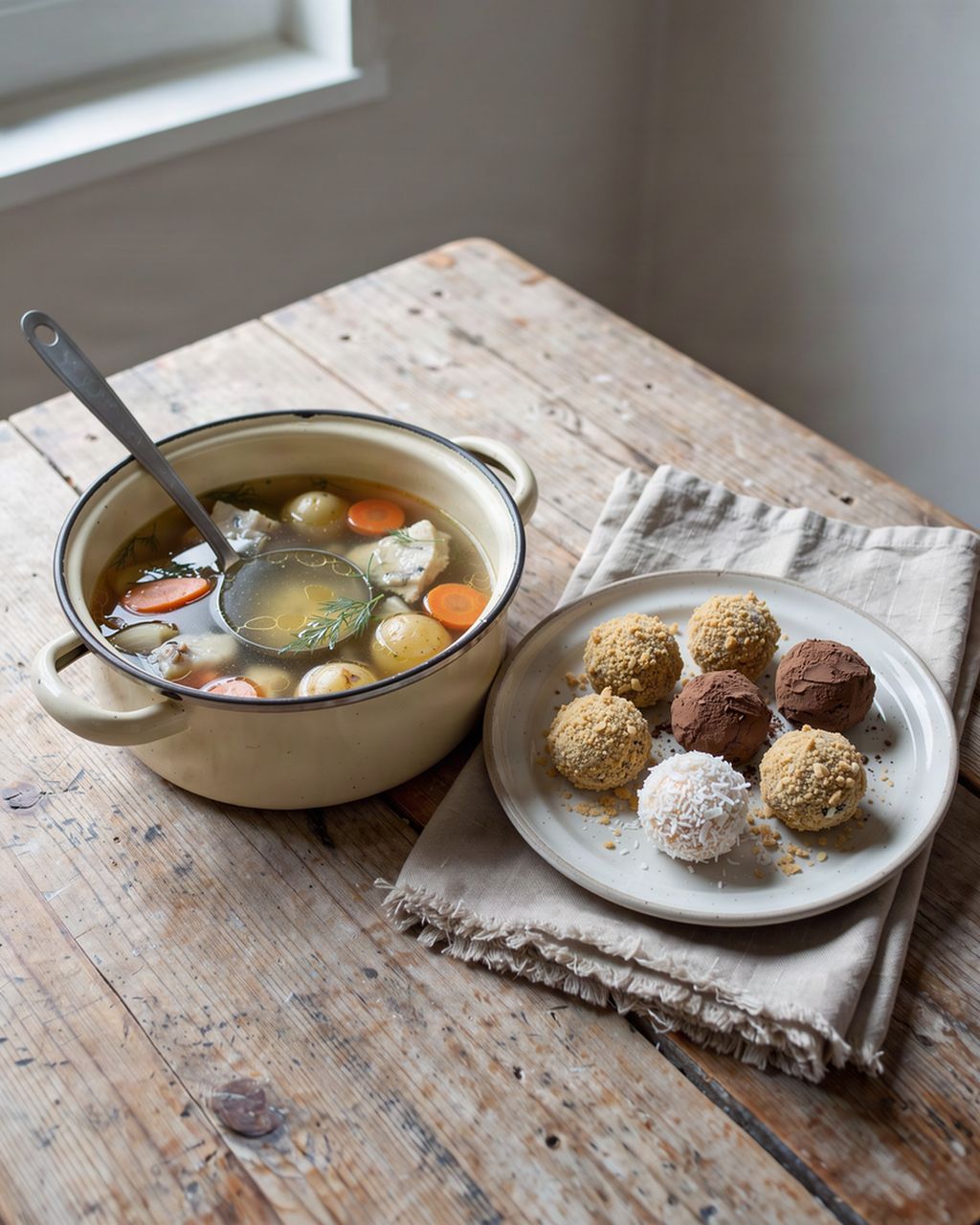
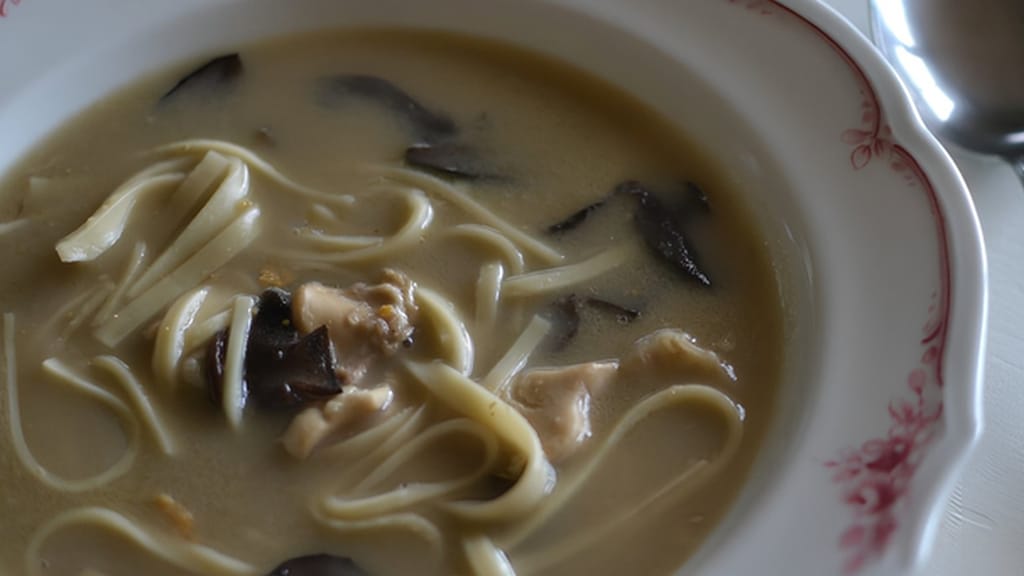
Fish soup is made from what's left of the carp after portioning: the head (without the gills), backbone, fins and roe or milt. Cover them with cold water, add carrot, parsley root, celery, onion, allspice and a bay leaf, and let it barely simmer, just below boiling, for 40–45 minutes. If it boils hard, the broth turns cloudy. Then strain it, pick the meat from the head, thicken the soup with a light roux and serve it with toasted cubes of white bread. A ready-to-cook version is in the recipe Mom's Christmas fish soup with mushrooms. Why broth turns cloudy and what to thicken the soup with is explained in how to thicken fish soup.
Pea soup is for those who don't care for fish: yellow split peas soaked overnight, cooked with root vegetables for 45–60 minutes until tender, blended and seasoned with marjoram. It's thick on its own, so don't thicken it.
Mom's christmas fish soup with mushrooms
Mom's Christmas fish soup with mushrooms
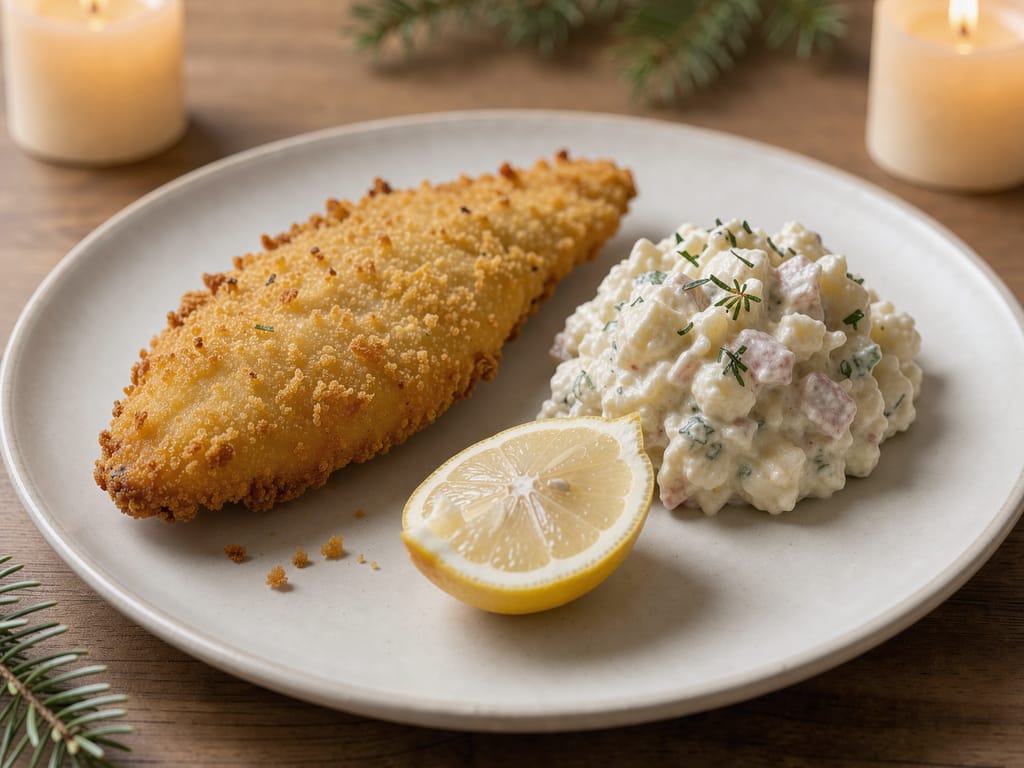
Fried carp is the main course the whole evening revolves around. The easiest approach is to buy skin-on carp fillet, cut it into portions about 1.5 cm thick, and score the flesh side closely every 2–3 mm so the tiny bones fry up crisp. Salt the portions, leave them for 30 minutes, then coat them in flour, beaten egg and breadcrumbs and fry them in at least 1 cm of fat at 170 °C for about 3–4 minutes per side, until golden brown. Serve with a lemon slice and potato salad. How to portion carp so the bones aren't noticeable is explained in how to debone and score carp.
Schnitzel is an equal second option in many families, not a backup plan. Pound slices of pork chop or chicken breast to 5–6 mm, salt them, bread them the same way as the carp and fry at 170 °C for about 3 minutes per side. Before serving, let them drain briefly on a wire rack, not on paper, or the underside will go soggy.
Potato salad is made the day before, because it needs to rest in the cold so the flavors come together. For it, boil type A (salad) potatoes in their skins for 20–25 minutes, until tender but not falling apart. Type A potatoes don't crumble, so the cubes stay whole. Which potatoes to choose and how to cook them so they don't fall apart is explained in which potatoes to use for potato salad.
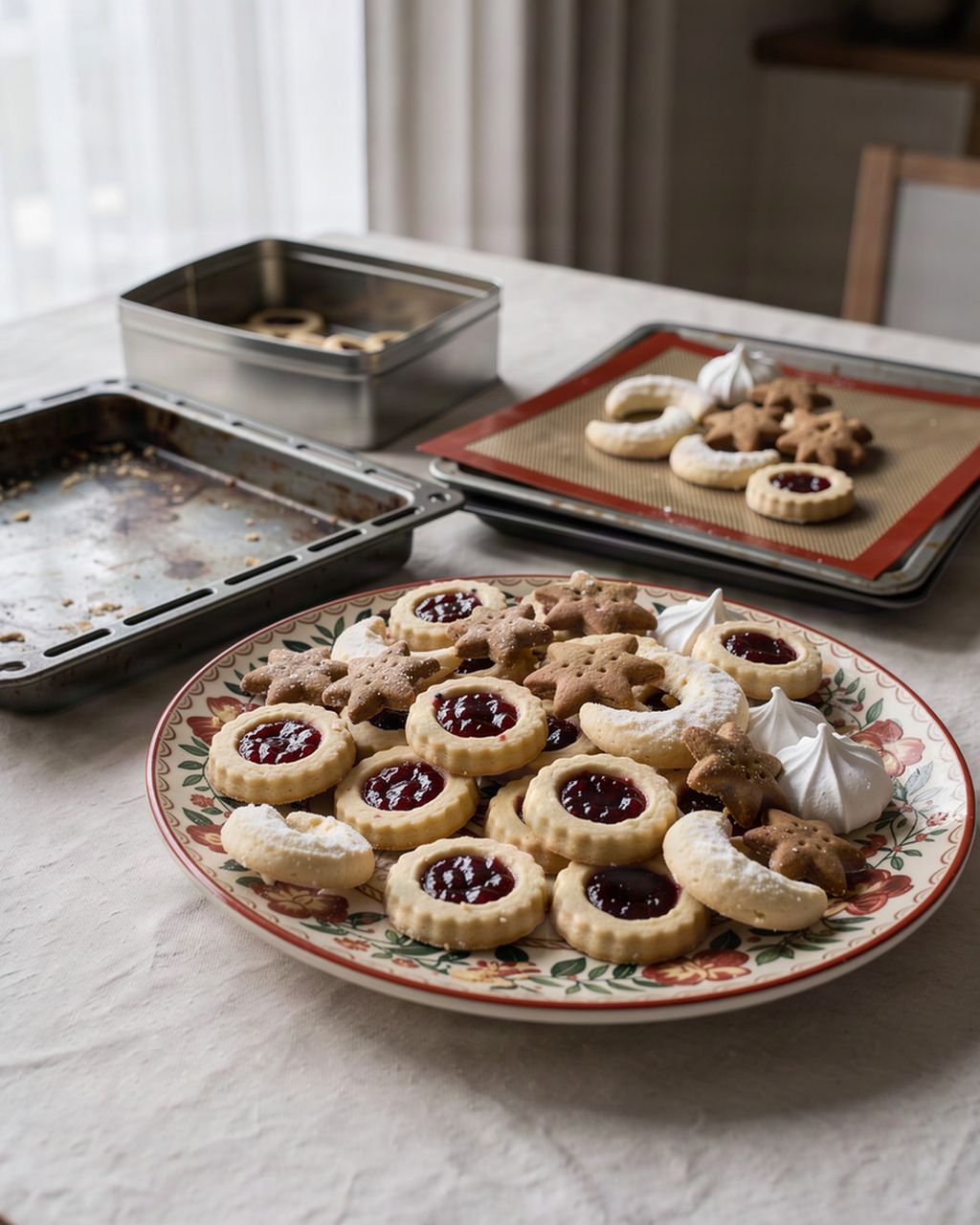
Bake cookies that need to mellow (linecké, gingerbread) 1–2 weeks before Christmas, vanilla crescents and filled cookies 3–4 days ahead, and vánočka the day before (December 23). Linecké (Czech Linzer-style jam cookies) and gingerbread soften and become juicier after 1–2 weeks in a tin, whereas vanilla crescents are good right away. Classic crisp linecké bake at 170 °C for 10–13 minutes, until the edges begin to turn golden. Soft gingerbread can also be baked a week ahead. An overview of twenty classics is in the article types of Christmas cookies, and if someone at the table doesn't eat gluten, what to replace flour with in gluten-free Christmas cookies will help.
Vánočka is a yeasted butter dough with raisins and almonds. Let it rise twice, the first time in the bowl for about an hour and the second time already braided for about 30 minutes. Braid it from nine strands (4 + 3 + 2), brush it with egg, bake for 5 minutes in an oven preheated to 240 °C, then for about 30 minutes at 170–180 °C. If the surface darkens too quickly, cover it with parchment paper. A tested method is in the recipe Mom's vánočka. With the cookies, many families pour homemade eggnog (Czech vaječný koňak, a thick egg liqueur similar to advocaat).
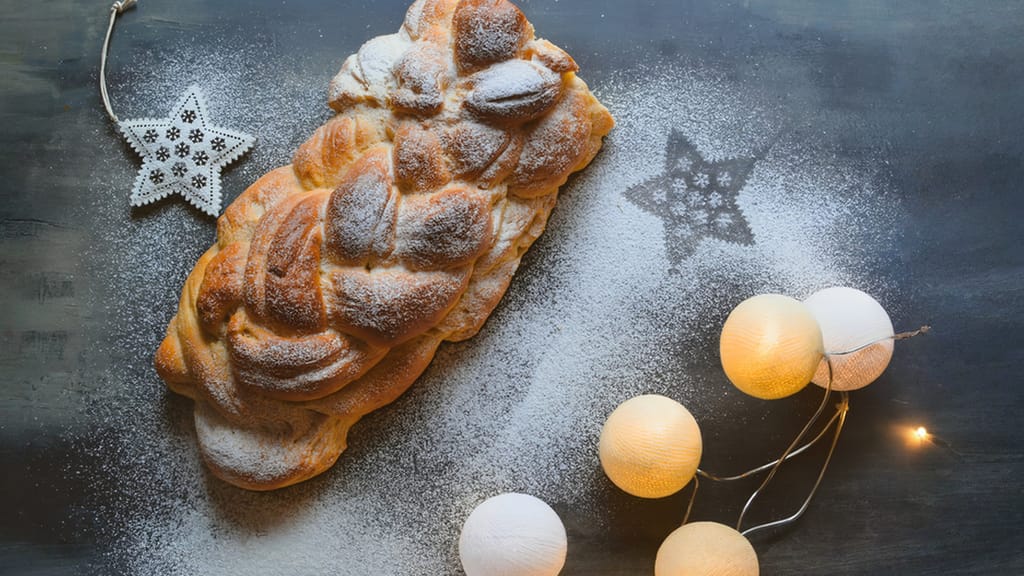
Homemade butter christmas braid
Mom's vánočka
How to soften gingerbread that’s gone hard, when to fill Linzer cookies and how to tell the carp is done. One recipe and one tip a week. Unsubscribe in one click.
Lunch on Christmas Eve is traditionally light and meatless. Most often it's one of these three dishes:
kuba (Czech baked barley with dried mushrooms),
pea purée with fried onions,
mushroom soup.
All three are cheap, filling and can be prepared ahead, so they won't tie up the stove at noon when you'll need it in the evening for frying. If you keep the fast strictly, fry the onions in butter or oil, not lard.
Kuba is a meatless baked dish of cooked pearl barley, dried mushrooms and onion fried in butter or oil, baked at 180 °C for 20–30 minutes until a crisp crust forms on top. You can bake it in the morning and just reheat it at lunchtime. We don't have a kuba recipe in our collection yet, but for barley prepared another way, no longer meatless (with smoked meat), try barley risotto.
Pea purée is yellow split peas soaked overnight and cooked for 45–60 minutes until they fall apart, mashed with butter and marjoram and served with onions fried in oil. It firms up as it cools, so reheat it with a little water.
Mushroom soup is the third classic of Christmas Eve lunch and is made from dried mushrooms, which smell more intense than fresh ones. Soak a handful of dried mushrooms (about 20–30 g per 1.5 l) for 20–30 minutes, sauté an onion in butter, then add the mushrooms with their soaking water (leaving the grit at the bottom behind), diced potatoes and caraway, and simmer for 20–25 minutes, until the potatoes are tender. You can thicken it with a light roux or with cream and all-purpose flour; at the end, season it with marjoram and garlic. A ready recipe is mushroom soup, and a more delicate creamy version is delicate and fragrant mushroom soup. The technique and the mistakes that make the soup bland are covered in mushroom soup: recipes, technique and mistakes.
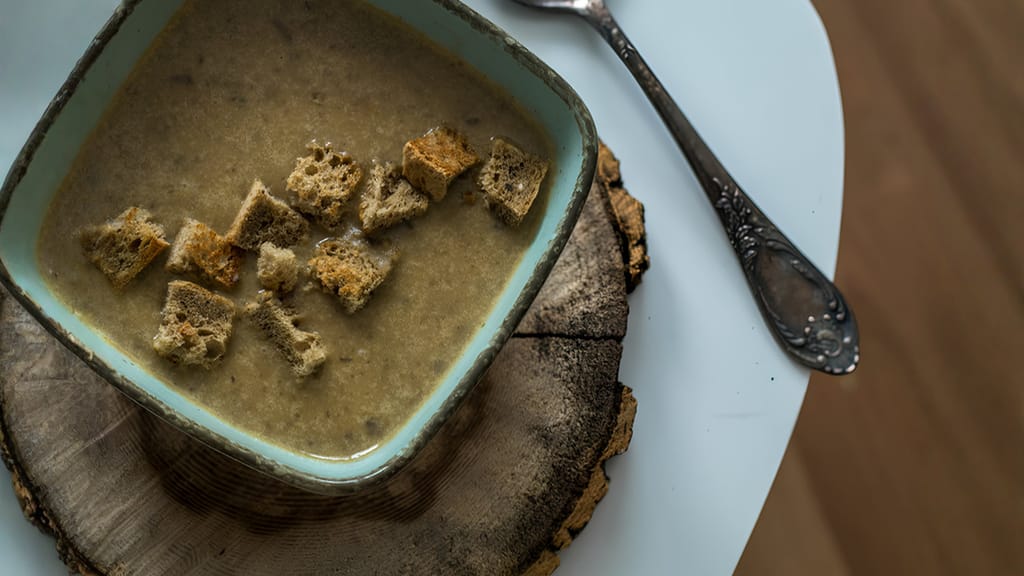
Mushroom soup
Mushroom soup made from dried mushrooms
You can prepare Christmas Eve dinner at home in four variations: the classic with carp, without carp, meatless and for kids. The soup and potato salad stay, and only the main course changes.
classic: fish soup, fried carp and potato salad,
without carp: another fish or schnitzel,
meatless: pea or mushroom soup and fried celery or oyster mushrooms,
for kids: schnitzel or fish sticks made from fillets, and salad without onion.
That way you only need to make one big bowl of salad and everyone takes what they want from it.
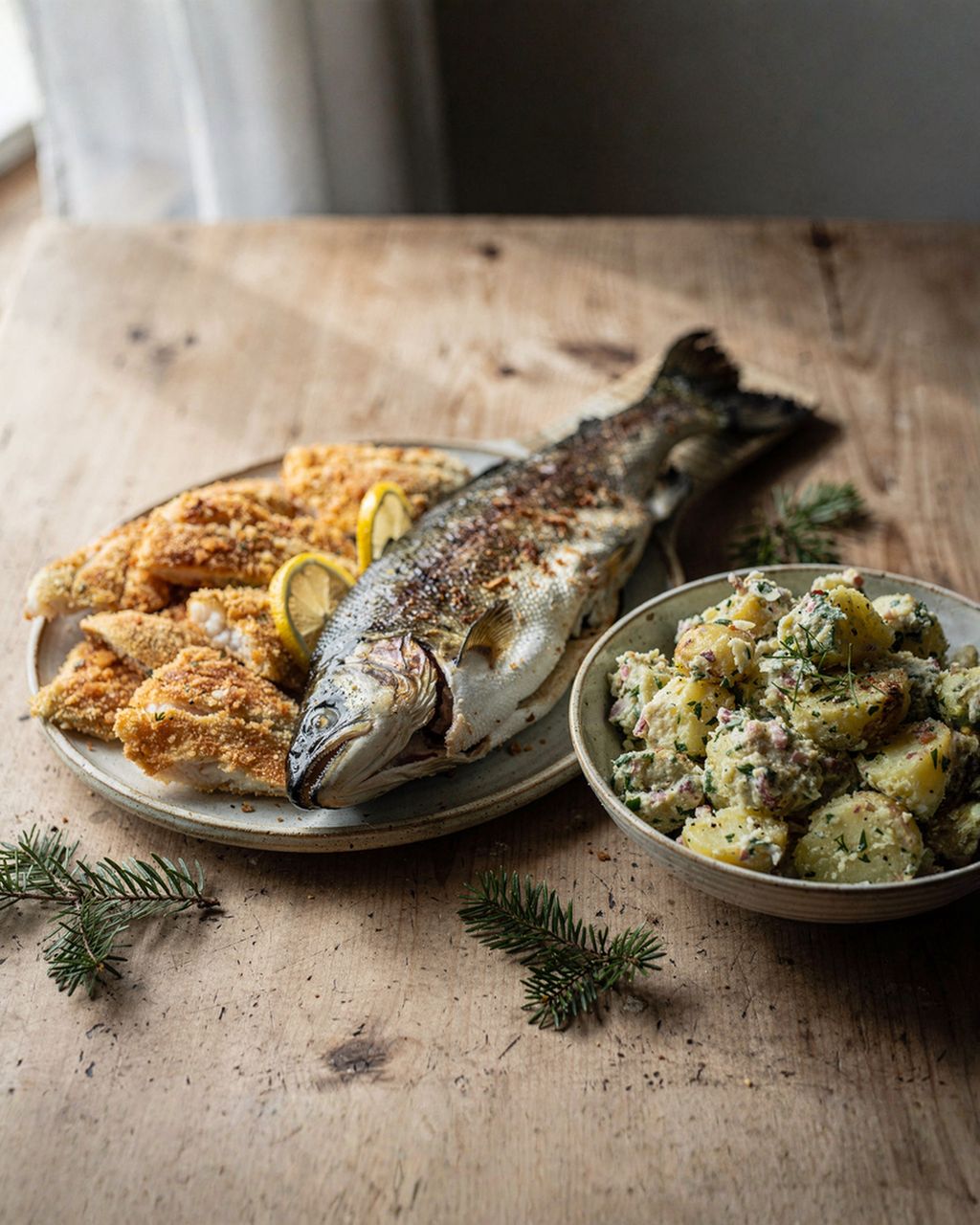
The classic Christmas Eve dinner is fish soup, fried skin-on carp fillet and potato salad rested since the day before (the methods are above). If you don't feel like frying, baked carp is just as traditional: rub the portions with butter, caraway and salt and bake at 200 °C for 20–25 minutes, until the skin turns golden and the flesh separates easily from the bone. Times for portions and whole carp of different sizes are in how long to bake carp in the oven.
If nobody at the table cares for carp, the easiest substitute is another white fish or salmon. Crispy-crusted fish fillets (cod with a Parmesan crust) are first steamed or pan-seared, and the crust is then finished under the broiler; they go just as well with potato salad. Another option is a pork or chicken schnitzel in the classic three-step breading. Trout, pikeperch, cod and salmon are compared in what to replace carp with on Christmas Eve.
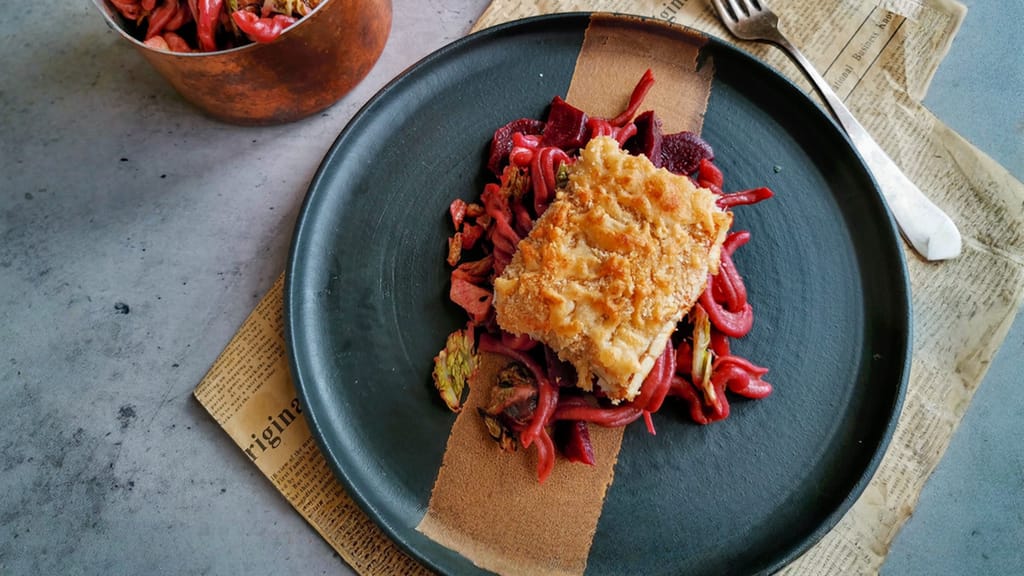
Fish fillets with a crispy crust
Crispy-crusted fish fillets instead of carp
A meatless Christmas Eve dinner is built around fried celery root or oyster mushrooms. Cut the celery root into 1 cm slices and parboil them for 5–7 minutes; leave the oyster mushrooms whole in clusters. Bread both in the three-step breading and fry at 170 °C for about 3 minutes per side. Choose mushroom or pea soup and leave the salad unchanged, just check that the mayonnaise has nothing in it that doesn't suit you.
For kids on Christmas Eve, chicken schnitzel or homemade fish sticks and potato salad without onion work best. You can also bake the schnitzels in the oven, for example baked crispy schnitzels in a cornflake coating made from turkey breast marinated overnight in kefir: 15–20 minutes at 200 °C. Make the fish sticks from boneless fillet (such as cod) cut into strips; rub each strip between your fingers first, then bread them and fry at 170 °C for 2–3 minutes. Set aside part of the potato salad in a smaller bowl before you add the onion and extra pickles, and for the kids you can serve the soup as a plain broth with pieces of vegetables.
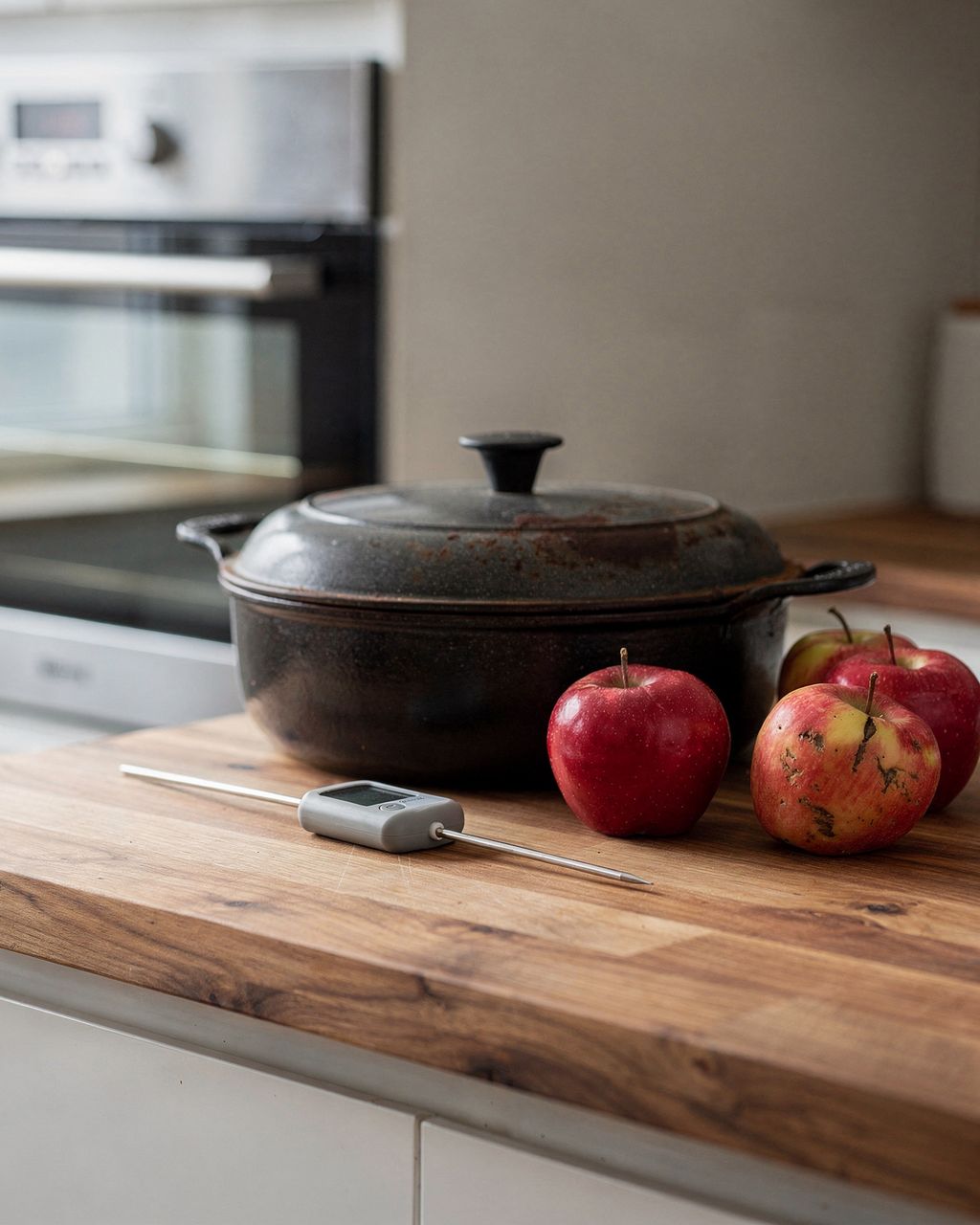
On Christmas Day, after the fast, meat is roasted, most often roast goose, duck or svíčková in cream sauce, with dumplings and cabbage. It's the only day of Christmas when the oven runs for several hours straight, so plan when to put the meat in so it's ready for lunch. For more accurate temperatures, especially for low-and-slow goose, an oven thermometer is handy, because home ovens commonly drift from the set temperature.
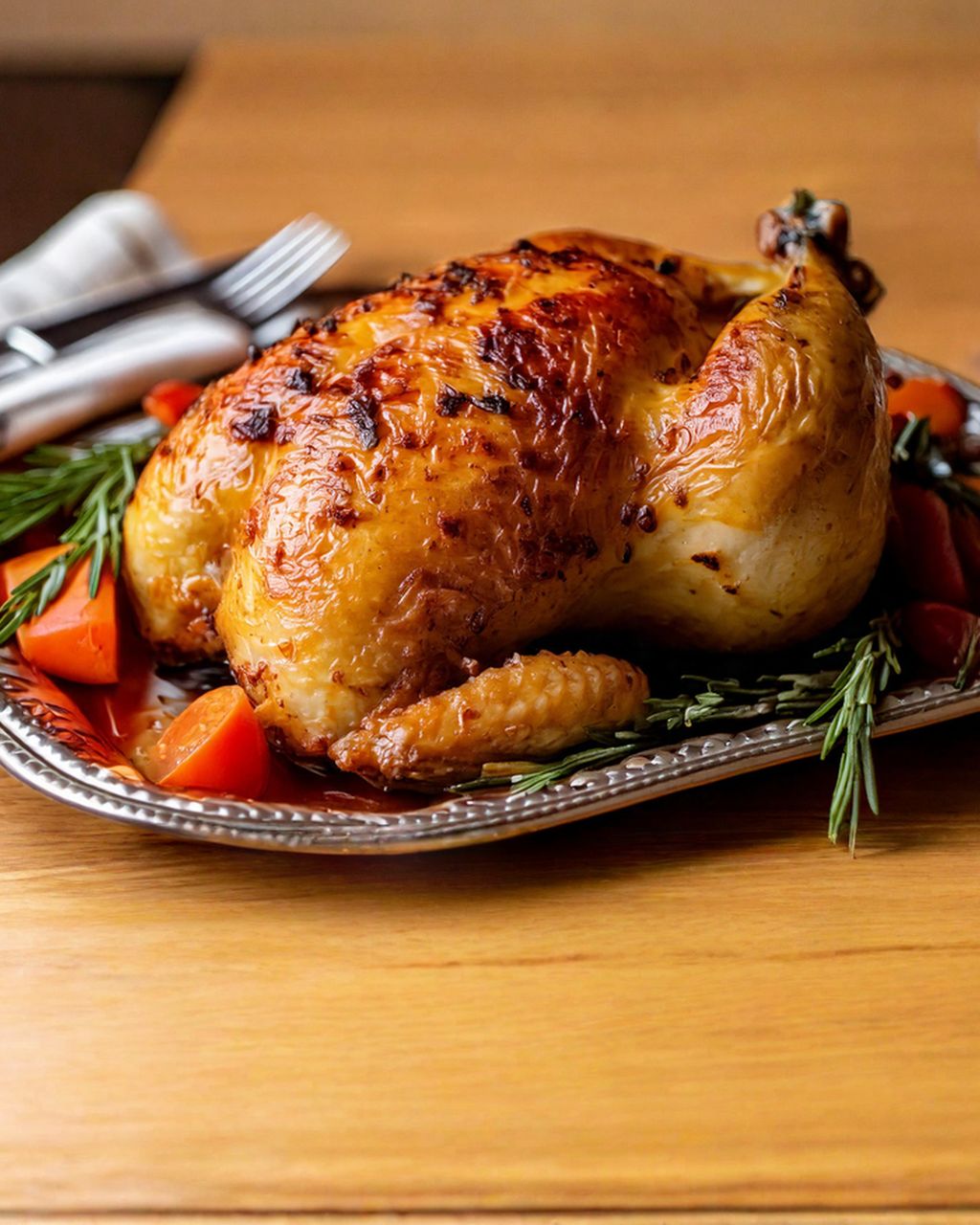
A roast goose of 4–5 kg is roasted covered at 150–160 °C for 3.5–4.5 hours and uncovered for the last 20–30 minutes at 200–220 °C. Before roasting, salt it inside and out, sprinkle it with caraway and put an apple and an onion in the cavity. Roast it in a roasting pan with a little water, basting it regularly with the pan juices, and at the end uncover it and raise the temperature so the skin crisps. It's done when a thermometer in the thickest part of the thigh, away from the bone, reads at least 74 °C; clear juices and a loose joint are only supporting signs. Serve with red cabbage and dumplings. Exact times by weight are in how long to roast a goose, and what to rub on it is covered in what to rub on a goose for crispy skin. For a smaller table, goose breasts on apples with potato lokše is enough.
A roast duck of 2–2.5 kg is roasted covered at 160 °C for 2.5–3 hours and then uncovered for 15–20 minutes at 220 °C, until the skin crisps. It's done at 74 °C in the thickest part of the thigh. Before roasting, salt it and sprinkle it with caraway. Save the rendered fat; you can fry potatoes in it for St. Stephen's Day. It goes well with sweet-and-sour braised red cabbage, which can be cooked a day ahead and tastes even better the next day. Temperatures for crispy skin are covered in how long to roast a duck. If you want something quicker, make duck breasts with crispy cabbage and bacon.
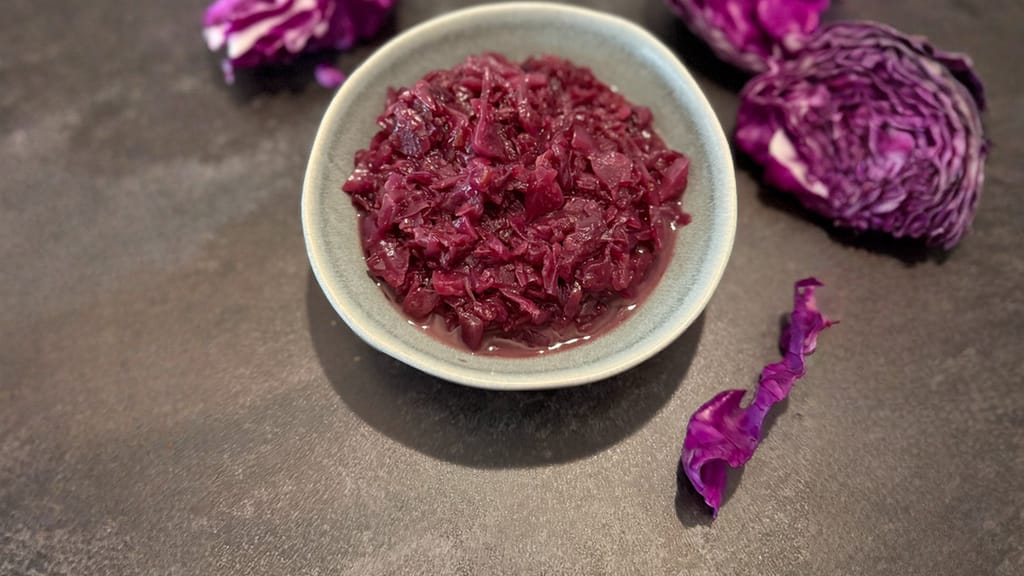
Sweet and sour braised red cabbage
Sweet-and-sour braised red cabbage for goose and duck
Svíčková in cream sauce is beef tenderloin or top round roasted at 160–180 °C for about 2 hours on a bed of root vegetables, which are then blended with the pan juices and cream into the sauce. You can cook it as early as the morning of the 24th and just reheat it, since a day of resting does it good. You'll find the recipe as homemade svíčková, and why the sauce can turn out sour and how to balance it is explained in why svíčková is sour.
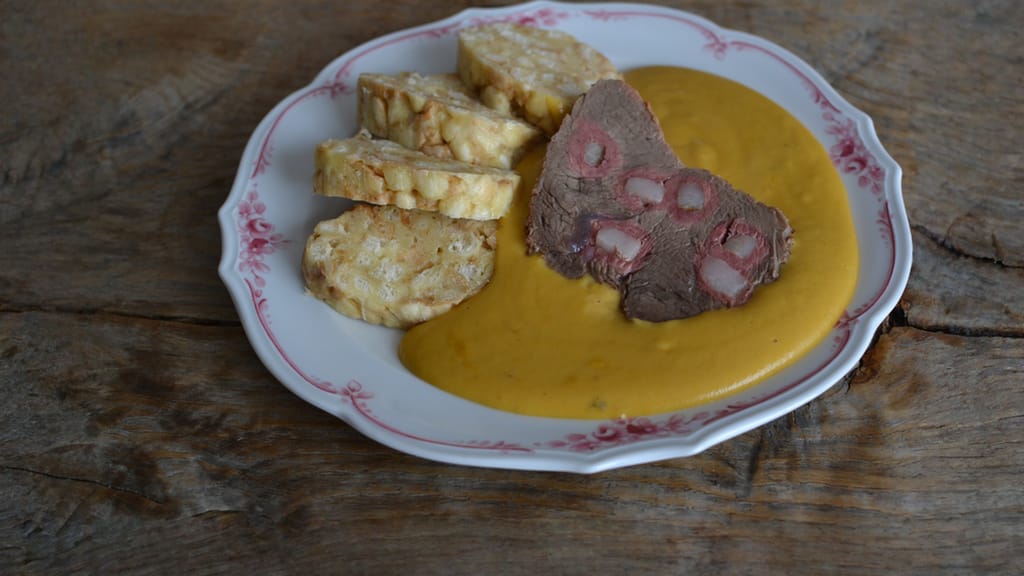
Beef sirloin in cream sauce (svíčková)
Homemade svíčková in cream sauce
On St. Stephen's Day, the traditional dish is vepřo knedlo zelo (roast pork with dumplings and sauerkraut), or you finish up leftovers from the previous days. It's the day when nobody wants to stand at the stove anymore, so dishes that cook themselves are ideal.
Roast pork with sauerkraut and a dumpling: pork shoulder or belly seasoned with salt, garlic and caraway is roasted at 170 °C for 2–2.5 hours and briefly at 200 °C at the end to set the surface. It goes with braised sauerkraut and a bread dumpling. For inspiration, try slow-roasted pork with red cabbage.
Leftovers: fried carp can be reheated in the oven at 180 °C for 8–10 minutes on a wire rack, until it reaches 74 °C inside and crisps up again, or you can pick the meat off and make a spread. Goose and duck meat suit risotto, gnocchi or bread with lard, for example as potato gnocchi with pulled duck. What to do with leftover poultry is covered in leftover roast goose and duck: what to do with the meat, carcass and fat, and what to do with cookies that didn't get eaten in what to do with leftover Christmas cookies.
The most important rule of the Christmas plan: potato salad and the broth for the soup are made the day before, and on Christmas Eve you only fry. The whole schedule looks like this:
A week or two ahead (by December 20): bake the cookies that need to mellow (linecké, gingerbread) and store them in tins. Order or reserve the carp and the goose or duck, as they sell out quickly before Christmas.
3 days ahead (December 21): buy the long-life items (barley, dried mushrooms, peas, mayonnaise, pickles, breadcrumbs, flour, frying fat). Bake the rest of the cookies that are best fresh (vanilla crescents, filled cookies). Move the frozen meat for Christmas Day (goose, duck) from the freezer to the fridge; a large goose takes two to three days to thaw in the fridge.
2 days ahead (December 22): buy fresh ingredients: vegetables, type A potatoes, eggs, cream. If you're buying chilled carp, buy it no earlier than now. You'll find how long fish keeps in the fridge below. Soak the barley and peas overnight for the kuba and pea purée.
The day before (December 23): boil the potatoes in their skins and the vegetables, and make the potato salad. Cover it and put it in the fridge, where it will rest overnight. Portion the carp and make a broth for the fish soup from the head and bones, strain it and leave it to cool. Bake the vánočka; wrapped in a kitchen towel, it stays soft until morning. Bake the kuba or cook the pea purée for tomorrow's lunch.
Christmas Eve morning and late morning: vánočka for breakfast. Score the carp, salt it and put it back in the fridge. Set out three plates for the breading. If svíčková is on the menu for Christmas Day, put the meat in to roast.
Christmas Eve at noon: reheat the kuba or purée, or make mushroom soup. Don't cook anything else; you have a break now.
Christmas Eve afternoon and evening (about an hour before dinner): finish the broth into soup, thicken it and season. Bread and fry the carp and schnitzels just before dinner. Keep the finished pieces on a wire rack in the oven at 80–100 °C so they stay crisp. Take the salad out of the fridge only when it's being served.
December 25, morning: put the goose or duck in to roast so it's ready around noon; for a goose, that means starting between seven and eight in the morning.
As a rough guide, count on about 150–200 g of carp fillet per adult (more for a whole carp with head and bones) and 250–300 g of potato salad. Count 250–300 ml of soup per bowl. A 4–5 kg goose serves six to eight people. Children need about half, and guests who only arrive on Christmas Eve after lunch will want more salad. Detailed tables by number of people, age and whether there is also schnitzel on the table are in how much carp and potato salad per person. How to work out how many cookies to bake is covered in how many Christmas cookies to bake.
According to the US food safety agency USDA FSIS, perishable food shouldn't be left out of the fridge for more than 2 hours, and in temperatures above 32 °C (90 °F) for only 1 hour. FSIS gives the danger zone, in which bacteria multiply fastest, as 4–60 °C (40–140 °F) and recommends setting the fridge to 4 °C or lower. On a Christmas Eve table, this applies mainly to potato salad, mayonnaise-based spreads and fried fish.
In practice, that means:
Keep the potato salad in the fridge and take it out only when everyone sits down. After dinner, put it back in the cold; don't leave it on the table until the carols.
According to FSIS, put leftovers in shallow containers so they cool quickly, refrigerate them within 2 hours of cooking and use them within 3–4 days. When reheating, FSIS says food needs to reach 74 °C (165 °F).
For fresh fish, meaning chilled carp or fillet, the US FDA recommends storing it in the fridge at 4 °C or lower and using it within 2 days of purchase. If you can't manage that, the FDA advises wrapping the fish tightly and freezing it.
In the fridge, put the carp on the bottom shelf, where it's coldest, in a closed container or well wrapped, so no juices drip onto the salad or other ready-to-eat food.
Traditionally, Christmas Eve breakfast is vánočka (Czech braided Christmas bread) with butter, honey or jam, plus tea or cocoa. The day is a fasting day, so breakfast is light and no meat is eaten until dinner. According to folklore, anyone who makes it through the whole day without eating will see a golden piglet.
In the traditional Christmas Eve fast, no meat from warm-blooded animals is eaten, meaning no pork, beef or poultry, while fish, eggs, dairy, pearl barley, legumes and mushrooms are allowed. That's why lunch is kuba (Czech baked barley with dried mushrooms), pea purée or mushroom soup, and dinner is carp. Schnitzel for Christmas Eve dinner is a newer custom that the fast doesn't account for.
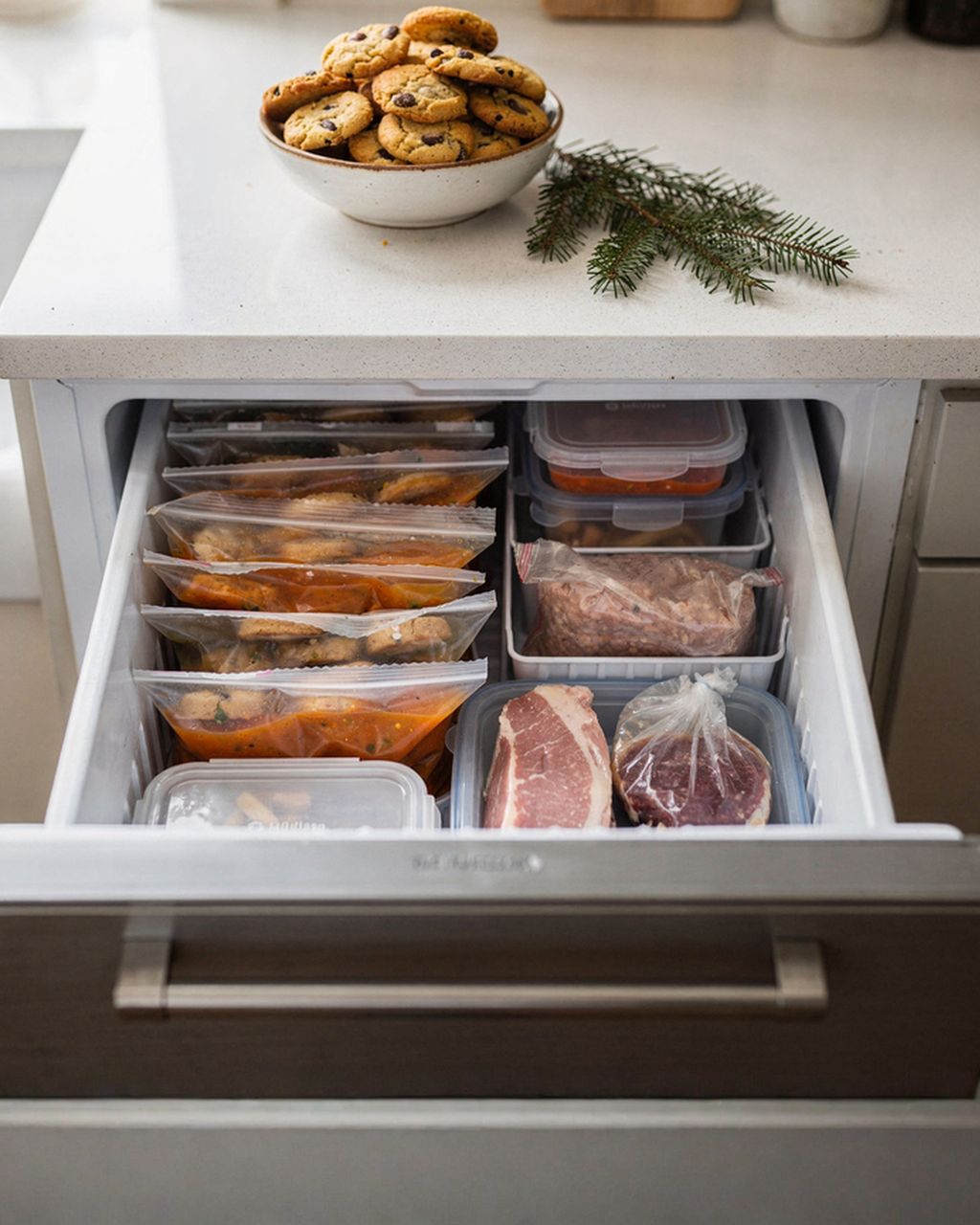
Yes, you can freeze both whole carp and carp fillets. The FDA recommends freezing fresh fish you won't use within 2 days of buying it. Wrap the fish tightly so it doesn't dry out, and thaw it slowly overnight in the fridge, not on the counter.
To make a vegan potato salad, leave out the eggs and bind it with mustard, oil and a little pickle brine instead of mayonnaise, or use vegan mayonnaise. The potatoes, root vegetables, onion and pickles stay the same, and you still let it rest the day before.
For New Year's Eve, use only leftovers you froze no later than December 25–26 and thawed in the fridge: a fish spread for open-faced sandwiches from the boned carp, or risotto, gnocchi or toast with lard from the goose or duck meat. Don't use anything that has been sitting in the fridge since Christmas Eve, as leftovers should be used within 3–4 days.
One recipe worth heating the oven for, one tip, and one deal from the shop. Nothing else.