Lokše - savory potato flatbreads
How to Boil Potatoes, Skin-On or Peeled: Times for Salad and Mash
Updated Nov 19, 2026
How to boil potatoes: start them in cold salted water, bring to a boil, then cook at a gentle simmer until tender – whole medium potatoes 20–25 minutes, halves 15–20 minutes, cubes 10–15 minutes. They're done when a knife or skewer slides in with no resistance. Everything else – potato type, skin, water, heat – decides whether you end up with a firm salad potato, fluffy mash, or mash you didn't want. Below you'll find times for every method, from the pot to steaming, the microwave and the rice cooker, plus why it all works.
Boiled potatoes need 10 to 40 minutes from the boil, depending on how big the pieces are. Time them from the moment the water starts to boil, not from when you put the pot on the burner.
Whole small potatoes (up to 50 g, walnut to egg size): 15–20 minutes
Whole medium potatoes (100–150 g): 20–25 minutes
Whole large potatoes (200 g and up): 30–40 minutes
Halves of medium potatoes: 15–20 minutes
Quarters or large chunks (about 4 cm): 15–18 minutes
Cubes, 2–3 cm: 10–15 minutes
New potatoes, whole: 12–18 minutes
These are guideline times for a gentle simmer. The variety, the age of the potatoes and how many are in the pot can shift them by a few minutes either way – so always test rather than just watching the clock.
Put potatoes in cold water, not boiling. A potato conducts heat slowly: in boiling water the outside cooks and starts to fall apart before the heat reaches the center. When the potatoes heat up together with the water, they warm through evenly and you get a firm outside and a tender center at the same time.
Add enough water to cover the potatoes by about 2 cm. The more potatoes, the bigger the pot – potatoes packed in tightly cook unevenly, and the ones at the bottom turn to mush before the ones on top are done.
The exception is small cubes for a quick soup, or new potatoes, where there's hardly any difference between outside and center – there you can start in boiling water if you like.
Add the salt right away to the cold water, about 1 heaping teaspoon (8–10 g) per liter. Potatoes only absorb salt while they cook, so if you salt afterward they'll be salty only on the surface. Skin-on potatoes can take a little more salt, since the skin lets less of it through.
When you boil peeled potatoes as a side dish, add a teaspoon of caraway seeds to the water; for skin-on potatoes, a bay leaf or a garlic clove works well. For mash and salad, don't flavor the water – season afterward.
A cooked potato lets a knife or skewer in all the way to the center with no resistance, and the potato slides off the knife on its own. If it lifts with the knife, the center is still hard; if it falls apart when pierced, it's overcooked.
Test the largest piece in the pot; small ones are done sooner.
Pierce as little as possible – every hole is a way in for water.
For salad, you want slight resistance right in the center, because the potatoes finish cooking as they cool. For mash, you want the piece to almost fall apart on the knife.
Drain the potatoes as soon as they're done. They keep softening in the water even when the pot is off the heat.
Seasonal baking plans, tested recipes and kitchen tricks that save you time. Unsubscribe in one click.
The type of potato you choose matters more than the cooking time: type A holds its shape, type B is all-purpose and type C cooks down into floury mash. Starch makes the difference – the more starch a potato has and the drier it is, the more it falls apart when boiled.
Type A – firm, salad potatoes. Low in starch, with firm, moist, slightly waxy flesh that doesn't fall apart after cooking. Good for salad, for skin-on potatoes and for baked dishes where you want neat slices. Read more about type A salad potatoes.
Type B – side-dish potatoes. The middle ground between the two extremes: slightly floury, they hold their shape but aren't rubbery. The all-purpose choice for boiled potatoes as a side dish, for soups and, if you have nothing else, even for mash. Details at type B side-dish potatoes.
Type C – floury potatoes. Lots of starch, dry flesh, and they fall apart in cooking. Ideal for mash, potato dough, dumplings and thickened soups. Not suited to salad – they'll break up when you stir.
If the bag doesn't say the type, go by a rough guess: a potato whose cut surface is dry, whitish and sticks to the knife is more likely floury; a smooth, shiny, moist cut surface suggests a firmer potato. Young, freshly dug potatoes are a chapter of their own – see How to Cook New Potatoes below.
Boil skin-on potatoes whole, in cold salted water, for 20–25 minutes (medium) from the boil – the skin protects them, so they hold their shape, have more flavor and soak up less water. It's the best method for salad, for buttered potatoes and anywhere you want a firm, flavorful potato.
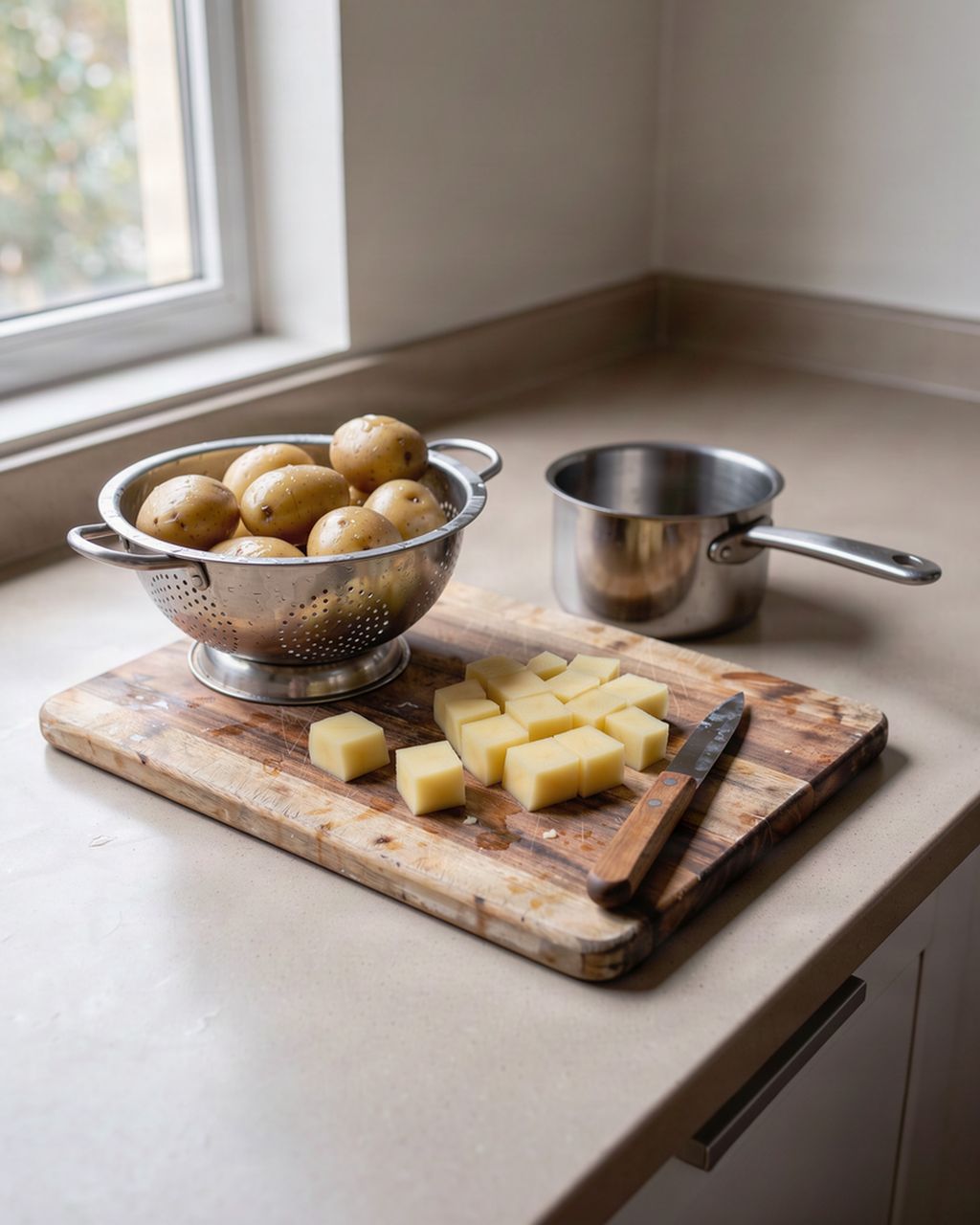
Scrub the potatoes well with a brush, especially around the eyes. Choose pieces of the same size, otherwise the small ones fall apart before the big ones soften.
Cut away any green spots and eyes with sprouts (we explain why below).
Cover with cold water, add salt, bring to a boil and turn down to a gentle simmer.
Cook 15–20 minutes for small, 20–25 minutes for medium, 30–40 minutes for large. Test with a knife.
Drain and let them steam dry for a minute or two in the open pot.
Peeling after cooking: warm potatoes peel most easily – the skin comes off almost on its own. Spear the potato on a fork and pull the skin off with a knife. If you don't want to burn your fingers, put them in cold water for 30 seconds; the skin separates from the flesh more easily, though the potato cools down a bit.
You can eat the skin, but as the German Federal Institute for Risk Assessment (BfR) points out, only undamaged, fresh potatoes are suitable for that – and for small children it recommends giving peeled potatoes.
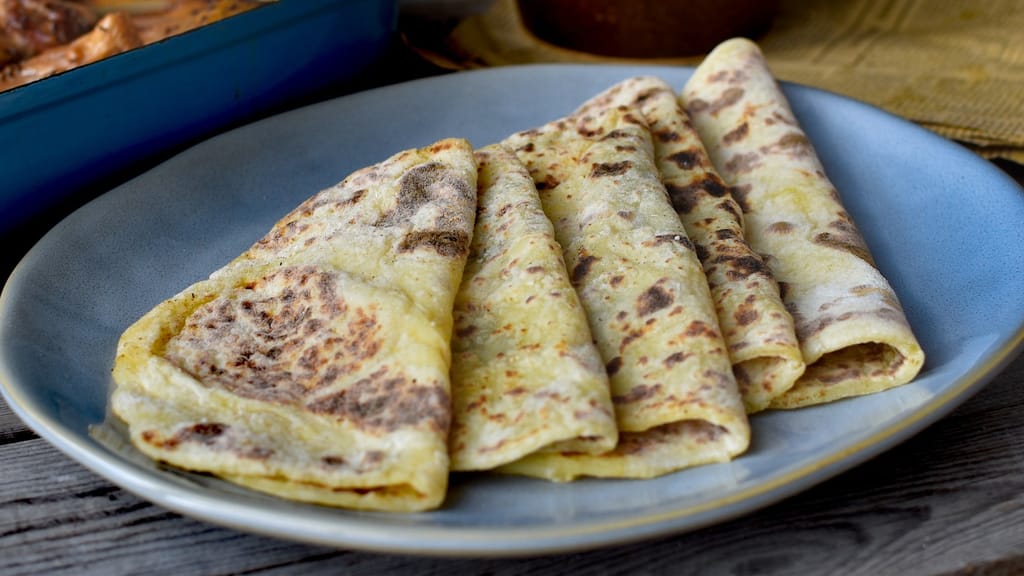
Skin-on potatoes that have been boiled and cooled are the base for potato lokše (Czech potato flatbreads).
Lokše - savory potato flatbreads
Potato lokše (Czech potato flatbreads) made from boiled potatoes
Cut peeled potatoes into evenly sized pieces, put them in cold salted water and, from the boil, cook halves or quarters for 15–20 minutes and cubes for 10–15 minutes. This is the classic side-dish potato – faster than skin-on, but more prone to overcooking because nothing protects it.
Peel thinly. A vegetable peeler wastes less flesh than a knife.
Cut into even pieces, 4–5 cm for a side dish. Halve or quarter large potatoes and leave small ones whole – the goal is for all the pieces to be a similar thickness.
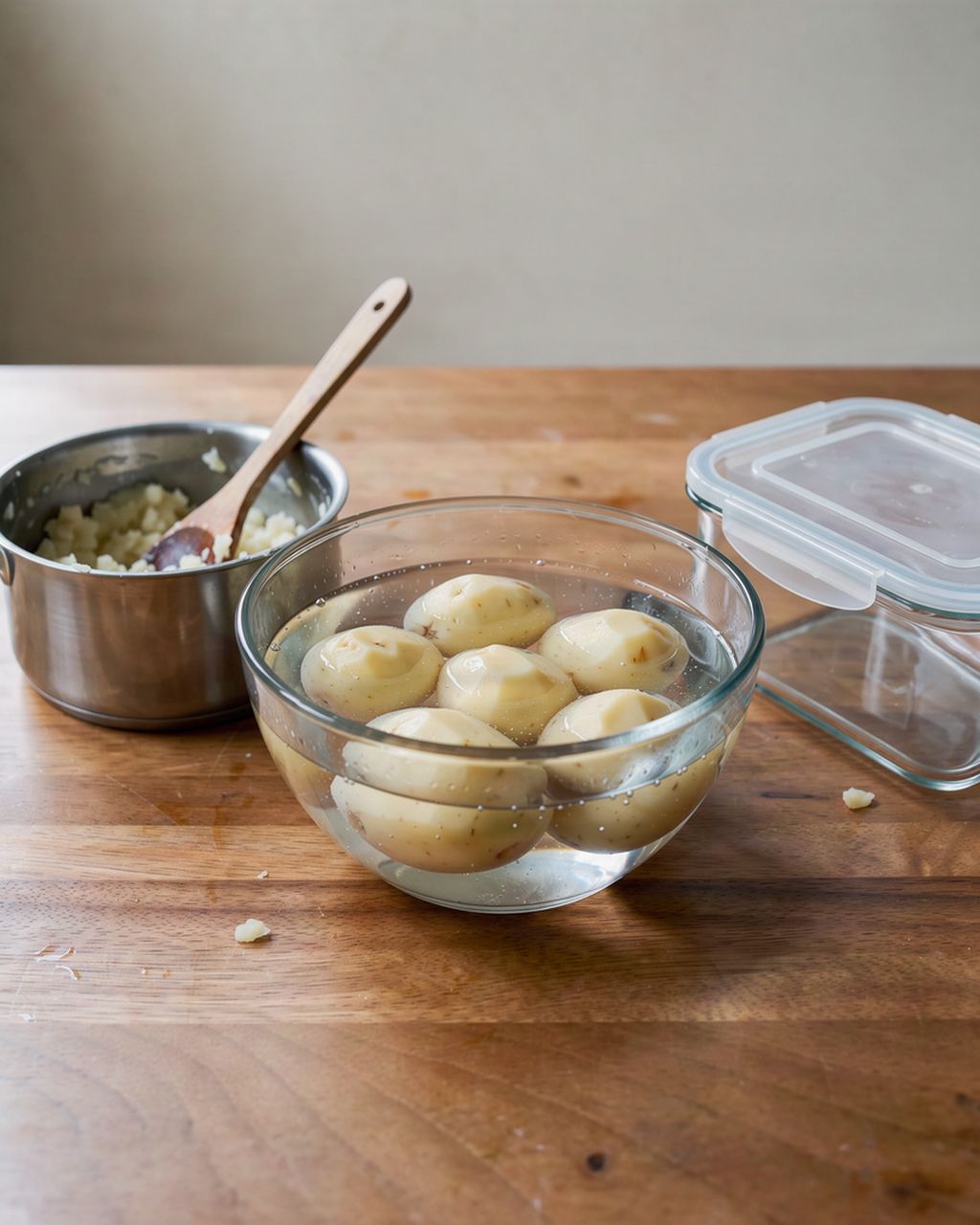
Don't leave peeled potatoes sitting in the air. Keep them submerged in cold water until you cook them, or they turn brown.
Cook gently. A hard boil knocks them against each other and the sides of the pot, and the edges break off.
Drain and steam dry. Put the pot back on the switched-off, still warm burner for a minute. The potatoes dry out, turn matte, and butter or parsley clings to them better.
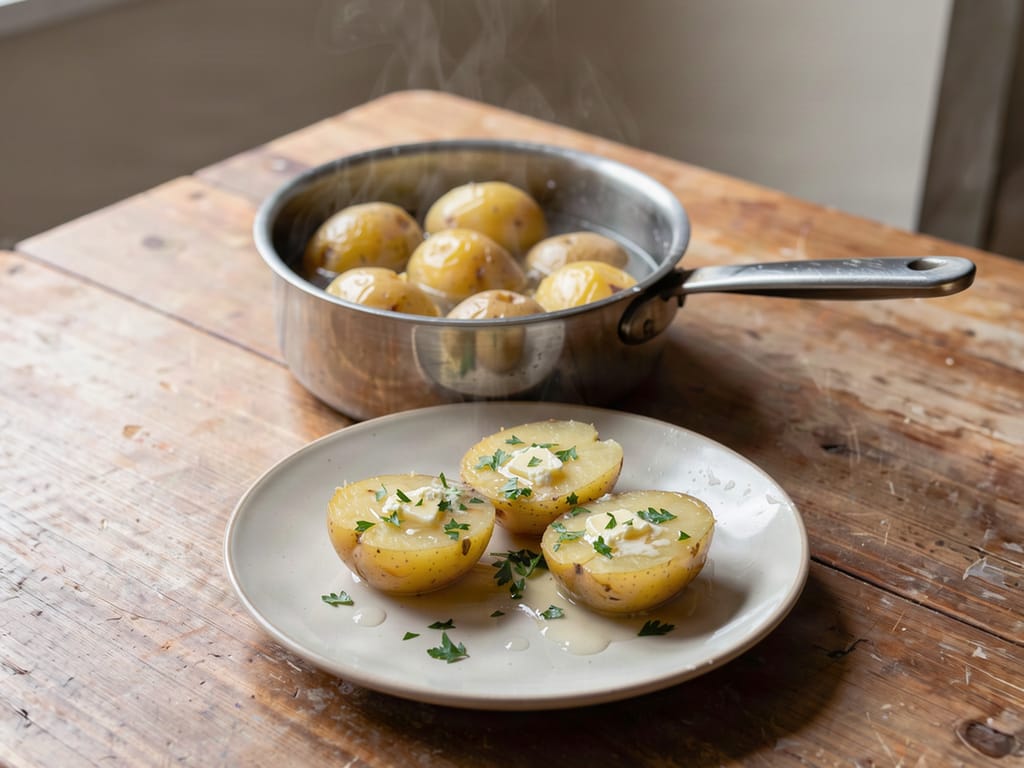
The classic is caraway in the water and, after draining, a knob of butter and a handful of chopped parsley. If you're serving the potatoes with a sauce, type B is the safe bet; type A will be firmer, while type C will start to break up into the sauce on the plate. For more ideas on what to do with boiled potatoes, see our article on what to cook with potatoes.
Boiled and pressed potatoes are also used to make homemade potato gnocchi.
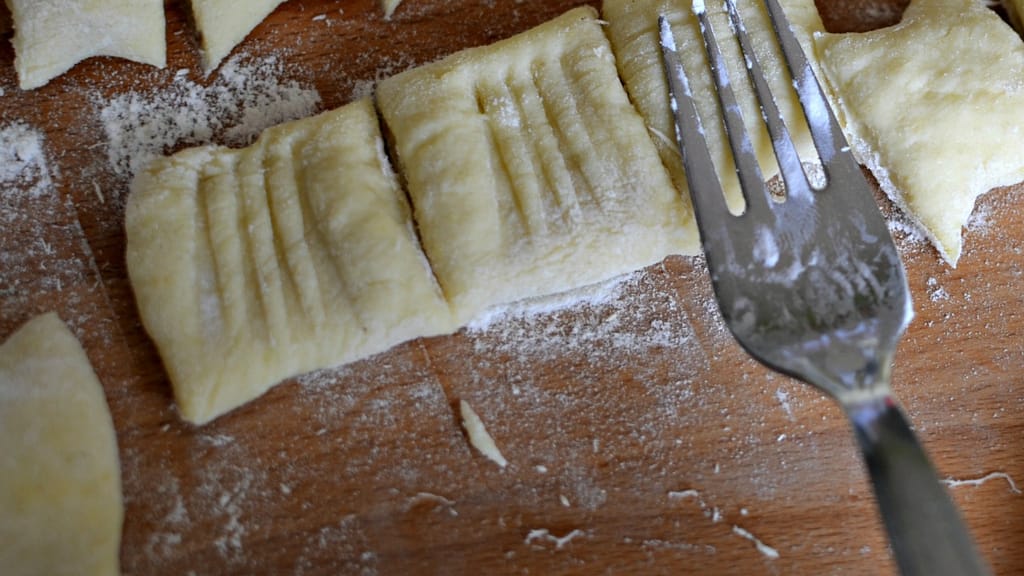
Homemade potato gnocchi
Homemade potato gnocchi
For salad, boil skin-on, whole, type A potatoes at a gentle simmer for 20–25 minutes, and let them cool unpeeled – ideally overnight. That way they stay firm, cut into neat cubes or slices and don't turn to mush when you mix them.
Why it works:
The skin stops the potato from soaking up water. A waterlogged potato turns mushy in a salad and releases water into the dressing.
Type A has less starch, so it holds its shape even after cutting. Floury potatoes fall apart right under the knife.
Cooling is key. While warm, the potato is fragile and sticky; once it cools, the starch sets and it cuts cleanly. That's why potatoes for Christmas potato salad are traditionally boiled the day before – in the Christmas prep plan, it's a job for December 23.
Cook them on the firm side – with slight resistance right in the center. They finish cooking as they cool. After draining, spread them out so they cool quickly, then refrigerate them covered. Peel them only once cold, just before cutting.
We cover choosing varieties in detail in the best potatoes for potato salad. Ready salad potatoes can then go into, for example, potato salad with green beans and smoked mackerel or a fresh potato salad.
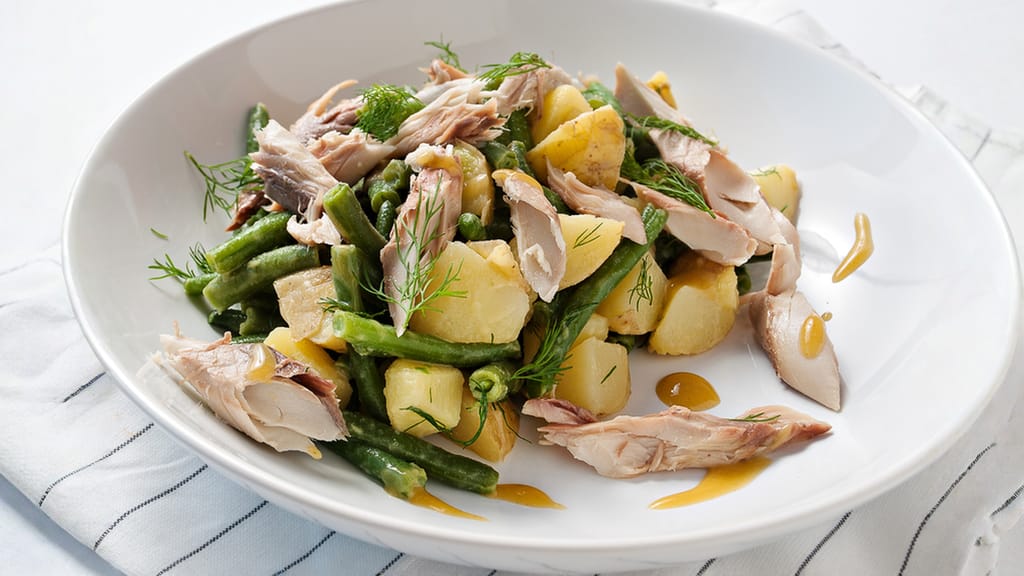
Potato salad with green beans and smoked mackerel
Potato salad with green beans and smoked mackerel – made with potatoes boiled in their skins
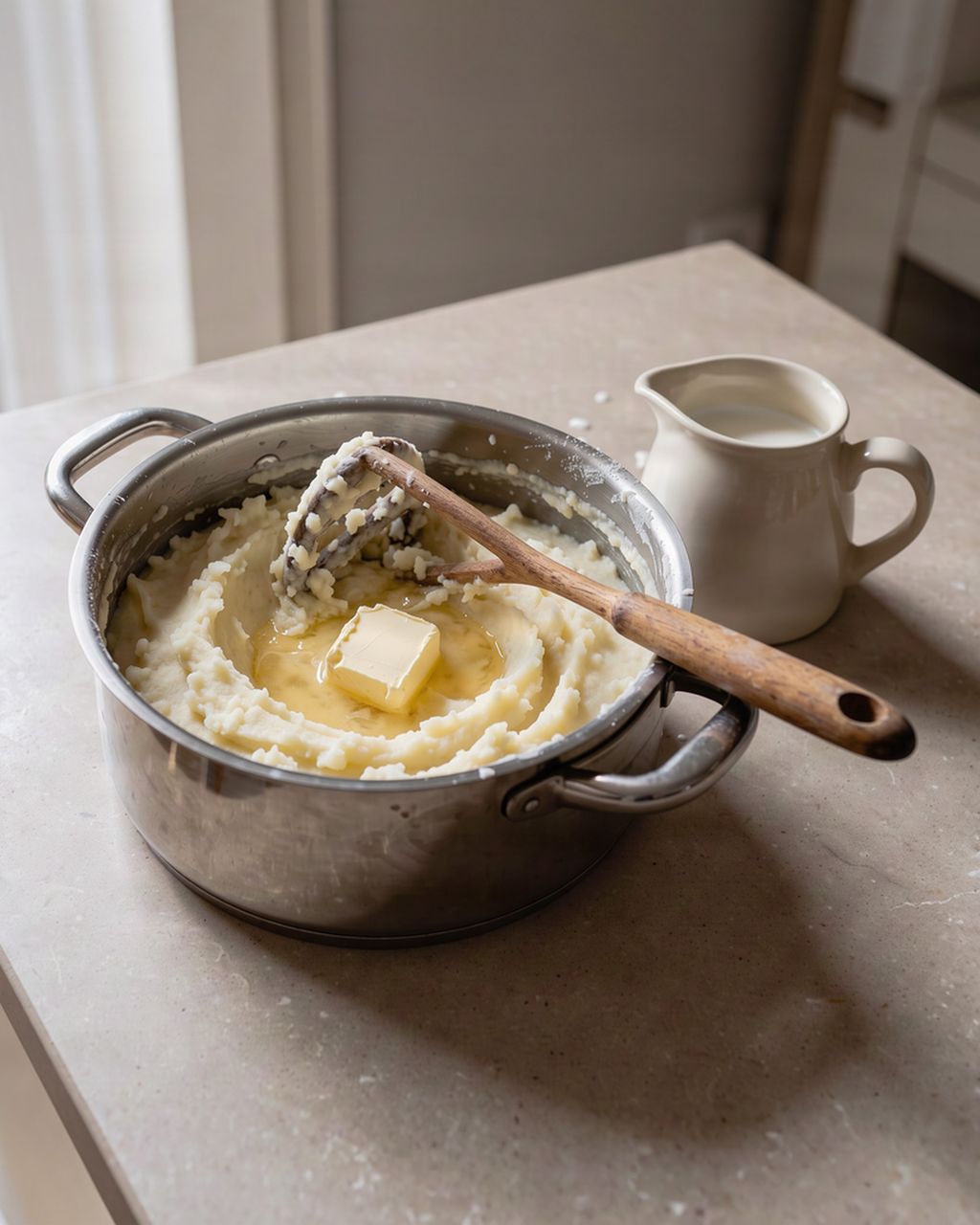
For mash, peel the potatoes, cut them into even pieces of about 4 cm and cook in cold salted water for 15–20 minutes from the boil, until a piece almost falls apart on the knife. You want type C or B, meaning floury potatoes that cook down into a velvety, dry mass – firm salad potatoes make sticky, gummy mash.
Cook them a touch longer than for a side dish: for mash you don't want any hard center, which would stay in the mash as a lump.
Drain well and return the pot to low heat for 1–2 minutes so the potatoes dry out. Every extra drop of water thins the mash and dulls the flavor.
Mash right away while hot, with a masher or ricer. Cooled potatoes are harder to mash and gluier.
Add the milk and butter warm, not straight from the fridge – cold liquid brings down the temperature of the mash, which then stiffens.
Don't use an immersion blender. The blades tear the potato cells, release the starch and turn the mash into wallpaper paste.
How to thicken mash when it's thin, how to season it and how to reheat it so it doesn't set like stone, we cover in mashed potatoes: how to thicken, season and reheat them. And if you want a tried-and-tested recipe, reach for our smooth, creamy mashed potatoes with nutmeg.
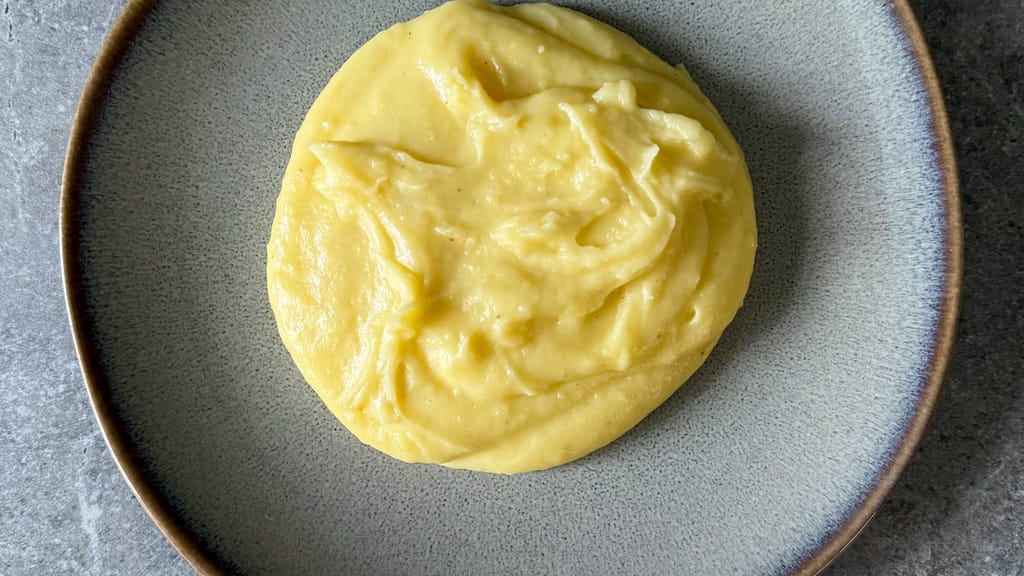
Silky smooth creamy mashed potatoes with nutmeg
Smooth, creamy mashed potatoes with nutmeg
To keep potatoes from falling apart, watch five things: the right type, a gentle simmer, a splash of vinegar, a low-temperature pre-cook and draining right away. Each deals with a different cause of breakdown:
The right type. Floury type C potatoes fall apart no matter what you do. For firm potatoes you need type A; with type B you can manage if you're careful.
A gentle simmer, not a full bubble. Once the water boils, turn the heat down so the surface just bubbles calmly. A hard boil batters the potatoes, and the outer layer breaks down before the center softens.
A spoonful of vinegar. A spoonful of vinegar per liter of water helps the flesh hold its shape – in an acidic environment the pectin that holds the potato's cells together softens less. You'll barely taste the vinegar after draining. It works in reverse too: if you cook potatoes in an acidic soup, they soften more slowly than you'd expect.
A low-temperature pre-cook. If you first hold the potatoes in water at around 60 °C (140 °F) for 20–30 minutes (no bubbling, just steam – monitor it with a thermometer) and only then finish cooking them, they firm up at that temperature and can then withstand longer cooking without falling apart. It suits salad or potatoes for goulash that need to hold up in the sauce.
Drain right away and let them cool. Potatoes keep softening in the water even off the heat. Drain them, spread them out and let them steam dry.
The general rules help too: cook them in their skins or in large, even pieces, and start in cold water. And if they overcooked anyway? Don't throw them out – add butter and milk and you have mash, or squash them into patties, or put them in a soup.
Steam potatoes in a steamer basket over boiling water with the lid on: 2–3 cm cubes 15–20 minutes, whole small and new potatoes 20–25 minutes, whole medium potatoes 25–35 minutes. Steam cooks a little slower than water, but the potatoes don't soak anything up and hold their shape even better than skin-on boiled ones.
Put about 3 cm of water in the pot so it doesn't touch the basket, and don't lift the lid needlessly while cooking – every time you open it the steam escapes and the time gets longer. Since steamed potatoes aren't cooked in salted water, salt them right at the start in the basket, or toss them with butter and salt after cooking while they're hot. You can put a bay leaf or caraway in the water under the basket; the potatoes pick up a little of the aroma.
Steaming is great for new potatoes, for peeled cubes for salad, and for anyone who wants a potato to taste mostly of potato.
In the microwave, cook whole skin-on potatoes in 5–7 minutes each (medium potato, 800 W), four at once in 10–14 minutes; turn them halfway and then let them rest 2–3 minutes to finish. It's the fastest way to have a cooked potato for dinner for one or two.
Whole, skin-on: wash, dry and prick several times with a fork, otherwise steam inside could burst the skin. Place them on a plate spaced apart, not touching. They're done when they give when squeezed and a knife goes smoothly to the center.
Cubes: put peeled 2–3 cm cubes in a microwave-safe bowl, add 2–3 tablespoons of water and a pinch of salt, cover with a lid or plate (not tightly with plastic wrap) and cook 6–8 minutes at 800 W, stirring halfway.
The microwave heats unevenly, so turn them and let them rest a while before serving – the heat evens out inside the potato. The result is more of a "baked" texture, drier and fluffy, ideal with quark (tvaroh, a Czech fresh curd cheese) or butter. For salad, where you want a neat cube, the pot or steaming is more reliable.
In a rice cooker you can cook potatoes either directly in water or in the steamer basket: cover cubes or small potatoes with water so they're just submerged (about 1 cm above them), salt, and run the standard cooking program; check with a knife after 20 minutes. Whole medium potatoes need 30–40 minutes.
A rice cooker switches to warming by itself once the water evaporates or it reaches temperature – with potatoes, that doesn't mean they're done. So always check with a knife, and if needed run the cycle again or add a little water. If your rice cooker has a steamer basket, it's even easier: rice or water below, potatoes or vegetables above – two things at once. Times vary from model to model, so keep an eye on the first batch; after that you'll know your machine.
The upside: nothing boils over and you don't have to stand over it. The downside: you can't control the strength of the boil, so for completely firm salad potatoes a classic pot is more reliable.
In an air fryer you don't boil potatoes, you roast them – an air fryer is a small convection oven with no water or steam. Roast whole medium skin-on potatoes at 200 °C (400 °F) for 35–45 minutes, 2–3 cm cubes at 180–200 °C (350–400°F) for 15–20 minutes; shake the basket two or three times during cooking.
The result differs from boiled potatoes: dry, fluffy flesh and a crisp skin or surface. It isn't suited to mash or salad, but it's great as a side with quark (tvaroh) or as American-style potatoes. Prick whole potatoes before roasting and rub them with a little oil and salt; toss cubes with a spoonful of oil.
An air fryer has one more useful job: finishing already boiled potatoes. Brush boiled halves or smashed small potatoes with oil and put them in at 200 °C (400 °F) for 12–15 minutes – they crisp outside and stay creamy inside. Grilled smashed potatoes on a skewer are made in a similar way, only on the grill.
For exact temperatures and times for fries, American-style potatoes and other foods, see air fryer: temperatures and times; oven roasting is covered in baked potatoes in the oven: temperature and time.
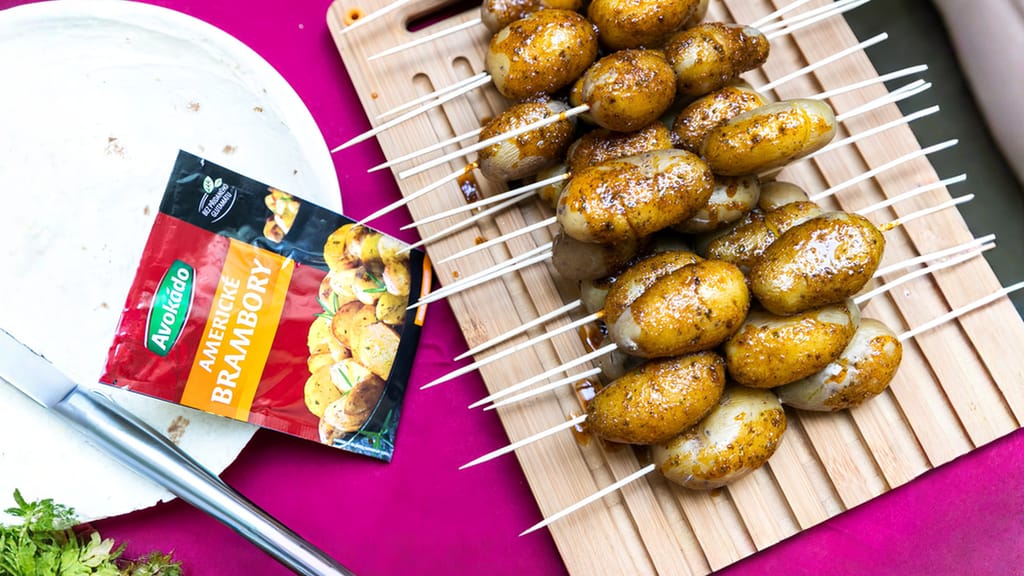
Smashed potatoes on a skewer
Grilled smashed potatoes on a skewer, made from boiled potatoes
Cook new potatoes whole and skin-on, ideally in boiling salted water or steamed, for 12–18 minutes depending on size. Young potatoes have thin, delicate skin, more water and less starch than stored potatoes, so they cook quickly and hold their shape.
Don't peel them. The skin is thin and part of the flavor. Just rub them under running water with a brush or a rough sponge – the loose skin comes off on its own.
Even out the size. Halve larger pieces so they finish at the same time as the small ones.
Don't overcook them. New potatoes don't break apart like floury ones, but when overcooked they turn watery and lose their delicate, slightly sweet flavor.
Serve them right away. They're best hot, with butter, salt and fresh herbs – dill, parsley or chives.
New potatoes are a short-lived pleasure; they dry out and spoil quickly, so buy them for a few days ahead, not to stock up. Find out more about their season and qualities at new potatoes.
Cut away green spots and eyes with sprouts from potatoes generously – that's what the German Federal Institute for Risk Assessment (BfR) recommends. Potatoes naturally contain glycoalkaloids, mainly solanine and chaconine, and according to the BfR, there are the most of them in the skin, in the sprouts and in the eyes.
What the BfR advice means for cooking:
Green and heavily sprouted potatoes are described by the BfR as unsuitable for eating, and it recommends sorting them out. It also recommends discarding old, shriveled potatoes.
Don't reuse the potato cooking water – according to the BfR, some of the alkaloids pass into it during cooking. So don't pour it into soup or sauce.
Don't eat potato dishes that taste bitter. According to the BfR, bitterness and a burning feeling in the mouth are signs of a higher glycoalkaloid content.
Give small children peeled potatoes – that's also a BfR recommendation. According to the BfR, the skin can be eaten, but only from undamaged, fresh potatoes.
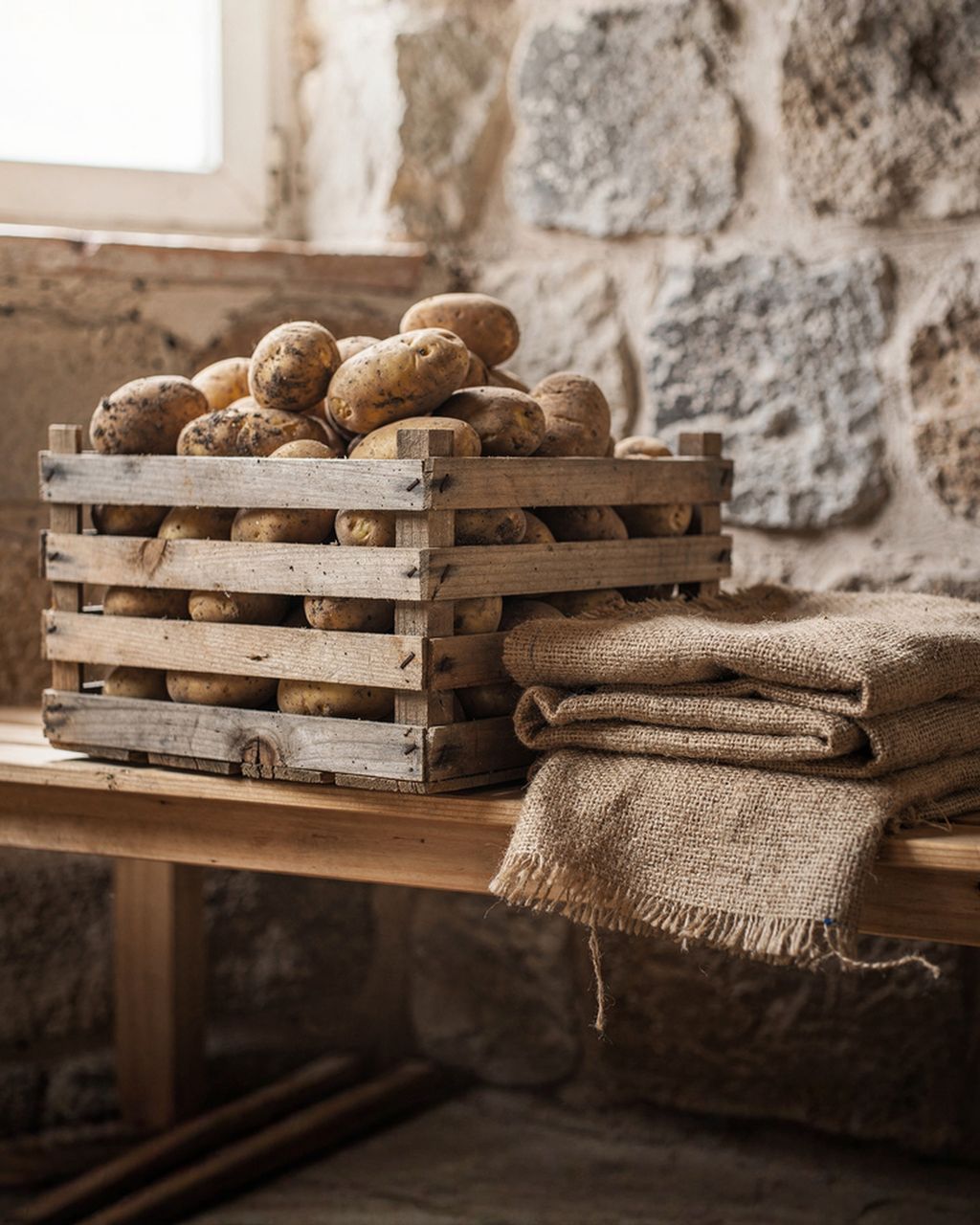
The green color itself is chlorophyll, which forms in a potato in light. But according to the BfR, green spots indicate an increased glycoalkaloid content, so treat them as a warning sign. The best prevention is storage: the BfR advises keeping potatoes cool, dark and dry. How to do that at home so they last until spring and don't sprout, we cover in how to store potatoes.
Let cooked potatoes cool quickly and refrigerate them covered – the U.S. Department of Agriculture (USDA) generally recommends refrigerating cooked food within 2 hours and using leftovers within 3–4 days. Don't leave them out at room temperature overnight.
A few practical tips:
Skin-on potatoes keep better in the fridge than peeled ones – the skin protects them from drying out and from fridge odors.
Spread them out so they cool fast. A pile of hot potatoes in a deep bowl takes a long time to cool in the middle.
Store them in a sealed container, otherwise peeled potatoes dry out and darken.
You can freeze boiled potatoes, but not every kind and not any which way – whole boiled potatoes often turn watery and change texture after thawing, while mash or make-ahead dishes handle the freezer better. For exactly how many days cooked, peeled potatoes keep, how to freeze them and what to make from them after thawing, see cooked potatoes: how long they keep and whether you can freeze them.
Boiled potatoes usually turn watery because they've soaked up water – they were peeled and cut into small pieces, overcooked, or left sitting in the water after cooking. Cook them with the skin on or in larger pieces, at a gentle simmer, then drain right away and let them steam dry for a minute or two in the open pot. Potatoes from a wet year or freshly dug ones can also be more watery.
In a pressure cooker, whole medium potatoes take roughly 8–12 minutes once at pressure, and 2–3 cm cubes about 4–6 minutes. Times vary by model and potato size, so check the first batch with a knife after releasing the pressure and fine-tune the time.
Cooked potatoes sometimes turn gray as they cool because of what's called after-cooking darkening – iron compounds and chlorogenic acid in the potato darken when exposed to air. It's a trait of some varieties and growing conditions; a spoonful of vinegar in the cooking water helps, and so does storing the potatoes covered after cooking.
Yes, you can peel and cut potatoes up to a day ahead if you submerge them in cold water and refrigerate them. The water keeps them from browning. Pour it off before cooking and cover them with fresh water, because some of the starch leaches into it.
Bring potatoes to a boil with the lid on, since the water heats faster, then set the lid ajar or take it off so the water doesn't boil over and the heat stays gentle. A fully covered pot easily slips into a hard boil, which batters the potatoes.
The best way to reheat cooked potatoes is in a pan with a bit of butter, or steamed for 5–8 minutes. In the microwave, sprinkle them with a spoonful of water and cover them so they don't dry out. Reheat skin-on potatoes before peeling – they stay juicier.
One recipe worth heating the oven for, one tip, and one deal from the shop. Nothing else.