Trout baked in foil with butter and garlic
Christmas Carp: How to Choose, Clean, Fry, Bake with Caraway and Make It na černo
Updated Nov 19, 2026
Christmas carp can be cooked in many ways: breaded and fried, baked with caraway, with garlic butter or on a bed of vegetables, the old-fashioned na černo way (in a dark sweet-and-sour sauce), or as fish soup. However you cook it, the result depends on how fresh the fish was when you bought it, how well it's scored and whether you overcook it. Here you'll find everything from shopping to the plate: how to spot a fresh fish, what to do if you bring home a live one, how to fry it so the coating stays on, three tried-and-tested ways to bake it, old-style carp na černo, what to make with smoked carp and how to get rid of the muddy taste.
The easiest option is to buy chilled carp that has already been killed and gutted, ideally a day or two before Christmas Eve. It's fresh, you don't have to kill or clean anything, and it keeps in the fridge until dinner. Buying a live carp only makes sense if you know the seller will kill it for you right at the tank, or if you can manage it yourself at home.
Choose the cut according to what you want to cook:
Whole carp: for baking whole, for carp na černo and for soup, because the head, backbone and fins make stock. Keep in mind that much of the weight is head, fins and bones.
Halves: carp split along the backbone, without the head. Ideal for baking with caraway or on vegetables, as they cook evenly and fit on a baking sheet.
Portions (steaks): crosswise cuts through the whole fish, backbone included. The classic for frying, though the bones stay inside.
Skin-on carp fillet: no backbone, the quickest choice for frying or the skillet. The skin holds the flesh together, so it falls apart less when fried.
To work out how much carp to buy per person and how much potato salad to serve with it, see the article how much carp and potato salad per person.
You can tell fresh carp by five signs: clear, bulging eyes, bright red gills, glossy skin with a coat of slime, firm flesh and a clean smell of water. Fresh carp has:
eyes that are clear, shiny and bulging, not cloudy or sunken,
gills bright red to deep red, not brown or gray,
skin that is glossy and slimy, with scales that stay put,
flesh that is firm: when you press it with a finger, the dent springs back right away,
a smell of clean water and fish, not sour, sharp or ammonia-like.
With a fillet you can't see the eyes or gills, so go by the flesh and the smell. It should be pinkish-white, glossy and firm, with no grayish tinge and no liquid at the bottom of the tray. Among live fish in a tank, don't buy a carp that swims on its side or belly-up.
How to soften gingerbread that’s gone hard, when to fill Linzer cookies and how to tell the carp is done. One recipe and one tip a week. Unsubscribe in one click.
The easiest thing is to have the carp killed and gutted by the seller. The State Veterinary Administration recommends exactly this to customers, and sellers will usually do it while you wait. You save yourself the stress, the fish the suffering, and you won't have scales all over your kitchen.
If you do bring a live carp home, don't leave it in the bathtub for days. Kill it the same day, quickly and calmly. At home you can do it in five steps: stunning, bleeding, scales, gutting, finishing.
Stunning: lay the carp on a firm surface, hold it in a kitchen towel and give it one strong blow on the top of the head, just behind the eyes, with a blunt object (a meat mallet, a heavy rolling pin). If the carp keeps moving its gills or fins, strike again right away, and bleed it only once it's stunned. If you're not sure about this, have it killed at the tank instead.
Bleeding: immediately afterward, cut through the gills or the artery under them with a sharp knife and let the fish bleed out over the sink. Bled flesh is lighter and cleaner in flavor.
Scales: scrape them off with a scaler or the back of a knife, from tail to head. The fewest fly around if you do it in the sink under a thin stream of water or inside a plastic bag.
Gutting: cut the belly open from the vent toward the head, but only shallowly so you don't slice the innards. Take them out and carefully remove the gallbladder (the small green sac by the liver): if it bursts, the flesh turns bitter. Scrape the black membrane out of the belly cavity, as it is bitter and smells of mud.
Finishing: cut off the head behind the gill plates (set it aside for soup), snip off the fins with scissors, and split the fish along the backbone or cut it into portions.
If you don't want the head, gills or roe, say so at the tank. The head, milt and roe, however, belong in the soup.
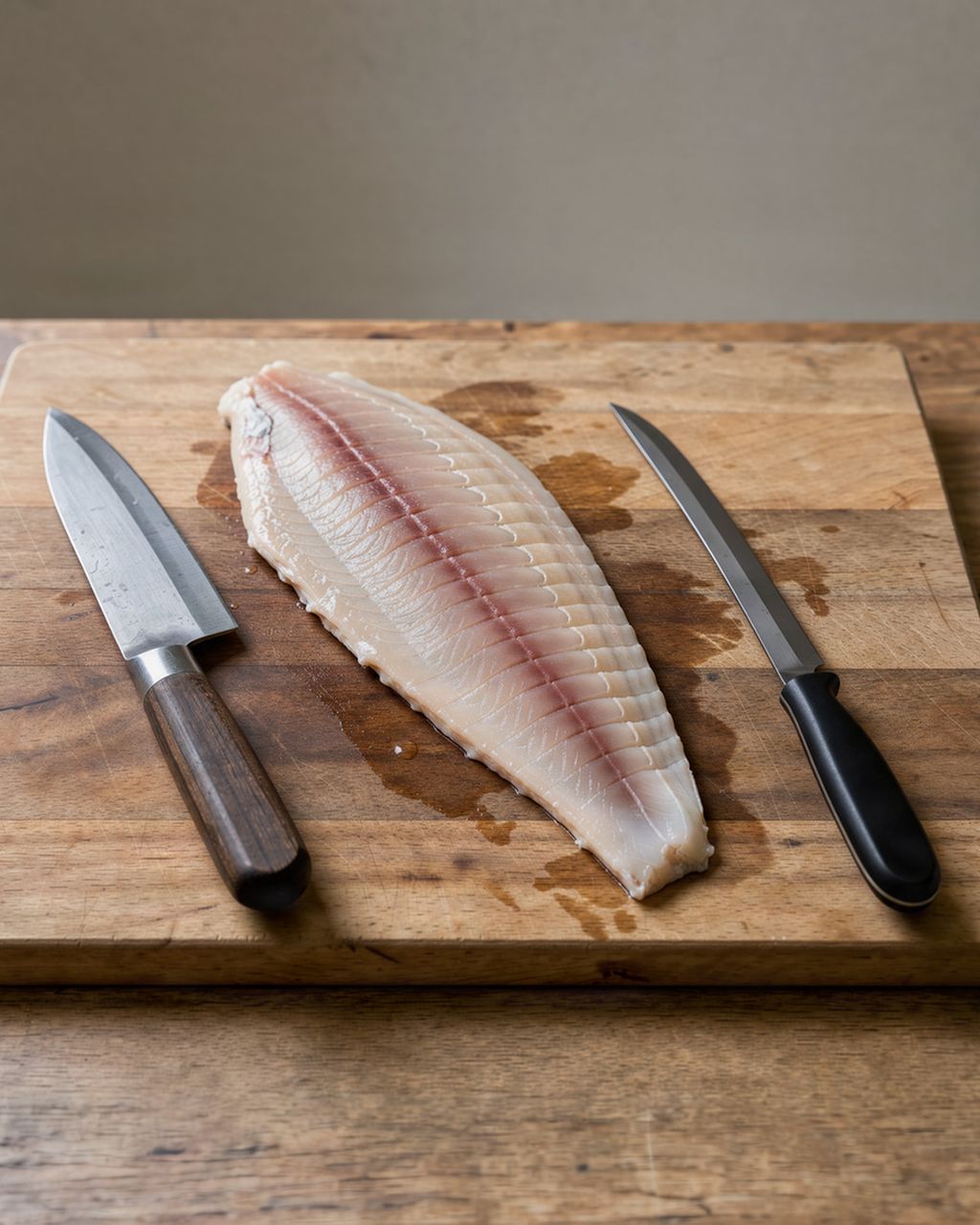
You neutralize the bones in carp by cutting the flesh crosswise in cuts 2–3 mm apart, all the way down to the skin, which you leave uncut. Carp has around a hundred tiny Y-shaped bones in the flesh that can't be pulled out. The solution is scoring: it chops the bones into tiny pieces, so you hardly feel them in your mouth.
What this means in practice:
The closer the cuts, the fewer bones you'll feel. 3 mm is the maximum, 2 mm is better.
Cut the flesh right down to the skin, but leave the skin intact, as it holds the portion together.
Scoring is worth it for fillets, halves and portions alike. Make the cuts before salting so the salt penetrates the full thickness.
How to hold the knife, how to cut out the backbone and how to turn a half into portions is shown step by step in the article how to bone carp and score it so you can't feel the bones.
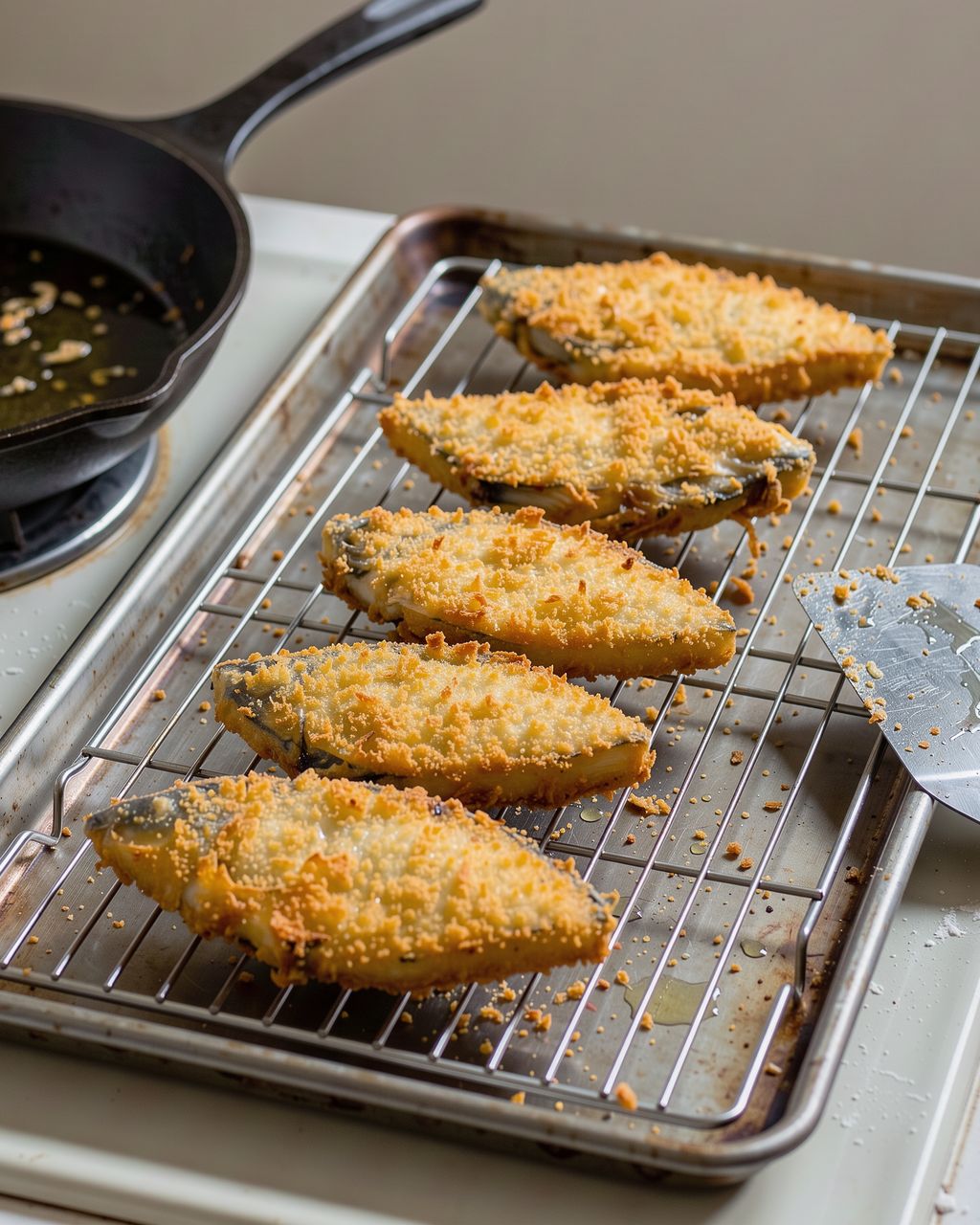
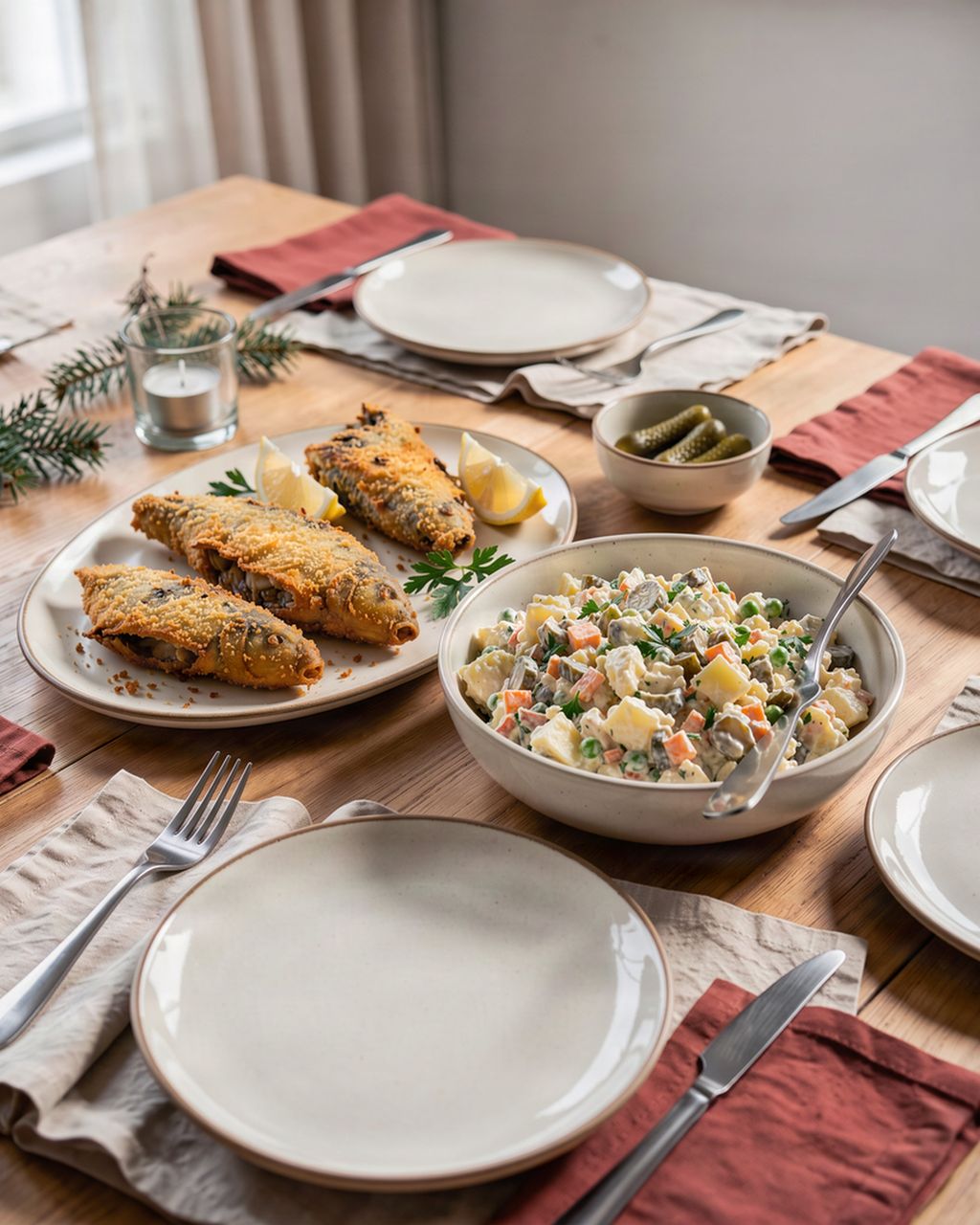
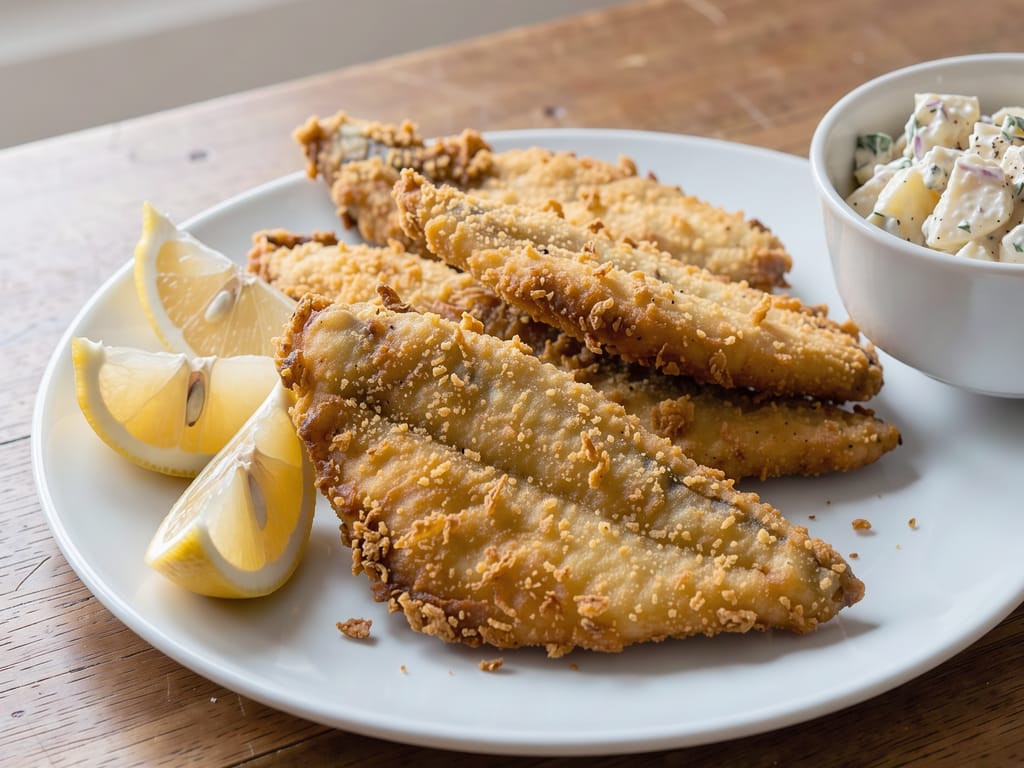
Fried carp is made from salted, scored portions coated in a three-step breading and fried in oil at 170–175°C (340–350°F) for 3–6 minutes per side depending on thickness, until the coating is golden brown. It's served with Christmas potato salad and lemon.
You make fried carp in six steps: salting, drying, breading, oil, frying, draining.
Salting: salt the scored portions or fillets, sprinkle with lemon juice and leave them in the fridge for 30 minutes up to several hours. The salt firms the flesh and seasons it all the way through.
Drying: pat the portions thoroughly dry with a paper towel before breading. Wet flesh is the most common reason the coating falls off.
Three-step breading: all-purpose flour, beaten eggs with a little milk or water, breadcrumbs. Coat the portion in breadcrumbs just once and press lightly. A thicker coating browns before the flesh inside is cooked through.
Oil: lard or an oil with a high smoke point, at least 1–2 cm deep in a skillet, or a deeper layer in a deep fryer. Watch the temperature with a thermometer: below 160°C (320°F) the coating soaks up fat and turns soggy, above 185°C (365°F) it browns before the fish is cooked.
Frying: a fillet 1.5 cm thick needs 3–4 minutes per side, a thicker portion with the backbone 5–6 minutes. Turn it no more than once and don't crowd the pan, or the oil will cool down.
Draining: put the fried portions on a rack, not on paper. That keeps the underside from going soft and the coating stays crisp.
If you fry in several batches, keep the finished portions on a rack in a 80–100°C (175–210°F) oven. Why carp breaks apart in the pan and the coating peels off is covered in detail in the article why carp falls apart when fried and how to coat it so the breading holds.
Fried carp goes with potato salad. You'll find the classic Christmas one in potato salad step by step, including a version without mayonnaise. For potatoes that don't fall apart, follow how to cook potatoes for salad. Add lemon and, if you like, tartar sauce. Carp in batter is a variation for those who don't like breadcrumbs: coat the portion in flour, dip it in a thick batter of flour, eggs and beer or sparkling water, and fry for the same time at the same temperature.
At Christmas, baked carp is most often made three ways: with caraway, with garlic butter and on vegetables. Halves or portions bake at 180–200°C (350–400°F), and the time depends on thickness: portions 20–25 minutes, halves 25–35 minutes, whole carp longer. Baked carp is less work than fried and doesn't make the whole apartment smell.
For exact times and temperatures for portions, halves and whole carp, see the article how long to bake carp in the oven and at what temperature. Before baking, always score the carp, salt it and let it rest for at least 30 minutes.
Carp with caraway is the simplest baked carp: you salt scored halves or portions, sprinkle them with crushed caraway and bake them skin side down on butter at 200°C (400°F) for about 25–30 minutes. For 1 kg of fish, count roughly 1 tablespoon of caraway, 1 teaspoon of salt and 50 g of butter in slices. Lightly crush the caraway in a mortar before sprinkling to release its oil, and rub it into the cuts as well. For the last 5 minutes you can switch on the broiler, so the flesh and the edges of the cuts brown golden. Serve with potato salad.
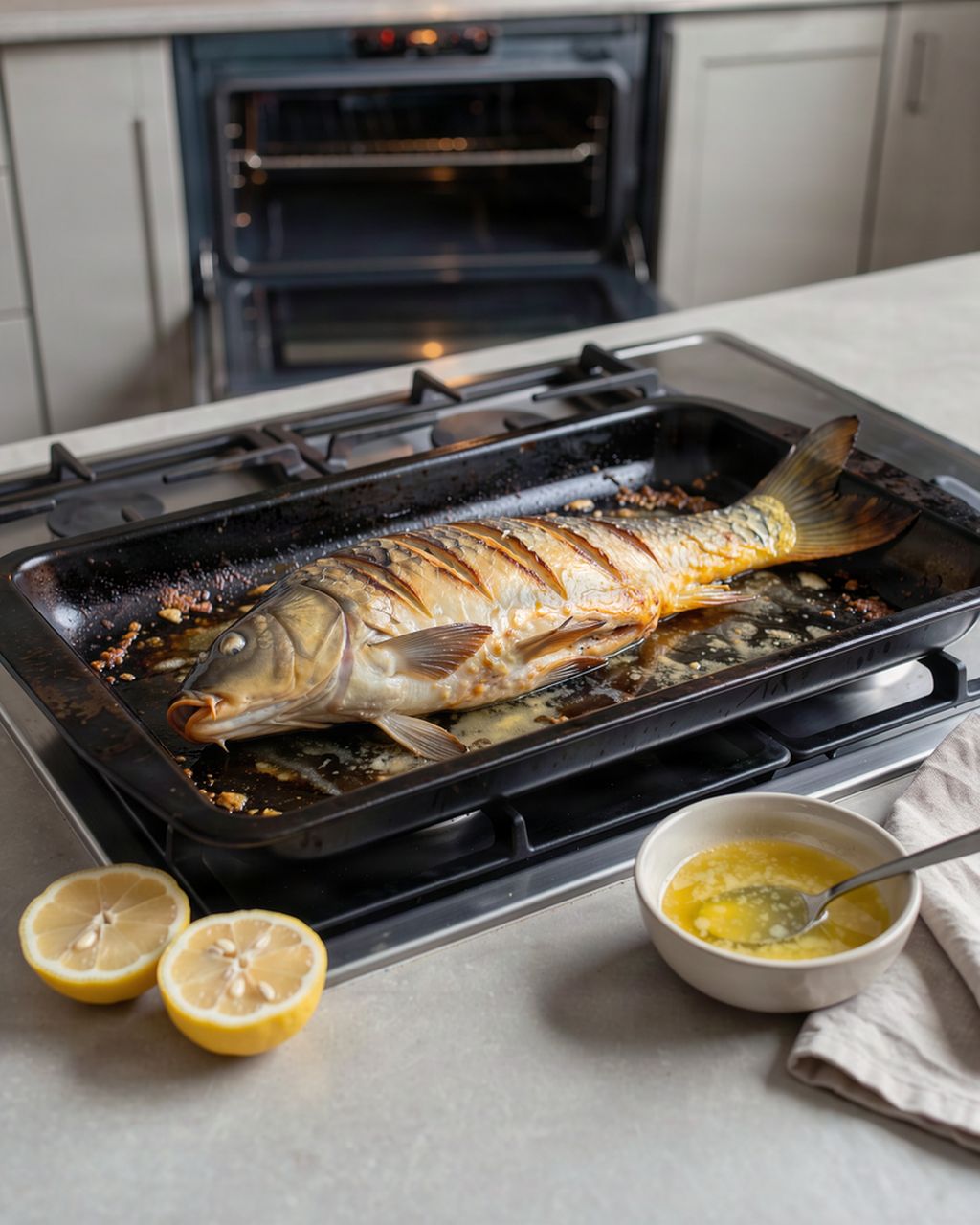
Carp with garlic butter bakes at 180°C (350°F) for about 20–25 minutes and is basted twice during baking with butter in which garlic has melted. For four portions, melt 80 g of butter with 3–4 pressed garlic cloves and a tablespoon of chopped parsley. Brush half of it on the salted portions, pour the rest over in the middle of baking, and spoon the pan juices over the carp once more before serving. Add the garlic to the melted butter, not directly onto the fish, or it will turn bitter on the baking sheet. It goes well with smooth, creamy mashed potatoes with nutmeg or just fresh bread for mopping up the butter.
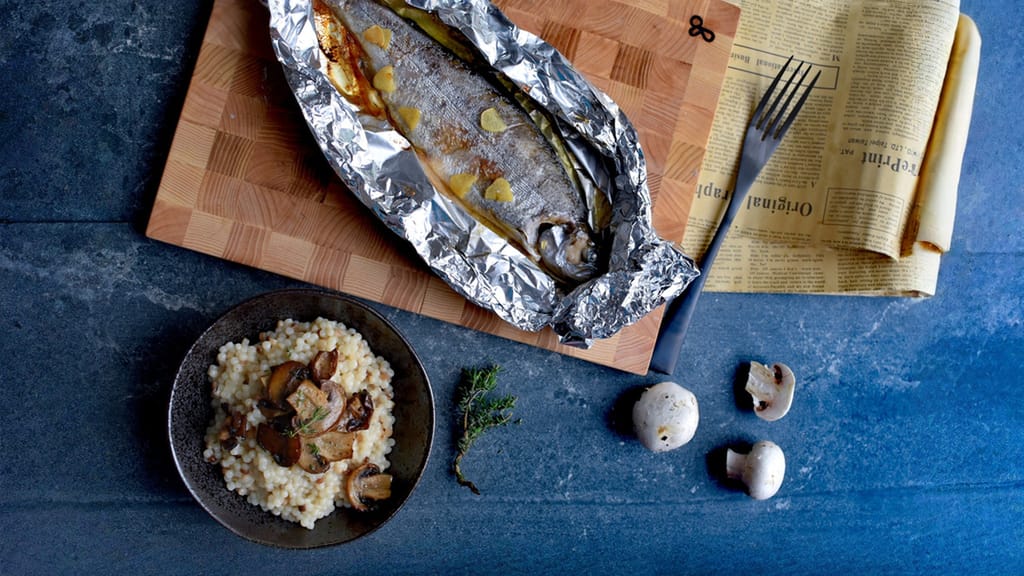
For the same method with butter and garlic, only in aluminum foil and with a whole fish, see the recipe trout in foil with garlic butter.
Trout baked in foil with butter and garlic
Trout in foil with garlic butter: a similar flavor to carp in butter
Carp on vegetables bakes on a bed of root vegetables and onion, which release juices and gently steam the fish from below, so the flesh stays juicy. Cut 2 carrots, 1/4 celery root (about 100 g), 1–2 parsley roots and 2 onions into a roasting pan, salt them, drizzle with oil and pre-roast at 200°C (400°F) for 15 minutes so the vegetables soften. Then lay salted, scored halves on top, skin side up, add 100–150 ml of water or white wine, 30–50 g of butter in slices and bake at 180°C (350°F) for another 25–30 minutes. The vegetables serve as the side dish, so bread is all you need with it.
Carp na černo is an older Christmas carp than the fried one: carp boiled or braised in a dark sweet-and-sour sauce made from gingerbread, dark beer, plum butter (povidla) and dried plums (prunes), garnished with nuts and raisins. Recipes for carp na černo appear in 19th-century cookbooks, including the one by Magdalena Dobromila Rettigová. According to the historian Martin Franc, breaded fried carp only became the dominant Christmas Eve dish in the 1950s.
The traditional method for carp na černo has five steps: stock, poaching the carp, black sauce, prunes with nuts, reheating.
Make a stock from root vegetables, onion, spices (allspice, bay leaf, pepper, cloves) and the carp head, acidified with 2–3 tablespoons of vinegar per 1.5 l of water, or with lemon.
Gently poach the carp portions in the stock for about 15–20 minutes, without letting them overcook, and lift them out.
To the strained stock add dark beer, grated gingerbread (about 100 g per liter), one to two tablespoons of plum butter, 1–2 tablespoons of sugar and 100 ml of red wine per liter of stock. Simmer for 15–20 minutes until the sauce thickens and turns black, and season with vinegar and sugar to a sweet-and-sour balance.
Separately cook dried plums, raisins and almonds or walnuts, and add them to the sauce.
Return the carp portions to the sauce and let them warm through in it.
There are countless versions: some baked, others boiled, with beer, or with just gingerbread. Carp na černo is even better the next day, so feel free to make it a day ahead. Serve it with potato dumpling, with bread, or just the way it was originally eaten.
Carp fish soup is made from the head, backbone, fins and milt or roe: from whatever is left over when you clean the fish. Scraps become a soup for the whole of Christmas Eve.
The base is a stock from the head, backbone and fins with root vegetables and spices. Cut the gills out of the head beforehand, as they turn the soup bitter. Simmer the stock gently for 40–60 minutes and don't let it boil hard, or it will turn cloudy, then strain it through a fine sieve or cloth so no bones remain. Milt or roe only needs to simmer a few minutes in the finished soup.
For a tested version with mushrooms, see the recipe Christmas fish soup with mushrooms, Mom's way.
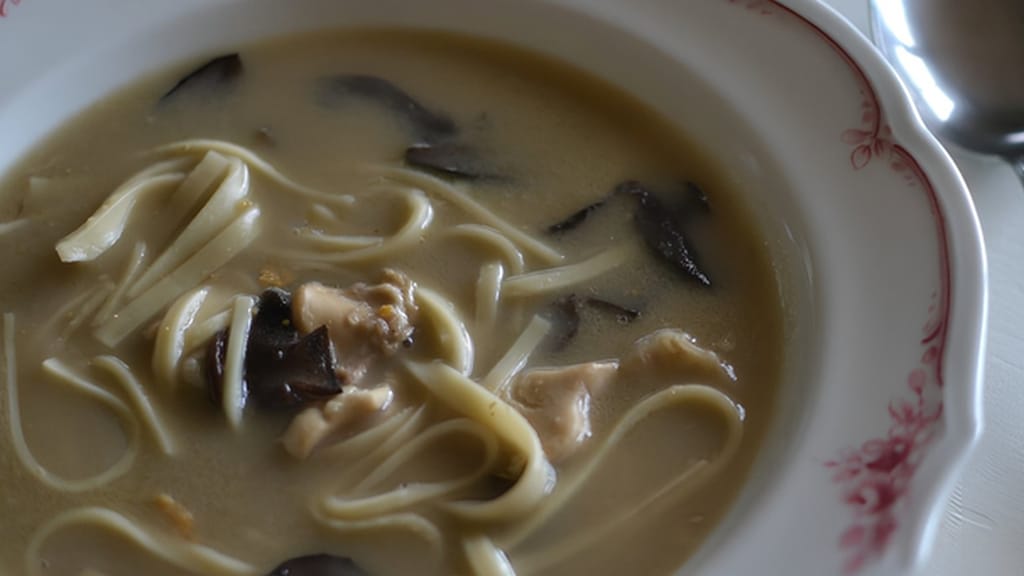
Mom's christmas fish soup with mushrooms
Christmas fish soup with mushrooms: from carp head and bones
Smoked carp is ready to eat: it tastes best in a spread, in a green salad, instead of fried carp with potato salad, or in pasta with dill. Smoked carp from the store is usually hot-smoked, so you only need to remove the skin and bones and eat it cold, or warm it briefly. Check the label to see whether it's hot- or cold-smoked; pregnant women should only eat cold-smoked fish if it's heated thoroughly, until steaming. Smoked carp has a stronger, richer flavor than fried, so it tastes best with something sour or fresh. What to do with it:
Smoked carp spread: mash the picked meat (about 200 g) with a fork with 250 g of quark (tvaroh, a Czech fresh curd cheese) or lučina (a Czech soft cream cheese), add finely chopped onion, a teaspoon of mustard, lemon juice and chives. Let it rest in the fridge for 1 hour and serve on dark bread.
Smoked carp with salad: pieces of the meat on lettuce with apple, red onion and a dressing of oil, vinegar and horseradish. A light lunch in 10 minutes.
Smoked carp with potato salad: instead of fried, when you don't want to fry. Warm it for 10 minutes in a 160°C (325°F) oven, wrapped in aluminum foil so it doesn't dry out.
In pasta or risotto: a few pieces stirred in at the end into a creamy dill sauce. Don't cook it, just warm it through, or it breaks down into strands.
The bones in smoked carp are just as fine as in fresh, and it usually isn't scored, so pick the meat over carefully with your fingers.
You can't remove the muddy smell from carp completely, but you can reduce it considerably: buy carp from holding tanks, cut away the dark flesh along the lateral line and the fat, sprinkle it with lemon and use strong spices. The earthy taste comes mainly from geosmin, a compound produced by bacteria and cyanobacteria in the water. According to the Global Seafood Alliance, fish take it up through their gills, it is stored in fat and dark flesh, and it leaves the fish slowly: it takes several days in clean water. That's why carp are kept in holding tanks before sale.
What you can do at home:
Buy from a holding-tank seller or a trusted vendor and ask how long the carp were in clean water. That's the only real prevention.
Remove the dark flesh and fat. Cut away the dark strip along the lateral line, the black membrane from the belly and the strips of fat by the back. That's where the earthy taste clings most.
Sprinkle with something sour. Lemon or vinegar help: the acidity overrides the earthy taste and freshens the flesh. Sprinkle the portions with lemon before salting, or leave them in milk for 30–60 minutes.
Strong spices. Caraway, garlic, onion, ginger or gingerbread in carp na černo override the smell. That's why these preparations have stuck with carp for centuries.
You can't "purge" a live carp in the bathtub with clean water: in a day or two it won't lose the smell, and it's stressed in the tub. If you bring one home alive, kill it the same day.
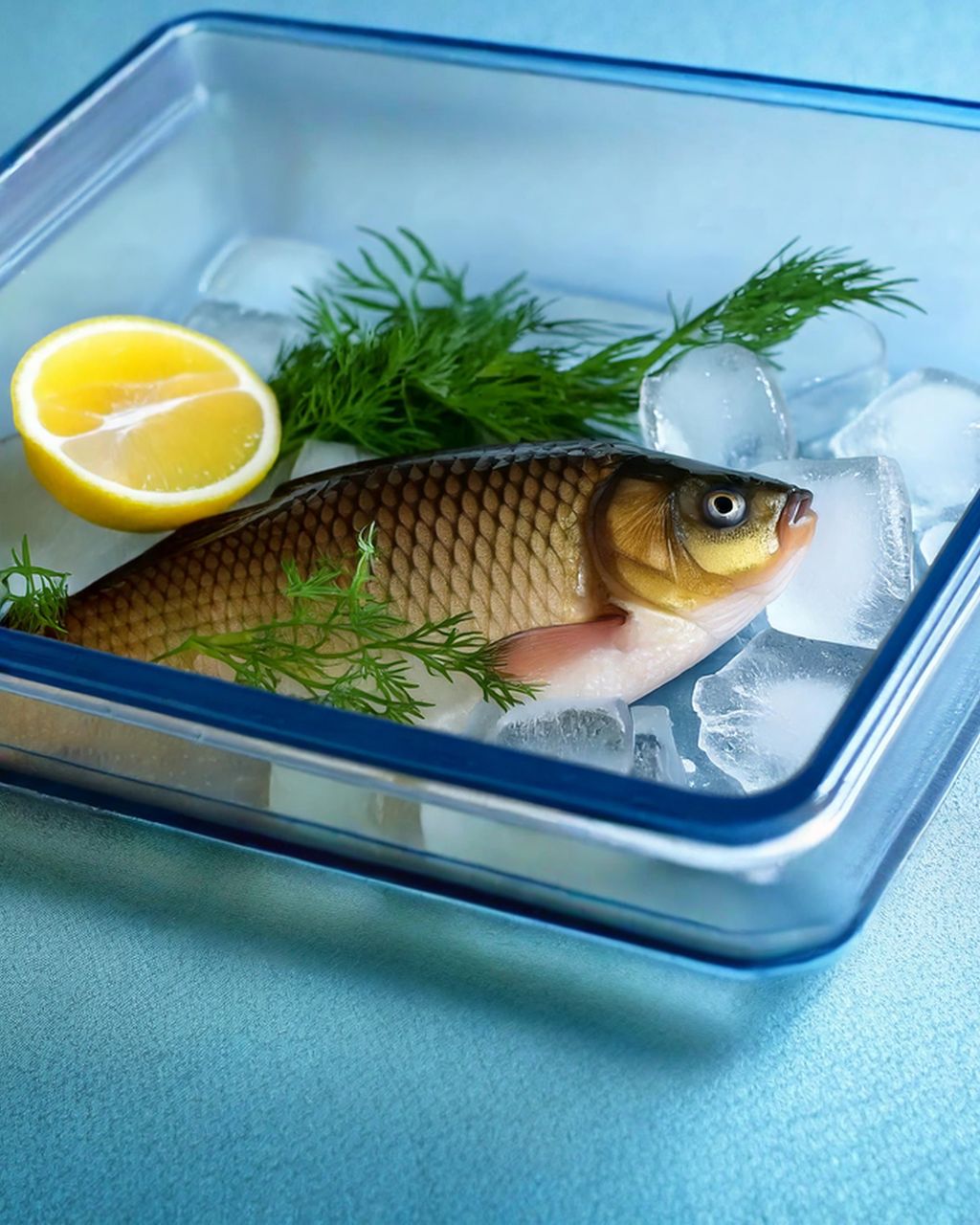
Keep killed and gutted carp in the coldest part of the fridge, ideally at 0–2°C (32–36°F), and cook it within one to two days. Before storing, rinse it, dry it and wrap it in plastic wrap or put it in a sealed container so it doesn't dry out or absorb fridge odors. If you buy it well ahead, freeze it right after purchase and thaw it slowly in the fridge overnight, not on the counter. How many days carp keeps in the fridge, how to freeze it properly and how to tell it's gone off is covered in the article carp in the fridge: how long it keeps and how to store it properly.
Carp is done when the thickest part reaches 63°C (145°F). The US Food Safety and Inspection Service (FSIS) gives this safe minimum internal temperature for fish in its safe temperature chart (145°F).
How to tell in practice:
With a thermometer: insert an instant-read thermometer into the thickest part of the portion, not into a bone or the coating. Once it shows 63°C, the fish is done. For fried carp, it's enough to measure one thick portion from the batch.
Without a thermometer: the flesh is cooked when it is opaque and white throughout and easily flakes apart with a fork in the cuts. Translucent, glassy flesh by the bone needs a few more minutes.
Don't cook carp much longer than it takes to reach this temperature. Overcooked flesh is dry and stringy. You don't feel the bones thanks to scoring, not to longer cooking.
You can replace carp on Christmas Eve with another fish (salmon, cod, trout), a schnitzel or a meatless option such as fried cheese or celery root schnitzel, and all of them go with potato salad. The article what to serve instead of carp on Christmas Eve covers this in detail. If you're planning the whole holiday, Christmas menu at home lays out what to cook for Christmas Eve lunch and dinner and for Christmas Day, and what to prepare ahead. And if there's carp left after dinner, what to do with Christmas leftovers suggests what to make from it the next day.
If you want fish without bones, fry battered cod with mashed potatoes.
And for a lighter salad without mayonnaise to go with fish: warm potato salad with honey-mustard dressing.
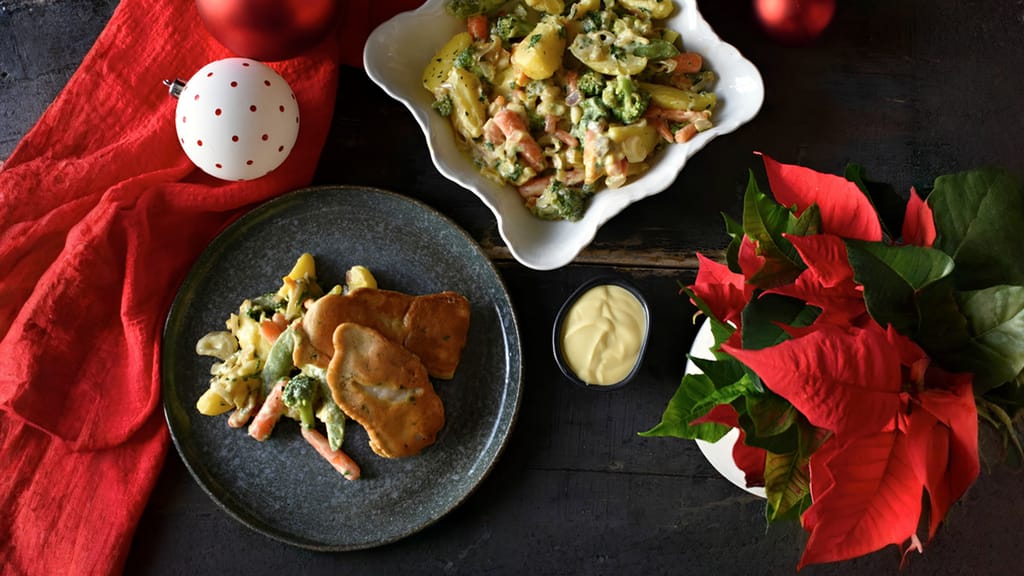
Unconventional christmas eve menu: fresh potato salad
Warm potato salad with honey-mustard dressing
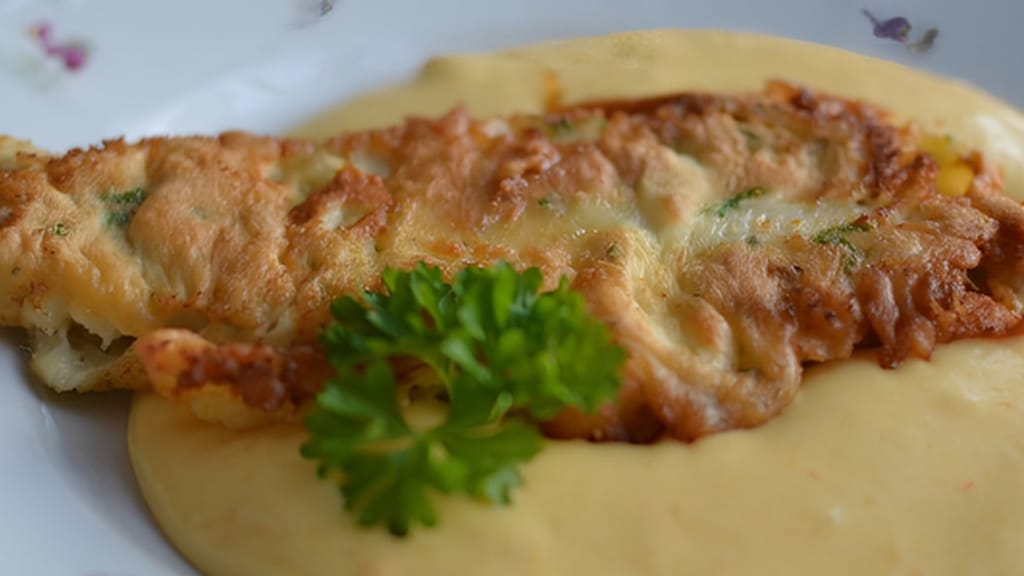
Battered cod with potato-carrot purée
Battered cod with mashed potatoes
You can fry carp a day ahead, but the coating will lose its crispness. Let the fried portions cool on a rack, store them covered in the fridge, and reheat them the next day on a rack in a 180°C (350°F) oven for about 10–15 minutes, until they reach 74°C (165°F) inside. Don't use the microwave, which makes the coating soggy. A better plan is to only score, salt and flour-and-egg the carp the day before, and add the breadcrumbs just before frying.
You can coat the carp in just all-purpose (plain) flour or gluten-free flour, or in fine cornmeal, and fry it the same way: at 170–175°C (340–350°F), 3–6 minutes per side depending on thickness. For a gluten-free three-step breading, use gluten-free flour and crumbs made from gluten-free bread or crushed unflavored cornflakes.
Fried carp stays raw inside when the oil is too hot or the portion too thick: the coating browns before the heat reaches the backbone. Fry at 170–175°C (340–350°F), cut thick portions with the backbone thinner, and don't put carp straight from the fridge's coldest spot into the oil. You can rescue an underdone portion on a rack in a 180°C (350°F) oven until the thickest part reaches 63°C (145°F).
Drizzle or spray the breaded carp portions with oil and bake them on a rack at 200–220°C (400–425°F) for about 20–25 minutes, turning them halfway. In an air fryer, about 12–15 minutes at 190–200°C (375–400°F) is enough. The coating is paler than with classic frying and absorbs less oil, and, as always, the fish is done at 63°C (145°F) inside.
Yes, carp roe and milt are both edible and traditionally go into Christmas fish soup, where they simmer for about 5 minutes. Milt can also be breaded and fried like little schnitzels. Always throw away the gills and the gallbladder, as the gallbladder turns the meat bitter.
One recipe worth heating the oven for, one tip, and one deal from the shop. Nothing else.