Marinated Hermelín and Utopenci: How Long They Keep and How to Store Them
Canned Pickles and Fermented Pickles: How Long They Last and How to Store Them Once Opened
Updated Nov 17, 2026
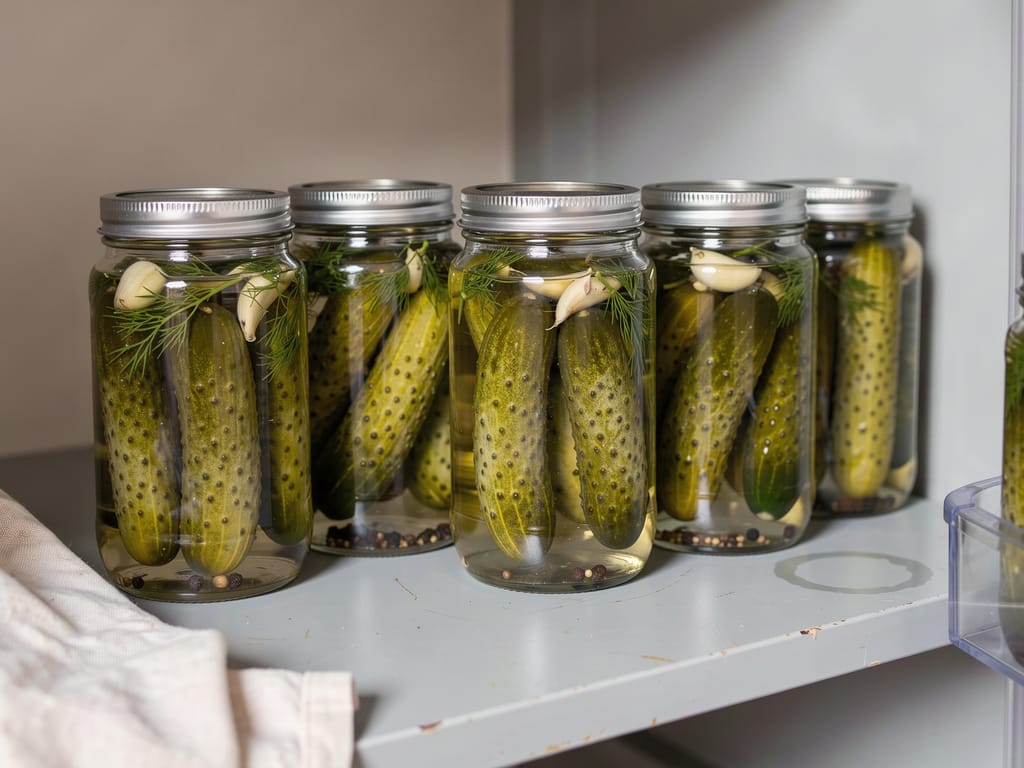
According to the USDA's guide to home canning, canned pickles in a sealed, processed jar are best within a year when stored in a cool, dark place at 10–21°C (50–70°F). Once opened, they belong in the fridge, and with home-canned pickles you should think in days rather than months. Fermented pickles are a different case: they aren't processed, they contain live lactic acid bacteria, and so once fermented they need the fridge. There, the USDA says they keep for roughly 4–6 months. Below you'll find where to put which pickles, how long an opened jar and leftover brine last, and how to tell when it's time to throw them out.
Unopened processed pickles keep their best quality in the pantry for up to a year, opened ones last 5–7 days in the fridge, and fermented pickles keep roughly 4–6 months in the fridge. Here are the details by type of pickle and where you keep them:
Processed pickles, unopened, in the pantry (cool and dark at 10–21°C / 50–70°F): best quality for up to 1 year. Source: USDA, Complete Guide to Home Canning.
Home-canned pickles after opening, in the fridge: 5–7 days, a conservative recommendation for opened pickled canned foods. Source: USDA FSIS.
Fermented pickles after fermenting, in the fridge, in the original container: roughly 4–6 months, as long as you regularly skim off surface scum and mold. Source: USDA, Complete Guide to Home Canning.
Store-bought fermented pickles: until the date on the package, and only in the fridge. Source: manufacturer.
Used brine in the fridge (at 4°C / 40°F or below): 1–2 days, with vegetables pickled in it for a few days. Source: NCHFP (National Center for Home Food Preservation, the US center whose research the USDA guide draws on).
The gap between "a year in the pantry" and "a few days in the fridge" makes sense: as long as the jar holds its vacuum, nothing can get in. Once you loosen the lid, you have an acidic vegetable exposed to air and forks.
Seasonal baking plans, tested recipes and kitchen tricks that save you time. Unsubscribe in one click.
Unopened processed pickles belong somewhere cool, dark and dry. The USDA guide recommends storing home-canned foods in a cool, dark place at 10–21°C (50–70°F) and not where temperatures climb above 35°C (95°F). That means not next to the stove, above the oven, by a radiator, in direct sunlight or in an uninsulated attic. In warmth, the USDA says, they lose quality within a few weeks to months and may spoil.
More practical tips:
Damp is bad for lids. The USDA warns that moisture corrodes metal lids, breaks the seal and lets the contents become contaminated again. A damp cellar under the washing machine is therefore not an ideal pantry.
Write the date on the lid. Then you know which jar to open first. The USDA advises canning only as much as you'll eat within a year.
Check the seal before storing. The lid should curve slightly inward in the middle and not click when you press it. A jar that didn't seal goes in the fridge and should be eaten within a few days (USDA). For why this happens and what to do about it, see our article on lids that didn't seal when canning.
Freezing: accidental freezing won't spoil home-canned food, the USDA says, as long as the jar stays tightly sealed.
If you're canning for the first time and mainly need help with the method, processing and lids, read canning for beginners. Here we stick to what comes afterward.
Put an opened jar of processed pickles straight into the fridge. For opened pickled canned foods, which include pickled cucumbers, the US agency USDA FSIS gives 5–7 days in the fridge. It's a cautious figure. If you want to be sure, open smaller jars.
How to extend the life of an open jar:
Keep the pickles under the brine. Anything poking above the surface dries out, softens and molds first.
Take them out with a clean fork, not your fingers. Every crumb of bread or trace of butter brings microbes into the brine that the acid wasn't counting on.
Screw the lid on tightly and return the jar to the fridge right away, not after dinner.
Set your fridge to 4°C (40°F) or below. That's the temperature the USDA recommends for fridges in general. The door is often warmer than the shelves inside.
For other opened preserves, you'll find rough timings in our food shelf life chart by type.
Fermented pickles go in the fridge once they've finished fermenting. They aren't processed or pasteurized. They're sour thanks to the lactic acid from fermentation, not vinegar and heat, and the bacteria in them are still alive. In warmth, fermentation would carry on, the pickles would turn too sour and soft, and the risk of spoilage would grow.
Fermenting and storing are two different stages:
Fermenting at room temperature. The USDA guide gives 21–24°C (70–75°F) for about 3–4 weeks. At 13–18°C (55–65°F) it works too, just more slowly, about 5–6 weeks. Above 27°C (80°F), the USDA says, pickles get too soft while fermenting. During fermentation, check the surface several times a week and skim off any scum or mold.
Storing in the fridge. According to the USDA, fully fermented pickles keep in their original container for about 4–6 months in the fridge, as long as you keep skimming scum and mold off the surface. Keep the pickles below the brine, for example weighed down with a smaller jar of water.
Want fermented pickles in the pantry? The USDA guide says outright that the better way to store them long term is to can the fully fermented pickles: bring the brine to a boil, pack the pickles into jars, cover them with the boiled brine and process. After that they're treated like any processed pickles. You will lose some of the crunch, though.
Store-bought fermented pickles are found in the refrigerated section, not on the shelf with the jars. Treat them the same way at home: fridge, and the manufacturer's date on the package.
Sauerkraut works on the same principle and has its own article: homemade sauerkraut, how long it ferments and keeps. And if the power goes out and your fermented pickles end up in a warm fridge, what to do with your food during a power outage will help.
Use brine that has already had pickles in it within 1–2 days, and vegetables pickled in it within a few days. NCHFP recommends keeping brine that has held vegetables in the fridge at 4°C (40°F) or below and using it within 1–2 days, for example in a sauce, dressing or marinade. Unused brine left over after filling the jars can, according to NCHFP, be covered, refrigerated and used later.
Why so short? Once pickles sit in the brine, the acid moves from it into the vegetable, and the brine itself becomes less acidic than it was. NCHFP therefore says clearly: don't reuse pickle brine for new canning. You no longer know its acidity, and the safety of processed pickles depends on it.
In the kitchen, though, it's handy for 1–2 days:
For seasoning legumes. A spoonful of brine instead of vinegar in sour lentils with a fried egg adds both tang and dill.
In dressings and mayonnaise-based salads instead of vinegar.
For quick fridge pickles, such as radishes or onions. NCHFP treats this as a flavor marinade, not preservation, so eat those vegetables within a few days.
Throw them out if the lid bulges, brine spurts out of the opened jar, or the pickles are slimy and soft or smell unpleasant. With processed pickles, cloudy brine is also a warning sign.
Processed pickles (vinegar + processing). According to the USDA and the UK's FSA:
the lid is bulging, doesn't curve inward, or clicks when pressed,
the jar leaks or has dried trails running down from the lid,
the brine is cloudy, has bubbles rising in it or has an unnatural color,
the brine spurts out when you open it, the contents smell unpleasant, or there's fuzzy mold (white, blue, black or green) on the surface or under the lid.
Fermented pickles. Cloudy brine is normal with these, because fermentation creates natural sediment. The USDA guide even advises straining the brine through a coffee filter when canning if the cloudiness bothers you. Skim off a thin white scum on the surface during fermentation. But according to the USDA, throw them out if:
the pickles are soft or slimy,
they have an unpleasant smell, meaning not sour and dilly but rotten, musty or sharply yeasty.
For a detailed overview of warning signs for all kinds of preserves, see when to throw out home-canned food.
No, opened canned pickles belong in the fridge. The vacuum that protected them in the pantry is gone once the jar is open, so USDA FSIS puts opened pickled canned foods in the fridge for 5–7 days. Left on the counter during the day, they soften and mold faster.
Often yes, as long as the lid still holds its vacuum and the jar shows no signs of spoilage. The one-year limit the USDA gives is about best quality: the pickles gradually soften and darken. A bulging lid, cloudy brine or an off smell means throw them out, however old the jar is.
Fermented pickles belong in the cellar only if it's as cold as a fridge, meaning 4°C (about 40°F) or below, which is rarely the case. The USDA's 4–6 months applies to fermented pickles kept in the fridge. In a warmer cellar they keep fermenting, turn too sour and go soft. For long storage outside the fridge, the USDA says it's better to can them.
Fermented pickles most often go soft because of enzymes in the blossom end of the cucumber, because they fermented in warmth above 27°C (80°F), or because the cucumbers poke out above the brine. That's why the USDA advises cutting a thin slice, about 1.5 mm (1/16 inch), off the blossom end (opposite the stem end) before fermenting, since it contains enzymes that soften pickles. If fermented pickles are soft or slimy, the USDA says to throw them out.
Both can be frozen, but it isn't worth it, because they go soft and lose their crunch after thawing. According to the USDA, freezing and thawing soften vegetables, so the pickles lose the crunch you eat them for. A sealed jar that freezes by accident won't spoil as long as it stays tight, but the pickles inside will be softer. It's better to open smaller jars and finish them in the fridge.
One recipe worth heating the oven for, one tip, and one deal from the shop. Nothing else.