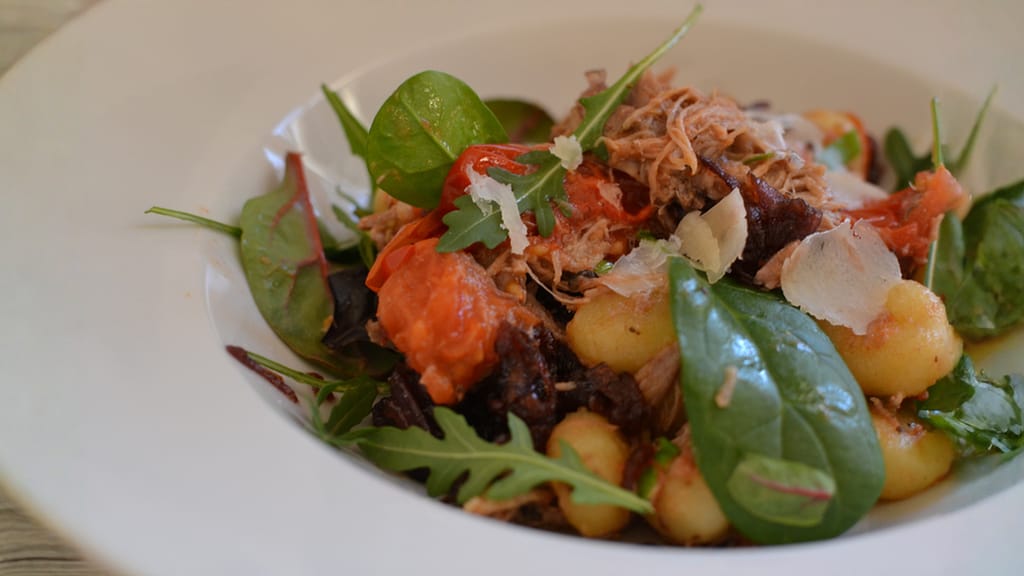
Potato gnocchi with pulled duck
Leftover Roast Goose and Duck: What to Do with the Meat, Bones, Skin and Fat
Updated Sep 17, 2026
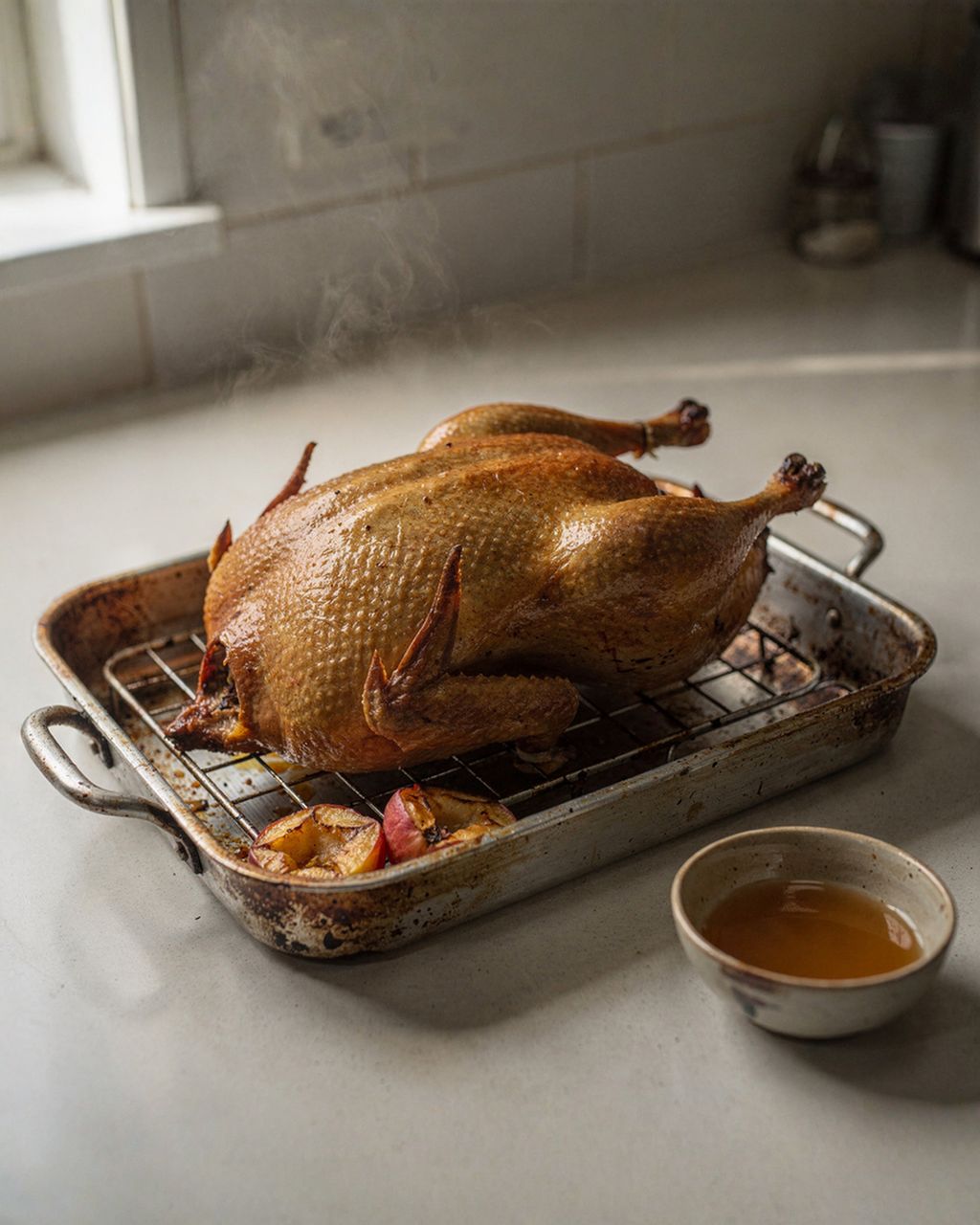
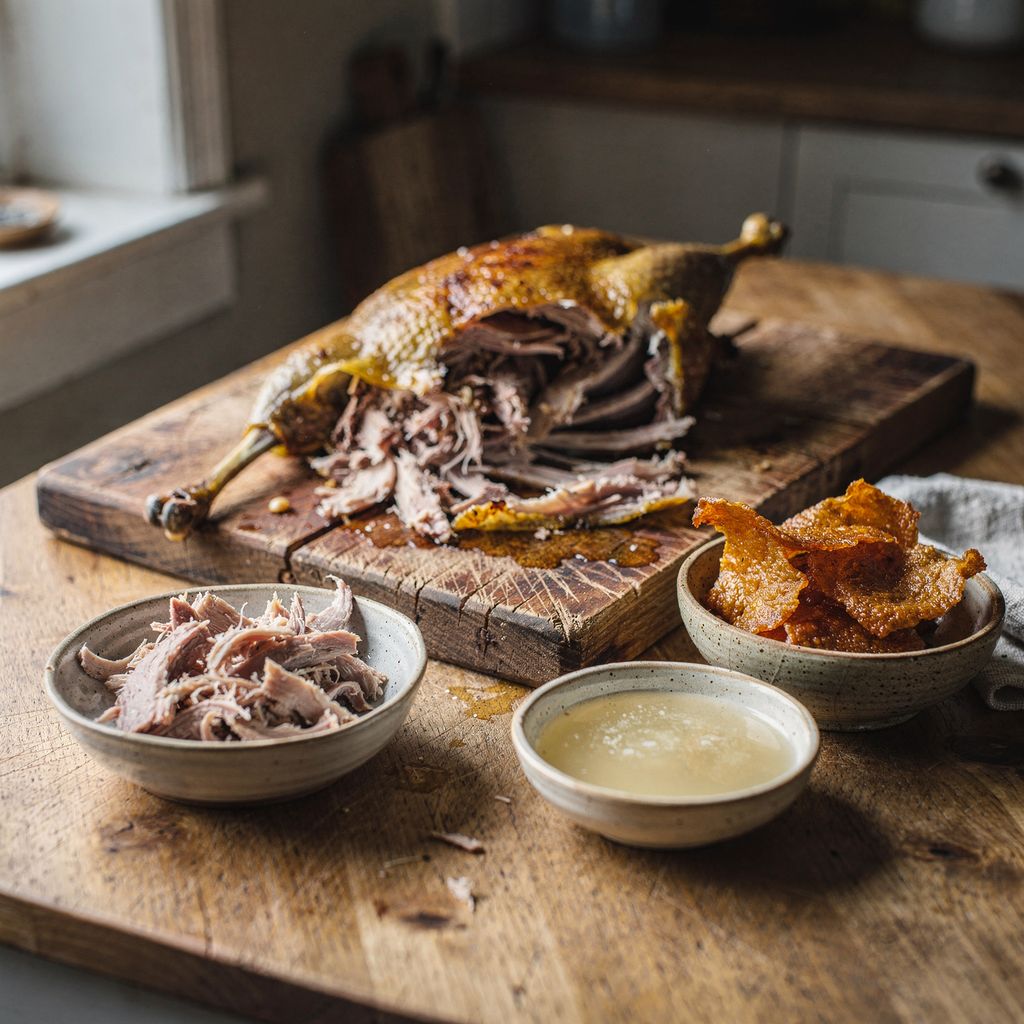
Leftover roast goose or duck shouldn't be reheated as a whole bird – break it down into five components (pulled meat, skin, carcass, fat, and roasting juices) and treat each one differently. Reheating the whole roast a second time is the fastest way to turn a good goose into dry meat with rubbery skin, while a properly broken-down roast gives you three days' worth of meals plus 1.5–2 litres of stock on top. Here's what to do with each part, how long it keeps, and what to cook with it.
One leftover goose or duck gives you five separate ingredients, each with its own best use:
Pulled meat – gnocchi, burgers, risotto, baked pasta, sandwiches, tacos.
Skin – crispy crackling for salads or soup, ready in 20 minutes.
Carcass – 1.5–2 litres of stock that sets into jelly in the fridge.
Fat – for roast potatoes, spread on bread, or confit; keeps for months in a clean, sealed jar in the fridge.
Roasting juices and pan drippings – the base for a gravy or a poultry jelly.
The rest of this article works through these five items in order. If you only have time for one thing, make stock – the carcass spoils fastest and gives you the biggest payoff.
Break down the leftovers within two hours of it coming out of the oven, while the meat is still warm. Warm meat comes away from the bone far more easily than cold, and the fat is still liquid, so you can simply pour it off. With a bird that's gone cold overnight, you'll end up peeling the meat off in scraps, and half of it will stay stuck to the bones.
The ten-minute method:
Pour all the fat and juices from the roasting pan into a jar or bowl and set aside – they'll separate on their own.
Peel off the skin in the largest pieces you can manage and set it aside separately. Don't mix it in with the meat, or it will go soft.
Slice the breast against the grain into slices, and pull the legs and the rest apart by hand or with two forks.
Pick out the small pockets of meat from the back and the "oyster" too – there's usually more than you'd expect, and it's the juiciest part.
Break the carcass into pieces small enough to fit your pot, then either refrigerate or start the stock right away.
Store the meat, skin and carcass separately in sealed containers. Mixed together, they'll soften each other, and nothing will end up crisp.
Reheat covered, at a low temperature, and only crisp up the skin right at the very end: 150°C under foil for 15–20 minutes, then remove the foil and grill for 3–5 minutes. This order warms the meat through without pushing the juices out, and only dries the skin once nothing else needs cooking.
What helps:
Let the meat sit out for 15–20 minutes before it goes into the oven. A cold centre forces the edges to overcook.
Spoon over 2–3 tablespoons of stock or melted fat. Water isn't enough – it evaporates before the meat warms through.
Lay the skin on top of the meat, not underneath – its fat drips down and bastes the meat as it renders.
Microwave only pulled meat without the skin, in 30-second bursts, stirring in between. It will reliably ruin crispy skin.
Only reheat the portion you're going to eat – leftovers should only be reheated once, so split everything into smaller batches right after roasting instead of storing the whole bird in one piece.
What doesn't help: cranking the oven to 200°C "to speed things up". At that temperature, the muscle fibres tighten and push out the remaining juices before the centre has a chance to warm through – which is exactly why reheated goose so often ends up dry.
Pulled goose or duck works anywhere confit meat would – it's already tender, rich and full-flavoured, so all it needs is warming through in the finished dish. Six dishes it suits best:
Potato gnocchi with pulled meat and cabbage.
A burger with pulled meat and something acidic – pickled onion, cranberries.
Risotto cooked in stock made from its own carcass.
Baked pasta with cream and mushrooms.
A sandwich or tacos with hoisin sauce, cucumber and spring onion.
Noodle soup – stock, noodles, meat piled on top in the bowl.
One rule applies across the board: add the meat right at the end of cooking and just warm it through. Simmer it for another twenty minutes and it will fall apart into bland, stringy shreds. And pair every one of these dishes with something acidic – goose and duck are rich, and without vinegar, cranberries or pickled vegetables, they get heavy after three bites.
Potato gnocchi with pulled duck
Potato gnocchi with pulled duck – the most straightforward use for leftover roast duck
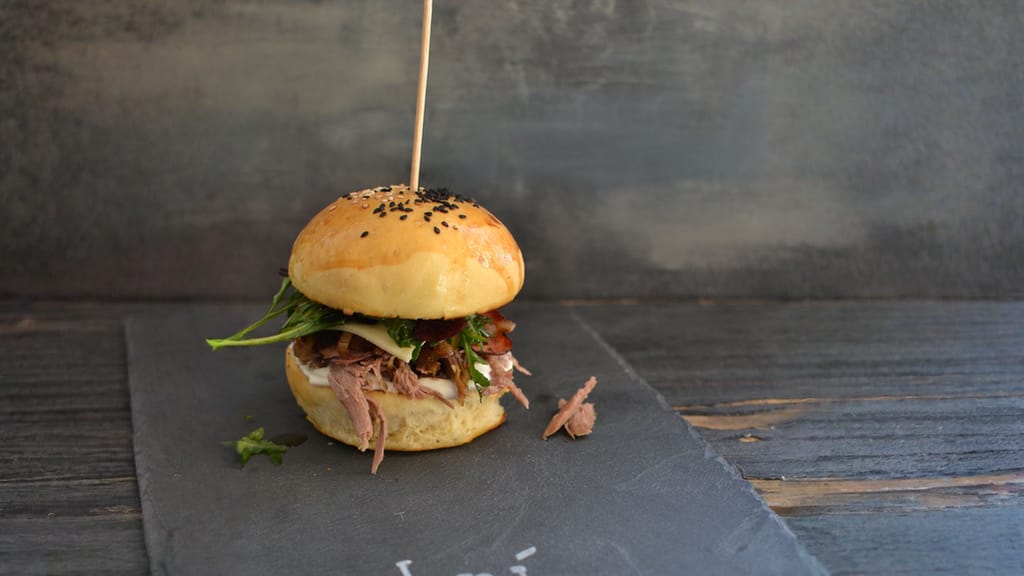
Pulled duck burger on homemade buns
Pulled duck burger on a homemade bun – works just as well with leftover goose
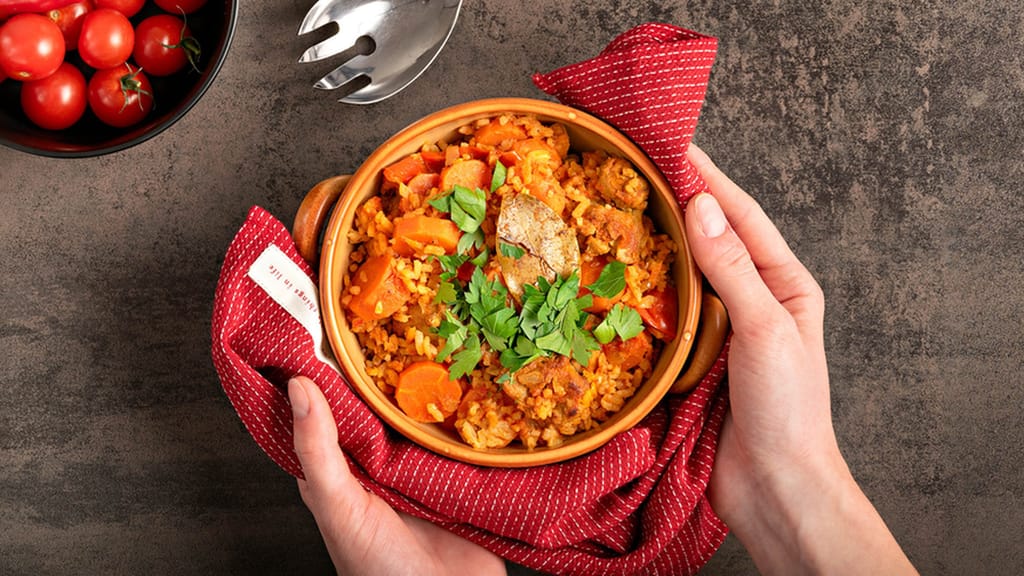
Baked risotto with chicken and vegetables
Baked chicken risotto: swap the chicken for pulled goose and the water for stock made from the carcass
One carcass will give you 1.5–2 litres of stock in 4–5 hours at 90–95°C, just below a boil – a hard boil will cloud the stock for good. Roasted bones don't need pre-roasting, since they've already been through the oven, and they give a dark, deeply meaty stock.
Once the stock has cooled, a layer of set fat will sit on top – lift it off and save it, it's pure fat, ready to use. Underneath, it should be jelly-like, not liquid. If the stock doesn't set in the fridge, it was too diluted or didn't simmer long enough; reduce it by half over heat. Freeze it in ice cube trays – one cube is roughly 15–30 ml, depending on the tray.
Cut the leftover skin into strips about 1 cm wide and place in a dry, cold pan over low heat – within 15–20 minutes the fat will render out, leaving crispy crackling behind. Starting from cold is key: a hot pan seals the surface, traps the fat inside, and leaves the skin rubbery.
Pour off the rendered fat into a jar as you go, so the crackling fries rather than stews.
Salt right at the end only – salting early would draw water out of the skin.
It's done when it snaps rather than bends.
Great as a topping for creamy soup instead of croutons, or mixed into potato salad or cabbage. It keeps for two days in a sealed jar before it starts to soften – if that happens, pop it back in the oven at 180°C for two minutes.
Strain the fat through a fine sieve or muslin into a clean, dry jar. Strained fat keeps for months in the fridge in a clean, sealed jar, and even longer in the freezer – as soon as it smells rancid or soapy, throw it out. It needs to be properly strained: any bits of meat or juice left in it will turn rancid within a few weeks. Always dip in with a clean spoon.
Why it's worth saving:
A smoke point of around 190°C – higher than butter, so you can roast potatoes in it without the fat burning.
It carries the flavour of the roast, turning plain potatoes into a side that tastes like part of the feast.
It's ideal for confit – next time round, you can use it to slow-cook duck legs.
The best use is simple: cube some potatoes, heat the fat to 160–180°C, fry until golden, and stir in crushed garlic and marjoram right at the end. Stay below the smoke point – burnt fat turns bitter and overpowers everything else. Duck fat is a fat rich in monounsaturated fatty acids (around 50%, according to nutrition databases). Save it for the flavour – you can taste the roast in it, whether it's on potatoes or in braised cabbage.
Don't throw out the pan juices – once cooled, they separate on their own into two layers: pure fat on top, and a dark, concentrated jelly underneath. That bottom layer is the most flavourful thing to come out of the whole roast.
For a gravy: melt two tablespoons of the jelly into stock, then thicken with a roux or cold butter.
On bread: the jelly mixed with finely chopped onion and salt makes a classic spread.
In cabbage: a spoonful of pan juices stirred into braised cabbage ties the side dish to the meat.
If there's a dark, caught-on residue left in the bottom of the pan, add a splash of water or wine, set it on the hob, and scrape it loose with a wooden spoon. That deglazed liquid is concentrated flavour that would otherwise go down the drain.
Freeze in portions of 150–200 g and always cover the meat in stock or melted fat – bare pulled meat dries out and picks up off-flavours in the freezer within a month. Fat or stock around it acts as a barrier against air.
Pulled meat in fat or stock: 3–4 months.
Stock in cubes: 2–3 months, then it loses aroma.
Fat: keeps longer in the freezer than the fridge – go by smell.
Skin and crackling: don't freeze – it turns rubbery once thawed.
Thaw slowly overnight in the fridge, not in the microwave. Use thawed meat within 24 hours and don't refreeze it in its original form – the only exception is cooking it into a new dish and freezing that.
Always cook up fresh cabbage to go with reheated goose – it's the one part of the plate that actually improves with reheating rather than suffering from it. Reheat the meat as described above, slice the dumplings and fry them in a spoonful of goose fat until crisp, and make the cabbage fresh, sharper and more acidic than the day before. Sweet-and-sour red cabbage balances the richness of the meat, which tastes even bolder on day two than freshly roasted.
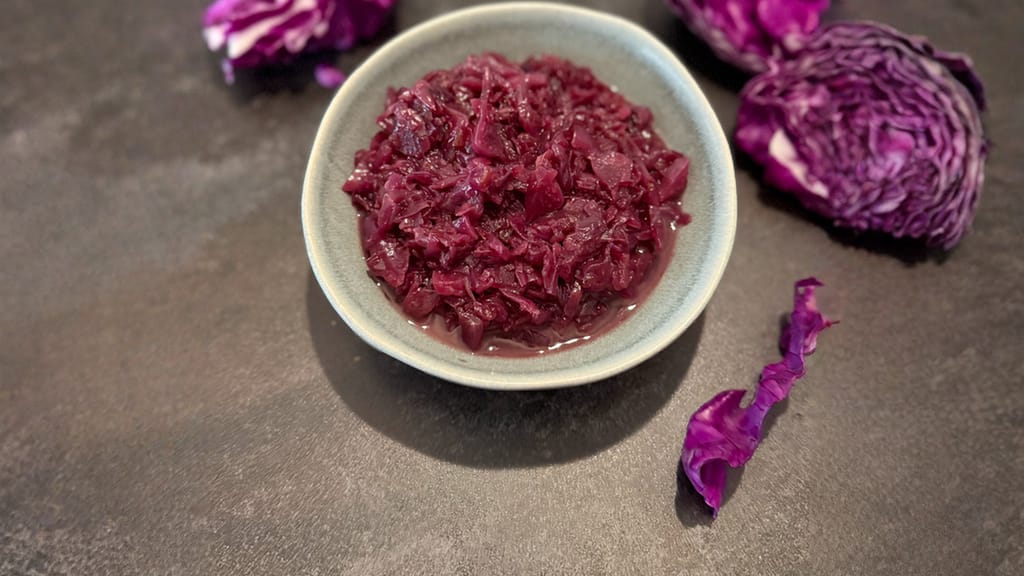
Sweet and sour braised red cabbage
Sweet-and-sour braised red cabbage – the acidic counterpoint to leftover roast goose
Yes – cold pulled meat from a roast goose is fine to eat as long as it's been in the fridge the whole time and you're within the 3–4 day window. Cold meat is actually more practical for salads, sandwiches or spreads, since it needs no reheating at all, which saves your one allowed reheat for another portion. Just bear in mind that the fat turns solid and the skin goes rubbery when cold – save the skin for crackling and pair the meat with something acidic.
Pull it into shreds and warm it through in liquid – the only way to rescue dry meat is to stop serving it as a whole slice. Stir the pulled meat into a sauce, stock or cream and let it sit for 5 minutes over low heat; the fibres soak up some of the liquid and the fat loosens up again. In a risotto, baked pasta or noodle soup, you won't be able to tell it apart from freshly juicy meat.
From a medium-sized goose that feeds four, you'll usually have two to three more portions of pulled meat left over. It depends a lot on the size of the bird and how thoroughly you pick meat off the back and neck – that's where most people leave the most behind. On top of that, count on a carcass for stock, skin for crackling, and rendered fat.
No – cooked poultry bones should never be given to dogs. Roasting makes them brittle, and when chewed they splinter into sharp shards that can injure the throat and intestines. The only safe option is boneless, cooked meat with no seasoning, salt or onion, and even then only as an occasional treat. The carcass belongs in the stockpot, not the dog bowl.
Yes, but first remove every last bit of stuffing from the carcass. Bread or dumpling stuffing turns to mush in the stock, clouding it and making it gluey. Apples and prunes from a fruit stuffing will make the stock unnecessarily sweet. Rinse out the cavity with cold water, break up the carcass, and simmer as normal – the result is no different from an unstuffed goose.
Goose gives you more fat and bolder-tasting meat, duck gives you more delicate meat and less fat. Goose typically renders noticeably more fat than duck – depending on the size of the bird and how it was roasted, sometimes several times as much. Goose meat is darker and richer, so it stands up well to bold partners like cabbage, cranberries or mushrooms; duck works better in Asian-style dishes with hoisin sauce and spring onion. But the same rules apply to both when it comes to storage, reheating and stock.
One recipe worth heating the oven for, one tip, and one deal from the shop. Nothing else.