Bundt Pan - Tradition
What to Do with Leftover Eggnog: Bundt Cake, Cake Frosting & Pralines
Updated Oct 17, 2026
What can you do with leftover eggnog? It bakes best into a bundt cake (just 200–250 ml), swirls into cake frosting (50–100 ml), or makes a filling for white chocolate pralines (50 ml for 24 pieces). In batter, eggnog adds moisture, vanilla and fat; in frosting and ganache, a gentle egg flavor. For no-bake desserts, though, you need to know how your eggnog was made. Here are the ratios, temperatures and most common mistakes for all three.
A bundt cake takes 200–250 ml of eggnog, cake frosting 50–100 ml, and one tray of pralines 50 ml.
200–250 ml → liqueur bundt cake (the classic, and the biggest eggnog user)
50–100 ml → cake or cupcake frosting
50 ml → white chocolate praline ganache (one mold, 24 pieces)
under 50 ml → bundt cake glaze, or a few spoonfuls in whipped cream for coffee
Eggnog, or more formally egg liqueur, is a sweet emulsion of yolks, sugar and alcohol; the homemade version is also made with milk or cream. In baking it behaves like milk, fat and sugar all in one, and you need to account for that when adding it to a recipe. If you don't have any left but want some, you can make homemade eggnog in half an hour.
Only bake with eggnog that smells, tastes and looks the same as it did the day you made it. Baking won't rescue spoiled ingredients. If it's sour, bitter, or has a watery layer in the bottle that won't blend back in when shaken, throw it out.
How long each type of eggnog lasts and how to store it properly is covered in the article Eggnog: How Long It Keeps and How to Store It. If yours has curdled slightly but is otherwise fine, follow the guide on why eggnog curdles and how to rescue it – after that, it's fine for a bundt cake.
A liqueur bundt cake is the best way to use up a larger amount of leftover eggnog: it replaces both the milk and part of the fat, giving a dense, moist crumb with a vanilla flavor. The classic Central European version (known in Germany and Austria as Eierlikörkuchen) rests on a simple principle: eggs whipped with sugar until foamy, then oil and the same volume of liqueur, and finally flour mixed half and half with starch.
Why it works:
Oil instead of butter keeps the cake moist even on day three – unlike butter, it doesn't firm up in the cold.
Starch in place of half the flour limits gluten, so the crumb is fine and doesn't fall apart.
The liqueur brings both sugar and fat – which is why you use less sugar in this batter than you'd expect.
If you want to put eggnog into your favorite bundt cake that calls for milk, replace the milk with eggnog 1:1 and cut the sugar by 10–20%, otherwise the cake will be too sweet and brown faster. Bake at 170–175 °C (340–350 °F) for roughly 50–60 minutes and test with a skewer – it should come out dry but the cake shouldn't be dried out.
Why it's best not to give eggnog bundt cake to small children is explained in the FAQ at the end of the article.
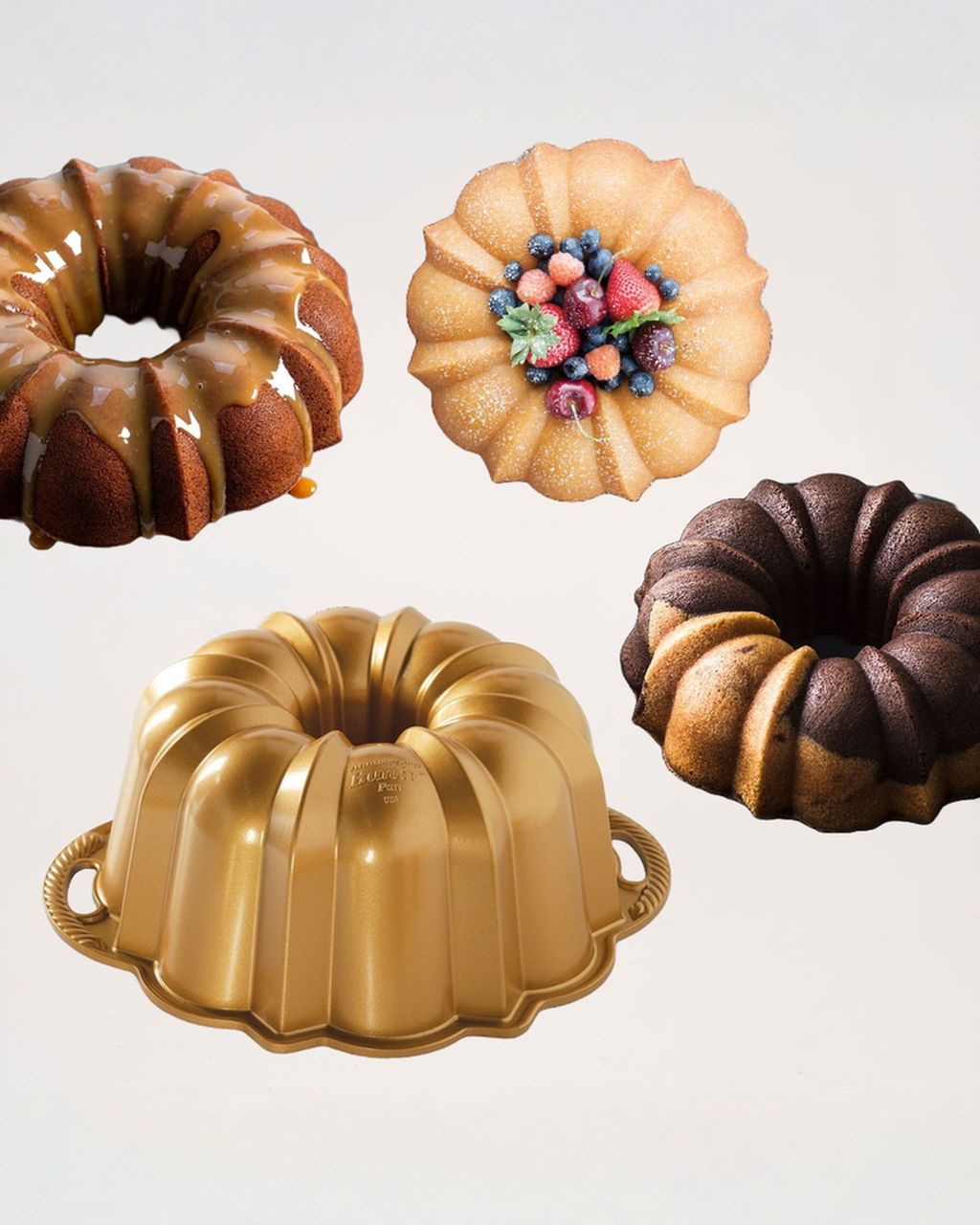
For a liqueur bundt cake, the best choice is a heavy cast aluminum pan with a nonstick finish: it conducts heat evenly, so a high-sugar batter doesn't scorch at the walls before the center is baked through. One example is the Nordic Ware Tradice cast bundt pan – a classic shape with deep ridges that comfortably holds the batter made with 200–250 ml of eggnog.
An honest comparison:
Cast aluminum (Nordic Ware) – the most even baking, crisp patterns, lasts for decades. More expensive and heavier.
Thin sheet metal or grandma's enamel pan – works, but the edges bake faster; lower the temperature by 10 °C (about 20 °F).
Silicone – the cake releases easily, but it barely browns and the soft mold flexes when you carry it. For a sweet liqueur batter it's more of a backup option.
You'll find the whole range of shapes and sizes among our bundt pans. Whichever pan you use, sweet batter sticks – brush every ridge with melted butter and dust with plain flour or breadcrumbs. After baking, leave the cake in the pan for 10 minutes, then turn it out; once cold it would stick.
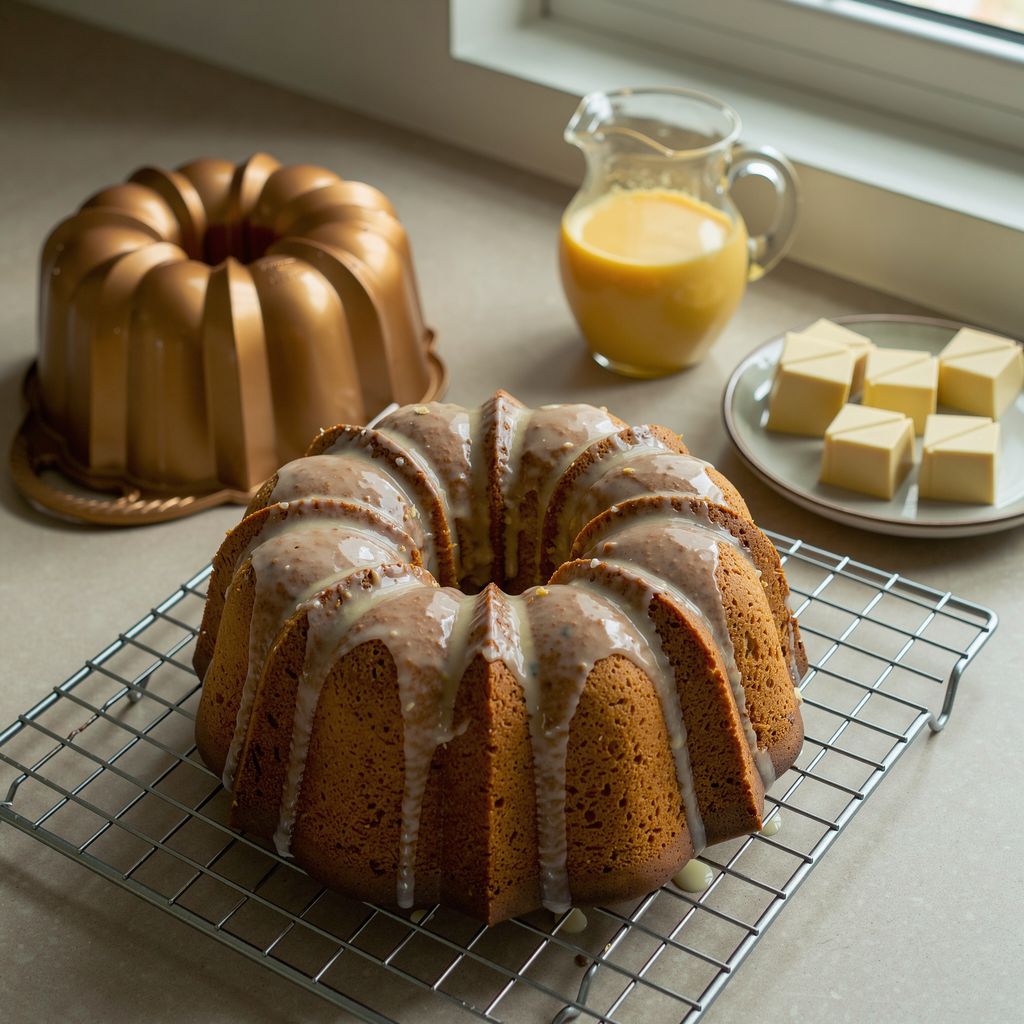
The simplest glaze is 100 g of powdered sugar stirred with 2–3 tablespoons of eggnog to the thickness of honey. A creamier, glossier option is 100 g of white chocolate melted with 40 ml of eggnog – pour it over a cooled cake, since on a warm one it would run right off.
You can make eggnog cake frosting on two bases: as a mascarpone cream, or as a whipped white chocolate ganache. In both, use no more than about a fifth of the frosting's weight in eggnog – more liquid thins the frosting so it won't hold on a cake or in a piping bag.
Mascarpone cream – 250 g mascarpone, 200 ml heavy whipping cream (33%), 30–40 g powdered sugar and 60–80 ml eggnog. Everything cold from the fridge; whip only to stiff peaks and no further, or the cream will curdle into grains. Use less sugar than usual, since the eggnog is sweet itself.
Whipped white chocolate ganache – pour 300 ml hot cream over 150 g white chocolate, stir until smooth, add 50 ml eggnog and chill overnight in the fridge. The next day, whip it like whipped cream. It's more stable than mascarpone cream and holds up between cake layers too.
You can also use eggnog to soak the cake layers: mix it 1:1 with sugar syrup (equal parts sugar and water, boiled and cooled) and brush it over the sponge. Straight eggnog would be too thick for the sponge and wouldn't soak in evenly.
A similar mascarpone cream appears on the pumpkin cupcakes with mascarpone frosting – in winter, feel free to flavor it with eggnog in place of some of the cream.
You make eggnog pralines from two things: shells of tempered white chocolate and a ganache in a ratio of roughly 3 parts white chocolate to 1 part eggnog (for example 150 g chocolate + 50 ml eggnog). That's plenty for one mold with 24 cavities.
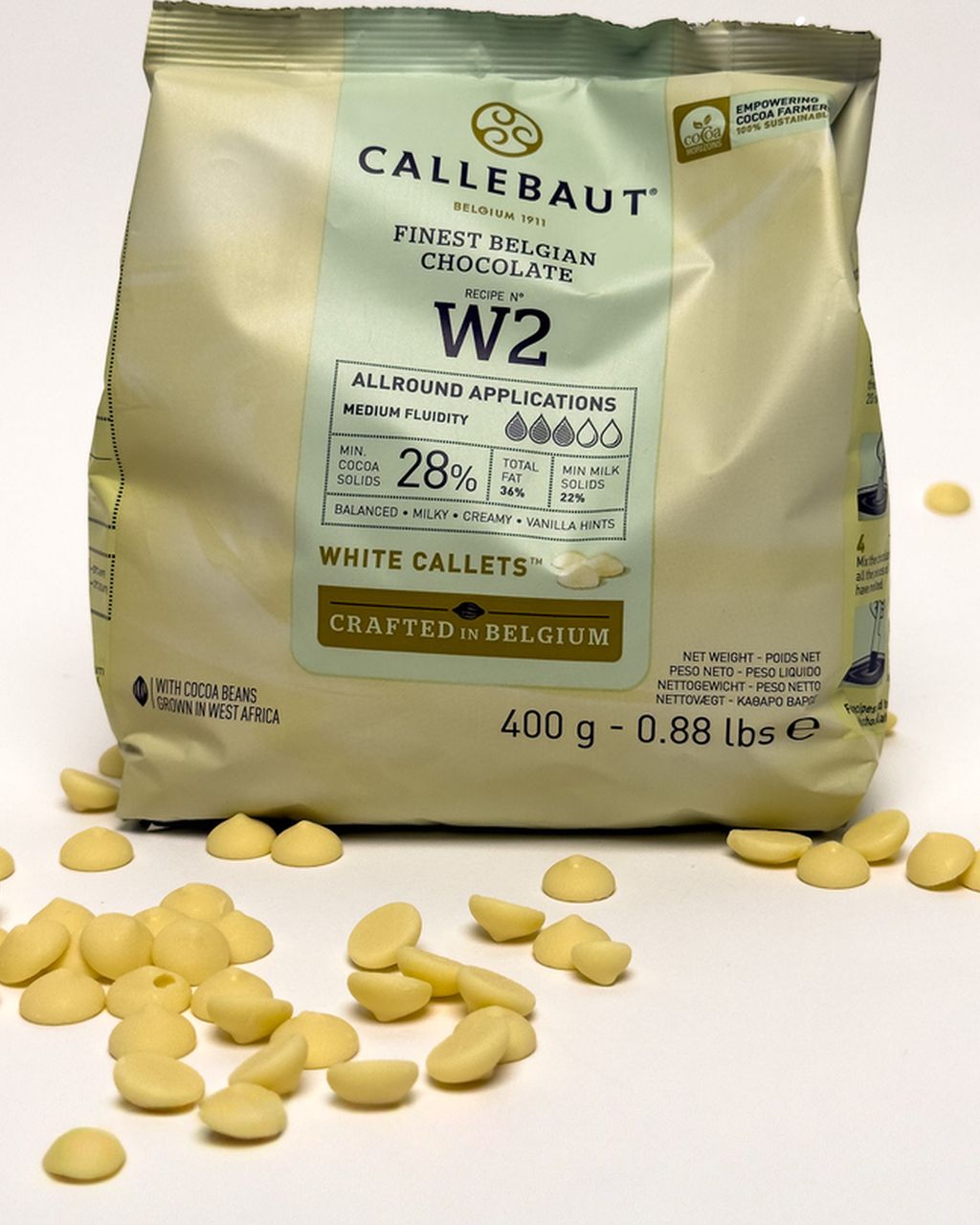
White chocolate is ideal for eggnog: its milky, vanilla flavor doesn't overpower the egg notes the way dark chocolate would. Use good-quality white couverture with a higher share of cocoa butter – for example Callebaut W2 white chocolate callets, which is thinner than bar chocolate when melted and so makes a thin shell. Supermarket white chocolate bars are fine for the ganache, but too thick for shells and harder to temper. One 400 g bag covers the shells and the filling for one mold.
How to do it:
Temper the chocolate. Melt it to 40–45 °C (104–113 °F), cool it to 26–27 °C (79–81 °F) while stirring, then rewarm to a working temperature of 28–29 °C (82–84 °F). Untempered chocolate stays dull and grayish and won't release from the mold.
Make the shells. Fill the mold with chocolate, turn it upside down, tap so the excess runs out, scrape the edges clean and let it set.
Prepare the ganache. Melt 150 g of chocolate to 35–40 °C (95–104 °F) and work in 50 ml of room-temperature eggnog a spoonful at a time, preferably with an immersion blender. Cold eggnog would make the chocolate seize.
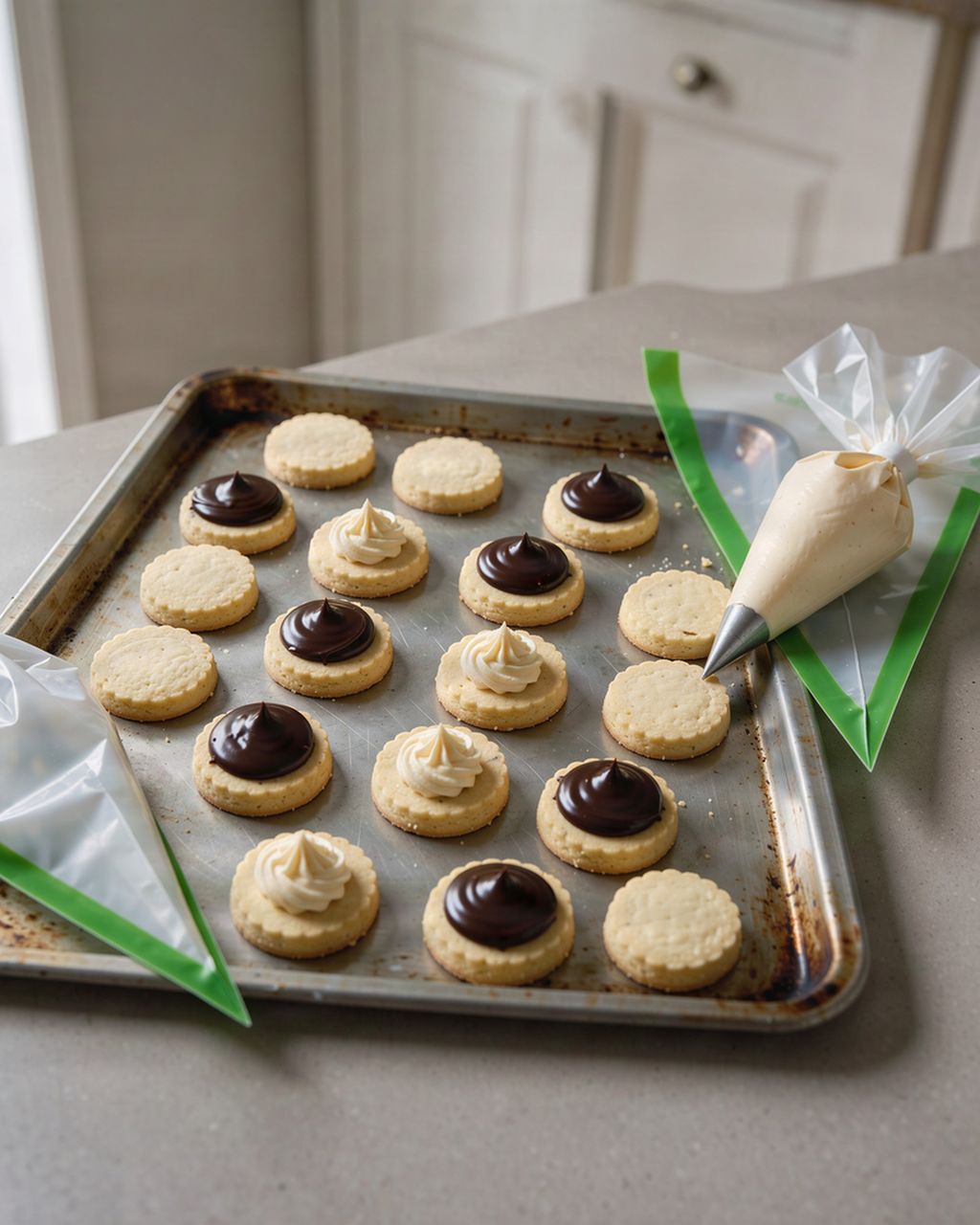
Fill the cavities with a piping bag to 2 mm below the rim, leaving room for the lid.
Let the ganache set for 12–24 hours in a cool place (around 16–18 °C / 61–64 °F), then seal the pralines with tempered chocolate and unmold once set. Setting outside the fridge like this is an exception that applies only to ganache made with heated or store-bought eggnog – the finished pralines then belong in the fridge.
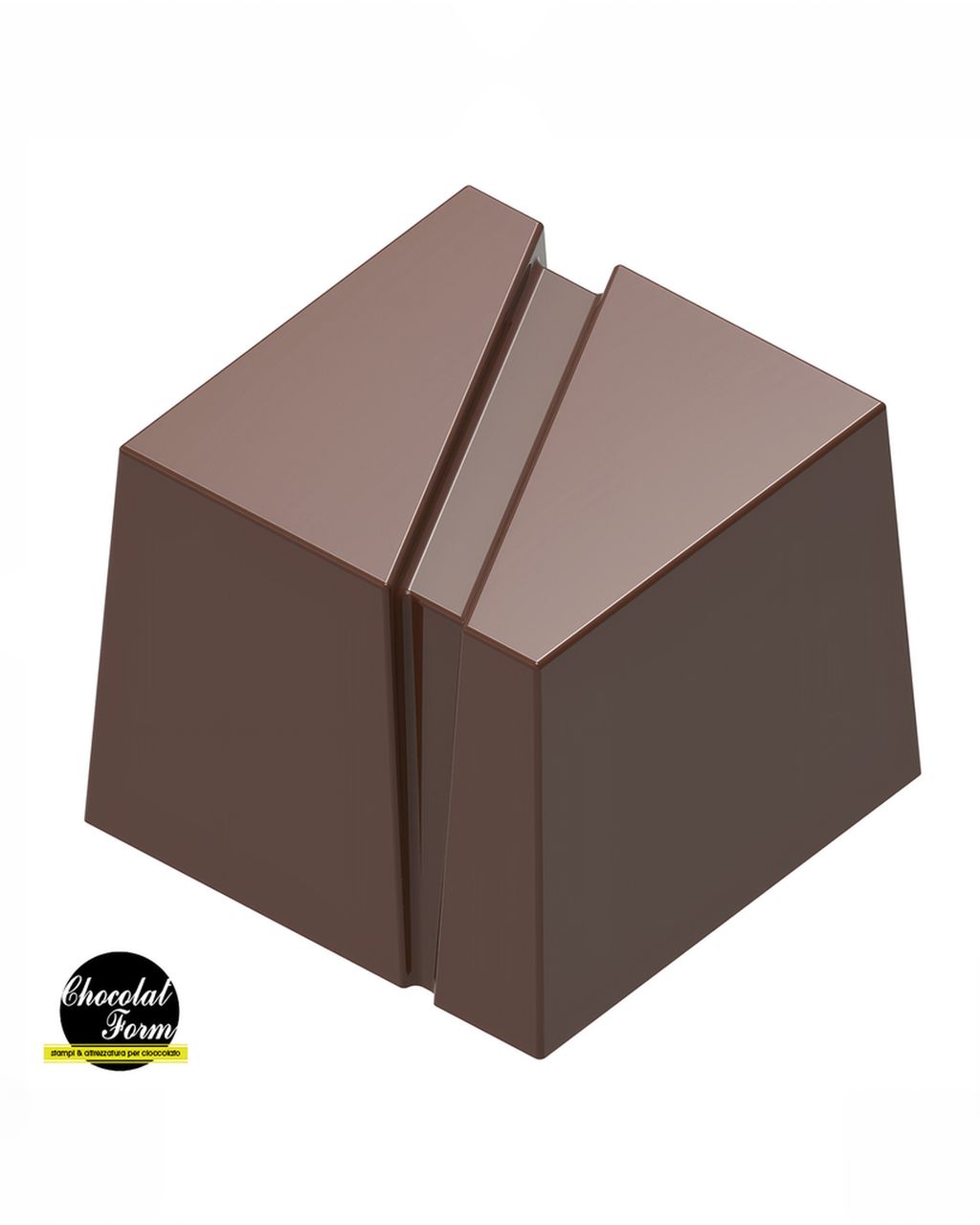
The praline mold needs to be polycarbonate – hard and glossy, so the pralines come out shiny with clean edges. Silicone molds are cheaper, but they won't give you a shine and a thin shell cracks when you unmold it. A simple shape is good for starting out – for example the Chocolat Form Cube with Stripe mold with 24 cubes of 25 mm, from which the chocolate releases easily thanks to the straight walls.
Store the pralines in a closed box in the fridge and eat them within 3 days – because of the egg filling they won't last as long as pralines with a pure chocolate ganache. Before serving, let them come to room temperature in the closed box so condensation doesn't form on them.
Stir a small amount of leftover eggnog into whipped cream, pour it over ice cream, add it to pancake batter or stir it into hot chocolate – none of these need the oven.
In whipped cream – 2 tablespoons of eggnog to 200 ml of cream, for coffee or gingerbread.
Over ice cream – pour it over a scoop of vanilla, where it works like a sauce.
In pancake or fritter batter – replace part of the milk (a third, no more, or the batter will scorch).
In hot chocolate – a few spoonfuls per mug, in place of sugar.
Yes. Store-bought egg liqueur works just as well in bundt cake, frosting and pralines, and it's actually safer for no-bake desserts, since commercial versions are usually made with pasteurized eggs and contain at least 14% alcohol. It tends to be sweeter and thicker than homemade, though, so cut back the sugar in the recipe and keep the amount in frosting toward the lower end.
It's better not to give eggnog bundt cake to small children, because according to USDA data about a quarter of the alcohol remains even after an hour of baking. There's little in a slice for an adult, but for kids it's best to bake a separate cake. In frosting and pralines the alcohol doesn't cook off at all, so don't give those to children.
Yes, a liqueur bundt cake freezes very well, and thanks to the oil it doesn't turn hard. Wrap it in plastic wrap once it's completely cool and unglazed. It keeps in the freezer for about 3 months; thaw it overnight in the fridge and add the glaze afterward.
Yes, you can freeze eggnog in a sealed container, but after thawing it may separate a little and lose its smoothness. It won't be ideal for drinking anymore, but after a good shake or a blitz in the blender it's perfectly fine for bundt cake or pancakes.
Eggnog ganache most often splits because the eggnog was cold or was added all at once. To rescue it, warm it gently to 35 °C (95 °F), add a spoonful of warm cream or eggnog, and blend with an immersion blender kept below the surface until it comes back together.
One recipe worth heating the oven for, one tip, and one deal from the shop. Nothing else.