Sweet and sour braised red cabbage
How Long to Roast Goose and How to Tell It's Done
Updated Oct 6, 2026
How long should you roast a goose? Plan on roughly 45–55 minutes per kilogram (about 20–25 minutes per pound) at 160–165°C (325°F). A 4 kg (9 lb) goose will need about 3 hours to 3 hours 40 minutes. But time only gets you an estimate. The goose is done once a thermometer reads at least 74°C (165°F) in the deepest part of the thigh and in the thickest part of the breast. Below you'll find times by weight, the right oven temperature, and three ways to check that your goose is properly roasted — so it's on the table on time for St. Martin's Day (November 11th).
Roast a whole unstuffed goose at 160–165°C (325°F) for roughly 45–55 minutes per kilogram (20–25 minutes per pound). This is based on the USDA/FSIS, the US food safety authority, which gives 20–25 minutes per pound at 325°F (163°C) for a whole goose. Converted to kilograms:
3 kg (6.5 lb): 2 h 15 min – 2 h 45 min
4 kg (9 lb): 3 h – 3 h 40 min
5 kg (11 lb): 3 h 45 min – 4 h 35 min
6 kg (13 lb): 4 h 30 min – 5 h 30 min
Treat these times as a plan, not the final word. Every oven runs a little differently, and a goose straight from the fridge roasts differently than one that's sat out on the counter for an hour. So start checking the temperature once you've reached about two-thirds of the estimated time. A cheap oven thermometer will quickly tell you if your oven's dial is lying to you.
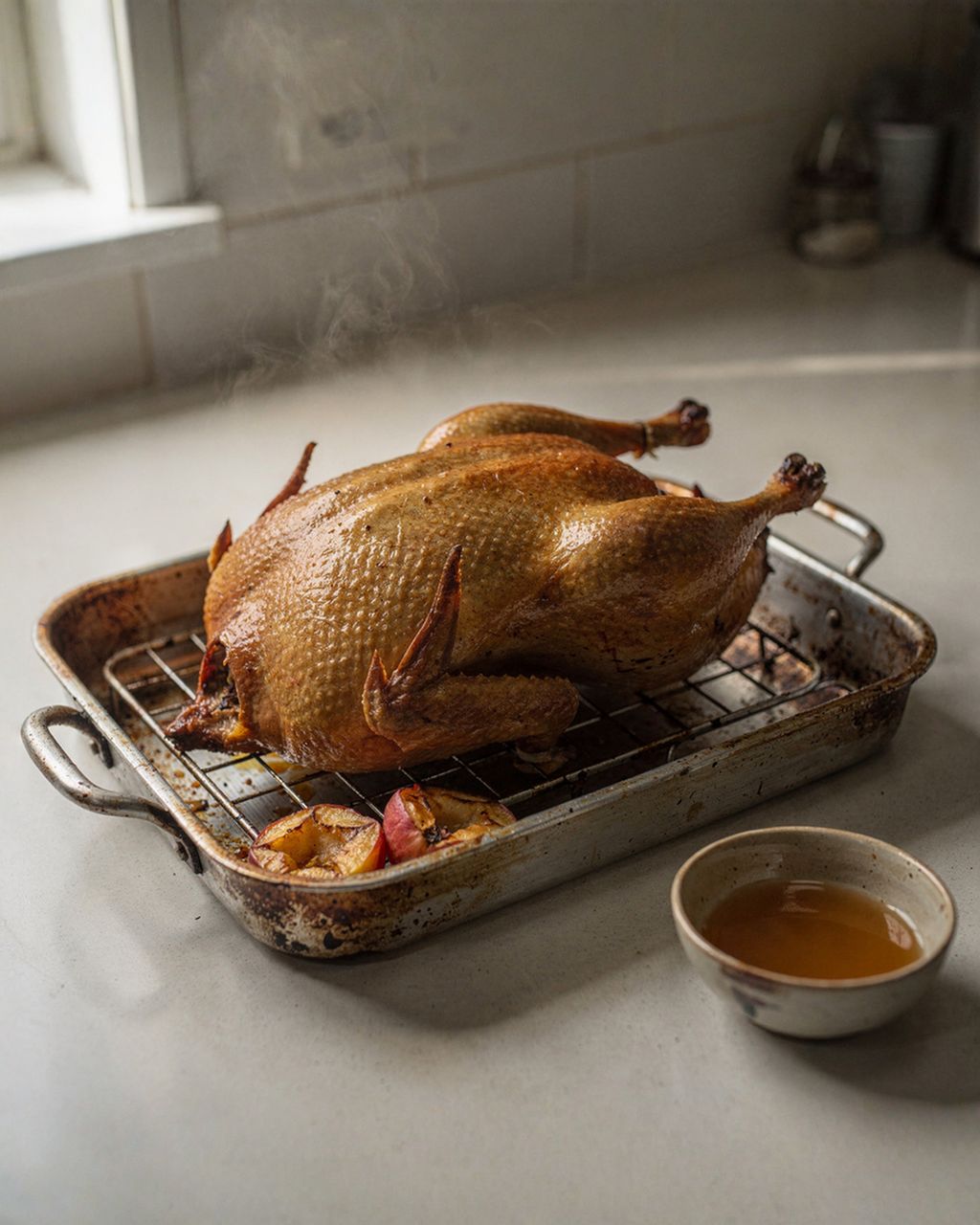
Set the oven to 160–165°C (325°F; fan ovens about 10–20°C lower) for most of the cooking time. Right at the end, turn it up to 200–220°C (400–425°F) for 15–20 minutes so the skin crisps up to a deep golden brown.
Why this way? Goose has a thick layer of fat under the skin that needs time to render out slowly. If you start at a high temperature, the skin browns before the fat beneath it has melted, leaving the legs tough. A low temperature gives the fat and connective tissue in the legs time to break down.
In practice:
Before roasting, prick the skin all over, especially on the breast and sides, so the fat can drain out. Be careful not to pierce the meat itself, or it will lose its juices.
For the first two-thirds of the time, roast covered — with a lid or foil — with a little water in the bottom of the roasting pan. The goose steams gently and the fat renders out.
Then uncover, pour off the excess fat (save it — it's goose fat, after all), and roast uncovered from there. Baste with the pan drippings every 20–30 minutes.
For the final 15–20 minutes, turn the heat up so the skin crisps.
If the skin still comes out rubbery or the meat tough, we've covered why in our article on why roast goose turns out tough and the skin won't crisp up.
The most reliable way to check a roast goose is with a thermometer: look for at least 74°C (165°F) in the deepest part of the thigh, the thickest part of the breast, and near the wing. Juices and the leg joint can tell you whether the meat is tender — but they don't tell you whether it's safe.
The USDA/FSIS recommends roasting a whole goose to at least 74°C (165°F) internally. Check in three spots:
the deepest part of the thigh, near where it joins the body,
the thickest part of the breast,
the inner part of the wing.
Make sure the probe tip isn't touching bone, since bone conducts heat differently and will throw off the reading. If you've stuffed the goose, check the center of the stuffing too.
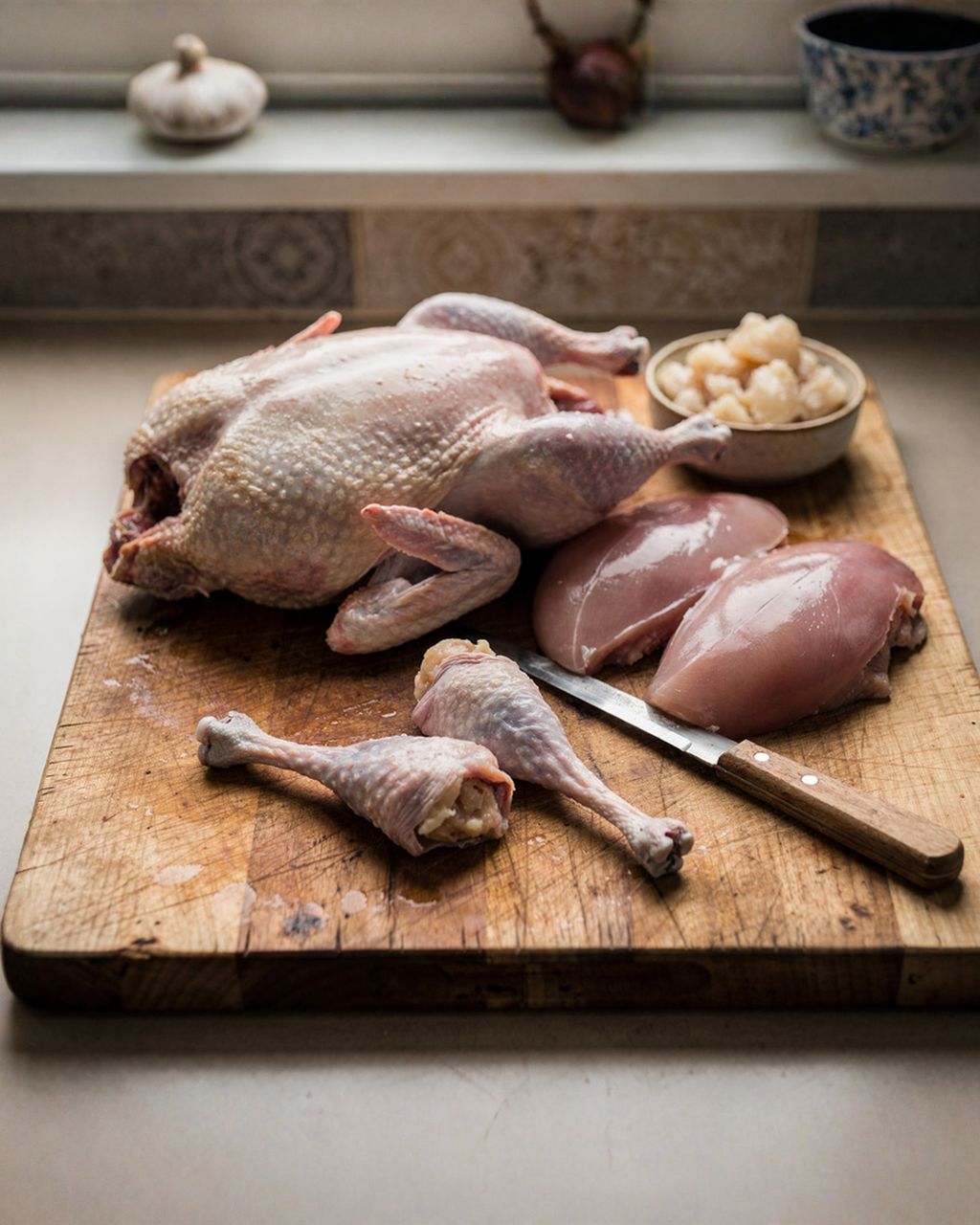
74°C (165°F) is the food-safety minimum, not necessarily the best temperature for flavor. The breast reaches it first, and any extra heat beyond that only dries it out. The legs are full of connective tissue and only turn tender at a higher temperature, around 80–85°C (175–185°F). That's why it's worth checking both. If the breast is done while the legs are still tough, cut the legs off and finish roasting them separately. For how to break down a goose this way, see our guide on how to butcher a goose for breast, legs, fat, and stock.
When you pierce the thigh near where it joins the body, the juices should run clear and yellowish — not cloudy, not pink. The leg should move freely at the joint, and the meat should start pulling away from the thighbone.
These are time-tested checks that generations of cooks have relied on, and they're still useful — they tell you whether the connective tissue in the legs has broken down and the meat is tender. But they don't guarantee safety. The FSIS specifically states that neither the color of the meat nor the color of the juices is a reliable sign of doneness. Poultry can stay pink even after reaching a safe temperature, and juices can run clear before the meat has actually reached 74°C (165°F). Without a thermometer, you're just guessing.
Once it's out of the oven, let the goose rest for 15–20 minutes, loosely covered with foil, before carving. This gives the meat time to relax so the juices redistribute instead of running straight out onto the board.
During resting, the internal temperature will climb a few more degrees — but don't rely on this to finish the cooking. Only take the goose out once every spot you checked already reads 74°C (165°F) in the oven. Use the resting time well: make a gravy from the pan drippings and warm up your side dishes.
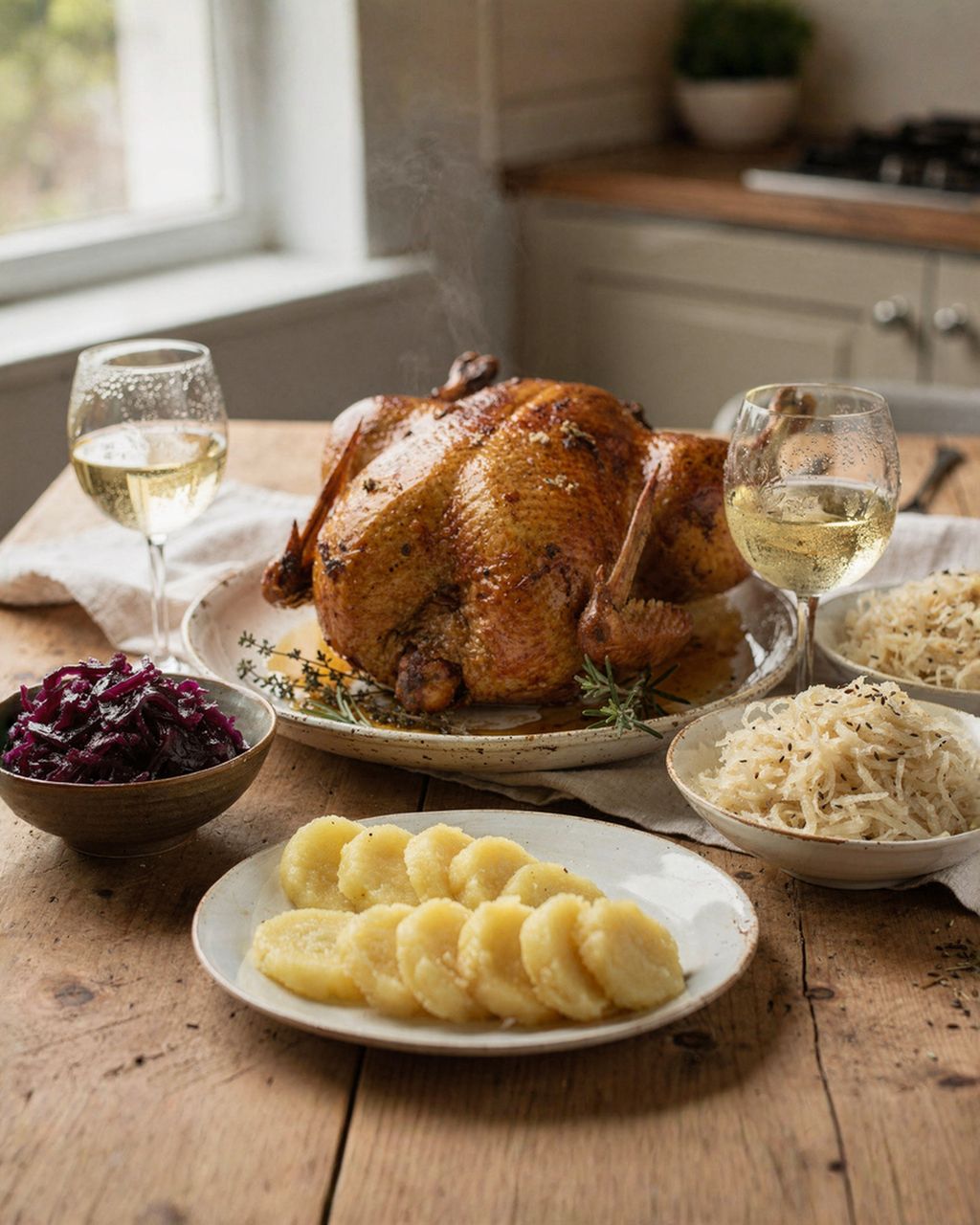
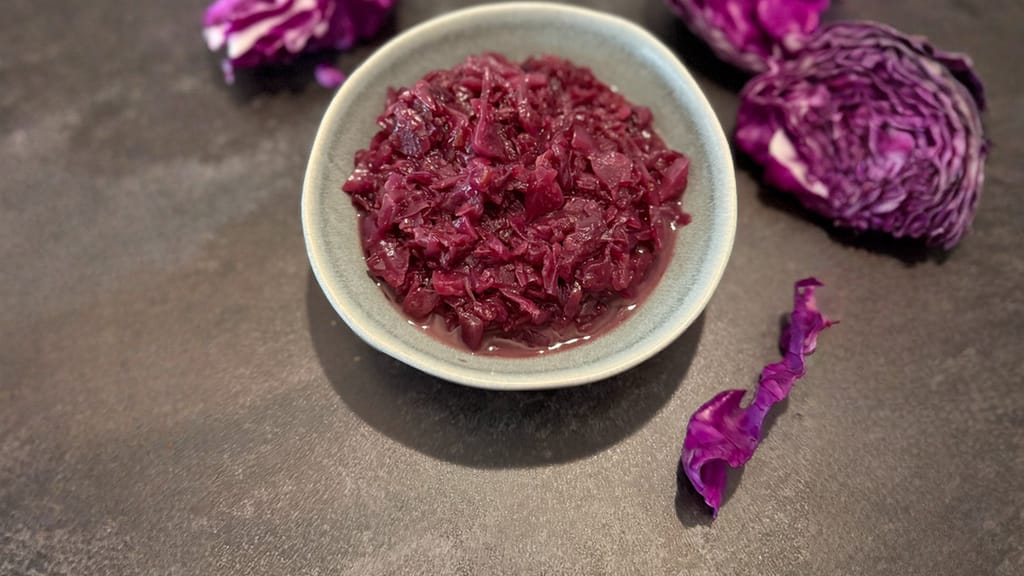
The classic pairing for roast goose is braised red cabbage with bread or potato dumplings. The cabbage's tang balances the rich meat, and the dumplings soak up the juices. You'll find the cabbage and bread dumpling recipes below — a potato dumpling recipe is still in the works.
Don't want to roast a whole goose? Goose breast alone works just as well. It cooks in a fraction of the time and is more practical for a smaller table.
Sweet and sour braised red cabbage
Sweet-and-sour braised red cabbage: the classic side for roast goose
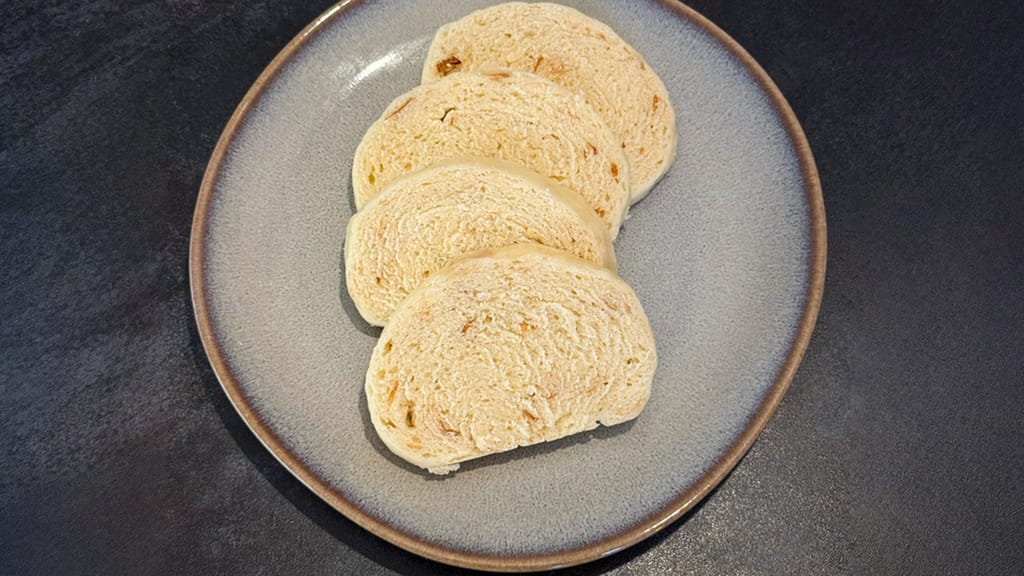
Steamed czech bread dumplings (houskový knedlík)
Steamed bread dumplings for roast goose and red cabbage
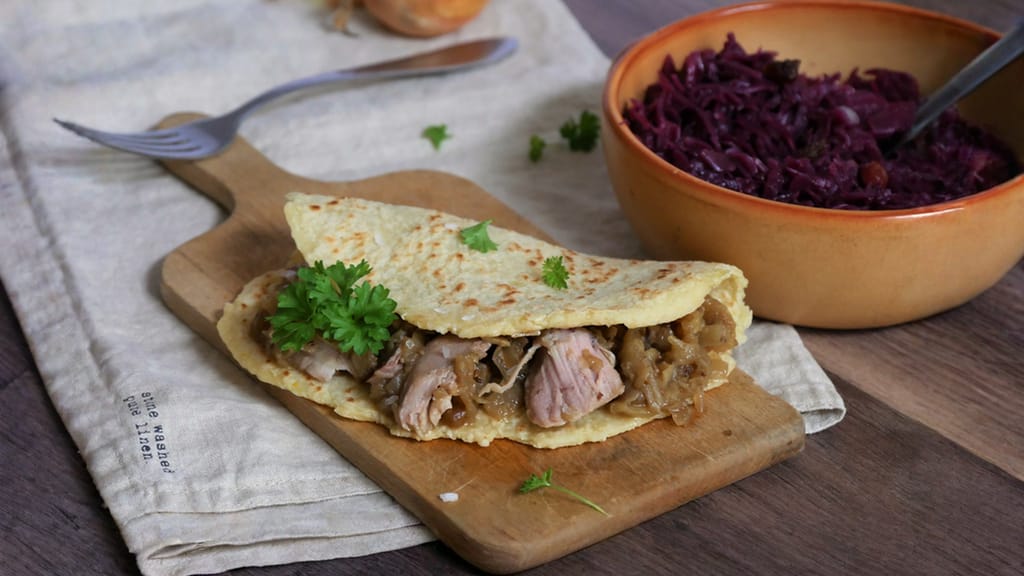
Goose breast on apples with potato lokše
Goose breast with apples and potato pancakes: St. Martin's goose for a smaller table
Roast a stuffed goose 15–30 minutes longer than an unstuffed one of the same weight. That's the guidance from the USDA/FSIS (the US food safety authority). It's done once the center of the stuffing also reaches at least 74°C (165°F). Stuffing soaked with juices from the raw bird heats through the slowest, so measure it separately.
Thaw a whole goose in the fridge for 1–2 days; a large bird may need longer. Cold water works faster: keep the goose in an airtight bag, submerge it, and change the water every 30 minutes. According to the USDA/FSIS, this takes 4–6 hours. Never thaw it at room temperature on the counter. Once a goose has been thawed in water or in the microwave, roast it right away.
Raw goose keeps in the fridge (below 4°C/40°F) for 1–2 days. A goose thawed in the fridge keeps the same amount of time, counted from when it thawed. That's per the USDA/FSIS. If you won't get to roasting it in time, freeze it. A goose thawed in the fridge can be refrozen raw.
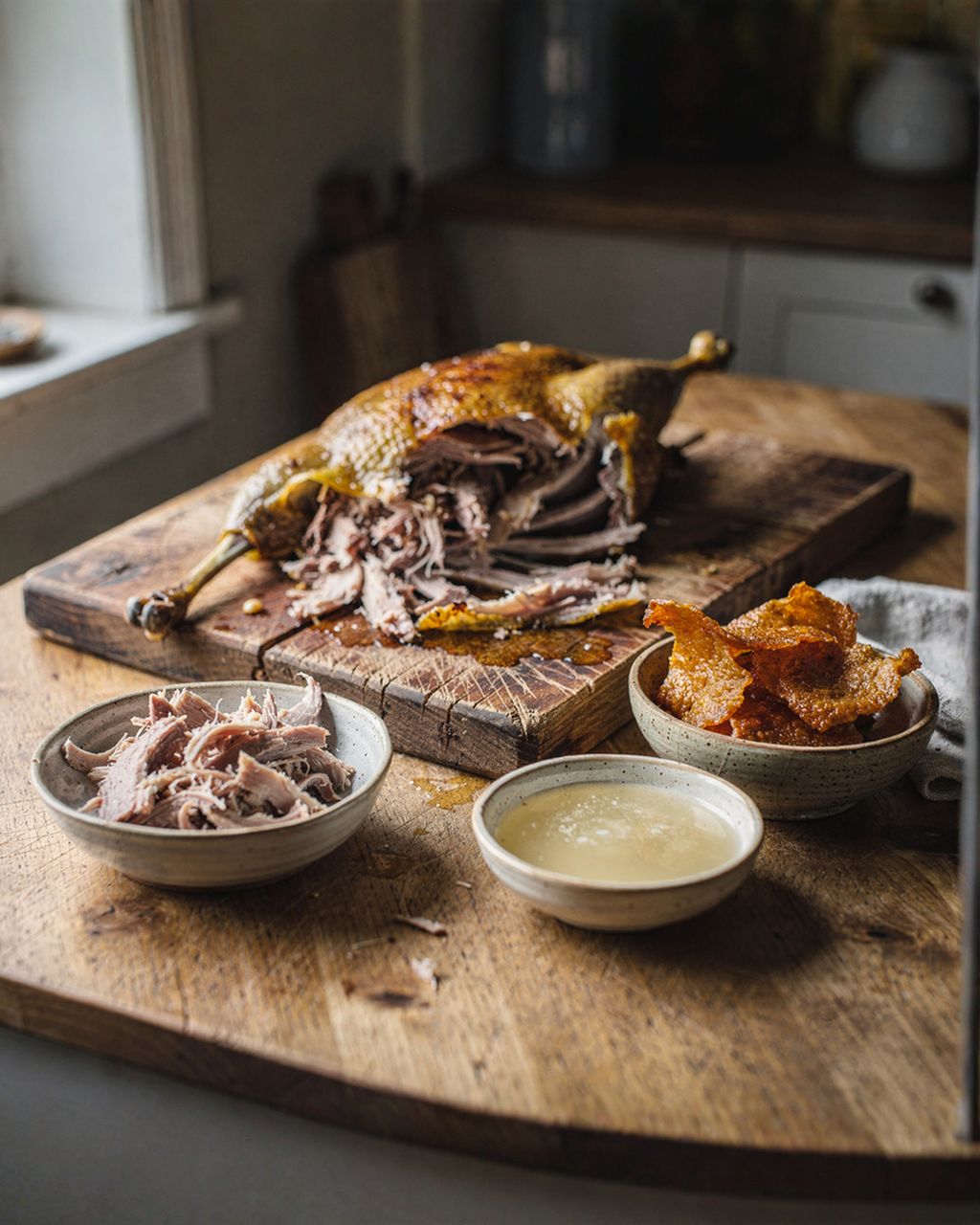
Roast goose keeps in the fridge (below 4°C/40°F) for 3–4 days. Refrigerate it within 2 hours of roasting, carved into pieces in shallow, covered containers. That's per the USDA/FSIS. Eat leftovers cold, or reheat them to at least 74°C (165°F). For ideas on what to do with them, see our article on [leftover roast goose and duck: what to do with the meat, carcass, skin, and fat](/articles/leftover-roast-goose-and-duck).
No — never roast a goose halfway and finish it later. The USDA/FSIS specifically warns against this, because bacteria in partially cooked meat may not be destroyed. If you want to save time, roast the goose fully in advance. Chill it in the fridge within 2 hours, then reheat it to 74°C (165°F) before serving. You can finish it with a short blast at 220°C (425°F) at the end to crisp up the skin.
One recipe worth heating the oven for, one tip, and one deal from the shop. Nothing else.