Chocolate peanut butter truffles
What to Do With Leftover Chocolate: 8 Ways to Use Up Baking Scraps and Saint Nicholas Figures
Updated Oct 17, 2026
What can you do with leftover chocolate? The best option is to melt it again, temper it and pour it into a praline mold. In half an hour you'll have glossy chocolates instead of a hardened crust in a bowl. You can just as easily turn it into mendiants, hot chocolate cubes or ganache. This works for scraps from dipping cookies, broken-up bars and chocolate Saint Nicholas figures that are still sitting on the shelf in January. You just need to know what kind of chocolate you're dealing with.
There are eight ways to use up leftover chocolate:
Molded chocolates – temper it and pour it into a polycarbonate mold.
Mendiants – chocolate discs topped with nuts and dried fruit.
Hot chocolate cubes on a stick – just stir into hot milk.
Ganache – for truffles, chocolate fillings or cake.
Chocolate bark – a thin slab sprinkled with whatever is left over from baking.
Glaze and cookie sandwich filling – for gingerbread, macaroons and cookies.
Batters and desserts – mousse, bundt cakes, brownies.
Chocolate sauce – the fastest rescue for seized chocolate.
Which method you choose depends mostly on the condition your leftovers are in, so sort them first.
Clean leftover chocolate can be tempered again and poured into molds. Seized or dirty chocolate should only go into baking, ganache and drinks.
Clean chocolate from the bowl (left over from dipping or drizzling, with nothing fallen into it) – the most valuable kind of leftover. It can go back into a mold, onto mendiants or into bark.
Chocolate with crumbs, nut pieces or coconut – typical after dipping cookies. You can temper it, but it isn't suited to a smooth praline mold. It belongs in bark, batters or hot chocolate.
Seized chocolate (thickened, grainy, dull, impossible to stir) – water or steam got into it. It can't be tempered anymore, but you can rescue it as a sauce or ganache (method below).
Saint Nicholas figures, devils and bars – read the label first. If it says "milk chocolate" or "dark chocolate," then under the EU cocoa and chocolate directive (2000/36/EC) it is chocolate that may contain at most 5% vegetable fats other than cocoa butter – and it can be tempered. Look for cocoa butter in the ingredients. If the chocolate also contains another vegetable fat, the package must say "contains vegetable fats in addition to cocoa butter," but it's still chocolate. If the package says "cocoa coating" or "confectionery," it contains a different fat. Cocoa coating can't be tempered, and you shouldn't mix it with real chocolate. Melt it into milk or batter instead. We explain how to read percentages and types of chocolate in our article Which Chocolate to Use for Brownies and Chocolate Cake.
Chocolate with a white film – grayish streaks or white spots are fat or sugar bloom. It's caused by heat or moisture, and the chocolate is still fine to eat. Fat bloom disappears after melting and tempering. Sugar bloom (dry, and doesn't dissolve when you touch it) can leave a grainier texture – that chocolate is better used in baking or hot chocolate.
Tip: pour the scraps from the bowl straight onto parchment paper in a thin layer. In 20 minutes you can break them up into a jar, and nothing dries onto the sides of the bowl.
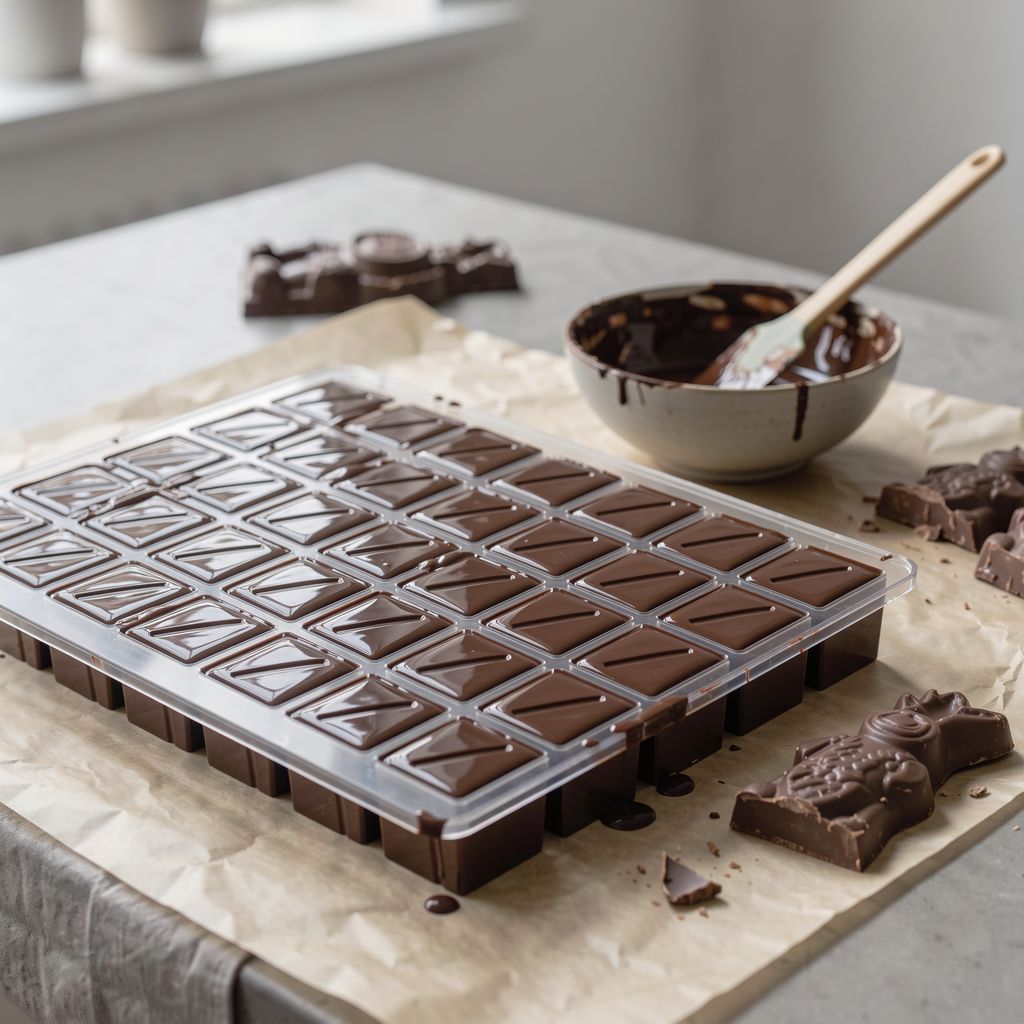
The best use for clean leftover chocolate is to pour it, tempered, into a polycarbonate praline mold. In 30–40 minutes you can pop out glossy, crisp chocolates that look like they came from a confectioner's shop.
Scraps that have already been melted once have lost their stable cocoa butter crystals. Without tempering, the chocolates will be dull and soft, and they won't release from the mold. The easiest approach is the seeding method:
Melt about two-thirds of the scraps to 113–122 °F (45–50 °C) for dark, 45 °C for milk and 40 °C for white. Use the microwave in 20–30 second bursts, stirring each time, or a double boiler.
Add the remaining third in solid form – ideally fresh chocolate pellets, which have their crystals intact. Stir until the chocolate cools to working temperature.
Working temperature: dark 31–32 °C, milk 29–30 °C, white 28–29 °C.
Test: drop a little chocolate onto parchment paper. At room temperature it should set glossy in 3–5 minutes and snap cleanly.
Then pour the chocolate into the mold, tap it on the counter to release air bubbles, and scrape off the excess with a scraper. Let it set at 16–20 °C (61–68 °F); for the last 10 minutes you can put the mold in the fridge. Finished chocolates release from the mold on their own – the best proof that the tempering worked.
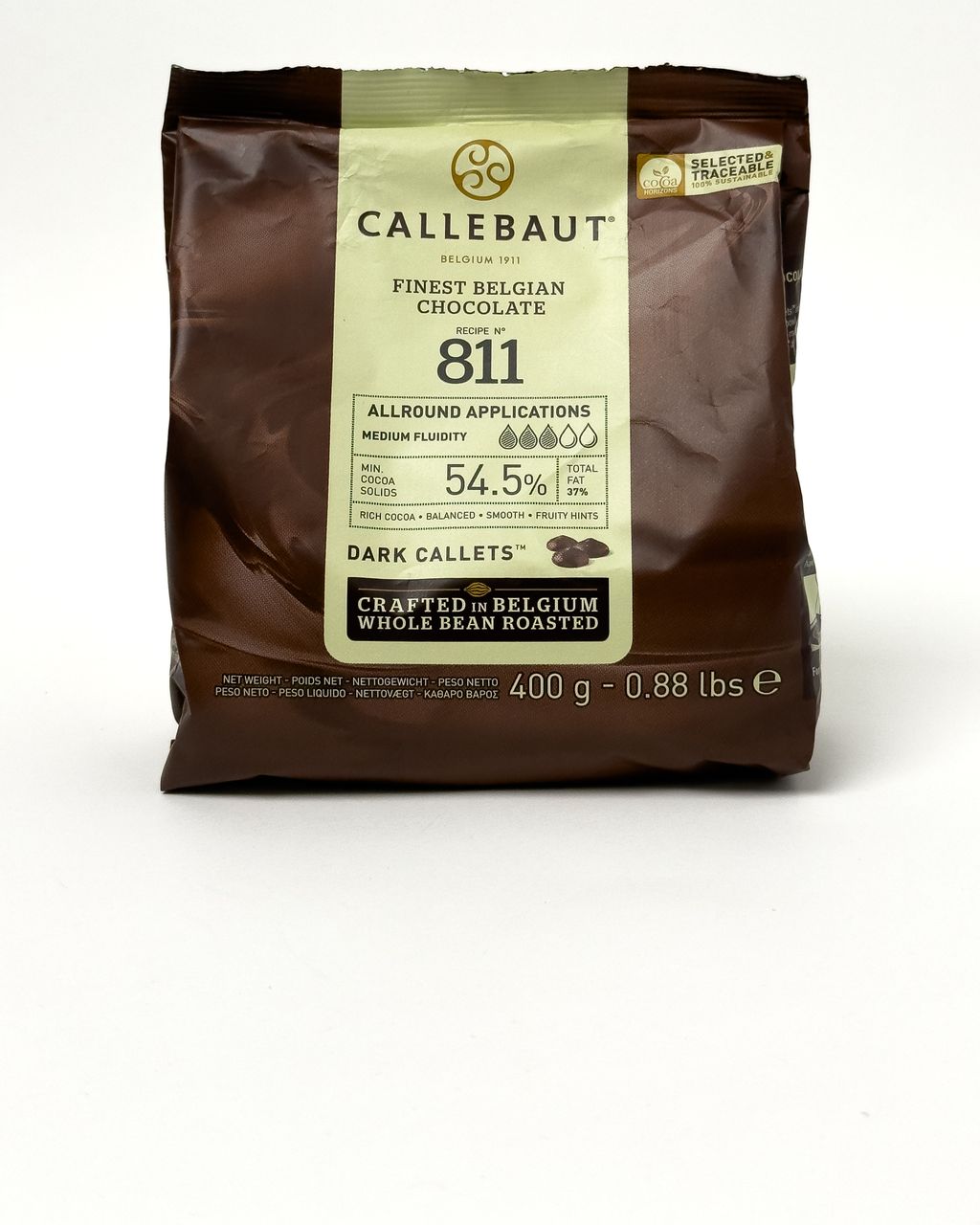
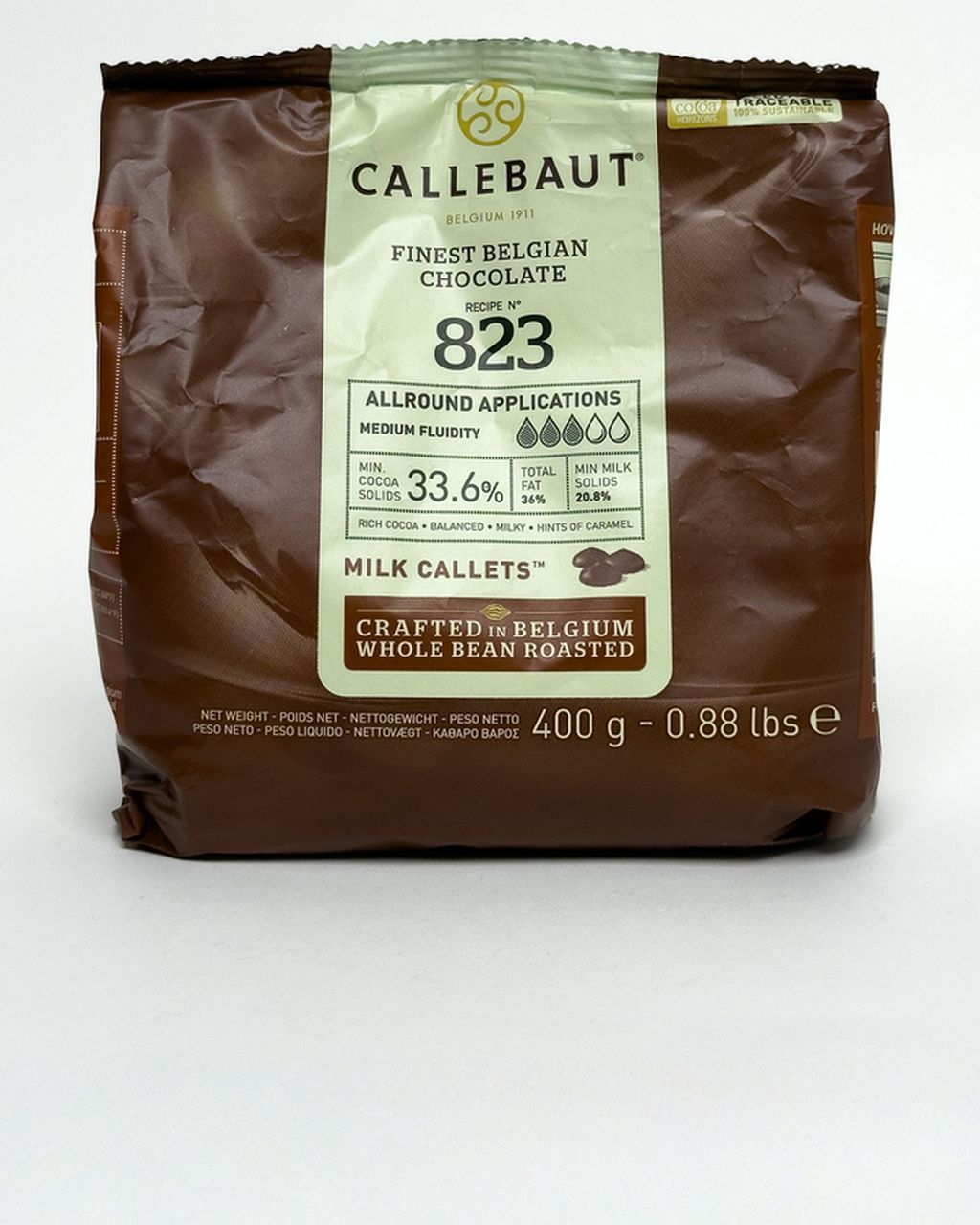
Callebaut 811 dark chocolate (54.5% cocoa) or Callebaut 823 milk chocolate (33.6%) works well as seed chocolate. The pellets melt quickly and are easy to measure out. If you don't have enough scraps to fill the whole mold, top up with fresh chocolate – you'll find more options among the milk chocolates for baking.
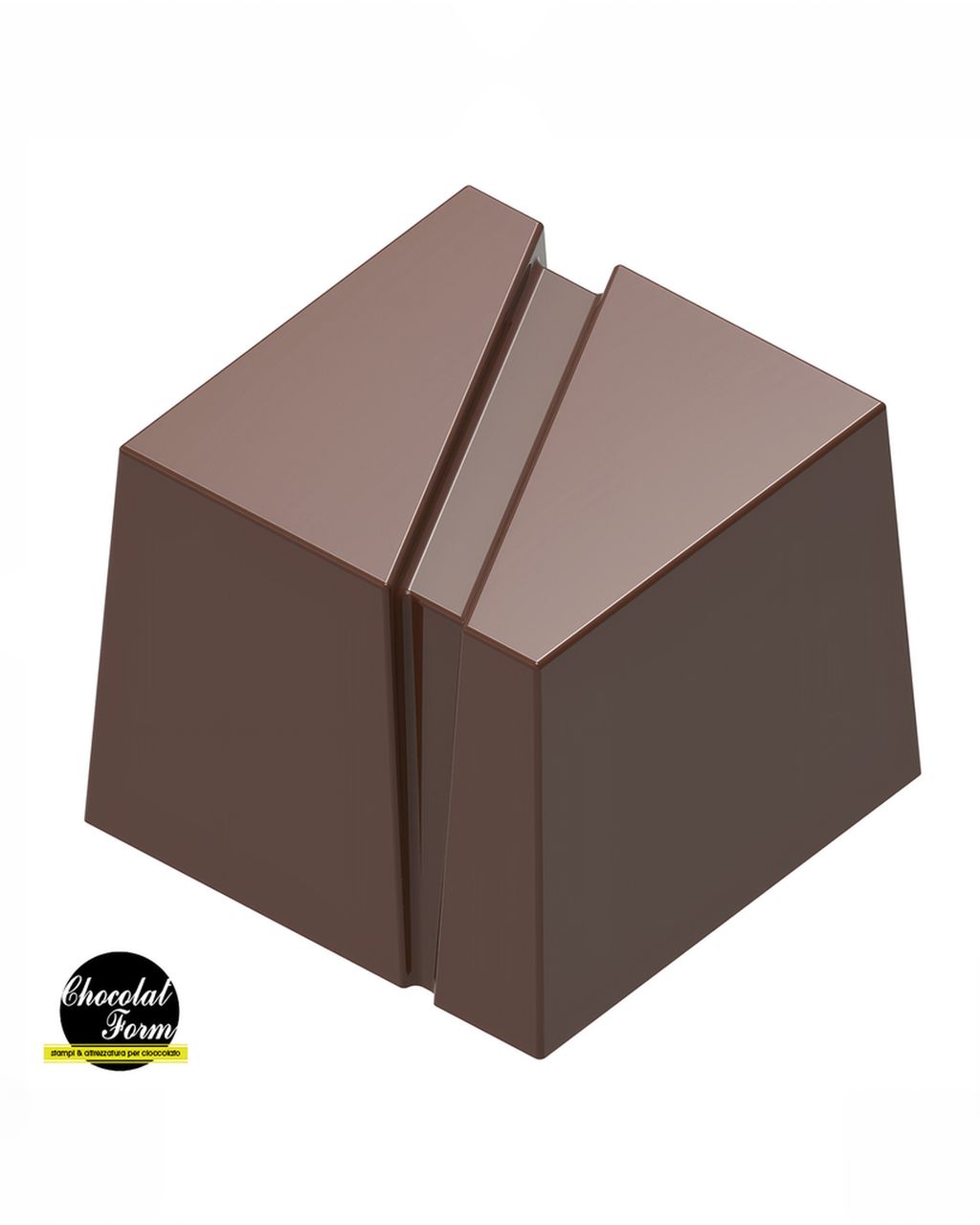
Which mold to choose: the polycarbonate Cube with Stripe mold (24 cavities, 25 mm) gives tempered chocolate a high gloss and a firm shape, and it lasts for years. A silicone mold (we don't sell these) is handy when you don't want to temper – the chocolate will come out even untempered, but it will stay dull. Silicone ice cube trays are fine for hot chocolate cubes. If you want chocolates for a gift, polycarbonate is worth it.
Mendiants are thin chocolate discs, 4–5 cm across, topped with nuts and dried fruit. They're ideal for smaller amounts of scraps, because about 100 g of chocolate is enough for 10 pieces.
Temper the chocolate (see above). Untempered chocolate will set too, but it will be softer and without gloss.
Drop a teaspoon of chocolate (8–10 g) onto parchment paper and spread it into a circle with the back of the spoon.
Add the toppings right away – after a minute the surface starts to set and they won't stick. The classic combination is almonds, hazelnuts, dried figs and raisins. Candied orange peel, cranberries or a few flakes of sea salt work too.
Let them set for 20 minutes at room temperature.
Dark chocolate makes the most striking ones, while kids prefer them with milk chocolate. Packed five to a cellophane bag, they look great as a gift.
Pour leftover chocolate into a mold, add a stick, and you have hot chocolate in a single stir. It's the best use for Saint Nicholas figures and for scraps with crumbs, because gloss doesn't matter here.
Melt the chocolate (you don't have to temper it, though the cubes will look nicer if you do). You can stir in a teaspoon of cocoa for a deeper flavor, or a pinch of cinnamon or salt.
Pour it into a praline mold or an ice cube tray. As soon as it starts to set (5–10 minutes), insert a stick or a spoon.
For a 250 ml (about 1 cup) mug of milk, count on 40–50 g of chocolate. To work out how many cubes that is, simply weigh one finished cube. Heat the milk to 70–80 °C (158–176 °F), don't boil it, and stir the cube in.
Store cubes made from untempered chocolate in the fridge, otherwise they soften and turn gray. Put them in a tightly sealed container, and before opening let it warm up to room temperature for about half an hour – that way moisture condenses on the container, not on the chocolate. Tempered cubes don't belong in the fridge; they keep for several months in a dry, cool place.
Ganache is chocolate melted into cream, and it's ideal for scraps because tempering doesn't matter here. Even scraps seized by water work in it.
Ratio of chocolate to cream (33% fat) depending on use:
Dark 1:1 – soft chocolate filling or cake glaze.
Dark 2:1 – firm ganache for truffles that can be rolled.
Milk 2:1 to 2.5:1 – milk chocolate has less cocoa and needs more chocolate to set.
White 3:1.
Heat the cream to just below boiling (about 80 °C / 176 °F), pour it over the chopped chocolate, let it sit for a minute, and stir from the center outward until it comes together glossy. Mixed scraps of different kinds work too; just set the ratio according to which chocolate there is more of.
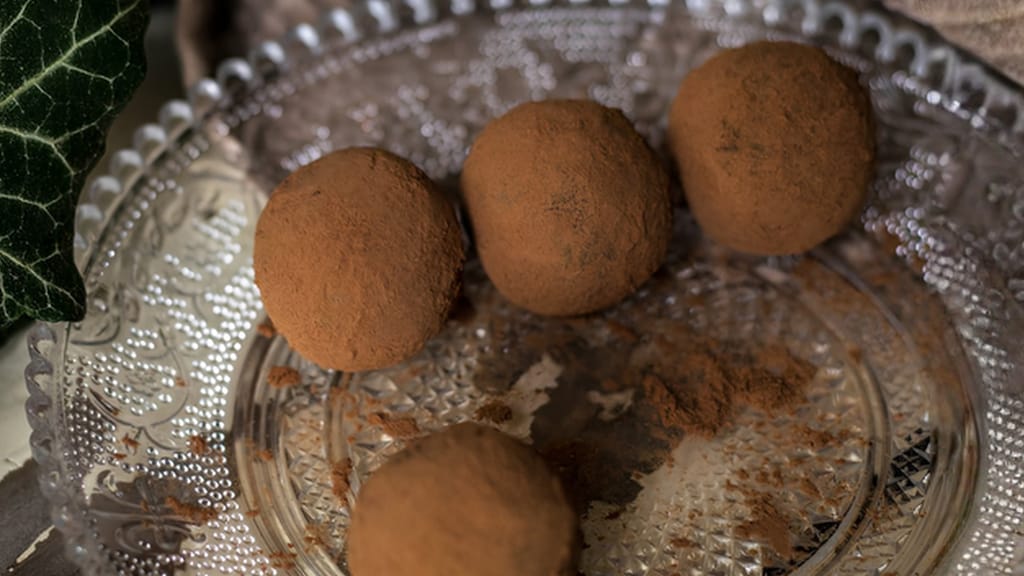
Make the firm ganache into, for example, peanut butter chocolate truffles. A softer ganache can be piped into shells made in a praline mold. If you'd like to turn the scraps into a whipped cake cream, take a look at firm Parisian cake cream – we've perfected the ratios there. Finished ganache keeps in the fridge for about a week, or up to 3 months in the freezer.
Chocolate peanut butter truffles
Peanut butter chocolate truffles made from firm ganache using leftovers
Chocolate bark is a thin slab of chocolate sprinkled with whatever you have on hand, and after Christmas baking it's the fastest way to clear out the pantry. It even handles chocolate with crumbs.
Spread the melted chocolate onto parchment paper in a layer 3–5 mm thick.
Sprinkle with leftover nuts, chopped cookies, coconut, dried fruit or cookie crumbs.
Let it set and break it into irregular pieces.
If you have both dark and white chocolate left, pour them in two layers – we describe how to keep them from peeling apart in our mint chocolate bark.
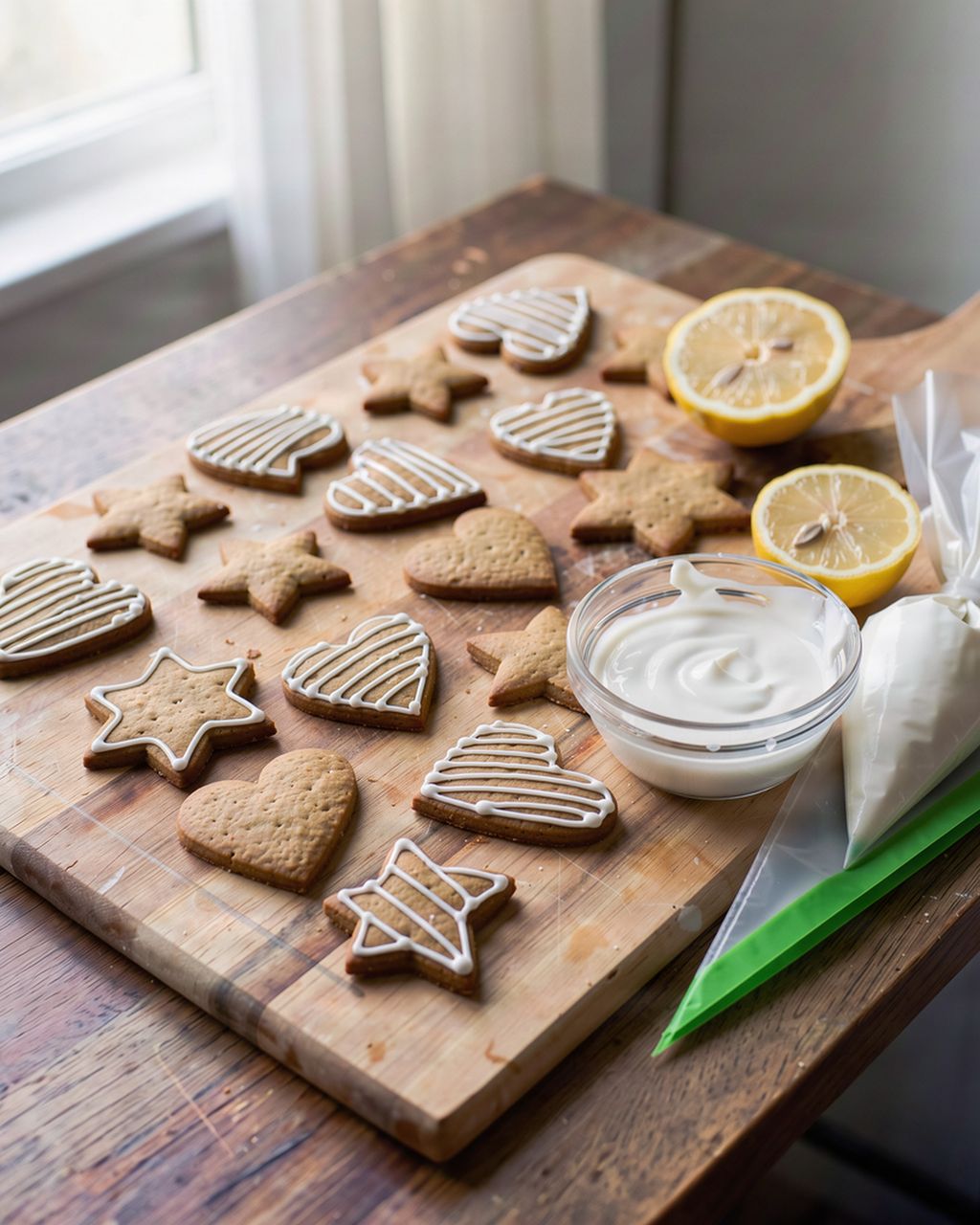
Leftover chocolate can be used straight away as a glaze or as a filling for sandwiching cookies. Just melt it and thin it a little if needed.
For gingerbread and sheet cakes, add 10–15 g of butter or a tablespoon of oil per 100 g of chocolate. The glaze spreads more easily and doesn't crack once set. You'll find the details in Sheet-Pan Gingerbread Glaze.
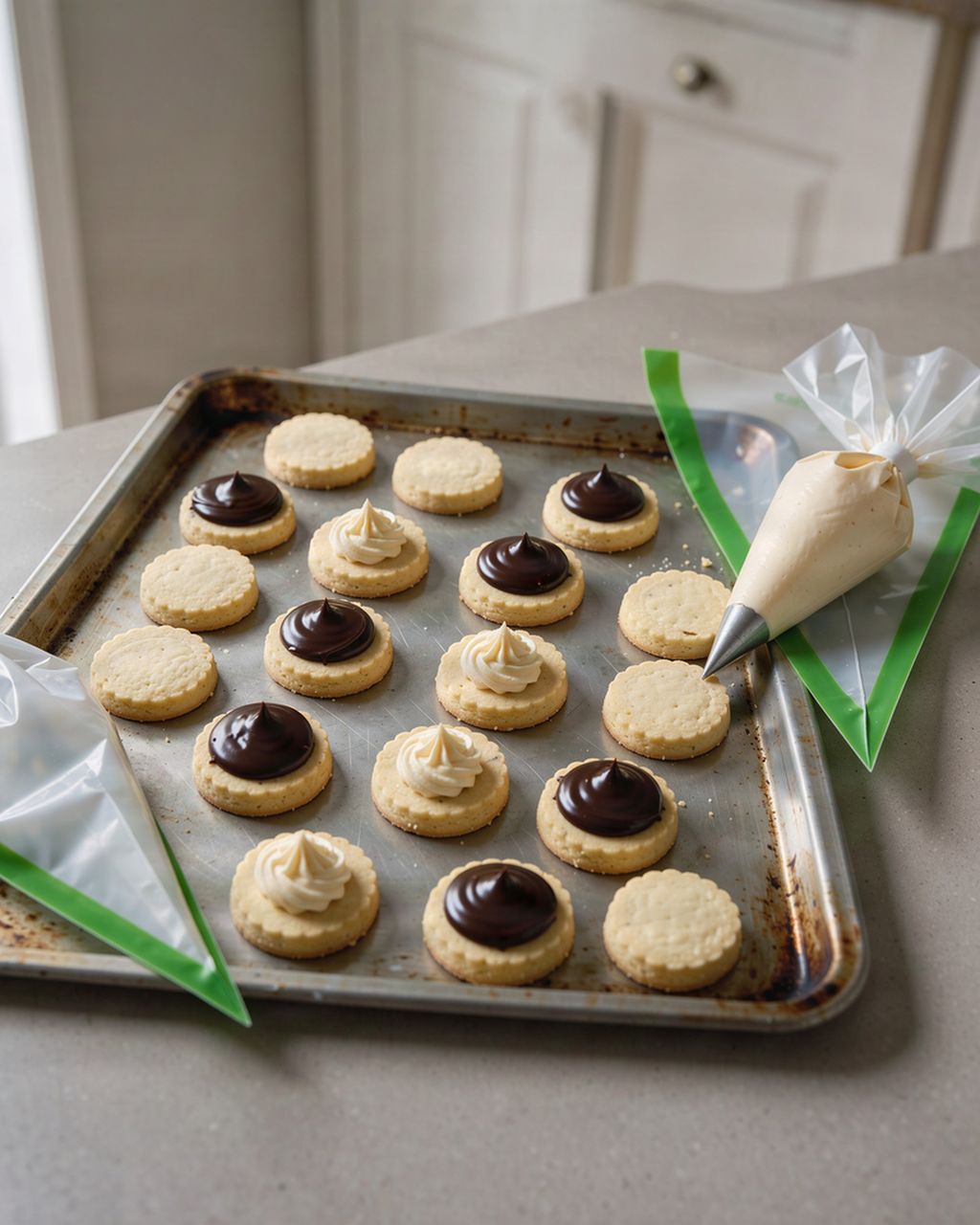
For sandwiching macaroons or linzer cookies, tempered chocolate is best, because it doesn't stick to your fingers. See chocolate-filled macaroons.
For dipping cookies halfway, even scraps with crumbs will do, since the crumbs get lost in the coating.
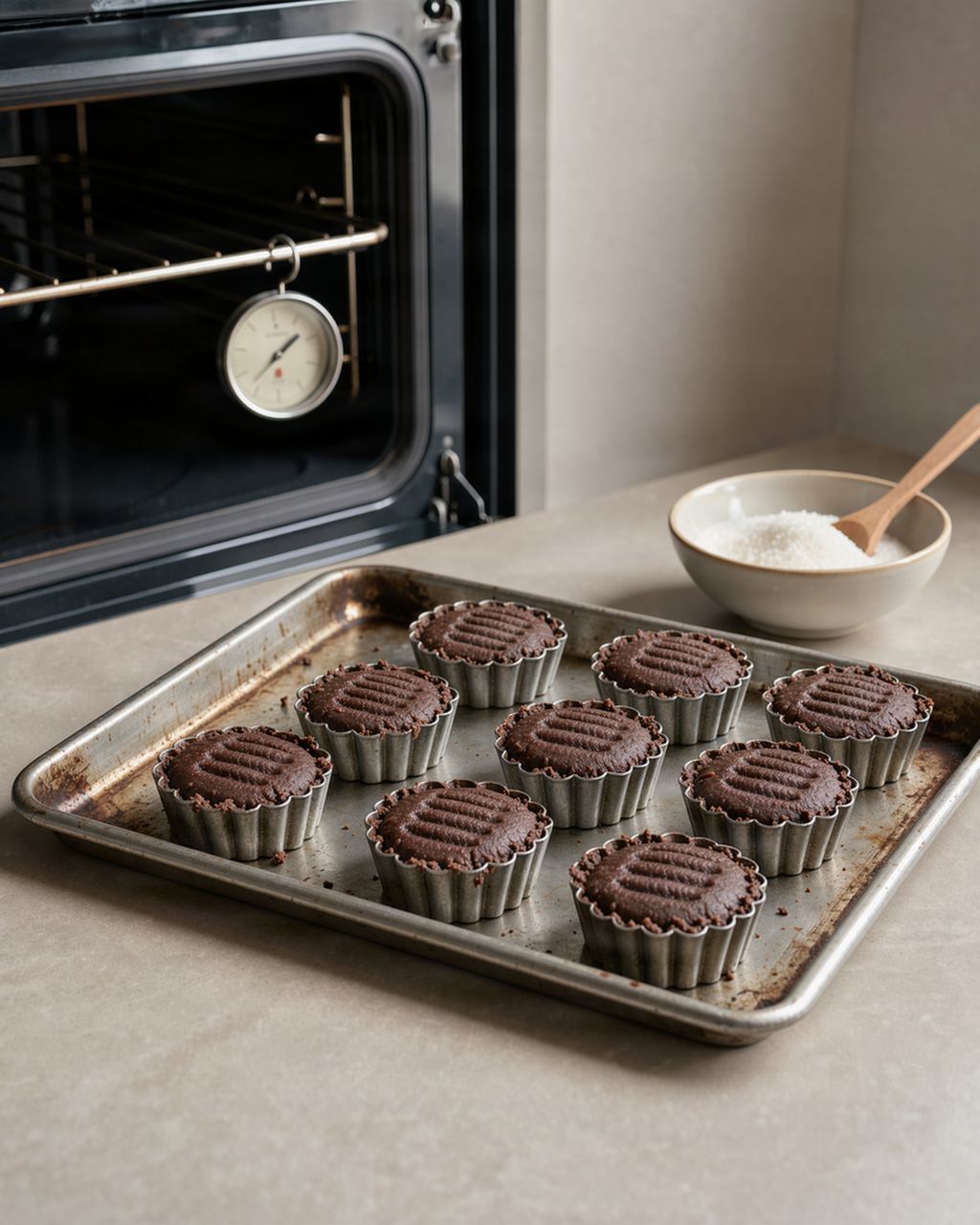
Glaze made from scraps also suits mini chocolate bundt cakes with glaze.
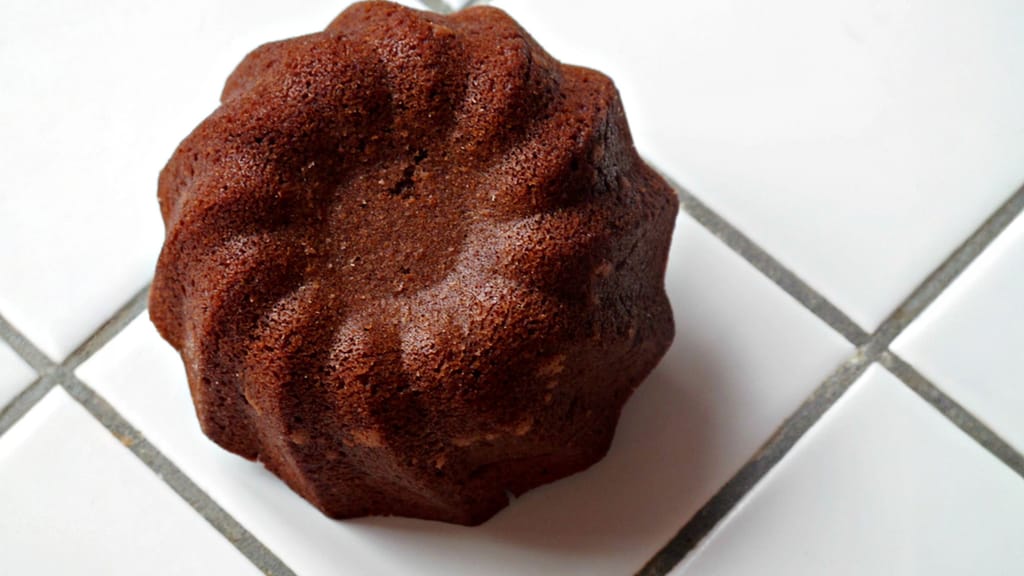
Little chocolate bundt cakes with ganache
Mini chocolate bundt cakes glazed with leftover chocolate
You can put any leftover chocolate into batter, even Saint Nicholas figures with cocoa coating or seized chocolate. In the oven, crystals and gloss make no difference.
Chopped into pieces (5–10 mm), it replaces chocolate chips in cookies, muffins and bundt cakes. Toss the pieces in a spoonful of flour so they don't sink to the bottom.
Melted, it goes into brownies, chocolate cake or mousse. Leftover dark chocolate makes a good chocolate mousse.
Milk chocolate from Saint Nicholas figures is sweeter than dark, so when you use it in place of dark chocolate in a recipe, cut the sugar by 10–20%.
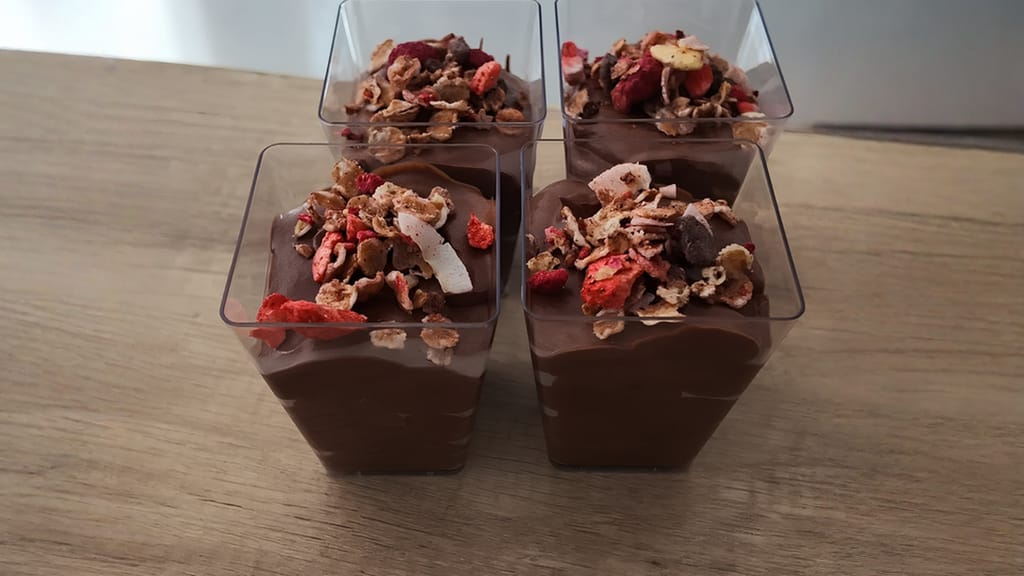
Chocolate mousse
Chocolate mousse made from leftover dark chocolate
You can rescue seized chocolate as a smooth sauce by stirring in hot water, milk or cream a spoonful at a time.
It sounds paradoxical, since water is exactly what seized the chocolate. But a small amount of water turns the sugar into sticky clumps, while a larger amount dissolves the sugar and the mixture comes together again. Here's how:
Add hot liquid to the seized chocolate one teaspoon at a time, stirring vigorously after each addition until it's absorbed.
As soon as the mixture comes together and turns glossy, stop – from here on you're just thinning it to the consistency you want.
Use the result as a sauce for pancakes and ice cream, in hot chocolate, or as the base for ganache.
This chocolate can no longer be tempered or poured into a mold, because it contains water. But it's perfectly fine for anything liquid.
Store leftover set chocolate in a dry, dark place at 15–18 °C (59–64 °F) in a tightly sealed container. The fridge is only a last resort.
The fridge doesn't suit it: when you take it out, moisture condenses on it and sugar bloom forms. Chocolate also absorbs odors. The exception is cubes and discs made from untempered chocolate, which would soften at room temperature – put those in the fridge in a sealed container and let them warm up before opening.
Label the jar – dark, milk, with crumbs. In a month you won't remember what's inside.
Shelf life: dark chocolate keeps for a year without trouble, while milk and white chocolate keep for a shorter time because of the milk fat. Go by the date on the original packaging.
Scraps with nuts or crumbs should be used within a few weeks, because nuts turn rancid sooner than chocolate.
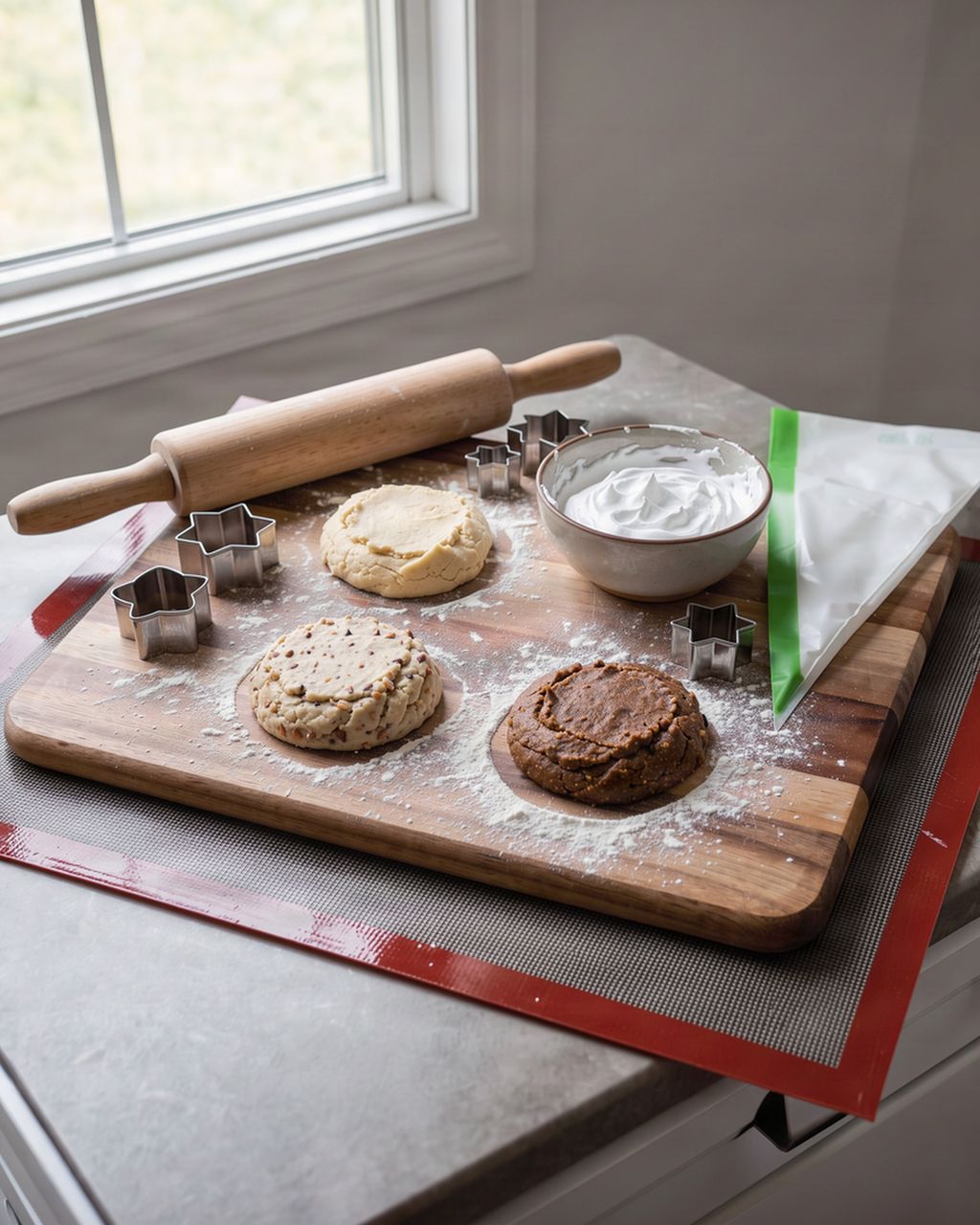
Leftover dough and creams from the same baking session are covered in Leftovers From Christmas Cookie Baking. And if you're not sure which chocolate to buy for your next bake so the leftovers can be reused, you'll find a comparison in Callebaut or Valrhona.
Yes, leftover chocolates of different kinds can be combined, and you'll get a milder chocolate with a milky flavor. When tempering, stick to the lower working temperature of around 84–86 °F (29–30 °C). The milk fat in the mix softens the cocoa butter, so the blend sets and melts at a lower temperature than pure dark chocolate, and at 31–32 °C the crystals would melt. For glossy chocolates it's safer to keep each type separate, but for hot chocolate and batters you can mix freely.
Yes, but it only pays off for ganache or when you need to store chocolate through a hot summer. Wrap it airtight so it doesn't absorb odors. Before opening, let it thaw slowly in its sealed packaging, first in the fridge and then at room temperature. Otherwise moisture condenses on it and leaves a white sugar bloom.
Usually yes, because the best-before date refers to quality, not safety. Chocolate without a filling is very stable thanks to its low water content. Taste it: if it smells and tastes normal, melt it into hot chocolate or batter. If it smells rancid or off, throw it away. Check figures with fillings or nuts more strictly.
You can melt and temper pure chocolate repeatedly, as long as you never overheat it and no water gets into it. Dark chocolate tolerates a maximum of about 122 °F (50 °C); above that it scorches and thickens. Milk chocolate (up to 45 °C) and white chocolate (up to 40 °C) scorch sooner because they contain milk solids. Each round, though, a few crumbs and some air get into the chocolate, so after two or three uses move the leftovers into baking.
One recipe worth heating the oven for, one tip, and one deal from the shop. Nothing else.