- Season
- Year-round. New potatoes arrive from June; maincrop (storage) potatoes are lifted from August to October and sold through winter into spring.
- Price
- Low
Calories and nutrition per 100 g
- 73 kcal
- 2.1 g protein
- 0.3 g fat
- 16.3 g carbs
Type A Waxy Potatoes
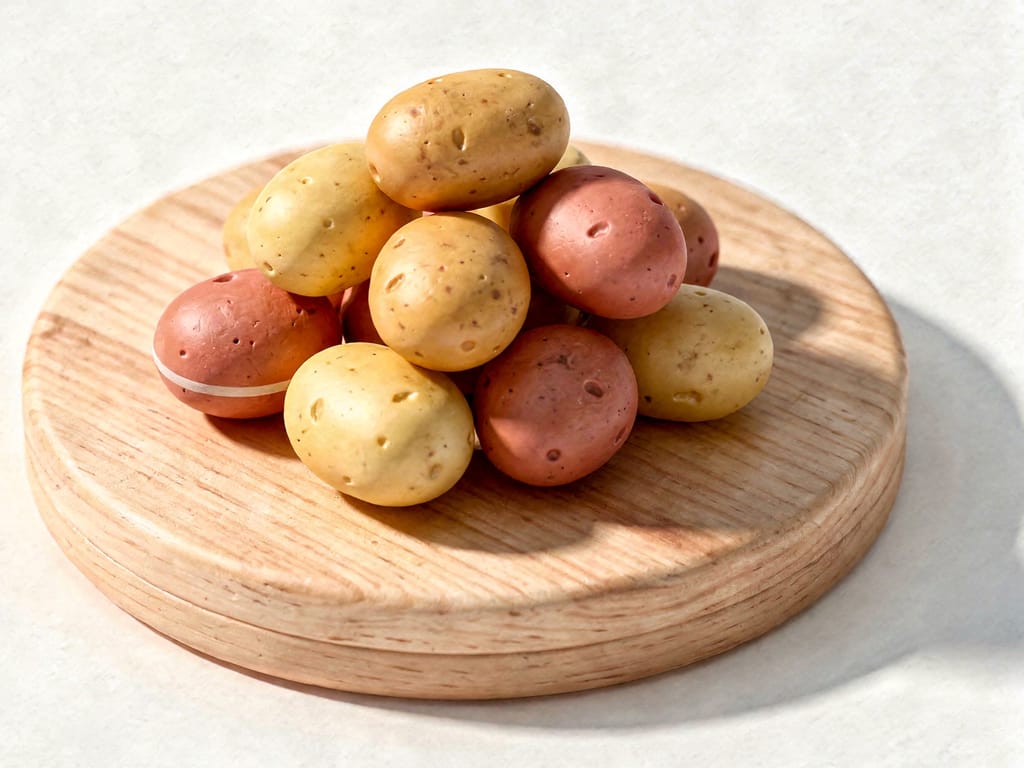
Type A potatoes are firm, waxy salad potatoes that keep their shape when cooked, do not fall apart and have a moist, creamy flesh. Cooking type A on a Czech pack means they suit potato salad, boiled potatoes, gratins and chunky soups, but not mash.
Store them dark, cool (4–8 °C) and in humid air, ideally in a cellar in a paper or jute sack; maincrop potatoes keep there for several months. At room temperature use them within 1–2 weeks and keep them in the coolest dark cupboard. New potatoes keep only a few days. Do not store them in plastic or next to onions and apples.
Do not keep raw potatoes in the fridge for long. Below 4 °C some of the starch turns to sugar, so they taste sweet and darken quickly when fried or roasted. Refrigerate potatoes boiled for salad in their skins within 2 hours of cooking and use them within 3–4 days.
Do not freeze raw potatoes; they turn glassy and watery when thawed. Boiled potatoes and finished potato salad do not freeze well either: they go watery and break up. If you must, cube raw potatoes, blanch 3–5 minutes, chill in iced water, dry and freeze; use them only for roasting or soup.
Look for cooking type A or AB on the pack. The potatoes should be firm and heavy for their size, with taut skin and no green patches, sprouts, soft or weeping spots. Wrinkled tubers have lost water. For salad, pick similar-sized potatoes so they cook evenly. New potatoes have skin you can rub off with a finger and keep only a few days.
Type AB or all-purpose type B potatoes. They work in salad if you boil them gently in their skins and take them out a few minutes earlier, as they break up more easily.
New potatoes of any variety, which hold together better when young. For a salad without potatoes, use cooked beans or chickpeas. Floury type C potatoes do not belong in potato salad; they turn to mush.
Scrub the potatoes under running water. Cut out green patches, sprouts and eyes generously, as bitter solanine collects there. For salad, boil them in their skins, starting in cold salted water and keeping a gentle simmer, then peel and cut them only once cold, ideally the next day. For roasting and pan-frying, cut them into even pieces and dry them well.
Slice leftover boiled potatoes and pan-fry them with onion, or use them in a potato bake or a Spanish tortilla. Peel leftover potatoes boiled in their skins only when you need them; they keep better in the fridge. Compost or bin the peels of potatoes with no green patches.
Roughly what one measure weighs, scooped the way you normally would in the kitchen.
Waxy potatoes are best boiled in their skins for potato salad, as plain boiled potatoes or jacket potatoes with butter and quark, in gratins and potato bakes, pan-fried, in goulash and in soups where the pieces should stay whole. Start them in cold salted water and simmer gently: small ones 15–20 minutes, medium 20–25 minutes and large 25–35 minutes from the boil. Roasted at 200–220 °C they stay creamy inside and hold their shape. They are not suited to mash, potato pancakes or potato dough: mash turns gluey and dough sticky.
Type A potatoes are firm, waxy salad potatoes that keep their shape when cooked, do not fall apart and have a moist, creamy flesh. The cooking type printed on Czech potato packs tells you how a potato behaves once cooked: type A is firm and waxy, type B mostly firm and all-purpose, type C floury. You will also see the mixed label AB, which is still firm enough for salad. Skin colour and tuber shape say nothing about the cooking type; the variety decides. Czech shops sell them as salad potatoes, type A, often with the variety name, such as Annabelle, Nicola or Keřkovské rohlíčky.
Waxy potatoes taste clean, mildly sweet and earthy. Cooked, they are smooth, creamy and slightly moist rather than dry and crumbly like floury potatoes. They take up dressing only on the surface and stay firm inside. The thin skin of new potatoes is tender and edible.
Seasonal baking plans, tested recipes and kitchen tricks that save you time. Unsubscribe in one click.
3 min read
The cooking type tells you how a potato behaves once cooked. Type A potatoes are firm and waxy, hold their shape and stay slightly moist. Type B are mostly firm all-purpose potatoes for boiling and roasting. Type C are floury potatoes that break up and turn dry and crumbly. Packs also show the in-between types AB and BC.
The difference comes mainly from starch and dry matter. Waxy potatoes have about 14% starch or less, floury ones usually about 16–18%; the exact figure varies with variety and season. Our guide The Best Potatoes for Potato Salad and How to Cook Them So They Don't Fall Apart goes into detail.
Boil salad potatoes in their skins, starting in cold salted water, at a gentle simmer so they do not knock together and split. After about 15 minutes of simmering, test them with a skewer: they are done when it goes in with slight resistance at the centre. Drain them and let them steam dry in the pan without a lid.
Peel and cut them only when completely cold, ideally the next day from the fridge, but refrigerate them within 2 hours of cooking. If the salad still turns watery, see Why Your Potato Salad Is Watery and How to Fix It. A lukewarm salad with yoghurt, like our fresh potato salad, is mixed while still warm.
Firm varieties sold as type A in Czechia include Annabelle, Nicola, Charlotte and the traditional elongated Keřkovské rohlíčky. The French La Ratte is small, elongated and distinctly nutty. Some varieties, such as Princess or Ditta, are listed as A or AB depending on the seller. The same variety can be classed differently by season and grower, so go by the cooking type on the pack.
Potatoes need darkness, 4–8 °C and humid air. Warmth makes them sprout, cold below 4 °C makes them sweet, and light turns them green. Sweetened potatoes from the fridge or a frosty balcony taste odd in salad. Eat boiled potatoes within 3–4 days and reheat them until hot all the way through, at least 70 °C for 2 minutes. More in How to Store Potatoes So They Last Until Spring.
The green colour on the skin is chlorophyll, which forms in light. Alongside it, glycoalkaloids, mainly solanine, build up in and under the skin and taste bitter. Boiling and roasting do not destroy them. Cut out green patches, sprouts and eyes generously. Throw away a potato that is mostly green or tastes bitter.
Waxy potatoes hold their shape because they have less starch and dry matter and more water than floury ones. During cooking the starch granules swell but do not fill the cells enough to push them apart, and the pectin between cells keeps them together. That is why they cut into clean cubes. Mash them and the cells rupture, the starch escapes and the mash turns gluey. Once cooled, part of the starch retrogrades, as in all potatoes, which is why cold potatoes cut better than warm ones.
Potatoes were domesticated in the Andes around Lake Titicaca more than 7,000 years ago. The Spanish brought them to Europe in the second half of the 16th century, and they became an everyday food in the 18th century. In Germany the same three types are labelled festkochend, vorwiegend festkochend and mehligkochend; in English they are waxy, all-purpose and floury.