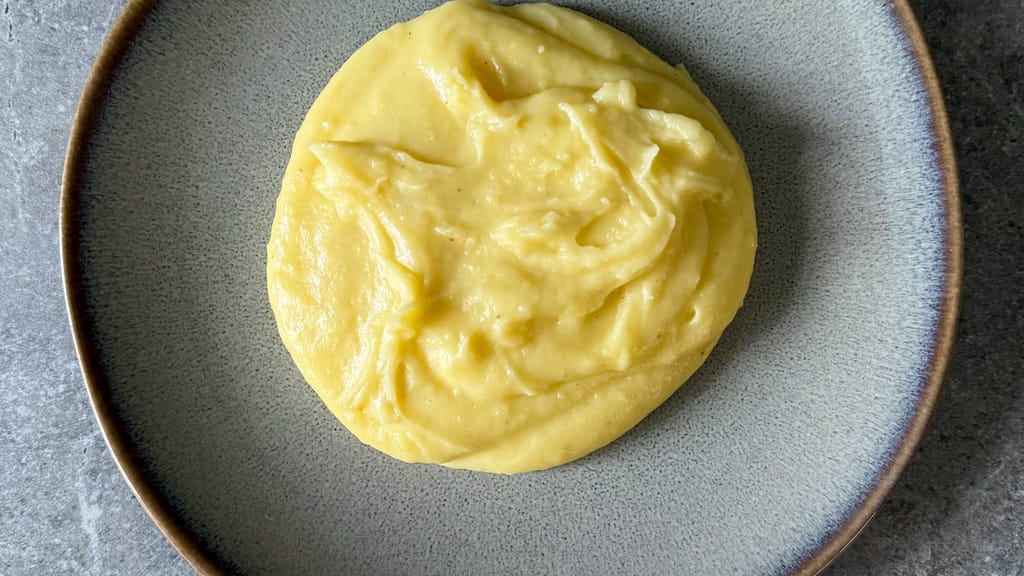
Silky smooth creamy mashed potatoes with nutmeg
Mashed Potatoes: How to Thicken, Flavor and Reheat Them the Next Day
Updated Nov 17, 2026
Mashed potatoes turn out well when you use starchy potatoes, boil them until completely tender (4–5 cm / 1½–2 inch chunks take about 15–20 minutes from the boil), let them steam dry and mash them by hand with warm milk and butter. Runny mash can be rescued by cooking off the moisture on the stovetop. Gluey mash can't be turned smooth again, but you can make something else out of it. And leftovers from the day before reheat best in a pan or the microwave with a spoonful of milk, until steaming hot all the way through.
For mash, choose starchy potatoes (Czech cooking type C), or all-purpose ones (type B). They're high in starch and low in water, so they break down into a fluffy mass and soak up butter and milk.
Type C (starchy) – the fluffiest mash, the classic choice.
Type B (all-purpose) – a little denser and creamier, and they release more water.
Type A (waxy, salad potatoes) – not suitable for mash; they stay waxy and turn sticky when mashed.
For potato salad, you want exactly the opposite kind. You'll find out why in the article which potatoes to use for potato salad and how to cook them.
Seasonal baking plans, tested recipes and kitchen tricks that save you time. Unsubscribe in one click.
Peeled potatoes cut into 4–5 cm (1½–2 inch) chunks need 15–20 minutes from the moment the water starts boiling. Whole medium potatoes need 25–30 minutes. They're done when a knife slides all the way to the center without resistance and the edges of a piece start to crumble.
Start them in cold, salted water. They heat evenly, so the outside doesn't fall apart before the center is tender.
Cut pieces the same size. Otherwise small pieces overcook and large ones stay hard.
Simmer gently, don't boil hard. A rolling boil breaks up the edges, which then soak up water and make the mash runny.
Drain and steam dry. Return the potatoes to the hot pot and shake them over low heat for 1–2 minutes, until they stop steaming and look matte. This step decides whether the mash will be thick.
Mash right away while they're hot. Cold potatoes are harder to mash and turn gluey sooner.
To keep mashed potatoes from turning gluey, mash the potatoes by hand with a masher or ricer, never blend them, and add butter and warm milk only until combined.
Sticky, rubbery mash is caused by overworked starch. When you blend potatoes with an immersion blender or whip them for a long time in a stand mixer, the cells burst and release starch that turns into glue.
Mash with a hand masher or press the potatoes through a potato ricer. A ricer gives the smoothest mash without damaging the starch.
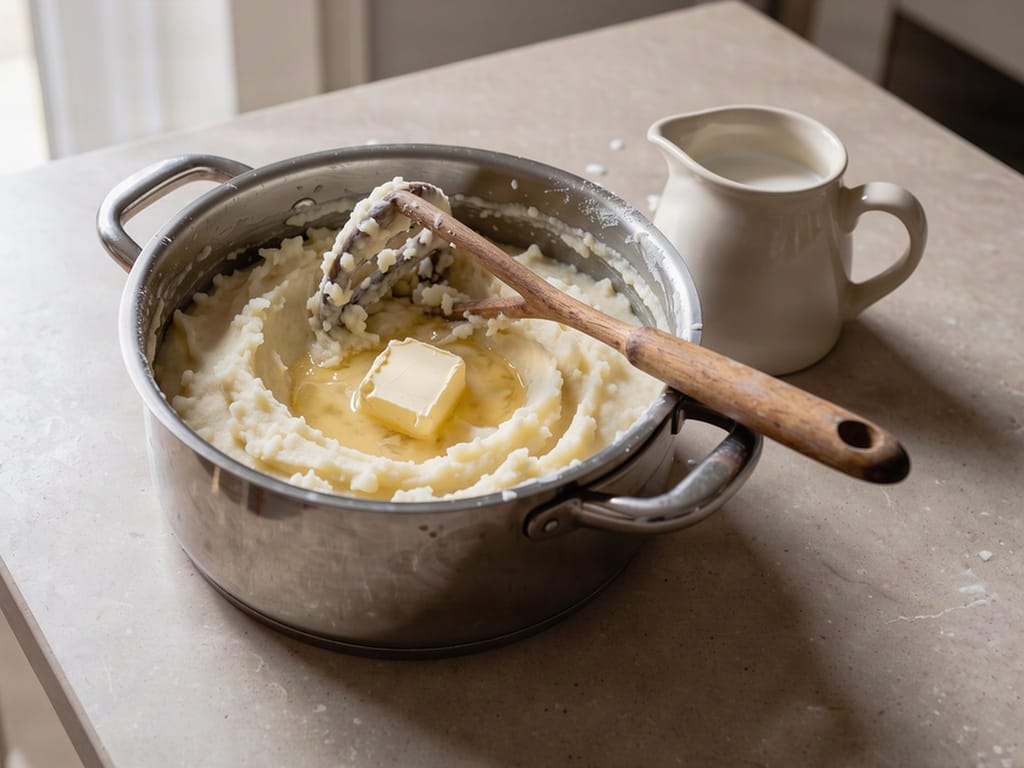
Add the butter before the milk. Fat coats the starch, so the mash gets less sticky.
Warm the milk until it's almost hot. Cold milk cools the mash down, making it harder to combine and turning it into a gummy mass.
Stir only until everything comes together.
As a guide, use 50–100 g (3½–7 tbsp) of butter and 150–250 ml (⅔–1 cup) of milk per 1 kg (2.2 lb) of potatoes. Add the milk gradually, because every batch of potatoes absorbs it differently. You'll find a tried-and-tested step-by-step method in the recipe for smooth, creamy mashed potatoes with nutmeg.
Silky smooth creamy mashed potatoes with nutmeg
Smooth, creamy mashed potatoes with nutmeg
You can't fix gluey mash, but you don't have to throw it out. Once the starch has been released, more milk or butter won't bring it back.
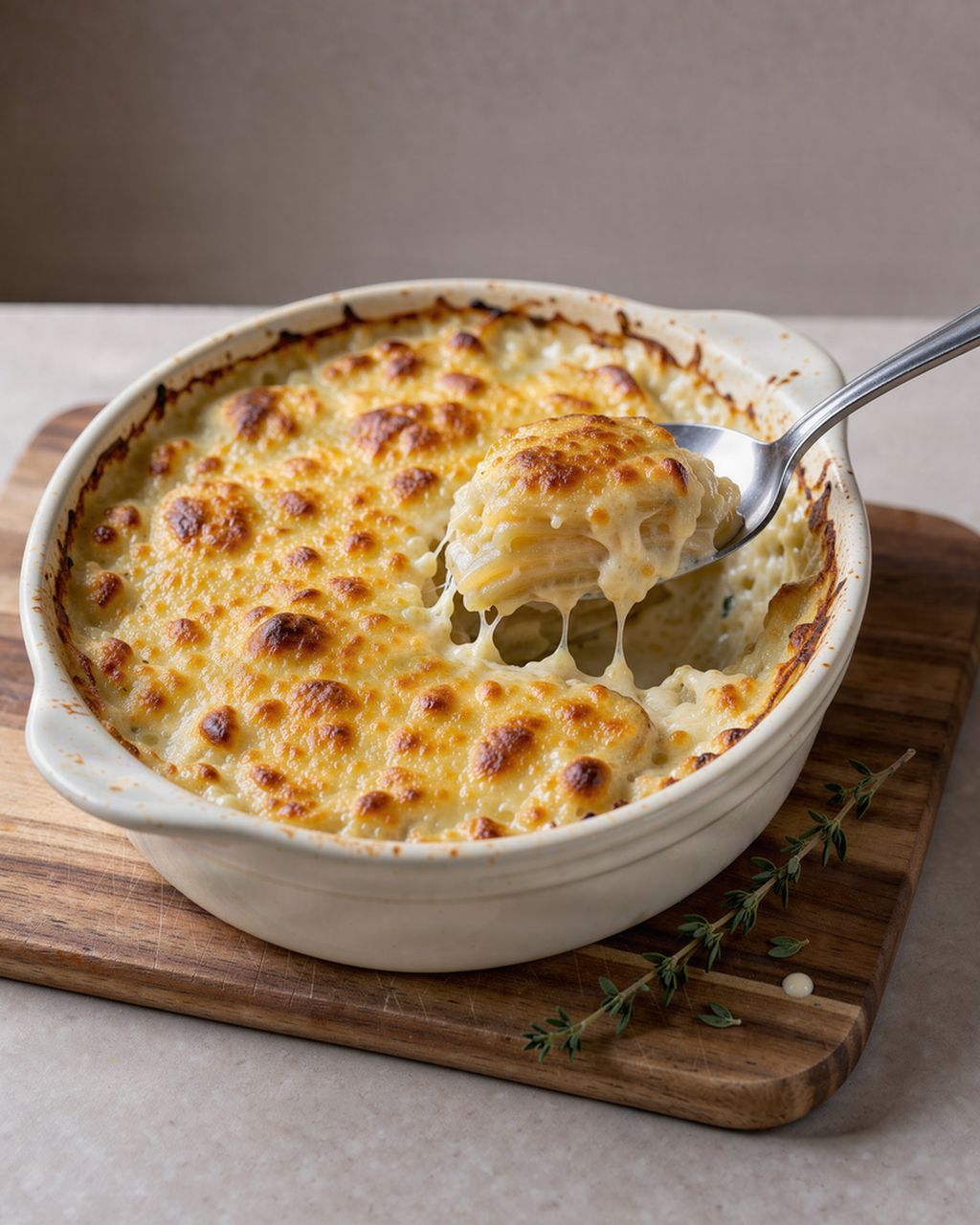
Bake it. Spread it in a baking dish, sprinkle with cheese, dot with a few pieces of butter and bake until golden. Under the crust, the dense texture will look intentional.
Turn it into potato pancakes. Shape it into patties with an egg and a handful of cheese, then fry them in a pan. Here the stickiness actually helps, because the patties hold together.
The best way to thicken runny mash is to cook off the moisture. Put the pot over low heat and stir the mash with a wooden spoon for 3–5 minutes, until it stops looking shiny and starts pulling away from the bottom. The excess water evaporates and the flavor rounds out.
If evaporating isn't enough:
Add another cooked potato that's been steamed dry. Mash it separately and stir it into the mash. It's the cleanest fix, because the flavor stays the same.
Potato flakes (instant mash), a spoonful at a time. They absorb liquid quickly, and in a small amount you won't taste them.
Grated hard cheese or a spoonful of cream cheese. It thickens the mash and seasons it at the same time.
Don't add flour or starch. Without cooking, they taste raw and form sticky lumps in the mash. Flour belongs in sauces, and how to use it so it doesn't taste of flour is covered in the article on roux and slurry.
The basics are salt, butter and a pinch of nutmeg. Go easy on the nutmeg, though: you should only catch a hint of it, not taste it outright. Adjust the salt at the end, because butter and cheese will add more. If you do oversalt it, an extra cup of milk won't help, but these tricks for oversalted food will.
You can go in many directions from there:
Brown butter – heat the butter until it smells nutty. The mash gets a fuller, nuttier flavor.
Roasted garlic – roast a whole head until soft and squeeze it into the mash. It tastes sweet, not sharp.
Fried onions on top – good with classic meatloaf or with baked crispy schnitzels in a cornmeal coating.
Horseradish or Dijon mustard – a teaspoon brightens the mash. It goes great with smoked meats and beef.
Herbs – chives, parsley or dill, stirred in at the end.
Cheese – Parmesan, Edam or smoked cheese. The last one gives the mash a smoky note without any meat.
Celery root or parsnip – swap in up to a third of the potatoes (200–300 g per 1 kg of potatoes) and cook them together. The mash will be gently sweet and more fragrant.
White pepper instead of black, if you don't want dark specks in the mash.
You can replace part of the milk with cream (creamier), buttermilk (slightly tangy) or potato cooking water if you're cooking without milk.
Mash from the fridge reheats best slowly, with a little milk and a lid on. When cold, the starch stiffens and the mash pushes out water. Without added liquid it would scorch while reheating and turn stiff. A spoonful of milk and a little butter bring back the creaminess.
Heat it until it's steaming hot all the way through, even in the center. USDA FSIS recommends reheating leftovers to 74°C (165°F), and the UK's FSA advises reheating food only once. So reheat only as much as you'll eat.
In a pan, mashed potatoes reheat in 5–8 minutes over low heat with 2–3 tablespoons of milk per 500 g (1 lb), covered and stirred often.
Put the mash in a pan or saucepan and add 2–3 tablespoons of milk for every 500 g (1 lb) of mash.
Cover it and heat over low heat for about 5–8 minutes. Stir every minute, scraping up the bottom.
When it's hot and creamy, stir in a little butter and season with salt.
If it's still stiff, add another spoonful of milk. The pan is the most reliable method, because you have the mash under control the whole time. Other options, such as steam or the oven, are covered in the article how to reheat food without a microwave.
In the microwave, reheat mashed potatoes covered, with a spoonful of milk, at medium power in 1–2 minute bursts, stirring in between.
Put the mash in a microwave-safe bowl, spread it in an even layer and make a well in the middle. That way the center heats as quickly as the edges.
Add a spoonful of milk and a little butter, and cover the bowl with a lid or a plate. The steam keeps the mash moist.
Heat at medium power in 1–2 minute bursts, stirring each time in between.
Before you eat, let it rest for a minute so the heat spreads evenly. Then taste from the center to check it's hot all the way through.
On full power, the mash dries out on the outside and stays cold inside. USDA FSIS also recommends heating gradually with stirring, because microwaves heat unevenly.
For mashed potatoes as a side dish, count on 200–250 g (7–9 oz) of peeled potatoes per person, up to 300 g (10½ oz) for big eaters. So 1 kg (2.2 lb) of potatoes makes mash for about 4 people. If you want leftovers for the next day or for potato pancakes, cook half as much again.
Yes. Instead of milk, add hot potato cooking water or vegetable broth, and use a little more butter. To avoid dairy altogether, loosen the mash with unsweetened oat or soy drink and use olive oil instead of butter. The mash will be slightly less creamy, but just as fluffy.
Reheat a larger amount of mashed potatoes in the oven: spread it in a baking dish, stir in a few spoonfuls of milk, dot the top with pieces of butter, cover with aluminum foil and bake at 160–180°C (320–355°F) for about 20–30 minutes. Stir it once in the middle. For the last 5 minutes you can remove the foil and sprinkle the mash with cheese so it browns on top.
Yes, mashed potatoes can be frozen and keep their quality for 3–4 months (USDA FSIS). Mash made with plenty of butter or cream freezes best. Thaw it overnight in the fridge, then reheat it in a pan with a spoonful of milk and stir vigorously, because it tends to be a little watery after thawing.
One recipe worth heating the oven for, one tip, and one deal from the shop. Nothing else.