Czech classic: potato soup with mushrooms

Updated Jul 16, 2026
Potato soup is at its best when it's built on a good stock, the right type of potato, and seasoning added at exactly the right moment — for Czech bramboračka, that means garlic and marjoram go in right at the end of cooking. In this article you'll find an honest, step-by-step method for traditional mushroom bramboračka, a tour of the world's potato soup variations from German Kartoffelsuppe to French vichyssoise, plus solid tips on thickening, seasoning and topping it for extra crunch. No fluff — just what actually works.
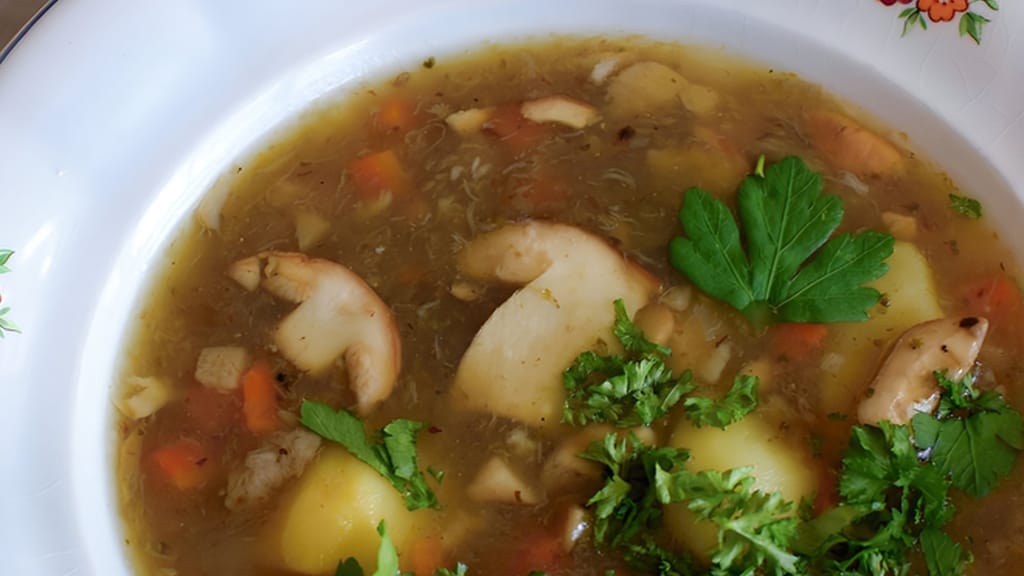
Traditional Czech bramboračka rests on five things: waxy-type (Type B) potatoes, root vegetables, mushrooms, a roux for thickening, and the classic pairing of garlic and marjoram, added right at the end. That's the whole foundation — everything else is just fine-tuning.
The method has three stages. First, sauté finely diced root vegetables (carrot, parsley root, celeriac) with onion in fat, dust with flour and make a light roux. Then pour in the stock, add cubed potatoes and soaked dried mushrooms, and simmer until the potatoes are soft. Finally — and this is the key trick — stir in pressed garlic and marjoram only after taking the pot off the heat. A hard boil would burn off their aroma; the residual heat of the finished soup draws it out beautifully instead.
Caraway seeds and bay leaf go in right at the start of cooking, so they have time to infuse.
Thickening is best done with a roux or by mashing some of the cooked potatoes right in the pot — never with flour stirred into cold water, which just makes lumps.
Dried mushrooms should be soaked, then add their soaking water to the soup — it's packed with flavor.
For bramboračka, reach for waxy Type B potatoes — they hold their shape when cubed, while still releasing enough starch to give the soup body. Type C (starchy/floury) potatoes break down and thicken the soup on their own, so they're better suited to creamy versions; Type A (waxy/firm) stays glassy and won't thicken the soup at all.
Freshness: young potatoes have more vitamin C and thinner skin than older stored ones, which have already lost some of their nutrients.
Fresh parsley instead of dried, for garnish — it adds color and a fresh aroma.
Stock instead of water: good homemade vegetable or chicken stock gives the soup a depth that water on its own simply can't match.
Czech classic: potato soup with mushrooms
Honest mushroom bramboračka with garlic and marjoram — the Czech classic, step by step
Potato soup exists in almost every cuisine. The four best-known European versions are German Kartoffelsuppe with sausage, Polish Zupa Ziemniaczana with smoked meat, Irish leek and potato soup, and French vichyssoise, which is served chilled. They all share the same base — potatoes and stock — but differ in texture and seasoning.
Kartoffelsuppe is a thicker, hearty potato soup made with carrots, celery and leek, where part of the vegetables are blended for creaminess and cream is stirred in. The flavor punch comes from fried sausage or frankfurters sliced into the bowl. Its close cousin is Swiss Papet Vaudois with leek, potatoes and sausage, if you want a really substantial winter version.
Zupa Ziemniaczana combines potatoes with root vegetables (parsley root, carrot) and builds its flavor on smoked meat or sausage. Fresh dill stirred in at the end is typical, freshening up the whole soup — similar to our own dill soup.
Irish leek and potato soup is the simplest of the whole family: potatoes and plenty of leek are simmered in vegetable stock, then blended smooth, with milk or cream added for silkiness. No meat, no extra spices — just the clean flavor of leek and potato leading the way.
Vichyssoise is a luxurious creamy soup made from leek, onion, potatoes and cream, which is blended, left to cool, and served cold — ideal for hot summer days. It's proof that potato soup doesn't have to be a winter-only dish. Find the method in our vichyssoise recipe.
You can take potato soup up a notch in three ways: seasoning (marjoram, caraway, nutmeg, bay leaf), cream or cheese for creaminess, and a crunchy topping for textural contrast. The best result comes from combining all three — fat, spice and crunch, all working together.
Beyond salt and pepper, try thyme or rosemary for an aromatic base, bay leaf simmered in the soup from the start, and a pinch of freshly grated nutmeg for an earthy note. In Czech bramboračka, the main lever remains marjoram and garlic added at the end. Crush caraway seeds just before using — whole seeds smell far more fragrant than ones that have been sitting in a bag for a year.
Cream gives a soft, melt-in-the-mouth consistency — cooking cream smooths things out, while sour cream adds a slightly tangy edge. Stir it in only at the end, off a hard boil, so it doesn't split. A cheesy undertone comes from a handful of grated Parmesan or Cheddar — a little goes a long way, or it'll overpower the potato flavor. Another creamy route is this creamy autumn potato and garlic soup.
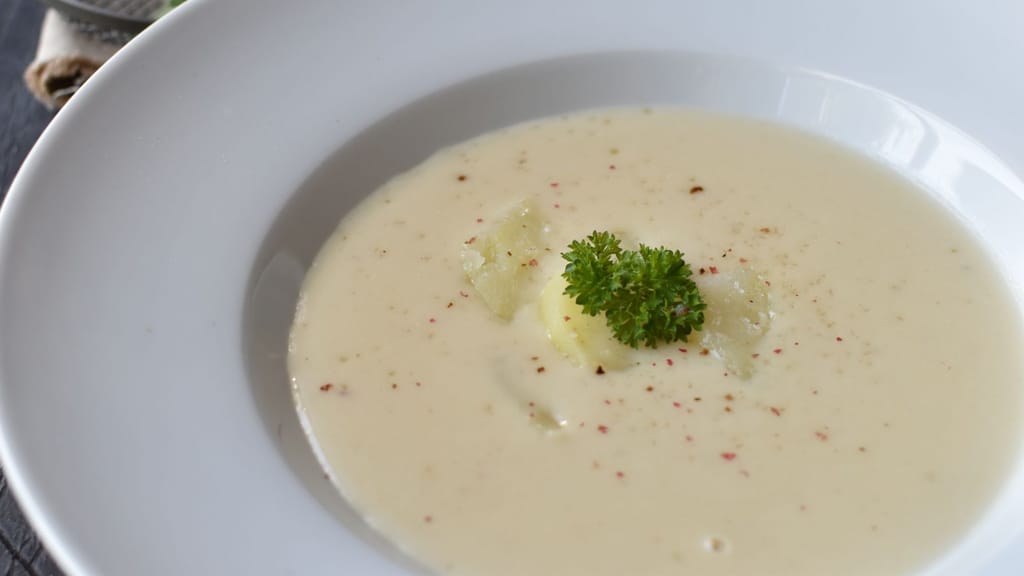
Creamy autumn garlic and potato soup
Creamy autumn potato and garlic soup — a velvety take on potato soup

Crunch is what turns an ordinary soup into something memorable. The most popular choices are fried bacon (diced small and rendered crispy) and homemade garlic croutons made from dried-out bread fried in butter with garlic and herbs. Crispy fried onions, pumpkin seeds, or a drizzle of good olive oil on top all work too. Stick to one bold topping rather than piling them all on — otherwise the flavors will fight each other.
Potato soup is filling but relatively light — a bowl gives you vitamin C and potassium from the potatoes, beta-carotene from the carrot, and antioxidants from the onion, while most of the calories come from the cream, bacon and butter you add. Without rich toppings, it's one of the lighter hot dishes around.
According to nutrition data, boiled potatoes contain roughly 6 mg of vitamin C and 280–460 mg of potassium per 100 g — more of it stays intact when you cook them in their skins, since less leaches out into the water. Experts note potassium helps maintain blood pressure and muscle function, while vitamin C supports immunity.
Carrot adds beta-carotene, which the body converts into vitamin A, important for eyesight and skin, plus fiber for digestion. Onion contributes flavonoids — antioxidants that studies link to anti-inflammatory effects. Homemade soup also comes without preservatives or unnecessary additives, so you know exactly what's in it.
Store cooked potato soup in an airtight container in the fridge for 3–4 days, or in the freezer for up to 3 months. Let it cool before storing, freeze it in portions, and reheat slowly so the cream doesn't split.
For a regular family dinner, serve the soup in deep bowls that hold the heat, topped with chives or parsley and a slice of fresh bread. For a special occasion, focus on the details: elegant bowls, croutons, a drizzle of olive oil on top, or a spoonful of sour cream swirled into a spiral. A simple trick for a wow effect with zero extra work.
Let the soup cool first, transfer it to an airtight container and store it in the fridge, where it'll stay fresh for 3–4 days (a bit less if it contains cream). For longer storage, divide it into smaller portions and freeze — just thaw overnight in the fridge and reheat slowly on the stove before eating. Find out more about safely cooling and storing hot food in our article on how to store hot food in the fridge.
Bramboračka is the specific Czech version of potato soup — thick, thickened with a roux, made with root vegetables, mushrooms, and that signature pairing of garlic and marjoram. "Potato soup" is the broader umbrella term covering the whole family, which also includes creamy blended versions without mushrooms or the cold French vichyssoise.
Thicken potato soup with a light roux made from flour toasted in fat, or by mashing some of the cooked potatoes right in the pot. Never sprinkle flour straight into hot soup — it'll clump; always whisk it into a bit of cold liquid first, or use a roux.
Add the garlic and marjoram right at the very end, after taking the soup off the heat. A hard boil burns off their aroma, while the residual heat of the finished soup draws it out beautifully.
In an airtight container, it keeps in the fridge for 3–4 days and in the freezer for up to 3 months. It's best to freeze it without cream, stirring that in after reheating — freezing and vigorous boiling can cause it to split.
Creaminess can also come from blending in some of the potatoes, whole milk, sour cream, or a spoonful of butter stirred in at the end. For a plant-based version, unsweetened oat or soy milk works well, as does coconut cream — though that will bring its own distinct flavor.
I send one like it every week. A recipe, a tip, one deal — nothing else.