JEM Piping Tip – Drop Flower #2D (Full Flowers & Rosettes)
Unicorn Cake: Piped Buttercream Mane, Gold Horn and Pastel Colors
Updated Oct 15, 2026
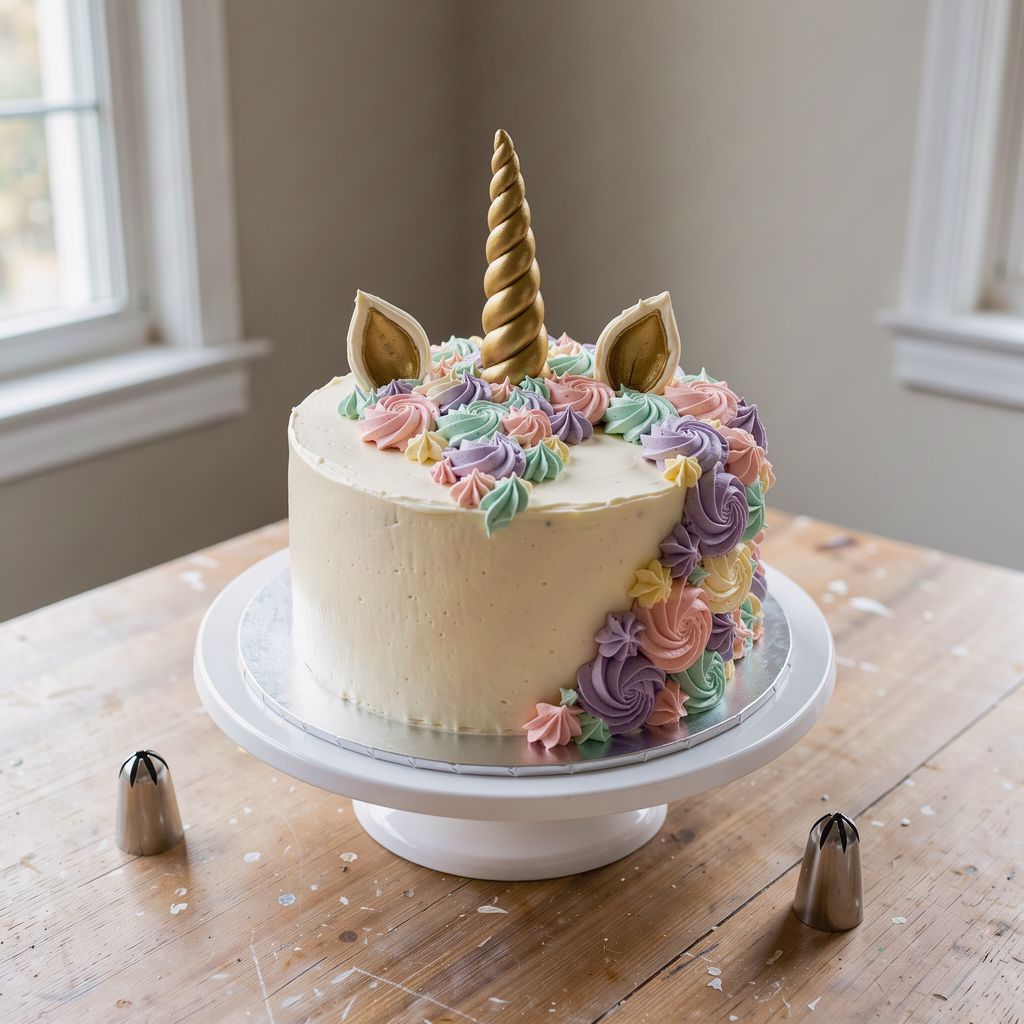
A unicorn cake is a tall, smoothly frosted cake with a pastel piped mane, a golden horn, little ears and closed eyes with lashes. Everything except the horn and ears is piped from frosting with three tips and a few drops of gel color. We'll cover which frosting to choose, how to mix pastels that won't darken by evening, which tips to use for the mane, what to make the horn from so it won't snap or topple, and how to gild it so it's genuinely edible.
For a unicorn cake you need six things: a tall cake base, white frosting that holds its shape, 3–4 pastel gel colors, 2–3 piping tips, piping bags and a horn with ears. Specifically, for a 20 cm (8 in) cake:
Cake layers: 3 layers, 12–15 cm (5–6 in) tall in total. The taller the cake, the more the mane flowing down it stands out.
Frosting: about 1 kg for filling and frosting, plus 350–400 g for the mane.
Colors: pink, purple, mint and yellow, or light blue if you like. A drop of black is enough for the lashes.
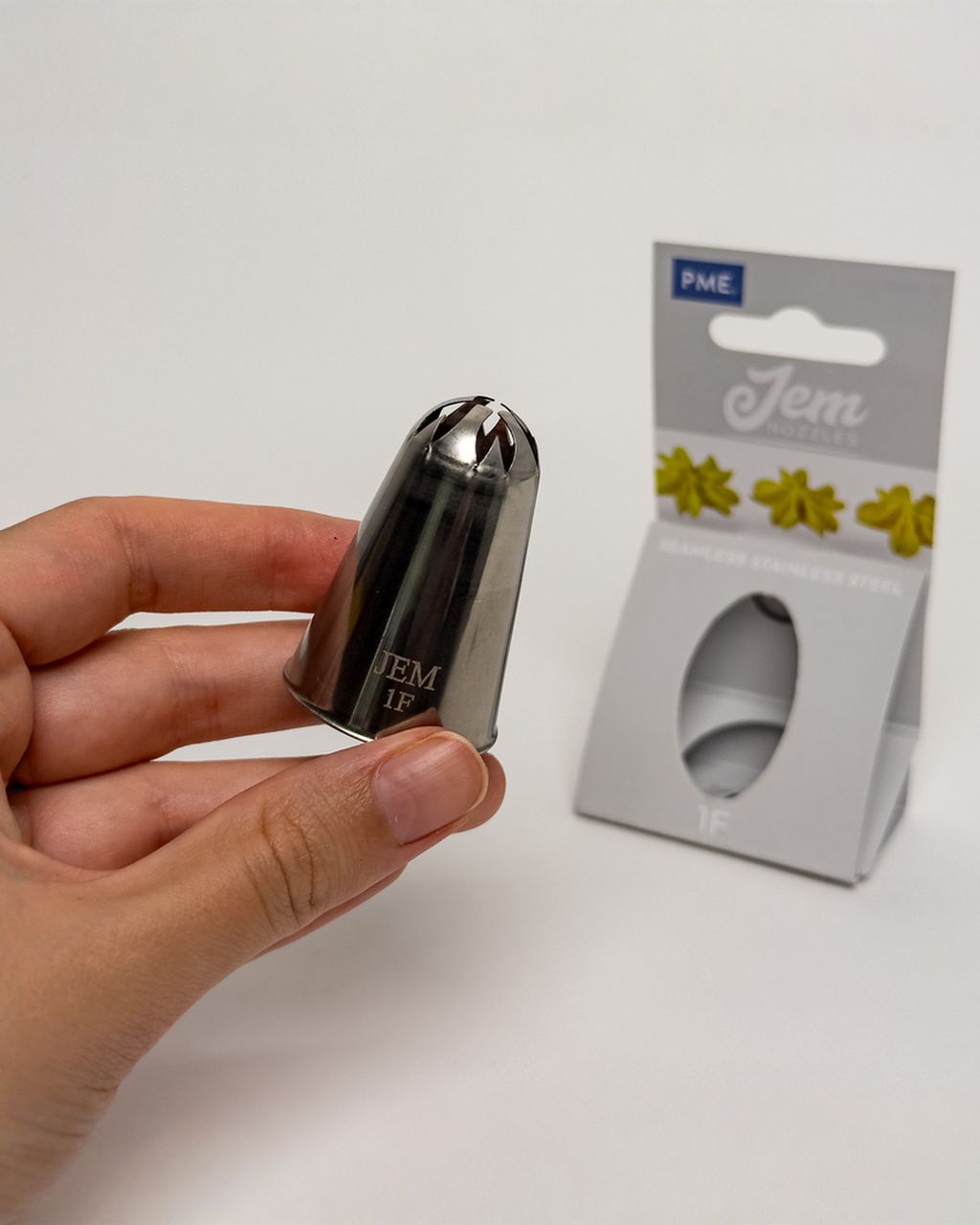
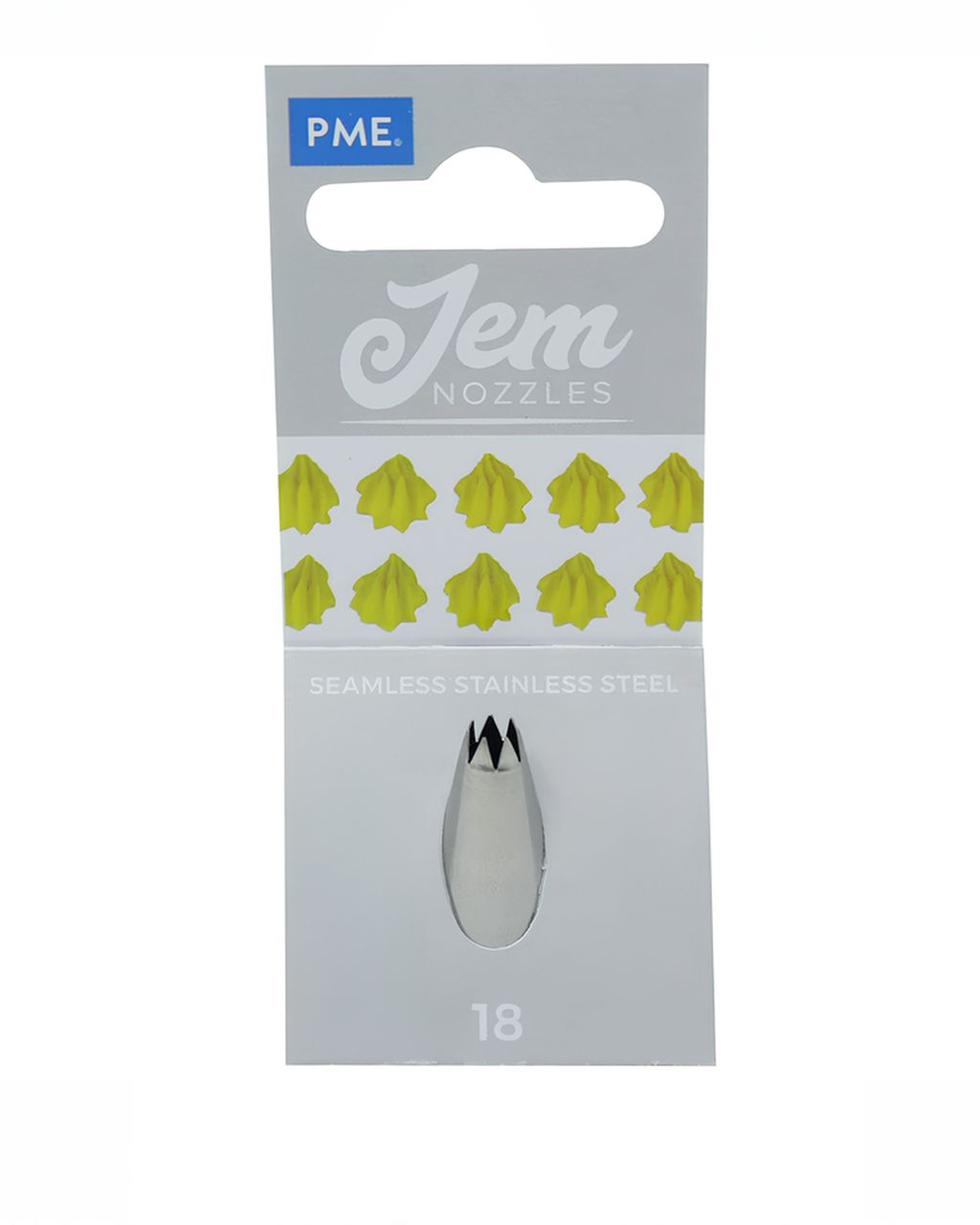
Tips: a large closed star (JEM 2D), a large flower tip (JEM 1F) and a smaller open star (JEM 18) for the extras.
Bags: one for each color, ideally disposable 30 cm (12 in) bags.
Horn and ears: made from fondant or modeling paste, painted with edible shimmer powder.
A sturdier cake that keeps its height makes the best base. A light génoise sponge works if you soak it with syrup and use a firm frosting. If you want the inside to be colorful too, start from a rainbow kids' cake. For general rules on cakes for children's parties (what to keep off the cake and how big to bake it), see our article on decorating kids' cakes.
Seasonal baking plans, tested recipes and kitchen tricks that save you time. Unsubscribe in one click.
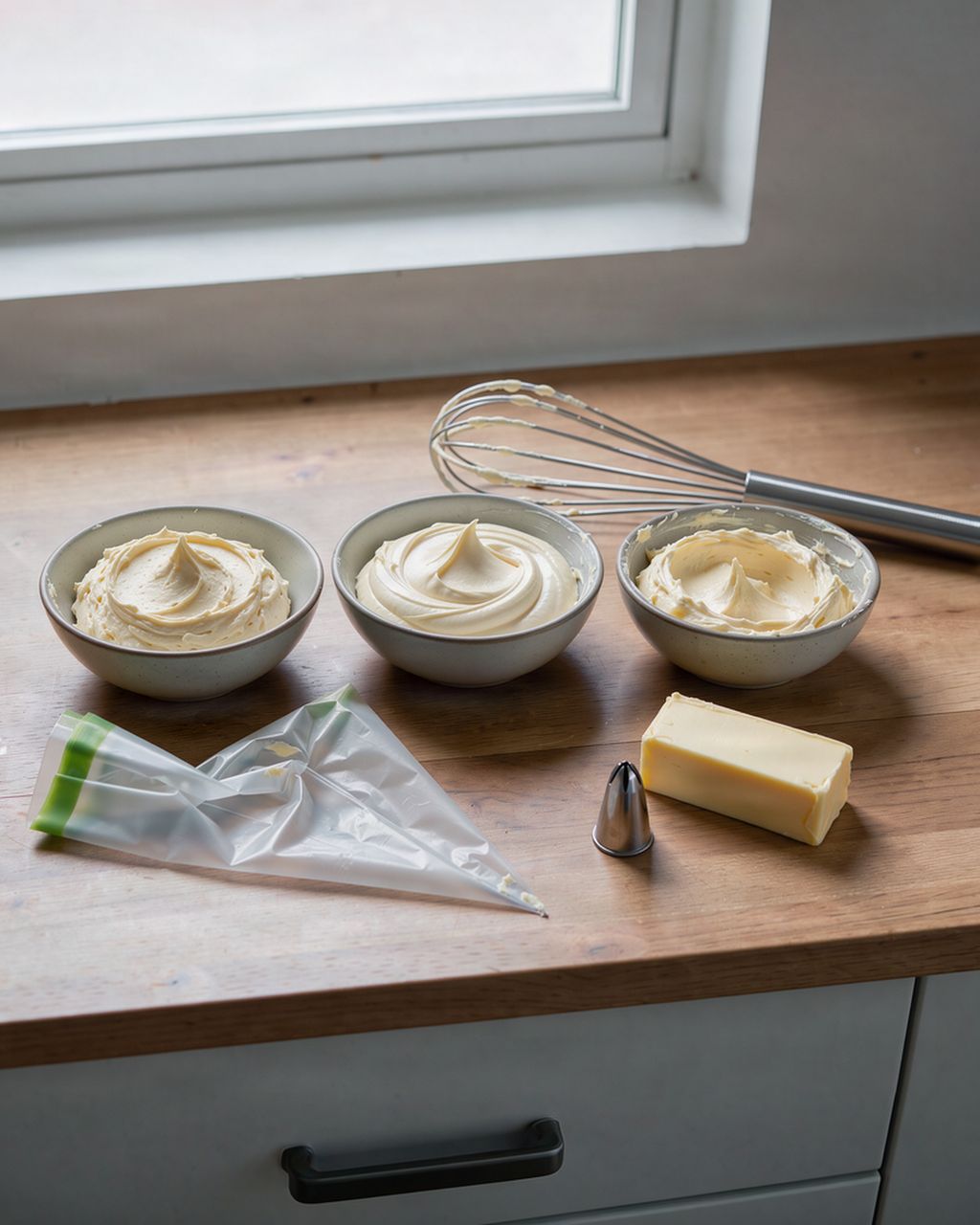
Buttercream works best, ideally Swiss meringue buttercream (egg whites and sugar whisked over steam, then butter). It holds sharp ridges from the tip for several hours at room temperature and takes color well. Here's how the options compare:
Swiss meringue buttercream: the surest choice. Smooth, firm and less sweet. Its weak point is the yellowish tint of the butter.
American buttercream (butter + powdered sugar): simpler and even firmer, but sweeter and slightly grainy.
White chocolate ganache: spreads beautifully, but it's creamy yellow itself, so pastels come out warmer in it.
Whipped cream frosting: tastes the lightest, but it only holds a mane in the fridge. Without stabilizing, you'll lose it within an hour on the table. For how to firm it up, see our article on stabilized whipped cream with gelatin.
With pastels, the starting white is what counts. On a yellow buttercream base, light blue turns greenish and purple turns gray. So whip the frosting as pale as you can first, and if needed, correct it with a tiny speck of violet. The method is described in our article on snow-white buttercream.
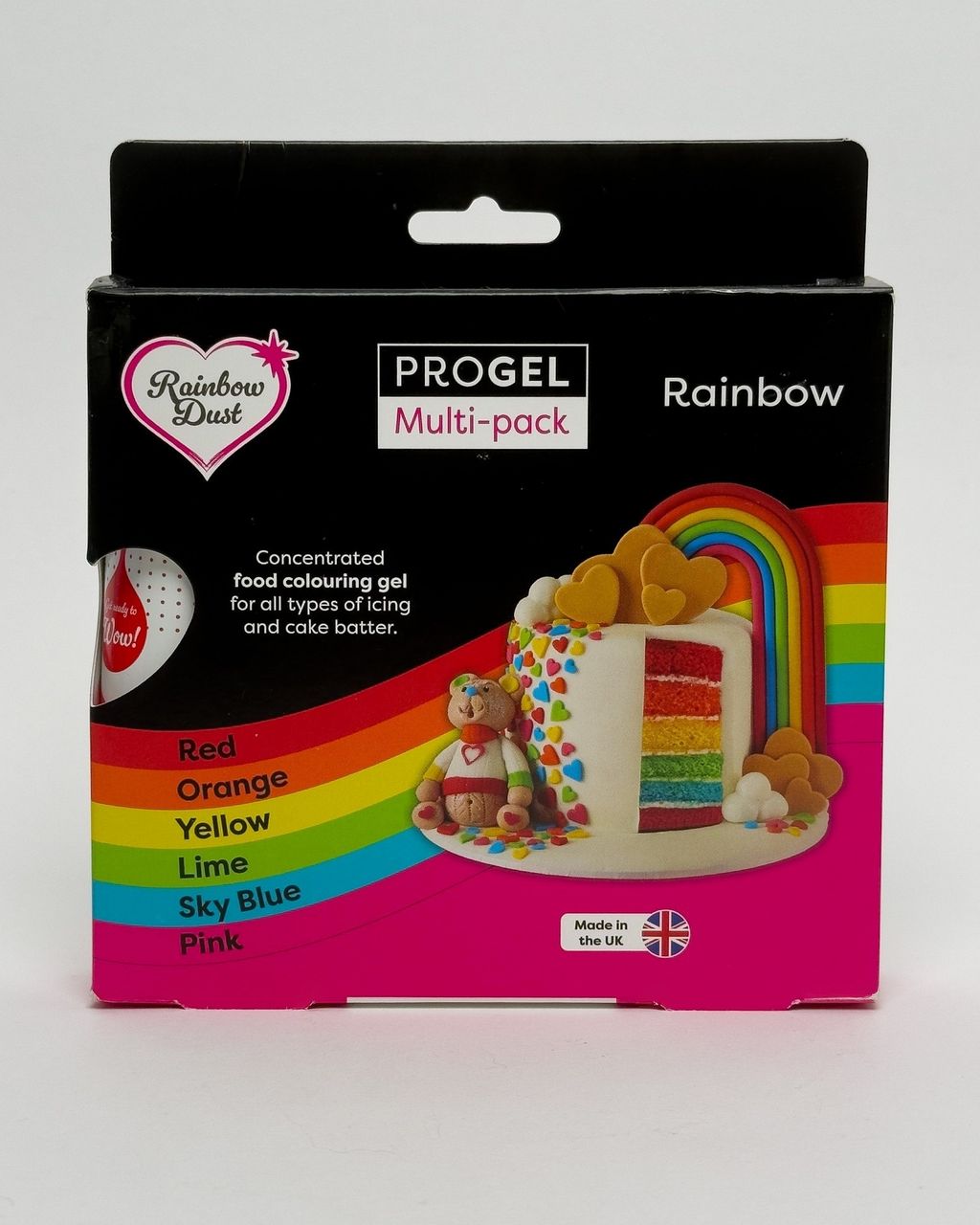
Pastel means a lot of frosting and very little color: for 100 g of frosting, the tip of a toothpick of gel color is enough. Liquid food coloring from the supermarket would thin the frosting before it colored it, so use gel, for example ProGel.
Divide the mane frosting into bowls of 80–100 g each, one per color.
Pick up color with a toothpick and mix it in, then add more only in small amounts.
Stop at a shade lighter than you want. Gel colors in buttercream darken over 1–2 hours.
Let the colors rest for a while, then compare them side by side. A mane looks best with 3–5 shades of similar lightness.
The easiest route is a ready-made set with all the shades together. The ProGel rainbow set of 6 covers pink, purple, blue and yellow. You can buy mint separately. For a detailed chart of shades and ratios, see how to mix frosting colors. Gel colors, tips and sprinkles are all together in our cake decorating category.
Frost the cake in two layers. The first thin layer traps the crumbs. Then put the cake in the fridge for 20–30 minutes, apply the final layer and smooth it with a scraper until the sides are straight. White is the classic. A soft pink or lavender base, though, will give you an ombré effect with the mane.
Before you pipe the mane, the coating must be chilled and firm. Cold frosting doesn't dent under the pressure of the tip, so the mane holds on it. For how to get straight sides and sharp edges, see our article on how to frost a cake with buttercream or ganache. If you want an extra-tall cake, cake strips will help.
You pipe the mane with three tips: the large closed star (2D) makes the main rosettes, the large flower tip (1F) makes bolder waves, and the open star (18) makes small stars and fills the gaps between them. The mane starts at the top between the ears, runs over the crown and flows down one side of the cake to about halfway or two thirds of its height.
JEM 2D has a closed star with curved teeth and makes deeply ridged rosettes. You can build the whole mane with it.
JEM 1F makes a larger, more open flower. Its rosettes are full and wavy, so they cover more area and give the mane volume.
JEM 18 is a small open star. It fills the gaps with little stars and tiny swirls and adds fine detail to the mane.
You don't need these exact tips. Large stars from other brands work similarly, for example Wilton 1M (open star) or other closed stars of a similar size. Numbers differ between brands, so look at the shape and size of the opening, not the label.
You pipe the mane in five steps:
Fit a tip into each bag and fill it two thirds full with one color. If you don't have that many tips, use a coupler and swap the tips between colors.
Start with the biggest rosettes (2D, 1F) at the top between the ears, where the mane is thickest.
Continue down the side, alternating colors irregularly. The same colors side by side look like stripes, not hair.
Toward the bottom end of the mane, make the rosettes smaller and sparser so the mane tapers off naturally.
Fill the gaps with tip 18: little stars, tiny swirls or an "S" wave.
Pipe the rosettes at a right angle to the surface: hold the tip just above the frosting, squeeze, stop the pressure and only then lift it away. A single rosette is covered in detail in our article on piping a frosting rosette on a cupcake. If you'd like to add little frosting flowers to the mane, see our article on buttercream flowers for cakes.
The most reliable horn is a twisted fondant or modeling paste horn on a wooden skewer, shaped at least a day ahead so it hardens completely. A soft horn bends in the frosting, and a fresh horn goes damp on a cold cake.
Roll two ropes of paste, each about 15 g and 12–15 cm (5–6 in) long, tapered at one end.
Lay them side by side, join them at the wider end and twist them into a spiral. You get a horn roughly 8–10 cm (3–4 in) tall.
Push a wooden skewer or toothpick into the bottom so at least 3–4 cm (1–1½ in) sticks out. That's what anchors it in the cake.
Leave the horn to dry for 12–24 hours in the open air, not in the fridge.
Prepare the ears the same way: two triangles of paste with a pink paste center, also on toothpicks.
Alternatives: you can shape the horn from isomalt (hard and shiny, but you need a mold and a thermometer), twist it from a wafer cone wrapped in fondant, or buy a ready-made sugar horn. We don't carry fondant or modeling paste, so find them at a cake supply shop or a big supermarket.
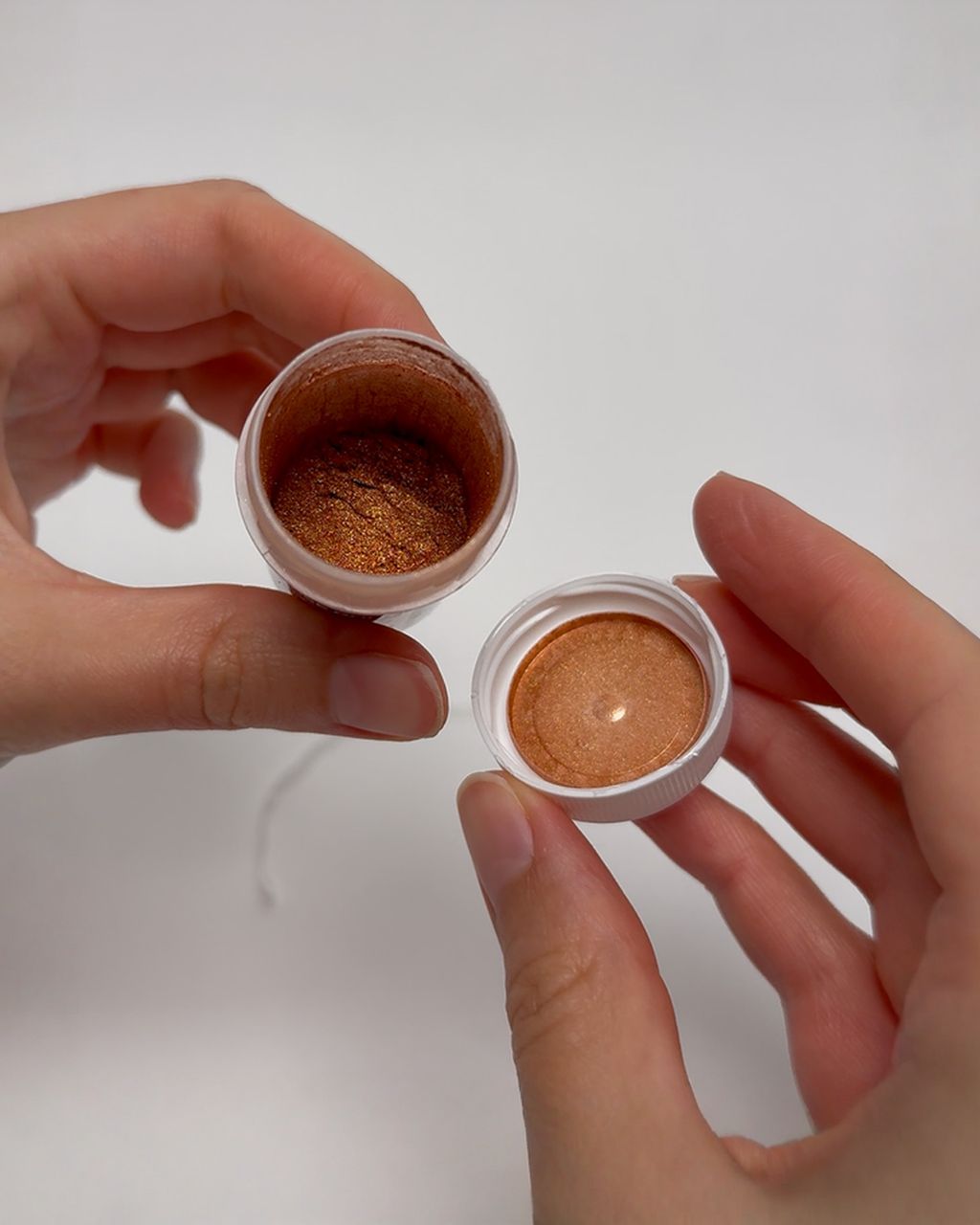
Gild the horn with edible shimmer powder mixed with a few drops of alcohol (vodka, lemon extract) to a paint-like consistency that you brush on. The alcohol evaporates within minutes and leaves a continuous gold layer. With water, the powder would dissolve along with the sugar in the paste and the horn would turn sticky.
Look for the word "edible" on the package. Powders labeled "non-toxic" or "for decoration only" (non-toxic, for display only) are not food. Since August 2022, the color titanium dioxide (E171) has been banned in the EU, so edible pearl powders today are mostly based on the carrier E555 (potassium aluminium silicate) colored with iron oxides (E172).
Which shade to choose:
Pinkish gold (Sugarflair): fits a pastel mane best, warm and soft. We have this powder in stock.
Classic yellow gold: richer and more "fairy-tale". Look for it as "gold lustre" labeled E171 free.
24-karat real gold leaf: the most luxurious option. The layers stick to a slightly dampened horn and the result shines the most, but it's expensive and unnecessary on a kids' cake. Use gold leaf (E175) only on a horn made of sugar paste, not on frosting or the cake itself.
Powder applied dry with a soft brush gives only a gentle sheen. For a rich gold horn, you have to paint it on like paint, ideally in two coats.
You assemble a unicorn cake in four steps: insert the horn and ears, pipe the closed eyes, gently gild the mane and add the sprinkles.
Insert the horn in the middle of the top, slightly toward the front, with the ears at the sides behind it.
Pipe closed eyes: two arcs, each with three lashes, on the front of the cake at about half its height, 4–5 cm (1½–2 in) apart. Use black frosting and a small round tip (2–3 mm), or melted chocolate in a bag with the tip snipped off. Black frosting is hard to mix from white, so start with chocolate frosting and add black gel color.
Gently gild a few rosettes on the mane too; dry powder on a brush is enough.
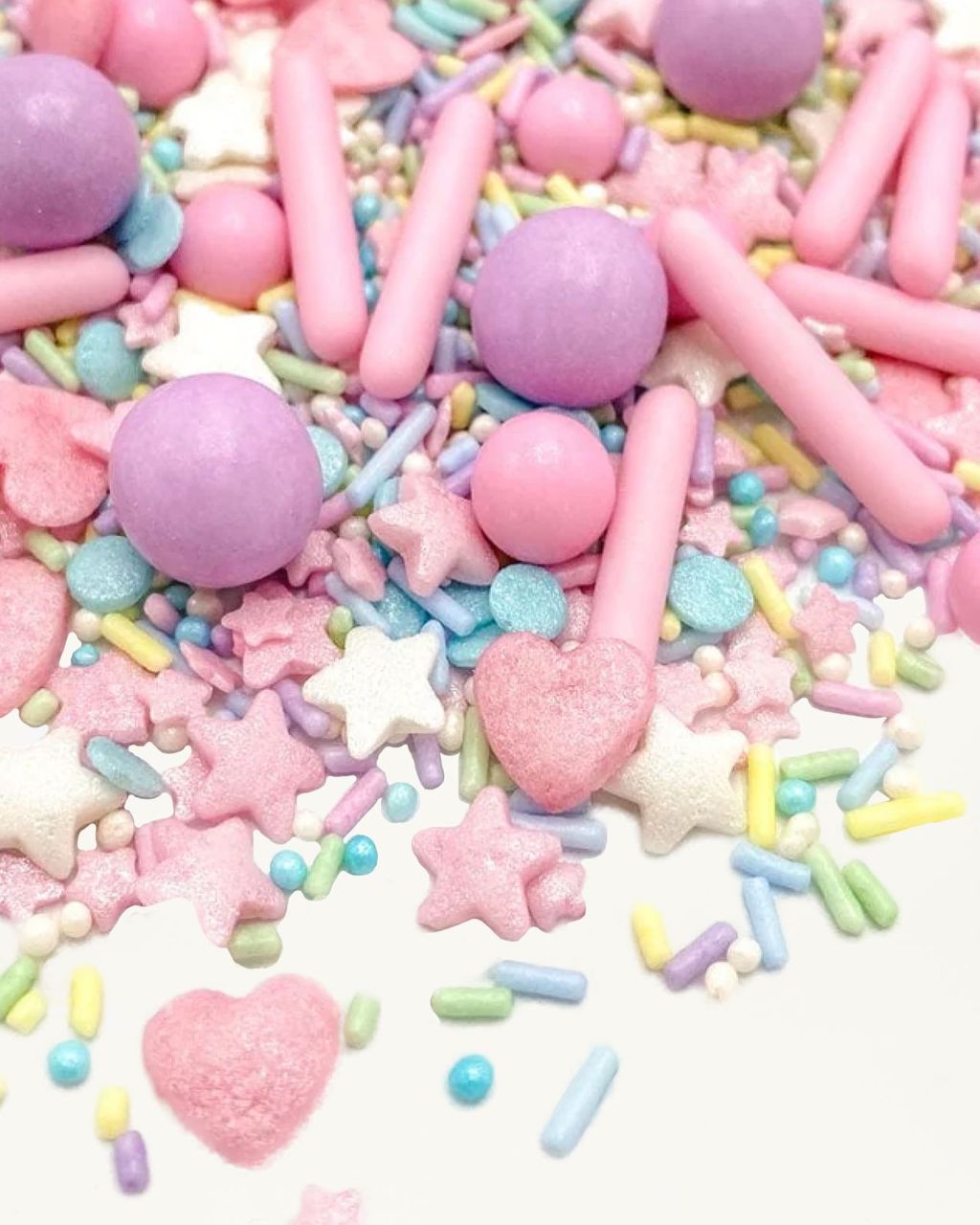
Scatter sugar sprinkles along the bottom edge or in the gaps of the mane. Pastel balls and pearls (for example the Pastel Party set) tie in with the colors of the mane.
For how to apply sprinkles evenly on the sides, see our article on how to decorate a cake with sprinkles. Then store the cake in the fridge and take it out an hour before serving, so the frosting softens and the flavor opens up.
Most failures come down to five causes: warm frosting, too much color, a yellowish frosting base, a fresh horn without a skewer and gold powder mixed in water.
The mane slumps and the ridges vanish: the frosting is warm. Put the bag in the fridge for 10 minutes and chill the cake between colors, too.
Colors are garish, not pastel: you added too much color, or the frosting darkened as it rested. Mix in white frosting until it's a shade lighter than you want.
Blue looks greenish, purple looks gray: the frosting was too yellow. Whiten it before coloring.
The horn leaned or fell: it was fresh, or had no skewer. Shape it a day ahead and push it in deeper.
The gold is sticky and runs: the powder was mixed in water. Use alcohol or extract.
If you make cakes to order and are working out what to charge, our article on custom cake pricing will help.
You can decorate a buttercream unicorn cake a day ahead and keep it covered in the fridge. Make the horn and ears another day before that, so they have time to harden before decorating. Take the cake out of the fridge about an hour before serving.
Yes, both the horn and the ears can be made without fondant. The horn can be made from a wafer cone, isomalt or modeling chocolate, and the ears from a cookie cut to shape and covered with frosting. The mane and eyes are piped from frosting either way.
For a unicorn cake 18 cm (7 in) across and 12–15 cm (5–6 in) tall, plan on about 1.1 kg of frosting; for 24 cm (9½ in), about 1.8–1.9 kg. Compared with the 20 cm cake (1 kg for filling and frosting plus 350–400 g for the mane), you use about a fifth less for 18 cm and almost half again as much for 24 cm, and the mane then needs around 450–500 g.
Yes, as long as the cake is thoroughly chilled and the skewer in the horn goes in deep. Carry it in a box on the flat floor of the car, not on a seat. In warm weather, keep it in the fridge until you leave and run the air conditioning on the way.
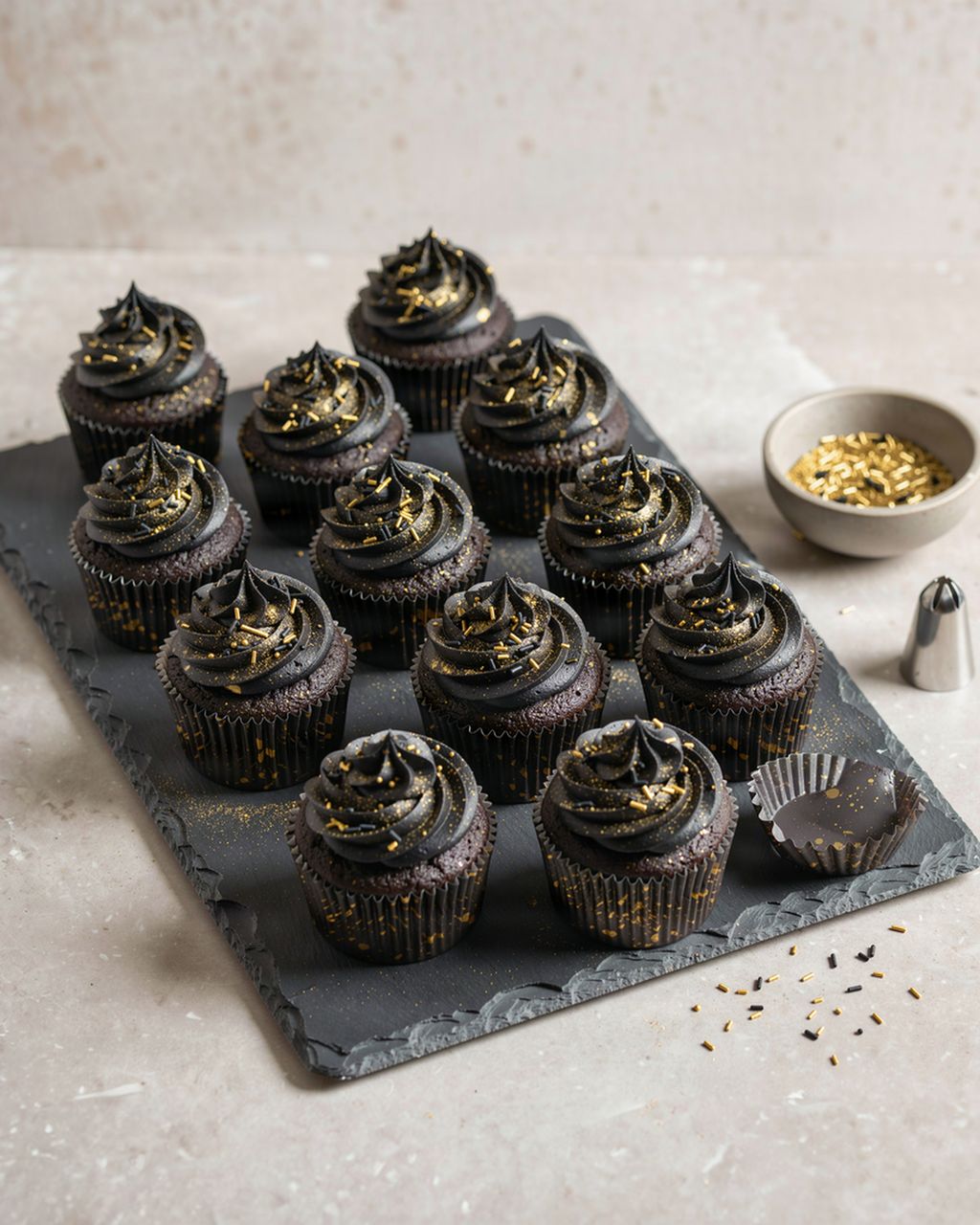
For unicorn cupcakes, pipe a small mane of 2–3 pastel rosettes on each one with tip 2D or 18, then stick a small gilded horn about 4 cm (1½ in) tall into the middle. Cupcakes need a flat top so the mane sits properly, so trim any that have domed with a knife first.
One recipe worth heating the oven for, one tip, and one deal from the shop. Nothing else.