Superwhite Icing Colour Sugarflair (20 g)
Snow-White Buttercream: How to Whiten It and Banish the Yellow Tint
Updated Oct 8, 2026
You can get snow-white buttercream in five steps: whip the butter on its own for at least 8–10 minutes, choose pale butter and clear vanilla, tone down the yellow with a toothpick-tip of purple gel colouring, add white icing colouring for true whiteness, and check the result in daylight after letting it rest for 15 minutes. Butter is naturally yellow, so sugar and whipping alone won't get it white. Below you'll find out why that is, how much of what to add, and how to avoid ending up with grey buttercream instead.
Buttercream is yellow because of beta-carotene, a natural pigment that cows pick up from fresh grass and that ends up stored in milk fat. The more butter in the buttercream, the more yellow it will be.
Summer butter from pasture-fed cows tends to be noticeably more yellow than winter butter from hay-fed cows.
Brown vanilla extract adds a beige tint to the buttercream.
Under-whipping leaves the butter dense and deep yellow – it's the air that lightens it.
Warm kitchen lighting can make buttercream look more yellow than it really is. Always check the colour by a window, in daylight.
You can whiten buttercream in five steps: whip the butter for a long time, choose pale butter and clear vanilla, add a trace of purple colouring, then add white colouring, and finally check the shade in daylight after letting it rest for 15 minutes. The first three steps cost nothing and will take the buttercream from yellow to ivory. For a truly snow-white result, you'll need the last two steps as well.
Whip the butter on its own for 8–10 minutes.
Choose a paler butter and clear vanilla.
Add a toothpick-tip's worth of purple gel colouring.
Add white icing colouring.
Check the colour in daylight and let the buttercream rest for 15 minutes.
Whip room-temperature butter (around 18–20°C/64–68°F) on its own for 8–10 minutes on medium-high speed, until it's pale, fluffy and has visibly increased in volume. Only then add the sugar. Air bubbles scatter light, so the buttercream looks lighter even though the amount of pigment in it hasn't changed at all.
After 2 minutes the butter is still deep yellow, after 5 minutes it's creamy, and after 8–10 minutes it's pale ivory. Beyond that point, it won't change much more. If your buttercream turns greasy or starts to split after lengthy whipping, check out how to whip buttercream so it doesn't turn greasy.
For white buttercream, go for the palest butter you can find with 82% fat and clear vanilla. Butter tends to be paler in winter, and some brands are simply lighter than others, so it's worth comparing two blocks side by side.
Dark vanilla extract will tint buttercream beige. A better choice is clear vanilla flavouring, vanilla sugar made from white sugar, or vanilla pod seeds, which add tiny black flecks without colouring the buttercream itself. We cover how much vanilla to use in how much vanilla to use in baking, buttercream and festive bread.
For 250–300 g of buttercream, a toothpick-tip's worth of purple gel colouring is enough – no more. Purple sits opposite yellow on the colour wheel, so it visually cancels it out and nudges the buttercream from yellow towards neutral white.
Dip just the tip of a toothpick into the gel and wipe it into the buttercream.
Whip for 30 seconds and wait a few minutes, as gel colouring tends to deepen further.
Only then decide whether to add another trace.
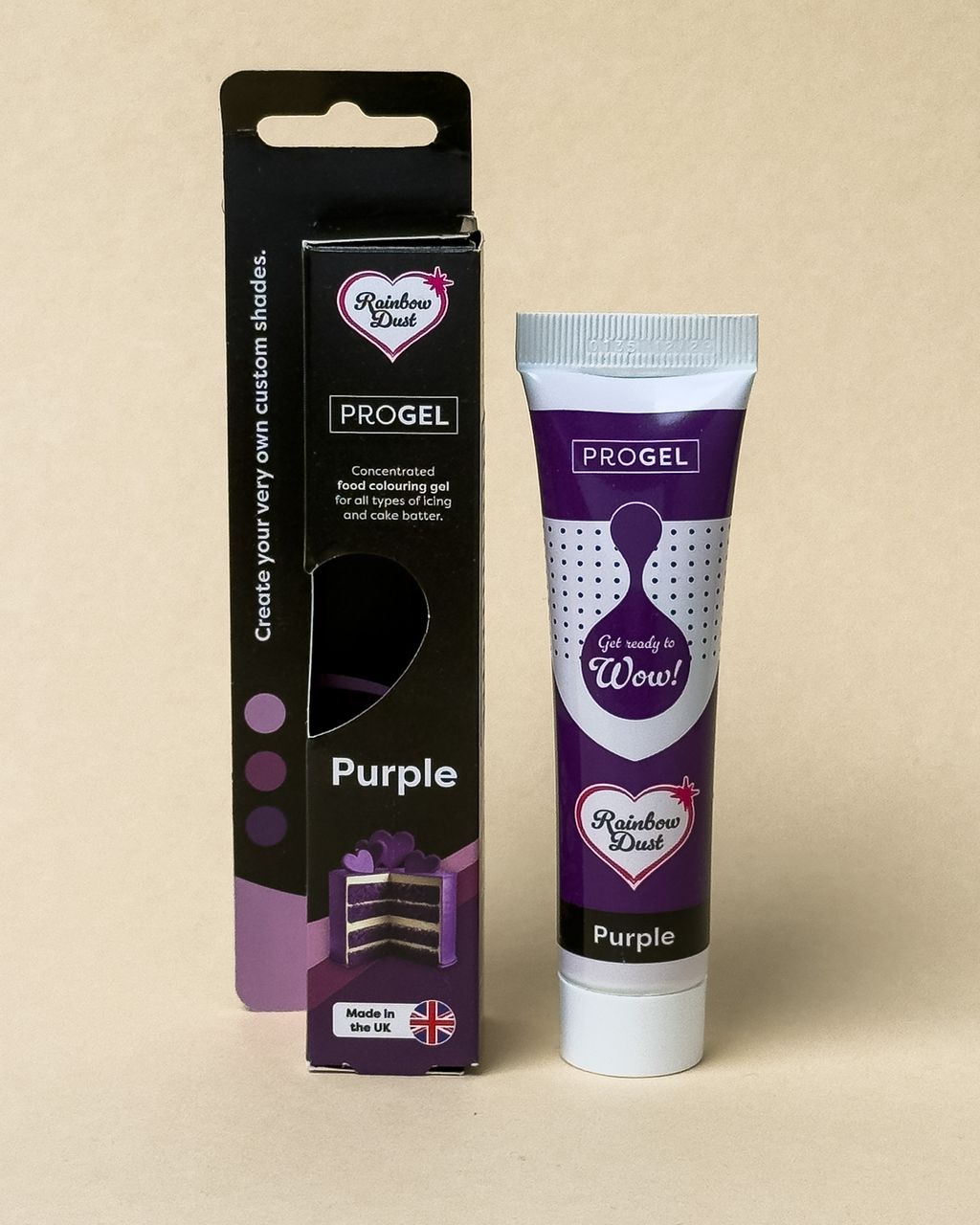
A concentrated gel colour works best here, such as ProGel Purple. Liquid food colouring from the supermarket is too weak and will just thin out the buttercream.
Add white icing colouring last, after the purple – as a guide, around ¼ teaspoon per 250 g of buttercream, then build up in small amounts. Unlike purple, it doesn't balance out the colour, it covers it: it's an opaque pigment that masks any remaining yellow and gives the buttercream a dense, matte whiteness.
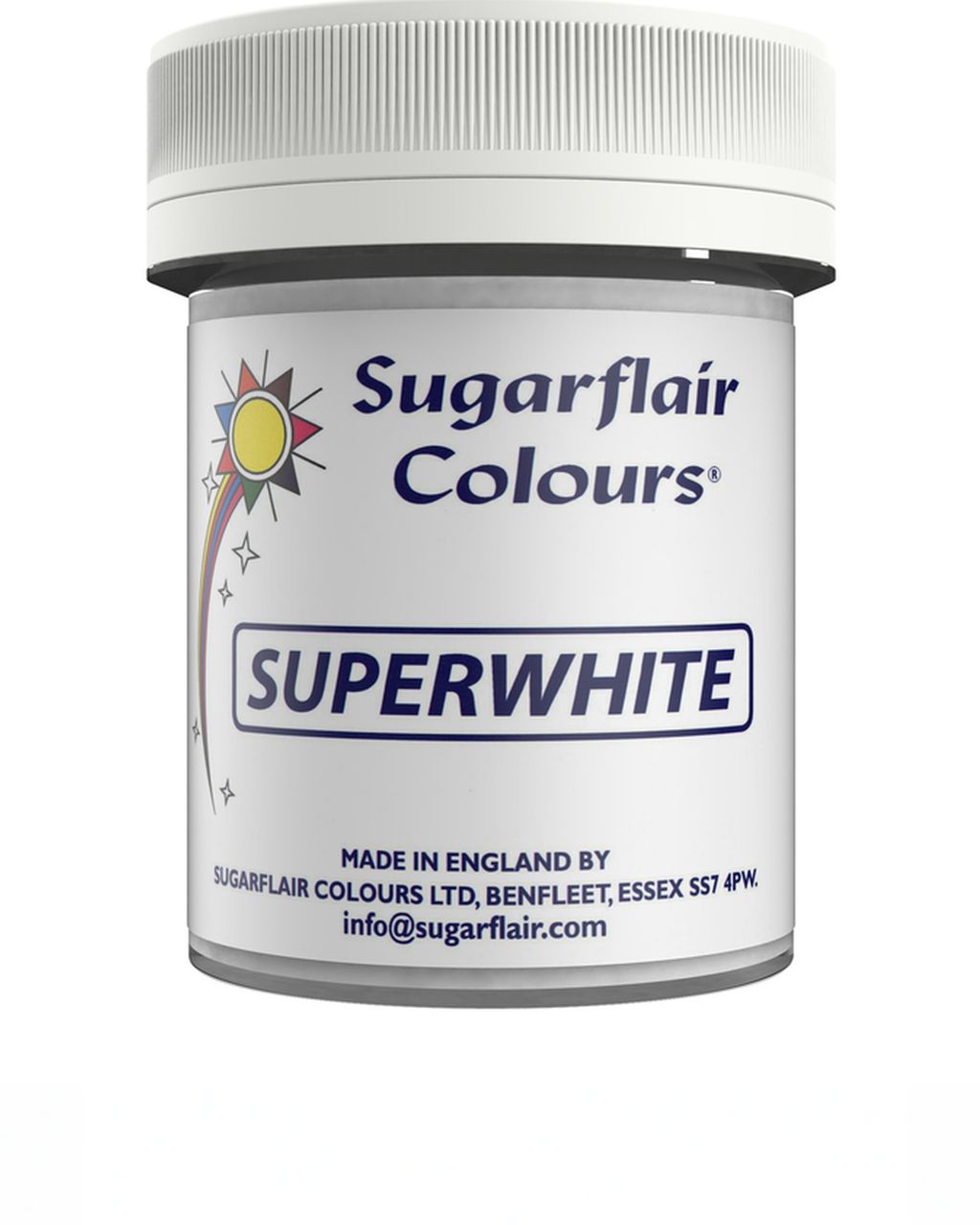
Sugarflair Super White icing colour is based on calcium carbonate (E170). Whip the buttercream after the first addition and keep adding until the shade looks right. It won't affect the texture.
Titanium dioxide (E171) used to be the go-to whitening agent, but it's been banned in the EU since 2022 (Regulation 2022/63, with the transition period ending on 7 August 2022), so white colourings on the European market today are based on other pigments, most commonly E170. According to bakers' experience, E170 covers slightly less, so you need a bit more of it, and it works best once the buttercream has already been well whipped and toned down with purple.
You'll find the full range of gel, powder and white colourings in our buttercream and icing colours category.
The best way to whiten buttercream is a combination of purple gel colouring and white E170 colouring. White vegetable fat will also whiten it, but it comes at the cost of flavour. Here's an honest comparison:
Long whipping – free, and it lightens buttercream to ivory. Not enough on its own for snow-white, though.
Purple gel colouring – mutes the yellow for pennies. Overdo it and the buttercream turns grey.
White icing colouring (E170) – adds dense whiteness without changing the flavour. Works best once the purple has already been added.
White vegetable fat (replacing some of the butter, typically American shortening) – gives a whiter, firmer buttercream even in warm conditions. The flavour is flatter though, leaving a waxy film in the mouth, and in the Czech Republic only hardened baking fats are easy to find. It makes sense for the whitest possible wedding cake, but not for a buttercream that's meant to taste of butter. We don't sell it.
Oil-based white colouring for chocolate – meant for chocolate and cocoa butter. You don't need it for buttercream; gel or paste white colouring blends in far more easily.
For the opposite challenge – a deep black buttercream – see our article on black buttercream and black icing: how to colour it.
The whitest option is cream cheese buttercream, followed closely by flour-and-milk buttercream (ermine buttercream), because they contain the least butter – the starting shade comes down mainly to how much butter is in the buttercream, not what it's called. Even these won't be snow-white without some adjustment, though. From whitest to most yellow:
Cream cheese buttercream – pale, but soft. Add colouring carefully so it doesn't thin out.
Flour-and-milk buttercream (ermine buttercream) – medium-pale and very fluffy.
American buttercream (butter and icing sugar roughly 1:1 to 1:2) – butter makes up roughly a third to half of its weight. The more sugar relative to butter, the paler it is, but it won't be white without added colouring.
Swiss or Italian meringue buttercream – tends to be high in butter, so it comes out ivory to pale yellow. Like the others, it needs both purple and white colouring to reach snow-white.
If you need buttercream as a white base to mix pastel colours into afterwards, it's worth whitening it in advance. That way the colours come out clean and true, rather than veering towards green or salmon. More on this in rainbow cake: how to colour the layers so they stay vivid.
Buttercream tends to yellow again over time mainly because air escapes from it and it loses its fluffiness, so the butter shows through once more. A quick re-whip before using it helps. Buttercream whitened with white colouring (E170) holds its shade more reliably, since the pigment masks the yellow instead of relying on air alone.
You whiten buttercream made with margarine or vegetable baking fat the same way as with butter: by whipping it, then adding a trace of purple and white colouring. Margarines and spreadable vegetable fats are often tinted with beta-carotene, so they can sometimes need even more purple than real butter. Flavour and heat stability will differ from butter, though.
Without colouring, you can only get buttercream to an ivory shade — it won't go snow-white without purple or white colouring. It helps to whip the butter for 8–10 minutes, use pale winter butter and clear vanilla, and pick a buttercream recipe with a lower proportion of butter.
No, chilling buttercream in the fridge won't make it whiter: the fat firms up and the buttercream becomes denser, which actually makes it look richer in colour, not paler. Once you take it out, let it come back to room temperature and give it a quick re-whip — that's what brings the lighter shade back.
Whiten the buttercream first, and only then start adding gel colouring a toothpick-tip at a time. For a pastel shade in 250 g of buttercream, one to two toothpick-tips is usually enough; for a deeper tone, add more one tip at a time. Let the buttercream rest for a few minutes, since gel colouring continues to deepen, then decide whether it needs more.
One recipe worth heating the oven for, one tip, and one deal from the shop. Nothing else.