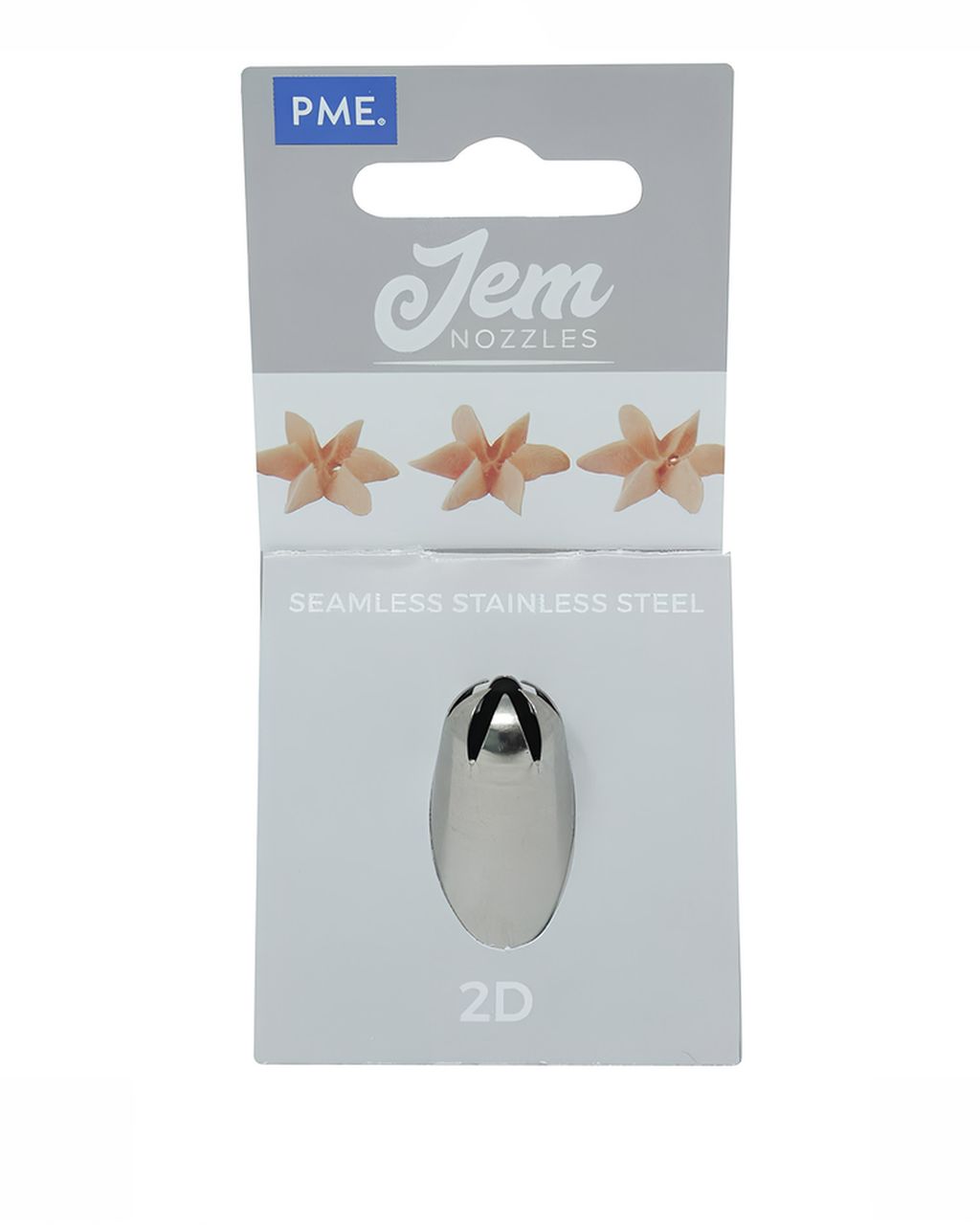
JEM Piping Tip – Drop Flower #2D (Full Flowers & Rosettes)
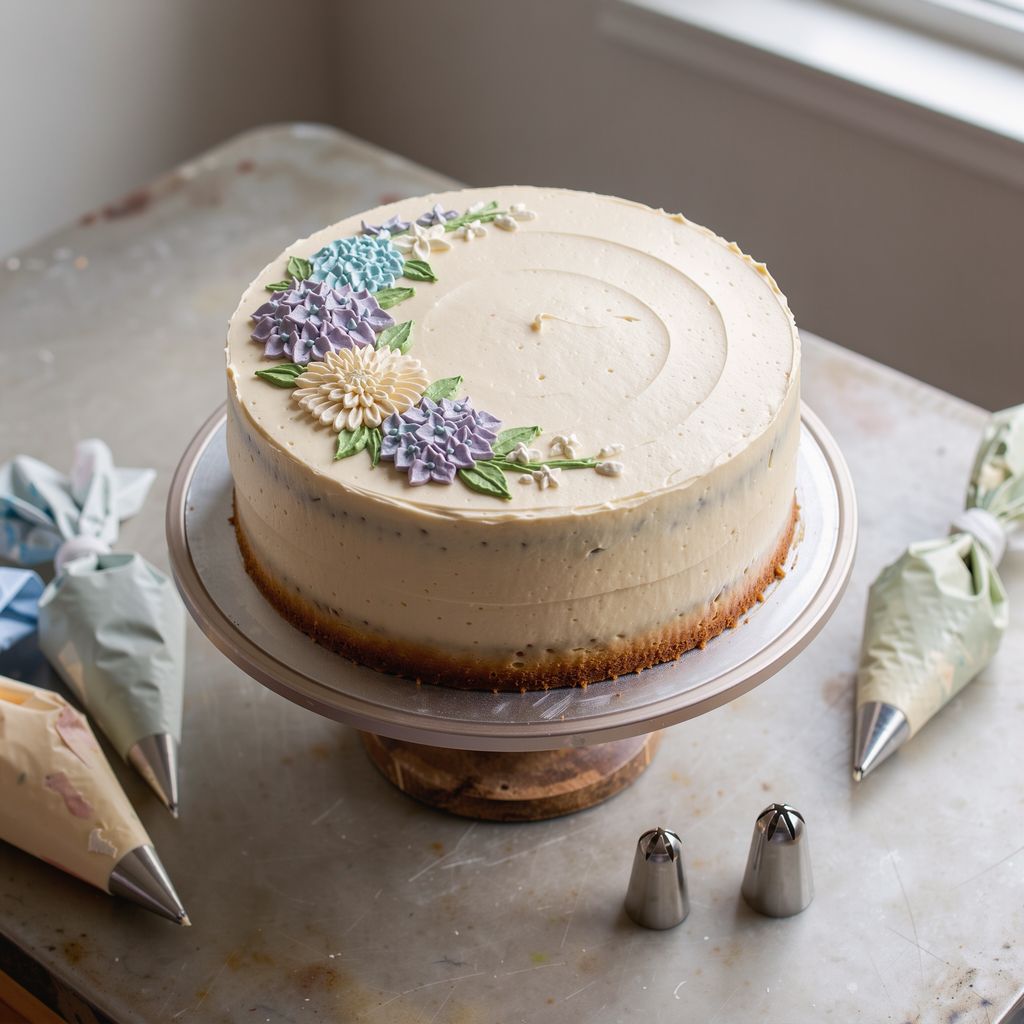
Piped Cake Flowers: Hydrangea, Chrysanthemum & Tiny Blossoms
Updated Oct 15, 2026
You can pipe cream flowers on a cake with just five piping tips. Pipe the hydrangea with a closed star tip 2D, big blooms with tip 1F, the chrysanthemum with a curved petal tip, tiny five-petal flowers with tip 104, and the greenery with a leaf tip. What matters most, though, is the cream: it has to be firm, smooth and cool, or the edges of your petals will melt before you finish piping them. I'll show you how to pipe each flower, what to color them with, and how to arrange them into a bouquet on the cake that doesn't look like a random heap. I'm leaving roses out here, because they have their own tutorials.
For piped flowers you need a frosting that holds a sharp edge and doesn't melt from the warmth of your hands. The best choices are Swiss meringue buttercream (smooth, glossy, less sweet) or American buttercream made from butter and powdered sugar (firmer, sweeter, forms a slight crust on the surface). Plain whipped cream, straight cream cheese frosting or unstabilized mascarpone won't work for flowers, because they go soft after a few minutes. Whipped cream stabilized with gelatin or a stabilized mascarpone frosting will hold only simple blooms from tip 2D. For chrysanthemums and tiny flowers from tip 104 you need buttercream.
Consistency: medium-stiff frosting for hydrangeas and big blooms, a little stiffer for chrysanthemums and tiny petals. If the edge tears as you pull a petal with tip 104, the frosting is too stiff or too cold. If the petals run together, it's too soft.
Temperature: ideally around 18–20 °C (64–68 °F). Hold the bag by the top, not in your palm. When the frosting starts to soften, put the bag in the fridge for 5–10 minutes.
A white base: pastel shades depend on the whitest frosting you can get. You'll find how to get rid of the yellow tint in buttercream in the snow-white buttercream tutorial.
For a detailed comparison of frostings that hold their shape, see our article cupcake frosting that holds its shape. If your buttercream feels greasy, whipping buttercream the right way will help.
Seasonal baking plans, tested recipes and kitchen tricks that save you time. Unsubscribe in one click.
Color your flower frosting with gel coloring, not liquid. Gel is concentrated, so a dab on a toothpick is enough and it won't thin the frosting. Ordinary store-bought liquid colors give pale shades and loosen the frosting when you use more of them.
Color gradually and let the color develop. The shade in buttercream darkens over 1–2 hours. So mix it one shade lighter than you want the final result.
Hydrangea: light blue, lavender and purple. Two neighboring shades in one bag look lovely.
Chrysanthemum: cream, yellow, dusty pink or brick. You can make the inner rows a shade darker.
Leaves: tone down green with a pinch of yellow or a drop of brown; a pure green straight from the tube looks artificial on a cake.
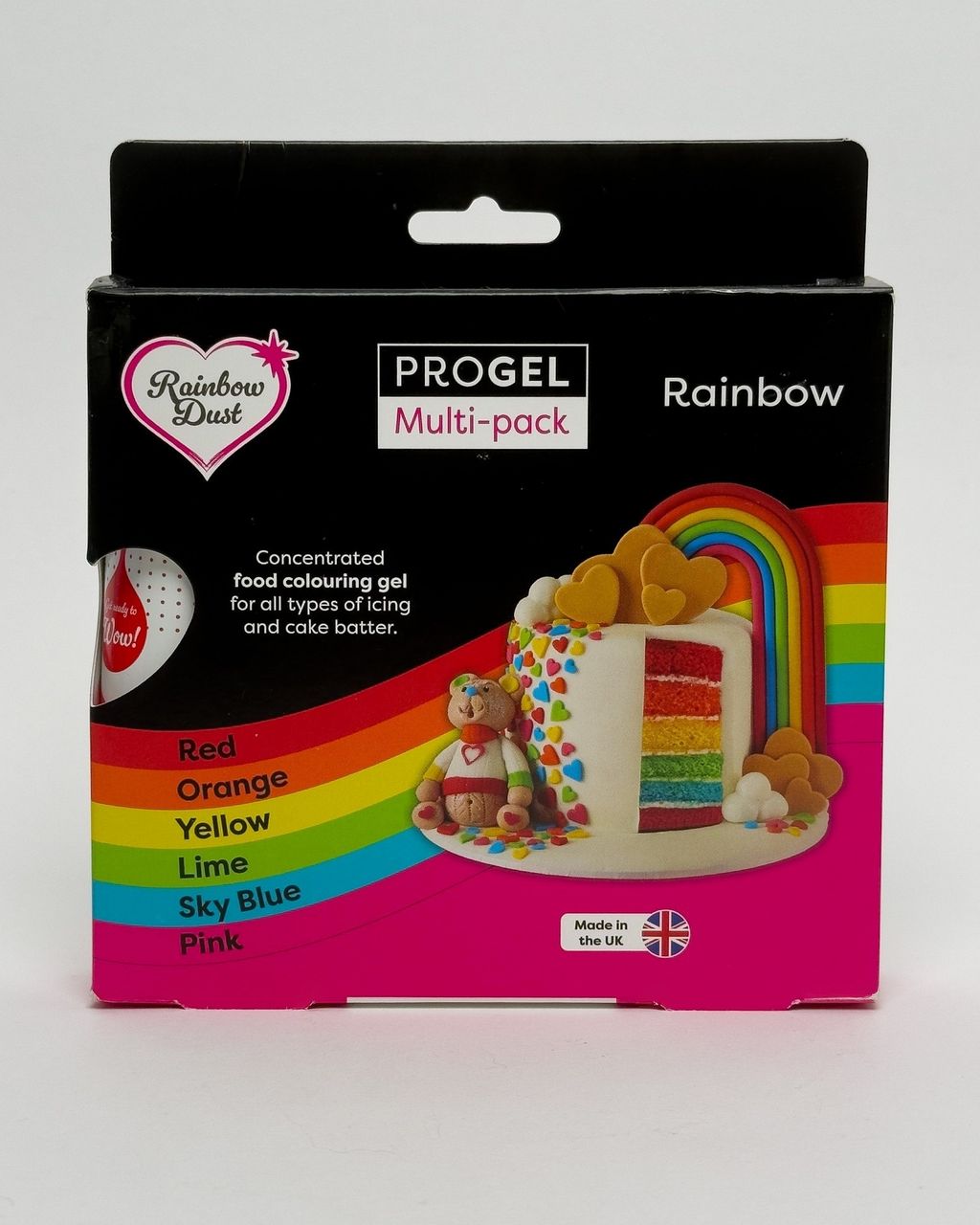
We carry ProGel gels by Rainbow Dust individually and as a rainbow set of six colors, from which you can mix a whole palette for flowers. Other good-quality gels (Wilton, Sugarflair, Americolor) can do the same. What matters is that it's a gel or a paste. For specific ratios for both pastel and deep shades, see the article how to mix frosting colors.
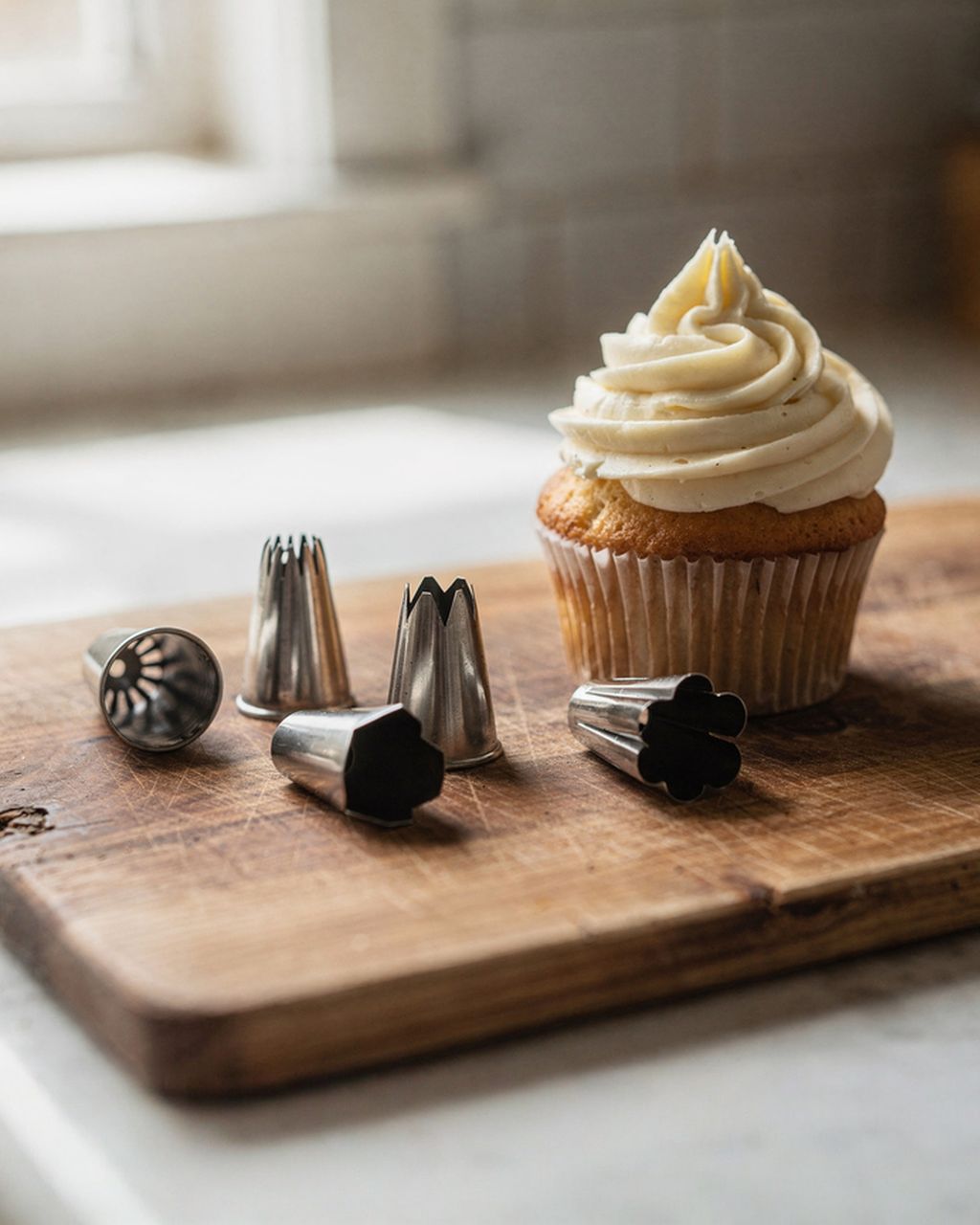
Five tips are enough for the four flowers in this article and their greenery. Each one makes one shape:
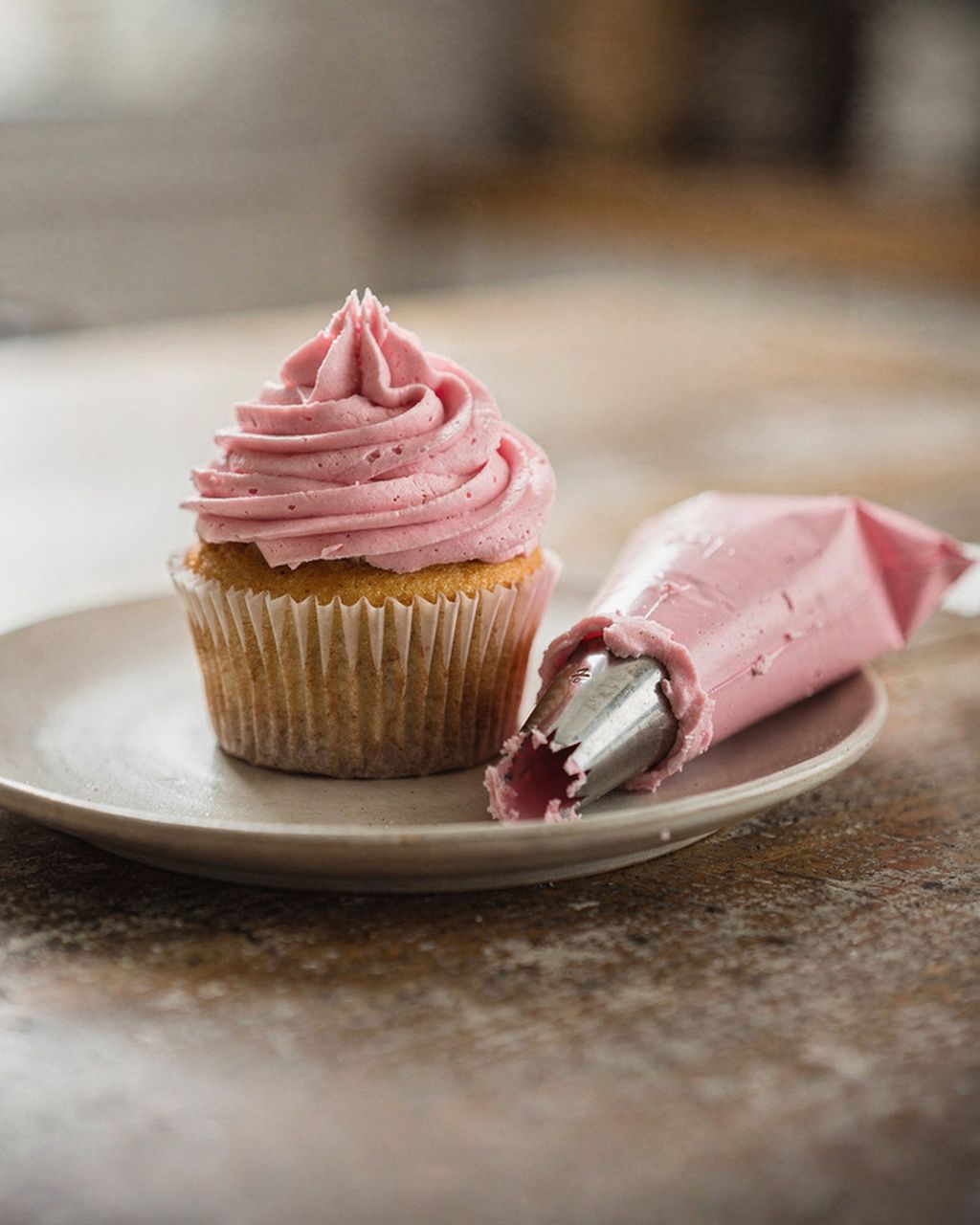
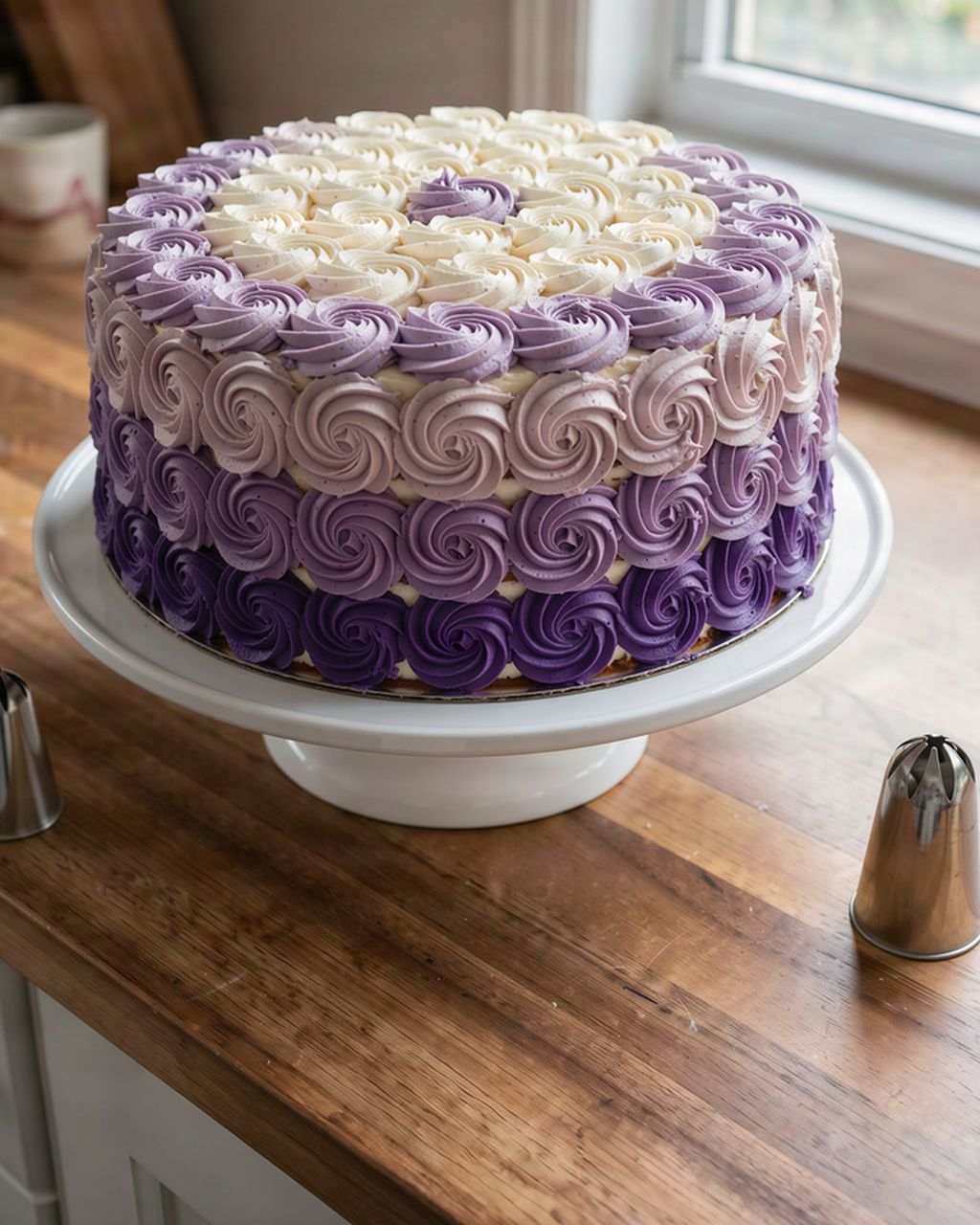
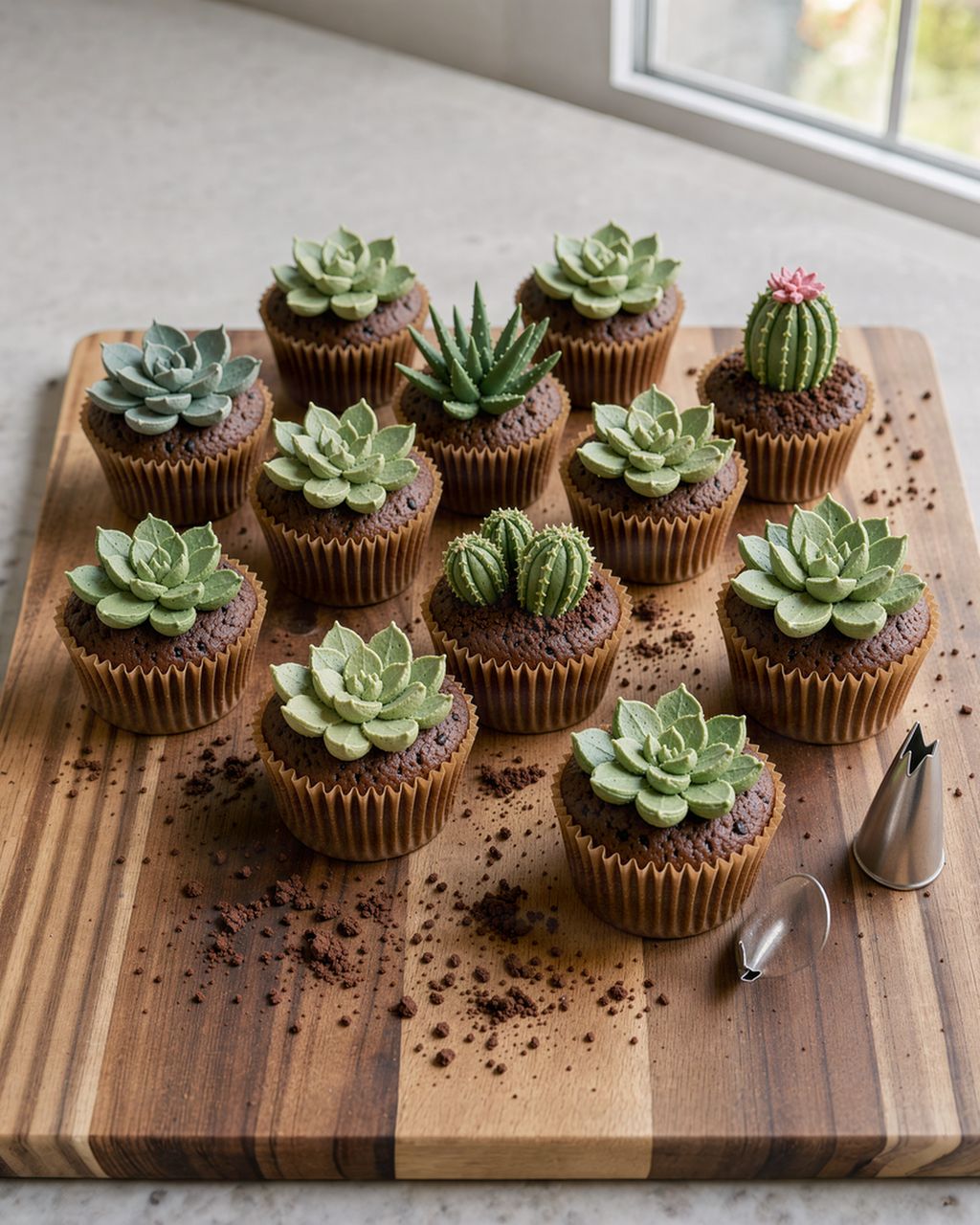
Closed star 2D (JEM Drop Flower #2D, opening about 14 mm): hydrangeas, smaller blooms, rosettes.
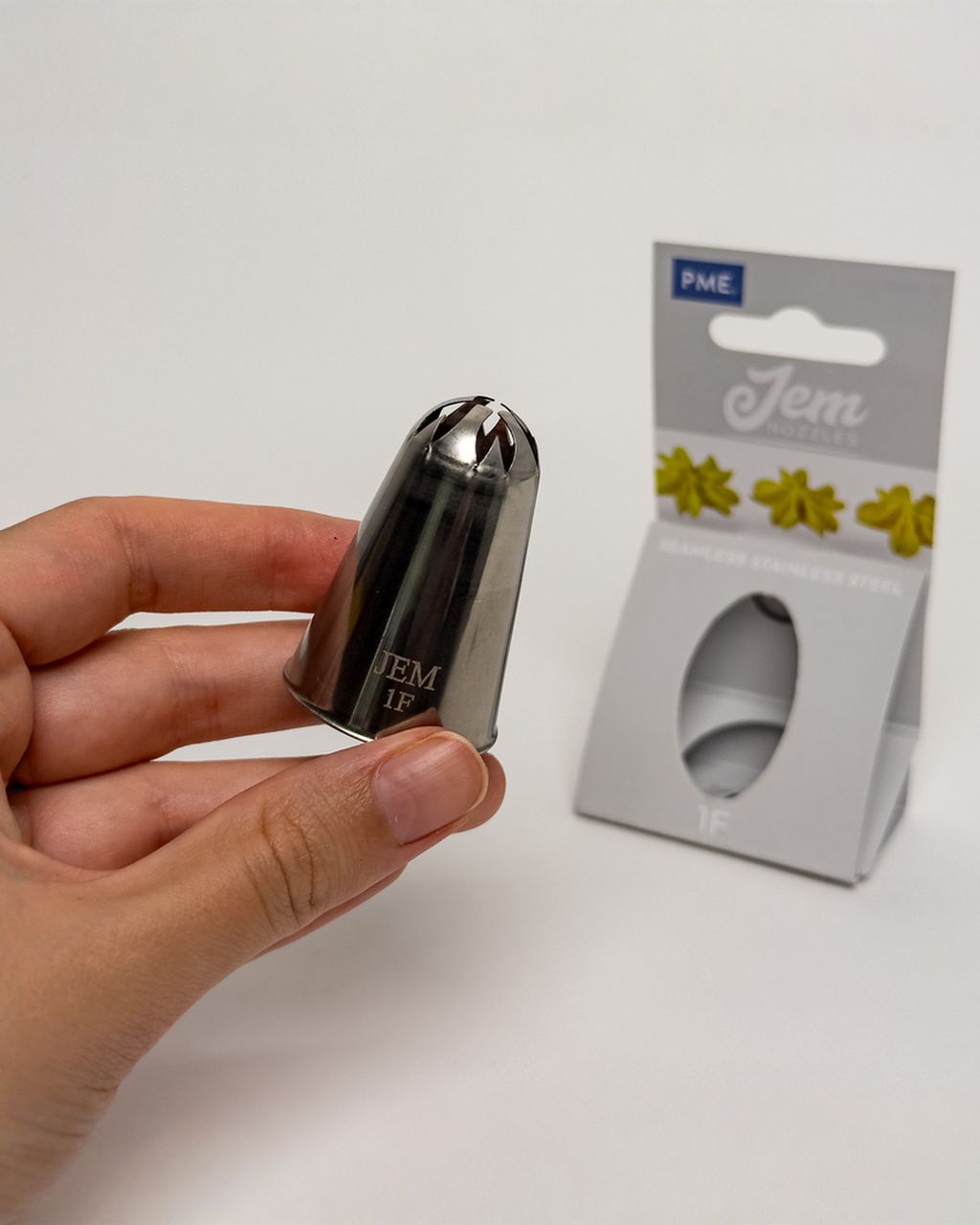
Large flower 1F (JEM Drop Flower #1F, opening about 19 mm): big blooms you pipe with a single squeeze.
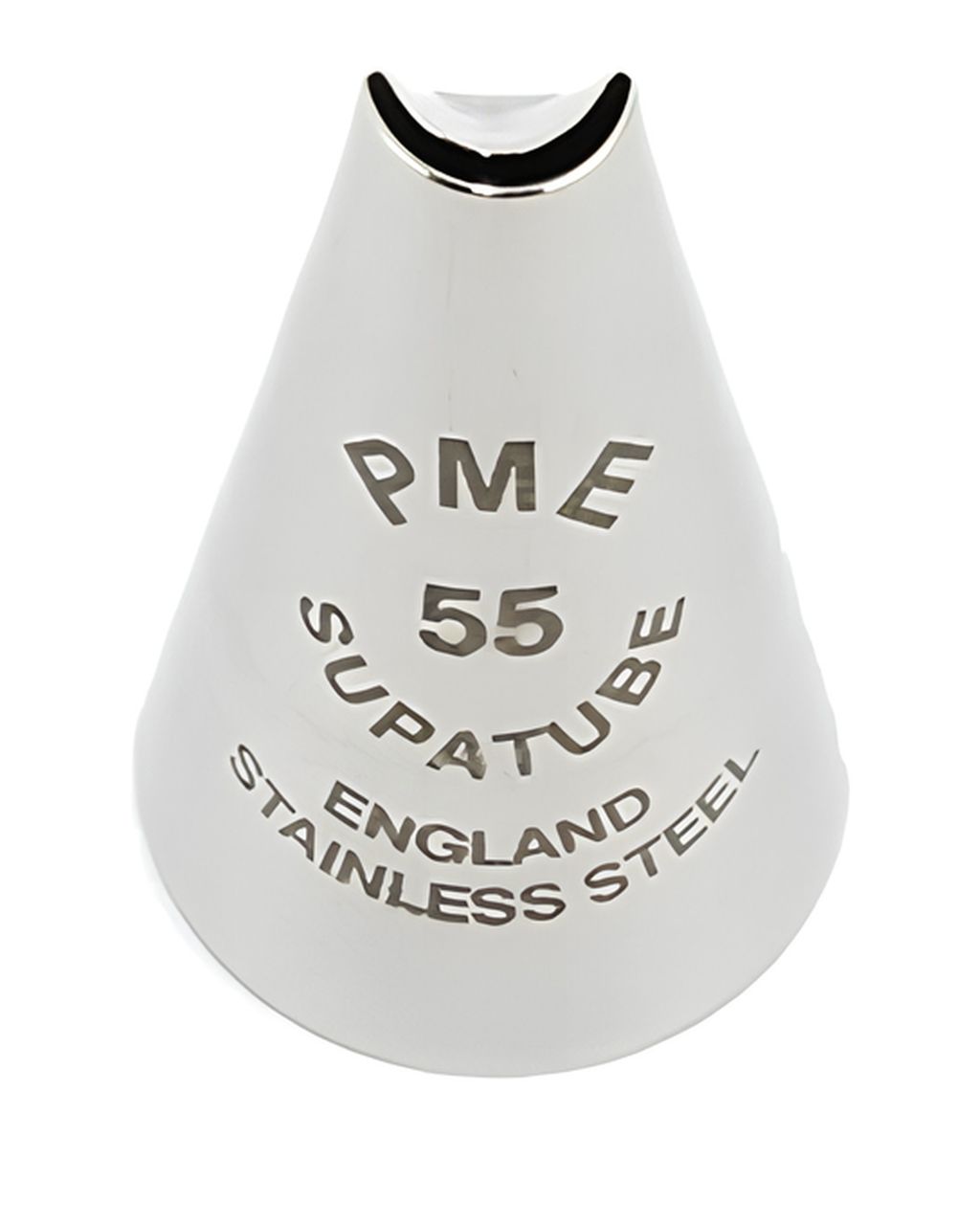
Curved petal tip (PME Supatube chrysanthemum, no. 55): the narrow, curved petals of a chrysanthemum. Wilton #81 (or JEM no. 81) has a similar shape.
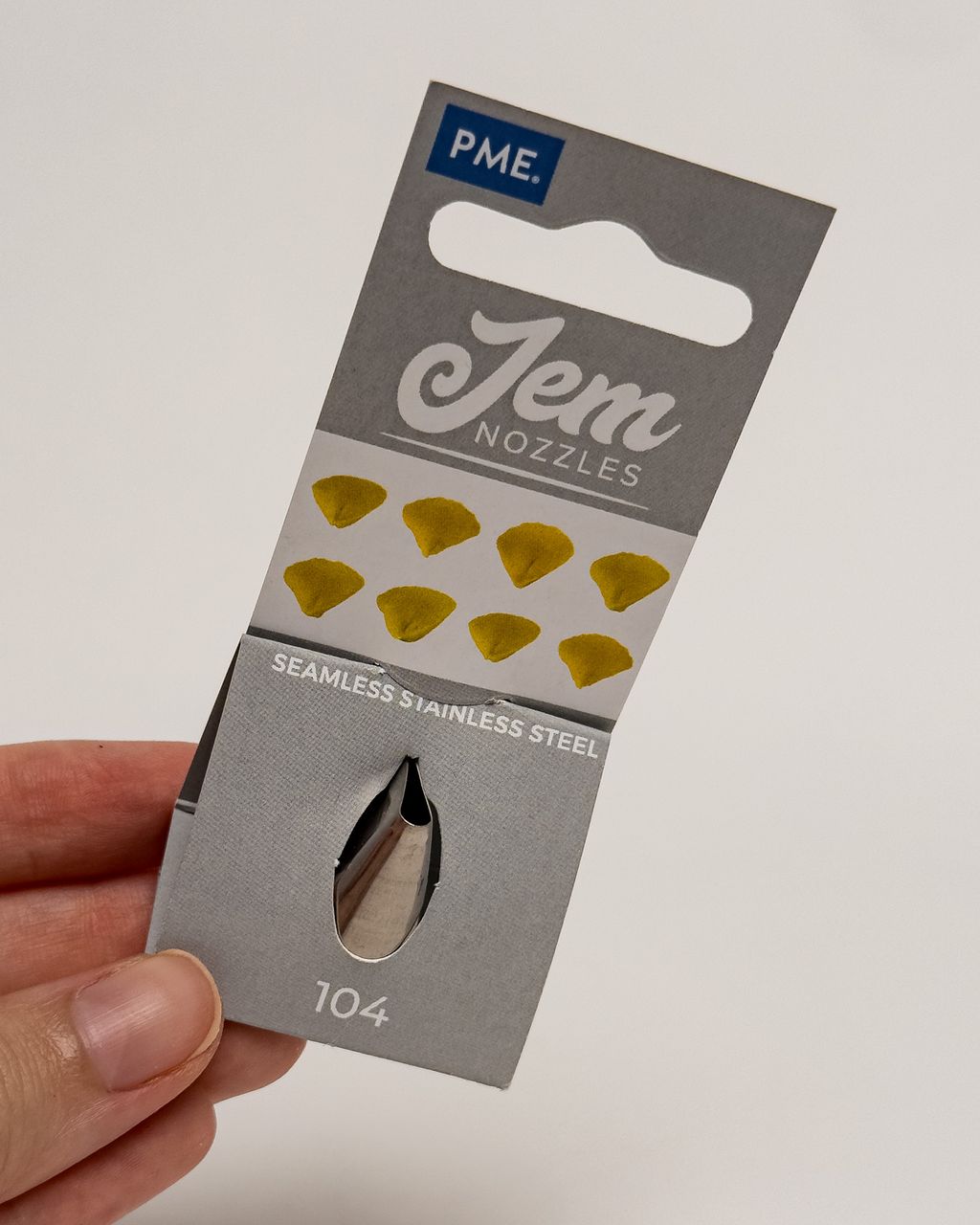
Petal tip 104 (JEM Petal/Ruffle #104): five-petal flowers, cherry blossoms, forget-me-nots and ruffles.
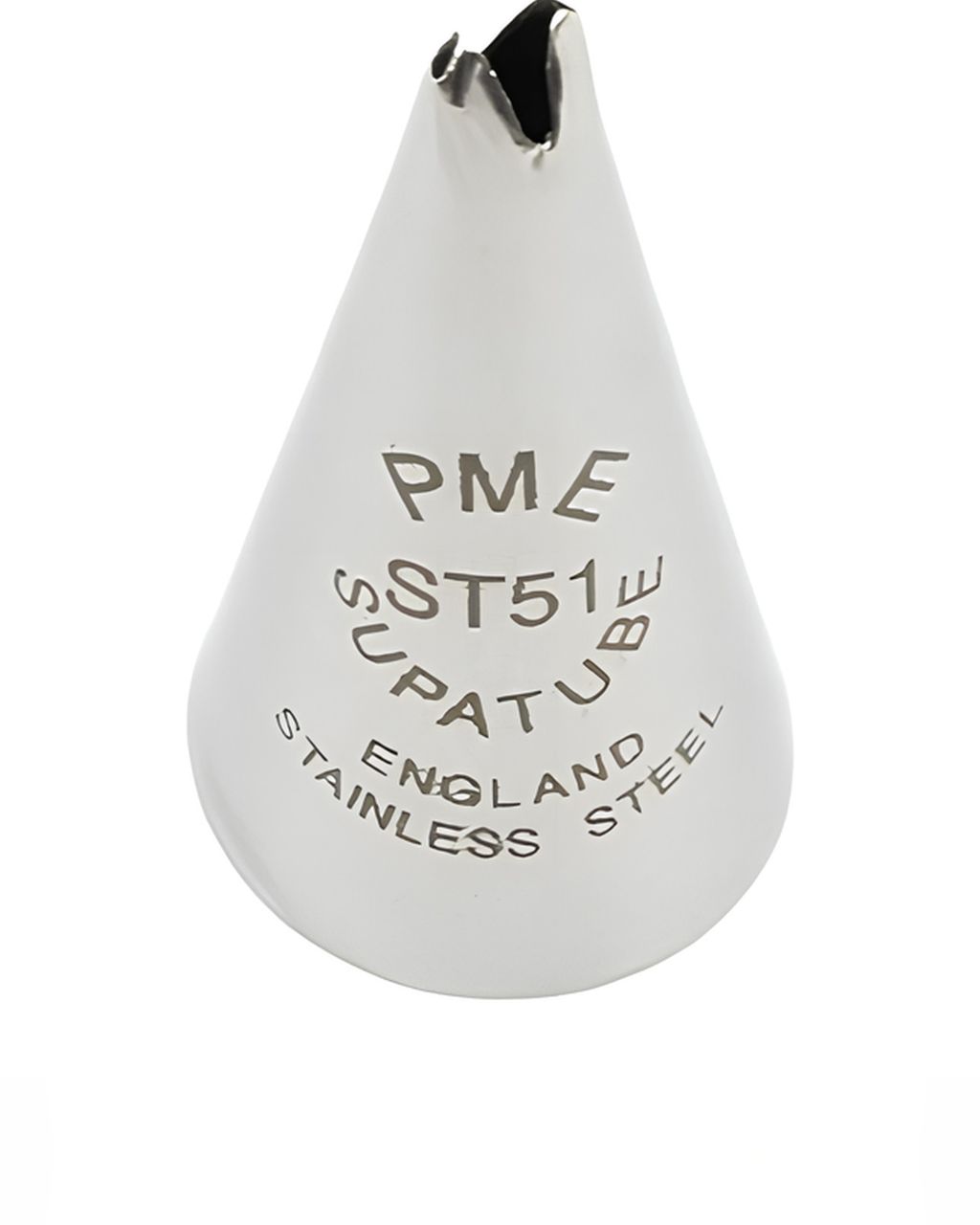
Leaf tip (PME Supatube medium leaf): the greenery that ties the flowers into a bouquet.
A word on brands: Wilton's 2D and JEM's 2D give practically the same shape, because JEM uses the same numbering as Wilton for its drop flower tips. In general, though, the numbers aren't consistent between brands, so with other makers (PME Supatube, Ateco) compare the shape and the size of the opening, not the number. What matters most is the quality of the seam and the sharpness of the teeth. Seamless stainless steel tips (JEM, PME Supatube) don't rust and the frosting comes out of them cleanly. Cheap sets made of thin metal work too, but they tend to have uneven teeth, and the petals come out frayed.
Whichever tips you have, you'll need bags too. Disposable piping bags and couplers let you change the tip without transferring the frosting. With a coupler, one bag of green does both leaves and stems. For how to clean and store your tips after use, see the tutorial how to clean and store piping tips.
You pipe a hydrangea with tip 2D by placing dozens of small florets right next to each other. Each one is made with a short squeeze and no turning. A whole hydrangea isn't piped as a single flower; it's built up from florets.
Build the base. Pipe a round mound of frosting on the cake or cupcake, roughly 4–5 cm (1½–2 in) across. The mound gives the hydrangea its ball shape, which you then cover with florets.
Hold the bag straight up, with the tip about 3–5 mm above the surface.
Squeeze briefly and firmly (about a second) so a small star-shaped floret comes out of the tip. Then release the pressure and pull the tip straight up.
Place the florets snugly side by side so their edges touch. Start at the bottom edge and work upward. Gaps show on a hydrangea more than slight imperfections do.
The center of the florets can be finished with a dot of white frosting from a round tip or a sprinkle pearl.
A two-tone effect brings the hydrangea to life. Brush a stripe of blue along the inside of the bag and fill the rest with purple, or put two colors side by side in the bag. Every floret then comes out a little different. How to fill the bag so the colors don't blend into gray is covered in two-tone frosting in a piping bag.
The most common mistake: turning your wrist. That turns the 2D into a swirled bloom instead of the flat star-shaped floret a hydrangea needs. For a hydrangea, just squeeze and pull away.
With tip 1F you pipe a big flower in a single squeeze. The difference from the hydrangea is a quarter turn of the wrist. The opening is about 19 mm, so one bloom covers a good part of a cake or almost an entire small cupcake.
Hold the bag straight up, with the tip almost touching the surface.
Before you squeeze, turn your hand a quarter turn against the direction in which you'll be turning.
Squeeze and at the same time turn your wrist back to its natural position. This gives the petals a slight twist.
Stop squeezing and only then pull the tip away. If you pull while still squeezing, you'll get a peak instead of a flower.
Add a dot of yellow frosting or a few sprinkle balls to the center.
Tip 2D makes a smaller version of the same flower. On a cake it looks good when you alternate big 1F blooms with smaller ones from 2D. The bouquet then has depth and doesn't look like it came from a template.
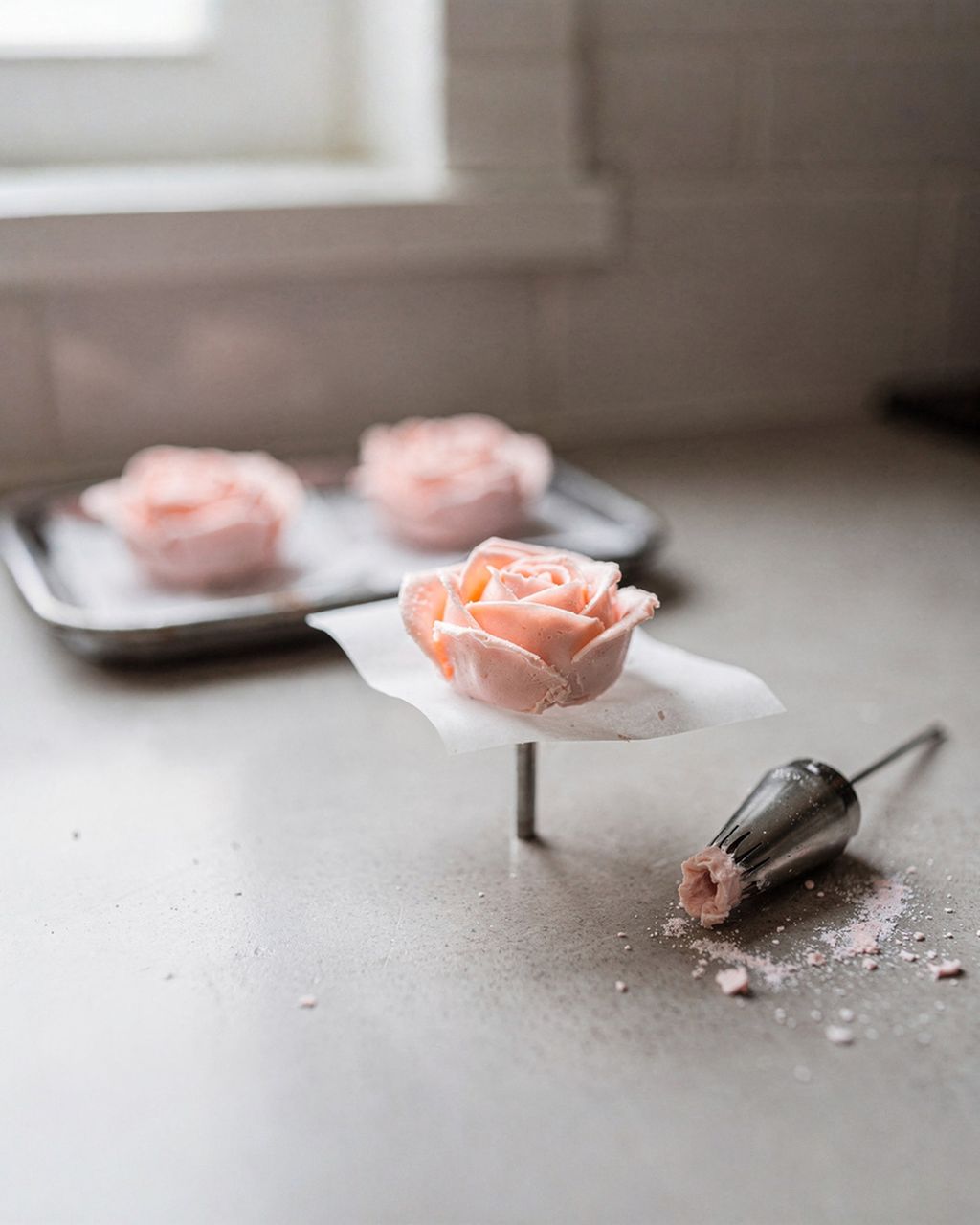
You pipe a chrysanthemum from a curved tip, in rows of narrow petals on a mound of frosting. Each following row is steeper, until the petals in the middle stand almost upright. The tip we carry for this is the PME Supatube chrysanthemum (no. 55). Wilton #81 (or JEM no. 81) has a similar shape.
The mound. With a round tip, or just a snipped bag, pipe a cone of frosting about 2 cm (¾ in) high. It supports all the petals. You can pipe straight onto a cupcake or onto a flower nail with a piece of parchment paper.
Turn the tip with the "smile" facing down: the rounded side of the opening points toward the cake, the points face up.
First row: push the tip into the base of the mound, squeeze firmly and pull out about 1 cm (½ in). Toward the end, ease off the pressure and lift slightly. You get a narrow, arched petal. Repeat all the way around, with the petals snug against each other.
Further rows: pipe between the petals of the previous row, each one a little higher and with a shorter, steeper stroke.
The center: close it with a few short petals pointing almost straight up.
If the petals crack or are as thin as threads, you're not squeezing hard enough. The pressure must be firm and even throughout the whole stroke. It pays to pipe a buttercream chrysanthemum onto paper on a flower nail, freeze it for about 20–30 minutes and then move it onto the cake. Once firm, it won't lose its shape.
You pipe tiny cream flowers with tip 104 from five short arcs on a flower nail. Tip 104 has a teardrop-shaped opening with a wider and a narrower side. It suits apple and cherry blossoms, forget-me-nots or primroses, which fill the gaps between the big flowers.
Stick a square of parchment paper onto the nail with a dab of frosting.
Hold the tip with the wider side toward the center and the narrower side out, tilted slightly (about 45°).
Squeeze and at the same time turn the nail by a fifth of a turn. The tip makes a small arc, which is one petal. Release the pressure at the center.
Start the next petal under the edge of the previous one. After five petals the flower is done.
Finish the center with a dot of yellow or white, set the paper with the flower on a tray and freeze.
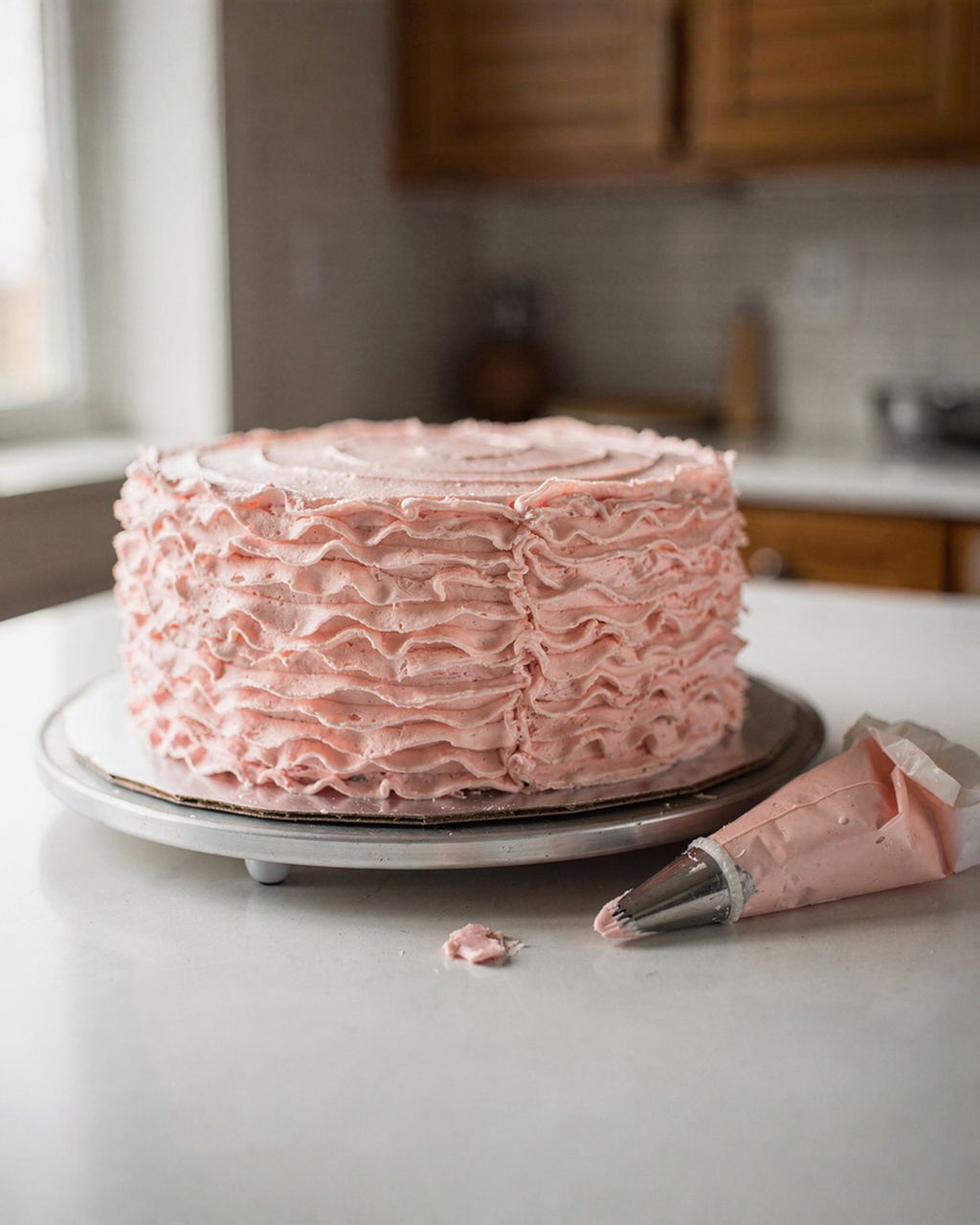
The same tip also makes ruffles and borders. If that appeals to you, the tutorial ruffle cake with tips 104 and 123 covers a whole ruffle cake. Dried edible flowers also work well for tiny blooms if you want to combine frosting with real flowers. You'll find out how in the article dried edible flowers and rose buds.
You pipe leaves with a leaf tip (PME Supatube medium leaf), or in a pinch with a bag cut into a V shape. The tip gives a sharper point and a more even vein.
Basic leaf: place the tip against the edge of the flower, squeeze to form a wider base, and pull out 1–2 cm (½–¾ in) while easing off the pressure. At the end, release the pressure completely and pull the tip away quickly, which creates the point.
Ruffled leaf: as you pull, gently pulse the pressure (squeeze–release–squeeze).
Snipped bag: cut the flattened tip of the bag with two diagonal cuts into a V shape. It works, but every bag comes out differently and the tip frays after a while.
Pipe the leaves last, straight onto the cake. They fill the gaps between the flowers and link them together. For a bouquet, 3–5 leaves per larger flower are enough; more greenery mutes the color of the blooms.
Piped flowers look best in a group with a clear shape, not scattered over the whole surface. Three arrangements are tried and true:
Crescent: flowers along one side of the top, thickest in the middle and thinning toward the ends.
Cascade: a cluster on the top edge that spills down the side of the cake.
Wreath: a continuous band of flowers around the edge of the top.
First place the big flowers (chrysanthemums, large blooms from 1F) in an odd number, say 3 or 5. Fill the gaps between them with hydrangea or smaller blooms from 2D, then add the tiny flowers from 104 and finally the leaves. If you want to cover the whole cake with flowers, first coat it with frosting with straight sides, see how to frost a cake.
On cupcakes the same applies in miniature: one big flower or a hydrangea across the whole top, or three tiny flowers with a leaf. The flowers are also a great fit for a number cake and a vintage cake.
You can make buttercream flowers several days ahead and freeze them. Pipe chrysanthemums and tiny flowers onto squares of parchment paper on a flower nail. Pipe the hydrangea straight onto the cake or cupcake, because it doesn't transfer well.
Set the finished flowers on their paper squares on a tray and freeze them for about 20–30 minutes, until firm.
Move the firm flowers into an airtight container so they don't absorb freezer odors. They keep for several weeks.
Before decorating, peel the flower off the paper and set it on a dab of frosting on the cake. Touch it only briefly so it doesn't start to melt in your hand.
Store the finished cake in the fridge and take it out about 30–60 minutes before serving, so the frosting softens and is pleasant to eat. If condensation forms on the flowers, don't touch them; it will soak in within a few minutes.
Scrape the failed flower off with a scraper or knife and pipe it again. The frosting can be reused. If it's already on the cake, remove it before the frosting sets and smooth the spot with a scraper. Only put the scraped frosting back in the bag if it has no cake crumbs in it, otherwise they'll clog the tip. You'll need the fewest repairs if you test every flower on a piece of paper first.
Buy a closed star tip 2D first. With it you can pipe a hydrangea, smaller one-squeeze blooms and cupcake rosettes. Only then add a leaf tip and a 104 for tiny flowers.
Holes and jagged edges on piped petals are most often caused by air bubbles or lumps of powdered sugar. You can get the bubbles out by pressing and smearing the frosting against the side of the bowl with a scraper for a few minutes. Sift the powdered sugar before adding it to the frosting. If a lump gets stuck in the tip, pick it out with a toothpick instead of squeezing harder.
A cake with buttercream flowers keeps its shape for about 2–3 hours at temperatures up to 22 °C (72 °F). In the heat or in direct sun the flowers soften much sooner. Put the cake back in the fridge between servings, and take it out 30–60 minutes before serving.
You don't need a nail for the hydrangea or for blooms piped with tips 2D and 1F, because you pipe those straight onto the cake. A nail is handy for chrysanthemums and the tiny flowers from tip 104, since you turn the nail as you pipe and then freeze the flower on its square of paper. In a pinch, an upside-down glass with a square of parchment will do.
One recipe worth heating the oven for, one tip, and one deal from the shop. Nothing else.