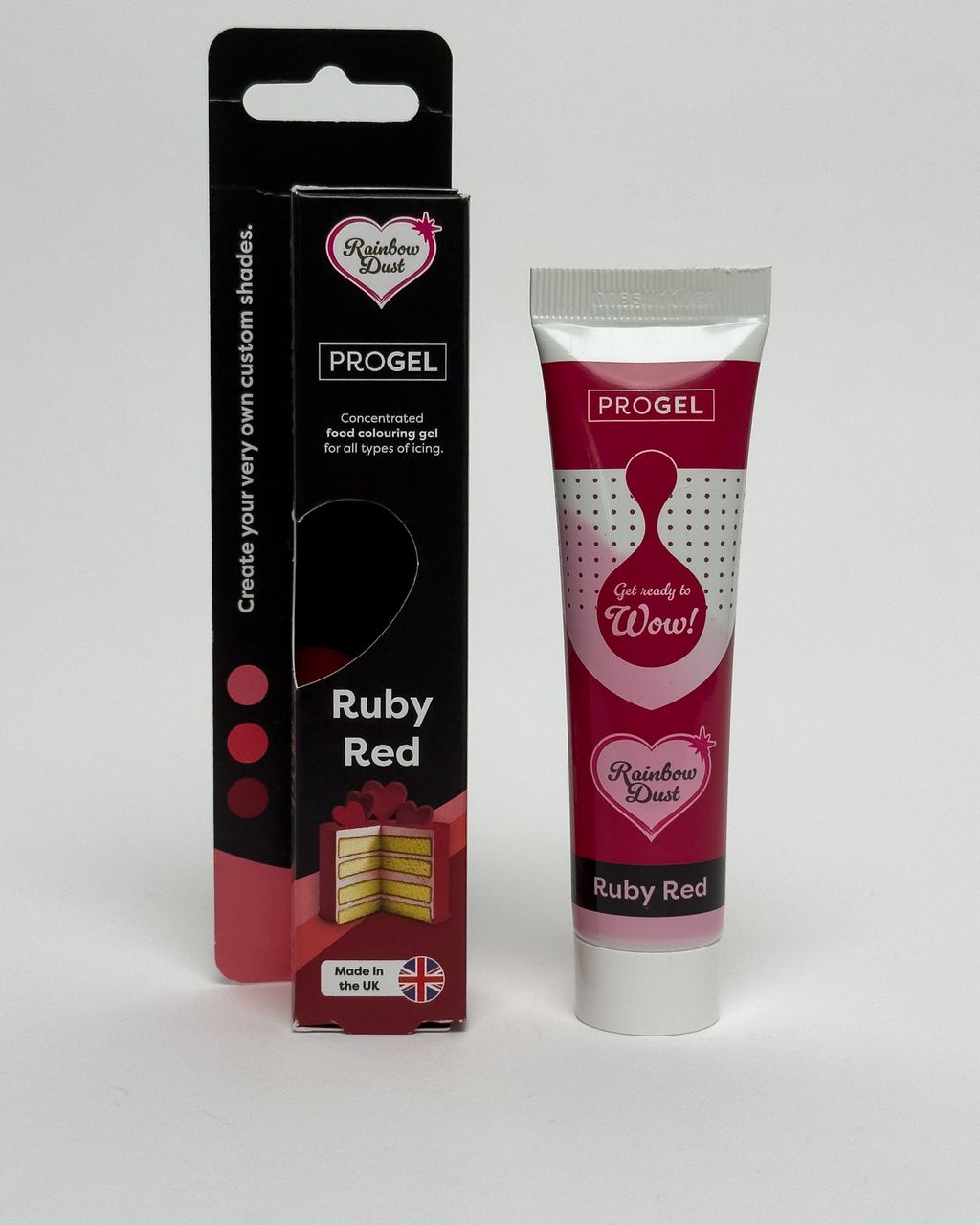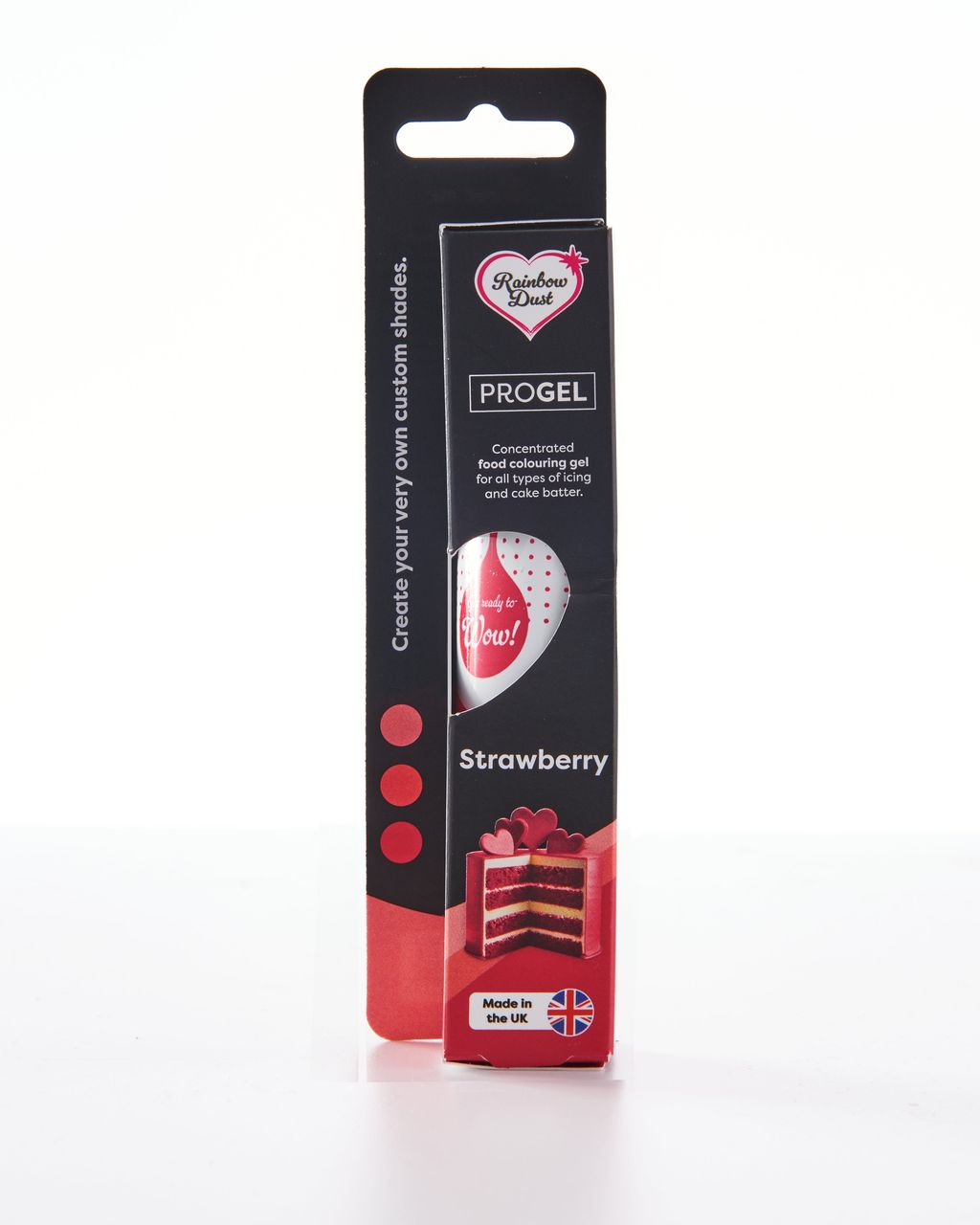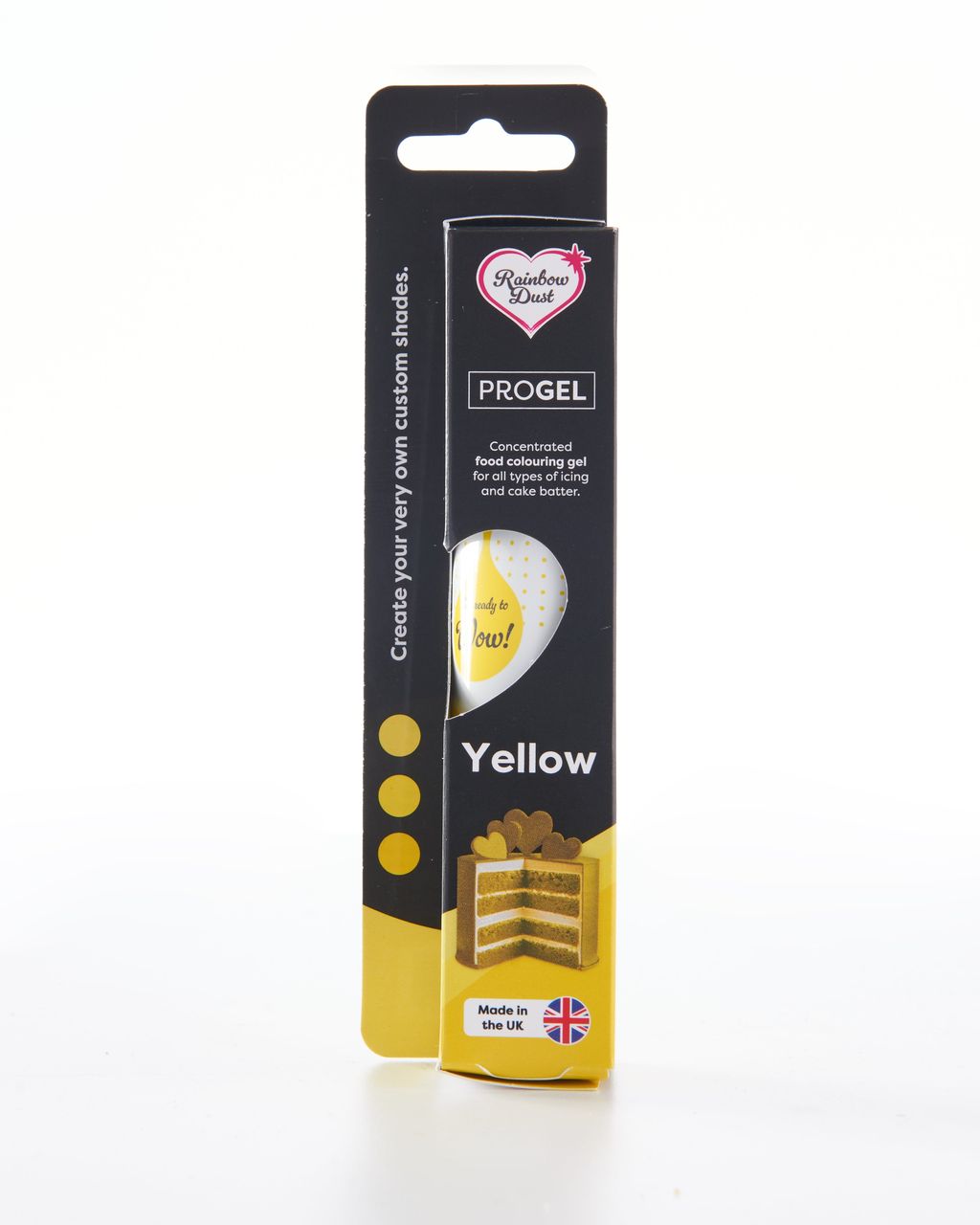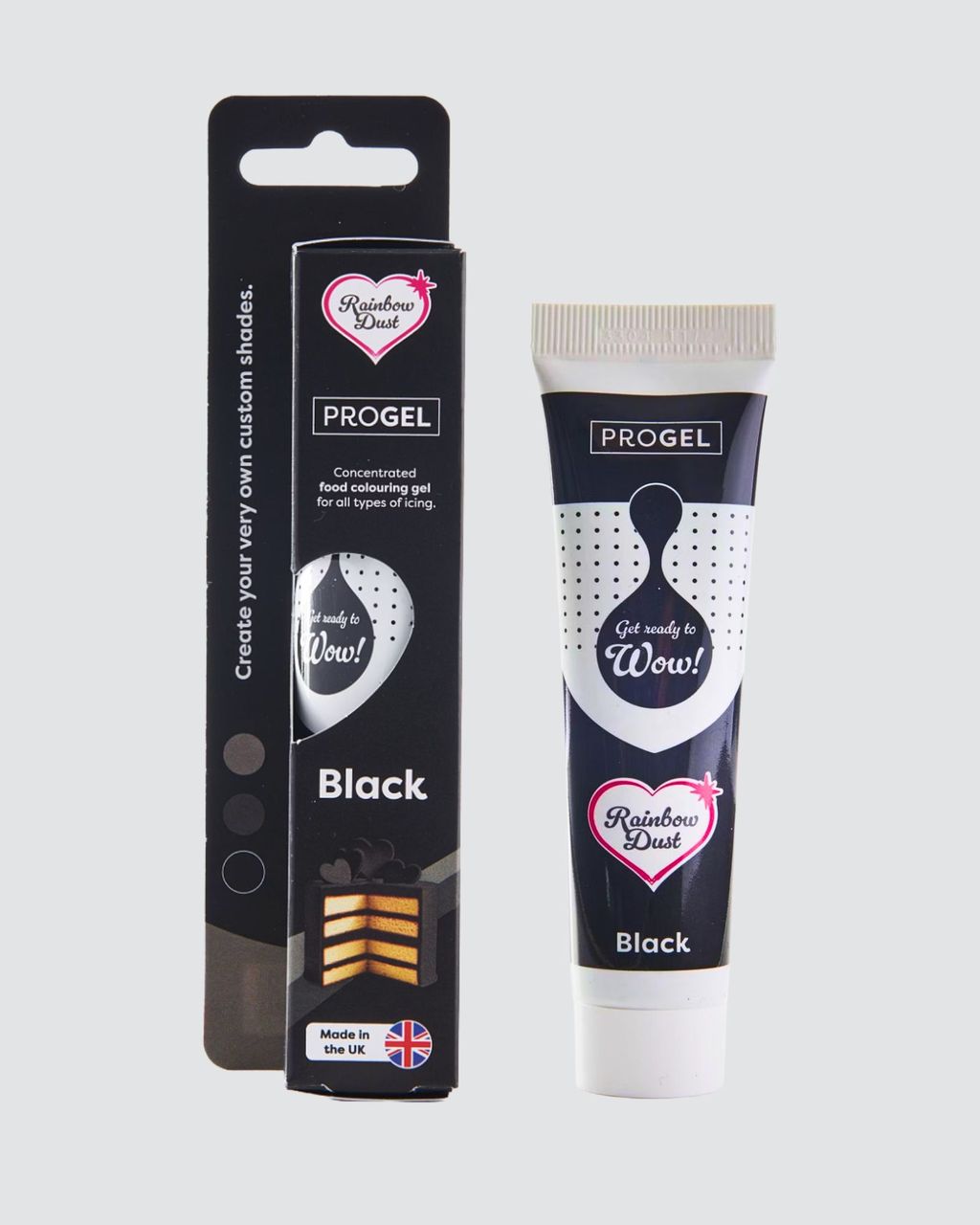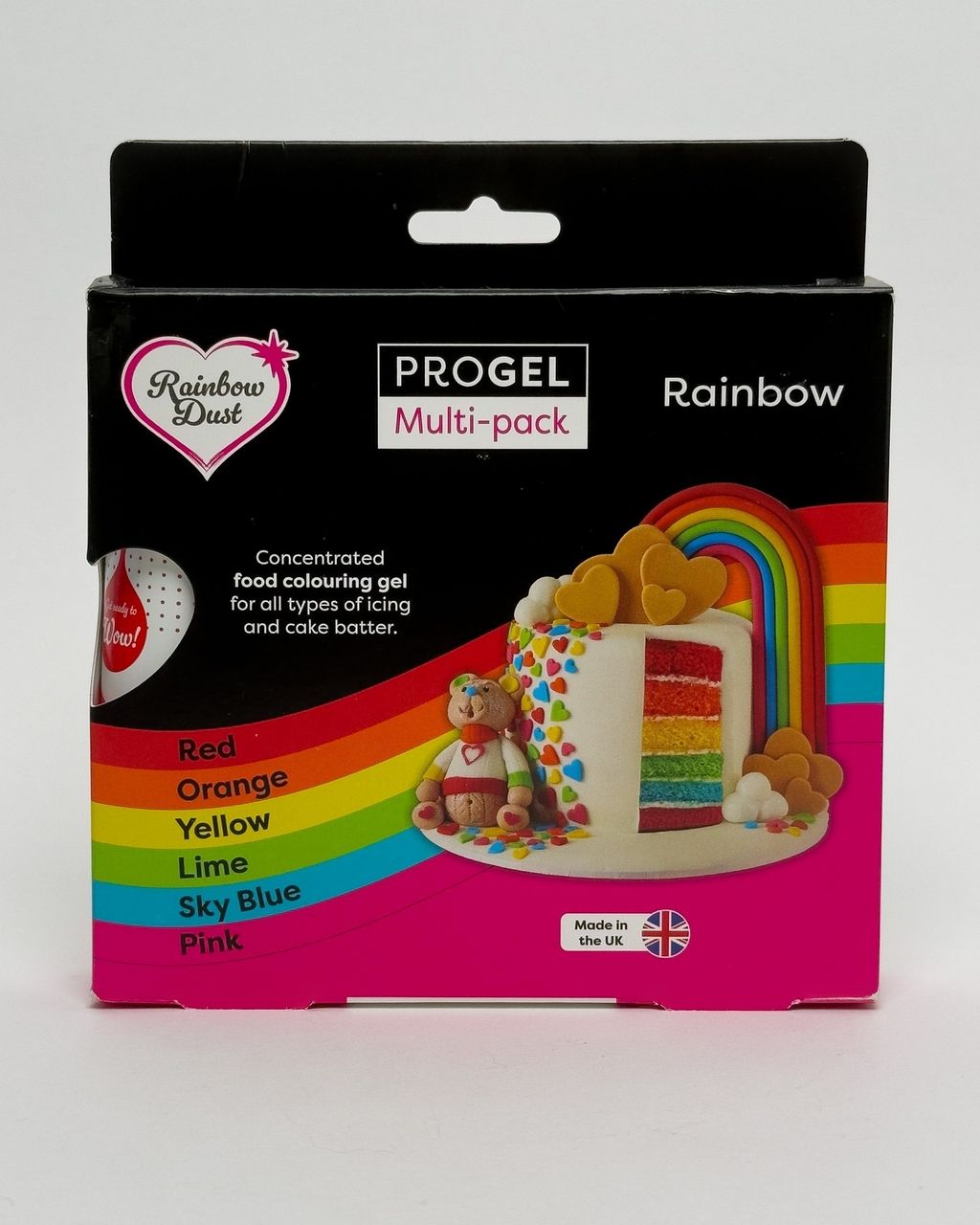
ProGel Gel Food Colouring Rainbow Set of 6
How to Color Frosting: Drop Chart from Pastel to Deep Shades
Updated Oct 15, 2026
You color frosting with gel food coloring, drop by drop: for 100 g of white frosting, 1 drop gives a pastel, 4–6 drops a rich shade and 10–15 drops a dark one. But frosting color keeps deepening for a few hours, by a shade or two, so always mix it a little lighter than you want it to end up. Below you'll find a chart by intensity, specific shades step by step, and what to do about red and black, the two that give the most trouble.
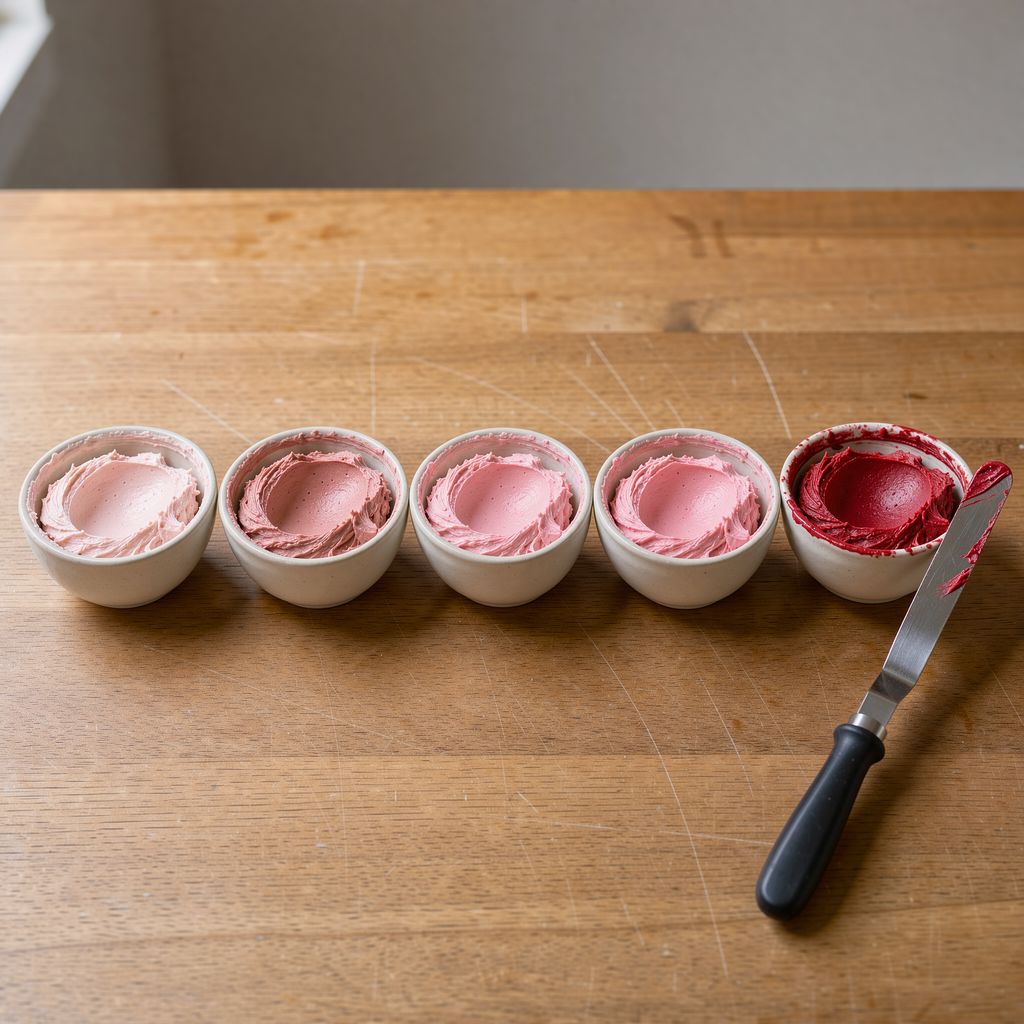
Per 100 g of white frosting, use 1 drop for a pastel, 2–3 for a bright shade, 4–6 for a rich one, 7–9 for a deep one and 10–15 for a dark one. These numbers apply to concentrated gel coloring (such as ProGel) and room-temperature frosting.
Pastel (baby pink, lavender, mint): a toothpick tip up to 1 drop
Light, bright: 2–3 drops
Rich: 4–6 drops
Deep: 7–9 drops
Dark (red, black): 10–15 drops and an overnight rest, or better yet a darker base, see below
By a drop we mean a small drop squeezed from the tip of the tube, about the size of a lentil. Even that is often too much for a pastel, so pick up the color on a toothpick tip, stir it in, and only then add more. For 500 g of frosting, multiply everything by five.
Write down how many drops you use. If you need to deepen the color or make a second batch, you can hit the same shade by the numbers instead of by eye.
You can mix most popular shades from six basic gels: Strawberry, Ruby, Yellow, Violet, Mint Green and Black. Starting ratios per 100 g of white frosting:
Baby pink: 1 drop Strawberry
Bright pink: 3–4 drops Strawberry
Peach, apricot: 2 drops Yellow + 1 drop Strawberry
Lemon: 1–2 drops Yellow
Lavender: 1 drop Violet (whiten buttercream first, otherwise it turns gray)
Dark purple: 6–8 drops Violet
Mint: 1–2 drops Mint Green
Sage, eucalyptus: 2 drops Mint Green + a toothpick tip of Black
Gray: a toothpick tip up to 1 drop Black
Burgundy: 8 drops Ruby + a toothpick tip of Black
Warm red: 6–8 drops Ruby + 1–2 drops Yellow, ideally on a base tinted deep with Strawberry (method below), and rested overnight
Black is the strongest toner-down. A toothpick tip will mute any color into a "vintage" tone, which is the trick for sage, dusty rose or old rose. Don't add more than that at once, though, or a pastel turns into a muddy gray.
If you're just starting out and don't want to buy colors one by one, you can find gel colors and food colorings all in one place, and the ProGel rainbow set with its six basic shades covers most of the mixing in this list.
Frosting color keeps deepening for several hours after you mix it, usually by one to two shades. Gel coloring is water-based and frosting is mostly fat, so the pigment disperses into it slowly. Most of the shift happens within 1–2 hours, and according to bakers' experience, dark shades keep developing for about 5 hours or overnight.
What this means in practice:
Mix one shade lighter than you want the result to be.
Let the frosting rest covered for 1–2 hours at room temperature, and only then add more color.
Mix dark colors a day ahead and leave them in the fridge overnight. Bring the frosting to room temperature and stir it before decorating.
On a finished cake the color will still mature. If the frosting looks just right on your spatula, it will be darker on the cake the next day.
Light works the other way: pink and purple shades fade over time in direct sun or under fluorescent lighting. Store a decorated cake in the dark or in a box.
The most reliable way to make red frosting is through pink: first tint the frosting deep with Strawberry, let it rest for an hour, and only then deepen it with Ruby. Going straight from white takes so much coloring that the frosting can turn bitter and still come out more pink than red.
Know what to expect from each color:
ProGel Ruby is a deep ruby red with a slight wine undertone. On its own it gives a beautiful raspberry, wine or ruby shade, not a pure "Christmas" red.
For a warmer, brighter red, add 1–2 drops of Yellow per 100 g to the Ruby. Yellow pulls the wine undertone toward scarlet.
If you want a completely pure Christmas red, reach for a gel explicitly labeled Christmas red or super red.
Mix red a day ahead. A quicker trick from pastry chefs: take out about a tenth of the frosting, briefly heat it in the microwave until liquid, and stir it back in. The heat helps the color develop. Just make sure the whole batch doesn't melt, or the frosting will split.
Start black frosting from a chocolate base, not a white one. Stir 1–2 heaped tablespoons of cocoa (about 8–15 g) into 100 g of frosting. That darkens it to brown, and then 3–5 drops of Black are enough instead of 10–15.
From white frosting, black comes out gray even if you squeeze in half a tube, and the frosting gets a bitter, chemical aftertaste. A brown base solves that problem.
Mix black frosting a day ahead; overnight in the fridge it darkens from charcoal to black.
If it looks greenish after resting, add a drop of Ruby; red cancels out the green tint.
If it looks purple, add a drop of Yellow, which neutralizes the purple.
Keep in mind that black stains the tongue and teeth. Use it sparingly on large areas; it's ideal for details and lettering.
Black glaze and more tricks against grayness are covered in the article black frosting and black icing.
The final shade depends on the color of the base: on white frosting the color comes out pure, while on yellowish buttercream it shifts toward warm tones. Blue on buttercream turns green, purple turns gray, and lavender gets lost in beige.
Buttercream is yellowish from the butter. The longer you whip it, the paler it gets. For cool tones (blue, purple, lavender), whiten it first; snow-white buttercream explains how.
Mascarpone frosting and cream-based frostings are white and take color most predictably. Stir the gel in briefly, because long mixing risks splitting.
White chocolate ganache is creamy yellow, so it behaves much like buttercream. Stir gel coloring into the warm cream or the finished ganache.
Plain melted chocolate won't tolerate gel coloring, because the water content can make it seize. Oil-based coloring belongs there; the difference is covered in the article how to color white chocolate.
There are four types of coloring for frosting: gel, liquid, powder and oil-based, and gel is the best for frosting because it's highly concentrated, gives a rich shade from a few drops and doesn't thin the frosting.
Gel (ProGel and similar): rich, easy to dose by the drop, doesn't thin the frosting. A universal choice for frostings, glazes and batter.
Liquid (the classic supermarket bottles): weak, so for a rich color you need teaspoons of it. Those thin the frosting and it can split. It's only enough for a pastel.
Powder: very concentrated and water-free, suited to where every drop of liquid is a problem (macarons, chocolate). It works in frosting, but it's harder to dose and has to dissolve well, or colored specks remain.
Oil-based: for chocolate and cocoa butter. It can be used in buttercream, but it makes no sense in cream-based frostings.
For a detailed overview of all the types, see the article food coloring in baking. To see how gel behaves in batter, look at the rainbow cake with rich layers, and you'll find out where coloring is most delicate in French macarons step by step.
Stir the color into a small portion of the frosting with a spatula, and only then work that portion into the rest. You get no streaks, and a mixer doesn't needlessly aerate the frosting.
Color the whole amount you need at once. A second batch in exactly the same shade is almost never possible to match.
Pick up the color with a clean toothpick or drop it from the tube; never dip a used toothpick back into the color.
Stir it into a spoonful of frosting until smooth, then spread it into the rest with a spatula.
Press out the bubbles: work the frosting against the side of the bowl with a spatula for a few minutes. Colored frosting shows every bubble.
Let it rest for 1–2 hours under a lid, and only then judge it and deepen the color if needed.
Check the shade in daylight, because kitchen bulbs distort colors.
You can also make effects from colored frosting; two-tone frosting in a piping bag shows how to put two colors in one bag. And pastel mint or baby pink suits, for example, coffee cupcakes with a delicate frosting.
Yes, frosting can turn bitter if you add around 15 or more drops of gel coloring to 100 g, typically with red and black. Pastel and rich shades won't change the flavor. You can avoid bitterness by starting with a darker base (Strawberry under red, cocoa under black) and letting the frosting rest overnight, so you need less color.
Yes, gel coloring tints whipped cream with no problem. Just add it at the end of whipping, once the cream holds a soft peak. Don't add it to liquid cream beforehand: whipping lightens the shade, you'll end up adding more color, and extra whipping can easily push the cream into a grainy mess. For a rich shade, count on 4–6 drops per 100 g of whipped cream, and for a dark one 10–15 drops. At that point, stabilize the cream with whipped cream stabilizer or a spoonful of mascarpone so it doesn't split during longer mixing.
You can, but expect muted shades and some flavor. Beetroot powder gives pink, matcha gives green, turmeric gives yellow, and freeze-dried raspberries give a pink with a fruity taste. You can't make a deep red or black naturally, and beetroot color fades in light and warmth.
Colored frosting keeps as long as uncolored frosting; the coloring doesn't change its shelf life. In a sealed container in the fridge it continues to darken, so frosting mixed a few days ahead will be somewhat deeper when you use it. Bring it to room temperature and stir it well before decorating.
To cover and fill a 20 cm (8-inch) cake, count on roughly 700–900 g of frosting, depending on the number of layers and how thick they are. Color 10–15% more than you think you need in one go, because matching the same shade in a second batch is almost impossible.
One recipe worth heating the oven for, one tip, and one deal from the shop. Nothing else.