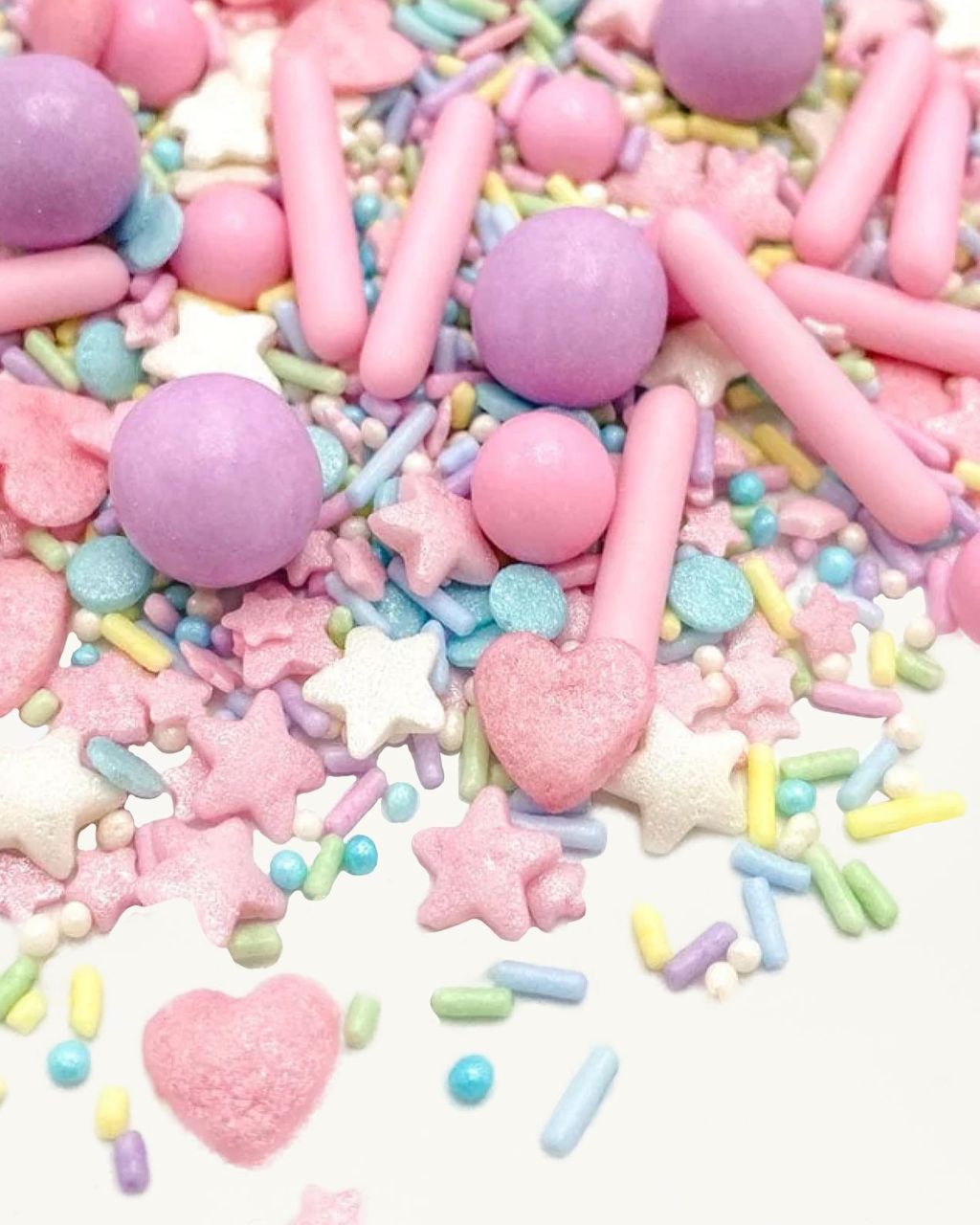
Sugar Sprinkles: Pastel Party
How to Decorate a Cake with Sprinkles: Sides, Edges & Numbers with a Stencil
Updated Oct 8, 2026
You can decorate a cake with sprinkles in ten minutes flat if you follow one rule: press them into frosting that's freshly spread and still tacky — ideally within 5 minutes of applying the final layer. On chilled, set frosting they won't stick and will just slide off onto the tray. Below you'll find which frostings and glazes sprinkles actually hold on, when to add them, which type to pick for the sides versus the top, six techniques from a fully coated side to a stencilled number, and how to prep your sprinkles so you don't run short.
Sprinkles stick to any surface that's tacky at that moment — and won't stick to anything that's already dried or set. So timing is what really matters:
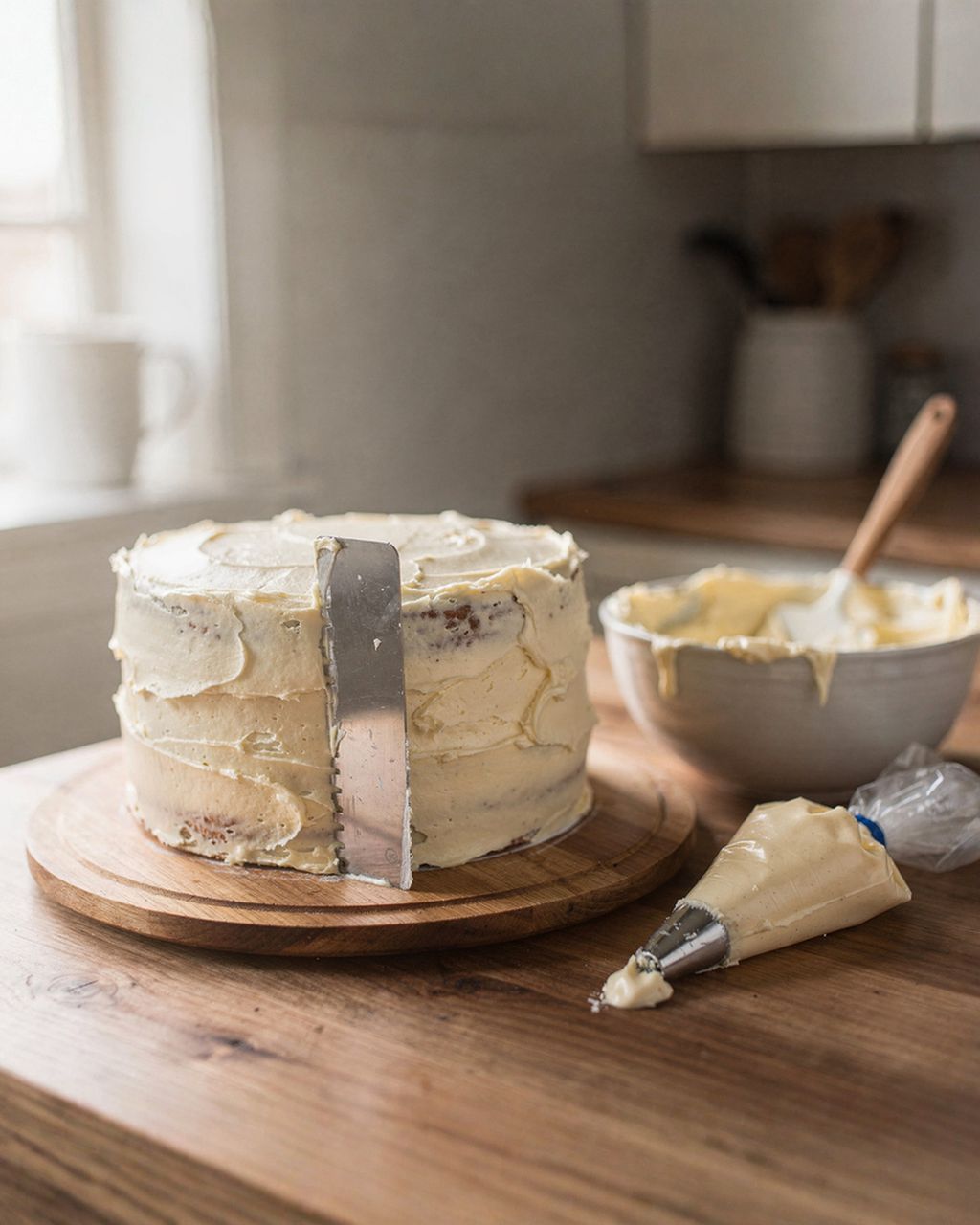
Buttercream: within 5 minutes of spreading the final layer. First apply a thin crumb coat and chill it for 15–20 minutes so the final layer doesn't mix with crumbs. Then spread, smooth, and sprinkle right away.
Mascarpone or cream cheese frosting: same as buttercream, but keep in mind it's wetter and will pull color from sprinkles faster. Sprinkle on the day of serving.
Whipped cream: holds sprinkles beautifully, but colored nonpareils and jimmies start bleeding color within an hour. Sprinkle right before serving.
Chocolate ganache: for the sides, press into ganache while it's still soft; for a drip, add sprinkles about 1–2 minutes after pouring, once it stops dripping but is still glossy.
Mirror glaze: sets within minutes on a frozen cake, so sprinkle the moment the glaze stops dripping — within a minute.
Fondant: doesn't stick on its own. Brush the spot very lightly with water or edible glue first, then press the sprinkles on.
For the basics on why sprinkles fall off or bleed color, see Sprinkles: how to use them so they stick and don't bleed color. Here we're focusing on cakes specifically. For which frosting stays tacky longest and smooths well, check out our guide to types of cake frosting and what each one is best for.
Pick small sprinkles (colored nonpareils, short jimmies) for the sides of a cake, and larger shapes (confetti, hearts, pearls) for the top and finer details. Small sprinkles create a solid, even coating, while large pieces tend to fall off a vertical side and look sparse.
Nonpareils — tiny beads about 1–2 mm across. They give the densest coverage on the sides and the sharpest edges when used with a stencil. They bleed color fastest, since they have the most colored surface area relative to their size.
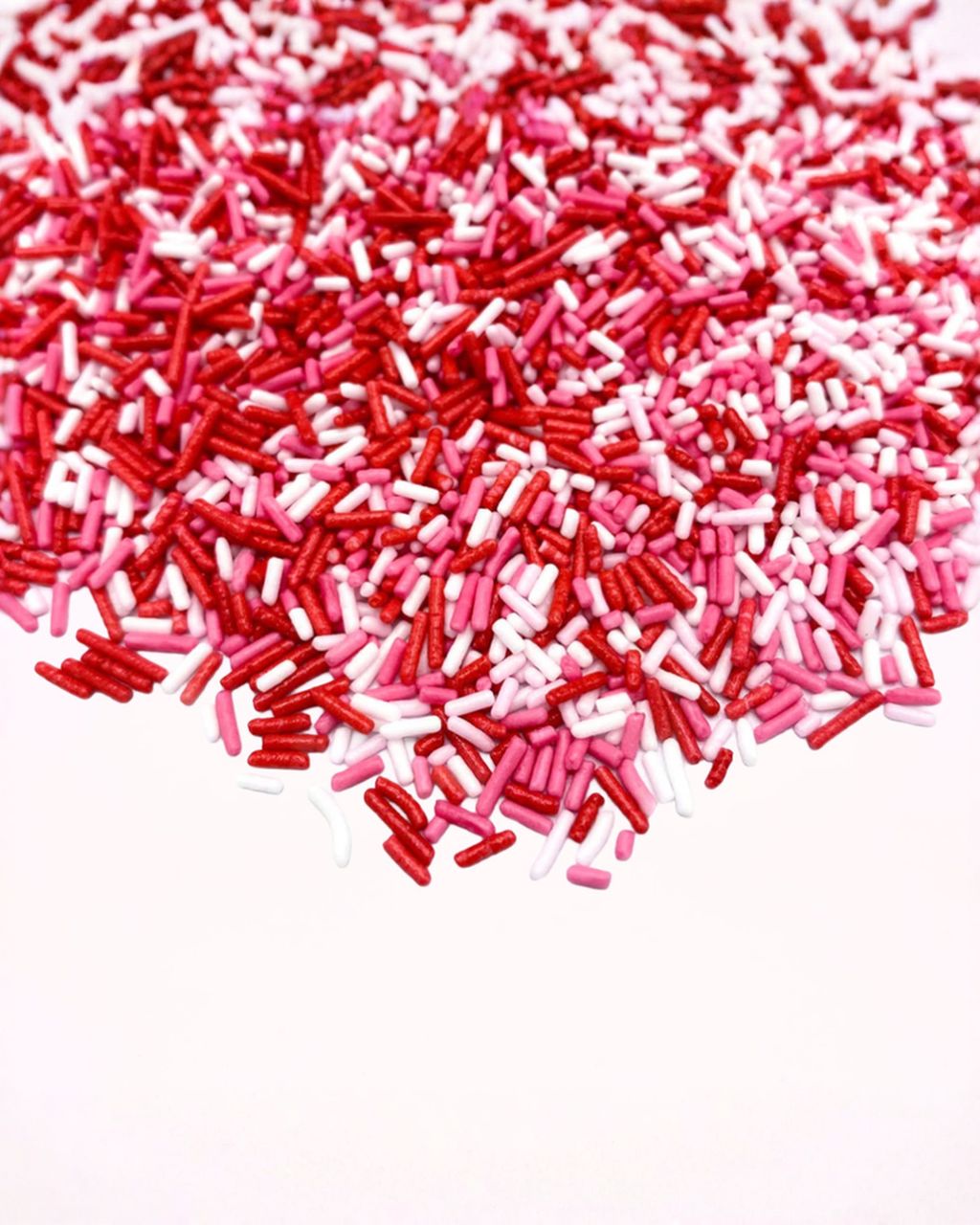
Jimmies — softer, slightly chewy little rods. They stick well to the sides and bleed color more slowly than nonpareils. A classic choice for birthday cakes.
Confetti — flat discs or shapes. Best for the top, a wreath border, or standalone accents; on the sides, use only mixed in with something finer.
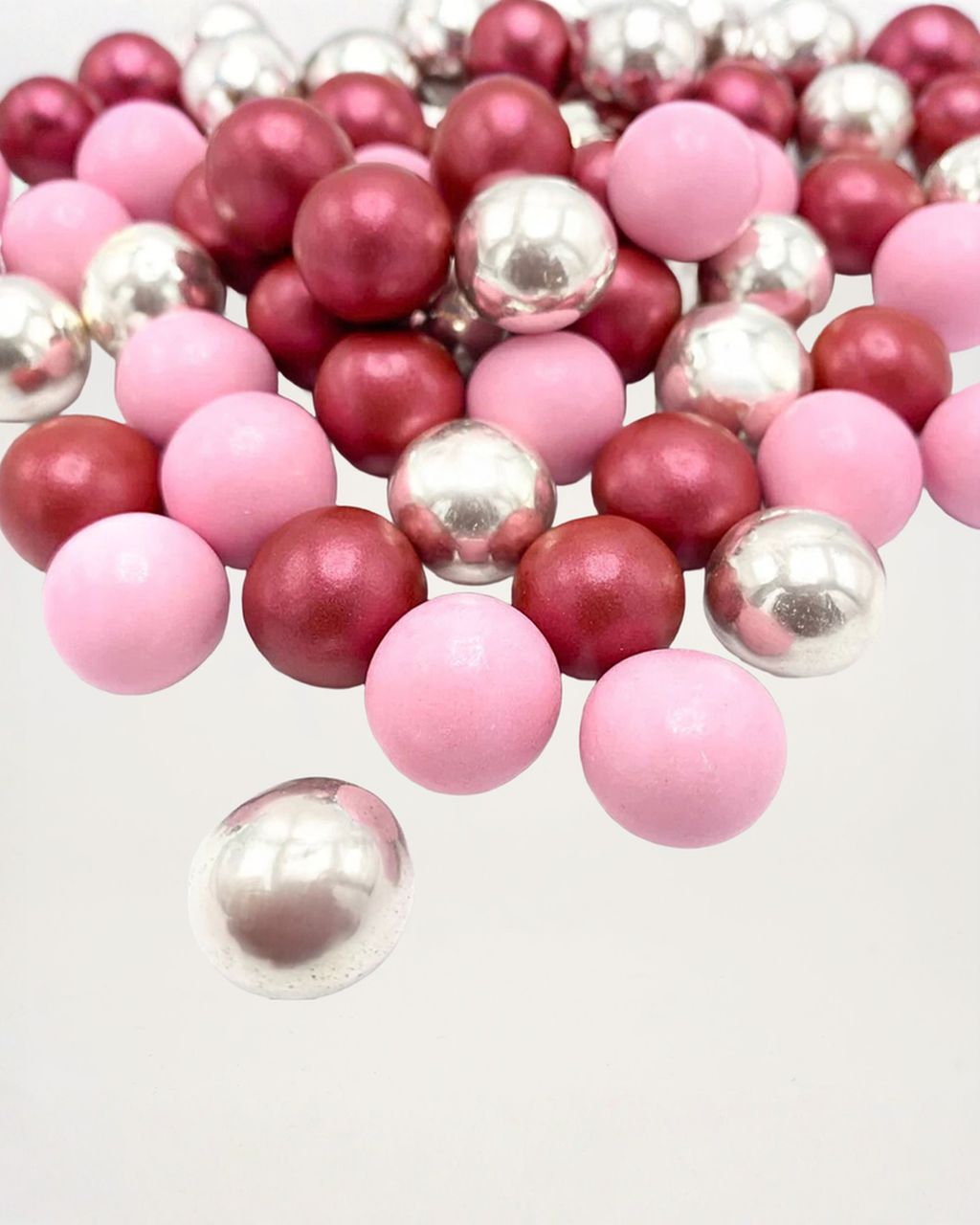
Sugar pearls and dragées — hard beads from 2 to 10 mm. Lovely for a wreath border or edge trim.
Mixes — a combination of all of the above in one color palette. The fastest way to a cake that looks carefully put together, since someone's already coordinated the colors and shapes for you.
Colored sanding sugar — more of a subtle sparkle than a bold decoration; good for an edge or to highlight a number.
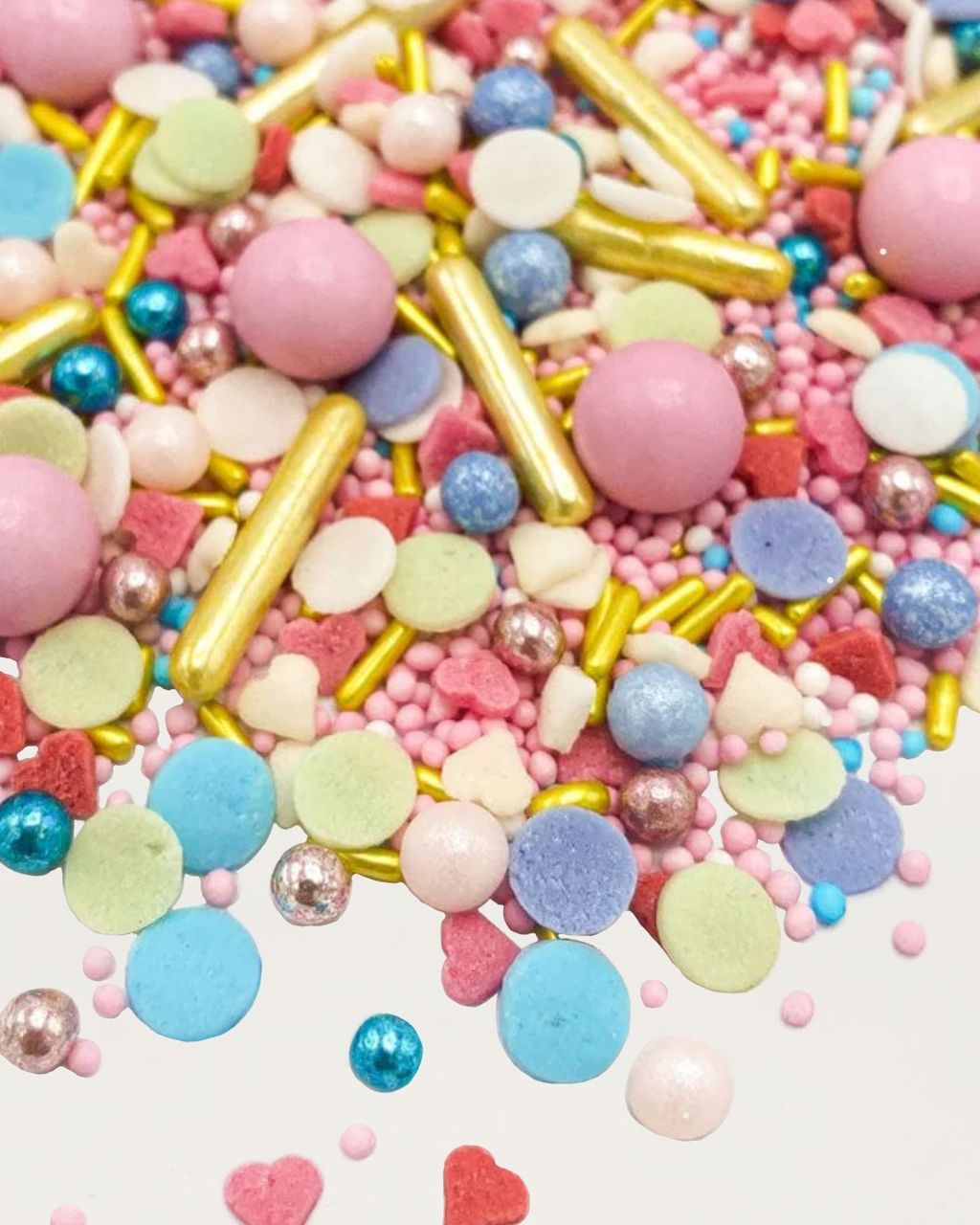
Mixes are the thing most home bakers lack — and exactly what we stock: our sprinkles range includes Happy Sprinkles mixes like the soft Pastel Party for a birthday or christening cake, the bolder Dance Floor Queen for a celebration, and Lovestruck Jimmies and XXL Sweet Kisses with hearts for an anniversary or wedding cake. For Easter, we also carry the seasonal Happy Eggs and Bunny Hop mixes.
What we don't carry but still works fine: plain supermarket jimmies are perfectly good for covering a whole side and come out cheaper — they're just less varied in color.
Six techniques: a fully coated side, a bottom border, a wreath along the top edge, a number or shape via stencil, large pieces placed with tweezers, and sprinkles on a drip glaze. Before starting any of them, set the cake on a cake board, and put that on a large sheet pan or tray — anything that falls off gets caught and can be reused.
To coat the whole side, scoop sprinkles into your palm and press them onto the side working from bottom to top while the frosting is still tacky. Here's how:
Set the cake, on its board, onto a sheet pan, and pour the sprinkles into a shallow bowl.
Spread and smooth the final layer of frosting.
Scoop up a full palmful of sprinkles, hold your hand against the bottom edge of the side, and press gently, almost like stroking the cake. Move your hand upward and open your palm at the top edge.
Turn the cake slightly and continue around. Fill in any gaps at the end with a small handful.
Smooth the top again if your fingers disturbed it, then chill the cake.
Don't press too hard — the sprinkles should sink into the frosting, not push it out of shape. If the frosting has set by the time you get to a spot and sprinkles won't stick, run a spatula warmed in hot water (and dried off) over that area, then sprinkle right away.
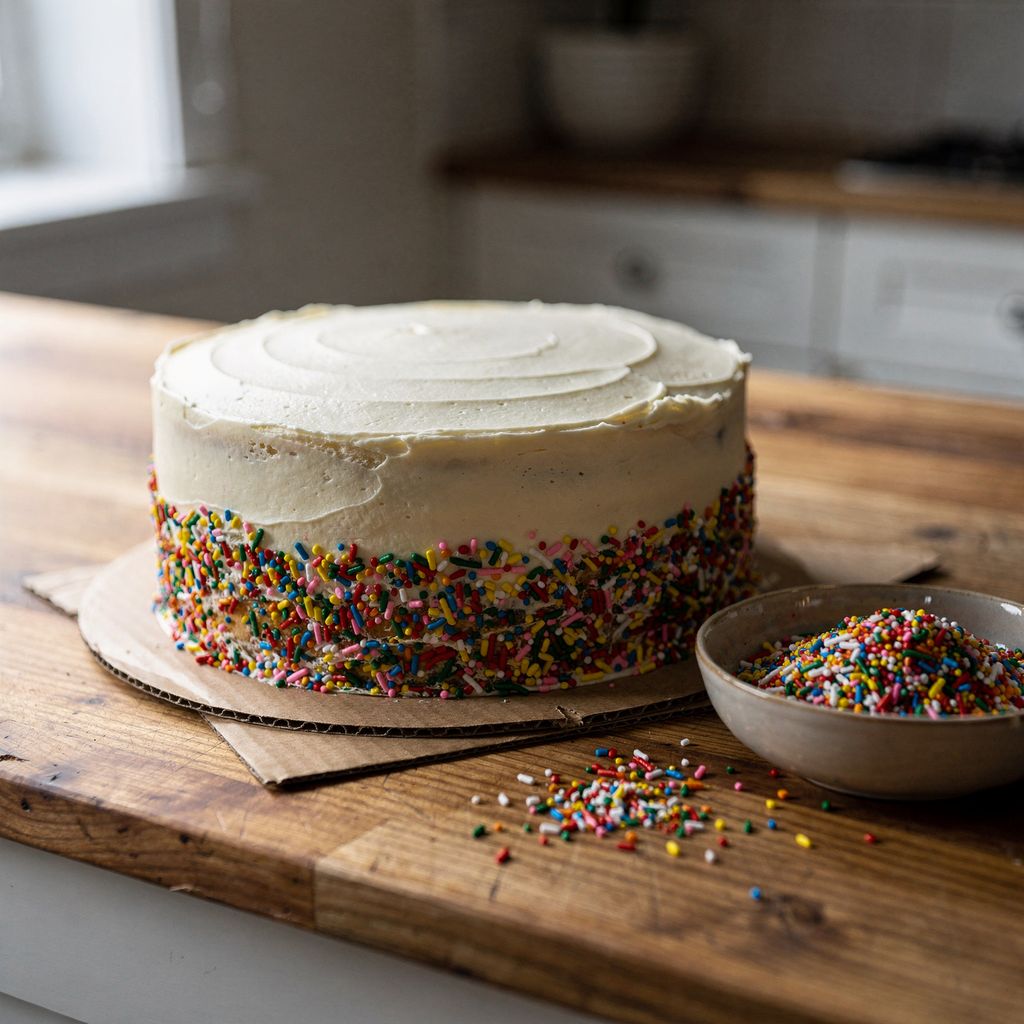
A bottom border is a 2–4 cm (¾–1½ in) band of sprinkles around the base of the cake — it looks clean and hides an uneven bottom edge of frosting. It's done the same way as a full side, except you only press your palm against the lower portion and don't carry it further up. Even out the top edge of the border by lightly running a flat spatula along it. A nonpareil or jimmies border is the most forgiving technique for beginners: any unevenness in the frosting disappears, and you only need about a third as many sprinkles as for a full side.
To make a wreath, sprinkle a 2–3 cm (1 in) band around the top edge and leave the center clean. For a neat inner edge, place a small plate or cutter 4–6 cm (1½–2½ in) smaller than the cake's diameter in the center, sprinkle around it, then lift it straight up. Larger confetti, pearls, and mixes work especially well for a wreath, where the shapes really get to show. You can then fill the open center with fruit or a message; for more ideas without piping tips, see our article on decorating a cake without piping tips.
To make a number out of sprinkles, cut it out of parchment paper as a stencil, lay it on the fresh frosting, fill in the cutout, then lift the paper straight up. In practice:
Draw a number or shape on parchment paper, about 4 cm (1½ in) smaller than the cake's diameter, and cut it out so the surrounding paper stays intact — the hole is your stencil.
Lay the stencil on top right after smoothing the frosting, while it's still tacky.
Fill the cutout generously with small sprinkles and press them lightly with your fingers or a spoon.
Lift the paper straight up with both hands, without shifting it sideways.
Nonpareils give the sharpest edges. Large confetti and hearts will blur the edge — if you want to use them, add them only after lifting the stencil off.
Place large hearts, pearls, and shaped confetti one at a time with tweezers rather than by the handful. On fresh frosting they'll stick on their own; on set frosting, attach them with a dab of frosting or melted chocolate. Used this way, they work as an accent — a cluster of five or six pieces on one side of the cake looks better than scattering them evenly all over. This is exactly how to work with something like XXL Sweet Kisses — their large hearts won't stick to the side by the handful, but with tweezers you can place them exactly where you want.
For a drip cake, add sprinkles 1–2 minutes after pouring the glaze, once the drips stop running but the surface is still glossy. Mix your drip ganache based on the type of chocolate — the ratio of chocolate to cream:
Dark chocolate: roughly 1:1.
Milk chocolate: roughly 2:1. Milk chocolate sets softer than dark, so at 1:1 it would run all the way down onto the board.
White chocolate: roughly 3:1.
Pour the ganache at 30–35°C (86–95°F) over a cake that's been chilled for at least 30 minutes — any warmer and it'll run down onto the board, any colder and it'll form thick, short drips. Add sprinkles only along the top edge, where the drips meet the top surface; don't sprinkle down over the drips themselves, as that will smudge them. For a chocolate base to pair with this, try our simple chocolate cake.
Moisture is what pulls color out of sprinkles — both from the frosting itself and from condensation that forms on the cake when you move it from the fridge into a warm room. On a cake, there are three ways to manage this:
Sprinkle as late as possible. With whipped cream and cream cheese frostings, do it on the day of serving, ideally right before.
Chill the cake in a box, not loose in the fridge — a box keeps humidity more stable and stops the cake from picking up fridge odors.
Choose jimmies and confetti over nonpareils for moist frostings, since they bleed color more slowly.
If you're building a cake with a fruit filling, pipe a frosting dam around the edge of each layer — filling that leaks out onto the side will dissolve sprinkles faster than anything else.
If you're using buttercream or ganache, you can add sprinkles a day ahead and store the cake in a box in the fridge. With whipped cream or cream cheese/mascarpone frostings, sprinkle on the day of serving, ideally right before — colored nonpareils on a moist frosting start bleeding color within as little as an hour.
You can swap sprinkles for cocoa curls or chocolate shavings, chopped pistachios, or toasted sliced almonds. They stick the same way — pressed into fresh frosting — and they don't bleed color. Add freeze-dried fruit only right before serving, since it softens on moist frosting and can tint it red or purple within an hour.
Only small, soft sprinkles (nonpareils, jimmies) are suitable for young children on a cake. Avoid hard sugar pearls and dragées with toddlers, as they pose a choking hazard.
You can only mix sprinkles into cake frosting right before spreading it, since colored nonpareils will bleed color into the frosting within a few hours. Jimmies hold up better. If you want sprinkles mixed throughout, it's better to bake them into the batter instead, as with a funfetti cake.
One recipe worth heating the oven for, one tip, and one deal from the shop. Nothing else.