Pepparkakor – swedish gingerbread cookies (not just for christmas)
Christmas Cake Decorating: Which Cake to Bake and How to Decorate It with Stars, Leaves and Gold
Updated Nov 2, 2026
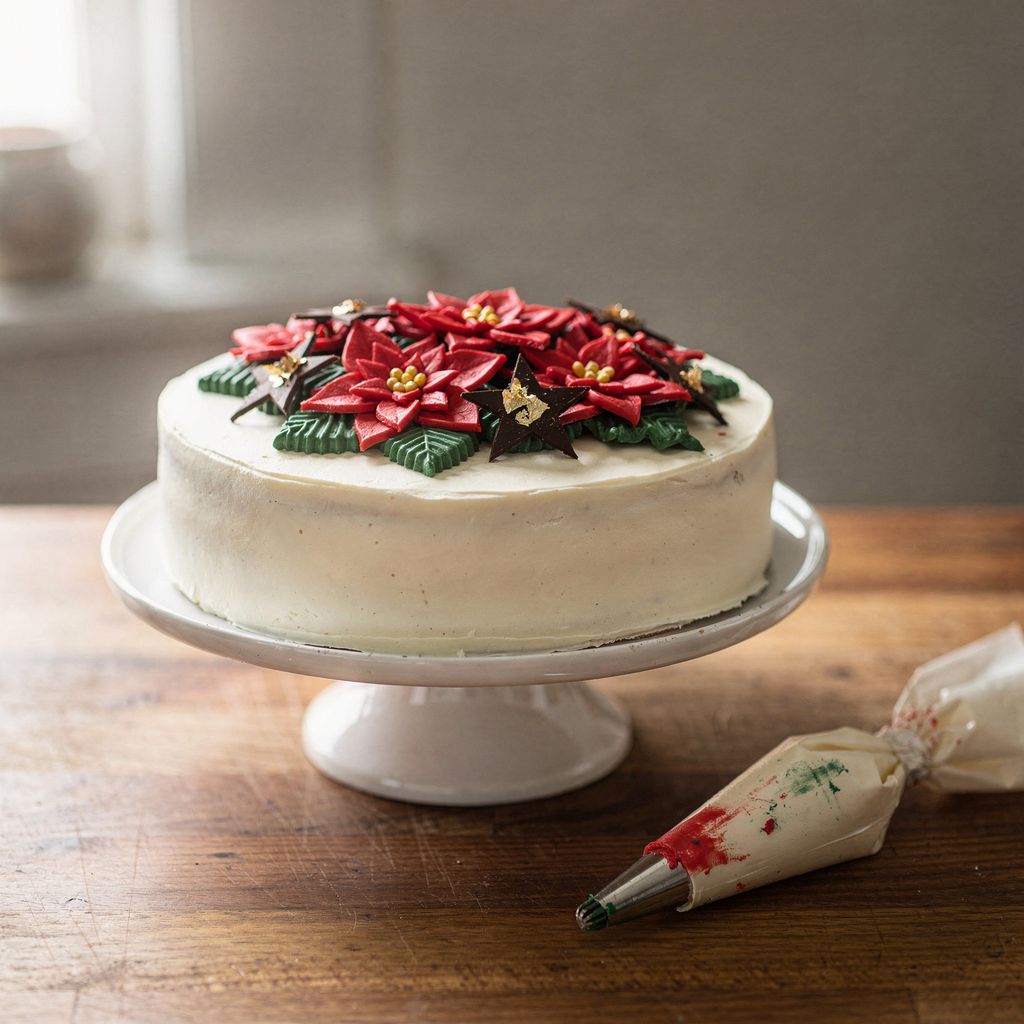
You can decorate a Christmas cake at home with five things: a piped buttercream poinsettia, green leaves, gingerbread or chocolate stars, edible gold and red shimmer dust. Two or three of them are plenty for one cake, and the best base is a dense chocolate or almond cake with a stiff buttercream. You don't need fondant or a pastry course. All it takes is stiff buttercream, a chilled cake and the right order of work. Below you'll find which cake to bake, how stiff the buttercream should be, how to tint it Christmas red, how to hold the piping tip, how to get gold onto chocolate decorations and what to do when the shapes won't hold.
Five things work best on a Christmas cake: a piped buttercream poinsettia, green leaves (holly, mistletoe, pine needles), gingerbread or chocolate stars, edible gold and red or gold shimmer dust. You don't have to use them all. Two or three are plenty for one cake.
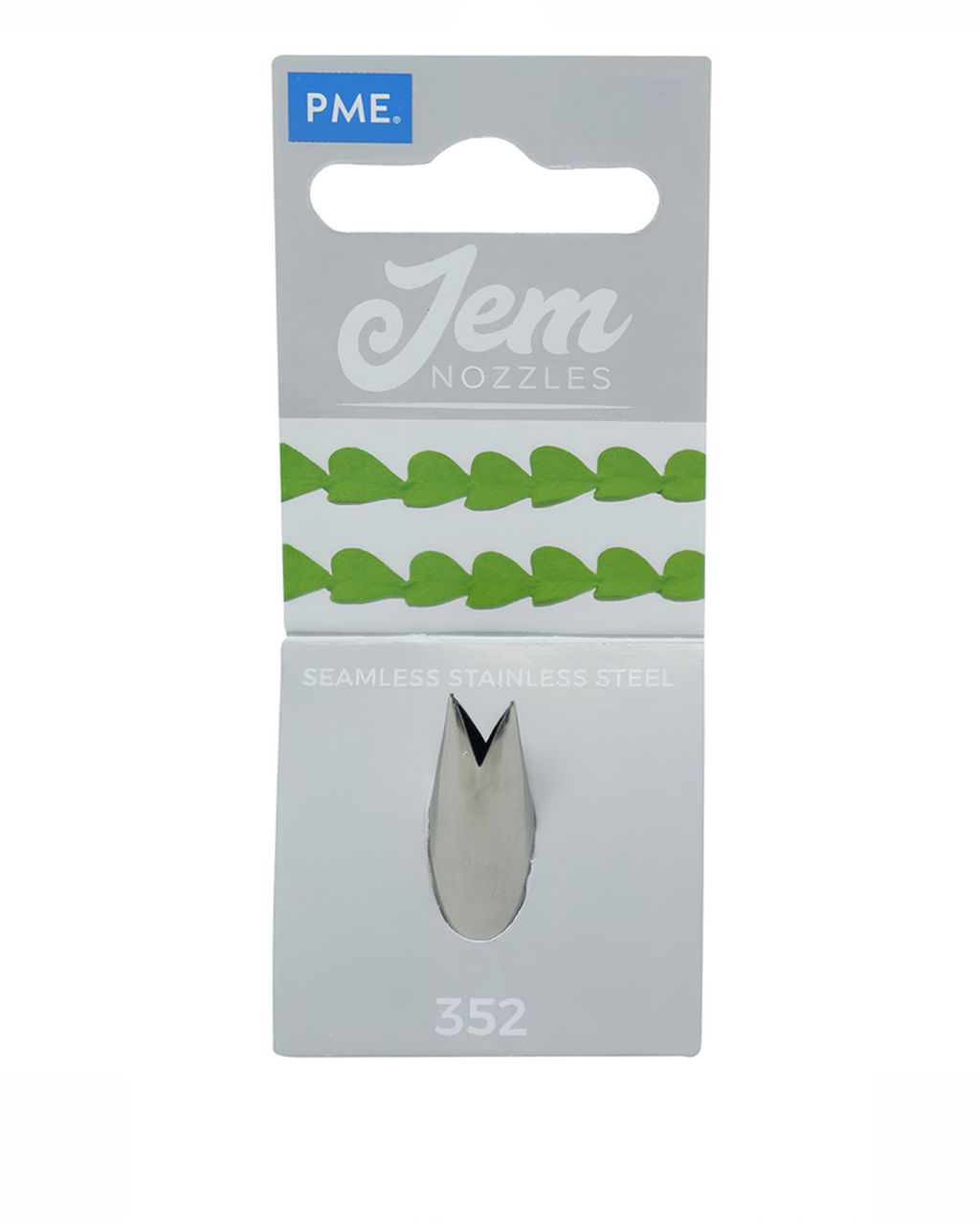
The piped poinsettia and leaves make up the main design. You pipe them with a single tip, typically leaf tip no. 352 (often labelled Leaf 352 on the packaging).
Gingerbread or chocolate stars add height and a shape that buttercream can't hold.
Edible gold goes on the chocolate stars and chocolate decorations. A few torn scraps of leaf in the spots where you want the eye to land are enough.
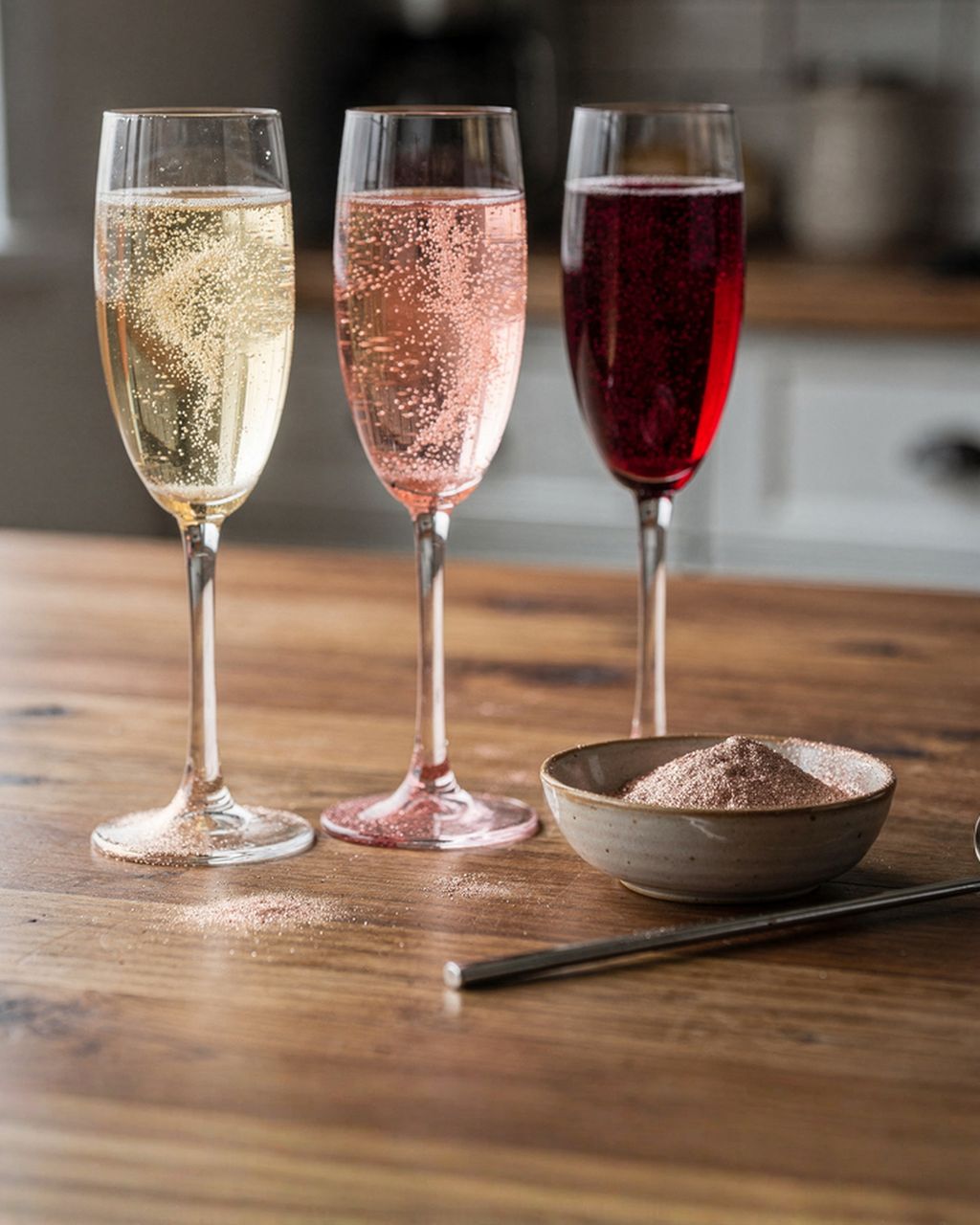
Shimmer dust softens the edges of the leaves and adds sparkle, but it won't overpower the colour of the buttercream.
There's a simple rule: one focal point (a cluster of stars on one side of the cake), with leaves around it and gold as the finishing touch. If you decorate all the way around the edge, it looks more like a wreath. That works too, just plan on double the buttercream.
You'll find tips, gel colours and shimmer dusts all in one place in cake decorating supplies.
Seasonal baking plans, tested recipes and kitchen tricks that save you time. Unsubscribe in one click.
Three kinds of cake work best under piped stars, leaves and gold: chocolate, almond or another denser cake with buttercream. All of them can carry stiff buttercream and decorations, they don't go soft in a warm living room as quickly as a whipped cream cake, and you can bake them a day ahead.
Chocolate cake. The dark surface is the best backdrop for a red star, green leaves and gold. You can manage a simple chocolate cake even as a first cake, and the ultimate chocolate pomegranate cake is more festive still, already Christmassy all on its own.
Almond cake. A Swedish almond cake with an almond sponge is celebratory in itself. For Christmas, one piped poinsettia and a few green leaves on top are all it needs.
Spiced cake with gingerbread spice. It tastes like Christmas, but keep in mind that a dark sponge shows through light buttercream, so apply the buttercream in two layers.
Christmas cakes with whipped cream or a cream cheese frosting work too, but decorate them with gingerbread and chocolate stars instead of piped ones, because soft cream can't hold a shape. Which frosting suits which cake is covered in our guide to types of cake frosting, and you can find how much you need for your cake size in the how much frosting per cake chart.
A stiff buttercream holds both the star and the leaves. It should stand in a sharp peak on a spatula and not bend over. Soft frosting, whipped cream or unstabilised mascarpone spreads into blobs and the leaves lose their points.
American buttercream with icing sugar (roughly 1 part butter to 1.5–2 parts sugar) holds best and is easy to colour.
Swiss or Italian meringue buttercream (buttercream made on a meringue base) is silkier but softens in the heat. Pipe it chilled, in a room at 18–20 °C (64–68 °F).
Ganache (chocolate and cream 2:1) also works for leaves, but only in dark brown or white. You can't get it to a deep red.
Consistency test: pipe one leaf onto baking paper. If the tip flops over after a minute, mix in 1–2 tablespoons of icing sugar. If the edges of the leaf tear, the buttercream is too stiff or too cold, so knead it in the bag with your hands for a while.
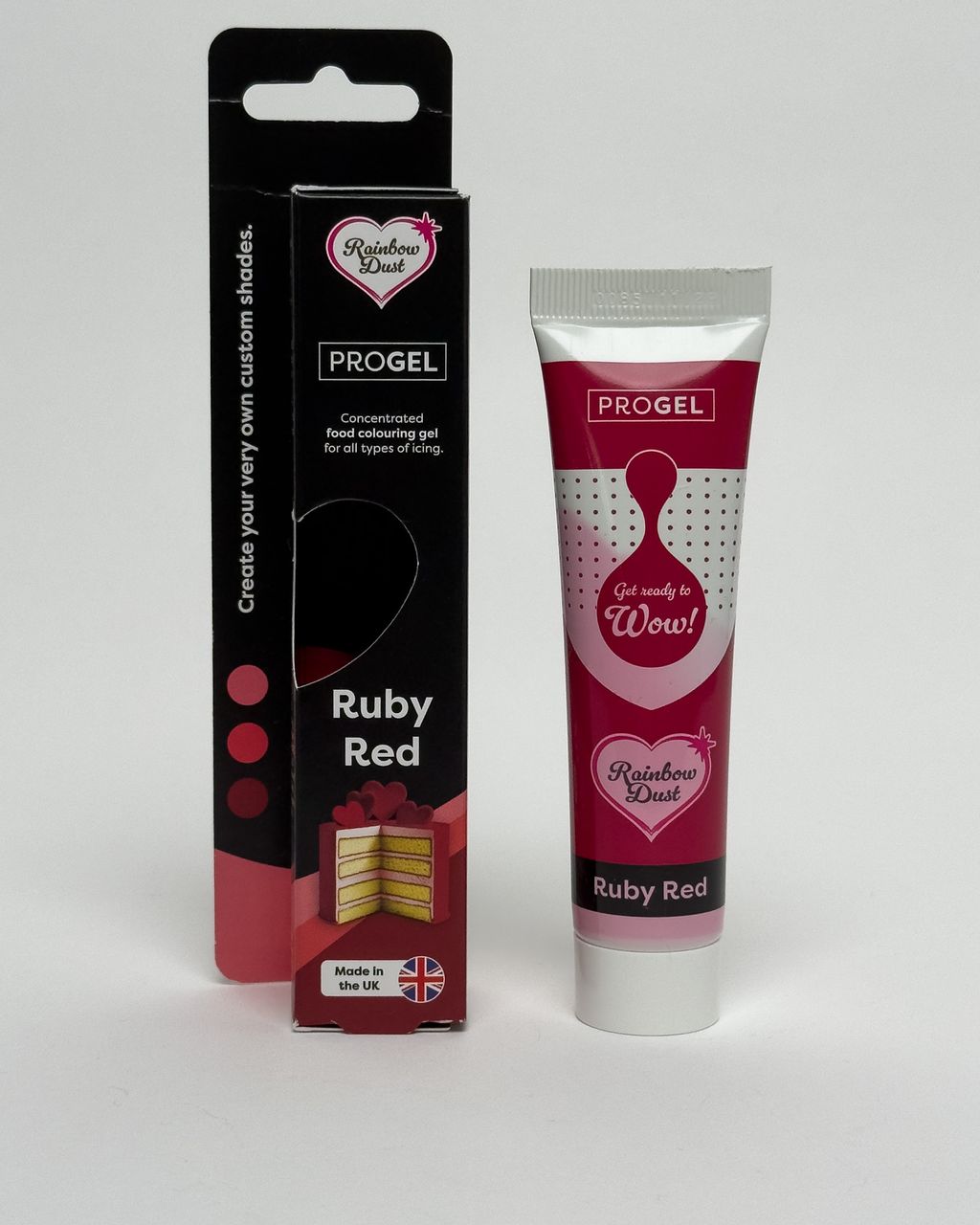
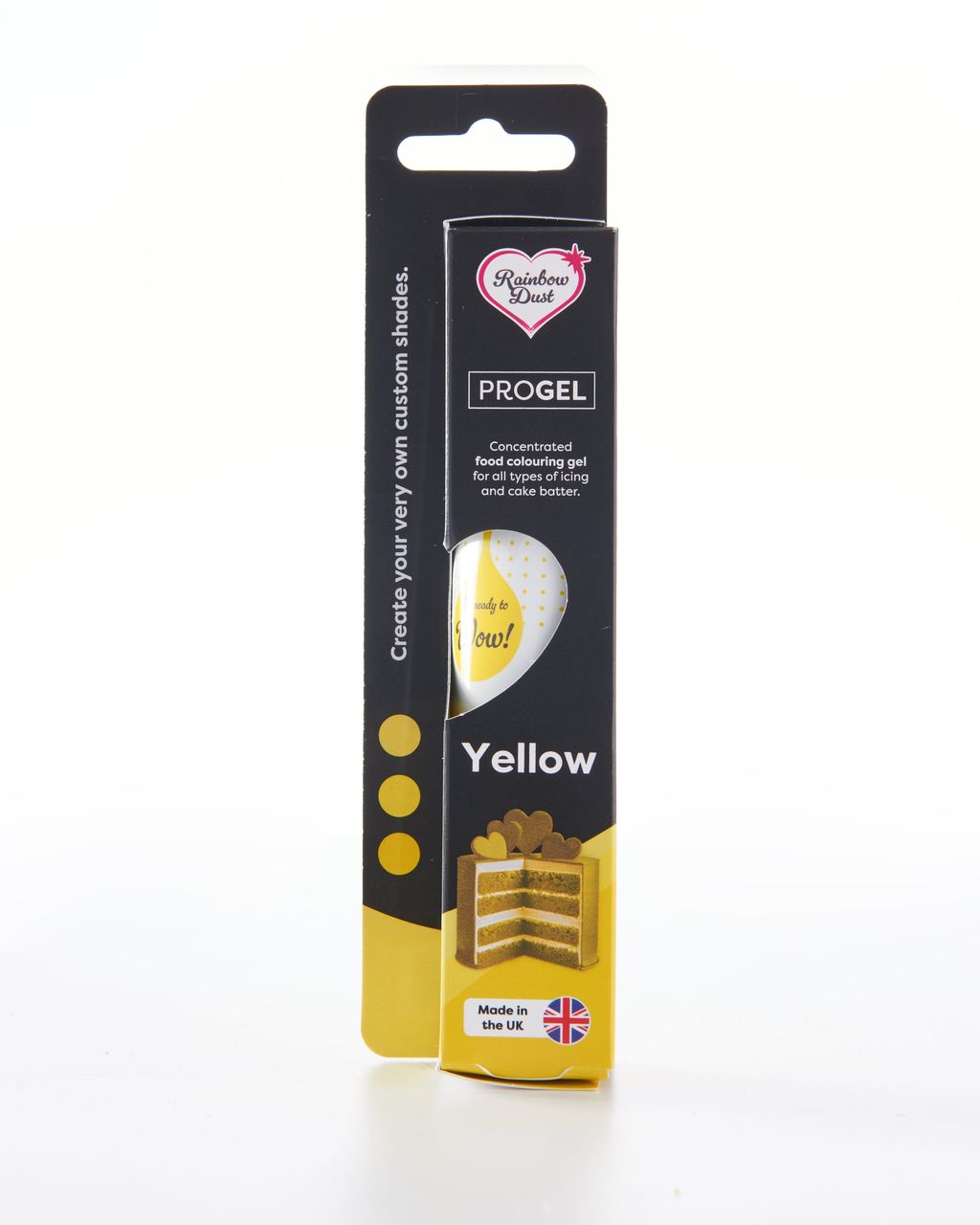
Deep red needs time, not more colour. Add the gel colour to the buttercream a day ahead, or at least 2 hours before decorating, because the colour darkens as it stands. If you keep adding colour until the buttercream looks red straight away, you'll overdo it and it will turn bitter. Also stick to the maximum dose on the packaging: for ProGel gel colours, that's 3 g of colour per 1 kg of buttercream, so at most 0.9 g for 300 g of buttercream for the stars.
Christmas red from gels. ProGel gel colour – Ruby is a deep ruby with a wine undertone, not a pure red. For a warmer Christmas red, mix in a little ProGel gel colour – Yellow, roughly 1 part yellow to 4–5 parts ruby. The limit of 3 g per 1 kg applies to both colours together.
Colour warning: Ruby contains E122 and E129, Yellow contains E102. These colours may have an adverse effect on activity and attention in children.
Pine-needle green: add a pinch of brown or black to the green, because pure green looks like grass on a cake.
To see how to mix a specific shade, check the buttercream colour chart.
You pipe a poinsettia from six large petals in a circle and six smaller petals between them, with yellow dots in the centre. The method below follows tip manufacturers (Wilton describes the same principle for tip 352):
Fit tip 352 into a piping bag and fill it with red buttercream no more than halfway. A full bag warms up in your hand and the buttercream softens.
Hold the bag at a 45° angle, with the points of the tip horizontal (left and right), so the petal lies flat.
Place the tip at the centre of the future flower, squeeze hard and pull outwards about 2–3 cm. Towards the end, ease the pressure, stop completely and pull the tip away. That finishes the petal with a point.
Turn the paper (or the cake) by a third of a circle and pipe the second petal, then the third. You'll get a Y shape.
Pipe another three petals into the gaps between them, so you have six.
On top of them and between them, pipe six shorter petals (about 1.5 cm).
In the centre, make 5–7 yellow dots with a round tip or a snipped corner of the bag. You can use sugar pearls instead.
On the cake or off it? Beginners do well to pipe the flowers onto squares of baking paper, freeze them for 20 minutes and then move them onto the cake finished. If a flower goes wrong, you simply scrape it off and pipe again, without damaging the smooth surface of the cake.
If you're using a classic tip and bag, see how to fill a piping bag. For tip 352 you need a coupler or a medium-sized bag.
You'll find the JEM Leaf / Poinsettia #352 tip and other leaf and star tips in the piping tips category.
You pipe a green leaf with the same tip 352 and hold it the same way as for the flower: points of the tip horizontal (left and right). That gives the leaf a flat shape with a vein down the middle.
Short leaf (holly, mistletoe): Squeeze, let the buttercream swell slightly at the tip, then ease the pressure and pull away. Length about 1–1.5 cm.
Long leaf: As you pull, gently wiggle your hand up and down, so the leaf ripples and looks livelier.
Pine needles: Use a small round or star tip (or a snipped corner of the bag). Short strokes of 3–5 mm outward from a twig.
Holly berries: Three small red dots at the base of the leaves. Use buttercream or sugar pearls.
Pipe the leaves around the finished flowers, not beforehand. They cover the base of the flower and the join between the flower and the buttercream on the cake, so the flower doesn't look stuck on. For bigger flowers, plan on 4–6 leaves.
The full range of tips and how to use them is in our overview of piping tips for cakes.
Instead of piped stars, put gingerbread stars, chocolate stars or natural decorations (rosemary, dried cranberries) on your Christmas cake.
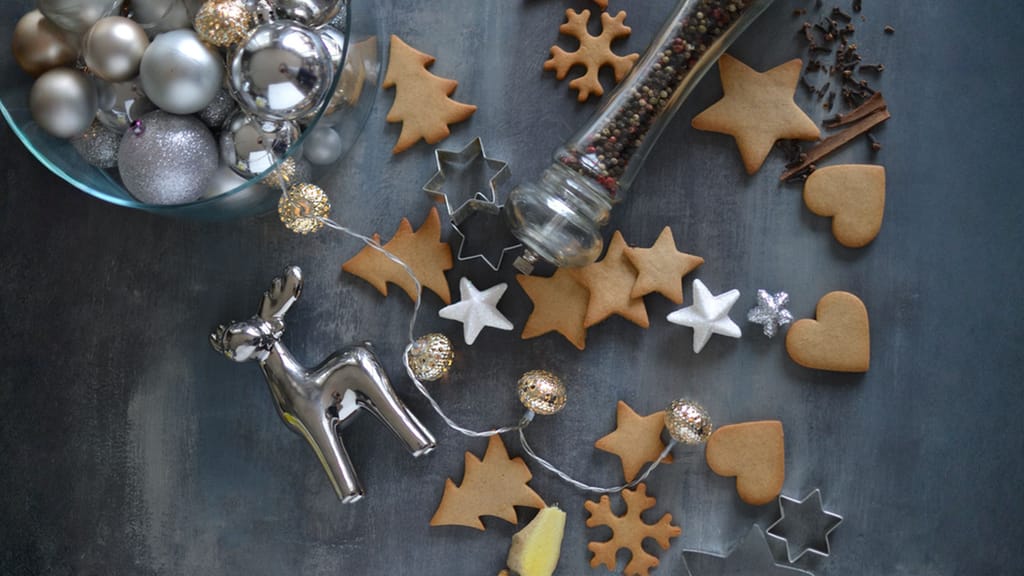
Gingerbread stars. Cut stars out of gingerbread dough with a cutter, for example from Swedish pepparkakor gingerbread cookies, and stand them upright in the buttercream. They add height. Put them into the buttercream only on the day of serving, otherwise they draw moisture from the buttercream and go soft.
Chocolate stars. Spread tempered chocolate onto baking paper at 2–3 mm thick, let it set and cut out stars with a warmed cutter. They keep in the fridge for several days.
Natural decorations. Sprigs of rosemary as pine needles, dried cranberries. Just don't put mistletoe or holly from the garden on a cake, as both are poisonous.
A piped star with tip 352 looks more like pastry-shop work, while gingerbread is more rustic. Feel free to combine them: piped stars on the side, a gingerbread one on top.
Pepparkakor – swedish gingerbread cookies (not just for christmas)
Pepparkakor: Swedish gingerbread cookies for gingerbread stars on a Christmas cake
Place edible gold on chocolate stars and chocolate decorations with a dry brush or tweezers, never with your fingers. It is thinner than a hair and on warm skin it sticks instantly and falls apart. Real edible gold is approved in the EU as the additive E 175, and only for the surface of confectionery, for decorating chocolate and in liqueurs. It is usually 22–24 carat (the EU requires at least 90% gold).
Close the window and switch off the extractor fan. Even your breath can blow a gold leaf away.
Pick up a piece of gold with tweezers or lift it with a dry brush and lay it on a chocolate star or chocolate decoration.
Press it down gently with the brush. The edges will tear, and that's a good thing. Torn gold looks natural, while a straight square looks more like a sticker.
Set the finished chocolate decorations with gold on the cake.
Where to put the gold: on chocolate stars and chocolate decorations, for example on the edge of a chocolate star, on chocolate drops or on pralines around the cake. Use gold in just 3–5 spots. An 8 × 8 cm sheet will then last for 2–3 cakes.
What is edible and what is only decoration is covered in our article on edible gold and shimmer dust for cakes.
You apply shimmer dust in two ways: dry with a soft brush for a gentle sheen, or mixed with a few drops of alcohol as a paint for firm surfaces. It can't recolour buttercream, though, it only adds sparkle. And because it's a colourant with restricted use, it's dosed in grams.
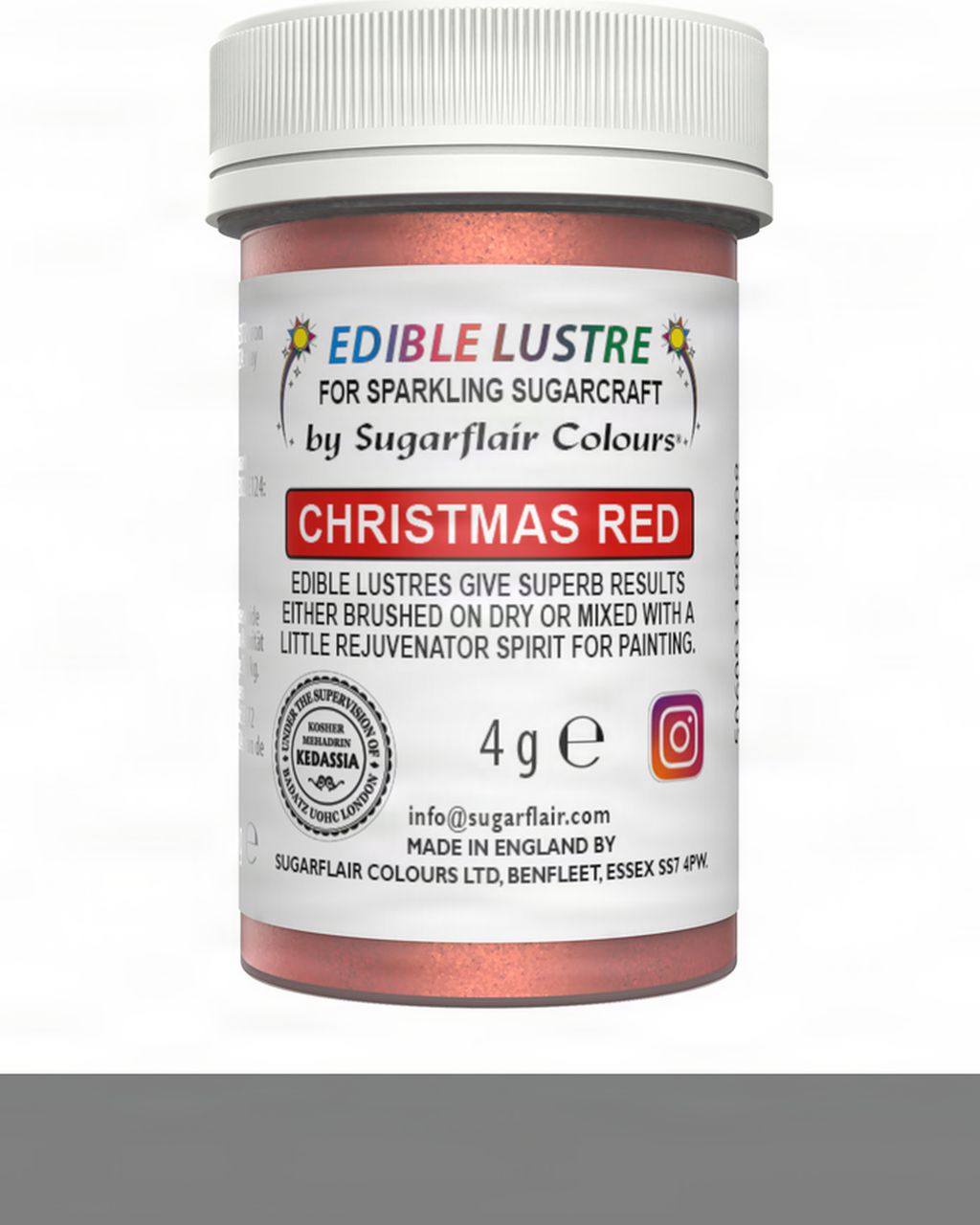
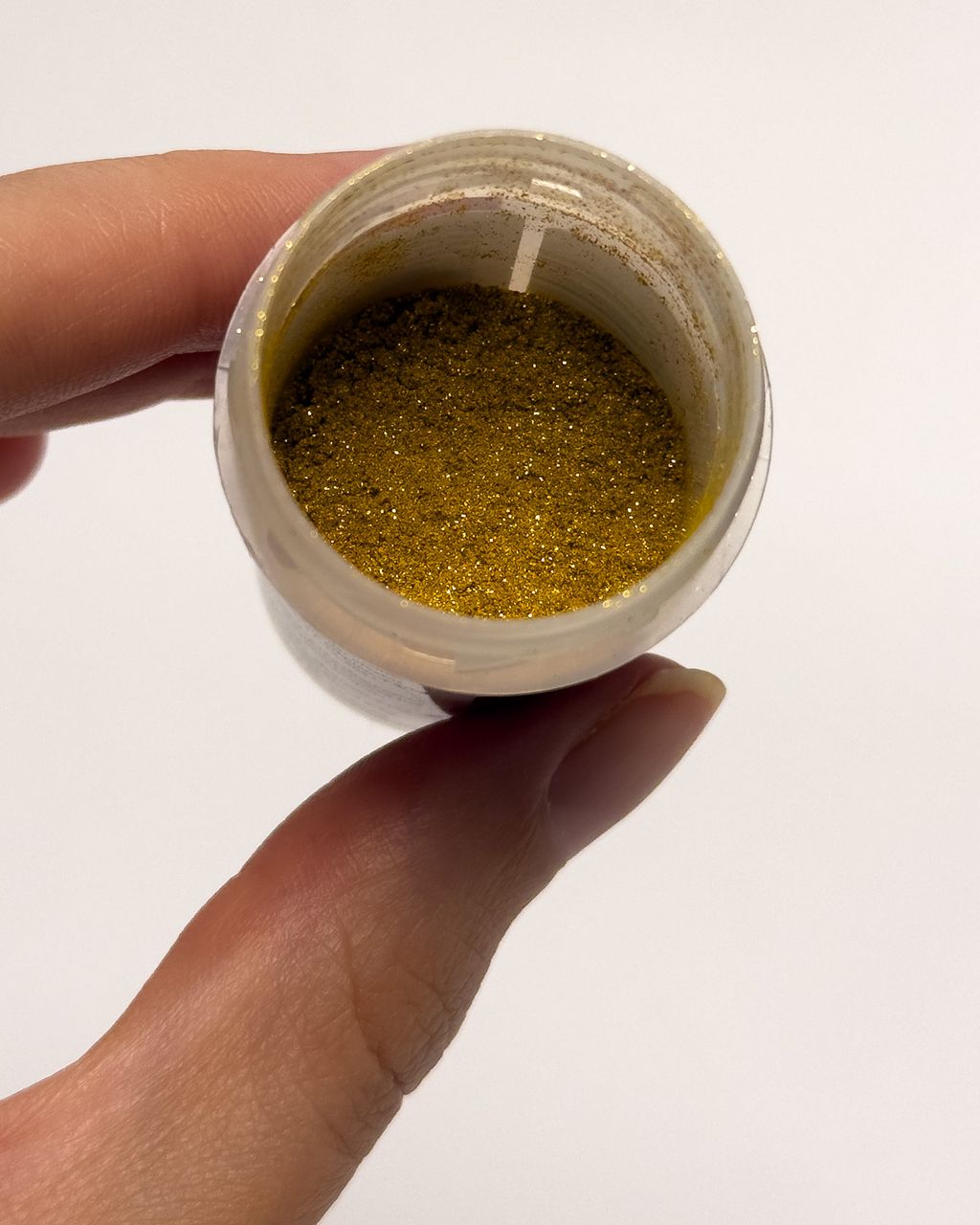
How much dust: according to the packaging, edible shimmer dust – Christmas red is allowed at no more than 1 g per 1 kg of cake, and edible shimmer dust – gold at no more than 2 g per 1 kg. For a 20 cm cake weighing about 1.5 kg, that's at most 1.5 g of red or 3 g of gold. Just a fraction is enough to highlight the edges of the leaves.
Dry on buttercream: pick up a little dust on a dry brush and lightly dust the edges of the poinsettia petals. Red shimmer dust gives a red flower depth, and gold dust gives the tips of the green leaves some contrast.
As paint: mix a pinch of dust with 3–5 drops of vodka or lemon extract. The alcohol evaporates and the dust stays. Paint onto chocolate, gingerbread, fondant or set icing, not onto soft buttercream. It would smear.
Don't use water. It dissolves the sugar in the surface and the dust runs into sticky streaks.
Warning: both dusts contain E102, and the red also contains E124. These colours may have an adverse effect on activity and attention in children.
On damp buttercream or whipped cream, the dust gets damp within a few hours and loses its shine. That's why you should add it just before serving. You'll find more edible glitters in the edible gold and glitter category.
Decorate from coarse to fine: buttercream and colours, stars, leaves, gingerbread and chocolate with gold, shimmer. Each layer covers the joins of the previous one, and the most delicate things go on last.
The day before: Frost the cake and chill it. Colour the buttercream for the stars and leaves so the colour has time to darken.
The evening before, or the morning of serving: Pipe the stars (onto paper to go in the freezer, or straight onto the cake), then the leaves around them. The coloured buttercream should stand for at least 2 hours. Put the finished cake in the fridge.
Before serving (0–2 hours): Insert the gingerbread stars and the chocolate stars with gold, and dust with shimmer.
If you're still unsure about the buttercream or the cake, start with the basics. Go through the types of cake frosting. The ultimate chocolate pomegranate cake makes a great base for Christmas decorating. A dark surface with red pomegranate seeds and a few chocolate stars with gold is Christmassy even without piped stars.
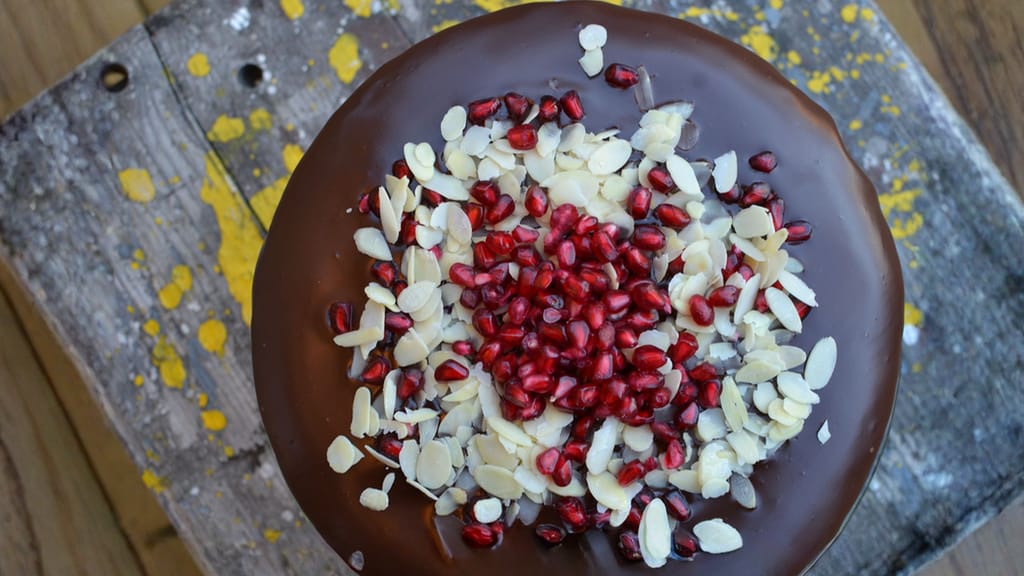
The ultimate chocolate cake with pomegranate
The ultimate chocolate pomegranate cake as a base for a Christmas cake
You can pipe leaves without a tip, using a disposable piping bag: flatten the end of the bag and snip it into a V shape, about 5 mm on each side. The leaves will be less sharp than with a 352 tip, but for a few of them it's good enough.
Transport a decorated Christmas cake straight from the fridge, in a box taller than the stars, standing on a flat surface such as the car floor rather than a seat. Pack the gingerbread and chocolate stars separately and push them into the buttercream once you arrive.
Unstabilised whipped cream won't hold a piped poinsettia or leaves: it spreads into blobs and the leaves lose their points. For piped stars and leaves, use stiff buttercream. If you frost the cake with whipped cream, decorate it with gingerbread or chocolate stars instead, and add the shimmer dust just before serving, because it loses its shine on damp cream.
For a 20 cm cake, a third to half of an 8 × 8 cm gold leaf sheet is enough for the chocolate stars and decorations. Tear the gold into small pieces and use it as an accent, not a surface. A whole sheet on one cake usually looks overdone.
Bake the cake layers 1–2 days ahead and keep them wrapped in cling film. Tint the buttercream a day ahead, then decorate the cake the day before serving or on the morning itself. Keep a buttercream cake in the fridge and eat it within 2–3 days. Add the gingerbread and chocolate stars and the shimmer just before serving.
One recipe worth heating the oven for, one tip, and one deal from the shop. Nothing else.