Sugar Sprinkles: Pastel Party
Edible Cake Decorations: From Sprinkles to Dried Flowers
Updated Oct 8, 2026
Edible cake decorations fall into five main categories: sugar sprinkles, edible gold, shimmer powders, dried edible flowers, and crunchy pearls. Each one needs a different surface and lasts a different amount of time. Sprinkles bleed color into moist frosting, gold sticks to your fingers, flowers wilt on whipped cream, and pearls go soft in frosting. Here's what to put on which frosting, when to add it to the cake, and what to use instead if you want something different.
There are five main types of ready-made edible decorations you can put on a cake. They differ in what they do and what kind of surface they'll hold up on:
Sugar sprinkles. Color and texture, the cheapest way to liven up a cake.
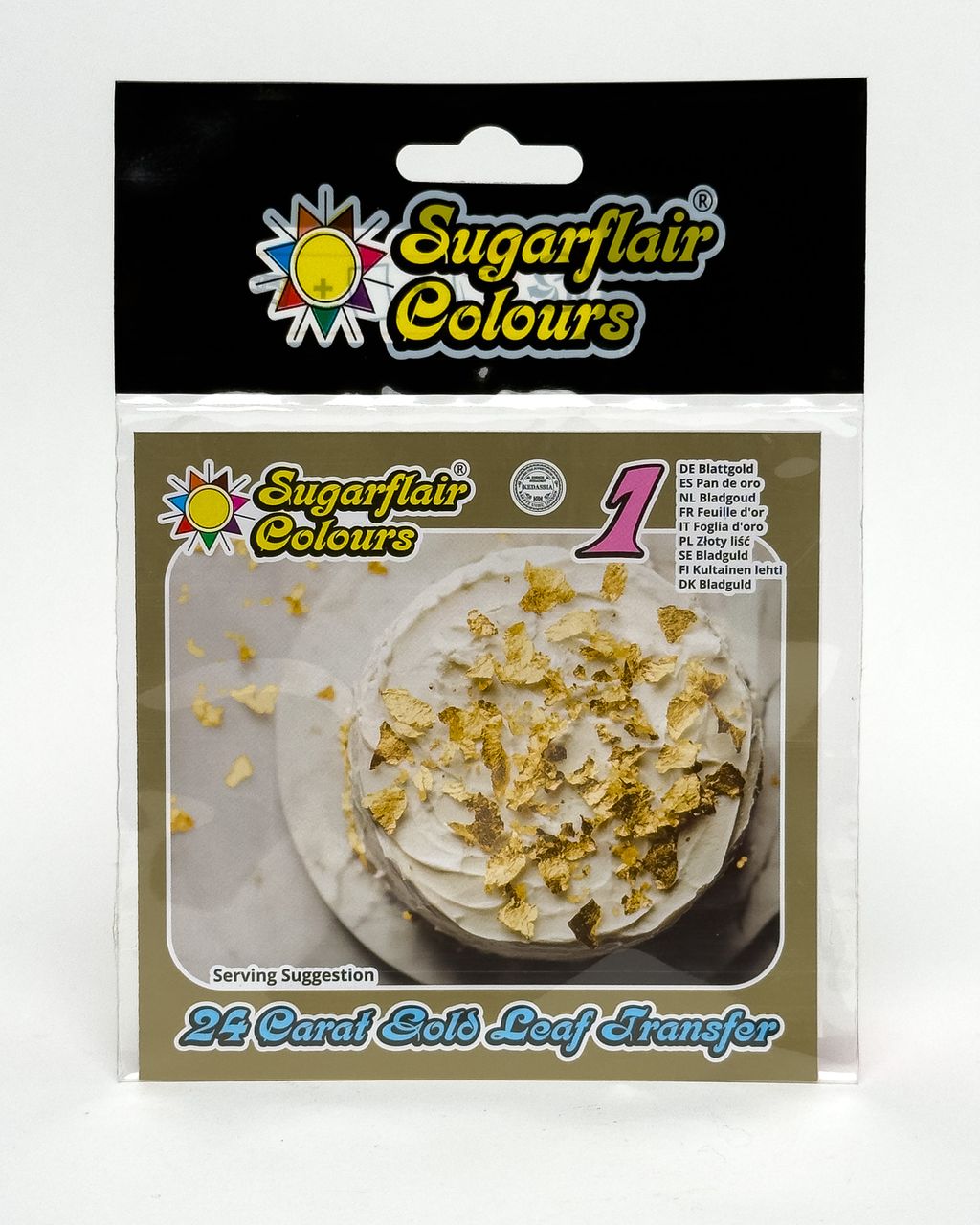
Edible gold. Sheets or flakes of real gold, even a small amount makes an impact. Best suited to chocolate elements on the cake.
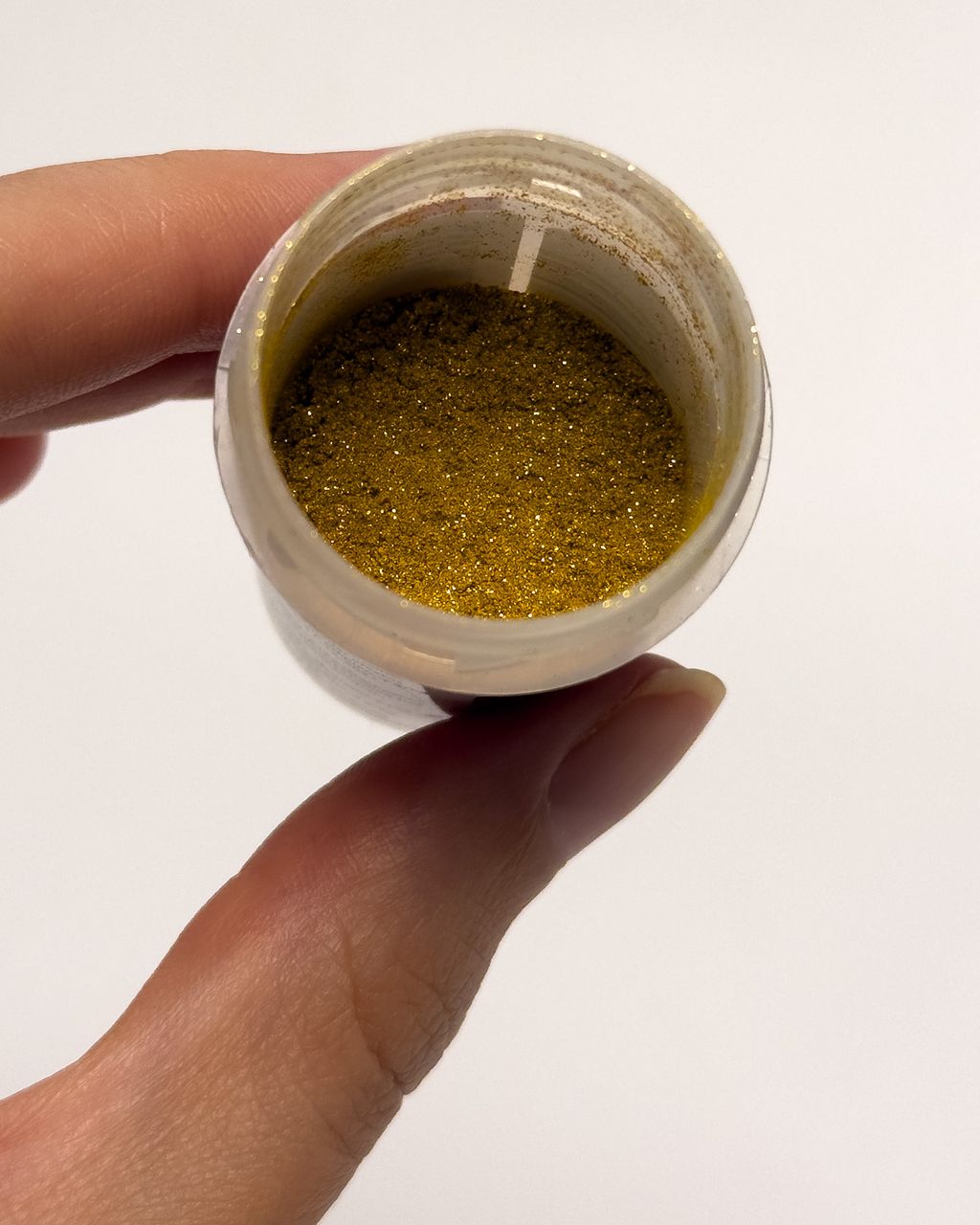
Shimmer powders. Metallic shine or pearl finish, applied dry with a brush or mixed with alcohol.
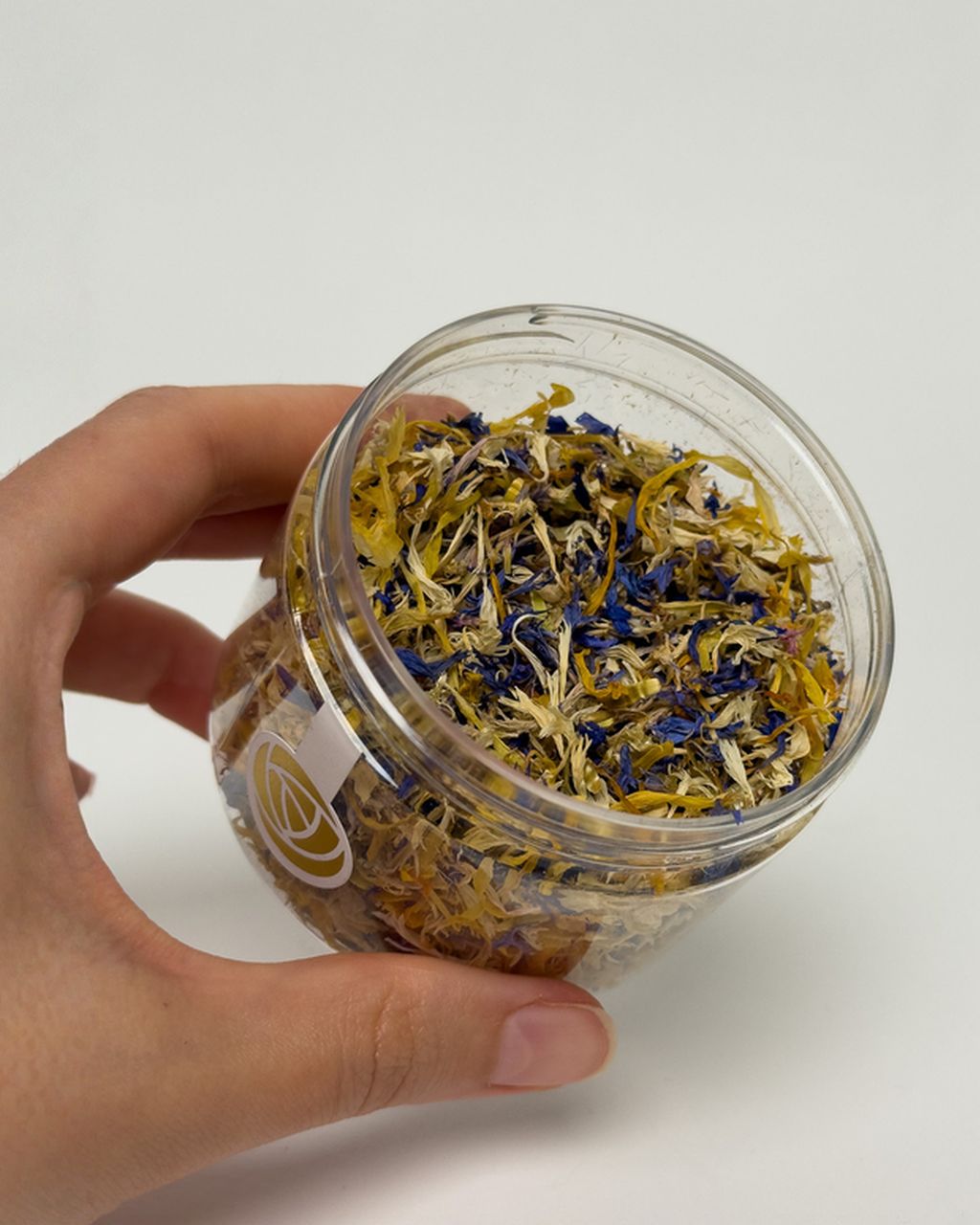
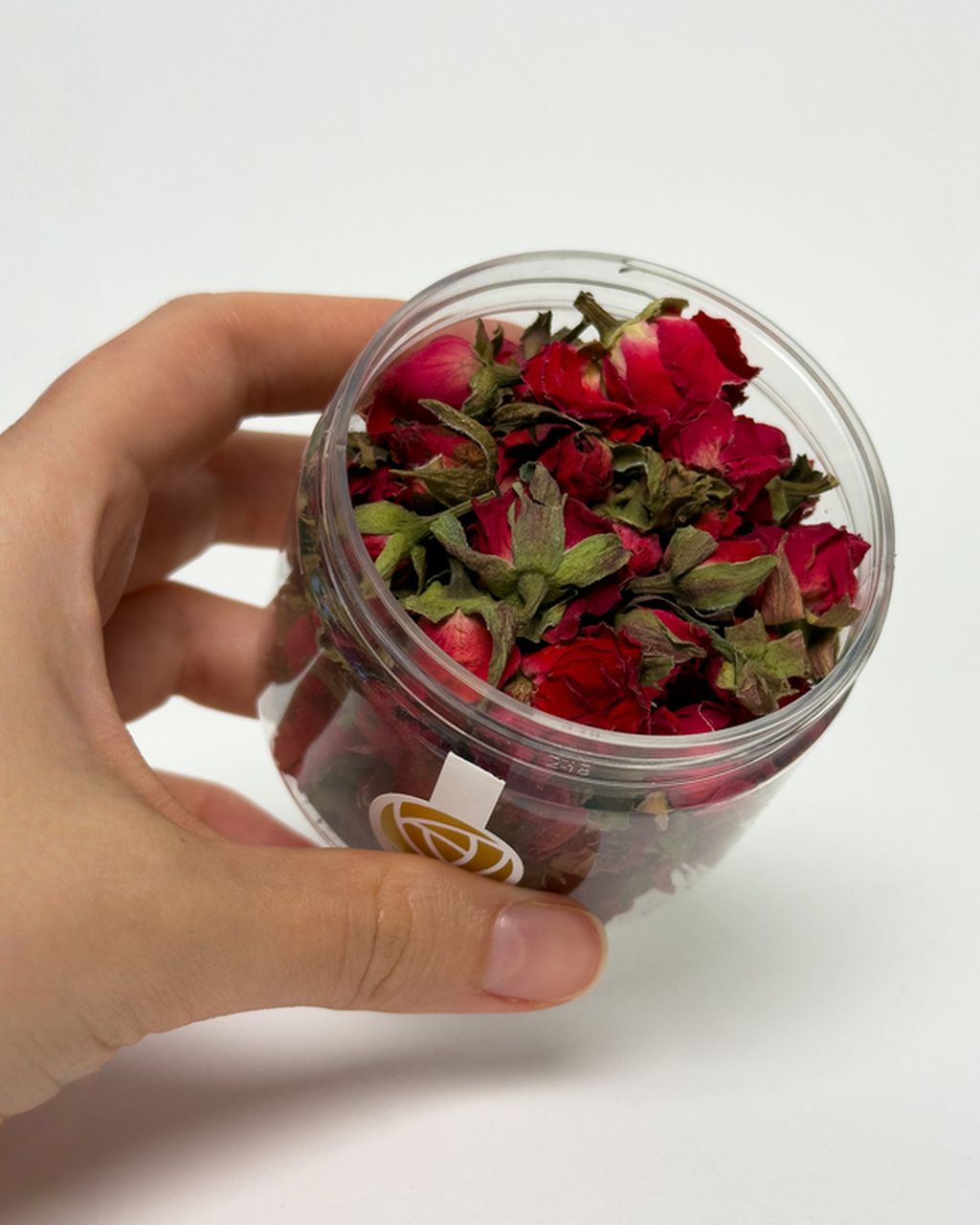
Dried edible flowers. Cornflower, rosebuds, or marigold, for a natural, "meadow" look.
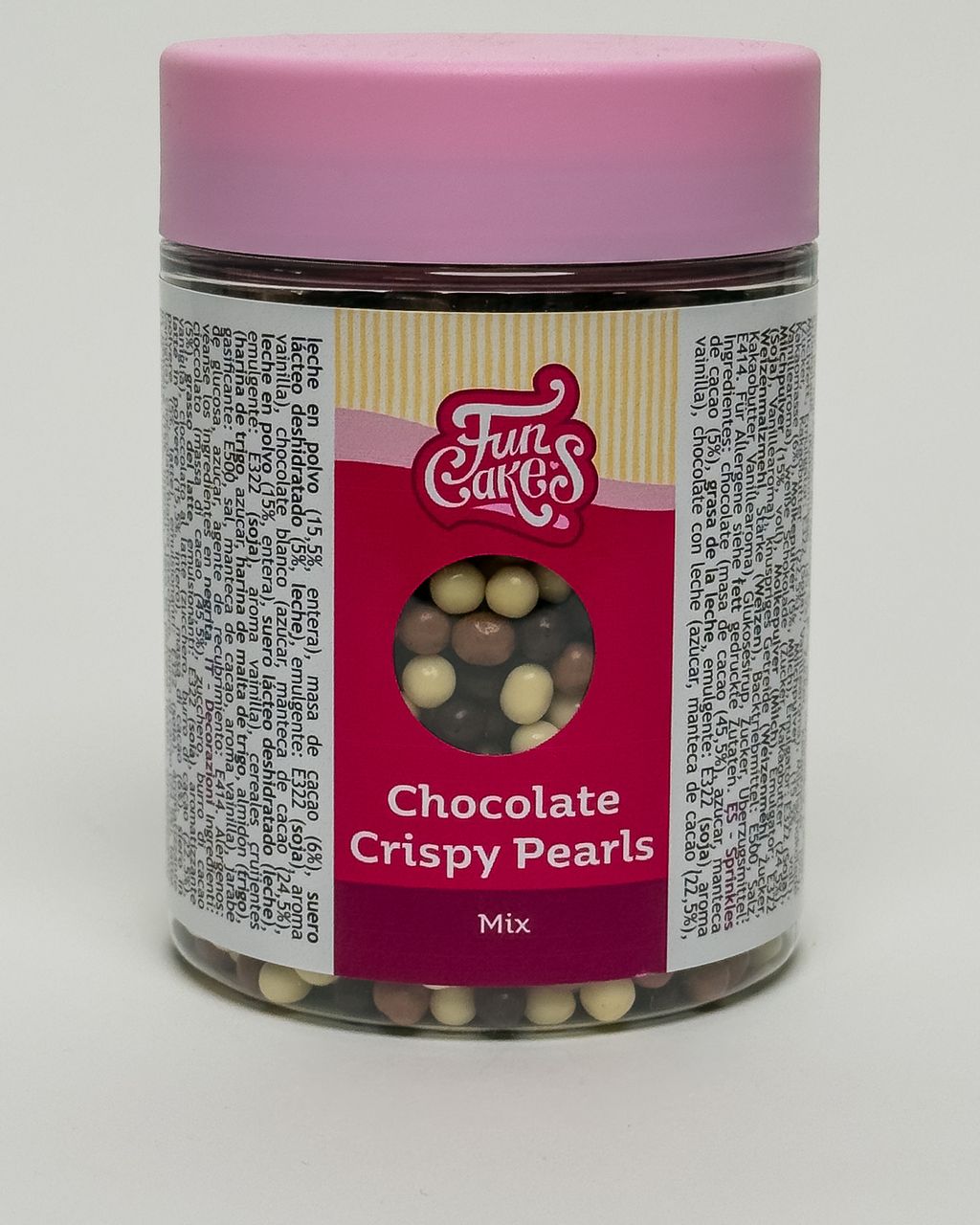
Crunchy pearls. Cereal balls coated in chocolate. Decoration and crunchy layer in one.
On top of that, there are decorations you make yourself: fresh fruit, fresh edible flowers, chocolate decorations, nuts, or meringues. You'll find a comparison at the end of the article.
For every group, two things matter most: how moist the surface is and time, meaning how many hours the decoration will sit on the cake before serving.
Add sugar sprinkles to the cake right at the end, onto frosting that's still slightly sticky. Ideally within 1–2 hours of serving. The dye in the sprinkles dissolves in moisture, and on whipped cream or quark frosting it will leave colored streaks after a few hours.
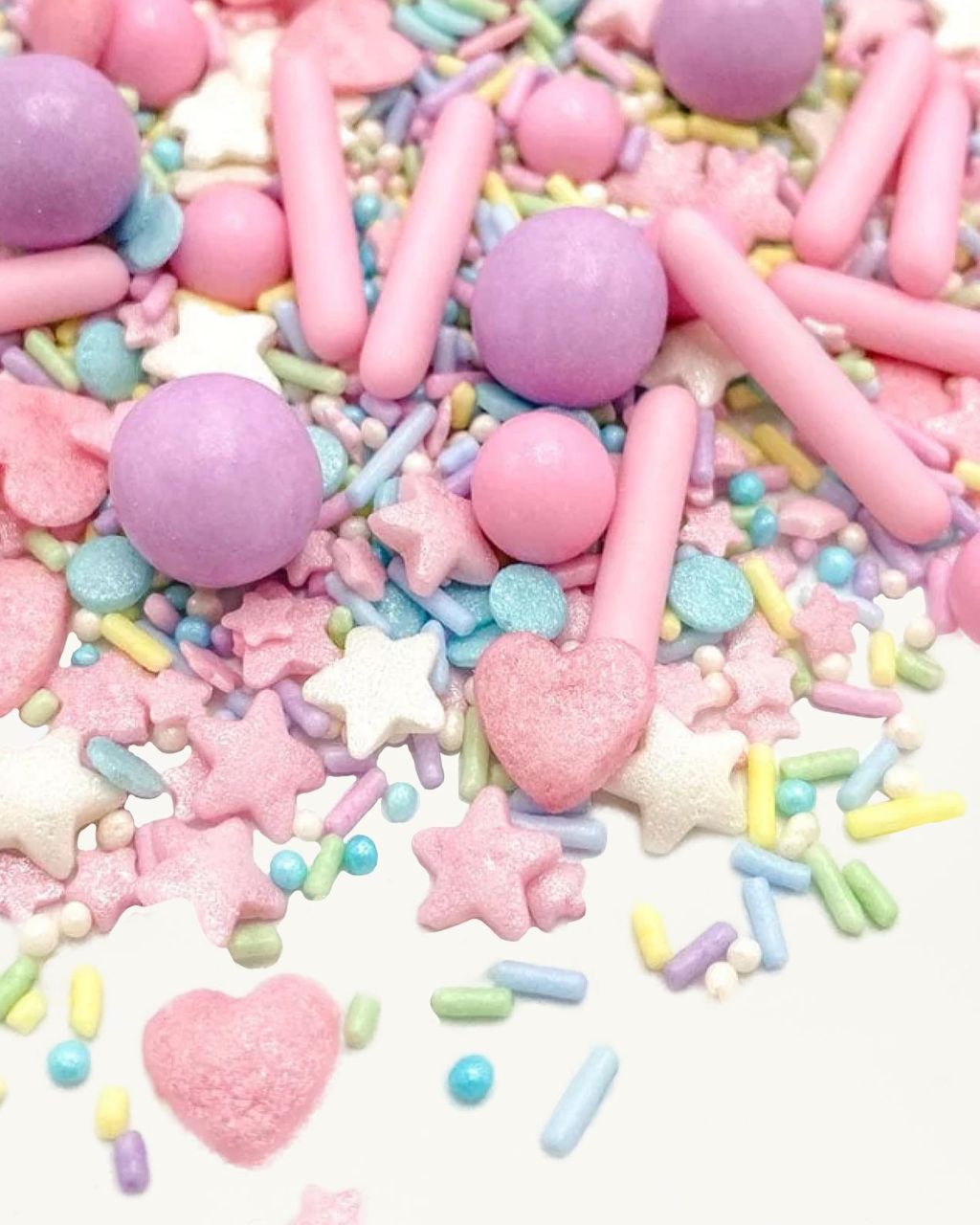
Sprinkles come in different shapes, and each shape suits a different purpose:
Tiny balls (nonpareils). For solid coverage on the sides or edge of a cake.
Jimmies. The classic "funfetti" look, holds onto frosting better than ball sprinkles.
Confetti and shaped sprinkles (hearts, stars, lips). An accent, not a full coating.
XXL pearls. Place them individually, with tweezers if needed.
Ready-made mixes. Several shapes and colors in one bag, color-coordinated. The simplest choice to start with.
How much sprinkle you need: roughly 30–50 g for the top of a 20 cm cake, 100–150 g to coat the sides fully. To coat the sides, scoop sprinkles into your palm and press them against the frosting. Put a tray underneath so they don't roll all over the kitchen.
For a step-by-step method, including edges and transitions, see How to decorate a cake with sugar sprinkles. If you want sprinkles baked right into the batter, read which sprinkles to use in a funfetti cake so the color doesn't bleed, since not every sprinkle survives baking.
Edible gold is real gold, 23–24 karat purity, rolled into sheets thinner than paper. It has a neutral taste and a shine nothing else can replicate. Look for E175 and the word "edible" on the label. Decorative gold leaf meant for crafts is not safe to eat.
Under EU rules, E175 is approved for surface finishing of confectionery and decorating chocolate. So on a cake, always place it on a chocolate element: ganache, glaze, a chocolate plaque, or a chocolate on top of the cake. That's also where it looks best.
How to work with it without sticking it to everything except the chocolate:
Don't touch it with your fingers. Skin is warm and moist and gold sticks to it instantly. Use tweezers or a dry brush.
Work without a draft. A sheet can fly off even from your breath.
The surface needs to be dry or just slightly tacky. It holds best on chilled ganache, set chocolate glaze, or a chocolate plaque. On wet whipped cream, gold wrinkles, turns translucent, and loses its shine.
Less is more. One or two sheets torn into flakes and clustered near the edge or on one side is enough for a chocolate element.
We cover gold accents for festive cakes in how to decorate a Christmas cake with stars, leaves, and edible gold. For gold, powders, and sprinkles together, check out sparkly New Year's Eve desserts.
Shimmer powder gives a cake a metallic or pearly shine, and you can apply it two ways. Dry, with a soft brush on a dry surface, for a subtle, diffused sparkle. Wet, mixed with a few drops of alcohol into a paint, for a deep, opaque metallic color.
Dry. For fondant, chocolate, set glaze, macarons, and pralines. Pick up a little powder on the brush, tap off the excess, and sweep it over the surface in circular motions. It doesn't apply well to frosting, since the powder soaks in and loses its shine.
Wet. About ¼ teaspoon of powder with 3–5 drops of vodka or lemon extract. This makes a thick paint for painting edges, glaze drips, or lettering. The alcohol evaporates within a few minutes, leaving the shine behind. Water doesn't work instead of alcohol, since the powder clumps in it and dissolves sugary surfaces.
Don't use powder to color an entire batch of frosting. It barely changes the color and you'd use a lot of it. Color the frosting with gel color instead and use powder just to add shine on top. If you want gold-tinted white chocolate, read how to color white chocolate first.
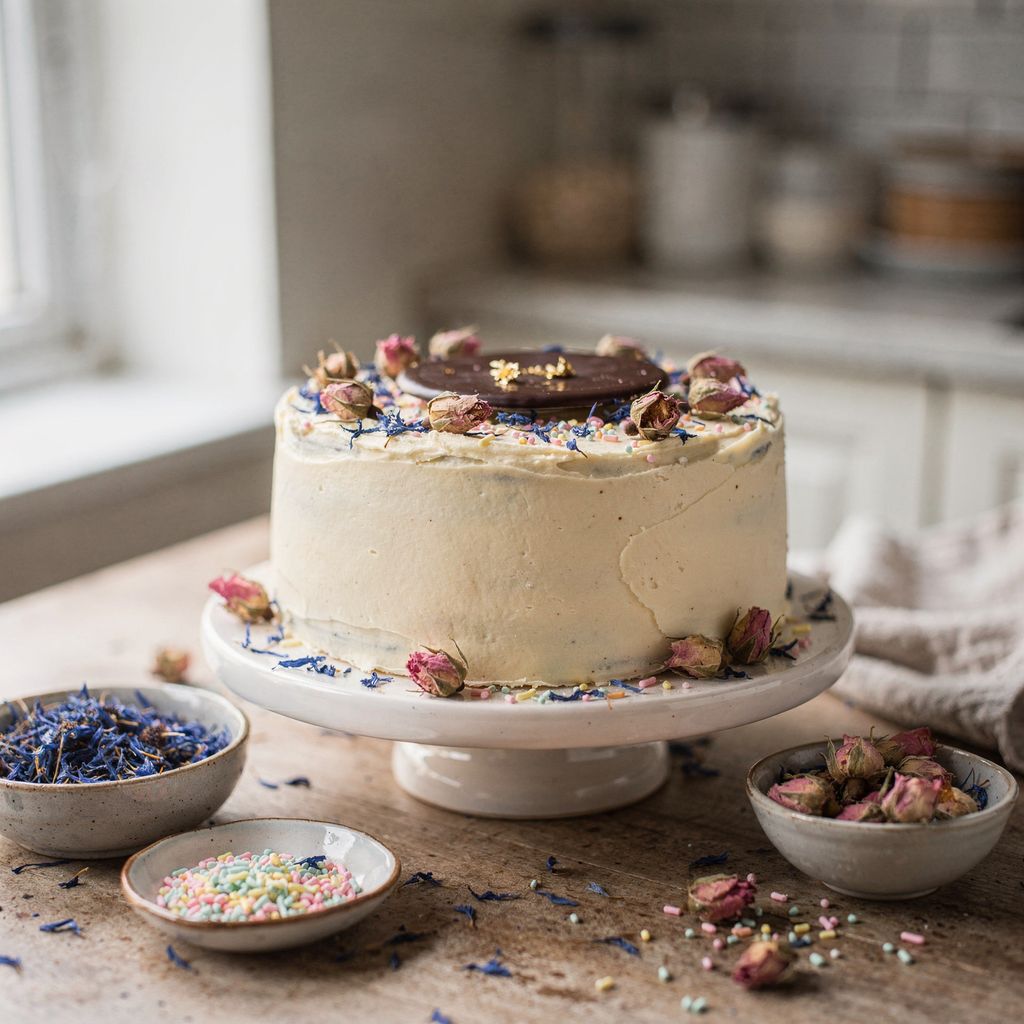
Dried edible flowers give a cake a natural, meadow-like look. The most common ones are cornflower (blue, pink, yellow), rosebuds and petals, and marigold. They taste mild at most, maybe a slight floral note, so you're mainly adding them for color. Lavender is the exception, since it has a strong scent. A few flecks are enough.
What matters most is what surface they sit on. Dried flowers absorb moisture:
Ganache, chocolate, buttercream, fondant. They last all day, the color stays rich and clean.
Whipped cream, quark frosting, mascarpone. Flowers absorb moisture within 2–4 hours, wilt, and blue cornflower may start to bleed color. Add them right before serving.
Fruit jelly or glaze. Flowers set into glaze look suspended like in ice and hold their shape, but gradually darken.
Buy flowers sold as food. Dried flowers from craft or potpourri shops are usually treated and not safe to eat. For more on working with flowers, where to use them, and how to store them, see Dried edible flowers and rosebuds. They also make a nice gift as homemade chocolate bars with edible flowers and nuts.
Crunchy pearls are cereal or cookie balls coated in chocolate. On a cake, they work two ways: on top as decoration and inside as a crunchy layer. The chocolate coating only protects them from moisture to a limited extent. On top of the cake they stay crunchy all day; inside the frosting between layers, they start softening within roughly 12–24 hours.
On top. Scatter them around the edge, onto glaze drips, or in a little pile in the center. On a chocolate cake, a mix of white, milk, and dark chocolate pearls looks subtly elegant.
Inside. Mix them into a thin layer of melted chocolate or praline paste, then spread that onto the cake layer. The fat coats them and they stay crunchy much longer than if mixed straight into plain frosting.
You'll find every trick for keeping pearls from going soft in Crunchy pearls: how to use them in cakes and sweets without them getting soggy. For a cake that also crackles, check out popping sugar. Add it just before serving, since it stops crackling in moisture.
Pearls work especially well on something like a simple chocolate cake, since the contrast between smooth glaze and crunch turns an ordinary cake into something special.
The wetter the surface, the later you should add edible decorations. Quick overview:
Whipped cream, quark, and mascarpone frosting. Sprinkles and flowers no earlier than 1–2 hours before serving, gold only on a chocolate element. Crunchy pearls right before serving.
Buttercream (chilled). Sprinkles, flowers, and pearls can go on a day ahead. Gold is the exception, since cold frosting fogs up with condensation after coming out of the fridge, and gold wrinkles on a wet surface. Add it only once the cake has come to temperature, and only onto a chocolate element.
Ganache and chocolate glaze. The most forgiving base. It holds gold, powders, flowers, and pearls, and decorations last longest on it.
Fondant. Both dry and wet powders, and sprinkles stuck on with a dab of water or edible glue.
Add sprinkles, gold, and powders to the cake only once you're done moving it around or covering it with foil. Anything that brushes against a box lid ends up stuck to the lid. You'll find the full range of decorations in the cake and cookie decorating category, neatly sorted into sprinkles, gold, powders, and flowers.
You can decorate a cake without ready-made decorations too: fresh fruit, fresh edible flowers, chocolate decorations, nuts, meringues, or the frosting itself. Each approach has its own strengths and weaknesses:
Fresh fruit. The most natural choice and the boldest in flavor. But it releases juice and browns at the cut, so it only lasts a few hours. Berries need nothing extra; sliced fruit should be brushed with melted cake glaze. See it in action in the recipe for a summer mascarpone cake piled with fresh fruit and in the article on decorating fruit cakes with strawberries, fruit, and edible flowers.
Fresh edible flowers (violets, marigold, borage flowers). They look beautiful but wilt within a few hours. They must come from your own garden or an organic source, never a florist, since cut flowers are usually treated with chemicals.
Chocolate decorations. Plaques, shavings, or drips made from tempered chocolate. Cheap, and the decoration lasts all day, but it takes a bit of practice. For the basics of tempering, see how to dip sweets in chocolate so they stay glossy; for round shapes, try chocolate bowls made with balloons.
Nuts and roasted seeds. Pistachios, hazelnuts, or caramelized almonds. Flavor and crunch, but watch out for allergies.
Meringues. Small meringue kisses on top of a cake are light and crisp, but they go soft in moist frosting. See meringue kisses.
The frosting itself. Sometimes a well-piped edge is all you need. Find inspiration in the article on ruffle cakes.
Ready-made decorations win when you need staying power and reliability: a party cake traveling in a car, or a cake made a day ahead. Fresh decorations win when flavor matters most and the cake will be eaten within a few hours.
Sugar sprinkles, edible gold, and shimmer powders will keep for months in a sealed container stored somewhere dry and dark, usually right up to the date on the packaging. Dried flowers and crunchy pearls are more sensitive to moisture. Once opened, store them in a well-sealed container and use them within a few weeks, before the flowers fade and the pearls go soft. Don't put them in the fridge, as they'll fog up with condensation there.
Store edible gold flat, in its original booklet between the interleaving sheets, somewhere dry and away from drafts. Don't pull the sheets out ahead of time or fold them, since any touch of a finger or crease leaves a permanent mark. Only open the booklet right over the chocolate you're decorating, and transfer a sheet straight from it using tweezers or a dry brush.
Sugar sprinkles aren't always vegan or gluten-free: glossy sprinkles often contain shellac (E904), and some shaped sprinkles contain gelatin or wheat starch. Shellac is a resin produced by insects, so it isn't vegan. If you're vegan or avoiding gluten, always check the ingredients and allergen information on the pack.
You can freeze the cake, but not most of the edible decorations. Sprinkles fog up with condensation on thawing and bleed color, gold wrinkles, dried flowers soak up moisture, and crunchy pearls go soft. Freeze the cake plain, with just its coating, and add the decorations only after it's thawed in the fridge.
Edible gold is an EU-approved food additive, E175. It has no flavor or nutritional value. For children, small gold flakes are a better choice than a large sheet, which can stick to the roof of the mouth, and of course only gold sold as edible, never decorative gold leaf.
One recipe worth heating the oven for, one tip, and one deal from the shop. Nothing else.