Chocolate cupcakes with salted caramel cream
New Year's Eve Cupcakes: Black-and-Gold Decoration, Glitter & Sprinkles
Updated Oct 15, 2026
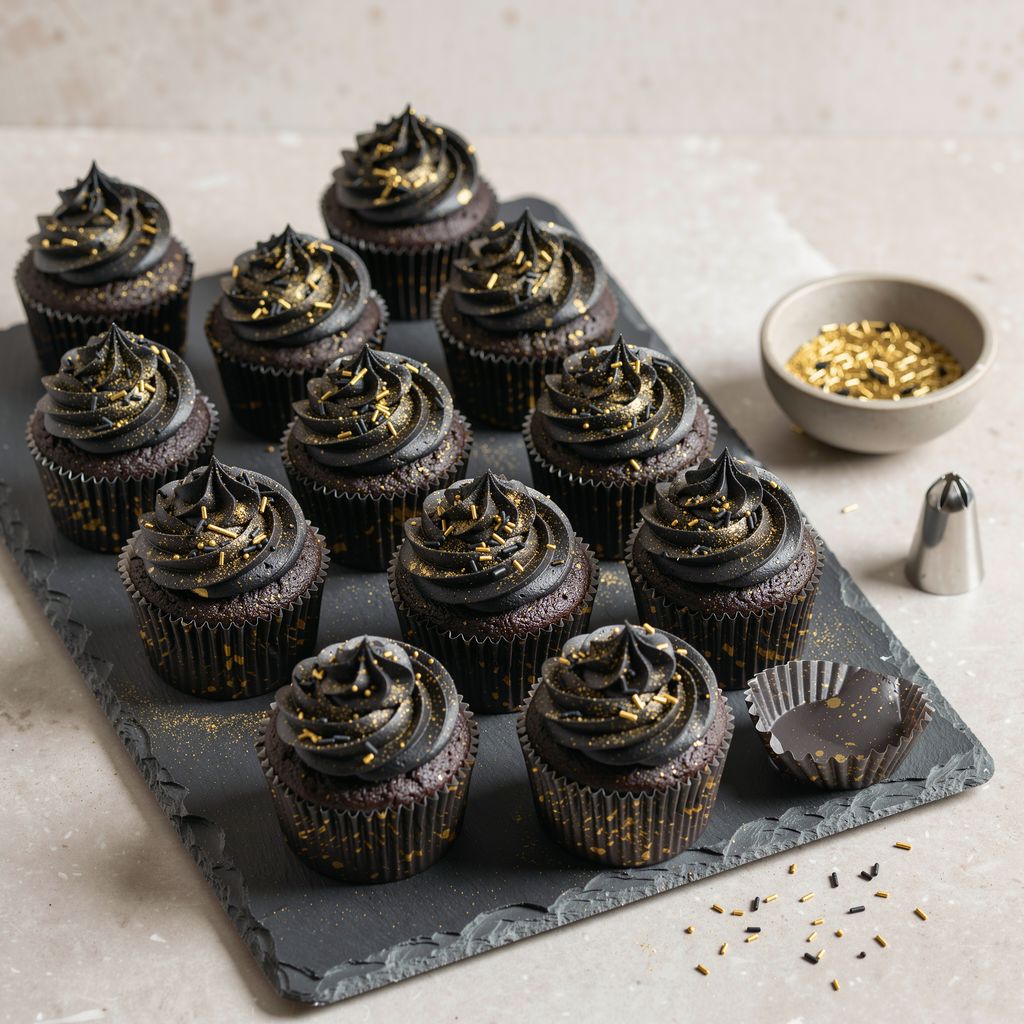
Black-and-gold New Year's Eve cupcakes come down to three things: a dark base (chocolate sponge plus black or dark chocolate frosting), a gold accent (edible shimmer powder, sprinkles or gold leaf), and getting the order right — pipe the frosting, add sprinkles straight away, and dust with powder only at the very end. Here's how to mix frosting that's genuinely black rather than grey, which piping tip to use for the swirl, which glitters are actually edible, and how to prep the whole batch a day ahead so you're not stuck with a piping bag at midnight.
For twelve black-and-gold cupcakes you need five things: a dark base, a frosting that holds its shape, black gel colour, a gold accent, and liners that won't turn grey. Specifically:
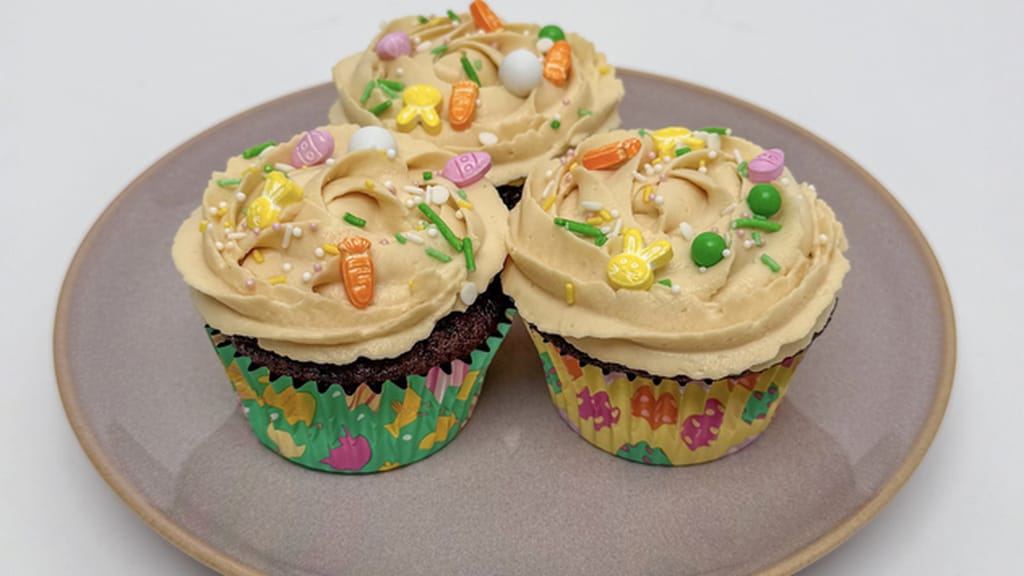
Base: chocolate — a dark batter won't show through black frosting when you bite in. A reliable base is chocolate cupcakes with caramel frosting; just swap the caramel for the black frosting below.
Frosting: roughly 450–500 g for 12 cupcakes with a tall swirl. Buttercream, ganache or a mascarpone frosting — the key is that it holds its shape even at room temperature.
Colour: gel, not liquid. Liquid colouring thins the frosting before it ever turns black.
Gold: edible shimmer powder, sugar sprinkles with gold pieces, or edible gold leaf.
Liners: foil-backed or sturdy paper with a dark print — more on that below.
Chocolate cupcakes with salted caramel cream
Chocolate cupcakes with caramel frosting — the base for black-and-gold New Year's Eve cupcakes
Seasonal baking plans, tested recipes and kitchen tricks that save you time. Unsubscribe in one click.
To get a deeply black frosting, start from a dark, chocolate-based frosting and add the black gel colour on top of that — starting from pale, yellowish butter tends to give you grey or greenish undertones instead. Cocoa does most of the work for you, so you only need a fraction of the colouring.
Stir 30–40 g of cocoa (ideally Dutch-process, for a darker tone) or 100 g of melted dark chocolate into 450 g of finished buttercream.
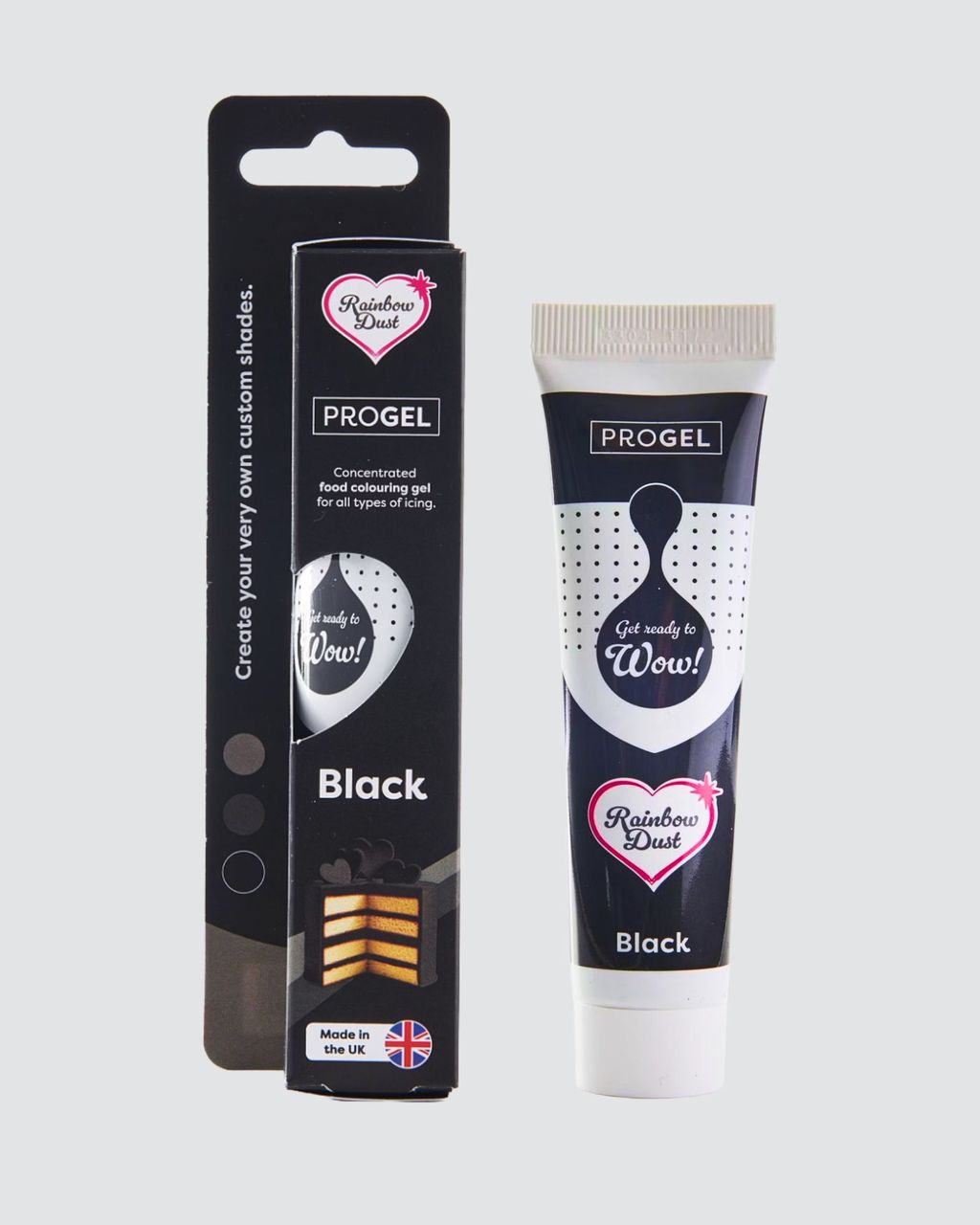
Add black gel colour a few drops at a time with a toothpick — Rainbow Dust ProGel Black is a thick gel, so the frosting won't thin out.
Once the frosting is dark charcoal, stop. Cover it and let it sit for 2–12 hours — the colour keeps deepening, and by the next day the charcoal turns proper black.
Give the frosting a quick re-whip before piping, to bring back a smooth texture.
Why this works: the colour keeps deepening as the frosting sits, so what you see right after mixing isn't the final shade. Keep adding colour until it looks black "right away" and you'll end up with a bitter taste and stained teeth.
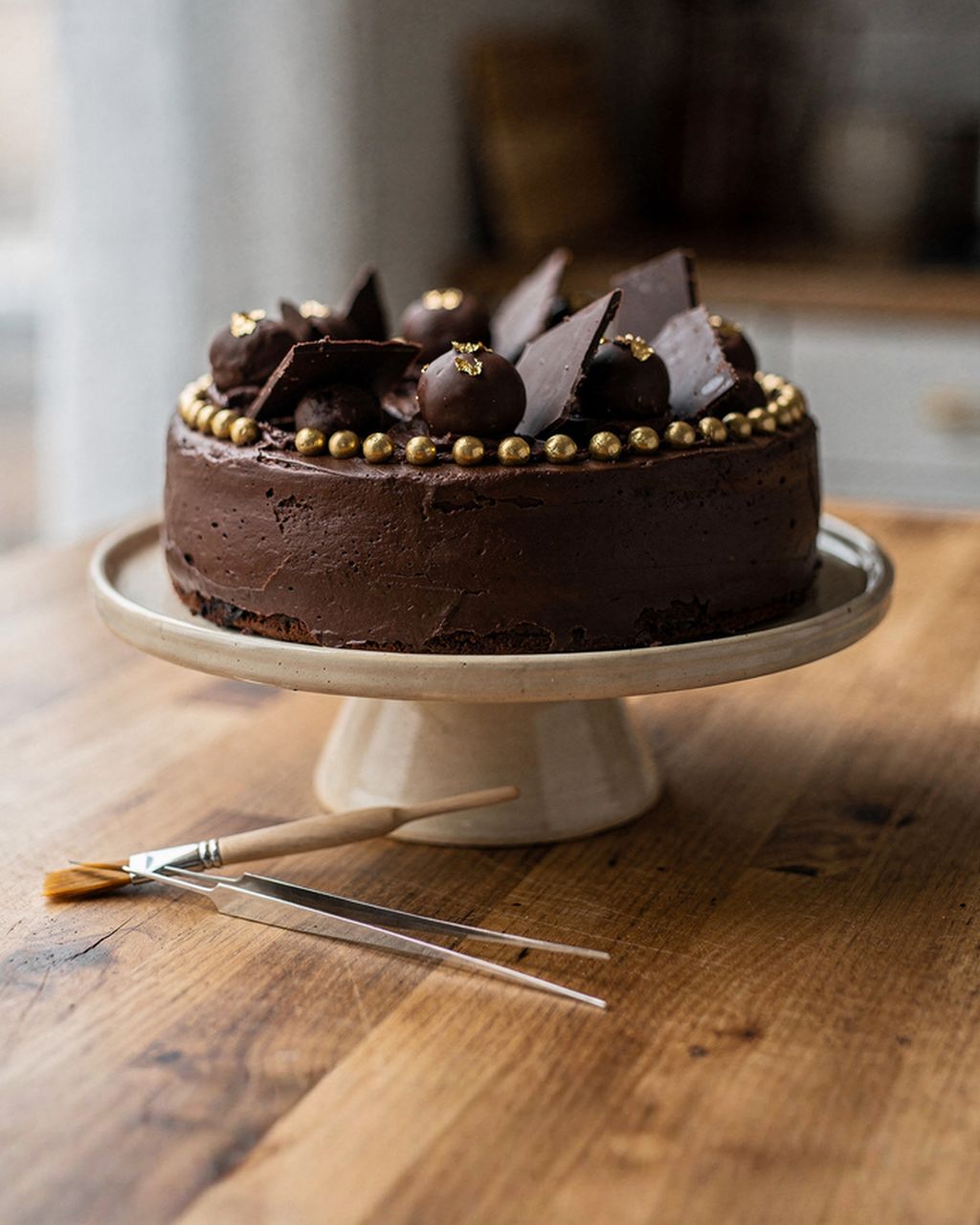
A colouring-free alternative: dark chocolate ganache (2 parts chocolate to 1 part cream) comes out dark brown, almost black, and looks just as elegant on a black-and-gold table.
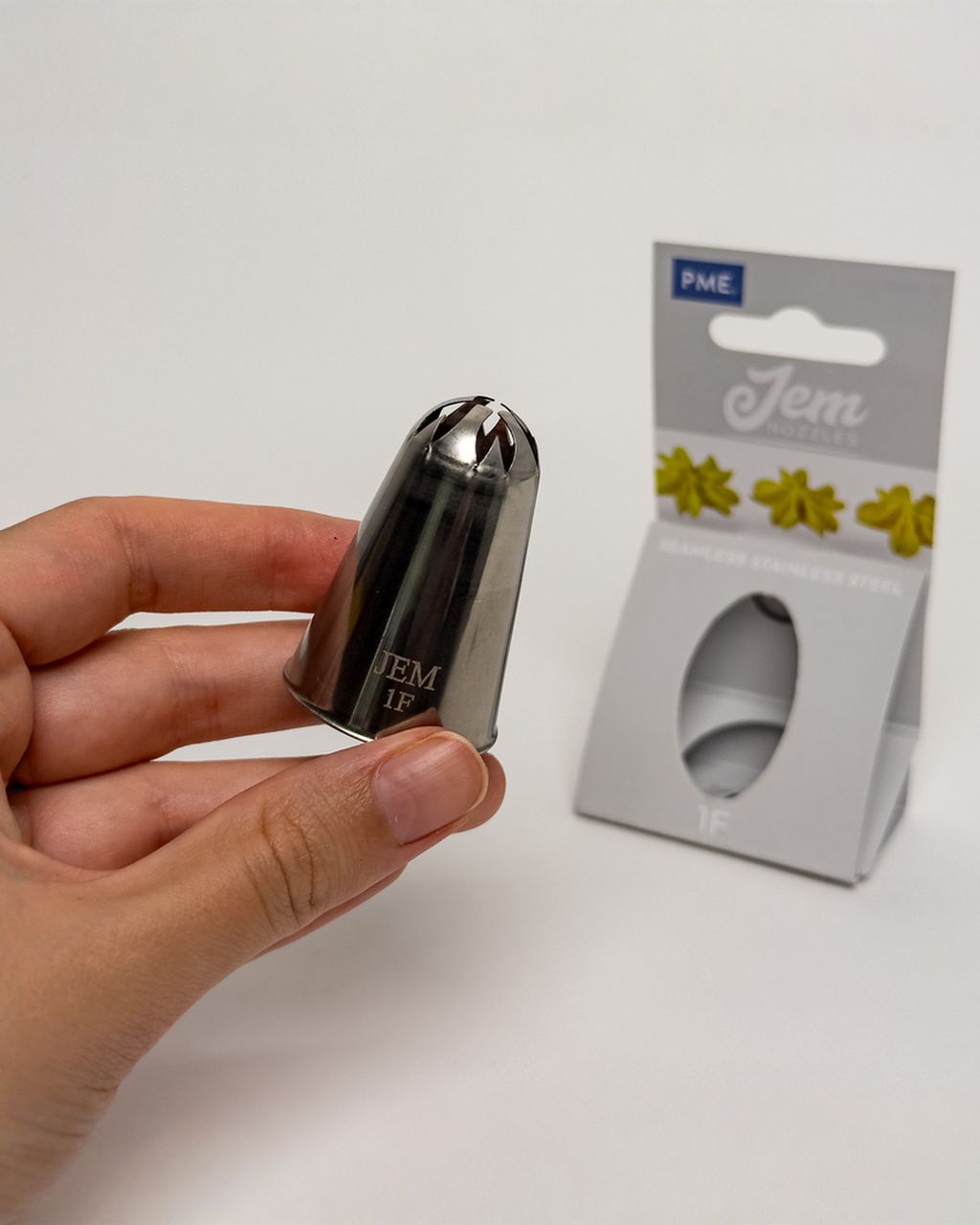
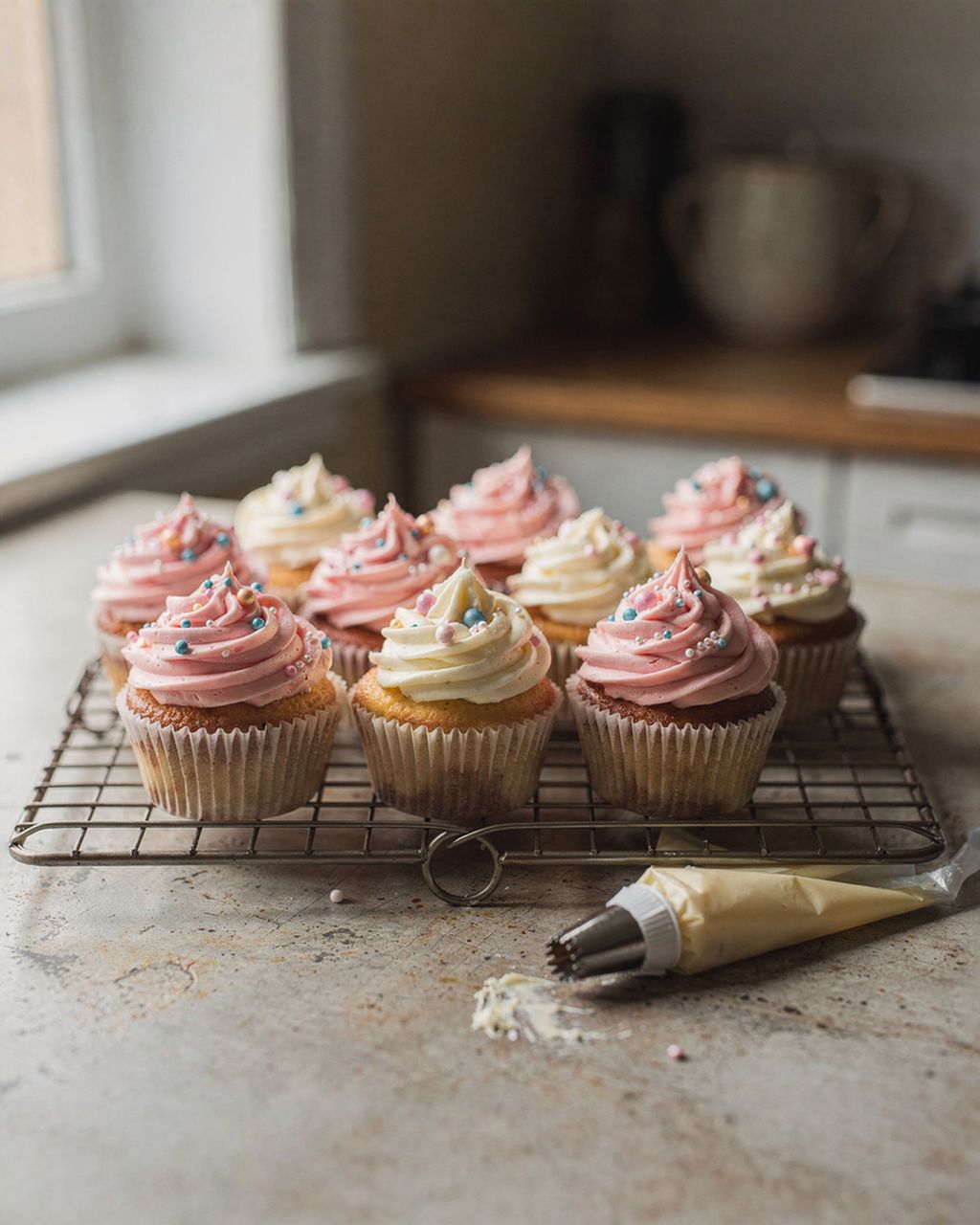
For New Year's Eve cupcakes, reach for a JEM 2D if you want a rosette, a JEM 1F if you want a tall star swirl — or a plain round tip if you want a smooth dome under a generous helping of sprinkles. The 2D and 1F are both large cupcake tips, but each catches the light differently — and on dark frosting that difference shows more than it does on white.
JEM 2D (closed star): the teeth curl inward, giving deep, narrow grooves. Pipe from the centre outward for a rose, from the outside in for a ring, or straight up for a classic swirl. The deep grooves only pick up gold powder on the ridges — black at the base, gold on the edges.
JEM 1F (more, finer teeth): gives a taller, "fluffier" swirl with denser ridging. Sprinkles stick to it more easily, since there's more flat surface for them to land on.
A plain round tip (a snipped piping bag works too): gives a smooth dome that shows off a big piece of gold sprinkle or gold leaf.
Technique for both star tips: hold the bag upright, 1 cm above the cupcake, pipe with even pressure, and release that pressure before lifting the tip away — otherwise the peak tears sideways. One 30 cm piping bag covers 12 cupcakes; find more pointers in our article on frosting that holds its shape.
Add sugar sprinkles right after piping each cupcake, within five minutes — before the frosting sets a skin on top. Chilled buttercream crusts over in 10–15 minutes, and after that sprinkles just roll straight off.
Pipe one cupcake, sprinkle it, then move to the next. Don't pipe all twelve first and sprinkle afterwards.
Don't scatter sprinkles from above. Pick up a pinch between your fingers and press it against the ridges of the swirl — it'll stay exactly where you put it.
For larger pieces (stars, pearls, confetti), press each one gently into place with tweezers.
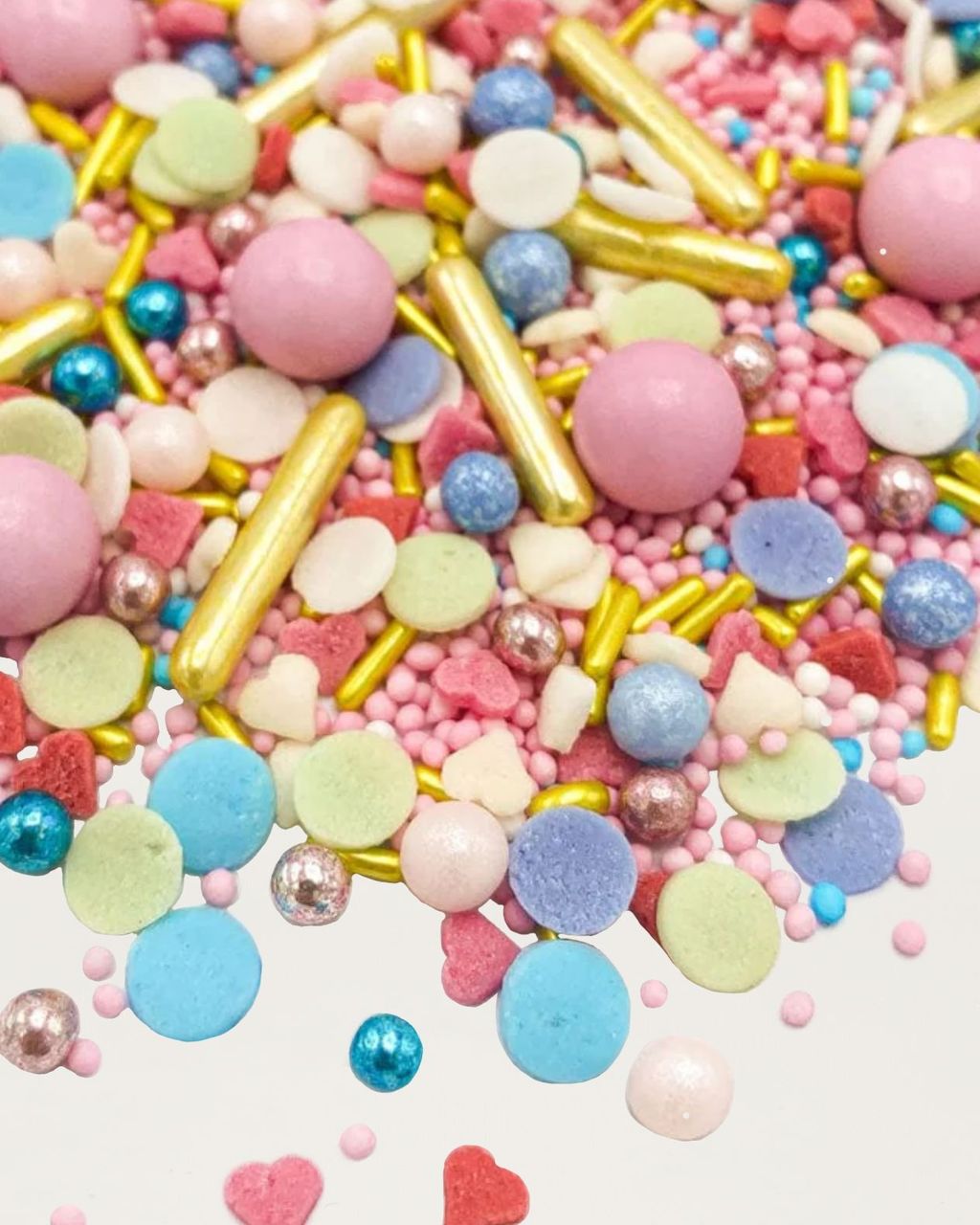
For a black-and-gold palette, Happy Sprinkles Queen of the Dancefloor is pretty much made for this — a mix of shapes and sizes, so one tub looks like three. If you'd rather keep it minimal, plain gold pearls plus one large star on top will do the job.
The same rule applies to ganache, just with a shorter window: in a cool room, ganache sets within minutes.
Apply gold shimmer powder as the very last step, dry, onto frosting that has already set a skin — after 15–20 minutes in the fridge. On fresh, tacky frosting the powder will clump into dull patches instead.
Three methods, depending on the effect you want:
Gold ridges (easiest): load a little powder onto a dry, soft brush, tap off the excess, and lightly skim it over just the ridges of the swirl. The deep grooves stay black.
The whole swirl shimmering: put the powder in a small tea strainer and tap the rim to dust it over the cupcake from about 10 cm up.
Gold paint: mix the powder with a few drops of pure alcohol (vodka) or lemon extract into a thick "paint" and brush it on — the alcohol evaporates within a minute. This works on firm decorations (chocolate shards, fondant, a chocolate shell edge), not on buttercream, which would simply melt.
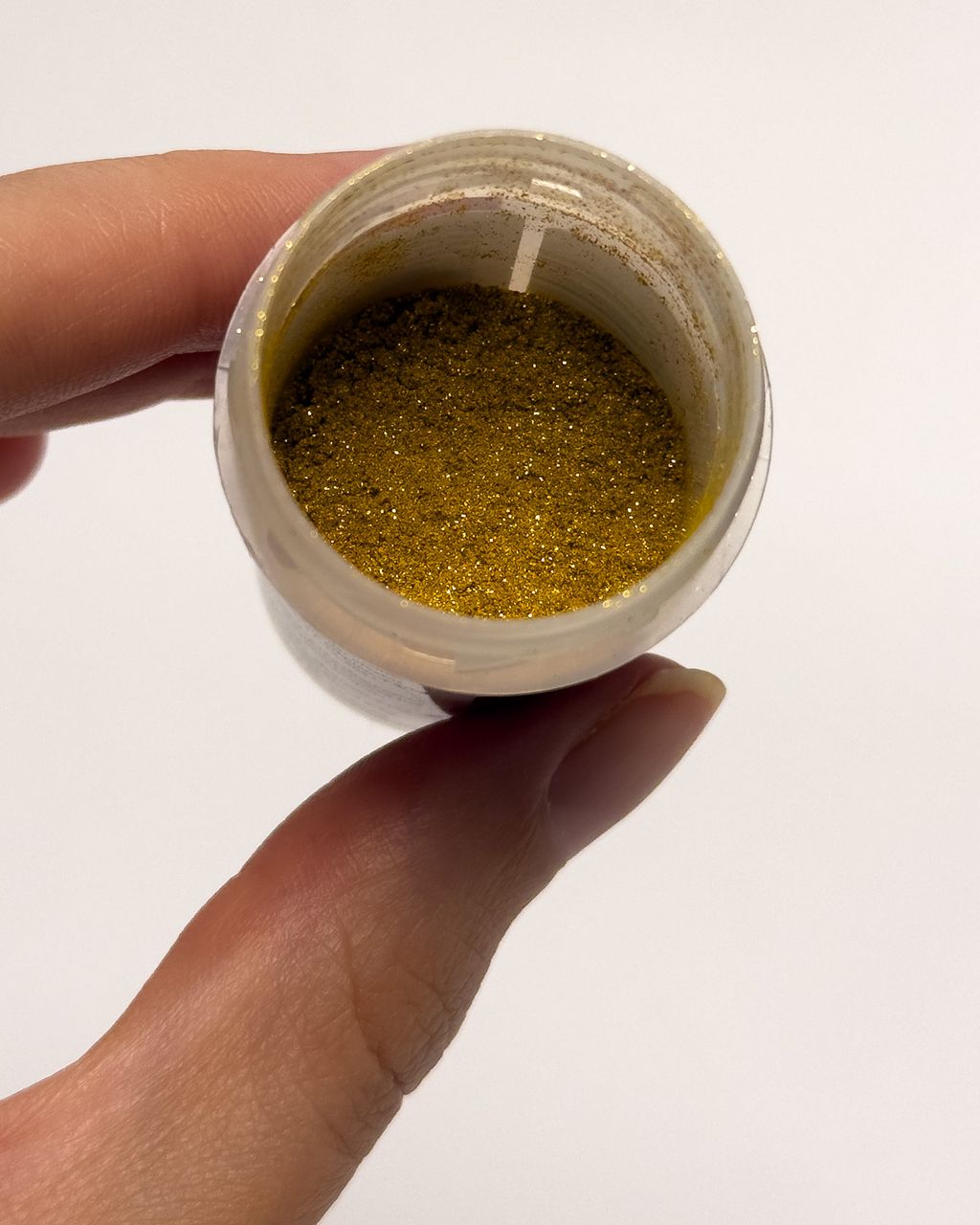
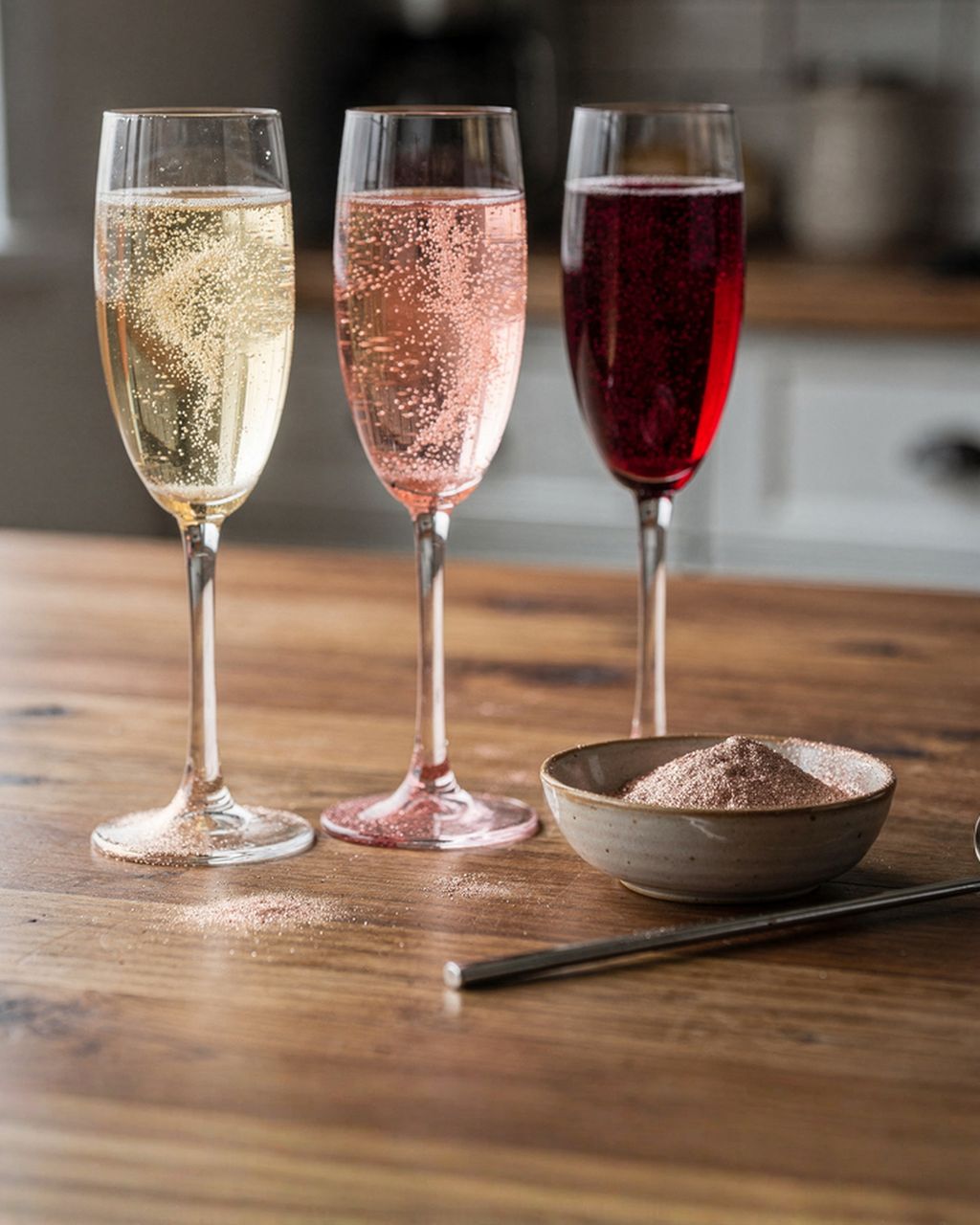
For a classic gold, there's Sugarflair Edible Shimmer Powder – Gold; for a softer rose-gold tone, go for the pinkish gold version. For twelve cupcakes you'll use a fraction of a gram — one tub will last you several New Year's Eves.
Only glitter labelled edible, with a full ingredient list in E-numbers, belongs on a cupcake — "non-toxic" or "for decoration only" means it's not meant to be eaten. This is a common mix-up: non-toxic (decorative) glitter is usually plastic and isn't intended for consumption. Only glitter and powders explicitly labelled edible belong on cupcakes.
How to tell from the packaging:
Edible: the word "edible," with an ingredient list showing food additives — typically E555 (potassium aluminium silicate, a carrier for the pigment E172), E172 (iron oxides, which give the gold and copper tones), and sometimes E175 (gold). Edible gold powders sold in the EU typically combine E555 + E172.
Non-toxic / decorative: no ingredient list, or one listing plastic (polyester, PET), with wording like "non-toxic," "for decoration only," or "remove before eating."
Under EU rules, titanium dioxide (E171) has been banned from food since 2022 — the European Food Safety Authority (EFSA) stopped considering it safe back in 2021. Older glitter from outside the EU may still list it, so check the ingredients on any tubs bought abroad.
Gold leaf (E175, 22–24 carat) is edible and looks the most luxurious for New Year's Eve — just a small torn piece lifted onto the top of the swirl with tweezers is enough. It's pricey though, sticks to your fingers, and won't stretch far over a large surface. For twelve cupcakes, shimmer powder is the more practical and affordable way to get the same effect.
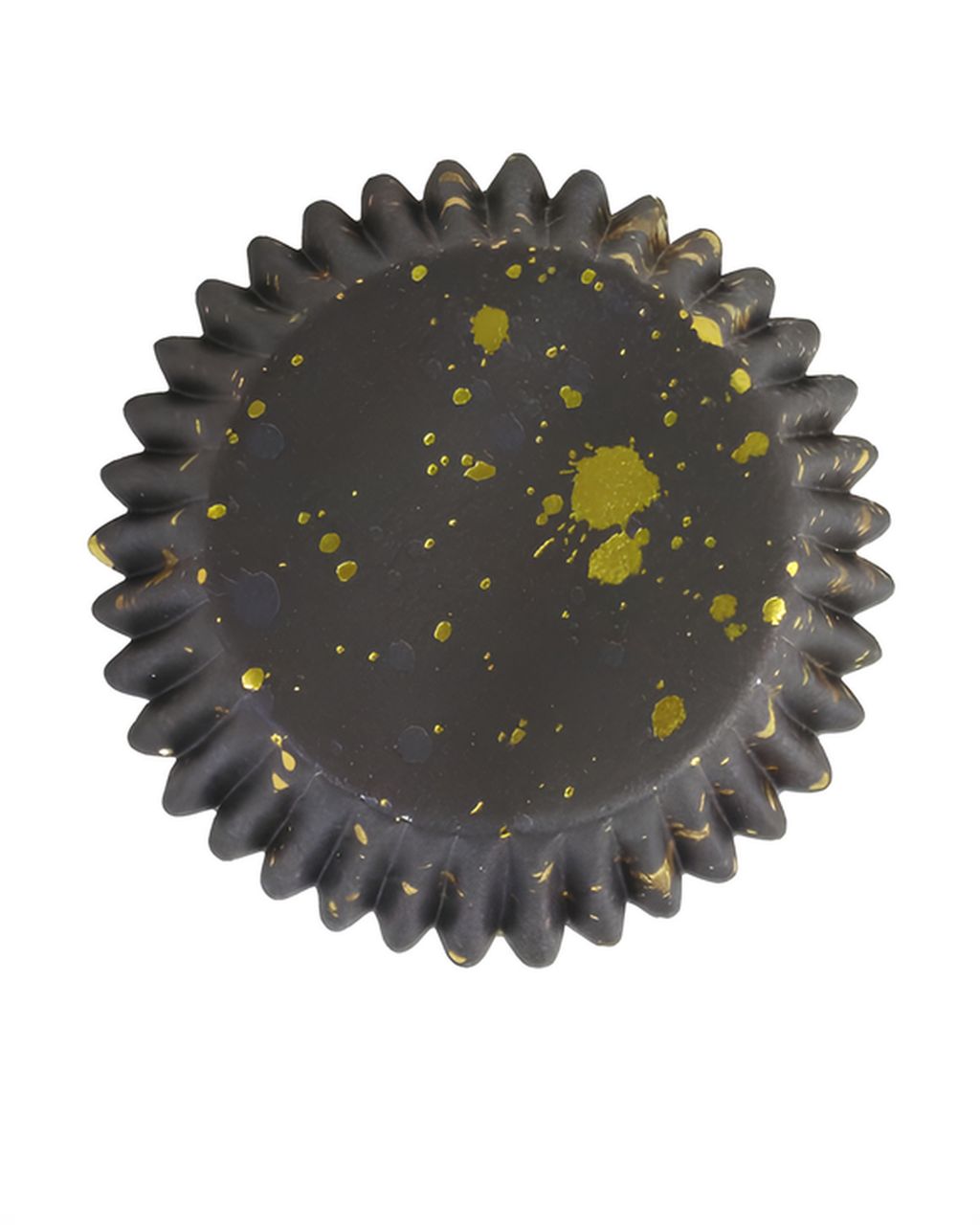
For chocolate cupcakes, use foil-backed liners — the metallic layer keeps the print crisp even after baking, whereas plain paper lets grease from dark batter soak through, turning a sharp black-and-gold pattern into a dull brown smudge. That's why for New Year's Eve we reach for PME Black & Gold Foil Cupcake Cases (pack of 30, enough for two full trays).
In fairness, tulip-style parchment liners (brown or black) work well too — they look café-style and don't let grease through, they just lack the shine. We wouldn't recommend plain white paper liners with dark batter. If you want to browse the full range, take a look at our cupcake liners; for a detailed comparison of materials, see Muffin and Cupcake Liners: Paper, Foil, or Tulip?
Tip: fill liners only two-thirds full. A flat top decorates far more easily than a dome — more on that in our piece on cupcakes with a flat top.
Spread the job over two days: bake the cupcakes and mix the black frosting on 30 December, then decorate on the afternoon of the 31st. The frosting darkens overnight, the cupcakes won't dry out in a sealed container, and your evening stays free.
30 Dec: bake the cupcakes, let them cool completely, and store in a sealed container at room temperature. Colour the frosting, cover it with plastic wrap pressed directly onto the surface, and refrigerate.
31 Dec, 2–4 hours before serving: take the frosting out, let it come up to room temperature (about 1 hour), and re-whip it. Pipe, add sprinkles, chill for 15–20 minutes, then dust with gold.
Until serving: keep the cupcakes somewhere cool, but not in an open fridge next to onions — buttercream picks up smells easily. Take them out 30 minutes before serving so the frosting isn't too firm.
Apply the gold powder only on the day of serving: fridge humidity can mute it slightly over time. For a full timeline, see Cupcakes Ahead of Time: When to Bake, Decorate and Store Them. And if you're planning a whole New Year's Eve spread — cakes, macarons, chocolate desserts — check out our sparkly New Year's Eve desserts.
Cupcakes with buttercream keep for 2–3 days in the fridge, or about a day at room temperature. Keep mascarpone or cream-based frostings refrigerated and eat them within 48 hours; let the cupcakes sit out for 30 minutes before serving so the frosting isn't too firm.
You can get black frosting colour off your teeth and tongue just by brushing your teeth or rinsing your mouth with water, since the colouring only sits on the surface. Whatever's left fades on its own as you eat and drink.
You can stir gold shimmer powder into cupcake frosting, but it will only give a subtle pearly sheen, not true gold shine. The shimmer really shows up when you dust the powder on top with a dry brush or sieve, over frosting that has already set.
In small amounts, black gel colouring won't change the taste of cupcake frosting — a few drops of thick gel in a cocoa-based frosting are undetectable. A bitter, slightly chemical aftertaste only shows up with the large amount of colouring you'd need to turn pale buttercream solid black. That's why you should start from a cocoa or chocolate base and let the frosting rest: you'll only need a fraction of the colouring, and the cocoa deepens the flavour too.
Add coloured sugar sprinkles on the day of serving, ideally just a few hours ahead. On moist frosting, and in the fridge, sprinkles can loosen over time and let the colour bleed into the frosting; metallic gold pearls and stars generally hold up longer than tiny coloured strands. Apply the gold powder right at the very end, onto chilled frosting.
One recipe worth heating the oven for, one tip, and one deal from the shop. Nothing else.