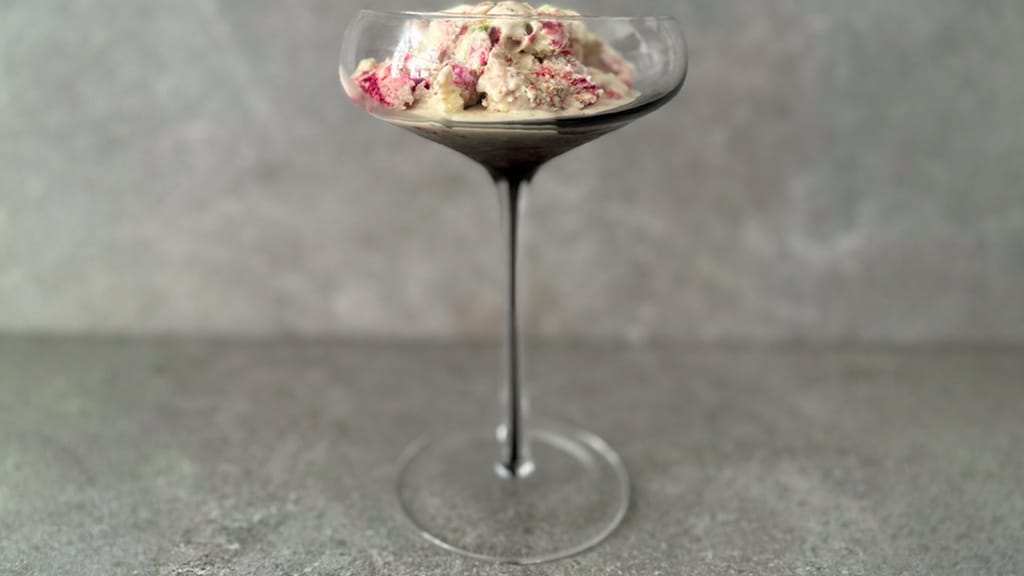
Homemade strawberry ice cream with basil and vanilla
Updated Aug 27, 2026
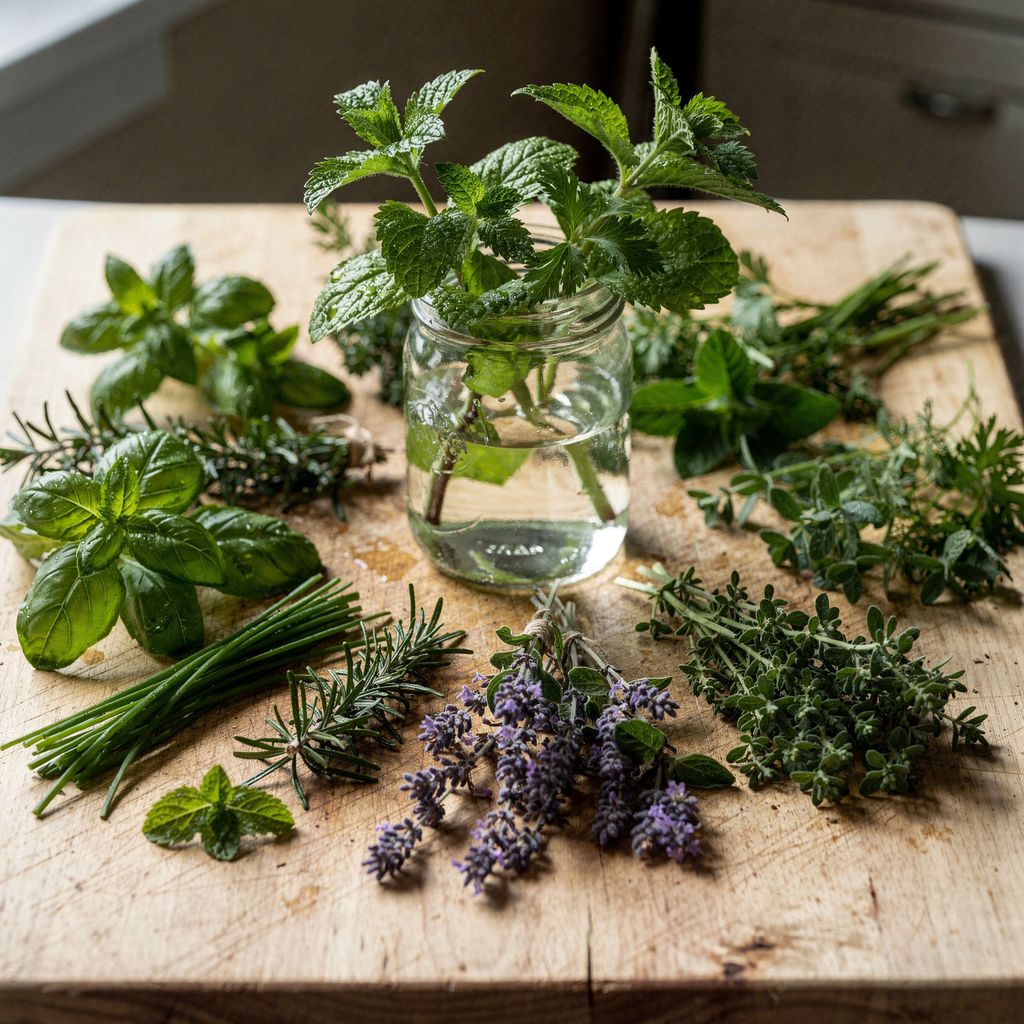
Summer herbs change a dish mostly through **when** you add them — not how much you use. Basil, mint, chives, coriander, parsley and tarragon belong right at the very end of cooking, or even on the finished plate. Rosemary, thyme and oregano, on the other hand, can take the heat and want time in the fat. Lavender is the exception in both directions: just a few buds, and it's better suited to cream than to meat. For each of the ten herbs below you'll find the same things: how it tastes, when to add it, what to pair it with, and how to store it so it lasts longer than three days.
The ten summer herbs you really need are basil, mint, rosemary, thyme, chives, coriander, parsley, oregano, lavender and tarragon. Each tastes different, and each has its own place in the cooking process:
Basil — sweet, with anise and clove undertones. Add at the very end. Goes with tomatoes, mozzarella, strawberries.
Mint — cooling, minty. Use raw. Goes with melon, peas, yoghurt, lime.
Rosemary — resinous, piney, the strongest of the lot. Add at the start. Goes with potatoes, lamb, apricots.
Thyme — earthy, understated, faintly peppery. Add at the start. Goes with poultry, mushrooms, peppers, honey.
Chives — mildly onion-like and sweet. Never cook. Goes with eggs, curd cheese, potatoes.
Coriander — citrusy, soapy to some people. Raw, off the heat. Goes with lime, coconut, chilli.
Parsley — fresh, grassy, clean. By the handful, not the pinch. Goes with fish, garlic, lemon.
Oregano — earthy and peppery, better dried than fresh. Add early to sauces. Goes with tomatoes, feta, lamb.
Lavender — floral and easy to overdo. Use by the bud. Goes into cream, sugar, honey.
Tarragon — aniseedy, faintly sweet, dominant. Add at the end. Goes with chicken, eggs, buttery sauces.
Add soft herbs right at the end, woody herbs at the start. That's the one rule you really need to know by heart, and it comes down to where the aromatic compounds sit in the leaf.
Soft herbs carry their aroma in thin leaves, just under the surface. Two minutes on the stove and it's gone — all you're left with is cooked green matter. Woody herbs hold their oils in tough, waxy needles and leaves, and release them slowly, into fat and heat. Throw them onto a finished dish and you won't flavour anything — you'll just be chewing.
Soft herbs (add at the end, off direct heat): basil, mint, coriander, parsley, chives, tarragon, dill.
Woody herbs (add at the start, into fat): rosemary, thyme, oregano, sage, savory, marjoram.
If you're not sure, use the two-batch trick: add half the herb early on so its flavour merges into the base, and stir the other half in fresh, finely chopped, right on the plate for fragrance. It works brilliantly with parsley in a stew or thyme in roasted vegetables.
Basil tastes sweet with anise and a faint clove undertone, and belongs in a dish right at the end — heat burns off its aroma within a few minutes. Thai basil pushes the anise note harder and handles heat much better, so it works well in a wok too. Lemon basil adds a citrus lift to salads and desserts.
Tear the leaves by hand rather than cutting them with a knife, if you can help it. A cut edge oxidises and browns faster, and with large leaves that difference shows within minutes. For pesto it doesn't matter — it's all going into the blender anyway. For a salad, it does.
And the main thing most people get wrong: don't put basil in the fridge. It's a heat-loving plant and suffers chilling injury below roughly 12°C, with serious damage below 10°C — the cell walls break down, the leaves go waterlogged and turn black. According to storage studies, this happens within a day at 0°C, and within about three days at 5°C. Leave it on the counter in a glass of water, like a bunch of flowers.
When to add: in the last minute, or straight onto the plate.
Pairs with: tomatoes, mozzarella, olive oil, strawberries, lemon, pine nuts, peaches.
Storage: stems in a glass of water, room temperature, out of direct sun.
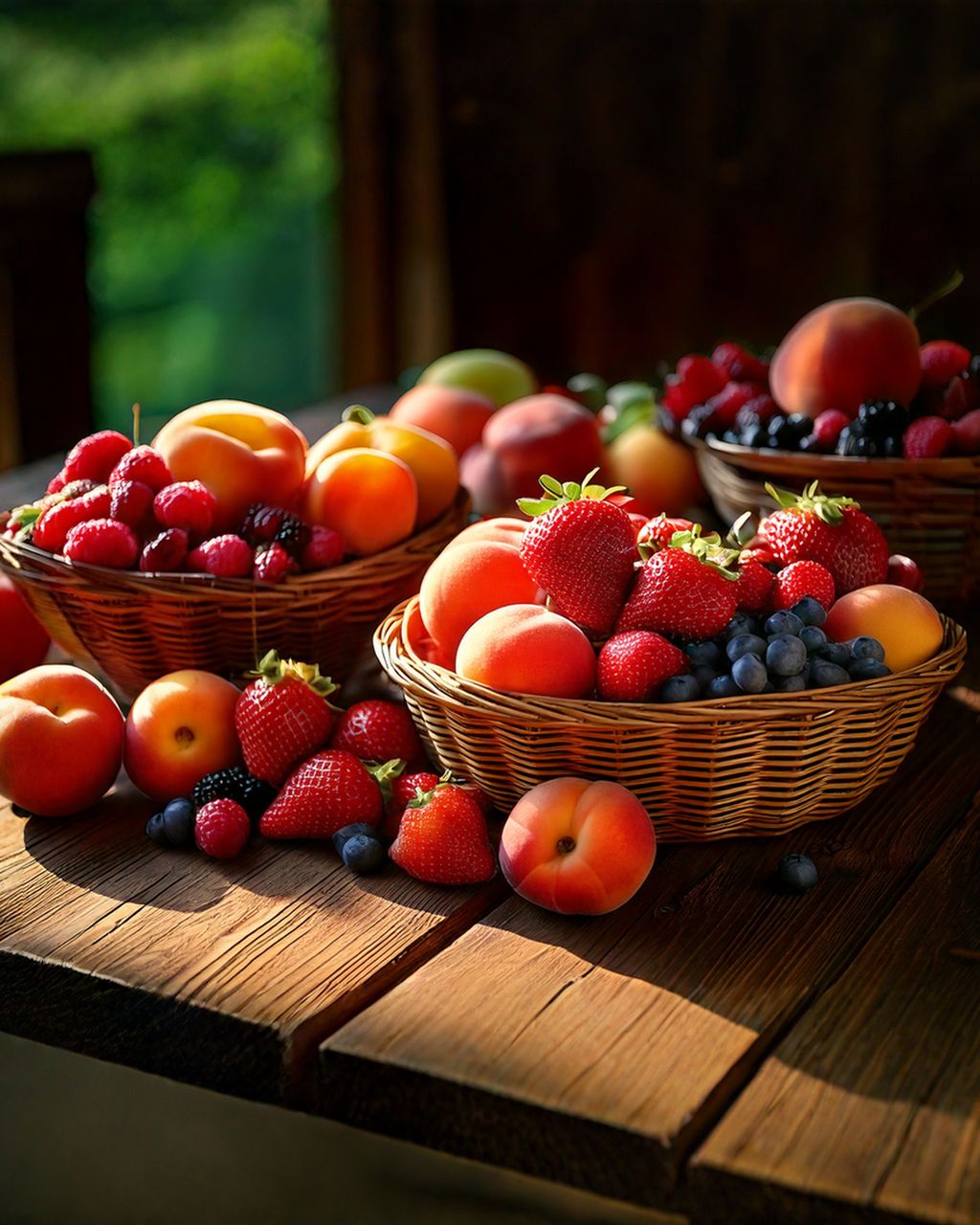
Homemade strawberry ice cream with basil and vanilla
Strawberry basil ice cream: proof basil isn't just for tomatoes
Mint feels cooling because it contains menthol, which triggers the same receptors in your mouth that respond to cold — so the food registers as chillier than it actually is, even at room temperature. That's why mint works better on a hot summer day than any other herb.
Which type you pick depends on where it's going. Peppermint is intense and sharp, and suits drinks, chocolate and teas. Spearmint is milder and sweeter, and it's the right one for food — for a yoghurt tzatziki, with peas, with lamb, in yoghurt-based dressings.
Here's a small correction you rarely hear: what's sold as "lemon mint" is often actually lemon balm — a different plant that smells citrusy but contains no menthol, so it won't give you that cooling effect. There is a true lemon mint (Mentha × piperita citrata), but even that is low in menthol. Both are lovely in lemonade; neither is a good stand-in for mint in tzatziki.
If you're planting it in the garden, sink a bucket into the ground and plant it inside that. Mint spreads via underground runners and will take over a whole bed within two seasons.
When to add: raw, at the end. Cooking makes it bitter and kills the cooling effect.
Pairs with: melon, peas, yoghurt, lime, cucumber, lamb, dark chocolate, strawberries.
Storage: a soft herb, but it handles cold well — stems in a glass of water, in the fridge, keeps 7–10 days.
Try it in drinks, in a Hugo with elderflower syrup or in a strawberry mint smoothie.
Rosemary tastes resinous and piney and is the strongest of all ten — one four-inch sprig is plenty for four servings. Its aroma is locked into tough needles and only releases into fat and heat, so it belongs in the pan right from the start.
There are two ways to work with it. Either add the whole sprig to the dish and pull it out before serving — the needles are hard and unpleasant to bite into — or strip the leaves and chop them really finely, almost to a powder. Nothing in between really works.
When grilling, don't throw sprigs onto the coals at the start — they'll just burn to ash. Lay them next to the meat on the grate, or toss them onto the hot coals in the last two or three minutes — that way the meat picks up smoke scented with rosemary, not just smoke. A woody sprig also doubles nicely as a skewer.
And don't underestimate rosemary in sweet dishes. It works beautifully with apricots, plums, pineapple, honey and dark chocolate.
When to add: at the start, into hot fat.
Pairs with: potatoes, lamb, pork, lemon, garlic, beans, apricots, honey.
Storage: a woody herb — wrap in a slightly damp cloth and keep loose in the fridge. Dries beautifully and holds its flavour.
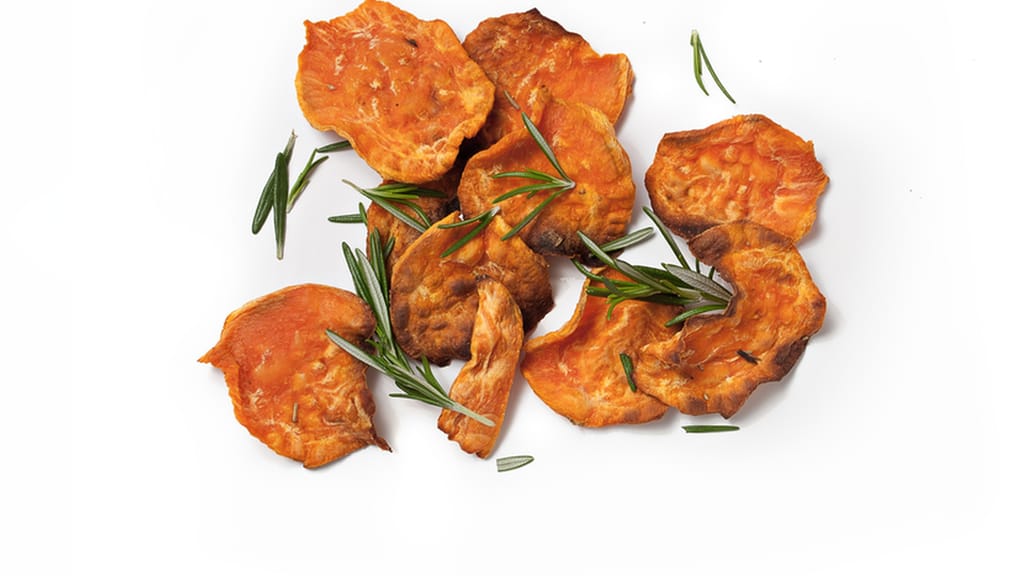
Rosemary sweet potato chips
Sweet potato rosemary chips: rosemary in fat and in the oven, exactly as it should be
Thyme tastes earthy with a faint peppery edge and belongs in a dish from the start, sprig and all, into fat or liquid. Unlike rosemary or tarragon, it doesn't push to the front — it settles under the other flavours and supports them, so you won't taste it directly in the finished dish, but the dish is deeper for it. That's why it ends up in stocks, sauces and every other roasted vegetable dish.
It's the easiest of all the woody herbs to work with: throw the whole sprig into the pot and cook. The leaves fall off on their own as it cooks, and you pull out the bare stem at the end.
Lemon thyme (Thymus citriodorus) is its own category. Its citrus compounds are more volatile than in ordinary thyme, so add it later in the cooking, in the second half — otherwise you're left with only the earthy part. It's perfect scattered with coarse salt over homemade focaccia.
Thyme is also one of the few herbs that works in sweet dishes and preserves too — try a cherry jam with mixed pepper and thyme or a blueberry ice cream with honey and thyme.
When to add: at the start, whole sprig. Lemon thyme in the second half of cooking.
Pairs with: poultry, mushrooms, peppers, potatoes, lentils, honey, cherries, blueberries, lemon.
Storage: a woody herb — damp cloth and the fridge. Dried thyme is one of the few dried herbs actually worth keeping.
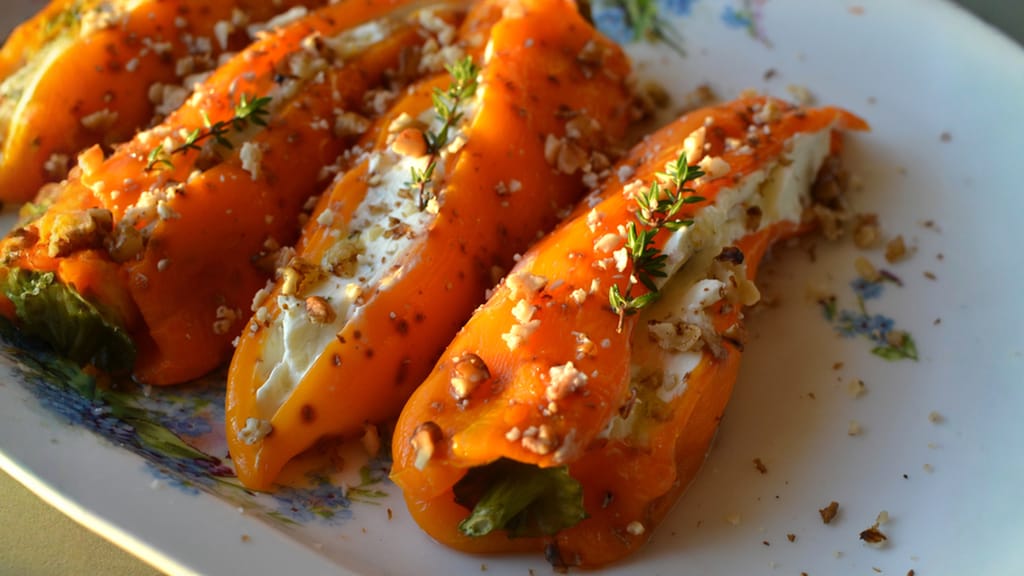
Roasted peppers with fresh cheese and thyme
Roasted peppers with fresh cheese and thyme
Never cook chives. The sulphur compounds behind their mild onion flavour break down with heat — after two minutes in a soup, all that's left is a flavourless green thread. Snip them with scissors straight onto the finished dish, into 2–3 mm rounds.
And really do snip them, don't chop with a dull knife. The stems are hollow, and a blunt blade crushes rather than cuts them cleanly, so the juice ends up on the board instead of in your food.
Chive flowers are purple, edible, and taste like a milder version of the stems — they look great scattered over a salad. They can also be pickled in vinegar, which turns pink and picks up an onion flavour. Once the plant flowers, though, the stems turn woody, so keep snipping them near the base to delay flowering.
When to add: right at the very end, onto the finished plate.
Pairs with: eggs, curd and cottage cheese, potatoes, cucumber, smoked fish, butter, radishes.
Storage: a soft herb — damp cloth in the fridge, keeps about a week. Chopped, it freezes beautifully. Not worth drying — dried chives are basically flavourless green confetti.
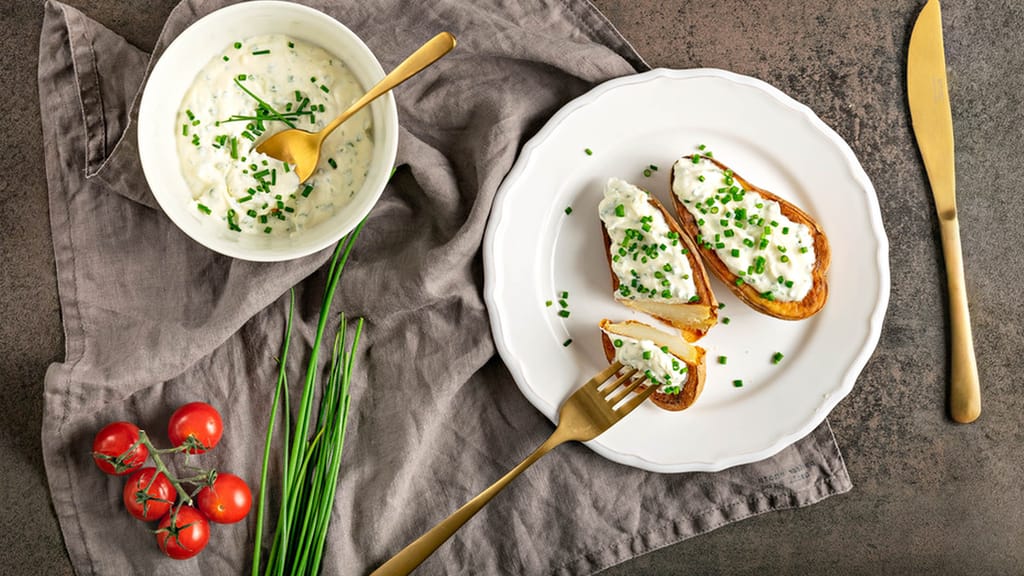
Baked potato with whipped herb curd cheese
Baked potato with whipped herb curd cheese and chives
Coriander tastes like soap to some people because of genetics, not because they're incapable of appreciating it. Studies suggest this comes down to a variant near the OR6A2 olfactory receptor gene, which is sensitive to aldehydes in the leaves — and those aldehydes are chemically related to compounds found in soap. Available estimates suggest that roughly 3–21% of people dislike coriander, depending on ancestry — the highest rate was found among people of East Asian descent (21%), 17% among people of European descent, and the lowest among people of Middle Eastern and Hispanic descent (3–7%). It's not an excuse — it's a different nose.
If coriander does agree with you, a few practical tips:
The stems have more flavour than the leaves. Chop them finely and add them to the dish — they're crunchy too. Throwing them away is a waste.
Never cook it. Add it after taking the pan off the heat, or right on the plate.
Coriander seed is not the same thing as the leaf. It tastes warm, nutty and citrusy-woody, is used crushed and toasted, and can't be swapped for the leaf in a recipe.
When to add: raw, off the heat.
Pairs with: lime, coconut milk, chilli, garlic, ginger, peanuts, chickpeas, fish, avocado.
Storage: a soft herb — stems in a glass of water, in the fridge. Freezing it dry is pointless (it goes mushy), but as a paste with oil and lime it freezes well.
Also worth trying: cauliflower soup with coriander and black cumin or tuna in coriander naan bread.
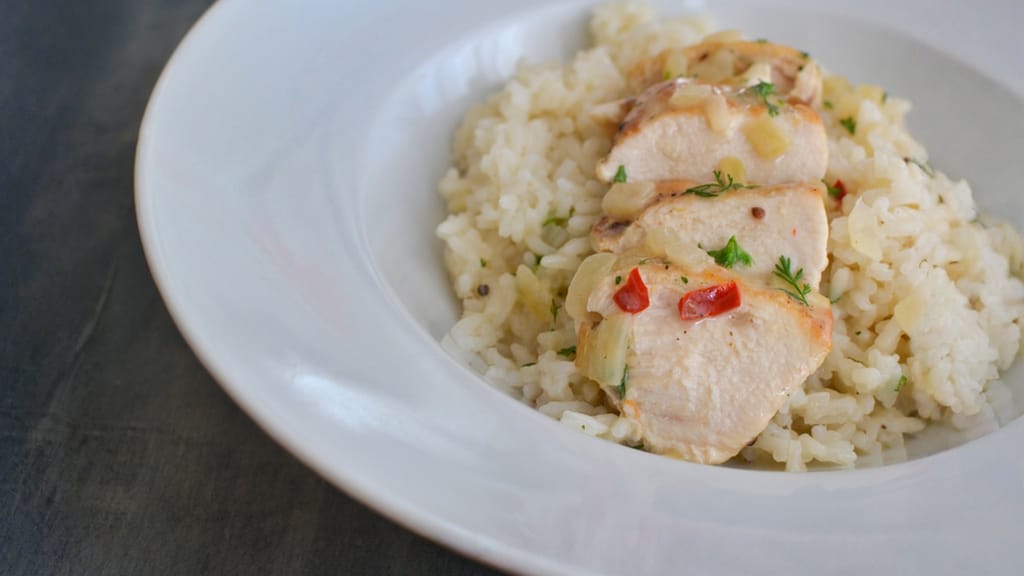
Coconut chicken with lime and coriander
Coconut chicken with lime and coriander
For flavour, go with flat-leaf (Italian) parsley — it's stronger, sweeter and easier to chop. Curly parsley is tougher and milder, and its advantage is texture: once chopped it stays fluffy instead of wilting, which is why it works well in tabbouleh-style salads, where parsley provides bulk rather than just seasoning.
And that's exactly what sets parsley apart from the other nine herbs here: you can treat it like a vegetable rather than a seasoning. A handful, not a pinch. Whole dishes are built around it — gremolata (parsley, garlic, lemon zest), salsa verde, persillade, or tabbouleh itself.
Don't throw away the stems. They pack plenty of flavour, and tied into a small bundle with a bay leaf and thyme, they'll turn a weak stock into a decent one. In the Czech Republic you can also find the leaves of root parsley sold separately — they're thinner and taste more earthy, great in stock, less so raw in a salad.
Chop it just before serving. Bagged chopped parsley loses its scent within a few hours and starts to smell musty.
When to add: at the end, in generous amounts. Stems can go in early, into stock.
Pairs with: garlic, lemon, butter, fish, potatoes, pulses, beef, capers.
Storage: stems in a glass of water, in the fridge — of all the soft herbs, this one keeps the longest, easily two weeks.
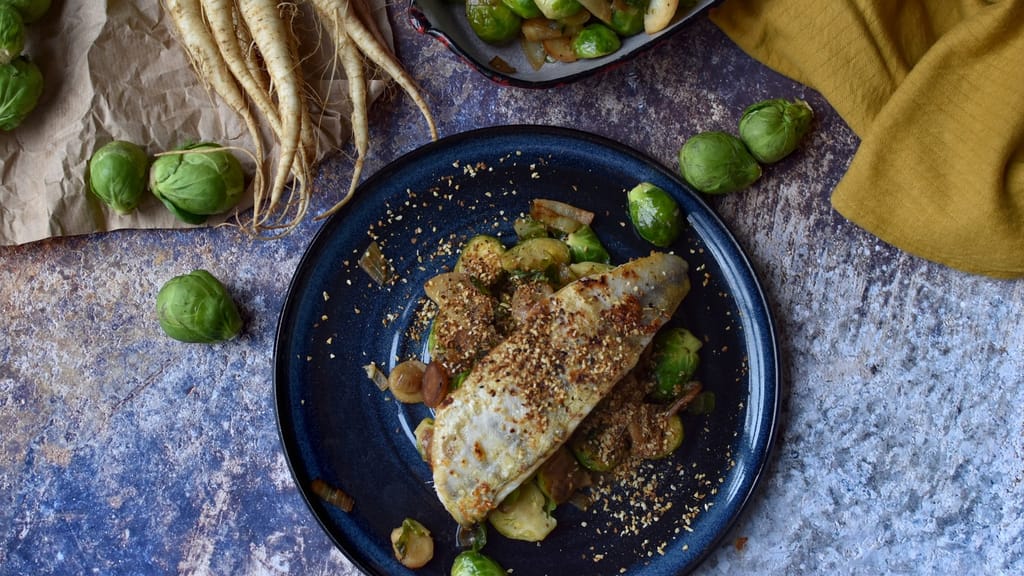
Trout with crispy brussels sprouts, parsley root and hazelnuts
Trout with crispy kale, parsley and hazelnuts
Oregano is one of the rare herbs where the dried version beats the fresh one. Drying gets rid of the grassy, slightly damp note and leaves the earthy, peppery flavour you know from pizza. Fresh oregano straight from a pot tastes surprisingly flat by comparison.
The variety matters. Greek oregano (Origanum vulgare subsp. hirtum) is the strong, peppery, faintly bitter one — that's the one you want. Italian oregano tends to be milder. And watch out for confusing it with marjoram: a close relative, but sweet and floral in flavour — marjoram belongs in potato soup, not oregano, and the two aren't a 1:1 swap.
Add oregano to a tomato sauce early — it needs oil and time. On a finished pizza, on the other hand, rub it between your palms right before serving — the warmth of your hands releases the oils and the aroma hits immediately.
When to add: dried, early into a sauce; rub between your palms onto a finished dish.
Pairs with: tomatoes, feta, lamb, lemon, olives, aubergine, pork, red onion.
Storage: dried, in a dark glass jar, use within a year — after that it's basically hay. Fresh, treat as a woody herb, in a damp cloth.
Try lemon and oregano chicken, an Italian tomato and pulse soup, or a quick pizza with yoghurt dough.
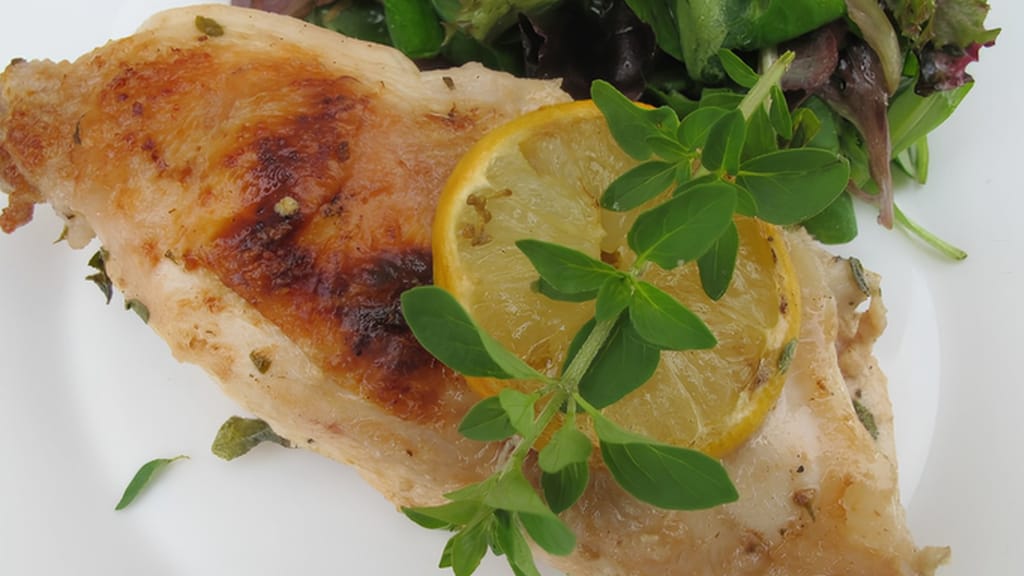
Chicken with lemon and oregano
Lemon and oregano chicken: a Mediterranean classic
The lavender you want for cooking is English lavender (Lavandula angustifolia) — it has the lowest camphor content and tastes floral and sweet. Lavandin (Lavandula × intermedia), grown mainly for oil and scented sachets, is much more camphorous and tastes bitter, almost soapy, in food. If a lavender dessert has ever tasted like soap to you, this was probably the culprit.
Dose it by the bud, not the spoonful. Half a teaspoon of dried buds per 500ml of cream is the upper limit, not the starting point. And most importantly: infuse lavender into cream or milk and then strain it out — don't leave the buds sitting in the finished dessert. The flavour keeps extracting, so what tasted lovely after fifteen minutes turns bitter after an hour.
The easiest way in is lavender sugar: mix dried buds into caster sugar, seal it for a week, then sieve it out. Use it in tea, in a sponge cake, or in whipped cream. You can turn a basic panna cotta into a lavender one simply by infusing the cream at the start and straining it — the rest of the method stays the same.
When to add: infused into warm liquid, or steeped into sugar in advance. Never onto meat at the end.
Pairs with: cream, honey, lemon, blueberries, apricots, white chocolate, lamb (in Provençal blends).
Storage: pick the buds just before they fully open, dry in the shade, and store in a dark glass jar.
Buy French tarragon. It has a bold aniseed flavour, driven mainly by estragole, and it's the one French recipes actually mean. Russian tarragon looks almost identical but tastes nearly neutral — growers describe it bluntly as the flavourless herb.
There's an easy way to tell them apart: French tarragon is sterile and can only be propagated from cuttings or by dividing an existing plant. So if you see a packet of "French tarragon seeds" on a shelf, it's either Russian tarragon or mislabelled stock. Buy a young plant and taste a leaf right there at the nursery — the anise note should hit you immediately.
In the kitchen, tarragon is dominant and easily overpowers everything else, so use it sparingly. It's essential in béarnaise sauce, wonderful with chicken, with eggs, and in buttery and creamy sauces. It also works beautifully with carrots and mustard. The classic trick for keeping it year-round is to steep it in white wine vinegar.
When to add: at the end, or briefly infused in warm butter or vinegar.
Pairs with: chicken, eggs, butter, cream, mustard, carrots, lemon, vinegar, leeks.
Storage: a soft herb — stems in a glass of water, in the fridge. Drying strips it of almost all its flavour; freeze it instead, or turn it into vinegar.
Soft herbs need moisture, woody herbs need air. That's the whole difference, and everything else follows from it.
Soft herbs (basil, mint, coriander, parsley, chives, tarragon, dill): trim the stem ends, stand them in a glass with about a finger's depth of water so the leaves stay dry, loosely cover the top with a bag, and put it in the fridge. Change the water every two to three days. Basil is the one exception — that one stays in a glass on the counter, not in the fridge.
Woody herbs (rosemary, thyme, oregano, sage): wrap in a slightly damp cloth and keep loose in the fridge. Don't seal them into an airtight container — trapped moisture ruins them far faster than mild drying out would.
And one rule for all of them: don't wash herbs ahead of time. Water on the leaves speeds up rotting. Wash them shortly before you use them, and pat dry.
Freezing works better than drying for every soft herb. Chop the herb, pack it into an ice cube tray, and top up with olive oil — the oil seals it off from air, and you can drop the cube straight onto a hot pan. This is a great way to save basil, parsley, coriander and tarragon.
Freeze chives dry, in a bag, chopped into rounds; they'll shake straight out of the freezer like a seasoning. Freeze rosemary and thyme whole, sprig by sprig.
Drying is only worth doing with woody herbs: thyme, oregano, rosemary, marjoram, savory and lavender hold onto their flavour once dried. Basil, chives, coriander, parsley and tarragon, on the other hand, lose almost all of it — for those, reach for the freezer instead.
Dry in shade with good airflow, bunches hung upside down, or in a dehydrator at 35–40°C. Higher heat drives off the essential oils. Store whole leaves in a dark glass jar and crush them only right before you use them — a whole leaf holds its aroma far longer than a ground powder.
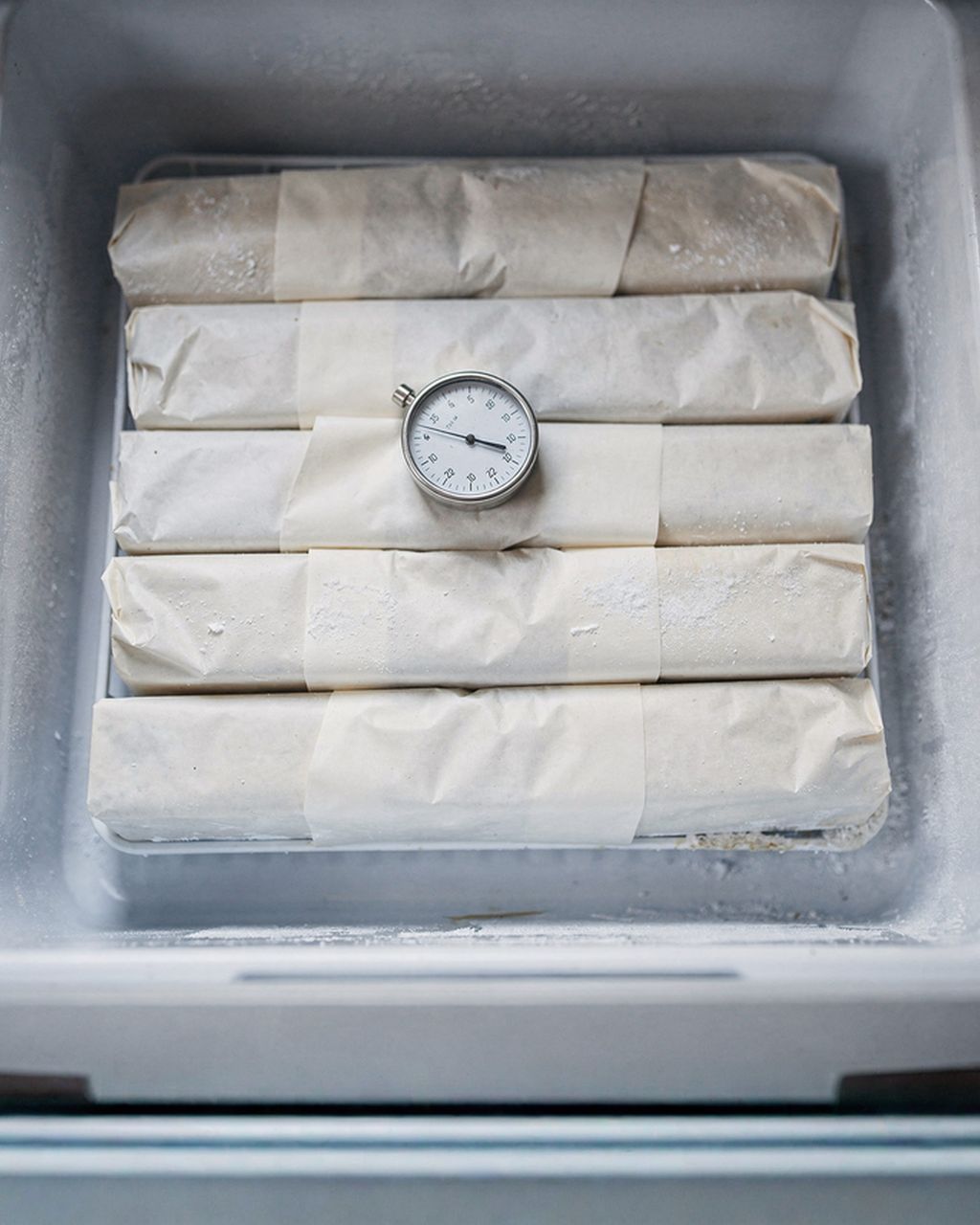
The tastiest way to use up a big herb harvest is herb butter. Softened butter, a handful of chopped herbs, salt, a few drops of lemon juice — roll it into a log in baking paper and freeze. It keeps for months, and you can slice off rounds for a steak, roast potatoes, or hot bread.
The method is identical to this easy wild garlic herb butter — just swap the wild garlic for a handful of parsley, chives and tarragon. A similar idea is behind this two-ingredient homemade herb cheese.
The basic ratio is 1:3 — one teaspoon of dried herb replaces three teaspoons (i.e. one tablespoon) of fresh. Drying removes the water and roughly triples the concentration of flavour.
Two caveats that matter, or the ratio will let you down:
It only applies to herbs that actually dry well — thyme, oregano, rosemary, marjoram, savory, lavender. For basil, chives, coriander, parsley and tarragon, the ratio won't help, because drying strips out not just the water but the very thing you wanted the herb for in the first place.
Dried herbs go into a dish earlier than fresh ones. They need liquid, fat and at least ten to fifteen minutes to open up. Sprinkling dried oregano onto a finished plate just means eating dust.
The safest rule is to stay within one cuisine: basil + oregano + thyme (Mediterranean), parsley + chives + tarragon (French fines herbes), coriander + mint (Southeast Asian). On the other hand, don't pit two dominant herbs against each other — rosemary with tarragon, or lavender with coriander, will cancel each other out and the result will taste muddled. As a general rule: one strong herb plus one neutral one (parsley, thyme) works almost every time.
Chervil can stand in for tarragon, or a mix of parsley with a pinch of crushed aniseed or fennel seed. Coriander has no exact substitute, but parsley with lime juice and a pinch of cumin gets close to what coriander does in a dish. Marjoram can replace oregano, but use less of it and expect a sweeter flavour. Rocket or wild garlic can take basil's place in pesto. The palest green part of a spring onion works instead of chives.
With coriander and parsley, absolutely — their stems actually have more flavour than the leaves, just chop them finely. Basil and mint stems are edible too, but tougher; they're better steeped into a sauce or infusion than tossed into a salad. The woody stems of rosemary, thyme and oregano aren't edible — pull them out before serving, or use them as a skewer or tie them into a bundle for stock.
Pick herbs in the morning, once the dew has dried but before the sun hits the leaves — during the day some of the essential oils evaporate. Always snip above a branching point rather than picking individual leaves; that way the plant bushes out instead of just growing taller. With woody herbs, don't cut into old wood — it won't sprout again.
Flowering changes the flavour, differently for each herb. Basil and coriander turn bitter and their leaves go woody once they flower — pinch off the flowers straight away to extend your harvest. Chives get tough once they flower, but their purple blossoms are edible and taste great in a salad or pickled in vinegar. With oregano and thyme, essential oil content peaks at flowering time, so that's actually the best moment to harvest them for drying.
One recipe worth heating the oven for, one tip, and one deal from the shop. Nothing else.