Super-quick potato soup
Nettles and Spring Herbs for Soup: Foraging, Prepping and Seasoning
Updated Aug 30, 2026
Nettles are the cheapest green ingredient spring has to offer – and the one most often ruined by overcooking. Pick them from March until they start flowering, blanch for 30 seconds, shock in ice water, and stir them in right at the end of cooking: that's the only way your soup stays a fresh green and doesn't turn bitter. This guide walks through what actually happens to nettles and spring herbs in the pot – from foraging, to thickening without flour or cream, to the finishing garnish.
Pick nettles from March until they start to flower, roughly through the end of May, taking only the top four to six leaves from plants under 30 cm tall. The young tip is tender, sweeter, and softens quickly; the lower leaves are tough and stay fibrous in the soup.
Once they've flowered, foraging isn't worth it: the tissue turns woody, the leaves get tough and bitter, and they stay fibrous in the pot no matter how long you cook them. The flavour also shifts towards hay, and no technique will fix that.
Where and how to forage:
Stay well away from roads and fields – at least 50 metres from busy roads and clear of field edges because of spray drift.
Avoid fences and paths where dogs are walked – the lower part of the plant gets the most exposure.
In shade and damp the leaves stay tender longer than in full sun.
Pick into a basket or a cloth bag, never a plastic one – in a sealed bag nettles steam and turn black within the hour.
For a litre of soup, count on 150–200 g of fresh leaves, roughly a heaped bowlful. After blanching, that shrinks to about a fifth of the volume. According to nutrition databases, cooked nettles come in at around 42 kcal per 100 g and rank among leafy greens with a high calcium content, roughly 400–500 mg per 100 g; cooking destroys most of the vitamin C, but the minerals stay put.
There's no dangerous look-alike to worry about – henbit deadnettle, which grows in the same spots and looks similar, doesn't sting and flowers with showy white, lipped blooms arranged in whorls, whereas nettle has small, drooping, greenish flower clusters. Deadnettle is edible too. You can also just go by touch: nettle will let you know before you've even had a proper look.
Seasonal baking plans, tested recipes and kitchen tricks that save you time. Unsubscribe in one click.
Heat or mechanical crushing reliably kills the sting: 30 seconds in boiling water, drying, or thorough blending all do the job. Once cooked or dried, nettle won't sting at all.
The sting isn't caused by formic acid, as was long claimed, but by a mix of histamine, acetylcholine and serotonin; formic acid is present in the hairs at too low a concentration to be the main culprit. The brittle, silica-tipped hair pierces the skin, snaps off, and injects its contents underneath – which is why even a thin rubber glove is enough protection, and why a firm grip on the leaf stings less than a light brush against it.
Gloves and scissors. Rubber or gardening gloves; the hairs will go straight through thin fabric.
Sort and rinse the leaves in cold water, pulling them off the tougher stems.
Blanch for 30–60 seconds in well-salted boiling water, about 10 g of salt per litre.
Shock in ice water – immediately and thoroughly, not just a quick rinse under the tap.
Squeeze out the excess water, or you'll water down your soup.
Green colour is destroyed by a combination of heat, acid and time. Under prolonged cooking or in an acidic environment, chlorophyll loses the magnesium at its centre, which gets replaced by hydrogen, forming pheophytin – an olive-to-khaki brown pigment. There's no getting the colour back once that happens, so prevention is the only option.
Blanch briefly and shock. The first 30–60 seconds in boiling water actually brightens the colour, as air escapes from the cells. Longer cooking kills it.
Add acid off the heat. Add lemon, vinegar or white wine after taking the pot off the heat, just before serving.
Green leaves go in last. Cook the base of onion, potato and stock until fully tender, then add the nettles in the final 2–3 minutes.
Stir soured cream into the bowl, never into the pot. Acidic and hot at the same time is the worst possible combination.
Blend and serve straight away. Every extra ten minutes on the heat pushes the colour further towards khaki.
Without flour or cream, you can thicken soup five ways: potato, blended vegetables, legumes, oats, or the green leaves themselves. They all work on the same principle – released starch or broken-down fibre binds water.
One medium starchy potato, about 150 g per litre, turns a thin stock into a creamy soup. Reach for a floury variety rather than a waxy salad one – it releases far more starch.
Watch out for one classic mistake: blend the potato briefly and on a lower speed. Blast it with a stick blender on full power and it releases so much starch that the soup turns gluey, like wallpaper paste. Pushing it through a sieve or mashing it with a fork is gentler and safer.
Without potato, you can thicken a litre of soup with 250–300 g of blended root vegetables, 60–80 g of red lentils, chickpeas, or 2 tablespoons of fine oats – or even just a handful of blended green leaves.
Root vegetables – carrot, celeriac, parsnip or cauliflower, 250–300 g per litre. Roasting them dry in the oven beforehand adds a caramelised depth that plain boiling never gives.
Red lentils – 60–80 g per litre will fully break down within 20 minutes and disappear. They thicken the soup and give it body without you ever noticing they're there.
Chickpeas – give a chunkier, more textured body; blend only half and leave the rest whole.
Fine rolled oats – 2 tablespoons per litre, 10 minutes of simmering. The fastest emergency fix, with almost no flavour of its own.
The leaves alone – a handful of nettles or young spinach blended into the hot soup thickens and colours it at the same time.
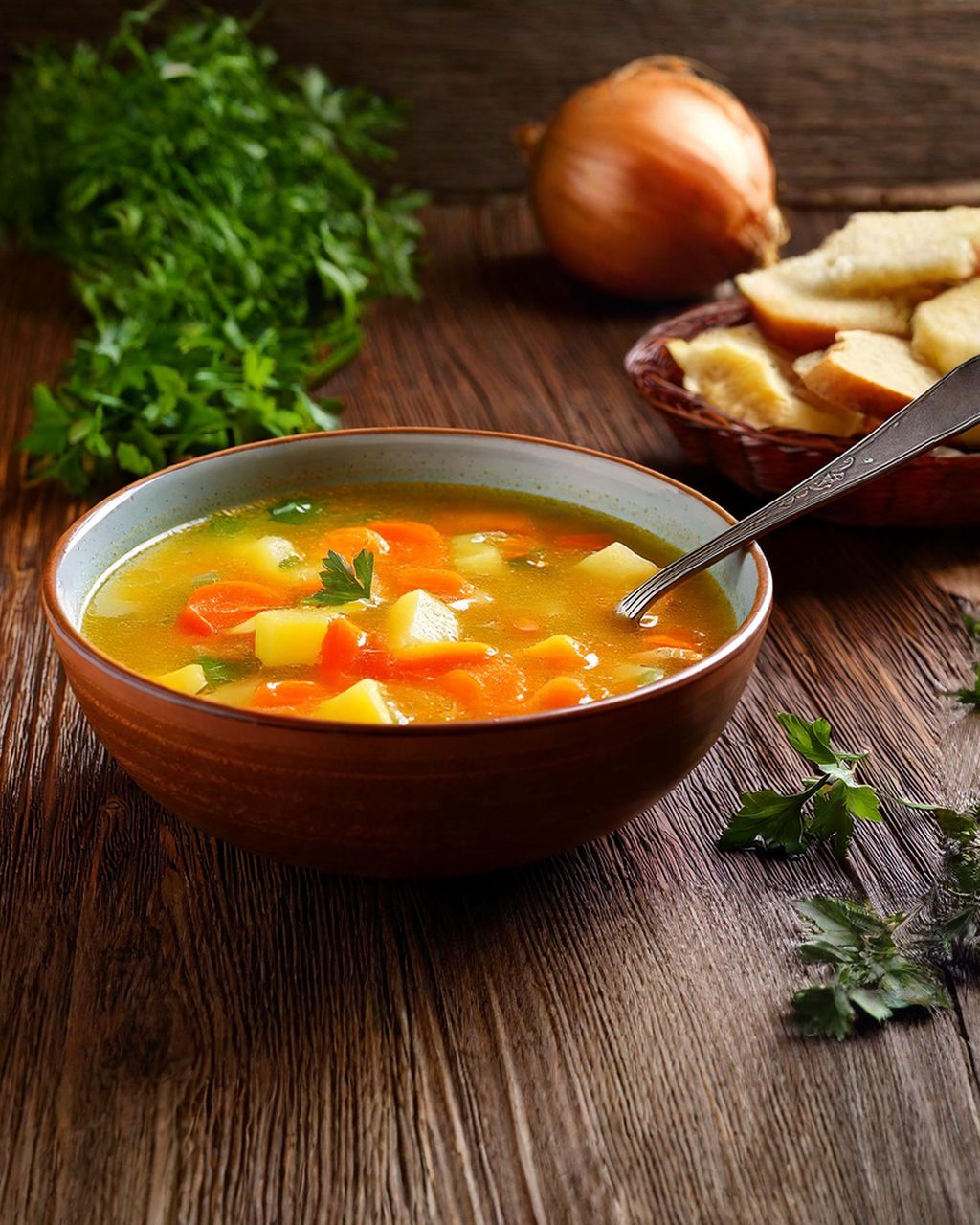
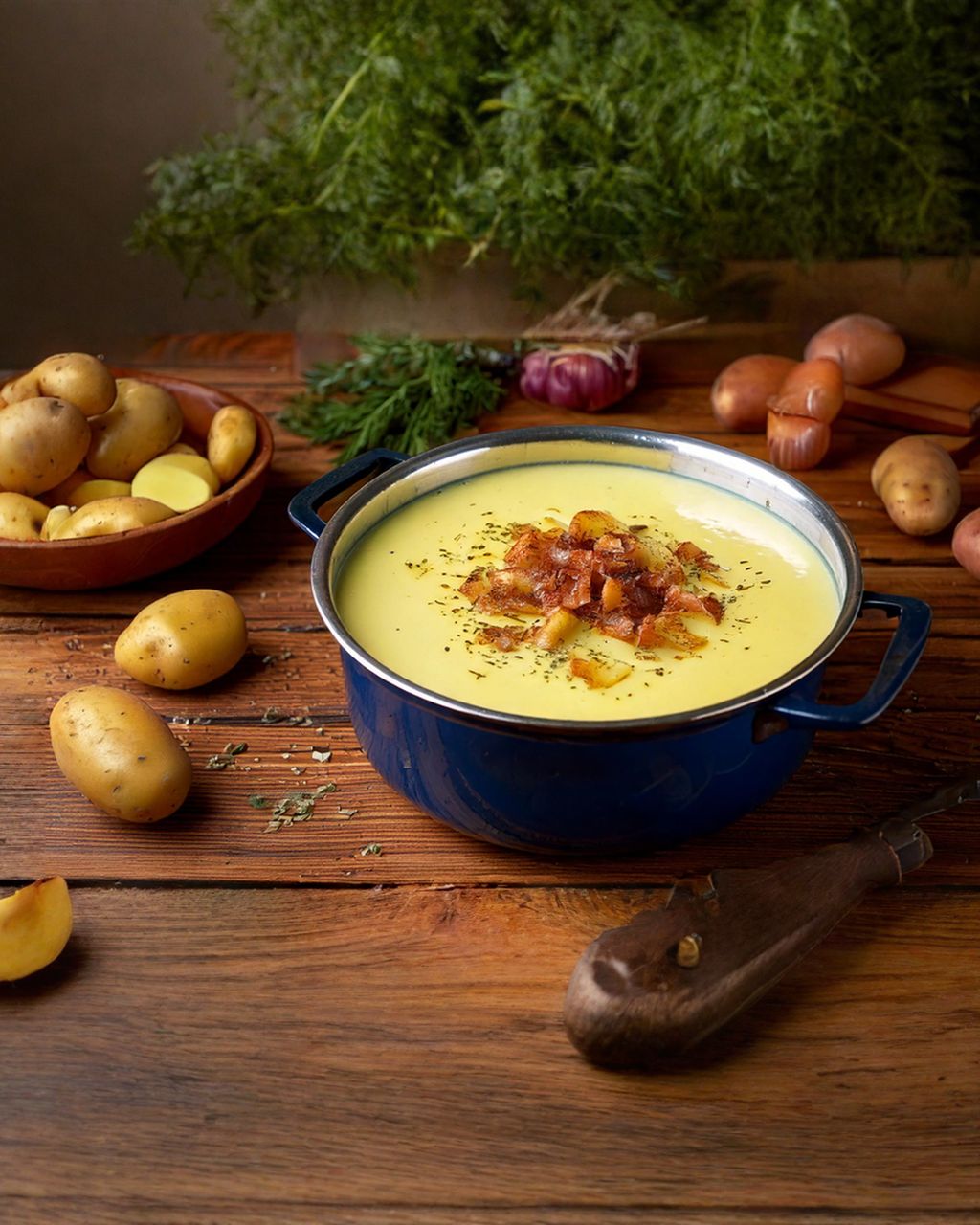
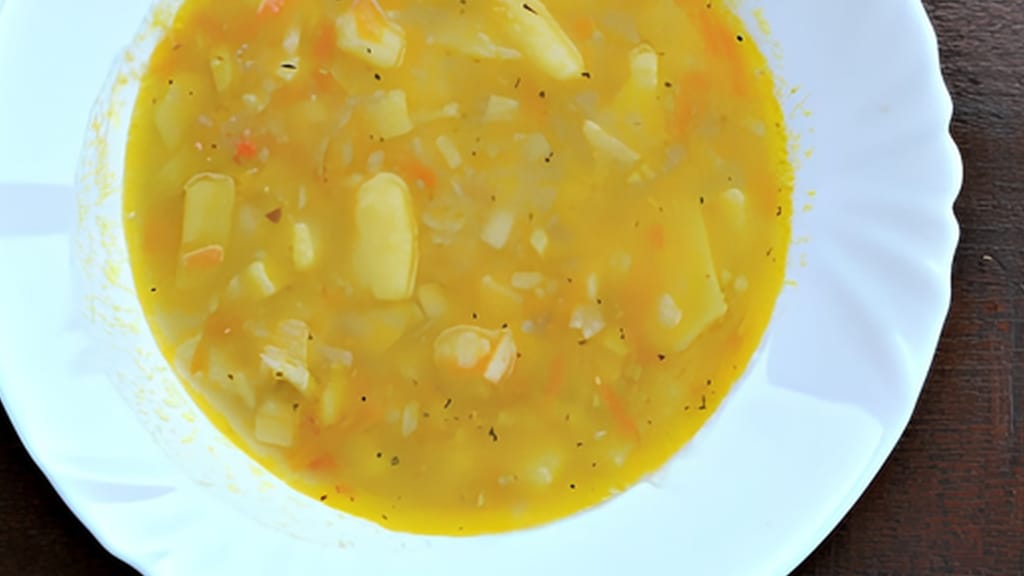
Super-quick potato soup
Potato soup – a good way to get a feel for thickening with potato instead of flour or cream
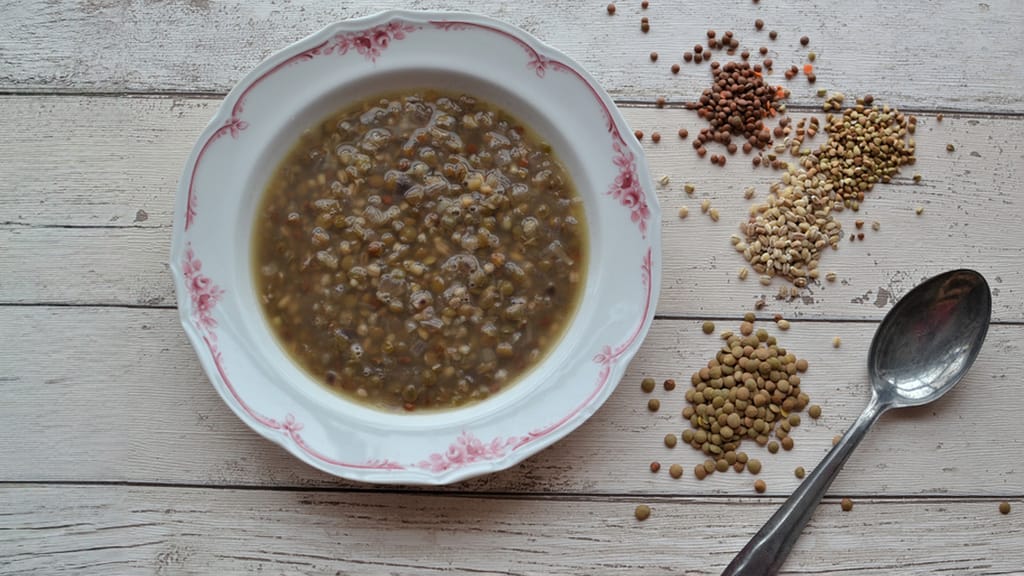
Perfect handful-style lentil soup
Hearty lentil soup: how legumes thicken soup and give it body

Creamy roasted carrot soup
Creamy roasted carrot soup – a good example of what oven-roasted vegetables do to texture
In a spring soup, add woody herbs – thyme, rosemary, sage, bay leaf – to the base right at the start, and delicate leafy ones – parsley, chives, chervil, lovage, dill, wild garlic – only after taking the pot off the heat. What matters isn't which herbs you pair, but when you add them: woody herbs release their aroma into fat and need time, while delicate leaves hold theirs in a volatile form that's gone within minutes.
It doesn't work the other way round. Delicate leaves break down under heat, turn bitter, and their volatile aroma simply evaporates into the kitchen air. Woody sprigs, on the other hand, won't have time to release anything in just two minutes.
Per litre of soup, count on 3–4 tablespoons of chopped delicate herbs, or 2 sprigs of woody herbs that you fish out before serving.
Combinations that work well in spring soups:
Parsley, chives and chervil – the classic spring trio. Neutral and fresh, it works with nettles as well as with a potato base.
Dill and lovage – a classic Czech pairing. Go easy on the lovage – one leaf per pot is plenty, otherwise it overpowers everything else.
Wild garlic – doubles as both a herb and a garlic hit. Never cook it – heat destroys its sulphurous aroma within a minute.
Thyme and bay leaf – for the base of earthy soups with mushrooms or root vegetables.
Mint and young peas – surprisingly good in delicate green soups; use less mint than you'd think you dare.
Save rosemary and sage for heartier meat-based stocks. In a delicate nettle soup they'll overpower the very thing you're cooking it for. For more on what spring has to offer and how to identify the herbs, see the article Spring Herbs: What to Forage, How to Identify Them, and How to Use Them in the Kitchen.
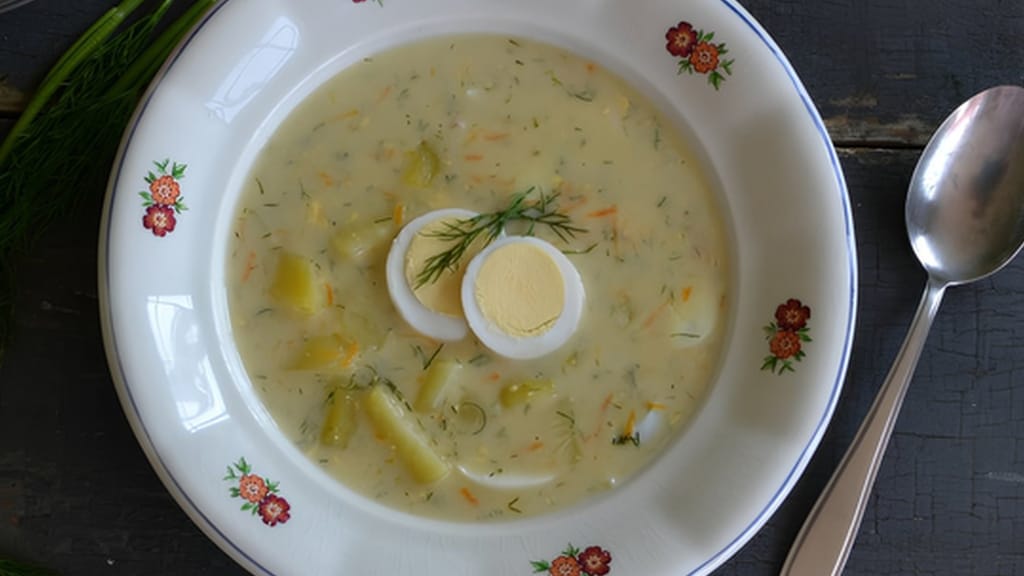
Dill soup
Dill soup: an example of a soup carried by a single delicate herb
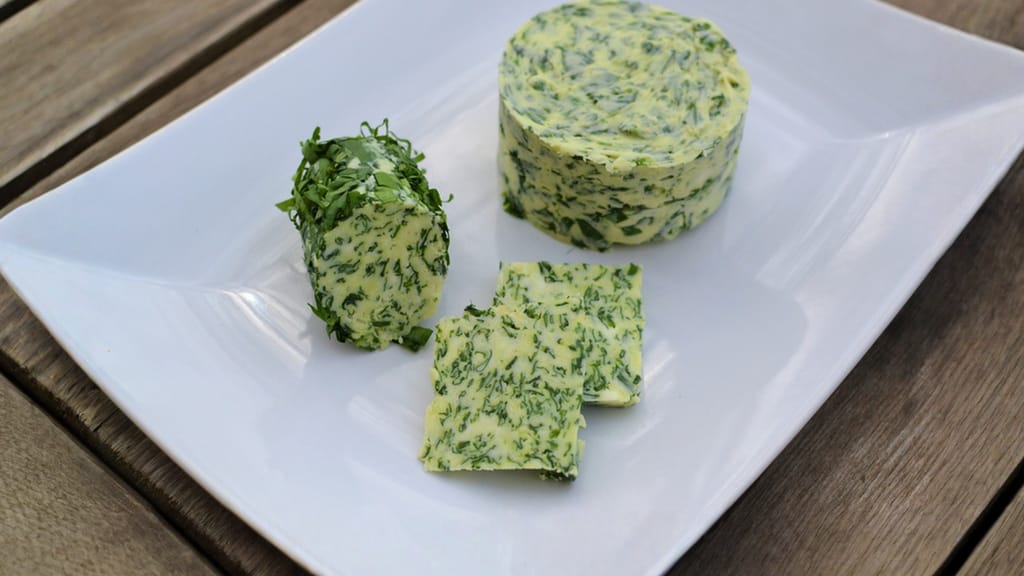
Easy wild garlic herb butter
Wild garlic herb butter – a spoonful stirred into a bowl of soup instead of cream
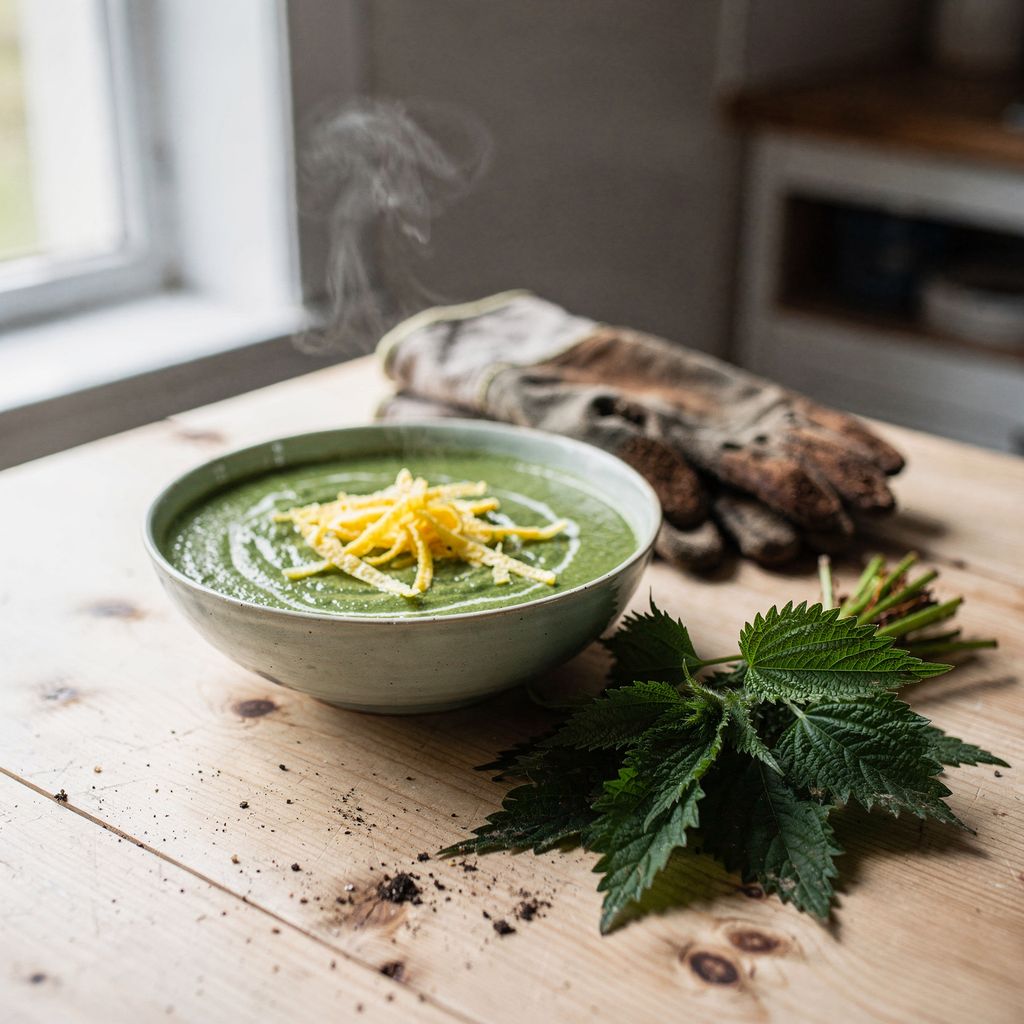
Egg pancake strips (svítek) are a thin omelette made from egg, milk and a spoonful of flour, baked or fried and cut into strips, which go into the soup only once it's in the bowl. It's spelled svítek – not to be confused with the similar-sounding Czech word for a rolled-up scroll or wrap; the two get mixed up but have nothing to do with each other.
Why add it only in the bowl: left in the pot, the strips soak up the stock within minutes, go soft and fall apart into shreds. Sliced ahead of time, it also keeps well in the fridge for a day.
Other garnishes that pair well with nettles and herbs:
Egg drop threads – two beaten eggs poured in a thin stream into the boiling soup while stirring constantly. This gives fine, delicate ribbons. Don't stir too vigorously, or you'll cloud the soup.
Semolina dumplings – add body, and work well in thinner herb-based stocks.
Rye bread croutons – a nice contrast to the sweetness of nettle.
Poached egg – a runny yolk turns a spring soup into a full meal.
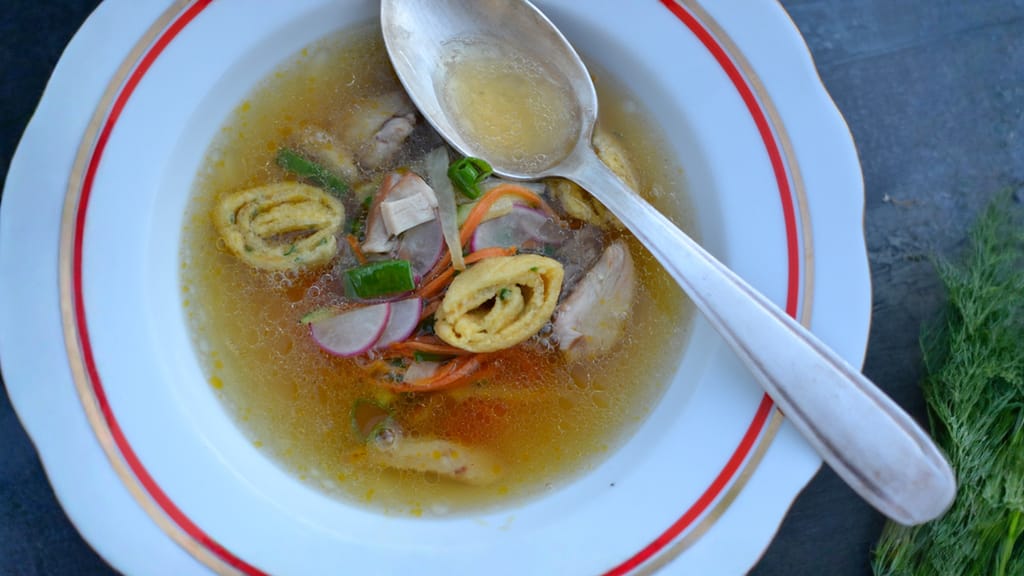
Hearty spring soup with egg roulade
A proper spring nettle soup with egg pancake strips – full recipe, including how to make the pancake
Nettles can do anything spinach can, and unlike spinach, they can also be dried or frozen. Always add them blanched, dried, or thoroughly blended into a dish – never a whole raw leaf. Besides soup, use them in a smoothie, where the stinging hairs are reliably destroyed by the blender blades, or swap them in for spinach in stuffing, quiche and pasta dishes.
Other directions to take this spring harvest:
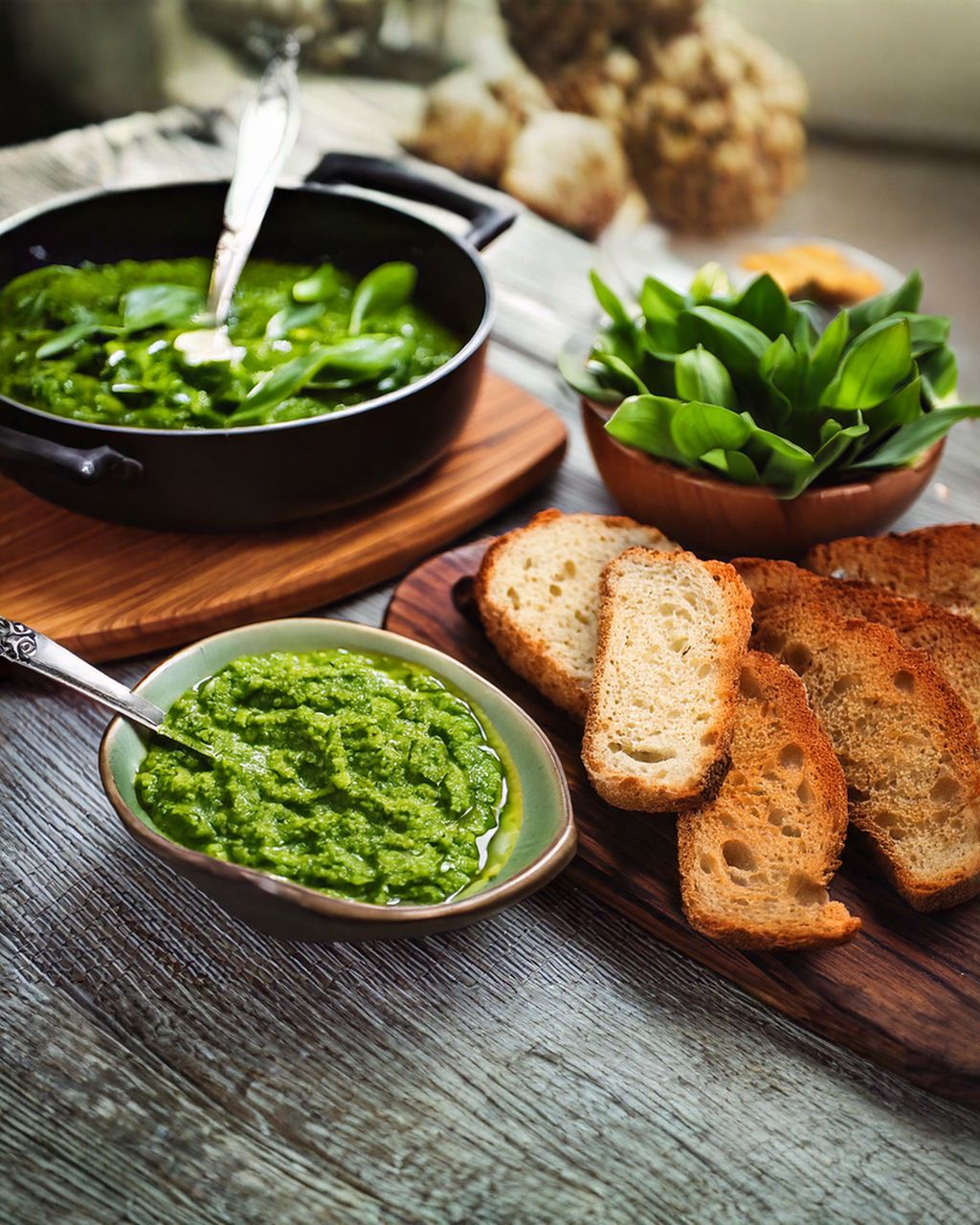
Nettle pesto – blanched and squeezed leaves, olive oil, sunflower seeds, hard cheese, and lemon added right at the very end.
Drying for tea – spread in a thin layer in the shade; once dried, nettle won't sting at all.
Freezing in cubes – blanched, squeezed, and packed into an ice cube tray. Keeps through winter, and goes straight into soup frozen.
Nettle salt – dried, crushed leaves mixed with sea salt in a 1:4 ratio.
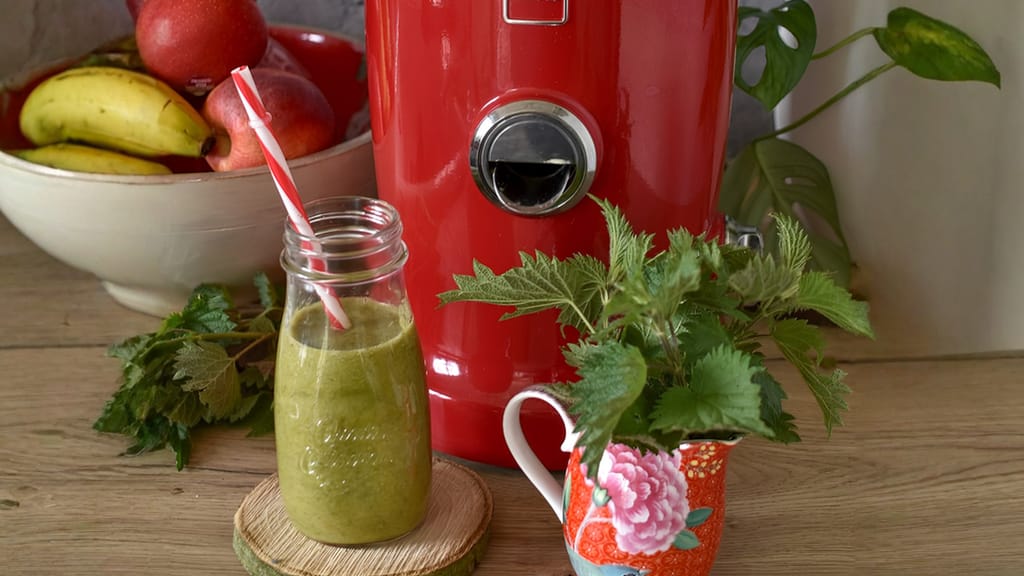
Spring nettle smoothie - harness nature's hidden treasures
Spring nettle smoothie – the fastest way to use up a freshly foraged batch
Five mistakes that reliably ruin a spring soup: picking too late, boiling the green leaves too long, adding acid to a hot pot, over-blending the potato, and cooking delicate herbs from the very start.
Picking too late. A flowering nettle is fibrous and bitter, and no technique will fix that.
Boiling the green leaves too long. Past five minutes, you've turned your soup khaki. Leaves belong in the pot only right at the end.
Adding acid to a hot pot. Lemon or soured cream added while the soup is still cooking will kill both the colour and the flavour. Save it for the bowl.
Over-blending the potato. The soup turns gluey and clings to the spoon. Use short pulses, or push it through a sieve instead.
Cooking delicate herbs with everything else. Parsley and chives have no business in the pot before the soup comes off the heat.
Best approach: blanch for 30 seconds, shock in ice water, squeeze out thoroughly, then freeze in portions or packed into an ice cube tray. They'll keep for about a year, and you can drop them straight into the soup frozen, no need to thaw. Fresh, unblanched nettles wrapped in a damp tea towel only last a day or two in the fridge before they yellow and turn bitter. Never put them in a plastic bag – they'll steam and go slimy within the hour.
Yes, but expect a different flavour and a different quantity: dried nettle tastes earthy, more like tea, not fresh and green, and you'll need roughly a tenth of the fresh weight – about 15–20 g per litre. Add the dried leaves to the stock and simmer for 10 minutes so they can soften. They won't give you the green colour, though – if looks matter, brighten the soup with a handful of fresh spinach.
Young spinach is the closest match – similarly delicate texture, cooks just as fast, and swaps in 1:1. Dandelion leaves or ground ivy make an earthier, slightly more bitter substitute, while young beet greens or chard lean sweeter. If it's mainly that spring flavour you're after, wild garlic works too, but it brings a strong garlicky character of its own and must never be boiled.
Nettle is used in the kitchen the same way as spinach. Always add it blanched, dried, or thoroughly blended – a whole raw leaf will sting. Nettle soup is an ordinary cooked leafy-green dish. Teas and concentrated nettle extracts are a different category from a cooked soup, and this article doesn't cover them.
Yes, and it often tastes better – one starchy potato per litre replaces the cream and gives the same velvety body. For a richer finish, stir in a spoonful of coconut milk, cashew cream or tahini once off the heat. Replace the tang that soured cream would have added with a few drops of lemon juice stirred in at the bowl.
One recipe worth heating the oven for, one tip, and one deal from the shop. Nothing else.