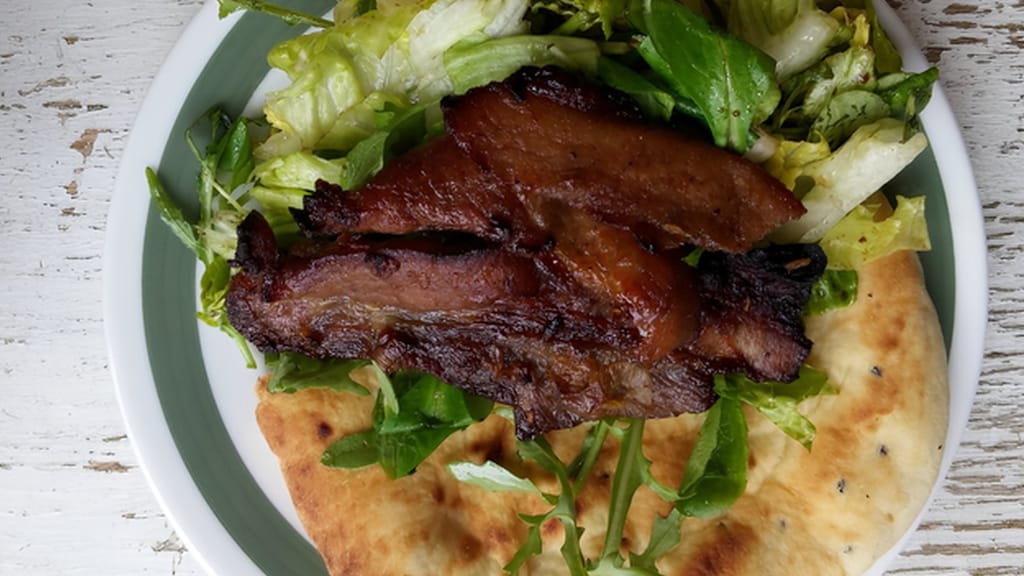
Asian-style grilled pork belly

Updated Jul 19, 2026
Great grilling comes down to two things: choosing the right cut and hitting the right temperature. This guide gives you both — the best cuts of meat with their safe internal temperatures and timings, how to cut vegetables for the grill, meat-free options from tofu to halloumi, and a handful of quick sauces and dips. No vague advice over burnt coals here, just real numbers, marinades and tricks that work on charcoal or gas. From steak to grilled peppers, you'll never have to guess at the grill again.
The grill loves well-marbled, thicker cuts — fat and extra thickness hold in juice and forgive a few extra seconds on the grate. Specifically:
Beef: ribeye, striploin (sirloin) or flank steak — look for good marbling with visible fat streaks.
Pork: shoulder/neck and thicker chops (at least 2–3cm) — enough fat to stay juicy.
Poultry: chicken thighs are more forgiving and juicier than breasts; only grill breasts if they're well marinated.
Choose fresh meat that's a bright, clear colour with no dark patches or off smell, ideally from a local butcher or a trusted supplier.
A marinade does two jobs: it adds flavour, and its acidic component (citrus, vinegar, yoghurt) tenderises the surface of the meat. Stick to these tried-and-tested pairings:
Beef: olive oil, garlic, rosemary and coarsely ground pepper — kept simple so the meat shines.
Pork: a sweeter profile — honey or maple syrup, mustard, smoked paprika.
Chicken: citrus juice with thyme or oregano; poultry 'drinks in' marinade the most, so feel free to leave it overnight.
Add salt either right before grilling or well ahead of time (over an hour) — in between, salt draws out moisture and then reabsorbs it. The worst timing is salting about 10 minutes ahead, which just leaves the meat needlessly wet. Pat it dry with a paper towel before it hits the grate so it sears properly and forms a good crust.
Take the meat out of the fridge 30–60 minutes ahead so it comes up to room temperature — otherwise the centre stays cold and raw while the surface burns. Get the grate really hot and oil it so the meat won't stick. And set up two heat zones: direct (right over the coals) for searing a crust, and indirect (off to the side, lid down) for cooking thicker cuts through without scorching them.
Asian-style grilled pork belly
Asian-Style Grilled Pork Belly — a Marinade That Locks in Juice
What matters is internal temperature, not time or colour. According to the USDA/FSIS (US food safety authority), these are the safe minimums:
Whole cuts of beef and pork: 63°C (145°F), followed by 3 minutes' rest.
Poultry: 74°C (165°F) at the thickest point.
Minced meat and burgers: 71°C (160°F).
For steak doneness (a culinary target for whole beef cuts, not a food-safety one), use a thermometer: rare ~52°C, medium-rare 54–57°C, medium 60–63°C, well done above 68°C. The times below are just a guide — every grill runs differently, so let the thermometer have the final say.
Grill a steak about 2.5cm thick over direct heat for roughly 4–5 minutes per side for medium-rare (54–57°C internal). Flip it just once so a proper crust has time to form. Let it rest for 5 minutes after coming off the grill — the juices redistribute back into the meat instead of running out onto the board.
Grill a chop or shoulder steak (2–3cm) for 5–7 minutes per side up to 63°C, then let it rest. Pork today doesn't need to be cooked grey right through — 63°C with a short rest is safe, and the meat stays juicy with a hint of pink.
Chicken breasts need 6–8 minutes per side over medium-high heat, up to 74°C. Thighs are more forgiving — their higher fat content means a few extra minutes won't dry them out. Never judge chicken by colour alone — always check the thickest point with a thermometer.
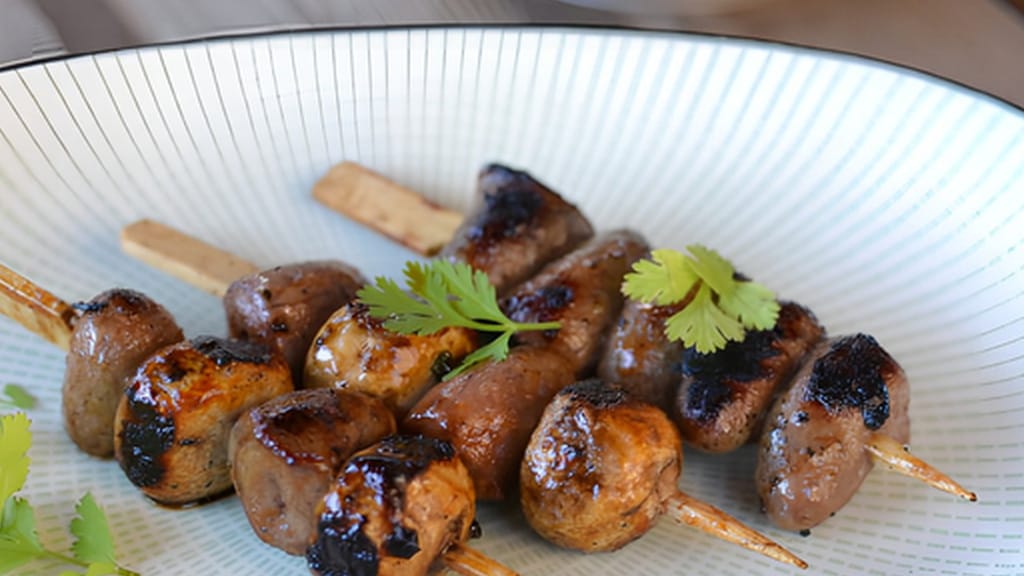
Grilled chicken hearts with mushrooms
Grilled Chicken Hearts with Mushrooms — Quick Poultry off the Grate
Flip as little as possible — ideally just once; every flip cools the surface and slows down crust formation.
Let meat rest for 3–5 minutes under foil after grilling so the juices settle.
Finish thicker cuts over indirect heat so the surface doesn't burn before the centre is done.
Slice vegetables about 1cm thick (thick enough to hold their shape, thin enough to cook through), brush with oil and grill over medium heat. Rough timings:
Peppers (halved or quartered, seeded): 10–12 minutes, until the skin blackens and the flesh softens.
Courgette and aubergine (1cm slices): 5–7 minutes per side.
Corn in the husk: 15–20 minutes, turning occasionally.
Mushrooms and onion: 8–10 minutes.
Skewer small vegetables or use a grill tray so they don't fall through the grate.
A marinade of olive oil, lemon, garlic and herbs (rosemary, thyme) only needs 30 minutes on vegetables — they don't need as long as meat. Add salt only after grilling, otherwise the vegetables release water needlessly and end up steaming rather than charring. For a detailed breakdown by vegetable, see our article on how to grill vegetables.
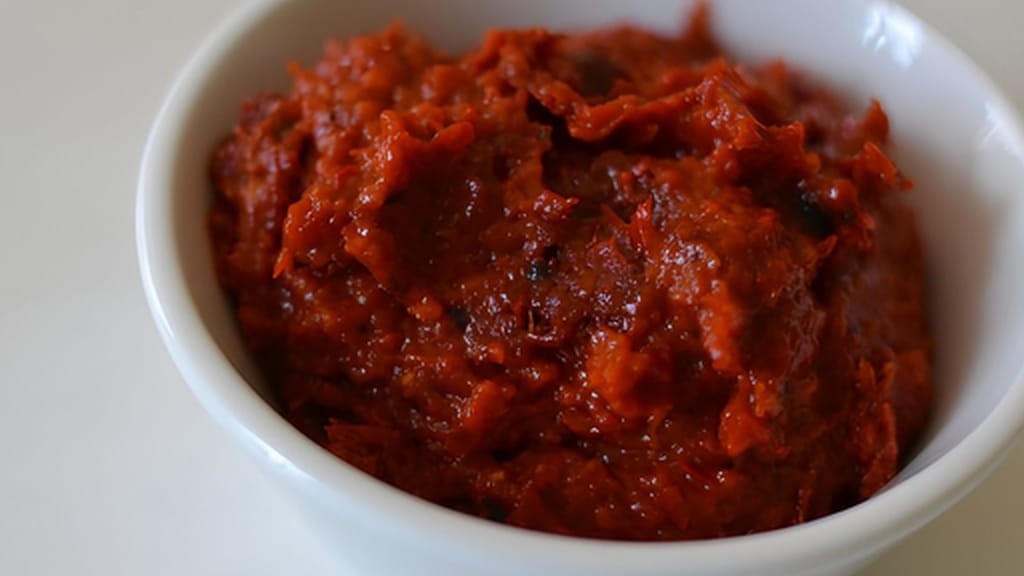
Grilling tip: roasted pepper dip
Grilled Mixed Roasted Peppers — a Side Dish and Grill Staple
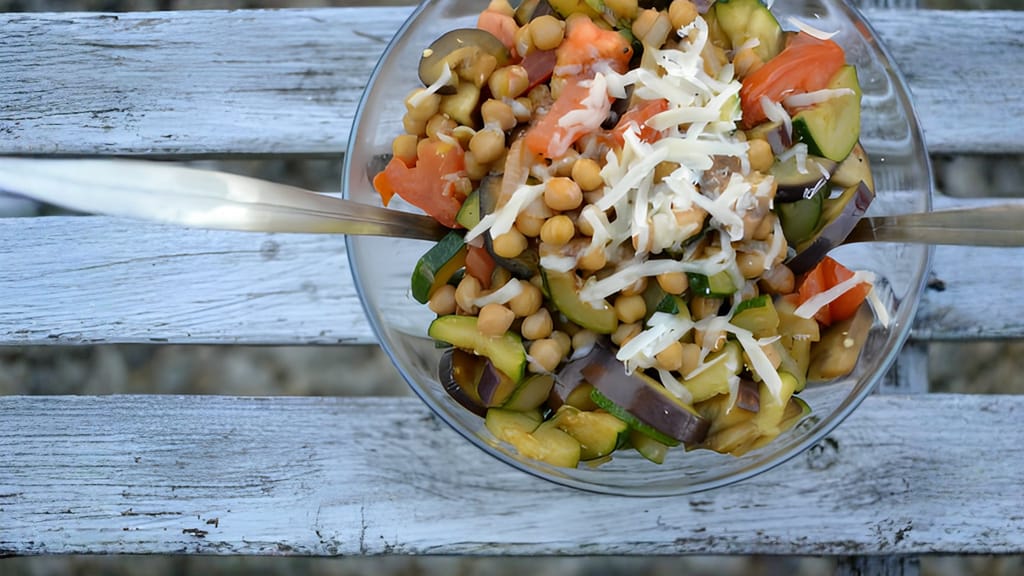
Grilled chickpea salad
Grilled Chickpea Salad — Vegetables Off the Grill as a Main Course
You won't be short of options without meat — tofu, tempeh, halloumi and burgers made from pulses or mushrooms all work brilliantly on the grate. The trick is the same as with meat: fat, marinade, and a hot, oiled grate so nothing sticks.
Press the tofu before marinating — wrap it in a tea towel and weigh it down for 20–30 minutes so it releases water and can then soak up flavour. A marinade of soy sauce, garlic and ginger gives it a gently spiced edge; tempeh pairs well with tamari, honey and lemon. Grill on both sides until golden, using a grill tray if needed, until the tofu firms up. Briefly pre-boiling tempeh (10 minutes) takes the edge off its bitterness.
Halloumi is basically made for the grill — its high melting point means it holds its shape instead of turning to mush. Slice it about 1.5cm thick, brush with oil and grill for 1–2 minutes per side until it has char lines. Skip the salt — it's already salty enough on its own.
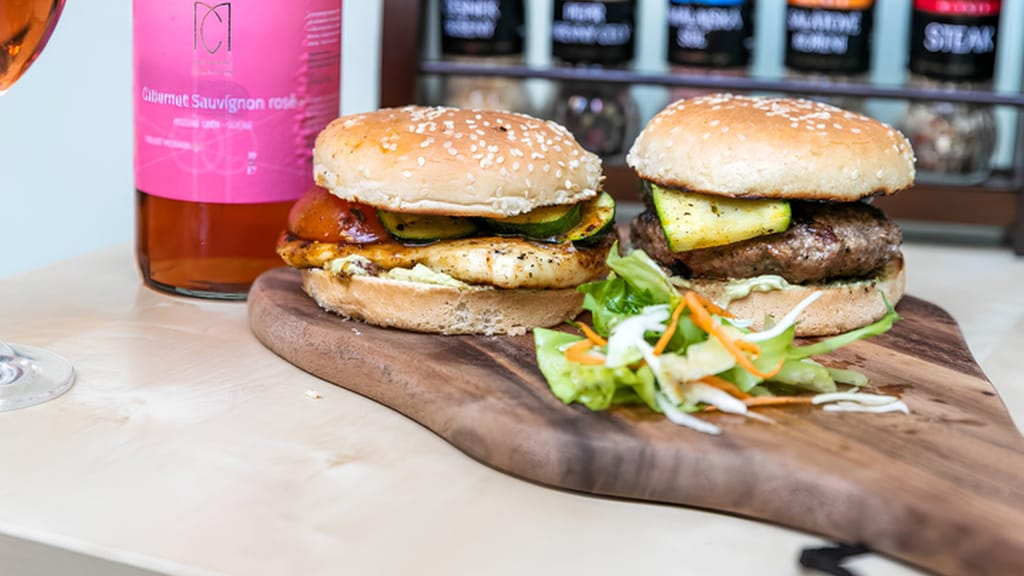
Sun-dried tomato and halloumi burgers
Meat-Free Burgers with Sun-Dried Tomatoes and Grilled Halloumi
Mash a mixture of chickpeas or beans with onion, garlic and spices, add oats or flour as a binder, and let the patties firm up in the fridge before grilling — otherwise they'll fall apart on the grate. Grill them on a grill tray or foil and turn carefully. A bit of smoked paprika in the mix adds a 'meaty' depth.
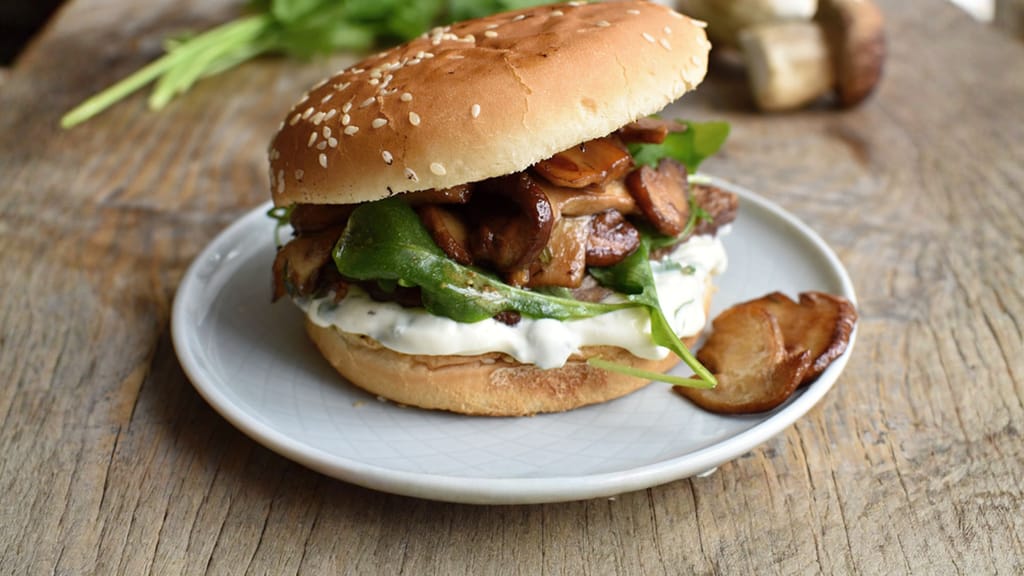
Homemade burgers with mushrooms
Homemade Mushroom Burgers — a Juicy Meat-Free Grill Option
Four sauces cover an entire barbecue: BBQ for ribs and chicken, a spicy salsa for meat and nachos alike, a yoghurt dip for vegetables, and a honey-mustard for poultry. All of them come together in minutes:
BBQ sauce: simmer ketchup, brown sugar, apple cider vinegar, Worcestershire sauce and garlic until thickened. A sweet-and-sour classic with pork.
Spicy salsa: chopped tomatoes, onion, jalapeño, coriander and lime. A fresh contrast to rich grilled meat.
Yoghurt dip: plain yoghurt with dill and chives, salt and pepper. Great with vegetables and potatoes.
Honey mustard: Dijon mustard and honey in a 1:1 ratio, plus a spoon of oil. Perfect with chicken strips or roasted vegetables.
For more homemade dips and variations, see our article on homemade dips, step by step.
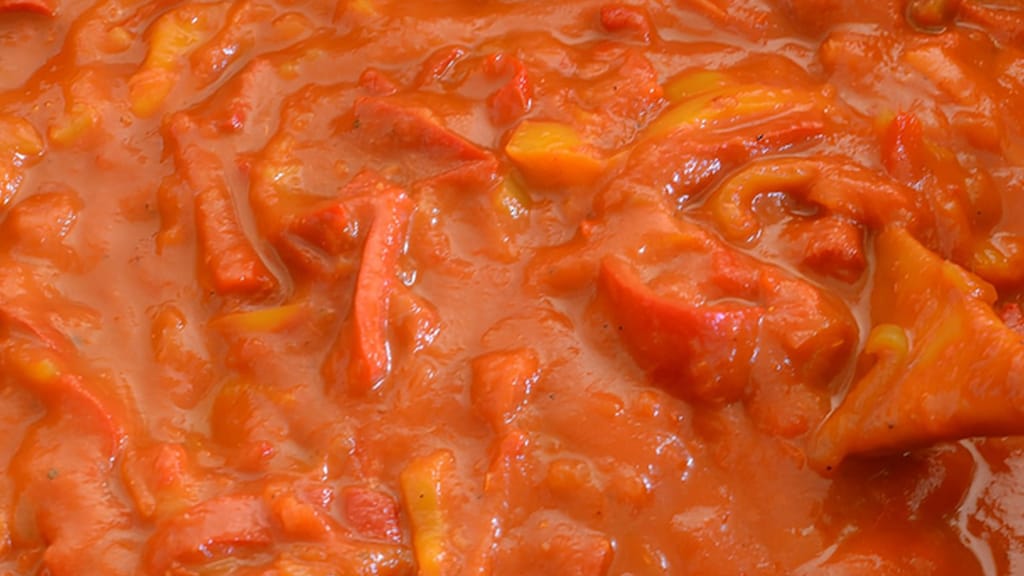
Spicy pepper and chilli dip
Spicy Pepper and Chilli Dip — a Fiery Salsa for Grilled Meat
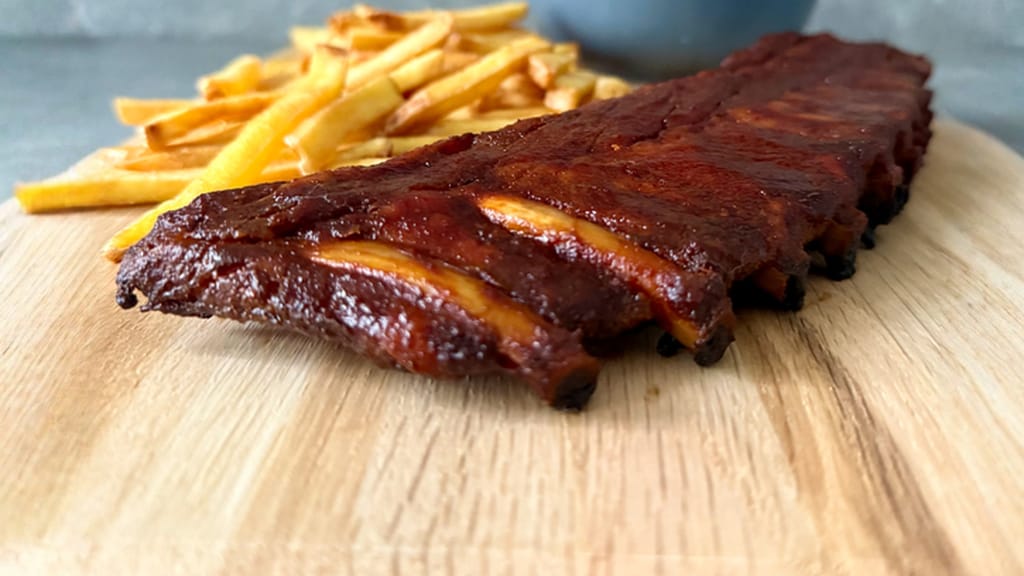
Baked pork ribs with apple cider and bbq sauce
Pork Ribs with Homemade BBQ Sauce — a Barbecue Classic
Plan on roughly 300–400g of meat per adult as a main, plus 150–200g of sides and vegetables. If you're grilling several things (meat plus meat-free options), cut back on each portion and bulk things out with bread and salads. Kids and lighter eaters usually need about half that.
Direct grilling happens right over the hot coals and is used to quickly sear thinner cuts (steaks, vegetables, sausages). Indirect grilling takes place away from the heat source with the lid closed, and slowly cooks thicker cuts (whole chicken, ribs, pork shoulder) through evenly without burning. The best approach is usually a combination: sear directly, then finish indirectly.
The grate needs to be hot, clean, and lightly oiled — a paper towel dipped in oil and held with tongs works well. Also, let meat release on its own rather than tugging it off too soon, or it'll tear and stick. Sugary marinades caramelise (and burn) faster, so add them nearer the end of cooking.
Yes — a cast-iron grill pan on the stovetop handles steaks, halloumi and vegetables just fine, and gives you those grill-mark lines too. Heat it until it's screaming hot, oil it, and cook in smaller batches so the temperature doesn't drop. You'll miss the smoky flavour, but you can fake it with smoked paprika or a drop of liquid smoke in the marinade.
Always marinate in the fridge, never at room temperature: poultry and pork can go overnight (12–24 hours), beef steaks 2–8 hours, and fish just 30–60 minutes, since the acid will start to 'cook' it if left too long. Never reuse a marinade that's been in contact with raw meat on cooked food without boiling it first.
One recipe worth heating the oven for, one tip, and one deal from the shop. Nothing else.