Plum dumplings with potato dough
Updated Sep 18, 2026
Storing food in the freezer comes down to one rule that changes everything else: at −18 °C, food doesn't spoil — it ages. Freezing halts bacterial growth, but it doesn't kill bacteria. What keeps changing, slowly, is the food's structure, fat and flavour. That's why every timeframe below is about quality, not safety: ground meat 3–4 months, fatty fish 2–3, blanched vegetables 6–12, fruit 8–12, bread 1–3. Safety only comes into play when you thaw food — and that's exactly where most mistakes happen.
At a steady −18 °C, ground meat lasts 3–4 months, beef steaks 6–12, roasts and large cuts 4–12, whole poultry up to 12, fatty fish 2–3, lean fish 6–8, blanched vegetables 6–12, fruit 8–12, ready-made soup 2–3, and bread 1–3 months. More detail by food type below.
The US Food Safety and Inspection Service (FSIS) sums it up in one line: at a constant −18 °C, food stays safe indefinitely, and the timeframes given are purely about quality. So a year-old pack of ground meat won't make you sick — but it will taste dry and off, with that stale-fat flavour.
Meat and poultry last 1–12 months at −18 °C, depending on the type: minced/ground meat 3–4 months, beef steaks 6–12, roasts and large cuts 4–12, whole poultry up to 12, and cured or smoked meats 1–2 months. What matters is surface area and fat content — the finer the meat is chopped and the fattier it is, the sooner it ages.
Ground meat and meat mixes: 3–4 months (large surface area = faster oxidation)
Beef steaks: 6–12 months, roasts and large cuts: 4–12 months
Pork and veal: 4–8 months
Lamb: 6–9 months
Whole poultry: up to 12 months, cut into pieces around 9 months
Offal and organ meat: 3–4 months
Bacon: 1 month, raw sausages and cured meats: 1–2 months — salt and fat speed up rancidity
Fish and seafood last 2–8 months in the freezer: lean fish 6–8 months, fatty fish 2–3 months, and prawns, mussels or squid 3–6 months. Fat content is the deciding factor — fatty fish last roughly a third as long as lean fish.
Lean fish (cod, pikeperch, pike): 6–8 months
Fatty fish (salmon, mackerel, trout): 2–3 months
Prawns, mussels, squid: 3–6 months
Ready-made meals last 2–6 months in the freezer: soups, sauces and stews 2–3 months, baked dishes with meat 2–3 months, and cooked meat without sauce 2–6 months. Dishes with sauce or gravy hold up best.
Soups, sauces, stews: 2–3 months
Baked dishes and ready meals with meat: 2–3 months
Cooked meat without sauce: 2–6 months (dries out faster without sauce)
Blanched vegetables last 6–12 months, fruit 8–12 months, herbs in fat 4–6 months, bread and baked goods 1–3 months, and raw yeast dough just 2–4 weeks. Vegetables and fruit last the longest of any group, while baked goods and dough have the shortest lifespan.
Blanched vegetables: 6–12 months
Whole fruit or as purée: 8–12 months
Herbs in oil or butter: 4–6 months
Bread, rolls, cakes: 1–3 months
Raw yeast dough: 2–4 weeks, the yeast gradually loses strength
Puff pastry: 1–2 months
Butter lasts 6–9 months in the freezer, hard cheese 2–4 months, beaten whole eggs (out of the shell) up to 12 months, and whipping cream 1–2 months. Fat content and emulsion stability decide it — the higher the fat, the better it survives freezing.
Butter: 6–9 months
Hard cheese, ideally grated: 2–4 months
Eggs, cracked and beaten, out of the shell: up to 12 months
Whipping cream (at least 30% fat): 1–2 months, once thawed use only for cooking
Freezing puts bacteria to sleep, it doesn't kill them. Water in the food freezes, becomes less available, and microorganisms stop multiplying — but once thawed, they pick up right where they left off. Whatever went into the freezer at the edge of freshness comes out at the edge of freshness.
What keeps happening even below freezing:
Fat oxidation. Oxygen still reacts with fat in the freezer, just more slowly. That's why fatty salmon only lasts 2–3 months, while lean cod lasts 6–8.
Enzymes. In raw vegetables, they keep breaking down pigments and aroma — which is why vegetables are blanched before freezing.
Sublimation. Ice on the surface turns straight into vapour, the food dries out, and you get freezer burn.
Ice crystal growth. With temperature fluctuations, small crystals merge into large ones, tearing cell walls, so juice leaks out of meat once thawed.
The practical takeaway: freeze quickly, in small flat portions, at a stable temperature. Fast freezing creates tiny crystals, slow freezing creates large ones — and you'll notice the difference both in how much liquid cooks out and in the texture.
Your freezer should stay consistently at −18 °C or below — that's the threshold at which microorganisms stop multiplying, and it's what all the storage times above are based on. At −12 °C, which an overstuffed, half-frozen freezer can easily hit, those times can shrink by half.
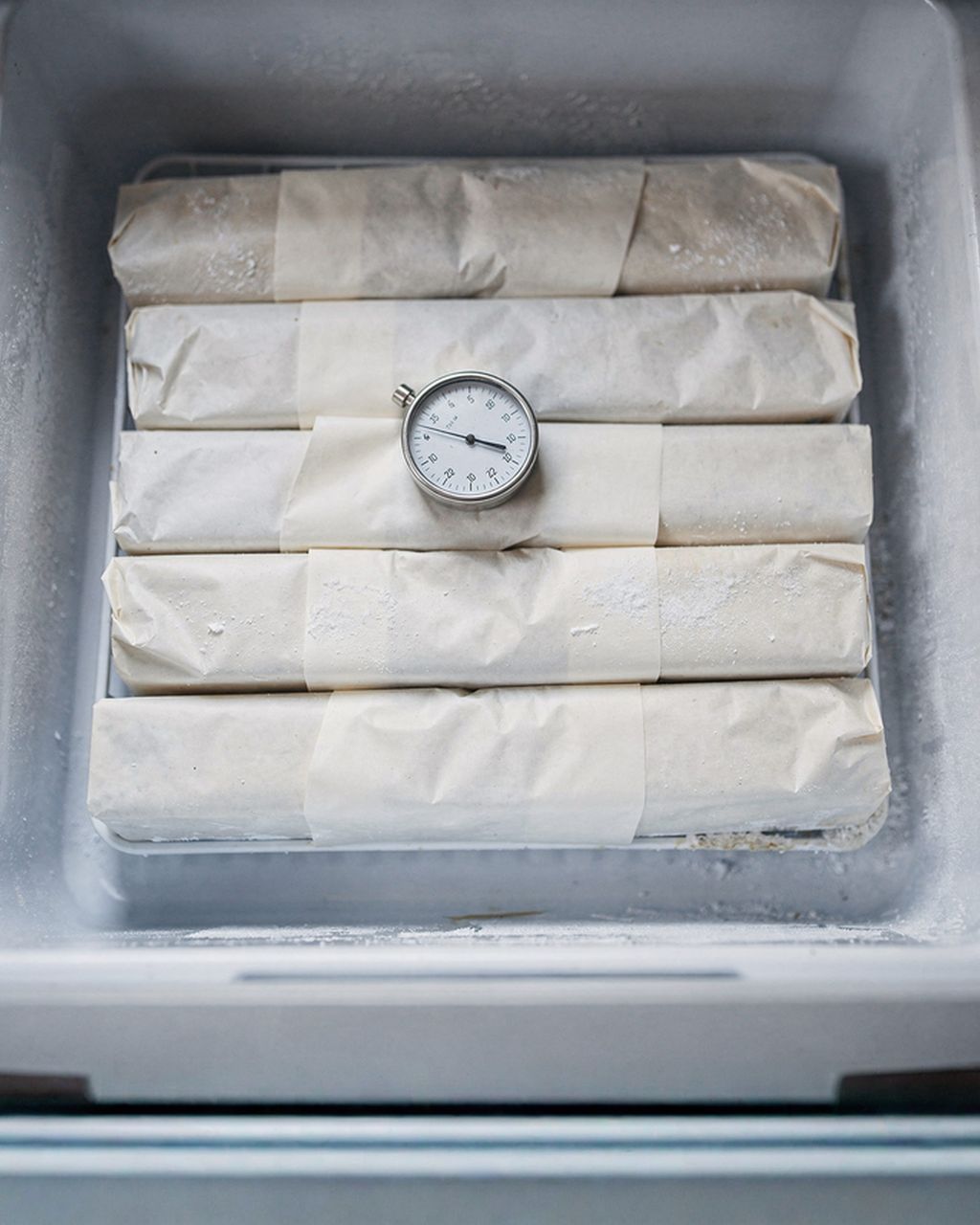
Check it yourself. Don't trust the display — a cheap freezer thermometer placed in the middle of the compartment will tell you the truth. Four stars on an appliance mean it can freeze fresh food down to −18 °C.
The warmest spots are the door and top drawer. That's where bread and items for quick use belong — not fish or ice cream.
Don't overload it all at once. Every freezer has a freezing capacity in kilograms per 24 hours (often 5–20 kg). Cram in more than that, and everything freezes slowly — including food that was already in there.
Turn on the fast-freeze function 6–12 hours in advance if you're planning a big shop or a seasonal batch of preserving.
A full freezer holds the cold better than a half-empty one. Fill gaps with bottles of water.
Frost build-up acts as insulation and drives up your electricity bill — defrost as soon as a solid layer forms, and definitely once it's more than a few millimetres thick.
Push out the air and flatten the package — these two things matter more for quality than anything else. Air causes drying and rancidity; a flat shape means fast freezing and fast thawing.
Portion for one meal. You shouldn't refreeze a thawed portion, so a solid half-kilo brick of mince is a trap.
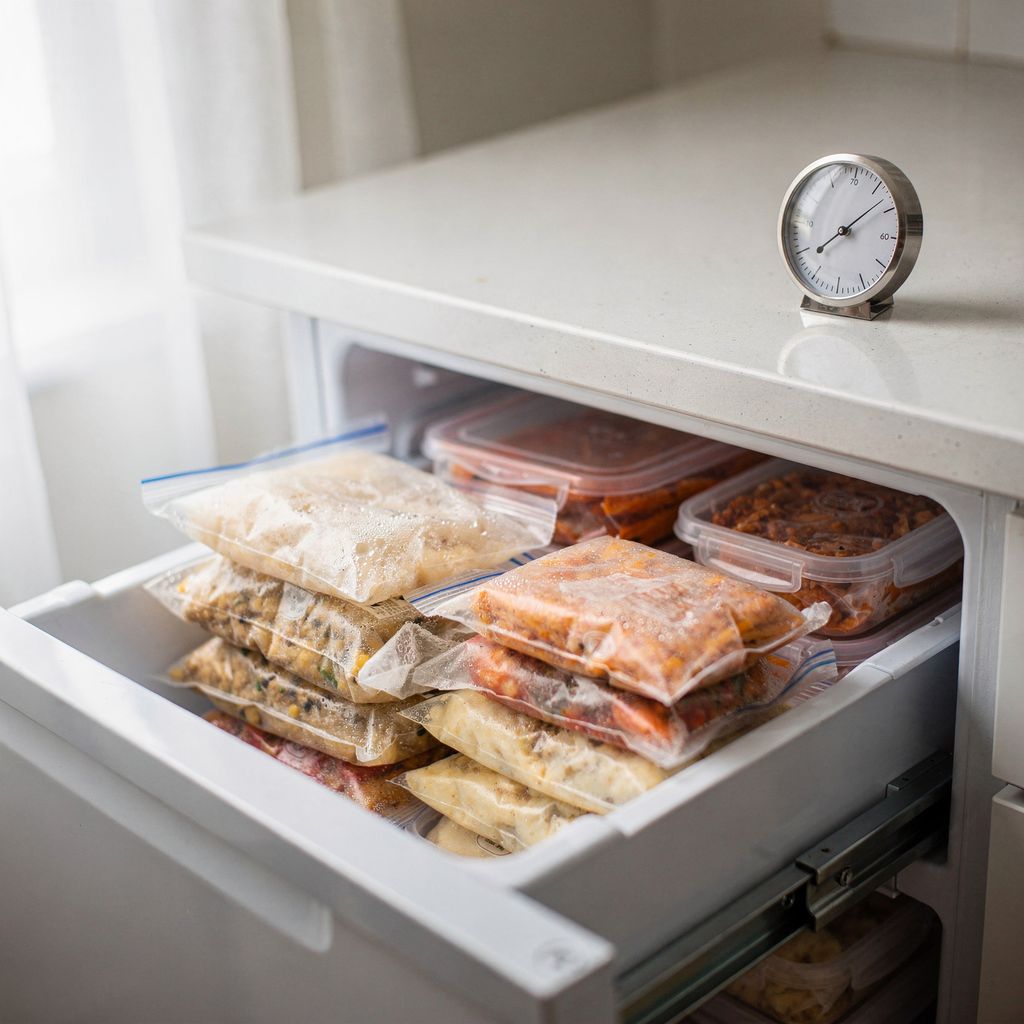
Keep packages flat, under 3–5 cm thick. They'll freeze in a few hours instead of overnight, and you can stack them in a drawer.
Push the air out. Seal bags underwater or with a straw, or vacuum-seal if you can. For anything stored longer than 2 months, wrap it twice — cling film plus a bag.
Glass jars need headroom. Water expands by roughly a tenth when it freezes, so leave 2–3 cm of empty space and don't screw the lid on fully until the contents are frozen solid.
Label the contents and the date. Three months from now you won't be able to tell braised beef from tomato sauce apart. Grab a marker, write two words and the date.
Freeze liquids lying flat. Soup in a bag laid on a tray freezes into a flat slab you can then stand upright like a book.
Pre-freeze small pieces on a tray. Spread berries, meatballs or dumplings out in a single layer, let them firm up for 2–3 hours, then tip them into a bag. That way they won't freeze into one solid block.
Hot food doesn't belong in the freezer. It warms up its surroundings above −18 °C and starts thawing whatever's next to it — and it freezes so slowly that coarse ice crystals form inside. Cool it down fast instead: spread it in a shallow dish, set it in cold water or outside, get it into the fridge within two hours (within an hour on a hot day), and only freeze it once it's fully cold.
Leafy salad greens, cucumber and radishes, eggs in the shell, yoghurt and soured cream, mayonnaise-based salads, diced boiled potatoes, breaded fried food, and soft cheeses in brine don't belong in the freezer — it comes down to water content and emulsion stability. Here's why, and what to do instead:
Leafy salad greens, cucumber, radishes: the cell walls burst and you're left with a watery rag.
Tomatoes for salad: turn mushy once thawed. You can freeze them for sauce, though — the skin slips right off after freezing.
Eggs in the shell: the contents expand and crack the shell. Cracked, beaten eggs freeze just fine; find out more in our article on using up leftover Easter eggs.
Yoghurt, soured cream, curd cheese and cream under 30% fat: they split into a grainy mush. Once thawed, use them only for cooking and baking, not straight from the spoon.
Mayonnaise-based salads and spreads: the emulsion breaks into oil and water, and there's no fixing it.
Diced boiled potatoes and potato soups: the potato turns glassy and falls apart. Mashed potato, on the other hand, freezes well.
Fried, breaded ready meals: the breadcrumb coating soaks up moisture and turns to mush. Breaded but unfried cutlets, however, freeze just fine.
Fresh cheeses in brine and soft cheeses: mozzarella falls apart, while hard cheeses hold up for 2–4 months, best when grated.
Each of these groups has one key step that makes all the difference: blanching for vegetables, pre-freezing on a tray for fruit, fat for herbs, and slicing ahead of time for bread.
Blanching means a brief dunk in boiling water followed by an immediate plunge into an ice bath. It shuts down the enzymes that would otherwise keep changing colour, flavour and texture even in the freezer — unblanched broccoli turns yellow and bitter after three months.
Boiling times according to the US NCHFP (start counting once the water returns to a boil):
Leafy spinach and greens: 2 minutes
Peas: 1.5 minutes, green bean pods: 3 minutes
Broccoli and cauliflower florets: 3 minutes, asparagus 2–4 minutes depending on how thick the stalks are
Sliced carrots: 2 minutes (small whole carrots 5 minutes)
Corn kernels: blanch whole cobs for 4 minutes and cut off the kernels only after cooling
A shorter time won't kill the enzymes, so the vegetable turns bitter even in the freezer; a longer time overcooks it. Straight after, dunk it in ice water for the same length of time, dry it thoroughly (extra water means extra ice), then spread it out on a tray. You don't need to blanch peppers, onions, mushrooms or herbs. You can dry mushrooms instead of freezing them — find the method in our guide on how to dry mushrooms at home.
Spread berries out in a single layer on a tray, let them freeze for 2–3 hours, then tip them into a bag — that way you can pour out exactly as much as you need later. Sprinkle apples and pears with lemon juice to stop them browning. Pit stone fruit beforehand, as the stone gives a bitter taste once frozen.
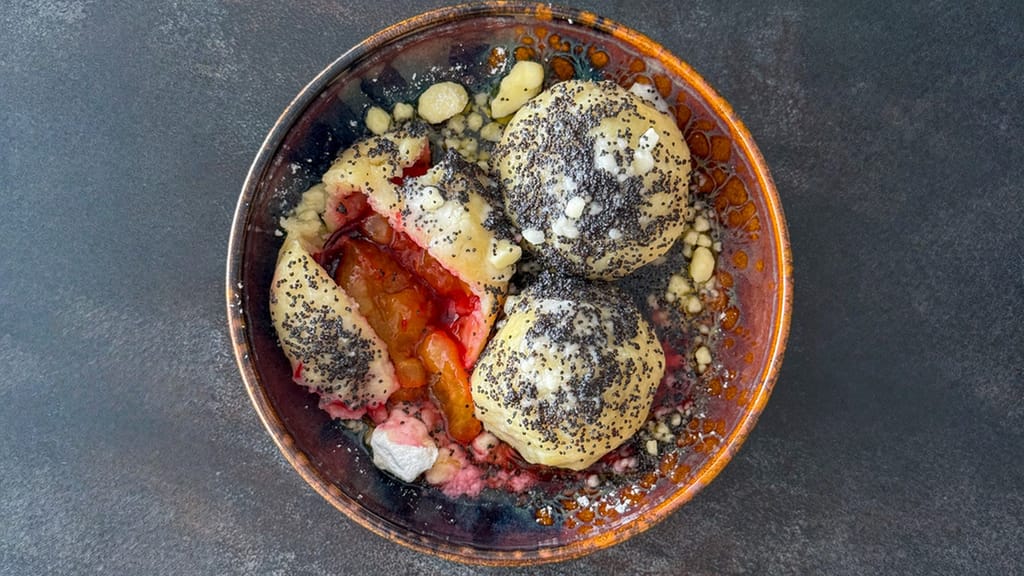
Plums and apricots for dumplings are frozen whole with the stone removed, and the dough is always made fresh. You can also freeze whole raw dumplings, uncooked — spread on a flat tray, freeze for an hour, then bag them up and boil straight from frozen, adding 2–3 extra minutes.
Plum dumplings with potato dough
Plum dumplings made with potato dough — the perfect way to use frozen plums from the freezer
Pack chopped herbs into an ice-cube tray, cover with olive oil or melted butter, and freeze. The fat protects them from drying out and oxidising, and they'll keep for 4–6 months — just drop a cube straight into a hot pan. Loose leaves in a bag will turn black and crumble.
Pesto works the same way: freeze it in cubes without the cheese, and stir the cheese in only after thawing, otherwise it turns grainy.
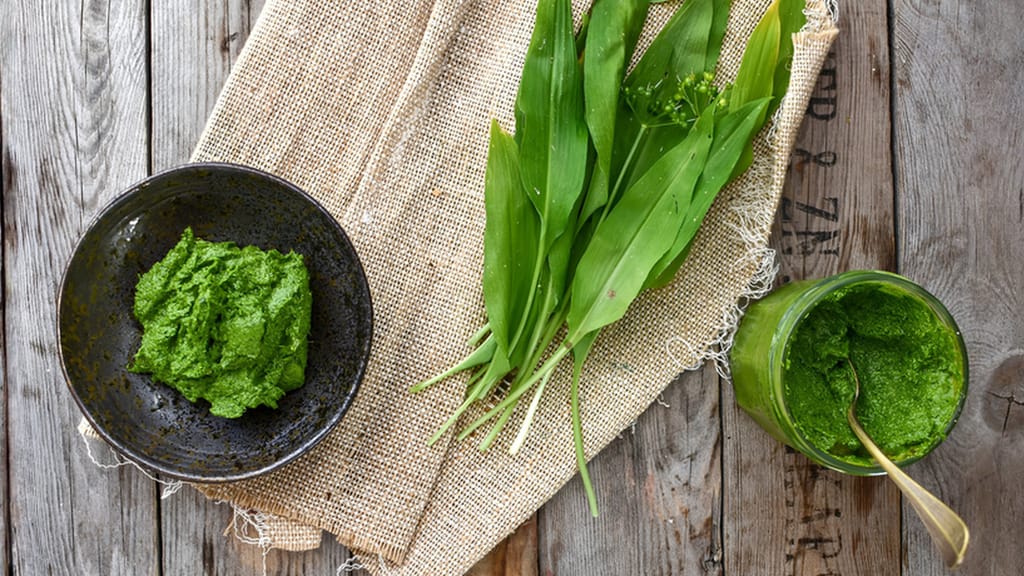
Wild garlic pesto
Wild garlic pesto — freeze it in cubes and enjoy spring flavour all winter long
Slice bread while it's still fresh, then freeze it — that way you can pull out just two slices instead of a whole loaf. It keeps for 1–3 months, after which it starts picking up freezer odours.
To bring it back to life: pop a slice straight from the freezer into the toaster, or spritz a whole loaf or roll with water and bake at 180 °C for 5–8 minutes. The crust will crisp back up. Freeze freshly baked homemade bread only once it's completely cool, otherwise it'll form its own ice inside the bag.
Anything with sauce or gravy freezes best: stews, ragùs, bean soups, tomato-based dishes, stocks. The liquid stops the food drying out, so it looks freshly made once reheated.
Two tweaks before freezing are worth making:
Leave out potatoes, pasta and rice and cook them fresh when reheating — they fall apart when frozen and reheated.
Reduce stock by half and freeze the concentrate in cubes — it saves space, and you just top it up with water when cooking.
Bean and mushroom soups are some of the best candidates, since they often taste even better once thawed.
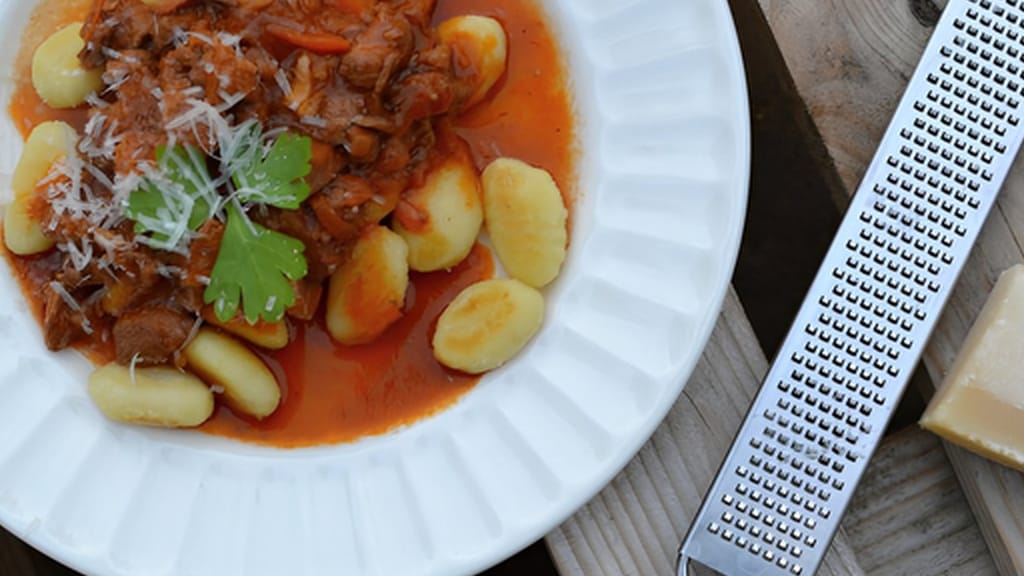
Slow-braised pork ragù with red wine
Slow-braised pork ragù with red wine — a rich, saucy ragù that freezes beautifully in portions
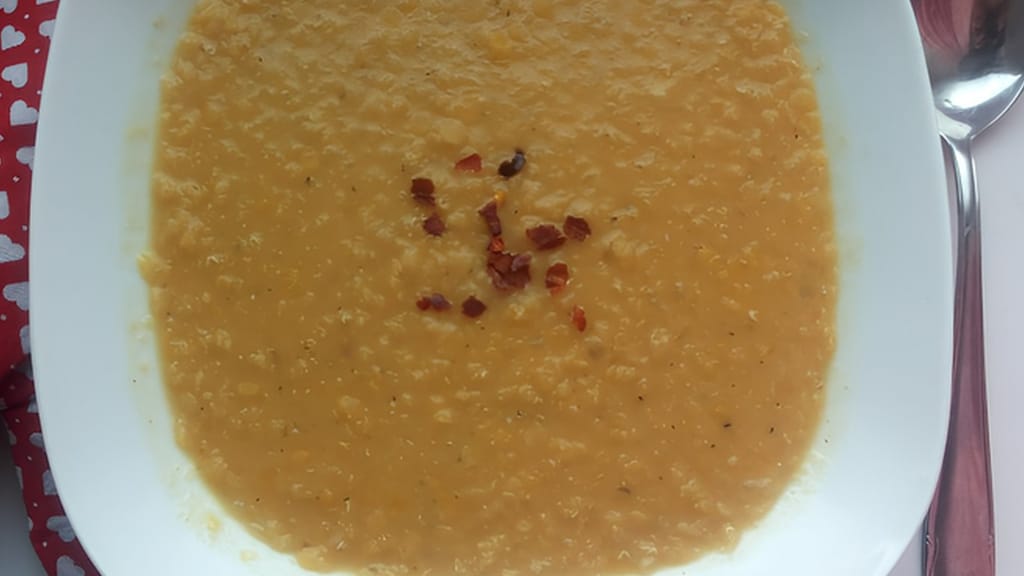
Red lentil soup with coconut milk and chilli
Red lentil soup with coconut milk and chilli — freezes brilliantly in single-serving portions
There are three safe ways to thaw food: in the fridge, in cold water, and in the microwave. They all share the same goal — keeping the food's surface from spending hours in the 5–60 °C danger zone, where bacteria multiply fastest. Thawing on the kitchen counter isn't one of them.
Thawing in the fridge (below 4 °C) is the safest method and the best for quality — the surface never enters the danger zone, and the meat loses less juice.
Small portions and slices: overnight, 8–12 hours
A kilo of meat: around 24 hours
Large poultry or roasts: allow 24 hours for every 2 kg
Put a plate under the meat — none of the thawing juices should drip onto other food
Once thawed in the fridge, use ground meat, poultry and fish within 1–2 days, and large cuts of beef or pork within 3–5 days.
Thawing in cold water is the quick fix for the day you forgot to take meat out of the freezer — it can thaw a kilo of meat in about an hour to an hour and a half, but you need to keep an eye on it.
The food must be in a leak-proof bag and fully submerged
Change the water every 30 minutes, otherwise it warms up and the surface enters the danger zone
Allow roughly 30 minutes per 0.5 kg
Cook it straight away once thawed — don't leave it until tomorrow
Only use the microwave to thaw food right before cooking it. Microwaves thaw unevenly, so the edges can start cooking in patches, and those spots are already in the danger zone. Cook the food immediately after thawing this way, and never put it back in the fridge to deal with later.
You don't need to thaw vegetables, soups, sauces, dumplings or thin slices of meat at all — put them straight from the freezer into the pot or oven and add roughly half again to the cooking time. Reheated food should reach 74 °C in the middle; let soups and sauces bubble gently for a bit.
You can refreeze thawed food if it thawed in the fridge and still has ice crystals or is below 4 °C. It's safe to do — the only downside is quality, since a second round of ice crystals damages the structure again and leaves the meat drier.
How to decide:
Thawed in the fridge, still raw: you can refreeze it. It's better, though, to cook it first and freeze the cooked dish instead.
Thawed in cold water or the microwave: cook it first, then you can freeze the cooked dish.
Thawed on the counter or left out at room temperature: don't refreeze it, and don't eat it.
Freezing a cooked dish made from frozen ingredients is completely fine — the cooking step in between is what makes it safe.
Keep the door shut. A full freezer holds a safe temperature for about 48 hours, a half-empty one for about 24 — and every time you open it, that window shrinks.
Once the power's back on, decide based on temperature, not appearance:
Food still has ice crystals or is below 4 °C: you can refreeze it or cook it straight away. Quality will be lower.
It was above 4 °C for more than 2 hours: throw it out. This applies especially to meat, fish, dairy and ready meals.
Never taste food to check if it's still good. The amount that causes food poisoning can be too small to notice by taste.
A handy trick for next time: put a cup of frozen water in the freezer and place a coin on top of the ice. If you find the coin at the bottom after a power cut, the contents thawed and refroze in the meantime — even if the thermometer now reads correctly.
Freezer burn shows up as grey-white, dry patches on the surface of food, and it's caused by drying out, not spoilage. Ice on the surface evaporates straight into the air (sublimates), the tissue dries out, and those spots lose both colour and flavour.
It's safe to eat, just unpleasant. The affected area is dry and papery, but the rest of the portion is fine and can be cooked normally.
It's caused by air trapped in the packaging and by temperature fluctuations. A poorly sealed bag is the main culprit.
Prevention means packing out the air — use a vacuum sealer, double-wrap food, fill glass jars right to the top, and stick to the storage times listed above.
Extensive freezer burn means the portion has had its day. If dry patches cover the whole surface, there's no bringing it back.
Yes — you can freeze it any time up to the very last day of its use-by date, since freezing pauses the shelf-life clock. But that clock doesn't reset once you thaw it: use it straight away, ideally the same day, because it went into the freezer right at the edge of freshness and will come out the same way.
For a few days, sure — but not for longer storage. Thin sandwich bags let air and moisture through, so food dries out faster and picks up freezer burn. Use a sturdier freezer bag instead, press out the air (seal it underwater or with a straw), and for anything stored longer than 2 months, wrap it twice — cling film plus a bag. A container with a tight-sealing lid works just as well, as long as you don't leave it half-empty.
Ice crystals form because of temperature swings, not age. Every time food partially thaws and refreezes, small crystals merge into bigger ones, and moisture condenses on the surface of the packaging. Keep ice cream at the back and bottom of the freezer, not in the door, avoid leaving the freezer open for long, and never add warm food straight in.
Studies suggest quickly frozen vegetables and fruit retain vitamin levels comparable to fresh produce. For vitamin C, a comparison of eight foods (Bouzari, Holstege & Barrett, Journal of Agricultural and Food Chemistry, 2015) found no significant difference in five of them, and the frozen version actually scored higher in three; results for other vitamins were mixed, with beta-carotene dropping noticeably in some foods. The reason is simple: produce is frozen shortly after harvest, and cold slows down breakdown. The biggest vitamin losses actually come from long boiling in lots of water.
You can't tell reliably, so treat any unlabelled bag as a priority to use first. Looks and smell won't reveal its age, and guessing from memory is often off by months. Going forward, set up a simple system: mark the contents and date with a marker, put new packages at the back and older ones at the front. Once every six months, go through the freezer and cook whatever's oldest.
One recipe worth heating the oven for, one tip, and one deal from the shop. Nothing else.