Mushroom soup
Updated Aug 30, 2026
Mushroom soup tastes best when you sear the mushrooms dry and golden brown first — the stock comes only after that. Mushrooms are about 90% water, and until that water cooks off, they won't brown at all: in the pan they just stew in their own juices and the flavor stays flat. This article will help you pick the right mushrooms for the result you want, give you ratios for both the classic and creamy versions, seasoning that actually deepens the flavor, and the mistakes that most often sink a mushroom soup.
Four types of mushrooms work well in mushroom soup: button mushrooms as a neutral base, chanterelles for a fruity aroma and firm bite, porcini (fresh or dried) for the deepest mushroom flavor, and oyster mushrooms for a meaty texture. The best soups come from combining two or three of these, not just one type.
Choose based on the result you want, not the price: a mushroom you want to taste in each bite needs to be firm, and a mushroom meant to carry the flavor of the whole soup needs to be aromatic. Few mushrooms manage both.
Button mushrooms are available all year and taste mild, so they can handle bold seasoning. Brown button mushrooms (cremini, portobello) have noticeably more flavor than white ones — if you're making soup from button mushrooms alone, go for brown.
Slice them 3–4 mm thick. Thinner slices fall apart into mush during cooking, thicker ones won't brown in the pan before they soften. Button mushrooms alone give a mild but somewhat flat soup; fix that with a handful of dried porcini or a spoonful of soy sauce.
Chanterelles smell like apricots, taste lightly peppery, and stay firm in soup even after simmering. In Czech forests, they grow roughly from June to October, and in warm years even into November.
Don't chop them finely. Halves or quarters hold their shape and you'll spot them in the bowl.
Add them late. Long simmering strips them of juiciness and makes them rubbery. Sear them separately and stir them back into the soup only in the last third of cooking.
They can handle fat. Butter, cream, and a splash of dry white wine all suit them — the peppery flavor doesn't get lost.
Porcini give the deepest mushroom flavor of all, and dried ones are even more intense in this respect than fresh. It's not just concentration at work — drying triggers an enzymatic release of ribonucleotides in mushrooms, mainly guanylate, and that's what carries the deep umami flavor (this mechanism is best documented in shiitake). The enzymes work best around 60°C (140°F), so gentle drying produces the most guanylate; fast drying at higher temperatures produces less.
In practical terms, this boils down to one thing: a handful of dried porcini does more for the soup's flavor than twice the amount of fresh button mushrooms. Pour 300ml of hot (not boiling) water over 15–20g of dried mushrooms and let them soak for 20–30 minutes.
Never pour the soaking water down the drain — it's the best mushroom stock you'll ever make at home. Pour it off carefully and leave the last centimeter at the bottom, since that's where the grit settles.
Oyster mushrooms hold a meaty, slightly fibrous texture in soup — good when you want bite, not a purée. Tear them along their fibers by hand instead of cutting with a knife: the torn edge has more surface area and browns better than a clean cut.
They pair well with thyme, root vegetables, and soy sauce. Mushrooms in general are a good source of B vitamins and potassium, and studies show that exposure to UV light converts ergosterol in mushrooms into vitamin D2 — which is why some cultivated mushrooms are labeled as a "source of vitamin D".
Stick to a 2:1 ratio — two parts mild mushroom (button, oyster) to one part bold mushroom (porcini, chanterelle). The mild mushroom provides volume and texture, the bold one provides flavor, and neither drowns out the other.
The cheapest and most effective combination of all: 400g fresh button mushrooms plus 15g dried porcini, soaking water included. It tastes like a soup made from pricey wild mushrooms and costs a fraction of the price.
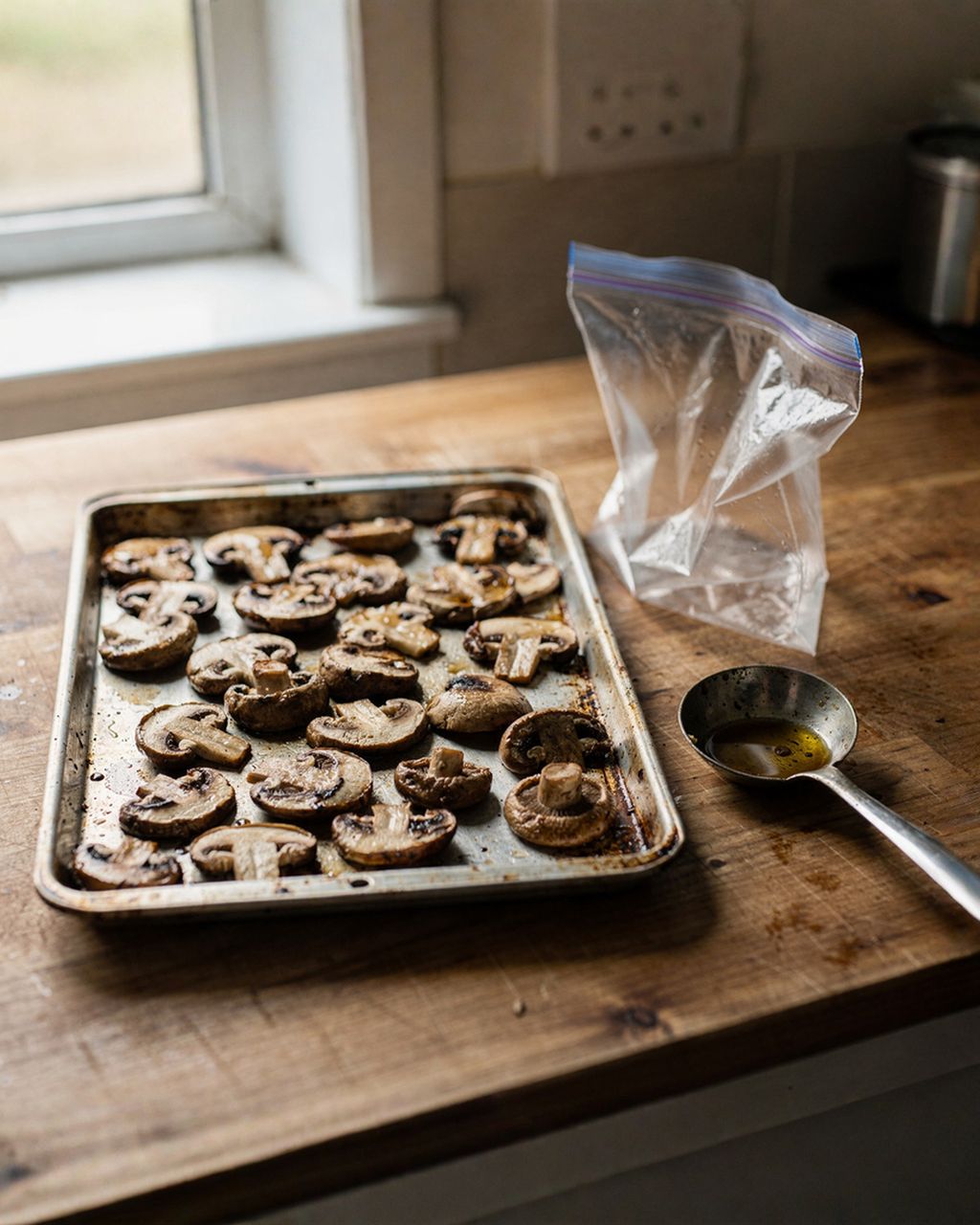
Add the mushrooms to a hot, wide pan in a single layer, don't salt them, and leave them alone until all the released water has evaporated and they start to turn golden — this takes about 8–12 minutes. Only then add butter, onion, and garlic. This is the one step that makes the difference between a mushroom soup and hot water with mushrooms in it.
The reason is physics. Free water in the pan can't rise above 100°C (212°F) until it fully evaporates. The Maillard reaction, which creates browning and roasted flavor, needs roughly 150°C (300°F). So as long as there's liquid in the pan, the mushrooms are steaming, not browning, and no real flavor develops — no matter how long you stand there.
Wide pan, single layer. An overcrowded pan means steamed, soggy mushrooms. Sear them in two batches rather than piling them on top of each other.
Salt at the end. Add salt once the mushrooms are browned — any earlier and it just draws out water needlessly.
Butter last. Start with a neutral oil, or even no fat at all; add butter once the mushrooms start browning, otherwise it will burn before the water has cooked off.
Don't keep stirring. Every stir cools the pan down. Let the mushrooms sit for 2–3 minutes, then flip them.
Deglaze. Once golden, pour wine or stock into the pan and scrape up the browned bits stuck to the bottom with a spoon. That's half the flavor of the whole soup right there.
For four servings of classic mushroom soup, you'll need 500g fresh mushrooms, 1L stock, 1 onion, 2 cloves of garlic, and 100–150ml cream. A mushroom-to-stock ratio of roughly 1:2 gives a soup that's full of flavor but still spoonable, not a sauce.
The method has four stages, and the order matters every time: sear the mushrooms until golden → add onion and garlic → deglaze and pour in the stock → simmer for 15 minutes, then remove from heat and stir in the cream. Always add garlic after the onion, and only for half a minute — in a hot pan it turns bitter within seconds.
Add diced potato along with the stock if you want a heartier soup — it thickens it while also mellowing the flavor. You'll find exact amounts and timing in the recipe below.
Mushroom soup
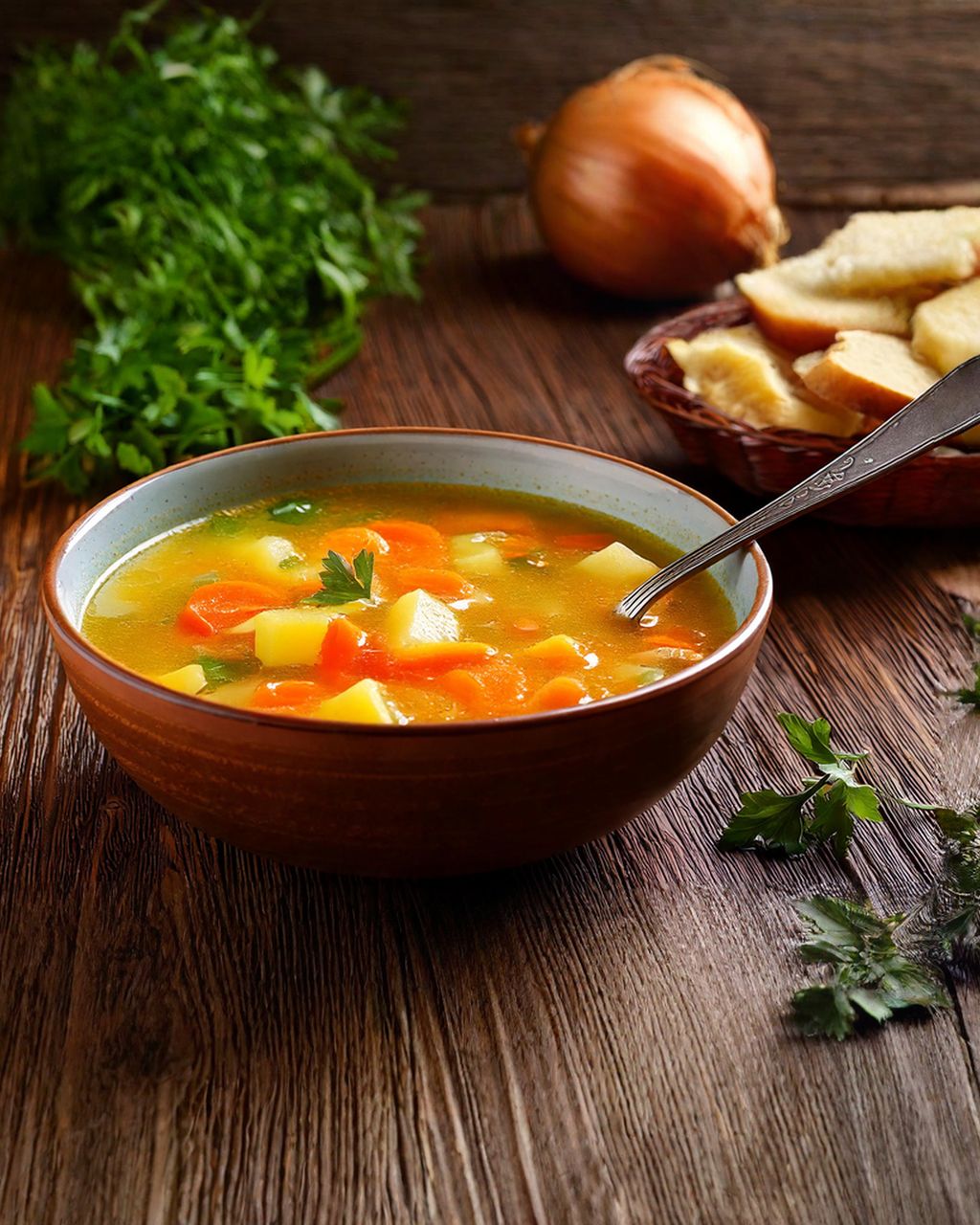
Classic mushroom soup, step by step — the base recipe that every variation in this article builds on
There are three ways to thicken creamy mushroom soup: potato, a blended portion of the soup, or a roux. Each gives a different result. Cream doesn't thicken the soup — that goes in at the end, just for richness.
Potato — 1 medium potato per liter, cooked right in the soup and blended. The purest mushroom flavor, no floury taste. The best choice when you want the mushrooms to shine through.
A blended portion of the soup — scoop out a third, blend it, and stir it back in. Zero extra work, zero foreign flavor, and you still get mushroom pieces in the bowl.
Roux — 20g butter and 20g plain flour per liter. A classic, but you have to let the flour cook in the butter for at least a minute, otherwise the soup tastes of raw flour and there's no fixing it afterward.
And then there's whipping cream (at least 30% fat) — 100–150ml per liter. It doesn't really thicken so much as smooth out and round off the flavor. Lower-fat cream curdles more easily.
Stir the cream in only after taking the soup off the heat — in an acidic or thinner soup it curdles easily if boiled, and you can't blend the curdled bits back in. If you need to reheat the soup afterward, keep it below a boil — the surface should only just shimmer.
Add fresh herbs only at the table. Thyme can handle a few minutes of simmering and gives the soup earthiness, but parsley, chives, or dill lose their aroma completely once cooked.
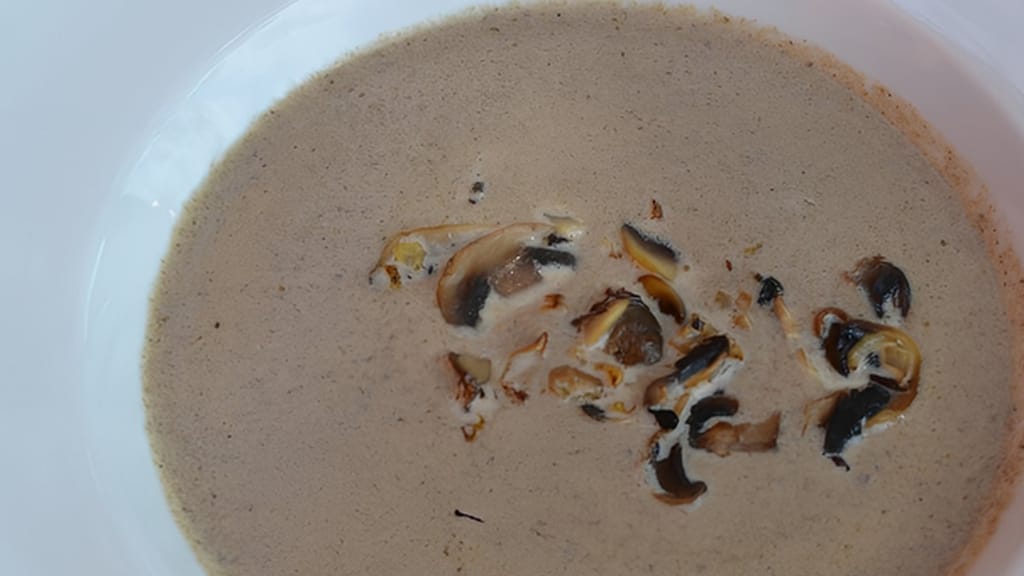
Delicate & fragrant mushroom soup
Delicate and fragrant mushroom soup — the creamy version with cream and herbs
You can make mushroom soup without cream too — coconut milk, blended soaked cashews, or simply cooked potato will give it body. Cashews taste the most neutral, coconut adds its own sweetness that you'll notice in the soup, and potato adds no flavor at all, just thickness.
The vegan version has one real drawback: without butter and cream, the soup lacks richness. Bring it back with dried mushrooms and their soaking water, a spoonful of soy sauce or light miso paste stirred in once the soup is off the heat (boiling kills miso's flavor), and a spoonful of olive oil into the bowl at the end — fat carries aromatic compounds, and without it the flavor won't reach your palate. Both coconut and cashew add sweetness, so finish the soup with a splash of vinegar or lemon to balance it out.
If you're using coconut milk, go for the full-fat canned kind, not the carton drinking kind — that's usually too diluted to thicken anything.
Kulajda is a Czech mushroom soup thickened with sour cream, sharpened with vinegar, and finished with dill and a poached egg. Three things set it apart from a regular mushroom soup — tanginess, dill, and egg — and thanks to them, it works even with plain button mushrooms.
There are two things that most often trip kulajda up:
Always temper the sour cream. Ladle a scoop of hot soup into a bowl with the sour cream, stir it together, and only then pour that mixture back into the pot. Pour sour cream straight into hot soup and it will curdle every time.
Vinegar last, and drop by drop. Adjust the tanginess off the heat, tasting as you go — kulajda should be pleasantly tangy, not vinegary. If you overdo it, a pinch of sugar will bring it back.
Poach the egg separately in gently simmering salted water with a splash of vinegar, and add it to the soup only once it's plated. Poach it directly in the soup and the white will unravel and cloud it.
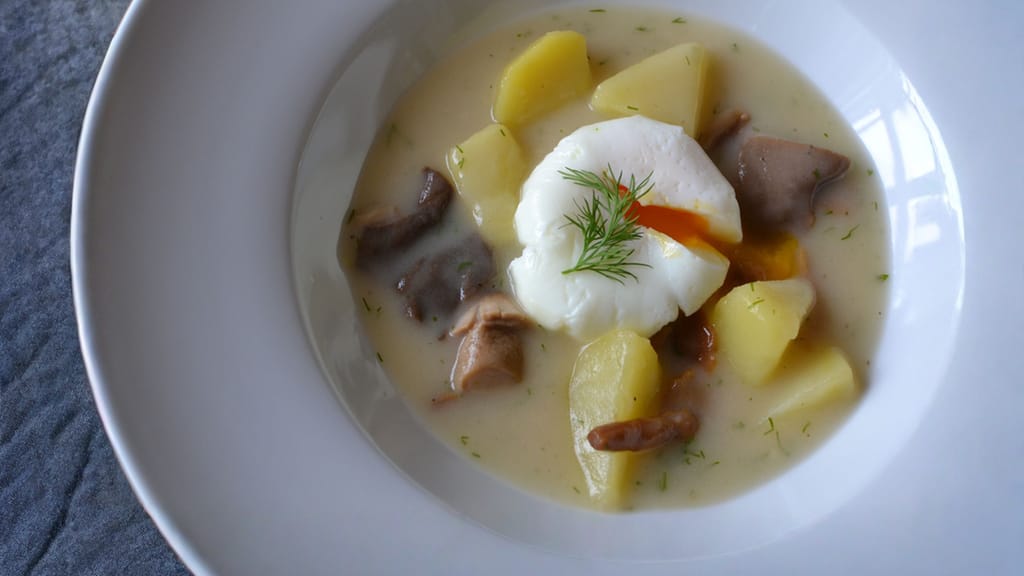
Kulajda – the best creamy mushroom soup
Kulajda – the best soup with mushrooms, dill, and a poached egg
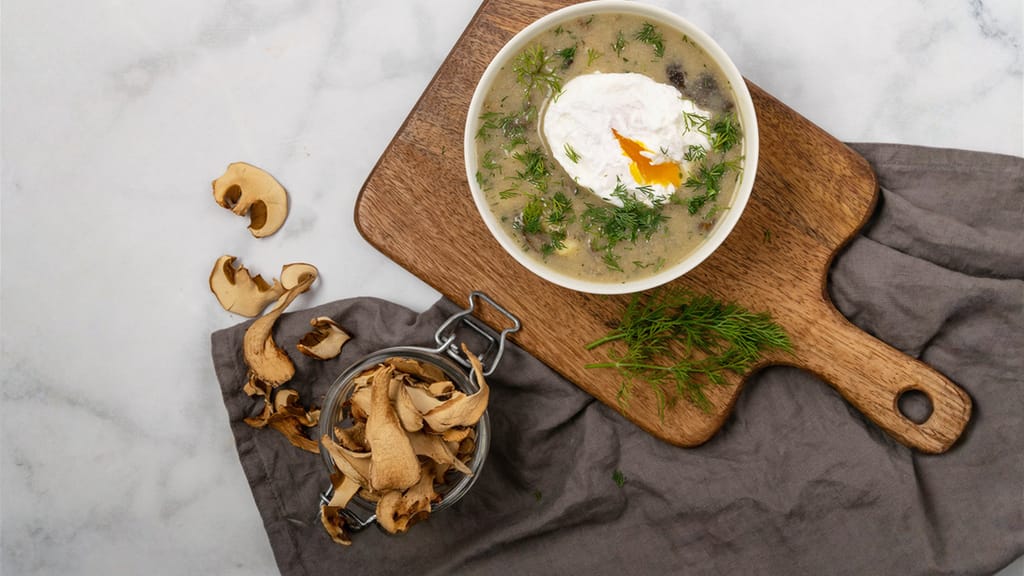
Healthy kulajda
Lighter kulajda — a lighter take on the same Czech mushroom soup
Six things take mushroom soup to the next level: dried mushroom soaking liquid, dry white wine, a pinch of nutmeg, a splash of acid, thyme or marjoram, and a spoonful of soy sauce or miso paste. Don't use them all at once — pick two.
Dried mushroom soaking water (300ml per liter of soup): by far the biggest difference for the least money. Use it to replace part of the stock.
Dry white wine (100ml): pour it over the seared mushrooms and let it nearly evaporate before adding the stock. Skip sweet wines, they overpower the mushrooms.
Nutmeg: just a pinch, freshly grated, added at the end. It works beautifully in creamy soups, but too much tastes like toothpaste.
Acid (a teaspoon of vinegar or lemon juice at the end): it doesn't make the soup sour, it just "switches the flavor on." If your soup tastes flat and adding salt doesn't help, this is what's missing.
Thyme or marjoram: thyme for creamy versions, dried marjoram for clear soups and kulajda. Add dried herbs with the stock, fresh ones only at the table.
Soy sauce or miso (a spoonful per liter): adds glutamate, which amplifies the guanylate already in the mushrooms. Stir in once the soup is off the heat.
Mushroom soup most often fails because of seven mistakes: mushrooms added to liquid without searing first, an overcrowded pan, salting too early, cream added to boiling soup, an undercooked roux, scorched garlic, and soaking water poured down the drain. Each one has a simple fix.
Mushrooms go straight into the stock. The single most common mistake. Without browning them first, there's no roasted flavor, and the soup stays watery. The whole method above fixes this.
An overcrowded pan. The mushrooms steam instead of browning. Sear in two batches, even if it takes ten minutes longer.
Salting right at the start. Add salt once the mushrooms are browned — any earlier and it just draws out water needlessly.
Cream added to boiling soup. It curdles and the soup turns grainy. Take it off the heat first, then stir it in.
An undercooked roux. Flour needs at least a minute in the butter, or the soup will taste raw.
Scorched garlic. It only goes into the hot pan after the onion, and only for 30 seconds. Bitter garlic ruins the soup's flavor for good.
Dried mushroom soaking water poured away. You're throwing out the tastiest liquid in the whole kitchen. Pour it off carefully and leave the grit settled at the bottom.
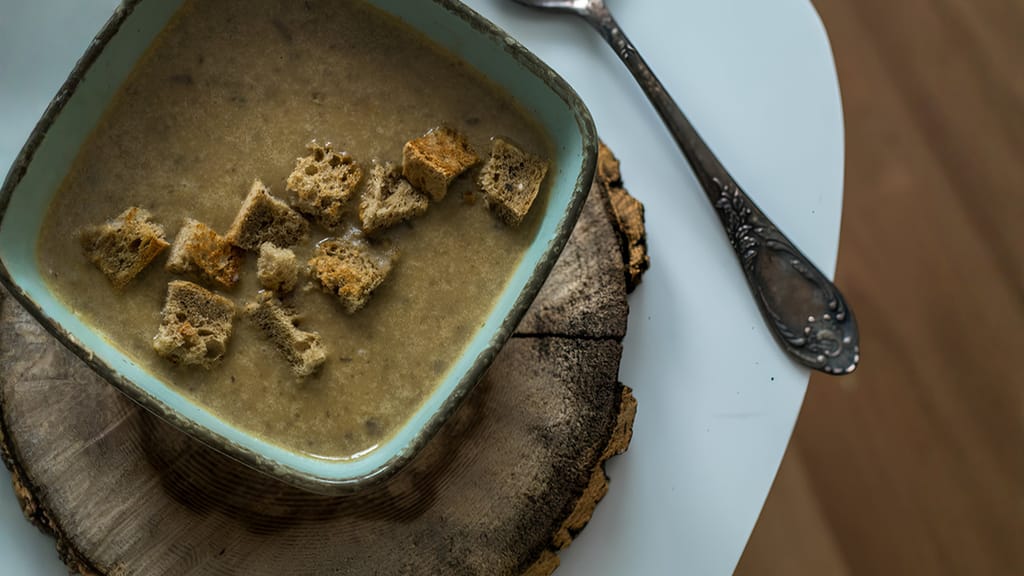
Tangy bread is the best match for mushroom soup — sourdough or rye, cut into thick slices, toasted, and rubbed with garlic. The tang of the bread does the same job as a splash of vinegar in the soup: it balances the richness of the cream.
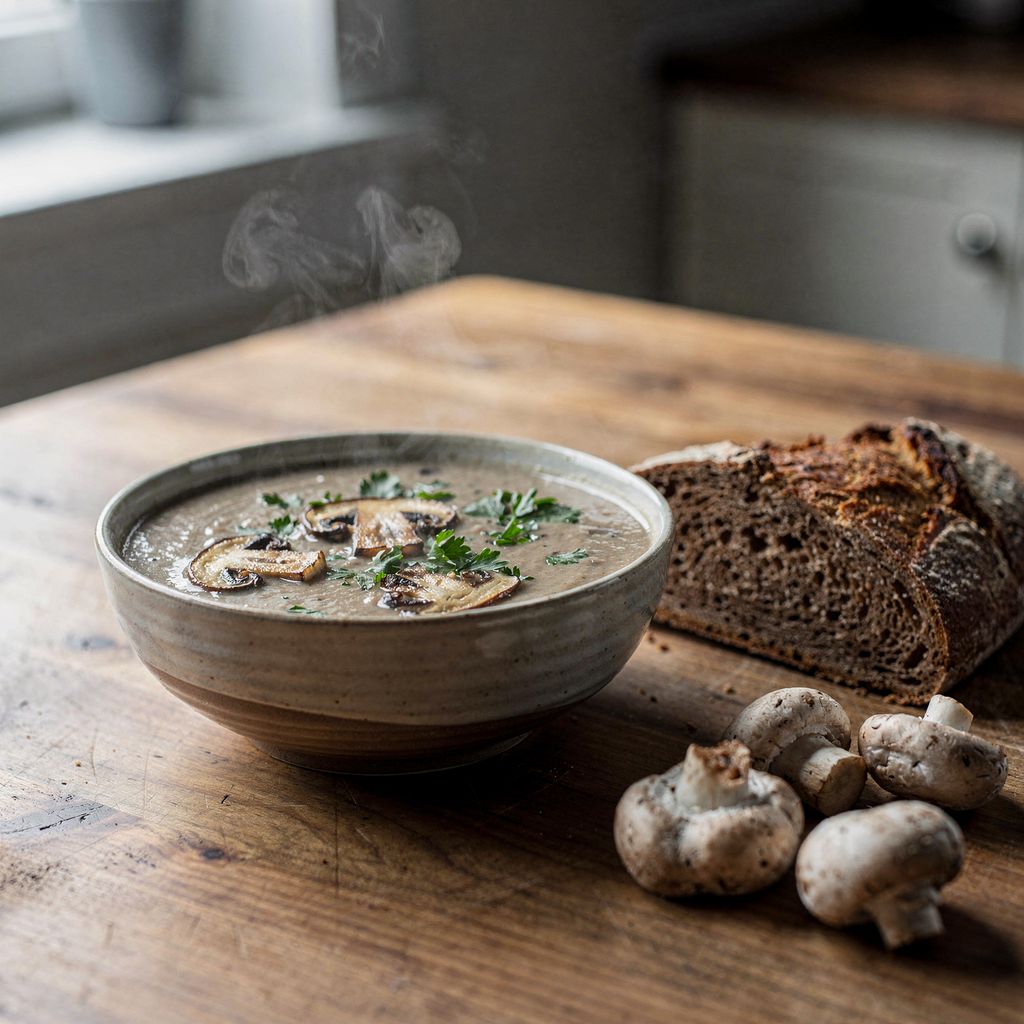
Seared mushrooms on top. Set aside a few of the nicest slices while searing and place them on top of the bowl at the very end. It looks great and adds texture to every bite.
A poached egg. Turns a light soup into a full meal, not just in kulajda.
A drizzle of cream or coconut milk. Pour it into the center of the bowl and drag a skewer through it to make a spiral.
Herbs only at the table. Parsley, chives, or dill, chopped just before serving.
A bread bowl looks great, but a thin soup will soak through it in under ten minutes. It only works with a properly thick creamy soup and a sturdy sourdough loaf.
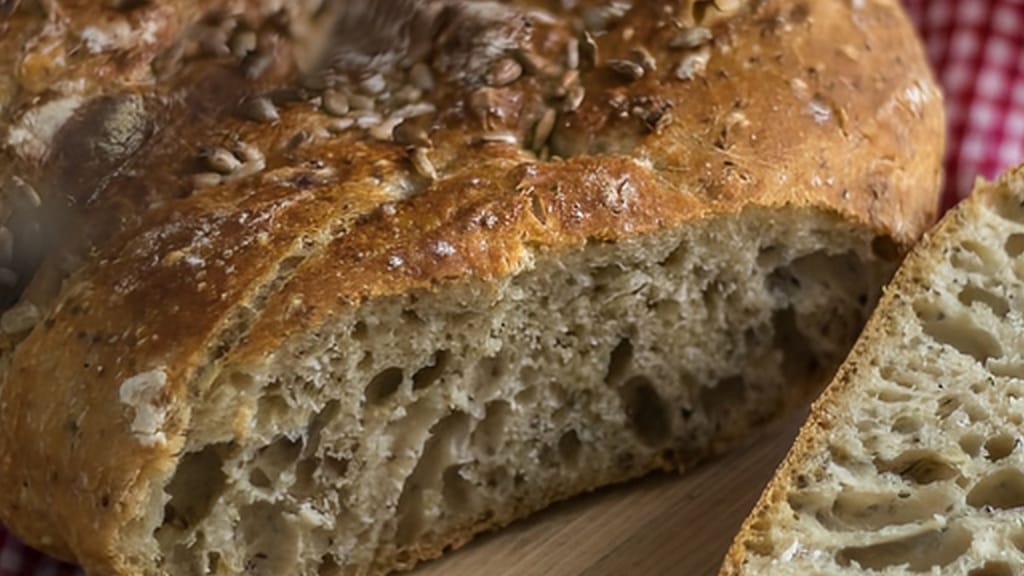
Homemade bread
Homemade bread — a sourdough loaf that pairs best with mushroom soup
Mushroom soup keeps in a sealed container in the fridge for 2–3 days. Reheat it slowly over low heat and don't let it boil — creamy versions will curdle.
Don't freeze soup with cream in it. Once thawed, it separates into water and curdled protein, and there's no bringing it back together. If you want to batch-cook, make the base without cream, freeze it (it keeps for 3 months), and stir the cream in only when reheating.
Cool the soup quickly after cooking and refrigerate it within two hours; when reheating, heat it through completely, not just on the surface. Don't let it sit lukewarm on the stove for hours, and reheat it only once to be safe.
Roughly 50g of dried mushrooms is equivalent to 500g fresh, since drying makes mushrooms lose about 90% of their weight. But you usually don't want that much in soup — dried mushrooms taste much stronger than fresh ones, so a good combo is: 400g fresh button mushrooms plus 15–20g dried porcini, soaking water included. Soak dried mushrooms for 20–30 minutes in hot, not boiling, water.
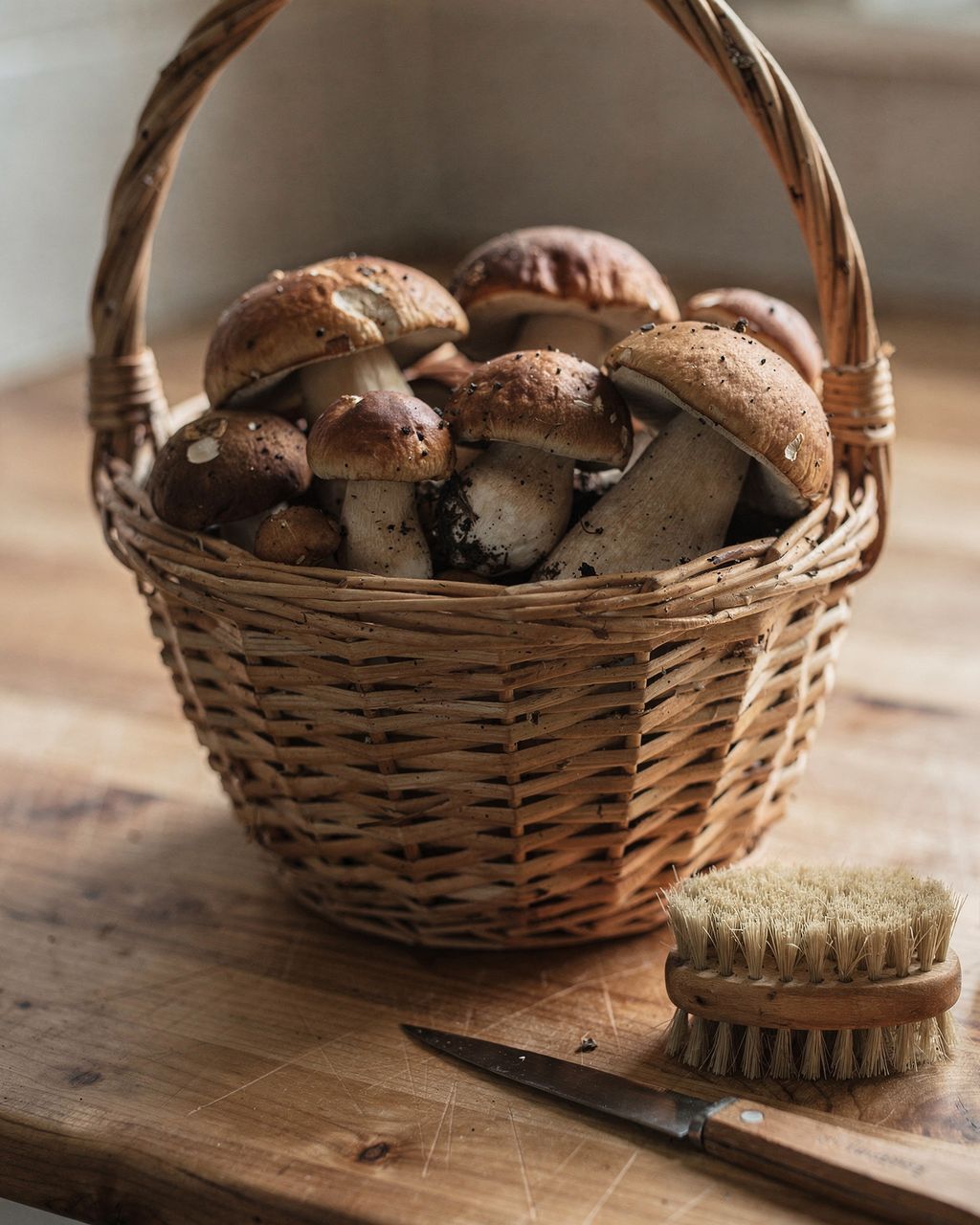
Don't peel mushrooms or rinse them under running water — wipe them with a damp cloth or a mushroom brush instead. Mushrooms soak up water like a kitchen sponge, and then they'll take forever to brown in the pan. Peeling only makes sense for older button mushrooms with a dried-out cap, or porcini with mushy tubes (the spongy layer under the cap), which will cloud the stock and turn it an unpleasant color. Just trim off any dirt at the base of the stem.
The most common cause of bitterness is scorched garlic or onion — both turn bitter within seconds in a too-hot pan, and there's no fixing that flavor once it's in the soup. The other culprit is a burnt fond stuck to the bottom of the pot that got stirred into the soup. The mushrooms themselves can also be bitter: overripe button mushrooms with dark gills, or the bitter bolete (Tylopilus felleus), which foragers sometimes mistake for porcini and which gets even more bitter when cooked. If your soup does turn bitter, a spoonful of cream and a pinch of sugar can help — but only up to a point.
Yes, but don't thaw them first — throw them into the pan still frozen, and plan for a longer time for the water to cook off. Thawed mushrooms release their juices into the bowl and turn soft and slimy; frozen ones will never brown quite as nicely as fresh, but they hold their shape better. Use higher heat and smaller batches, since frozen mushrooms cool the pan down more than fresh ones. They work perfectly well in a blended creamy soup; for a chunky soup, mix in some fresh mushrooms too.
Check with your pediatrician about the right age to introduce mushrooms — recommendations vary, and we won't set a hard rule here. When trying mushrooms for the first time, start with a smooth, blended, creamy version made from well-cooked cultivated mushrooms: it's gentler, and kids usually take to it better than a chunky soup.
Yes — clear mushroom soup is older and more traditional in Czech cooking than the creamy version. Build it on a good stock, dried mushrooms, and caraway with marjoram, thicken it with diced potato, or stir in a handful of homemade noodles or semolina dumplings. Replace the fat with a spoonful of butter or lard stirred in at the end, which gives the flavor the fullness it needs. Without any fat at all, the soup will taste flatter, since the aromatic compounds in mushrooms are fat-soluble.
One recipe worth heating the oven for, one tip, and one deal from the shop. Nothing else.