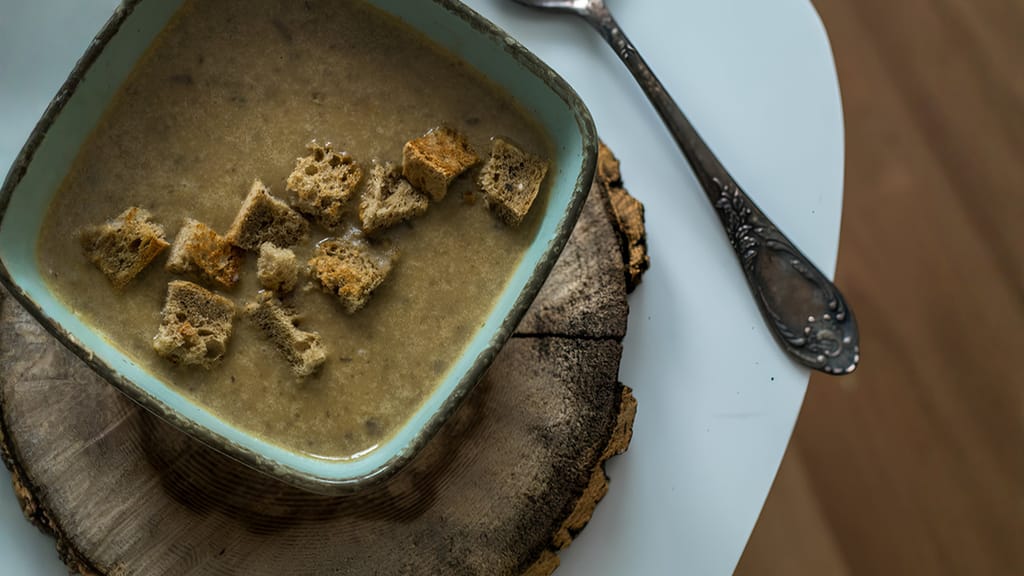
Mushroom soup
Updated Sep 18, 2026
Homemade stock keeps in the fridge for 3–4 days, as long as you cool it quickly after cooking and keep it below 4°C (39°F). What matters isn't how long you simmered it or how much salt you added — it's how fast the stock goes from boiling to cold. That's almost always where things go wrong. Below you'll find shelf life by type of stock, how to chill it quickly, why reheating isn't the same as real preservation, how to spot the signs it's time to toss it, and how to freeze it for months.
Strained meat or vegetable stock keeps in the fridge at up to 4°C (39°F) for 3–4 days. For stock with meat and vegetables left in it, and for fish stock, we recommend being stricter than standard storage charts suggest. Specifically:
Clear chicken or beef stock, strained — 3–4 days
Bone broth, long-simmered and strained — 3–4 days
Vegetable stock — 3–4 days
Stock with meat, noodles, or vegetables left in it — storage charts say 3–4 days, but we recommend 2–3 days, since solid pieces slow down cooling; this is our own more cautious guideline, not the chart figure
Fish stock (fumet) — storage charts say 3–4 days, but it's best to use it within two; this is our own more cautious guideline, not the chart figure
Opened store-bought stock — follow the date given by the manufacturer on the packaging; if there isn't one, treat it the same as homemade, i.e. 3–4 days
Solid pieces in stock shorten its shelf life for two reasons: cooked meat and vegetables spoil faster than the liquid alone, and they also slow down cooling because they hold heat inside. So always strain your stock before putting it in the fridge. Store the meat and vegetables separately in a sealed container and add them back in only when reheating.
With fish stock, we recommend being stricter than with meat stock because of enzymes and bacteria from fish that keep working even at low temperatures, and the smell is usually the first thing to give it away. If you're making fish soup, plan to cook and eat it within two days.
Stock has a short shelf life because it's practically an ideal breeding ground for bacteria — its pH sits close to neutral (roughly 6–7, well above the 4.6 threshold that defines a low-acid food), it's full of water and dissolved proteins and amino acids, and it has nothing in it to slow bacterial growth down.
Compare that to homemade jam: it keeps for months thanks to sugar and acid, which strip bacteria of both water and a hospitable environment. Stock has neither. Salt at soup-level concentration (around 1%) does virtually nothing to preserve it — salt only works as a preservative in the tens-of-percent range, like in cured meat.
The second issue is a specific bacterium. According to U.S. food safety authorities, stocks, sauces, stews, and braised meats are classic carriers of Clostridium perfringens. Its spores survive boiling — some strains can withstand a full hour at 100°C — and simply wait. Once stock cools slowly through the 4–60°C (39–140°F) range, the spores germinate and the bacteria start multiplying — doubling in as little as 7 to 10 minutes at the warmest part of that range. It's one of the fastest-growing pathogens in food, period.
Which is the key takeaway: stock safety isn't decided in the fridge — it's decided in the first hour after cooking.
The goal is to get stock from 57°C (135°F) down to 21°C (70°F) within two hours, and from there to 5°C (41°F) within another four hours — at home, it's worth aiming even stricter, for 4°C. That's the two-stage cooling standard set out in the U.S. food code, and it's the most practical benchmark to follow at home.
A big pot of stock left to cool on the stove won't come close to hitting that. The center of a 5-liter pot can easily stay above 40°C for five hours. Here's what to do instead:
Strain the stock as soon as it's done. This removes the residual heat held by the bones and vegetables and reduces the overall volume.
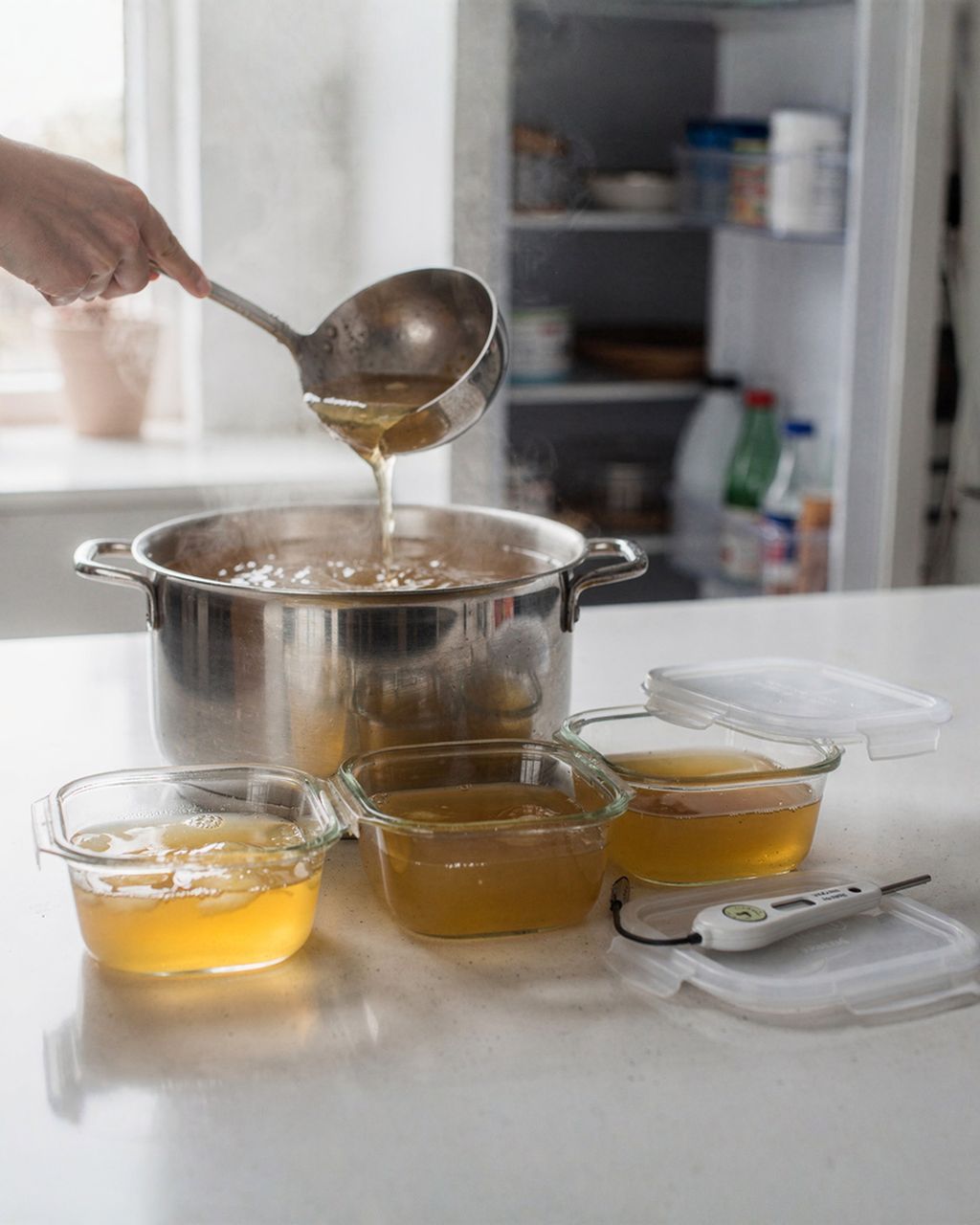
Divide it into shallow containers. Keep the depth to 10cm or less, ideally shallower. Four shallow containers cool many times faster than one deep pot — it all comes down to the surface-to-volume ratio.
Set the containers in an ice bath. Fill the sink with cold water and ice, up to the level of the stock inside the containers. Stir every few minutes — without stirring, a cold shell forms around a warm center.
Actually measure it. Stick a thermometer into the center. Don't guess based on how warm the container feels from the outside — glass and plastic are deceptive.
Put stock in the fridge lukewarm, not hot. A hot pot in the fridge acts like a heater and can push nearby food into the danger zone.
Don't seal the containers tightly right away. For the first 30 minutes, leave the lid just resting on top so steam can escape. Then seal it properly.
Handy trick for next time: freeze a few liters of water in clean plastic bottles ahead of time and drop them straight into the stock while it's cooling. They chill it from the inside, don't water it down, and are easy to pull back out.
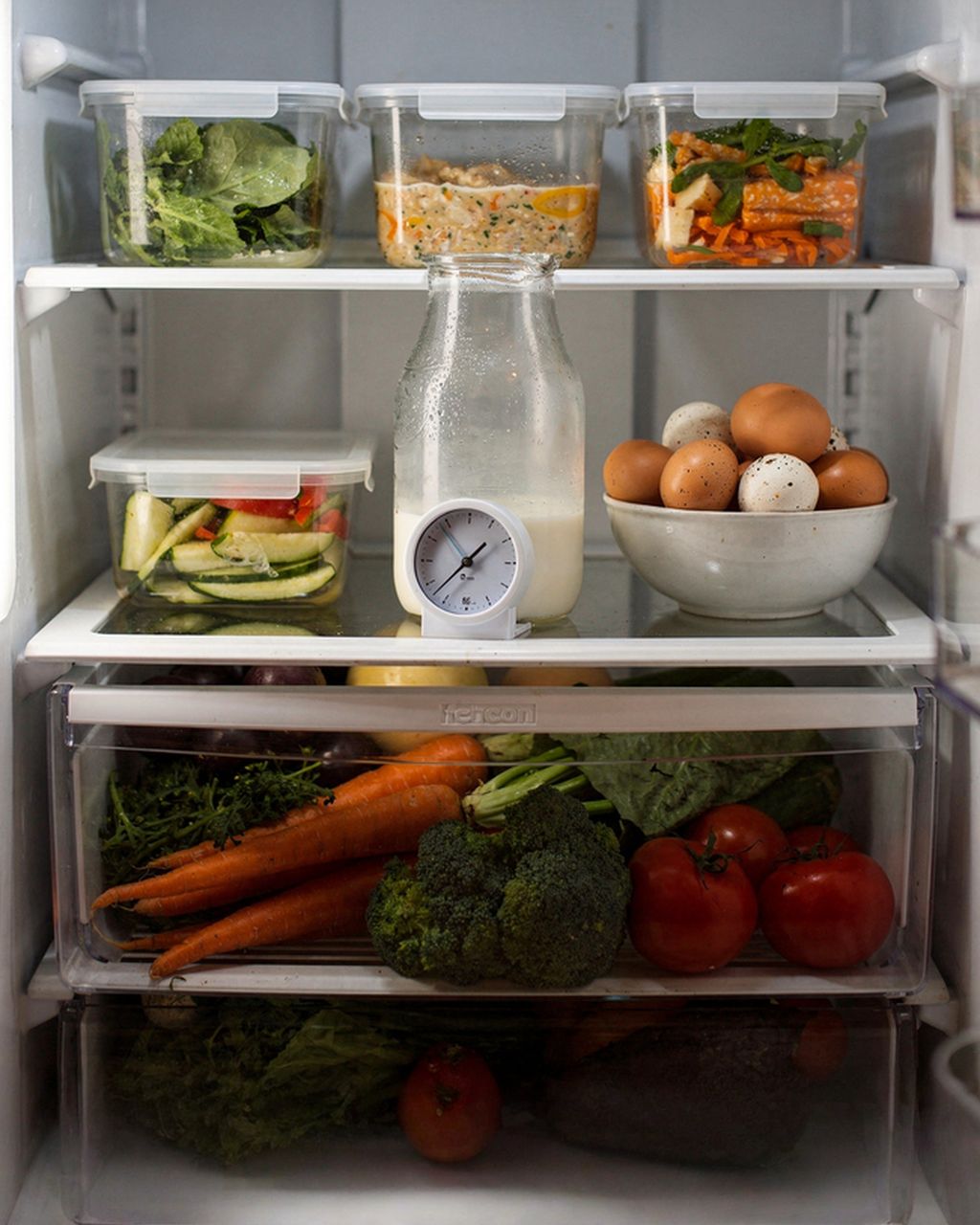
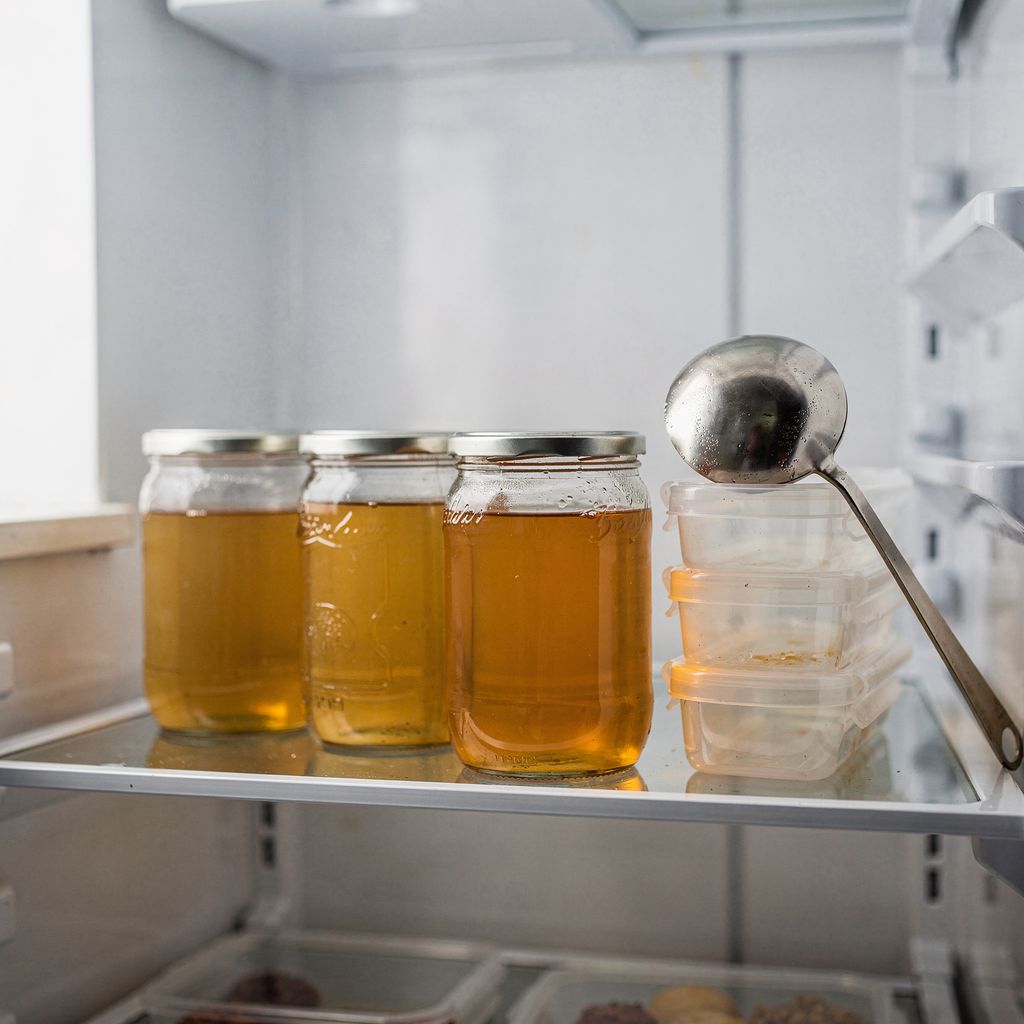
Store stock strained, in an airtight container, at the back of the fridge, at 4°C (39°F) or below. That's what the whole 3–4 day window depends on.
Airtight. A container with a proper lid, not a bowl with plastic wrap stretched over it. This cuts down on oxidation and odor transfer — stock is remarkably good at soaking up fridge smells.
Toward the back, not the door. The door sees the biggest temperature swings every time it opens. The back of the bottom shelf is the most stable spot.
Check your fridge temperature. Plenty of home fridges run around 7°C, which cuts shelf life significantly. A fridge thermometer costs next to nothing and is the cheapest upgrade you can make to how you store food.
Label the container with the date. After three days, nobody remembers if they cooked it Wednesday or Thursday. A strip of tape and a marker is all it takes.
Smaller containers beat one big one. You only open the one you're using, and the rest stays untouched.
One thing not to rely on: a layer of fat on top is not preservation. Solidified fat slows oxidation and moisture loss, but it's not an airtight seal and does nothing to stop bacteria. Ignore advice claiming stock "keeps for months under a fat cap" — the shelf life stays the same whether you skim the fat or not.
Before serving, reheat stock to 74°C (165°F) at the center, or bring it to a genuine rolling boil for a full minute. That reliably kills off common vegetative bacteria.
What reheating can't do: reset the clock on shelf life. The most common kitchen myth is that reboiling stock every other day will make it last a week or two. It won't, for two reasons:
Spores survive boiling. Clostridium perfringens spores can withstand 100°C for dozens of minutes at a time. Every time you reboil and let it cool slowly again, you're basically giving them another round to multiply.
Boiling doesn't destroy toxins. Certain bacteria — Staphylococcus aureus, for instance, or Bacillus cereus — produce toxins that survive even 100°C. Boiling kills the bacteria, but the toxin stays in the pot. The stock can still look and smell completely normal.
The practical rule: reheat each portion only once. That's why it's worth splitting stock into portions right after cooking. Take out what you need, heat it in a saucepan, and the rest stays untouched in the fridge. Reheating the whole pot over and over is exactly the scenario you want to avoid.
Reheating on the stove beats the microwave — microwaves heat unevenly and leave cold spots. If you do use one, stir halfway through and let it stand for a minute afterward.
You'll notice spoiled stock first by smell and by stirring it — it smells sour or yeasty, tiny bubbles rise when you stir it, and a spoon pulls a slimy thread through it. Specific signs to watch for:
Smell. Fresh stock smells meaty and savory. Spoiled stock smells sour, yeasty, sometimes like stale beer or cheese. This is the most reliable signal, and it shows up before anything else does.
Bubbles or fizzing. Cold stock that foams or forms tiny bubbles when stirred is fermenting. Throw it out.
A slimy, stringy texture. Stock that pulls into a thread off a spoon or feels sticky between your fingers contains bacterial slime polysaccharides.
Cloudiness or a film. Stock that's turned cloudy after being clear before, or has a continuous dull film across the surface.
Mold. Any fuzzy or colored growth on the surface or on the fat layer.
Two things worth remembering:
Don't taste-test it. Tasting won't tell you anything reliable — some toxins have no taste or smell and don't cook away. Smell and sight are enough; if those don't give you a clear answer, go by the date on the container.
Spoiled stock can't be rescued. You can't fix it by boiling, straining, salting, adding acid, or "using it just for a sauce." Throw out everything, including whatever was sitting in it, and wash the container with hot, soapy water.
And one false alarm to note: stock that sets into a jelly in the fridge is completely fine. That's collagen from bones and cartilage, and it's a sign of a well-made stock, not spoilage. It melts back down once reheated.
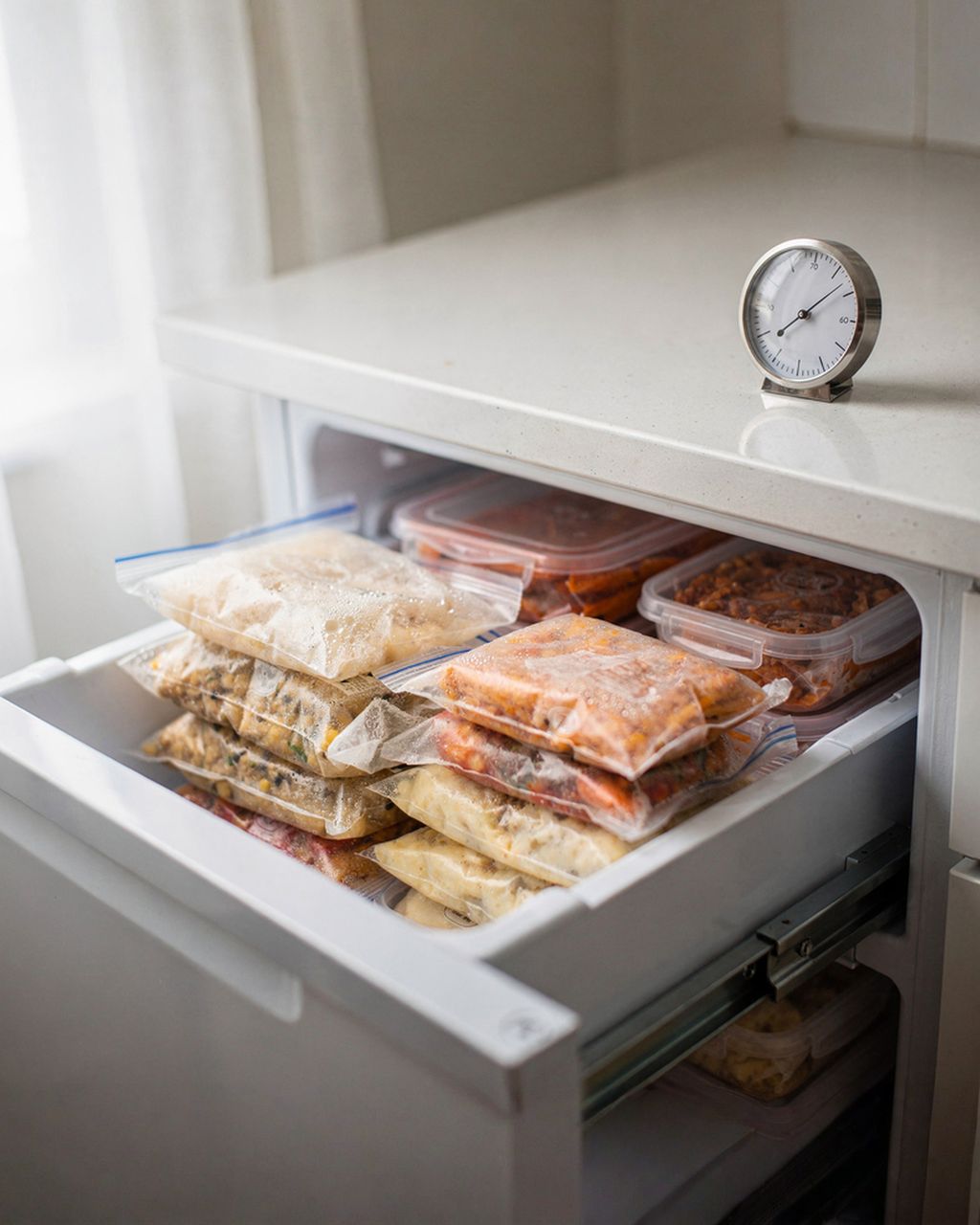
Frozen stock holds full quality at −18°C (0°F) for about 2–3 months; well-sealed, it often stays good longer than that, and it stays safe at −18°C essentially indefinitely — it just loses flavor and picks up freezer odors over time. If you know you won't use up your stock within three days, freeze it as soon as it's cooled, not on day three in the fridge. The timeframes don't add together: three days in the fridge plus a stint in the freezer doesn't mean you get another three days once it's thawed.
Freeze it in the portions you'll actually use. Half a liter for soup, 250ml for risotto or a sauce.
Flavor cubes. Stock reduced down to a third of its volume and frozen in an ice cube tray gives you concentrated cubes you can drop straight into a pan. They thaw in about a minute.
Leave room for expansion. Water expands by roughly 9% when it freezes. In a jar, leave at least 2cm of headspace and freeze it uncovered until solid — otherwise the jar can crack.
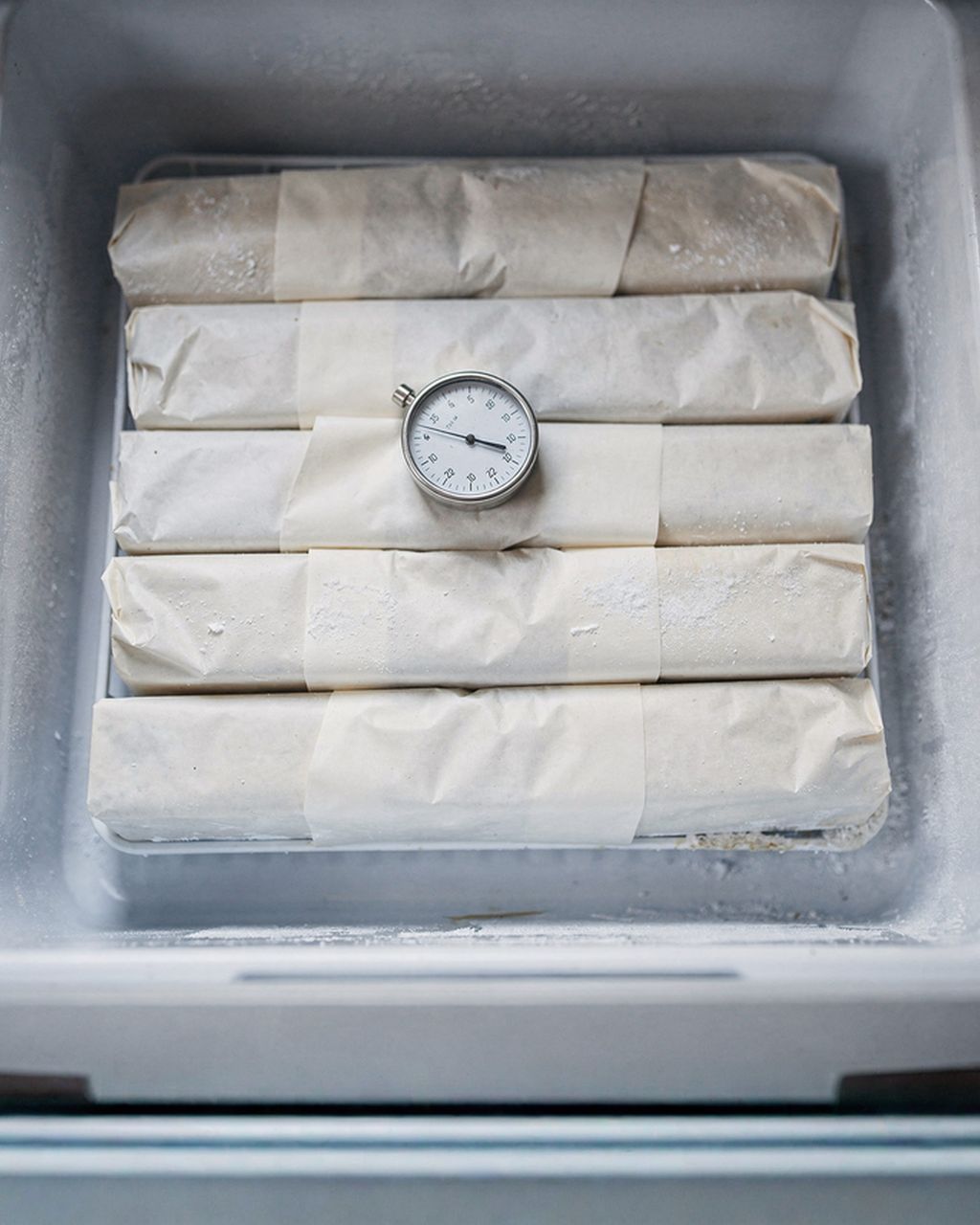
Freeze bags flat. Stock in a resealable bag, spread out into a thin layer, freezes faster, takes up less space, and thaws in just a few minutes.
Label with the date and type. Frozen beef stock and vegetable stock look identical after a month in the freezer.
Thaw it in the fridge overnight rather than on the counter. Small portions can go straight from frozen into a saucepan and melt down over gentle heat. Don't refreeze thawed stock — if you boil it after thawing and turn it into a finished soup, you can freeze that soup, but don't put the plain stock back in the freezer a second time.
A liter of stock is enough for mushroom soup, dill soup, or tomato soup — plenty for two meals within three days. The surest way to stop worrying about shelf life is simply to use the stock up. Stock is a building block, not the finished dish: it adds depth to mushroom soup, dill soup, tomato soup, and braised vegetables alike. These three recipes will use up a liter of stock without any waste:
Mushroom soup
Mushroom soup made with homemade stock — the fastest way to use up a liter of chicken stock
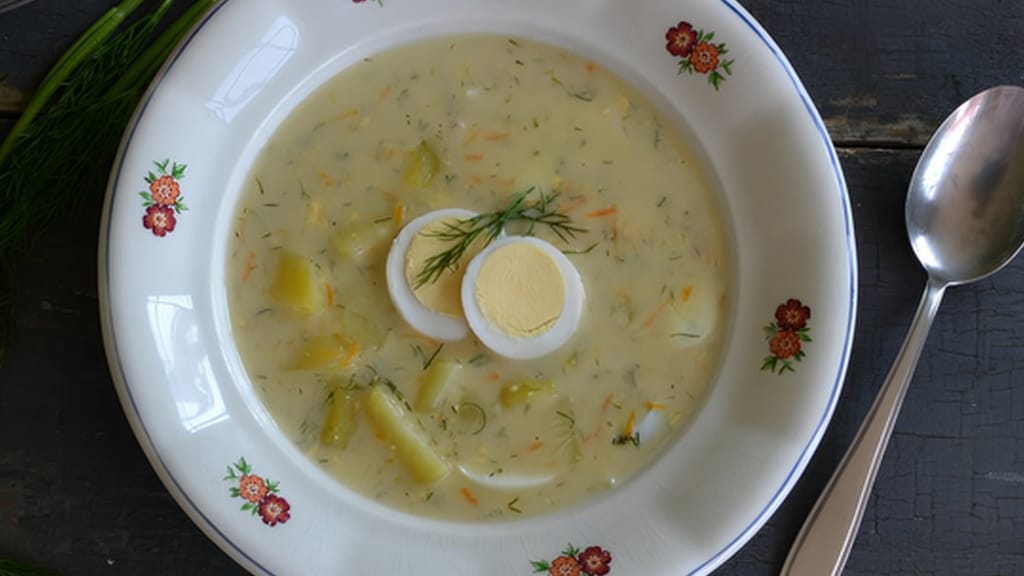
Dill soup
Dill soup made with stock — stock gives it a body plain water and flour never could
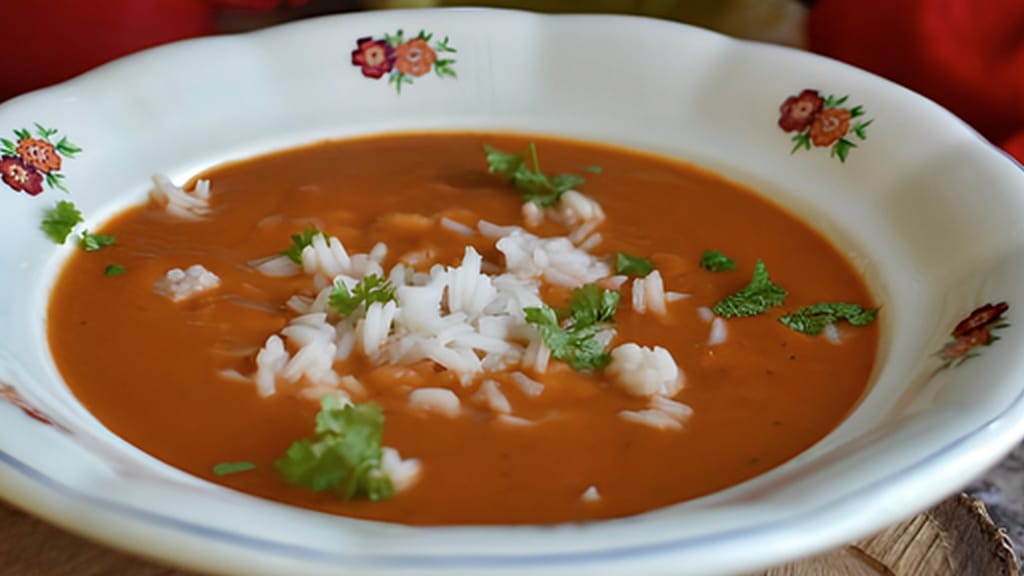
Chase away the winter chill! tomato soup with rice
Tomato rice soup cooked in stock instead of water — a completely different dish than the powdered version
To make stock that keeps well, strain it as soon as it's done, cool it quickly, and divide it into portions. And if you're still at the planning stage, start here — it's made with chicken and mushrooms and doubles as a ready-to-eat soup:
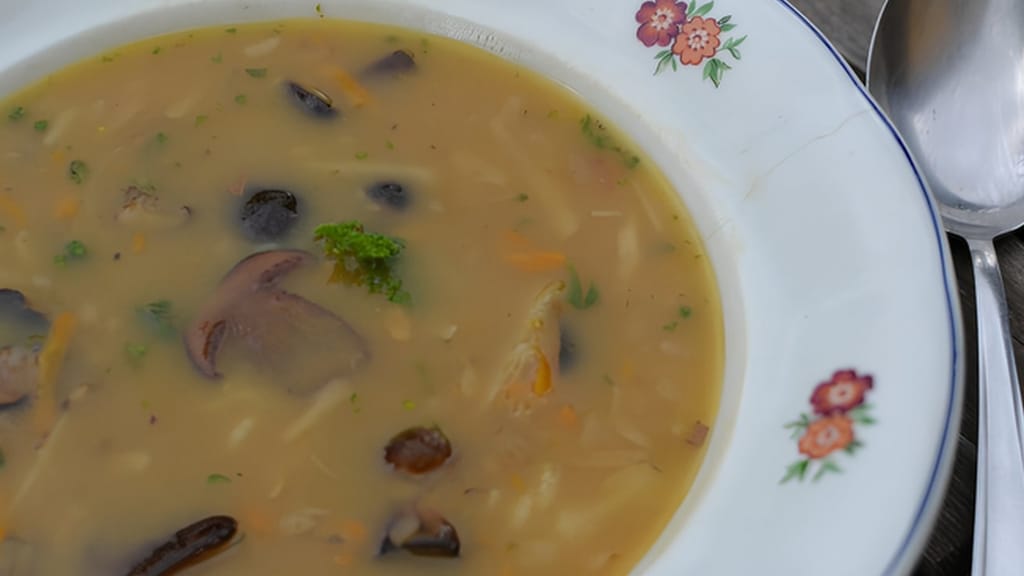
Thickened chicken broth with meat and mushrooms
Rich chicken stock with meat and mushrooms — cook a big pot, strain it, cool it, and portion it out
Stock can sit out for a maximum of 2 hours — or just 1 hour if your kitchen is above 32°C (90°F). Between 4°C and 60°C (39–140°F), bacteria multiply fastest in stock; at the warmest point in that range, their numbers can double in just 7 to 10 minutes. If a pot of stock sat out overnight on a turned-off stove, throw it out — reboiling won't save it, because heat kills the bacteria but not the toxins some strains have already produced.
Once opened, store-bought stock should be used by the date the manufacturer lists on the packaging; if there isn't one, treat it the same as homemade — 3–4 days. The container matters most here: pour any leftover stock from a carton into a clean, sealable container, since an unsealed carton lets fridge odors seep in fast. An unopened carton is fine past its printed date even outside the fridge, but once opened, it follows the same rules — and shows the same spoilage signs — as homemade stock.
Cloudiness that shows up in chilled stock is usually just solidified fat and gelatin — it disappears once you reheat it, and there's nothing wrong with the stock. Collagen from bones and cartilage sets the stock into a jelly as it cools, and the fat rises to the top as a hazy layer; both are signs of a well-made stock, not spoilage. It's a different story if stock that was clear before turns cloudy on its own — if that cloudiness comes with a sour smell, bubbles when stirred, or a stringy texture, the stock has spoiled and should be tossed entirely.
You can freeze stock in a canning jar, but be careful — a narrow neck is the most common reason glass cracks in the freezer. Ice expands by roughly 9%, and in a jar with shoulders, there's nowhere for that expansion to go, so the pressure pushes against the walls. If you don't have another container: fill the jar only up to its widest point, leave at least 2cm of headspace, freeze it uncovered, and screw the lid on only the next day once the contents have solidified. Straight-sided jars, plastic containers, or freezer bags frozen flat are safer choices.
Not using a home water-bath canner — stock is a low-acid food, and a jar in a standard canning pot never reaches the temperature needed to destroy Clostridium botulinum spores. The only safe method is pressure canning at around 116°C (240°F), which most home kitchens simply aren't set up for. For home use, the freezer is simpler, cheaper, and risk-free: portions under 0.5L, at −18°C (0°F), full quality for 2–3 months.
One recipe worth heating the oven for, one tip, and one deal from the shop. Nothing else.