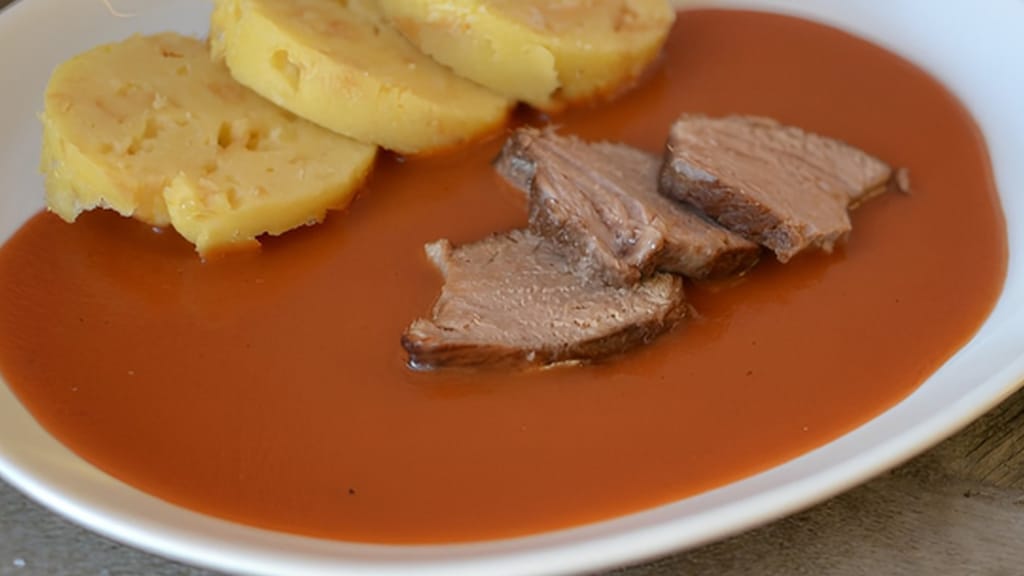
Czech tomato sauce with beef
Czech Sauces: Tomato, Dill, Mushroom and Svíčková Recipes, Plus How to Make the Base
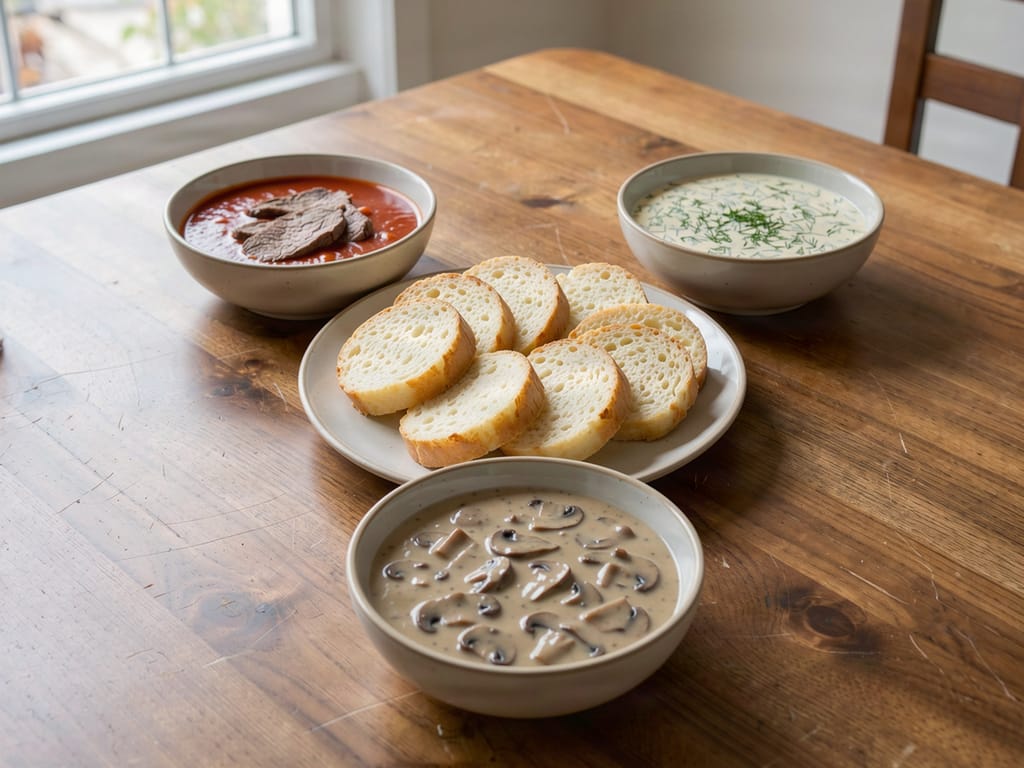
Updated Nov 20, 2026
Czech sauces all rest on one principle: first a flavor base from browned meat, vegetables, onion or mushrooms, then stock, thickening with a roux or starch, and finally cream, butter or a drop of vinegar to bring everything into balance. Once you understand that principle, you can make tomato sauce (rajská), dill sauce (koprovka), mushroom sauce and svíčková with no lumps, no floury taste and no curdled cream. Below you'll find the method for each sauce, the most common mistakes and links to tested recipes.
The classic Czech sauces include tomato sauce (rajská), dill sauce (koprovka), mushroom sauce, svíčková na smetaně (Czech beef in a root-vegetable cream sauce) and the cream sauce served with braised meat, typically rabbit or chicken. They're served with dumplings, potatoes, gnocchi or pasta, and all share the same framework.
Tomato sauce (rajská): sweet-and-sour, made from tomato paste or tomatoes, with spices such as cinnamon, allspice and bay leaf.
Dill sauce (koprovka): creamy and sweet-and-sour, with fresh dill added at the very end.
Mushroom sauce: mushrooms sautéed in fat with onion and caraway, mellowed with cream.
Svíčková na smetaně: roasted, blended root vegetables, mustard, vinegar and cream.
Cream sauce for meat: the juices from braised meat and vegetables, thickened and softened with cream.
What they have in common: first you build flavor (by browning meat, vegetables, onion or mushrooms), then you add liquid, thicken the sauce and finally season it. Whether it tastes like canteen food or like something you'll want again is mostly decided in the first and last steps: how well you brown the base and how carefully you balance salt, sugar and acidity. The middle part, the thickening, is a craft you can learn in one afternoon.
Seasonal baking plans, tested recipes and kitchen tricks that save you time. Unsubscribe in one click.
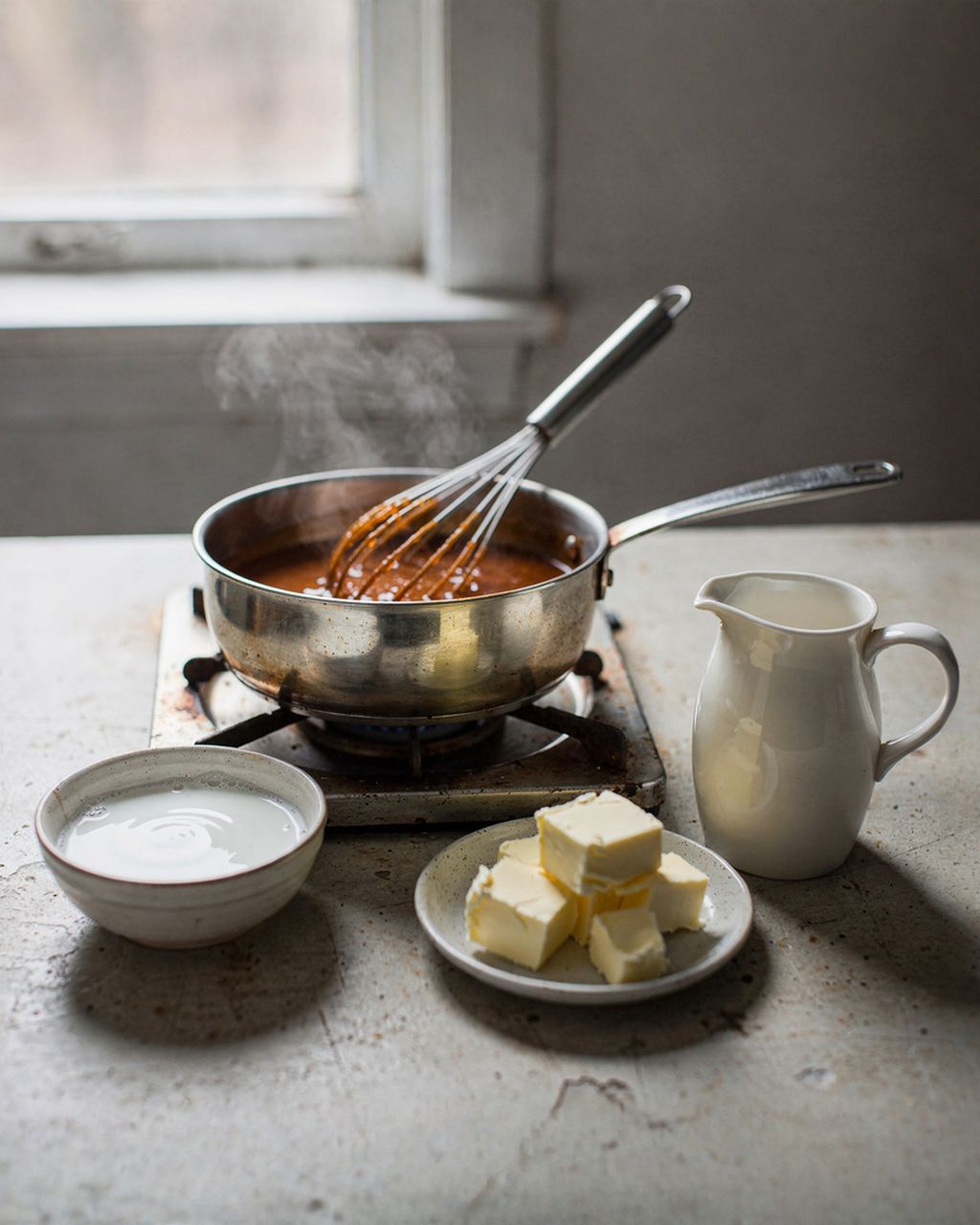
The base of a Czech sauce is a light roux of butter and all-purpose (plain) flour, roughly 1:1, into which you whisk cold stock in portions and then simmer for at least 15–20 minutes. The cream comes only after that. Three rules decide the result:
Hot roux, cold liquid. When you pour cold stock into a hot roux in small batches and whisk each one in right away, the flour disperses before it can swell and clump. This is exactly how our dill sauce recipe works.
Cook out the flour. A sauce thickened with roux needs 15–20 minutes of gentle simmering, otherwise it tastes of raw flour. It keeps thickening during that time, so adjust the consistency at the end, not right after thickening.
Add the cream last and don't boil it hard. Cream curdles easily in a boiling sauce. Pour it in once the base is finished, turn the heat down and just warm the sauce through.
Which cream should you use? Whipping cream (30–33%), 12% cooking cream or sour cream all work in sauces. Richer cream makes the sauce silkier and usually handles heat better, while lighter cooking cream gives a thinner, less rich sauce. That's why our recipes for mushroom sauce and slow cooker rabbit combine it with whipping cream. Stir in the sour cream that dill sauce needs once the sauce is no longer boiling.
A roux isn't the only way, though. You can thicken mushroom sauce with potato starch mixed in cold water, svíčková with blended vegetables, and meat juices with a simple reduction, simmering them uncovered until the liquid evaporates and thickens. You'll find how much to use per half liter in the article how to thicken a sauce without flour. And if your cream does curdle, the article why cream sauce curdles and how to rescue it will help.
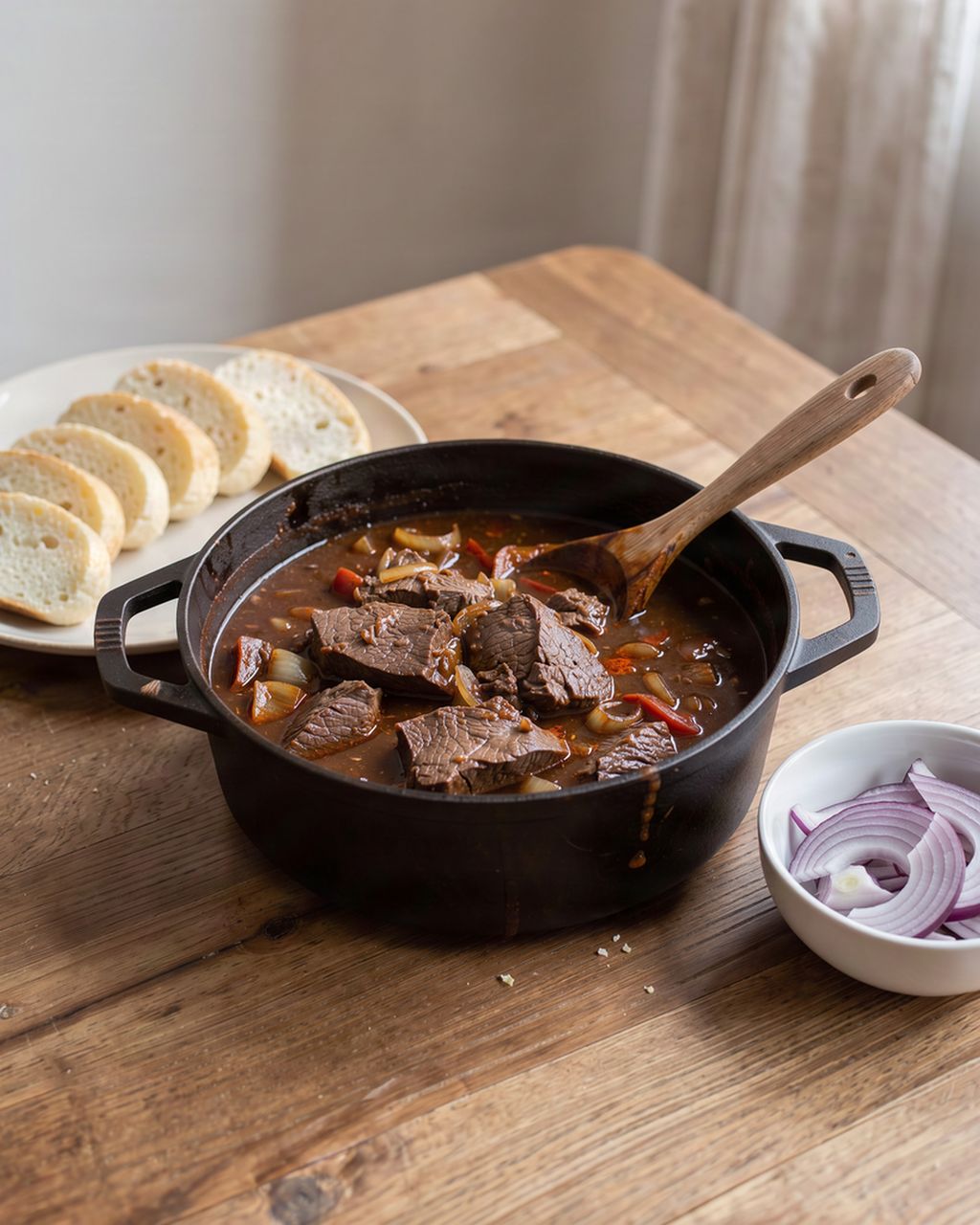
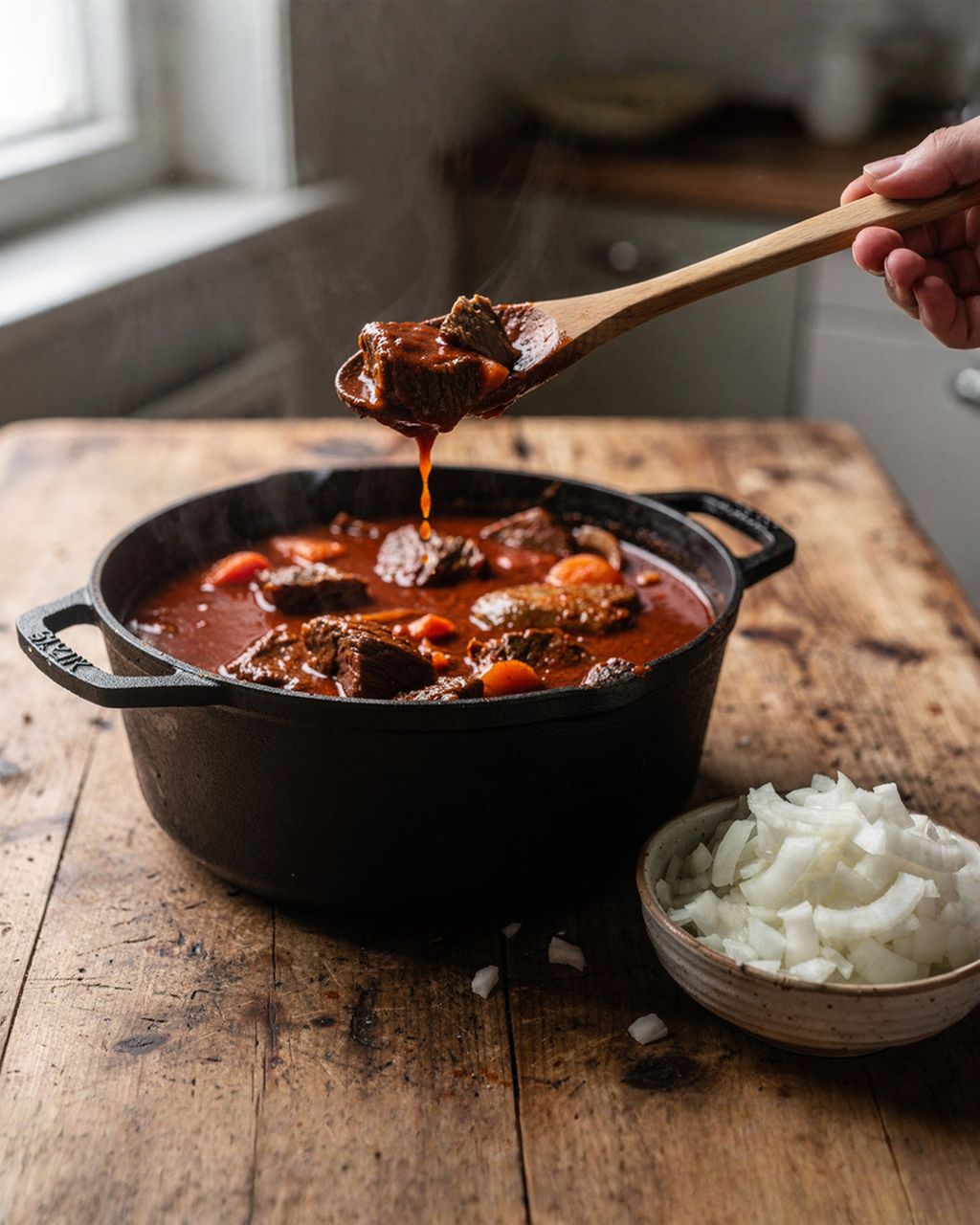
Classic rajská is a sweet-and-sour tomato sauce thickened with a roux, flavored with cinnamon, allspice, bay leaf and sugar, and served with braised beef and bread dumplings. Our recipe for tomato sauce with beef takes about three hours, but for most of that time the meat just simmers quietly.
The method in brief: season slices of beef shoulder with salt and pepper and brown them well on all sides in a heavy-bottomed pot, add two onions and pour in enough water to cover the meat completely. Tie the allspice, bay leaf, cinnamon and star anise in a piece of cheesecloth so you can lift them out in one go, and braise the meat covered until tender. If you're in a hurry, the recipe suggests a pressure cooker. Take out the tender meat and cover it with a plate so it doesn't dry out, then reduce the liquid uncovered to about half a liter.
Next, brown two more coarsely chopped onions in butter until golden, sprinkle in 20 g of cane sugar toward the end and stir until it dissolves. Sprinkle in all-purpose flour, stir vigorously for a moment so the flour toasts, then whisk in the reduced stock in portions. Stir in 600 g of tomato paste and let everything simmer gently for about 20 minutes. Blend the sauce until smooth, press it through a fine sieve to catch the onion fibers, and season with salt and sugar. Finally, off the heat, whisk in a piece of cold butter, return the meat and just warm it through without boiling.
Why it works: onion caramelized with sugar tames the acidity of the tomato paste and gives the sauce a depth that sugar stirred in at the end can't. The cold butter whisked in at the end gives it shine and a velvety smoothness; don't boil it afterward. If you like a more pronounced aroma, you can add two cloves to the other spices, as the recipe suggests.
Both work, just differently: tomato paste gives a thick, deep red, predictable sauce, while tomatoes give a fresher flavor but need longer cooking. Our recipe uses paste and lists canned tomatoes as an alternative.
From tomato paste: the fastest route. Paste is a concentrate, so stir it into the thickened base and let it simmer for at least 20 minutes to lose its raw sharpness.
From peeled tomatoes: peeled tomatoes in juice contain more water and have a less concentrated flavor. Expect a longer reduction, and blend and strain the sauce at the end. The result tends to be smoother and less sharp.
From fresh tomatoes: makes sense in season, when tomatoes truly smell of something, which means summer and early fall. Blanch, peel and chop them, then cook until they fall apart and reduce, then blend and strain. Fresh tomatoes vary a lot in sweetness, so adjust the sugar and salt only at the very end.
Whichever you choose, season gradually: a little salt, a little sugar, taste, and again. The acidity of tomatoes varies by variety and by brand, so a fixed amount of sugar never fits every time. Rajská should taste both sweet and sour, and neither may overpower the other.
Czech tomato sauce with beef
Tomato sauce with beef: shoulder braised with spices, caramelized onion, tomato paste and butter at the end
Meatballs are either simmered directly in tomato sauce or browned separately and added to the finished sauce. Our rajská recipe adds one tip: if you're making it for meatballs, stir in the pan drippings from the skillet or roasting pan where the meat was browned. That's where most of the flavor is.
If you want to simmer the meatballs right in the sauce, take a look at meatballs in vegetable sauce. It isn't a classic roux-based rajská, but a lighter sauce of root vegetables, beef stock, tomato purée and tomato paste. One rule from it applies to all meatballs simmered in sauce: don't stir them for the first few minutes, until they firm up, or they'll fall apart.
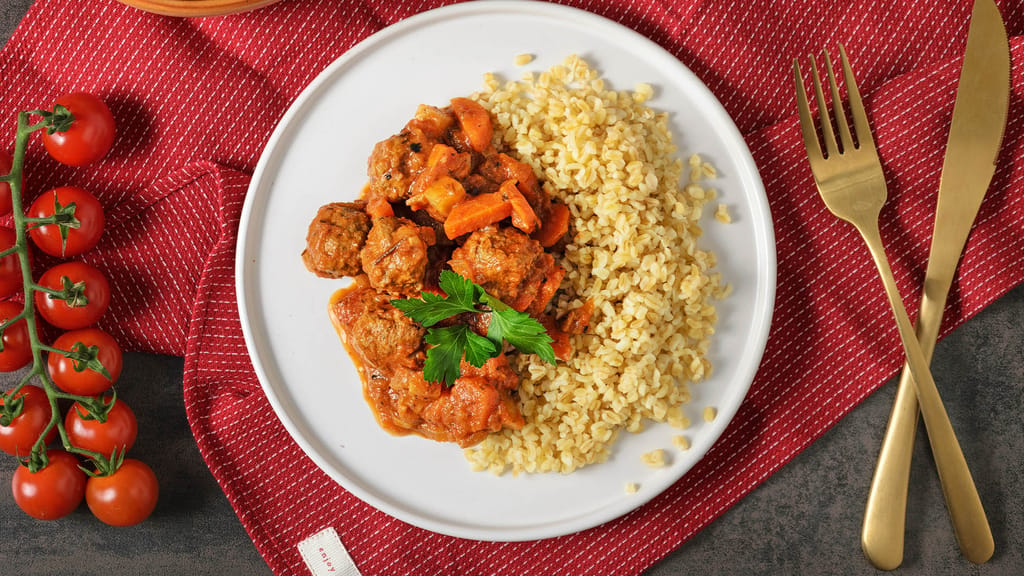
Meatballs in vegetable sauce
Meatballs in vegetable sauce: beef meatballs simmered in a sauce of root vegetables and tomato paste
Stuffed peppers in tomato sauce use the same rajská, except that instead of a piece of beef, peppers stuffed with ground meat and rice simmer in it. Remove the seeds and membranes from the peppers, fill them with a mixture of ground meat, par-cooked rice, egg, salt and pepper, and set them in the partly finished tomato sauce. Simmer them covered over low heat until the peppers are tender and the filling reaches at least 71°C (160°F) in the center, usually about 45 minutes. Then season the sauce as you would the classic: salt, sugar, taste.
Koprovka is a sweet-and-sour cream sauce thickened with a roux and flavored with fresh dill, sugar and vinegar. Our recipe for creamy dill sauce takes under 40 minutes and uses beef stock, two kinds of cream and 50 g of dill.
The method: melt 50 g of butter in a pot, add 30 g of sugar and pour in 15 ml of white wine vinegar. Let it bubble briefly until the sugar dissolves completely; the sauce draws all its flavor from this sweet-and-sour base. Lower the heat a notch, sprinkle in 50 g of all-purpose (plain) flour and immediately whisk it into the butter, or it will start to clump. The roux should stay pale. Pour in half a liter of cold stock in small batches, whisking each one smooth. Season with salt and pepper and simmer gently for about 20 minutes, stirring now and then. Then add the whipping cream and sour cream, right after that the finely chopped dill, and just warm the sauce through for a few minutes.
Koprovka rests on two things:
Only leaves, no tough stems. The stems would stay woody in the sauce. Add the dill only at the end, since long cooking costs it its color and aroma.
Set the sweet-sour balance yourself. Taste, and add sugar or a drop of vinegar as needed. Every family makes koprovka with a different level of sweetness, and both are right.
Note that the recipe relies on beef stock, so it isn't a meat-free dill sauce. You'll find how to make one without meat further down.
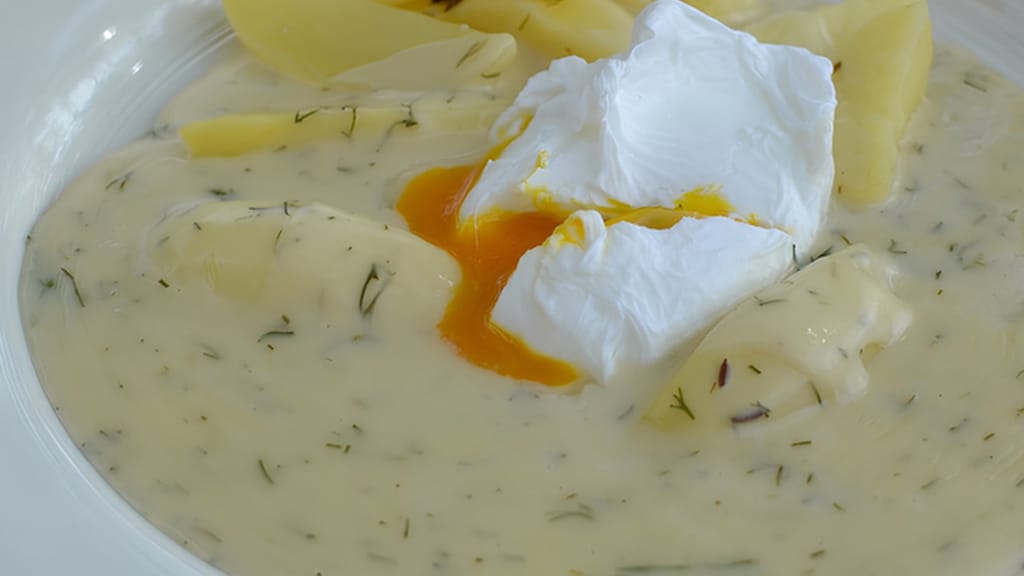
Dill sauce with cream
Creamy dill sauce: sweet-and-sour roux, beef stock, two kinds of cream and fresh dill
Dill sauce with hard-boiled egg and boiled potatoes is the most common form of this sauce on the Czech table, and also the simplest. Make the sauce exactly as described above. Hard-boil the eggs for about 10 minutes from the moment the water starts to boil, then cool them in cold water and peel. Boil the potatoes in salted water. Put the potatoes on a plate, pour the dill sauce over them and top with halved eggs. Type B potatoes (firm, all-purpose) work best: they hold their shape and still soak up the sauce.
Dill sauce made from preserved dill and milk is a thrifty winter version: it tastes sharper, is lighter and can be made from what you have in the pantry. Preserved dill is packed in an acidic brine, so drain it and rinse it to taste, and go easy on the vinegar in the base until you've tasted the sauce. Milk instead of cream gives a thinner sauce, so make the roux a little thicker, and after pouring in the milk don't boil the sauce hard, so the milk doesn't catch on the bottom. A spoonful of sour cream stirred in at the end, off the heat, gives it a fuller flavor.
Dill sauce with beef is the Sunday version: instead of plain stock, the sauce gets the juices from slow-roasted meat, so it tastes deeper than koprovka made with stock. The principle is simple: beef shoulder is first seared hard, then slowly roasted covered in the oven with vegetables and spices until tender, and the strained juices become the base of the sauce. Our recipe for dill sauce with slow-roasted beef takes over eight hours, but for most of that time the meat just roasts quietly in the oven. Take one trick from it for ordinary koprovka too: let the dill stems, which don't belong in the finished sauce, steep in the juices and then remove them.
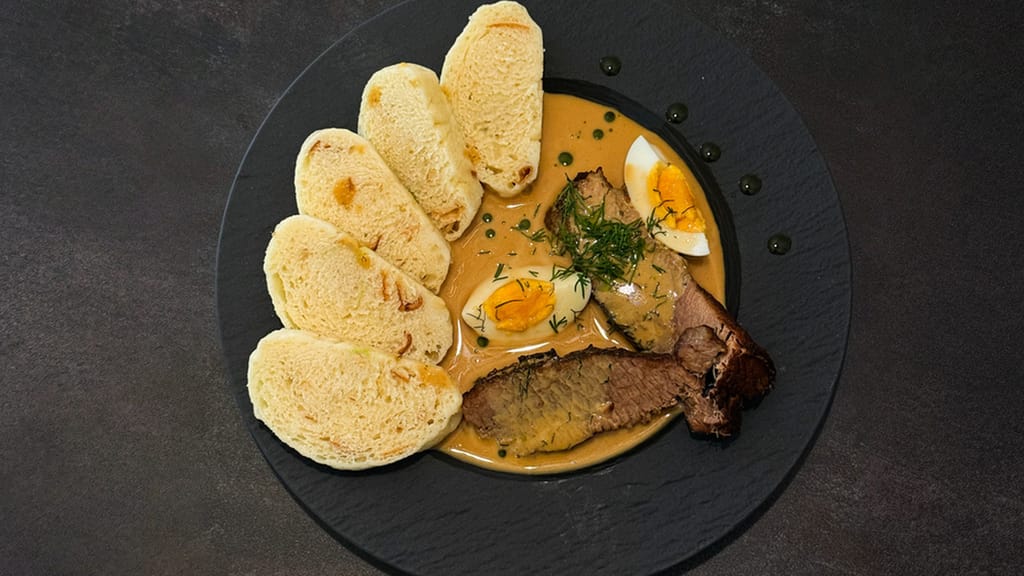
Dill sauce with slow-roasted beef
Dill sauce with slow-roasted beef: juices from roasted shoulder, cream and fresh dill
Dill sauce with zucchini is a lighter summer variation in which zucchini, rather than meat or eggs, plays the lead. Dice it, sweat it briefly in butter with onion and stir it into the finished dill base. Cook it only a few minutes, so it softens but holds its shape; overcooked zucchini releases water and thins the sauce. Add the dill last, as always.
Mushroom sauce is made from mushrooms sautéed in fat with onion and caraway, covered with cream and thickened with starch. Our recipe for mushroom sauce with cream is ready in about 50 minutes and needs no flour.
Sweat finely chopped onion in lard until translucent, add 500 g of mushrooms cut into smaller pieces, season with salt and pepper and add the caraway. The mushrooms release juice at first, so don't add any liquid at the start. Once they begin to stick to the bottom, pour in about 100 ml of water, cover and cook for 15–20 minutes until tender; if the water cooks away, add more. Then take off the lid, dust the mushrooms with sweet paprika, pour in the cooking cream and the whipping cream and let the sauce simmer gently for ten minutes. Mix potato starch in cold water, roughly a tablespoon per 50 ml, and pour it into the sauce while stirring. Then keep warming it for at least five more minutes so the starch thickens and loses its raw taste. Serve with a side dish and a hard-boiled egg.
What matters: the mushrooms must not just float in the sauce. They first have to cook off their liquid and soften, and then they taste of mushrooms rather than water. For wild mushrooms, the rule the recipe itself reminds you of applies: use only those you can identify with certainty. Note that the recipe uses lard, so it isn't a meat-free sauce. You'll find how to make one without meat further down.
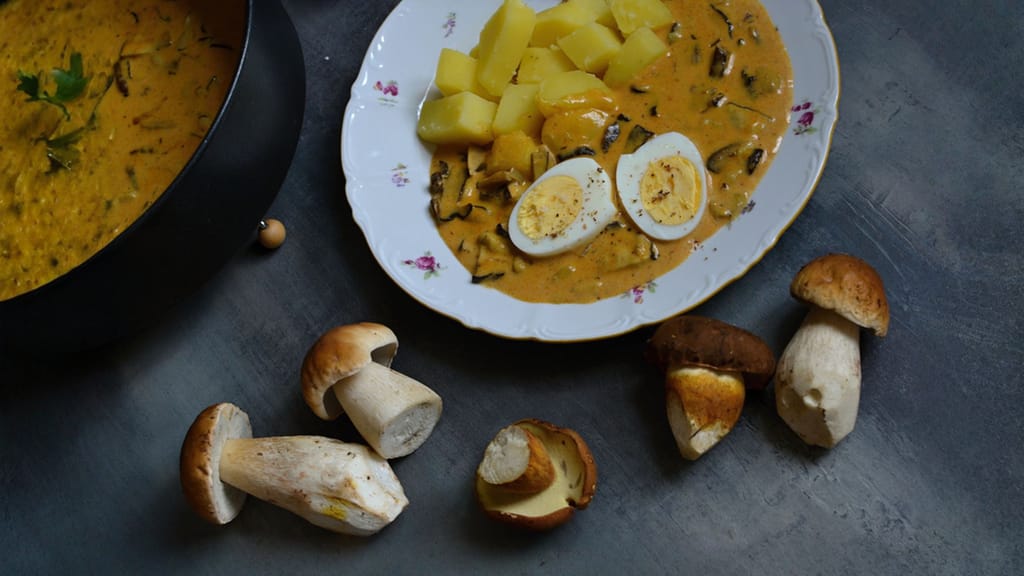
Mushroom sauce with cream
Mushroom sauce with cream: mushrooms braised with onion and caraway, thickened with potato starch
Svíčková differs from other Czech sauces in that its base isn't a roux but roasted, blended root vegetables. Carrot, parsley root and celery root are browned in fat with the meat drippings until golden, onion is added, everything is caramelized with sugar and deglazed with vinegar and mustard. Then the vegetables are roasted with the meat, stock and whole spices for about two hours, blended until smooth and softened with cream. A roux is only insurance in case the sauce comes out thin.
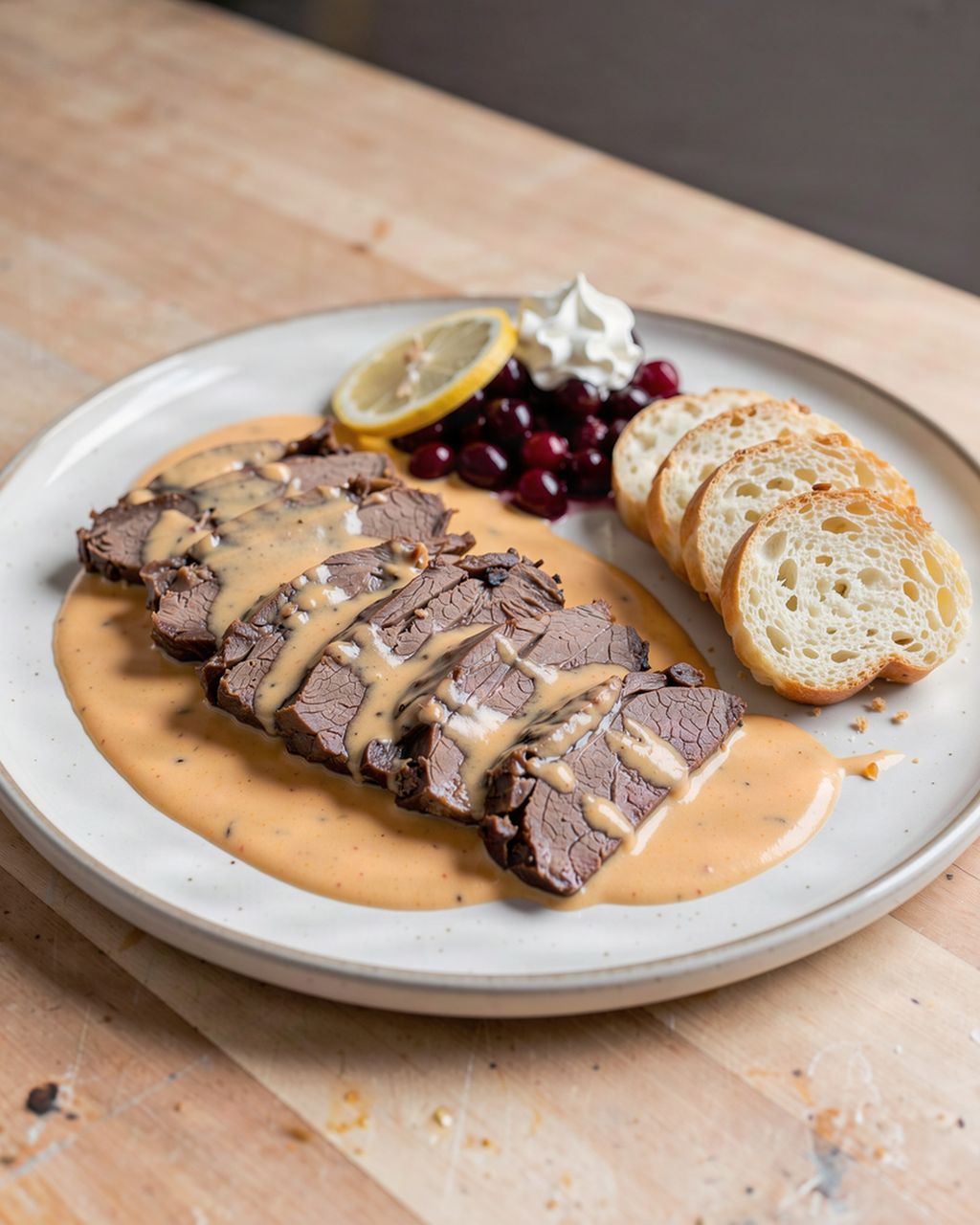
Our recipe for svíčková na smetaně uses beef tenderloin larded with frozen bacon fat, roasted in the oven at 180°C (350°F), and 250 ml of whipping cream. The key moment is browning the vegetables: they need to turn properly golden but must not burn, or the sauce will turn bitter. Then slice the meat thinly across the grain and serve with dumplings. We cover the whole process step by step, with mistakes and variations, in a separate article, svíčková na smetaně: recipe. And if your sauce turns out too sour, the article why svíčková is sour and how to balance it will help.
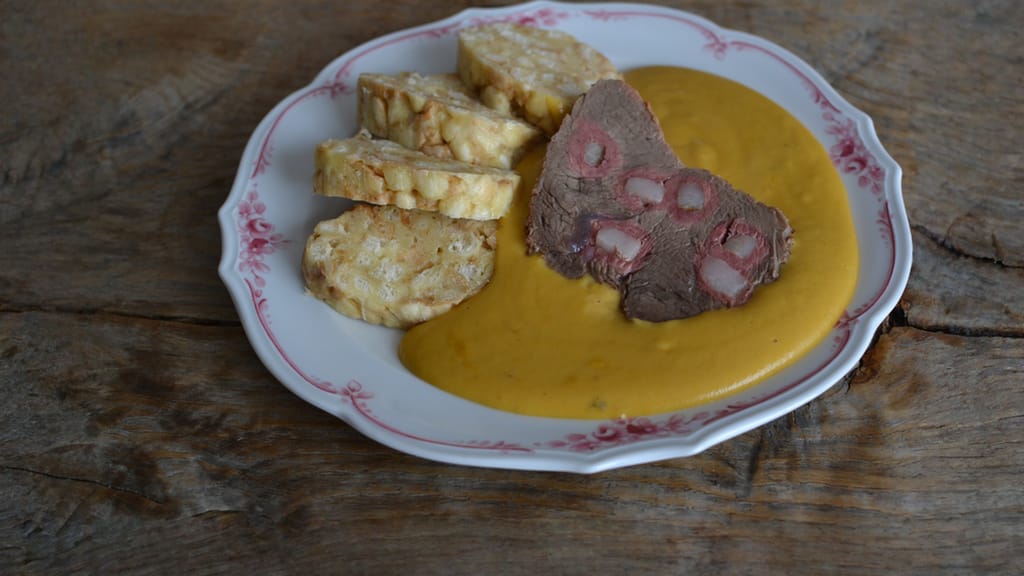
Beef sirloin in cream sauce (svíčková)
Svíčková na smetaně: beef tenderloin, roasted root vegetables and whipping cream
Each meat suits a different sauce: beef goes with rajská, koprovka and svíčková, rabbit and chicken with cream sauces with root vegetables, and pork with mushroom sauce or dill sauce.
Beef needs long braising. Shoulder or shin turns tender during it and releases the flavor into the juices that carry the sauce. That's why both tomato sauce and dill sauce with meat take hours.
Chicken and rabbit have delicate meat that needs shorter braising, and they suit a cream sauce with root vegetables.
Pork (slices of leg or neck) only needs simmering until tender right in the finished mushroom sauce or dill sauce, where it releases its juices.
Cream sauce for rabbit is made from the juices in which the rabbit braised with root vegetables: the juices are thickened, softened with cream and usually blended or strained until smooth. The vegetables both flavor and thicken the sauce.
We have two tested recipes, each for a different day. Rabbit in cream sauce from the slow cooker almost makes itself: the rabbit braises with vegetables for 7 hours in the slow cooker, then everything is blended with a roux and cream. Rabbit in cream sauce is the stovetop classic, ready after about an hour of braising, with caramelized vegetables and seasoning with vinegar and sugar.
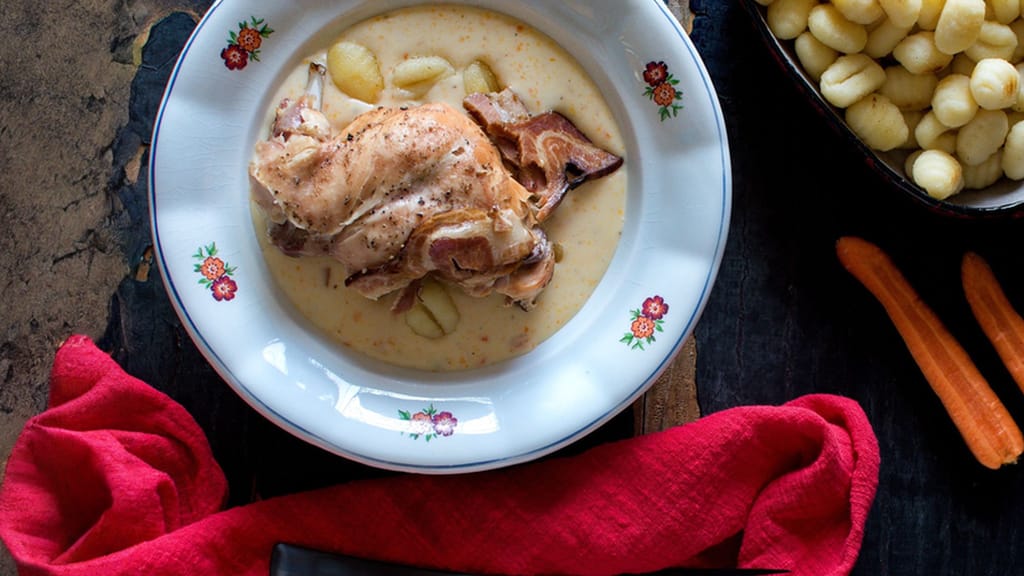
Slow cooker rabbit in creamy sauce
Rabbit in cream sauce from the slow cooker: 7 hours of braising, blended vegetables and two kinds of cream
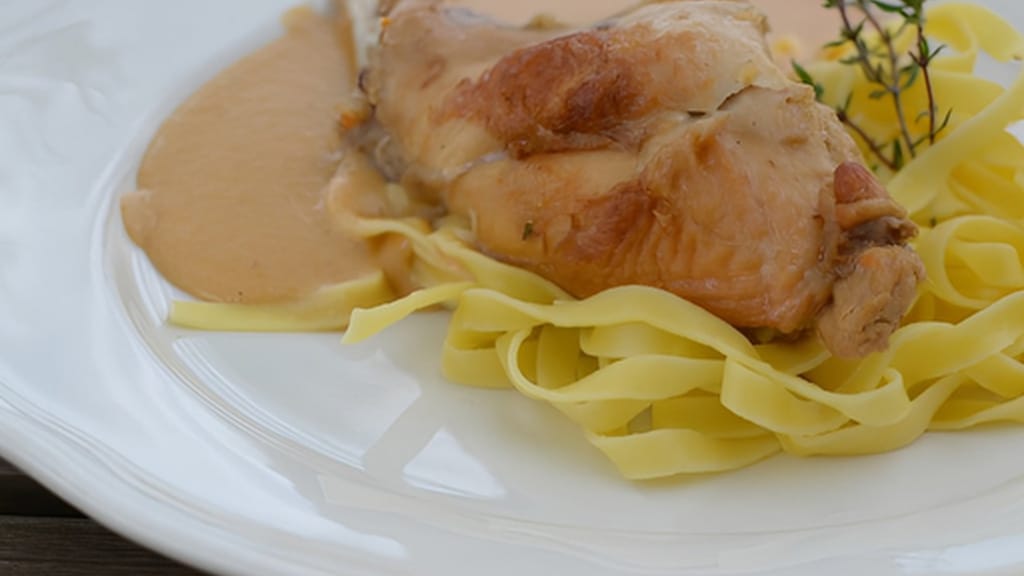
Rabbit in cream sauce
Stovetop rabbit in cream sauce: caramelized root vegetables, pale roux and cream
Chicken sauce is made from the juices of braised chicken thighs and root vegetables, thickened and softened with cream. Brown the thighs, braise them on onion and root vegetables with a little stock until the meat is tender and reaches at least 74°C (165°F) at the bone, then thicken the juices and soften them with cream. Chicken is done sooner than rabbit, so plan on a shorter braise. For a paprika version, sprinkle sweet paprika over the browned onion and deglaze right away, because paprika quickly turns bitter in dry fat.
Most classic Czech sauces are meat-based, even when you can't see any meat: koprovka is cooked in beef stock, mushroom sauce in lard, svíčková on meat drippings. If you're looking for meat-free sauces, watch mainly the fat and the stock.
Fat: butter or oil instead of lard.
Stock: vegetable stock, or water and well-browned onion; the flavor then has to come from browning the base.
Fullness of flavor: mushrooms, browned onion and tomatoes give the sauce the depth that meat otherwise provides.
A tip for meat-free mushroom sauce: make it exactly as described above, just sweat the onion and mushrooms in butter instead of lard. The mushrooms add so much flavor on their own that you don't even need stock.
And if you want a tomato sauce loaded with vegetables, reach for zucchini goulash. It's goulash in name only: in reality it's a thick tomato sauce made from passata and onion fried in olive oil, in which zucchini simmers for about 20 minutes with goulash seasoning. It's meat-free and vegan, and served with bulgur or rice, like a sauce.
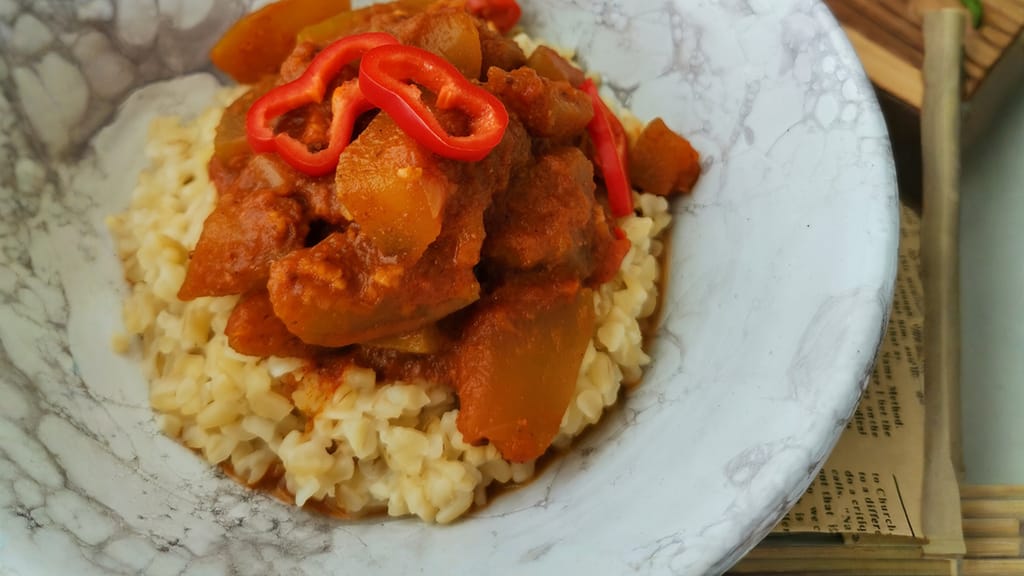
Zucchini goulash
Meat-free zucchini goulash: vegan passata tomato sauce with zucchini and goulash seasoning
Refrigerate cooked sauce within two hours of cooking and use it within 3–4 days; that's what the US food safety agency USDA FSIS recommends. According to the same agency, sauces, soups and gravies are reheated to a boil, and when the room is above 32°C (90°F), the two-hour window shrinks to one hour.
In practice: a full pot cools slowly, so divide the sauce into smaller containers. Reheat cream sauces slowly, stirring constantly, and bring them to a boil carefully, as long, hard boiling harms both their flavor and consistency. Rajská and svíčková can happily be made a day ahead, as the flavors meld overnight. Which sauces can go in the freezer and which curdle after thawing is covered in the article how to freeze soup and sauce.
Most failed sauces come down to one of six causes, and each can be fixed or prevented:
Bitter taste. Burnt onion, vegetables or roux. Brown over medium heat and stir. If the bottom scorches, don't stir, and immediately transfer the sauce to a clean pot; more in the article how to rescue a scorched sauce.
Lumps. The liquid went into the roux all at once or warm. Pour in cold liquid in portions and whisk; if lumps form, blend or strain the sauce.
Floury taste. The sauce cooked too briefly after thickening. Give it 15–20 minutes of gentle simmering.
Curdled cream. The sauce was boiled hard after the cream went in. Add the cream last and only warm the sauce through.
Flat flavor. Balance is missing. A Czech sauce almost always needs all three: salt, sweetness (sugar, caramelized onion) and acidity (vinegar, tomatoes, sour cream). Season in small steps and taste.
Faded dill or herbs. They went in too early. Add fresh herbs to the finished sauce.
If you're planning a whole lunch, not just the sauce, take a look at what to cook for lunch and what to cook with beef, where you'll find goulash, beef cheeks and other braised dishes that sauces go well with.
Rajská (Czech tomato sauce) turns sour when the tomato paste or tomatoes are cooked too briefly and there's no sweet counterweight. It helps to caramelize the onion with sugar right in the base, add sugar a little at a time while tasting, and whisk in a piece of cold butter at the end, off the heat.
Rajská and svíčková go with bread dumplings (houskový knedlík). Dill sauce goes with boiled potatoes and a hard-boiled egg, or with dumplings. Rabbit in cream sauce goes with potato gnocchi, and mushroom sauce with dumplings or potatoes and egg.
Crème fraîche comes closest to whipping cream: it's rich, usually handles heating without curdling and adds a gentle tang, so go easy on the vinegar. A plant-based cooking cream makes the sauce lighter and flatter in flavor, so season it more boldly. Processed cheese thickens the sauce and makes it creamy, but adds saltiness and a cheesy taste, so use less salt and expect the dill or mushroom sauce to taste different from the classic.
Yes, but dried dill is far less fragrant than fresh, so add it a little earlier to give it time to flavor the sauce, and expect a milder taste. The best result comes from fresh dill stirred into the finished sauce; dried works better as a supplement.
Plan on roughly 200–250 ml of sauce per serving, more if the sauce is the main course served with dumplings. Our recipes for dill sauce and mushroom sauce make four servings from just under a liter of liquid, cream included.
Czech tomato sauce is thick, thickened with a roux, spiced with cinnamon, allspice and bay leaf, and served as a main course with meat and dumplings. Tomato soup is thinner, cooked in stock with root vegetables and usually served with rice.
One recipe worth heating the oven for, one tip, and one deal from the shop. Nothing else.