Fish Soup: How Long It Keeps in the Fridge, the Freezer, and After Reheating
How to Thicken Fish Soup (and Why It Turns Cloudy)
Updated Nov 3, 2026
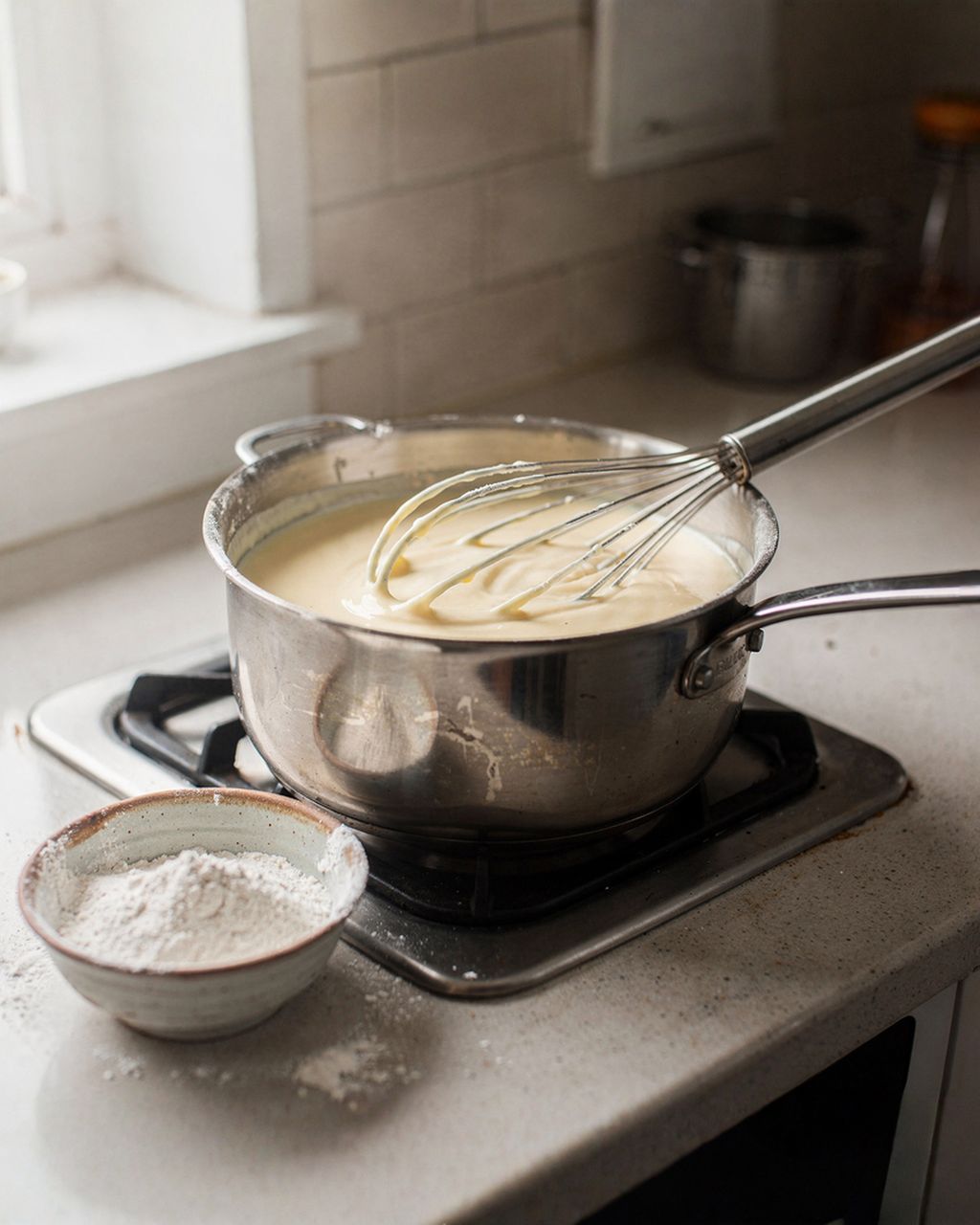
The most common way to thicken Christmas fish soup is with a light roux made from butter and plain flour. Whisk it into cooled stock and simmer for at least 15–20 minutes so the soup doesn't taste of raw flour. A lighter option is to blend the root vegetables from the stock. Fish soup turns cloudy when the stock boils hard, when you don't skim the foam, or when you add fish heads with the gills still in. The gills also make the stock bitter.
You can thicken fish soup with a roux, blended vegetables, starch, cream, or milt and roe. Each method gives you a slightly different soup:
Light roux – the traditional Czech Christmas fish soup. Velvety, rich, and full of flavor.
Blended root vegetables from the stock – lighter, with no flour, and the soup takes on a golden color.
Potato or corn starch – a quick last-minute fix that leaves the soup more translucent.
Cream – a creamy soup, more modern than traditional.
Milt and roe – they thicken the soup a little and, above all, add the typical flavor. Add them only at the end.
Seasonal baking plans, tested recipes and kitchen tricks that save you time. Unsubscribe in one click.
To thicken fish soup with a roux, briefly cook plain flour in butter until light golden, pour in cooled stock, whisk until smooth, and let it simmer gently for 15–20 minutes. Per quart (liter) of stock, use roughly:
Lightly thickened soup: 15–20 g butter and 15–20 g plain flour
Thicker soup: about 30 g butter and 30 g flour
Method:
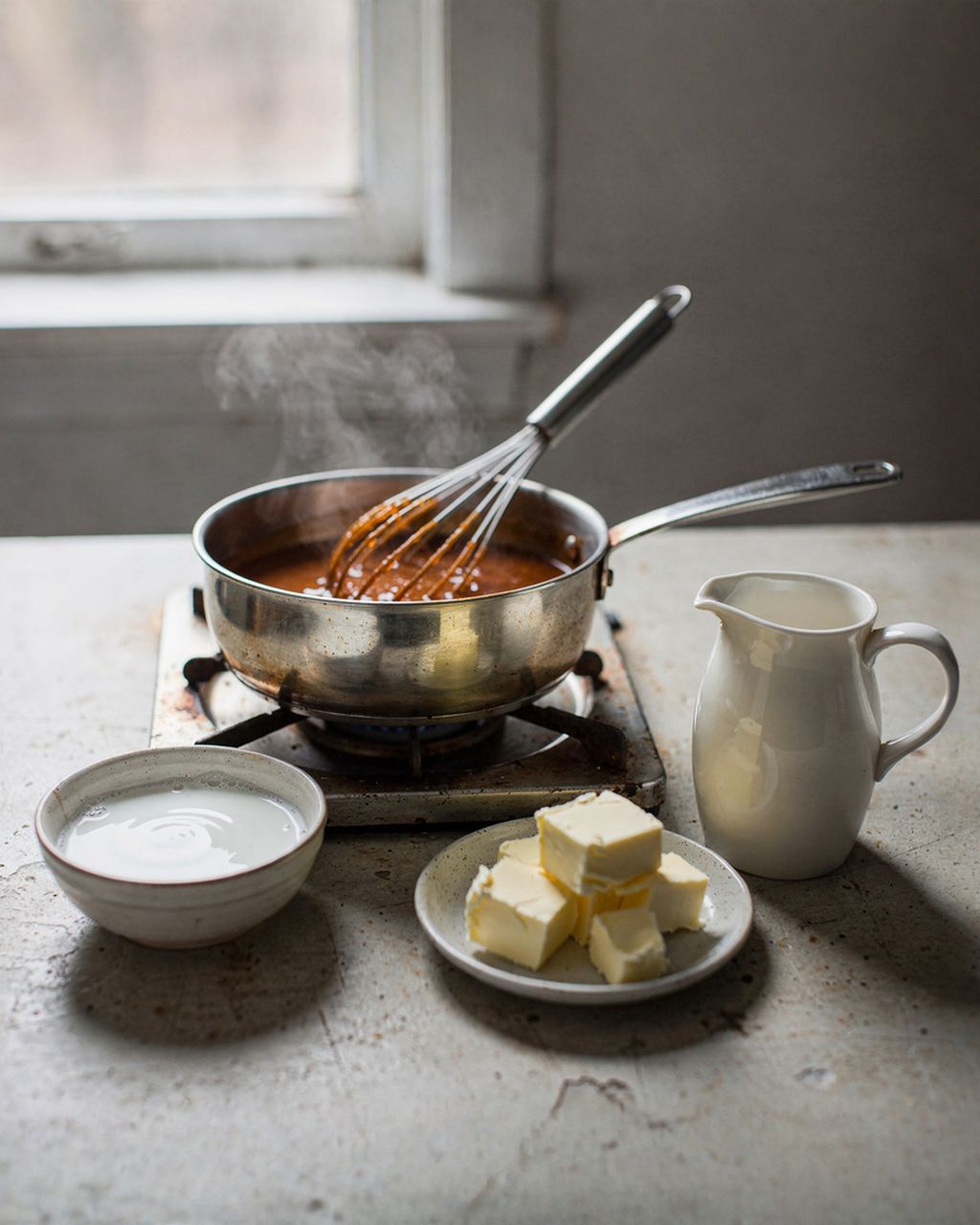
Melt the butter, stir in the flour, and cook for 2–3 minutes, stirring constantly, until pale in color. A dark roux would overpower the delicate fish flavor.
Pour cold or lukewarm stock over the roux and whisk it in straight away. A hot roux in hot stock makes lumps.
Add the rest of the stock and simmer gently for 15–20 minutes. The flour needs time to cook through and lose its raw taste.
This is exactly how you thicken Mom's Christmas fish soup with mushrooms too – you can adjust the amount of roux to suit how thick you like your soup.
To thicken fish soup without flour, use blended root vegetables from the stock. Fish out the carrot, parsley root, celeriac, and onion that cooked with the fish, blend them smooth with a ladleful of stock, and return the purée to the pot. The soup thickens and gets a sweeter, more vegetable-forward flavor.
A quicker option is potato or corn starch: mix a spoonful into a little cold water, pour it into the boiling soup while stirring constantly, and simmer for 1–2 minutes. Starch thickens fast, so add it a little at a time. A soup thickened with starch can sometimes thin out again after standing for a long time or after reheating.
Fish stock turns cloudy when it boils hard, you don't skim the foam, there are gills and blood in the pot, or it cooks too long. At a hard boil, the proteins and fat from the fish break into tiny particles and spread through the stock so that they no longer settle.
Hard boiling: keep the stock at a gentle simmer, with the surface barely trembling.
Foam: skim off the gray foam that appears at the start of boiling with a slotted spoon.
Gills and blood: cut the gills out of the heads and rinse the heads and bones in cold water. Gills cloud the stock and make it bitter.
Cold water at the start: cover the fish with cold water and bring it slowly to a boil. The proteins then gather into foam that you can skim off.
Long cooking: about an hour is enough for fish stock. Cooking longer adds no flavor, only cloudiness and bitterness from the bones.
Stirring: don't stir the stock while it cooks, or the stirred-up particles won't settle.
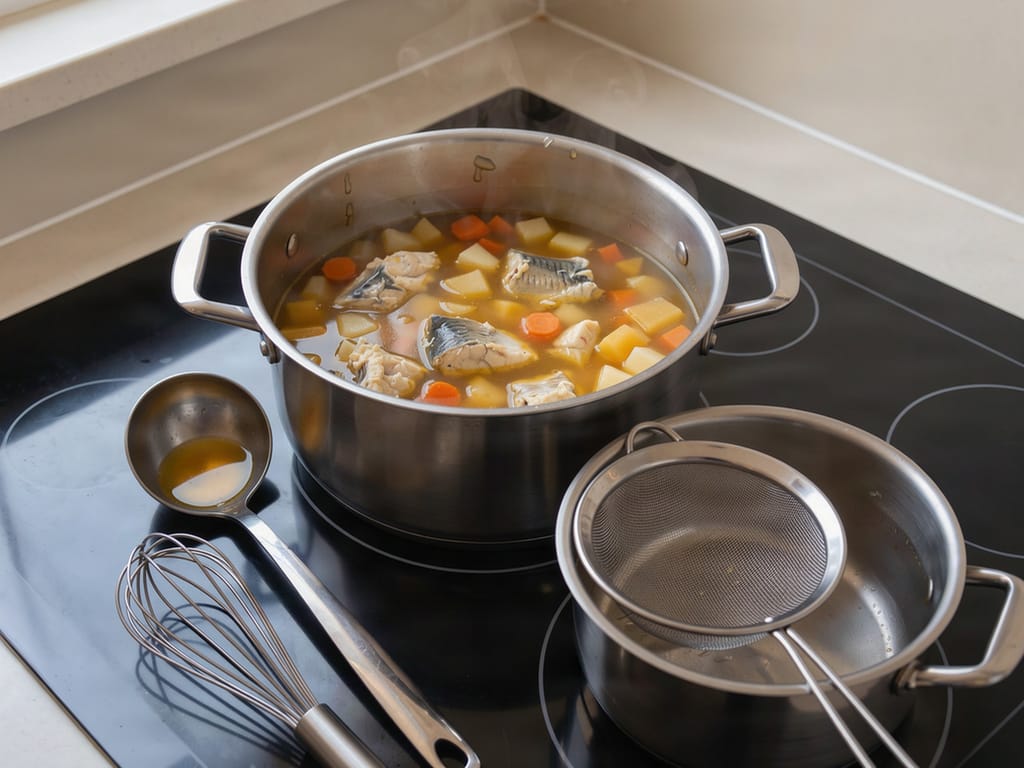
You can clear up cloudy fish stock by straining it through cloth or a fine sieve lined with a paper towel. Pour slowly with a ladle and don't press down on what's left in the sieve.
For a perfectly clear stock, professional kitchens use egg white clarification: you whisk an egg white into cooled stock, slowly bring it to a boil, and the egg white traps tiny particles in a foam, which you then carefully skim off before straining the stock. For a Christmas soup thickened with roux, though, you don't need this – a gentle simmer, skimming, and straining are enough.
Fish soup turns bitter because of gills, bile, overly long cooking, or a burnt roux. Always cut the gills out of the heads, take care not to puncture the gallbladder when cleaning the fish (cut away any green stain on the flesh), and cook the stock for about an hour, not half a day. Cook the roux only to a light golden color – a dark, burnt roux gives the soup a bitter, brownish tone that you can't fix afterward.
Yes, you can thicken fish soup with cream, but you'll get a creamy soup rather than the traditional Czech Christmas one. Stir whipping or cooking cream into the soup after you take it off the heat, then warm it through briefly without boiling it for long. With sour cream, first whisk it with a ladleful of warm soup, otherwise it will curdle.
Simmer carp head stock gently for about an hour. In that time the heads and bones give up their flavor and gelatin. Cooking longer won't add flavor, but it will make the stock cloudy and bitter. Cut the gills out of the heads beforehand, and pick the meat from the heads into the soup once they're cooked.
Add the milt and roe to the soup only about 5 minutes before the end of cooking. They cook quickly, and with longer boiling they fall apart and cloud the soup. Cut them into smaller pieces and cook only at a gentle simmer so they stay whole.
Lumps form when you pour hot stock onto a hot roux, or when you don't whisk it in right away. Next time, pour cold or lukewarm stock over the roux and whisk straight away. You can rescue a lumpy soup by blending it with an immersion blender or straining it through a sieve.
One recipe worth heating the oven for, one tip, and one deal from the shop. Nothing else.