How Long Does Goulash Last in the Fridge and Freezer (and Why It Tastes Better the Next Day)
How to Freeze Soup and Sauce: What Freezes Well and What Splits
Updated Nov 17, 2026
You can freeze almost any soup or sauce. Only a few ingredients cause trouble. Legume soups, cream-free vegetable purées, goulash and tomato sauce with no cream all go into the freezer without a problem. Cream, milk, eggs, potatoes and pasta change after thawing: cream sauce splits, potatoes turn mealy, noodles overcook. Either add those ingredients after thawing, or expect to rescue the sauce. Below you'll find an overview of what to freeze and what not to, plus the method from cooling to reheating.
You can freeze almost all soups and sauces. What matters is what's in the pot, not what the soup is called.
Freeze very well: legume soups, cream-free vegetable purées, borscht without sour cream and potatoes, goulash, tomato soup without rice and tomato sauce, plus sauces thickened with flour or roux (such as the base for svíčková, a Czech beef in a root-vegetable cream sauce), as long as you freeze them without cream.
Freeze with adjustments: cream sauces and soups (dill, mushroom, Szegedin goulash, paprikash), soups with potatoes and chunky vegetable soups.
Don't freeze: kulajda, soups with egg, soups with noodles, rice or semolina, and sauces thickened with starch alone.
Soups and sauces without dairy, eggs or a side such as pasta or rice freeze very well: legume soups, vegetable purées, borscht, goulash, tomato soup and roux-based sauces.
Legume soups: lentil, bean, pea. They thicken after thawing, so just thin them with water or broth. Try red lentil soup with coconut milk (add the coconut milk when reheating), easy tomato soup with red lentils or Italian tomato soup with legumes.
Blended vegetable purées without cream: pumpkin soup or pumpkin purée soup, carrot, celeriac and broccoli purées. A blended texture has nothing to lose.
Borscht without sour cream and without potatoes. Add the sour cream at the table and cook fresh potatoes when reheating.
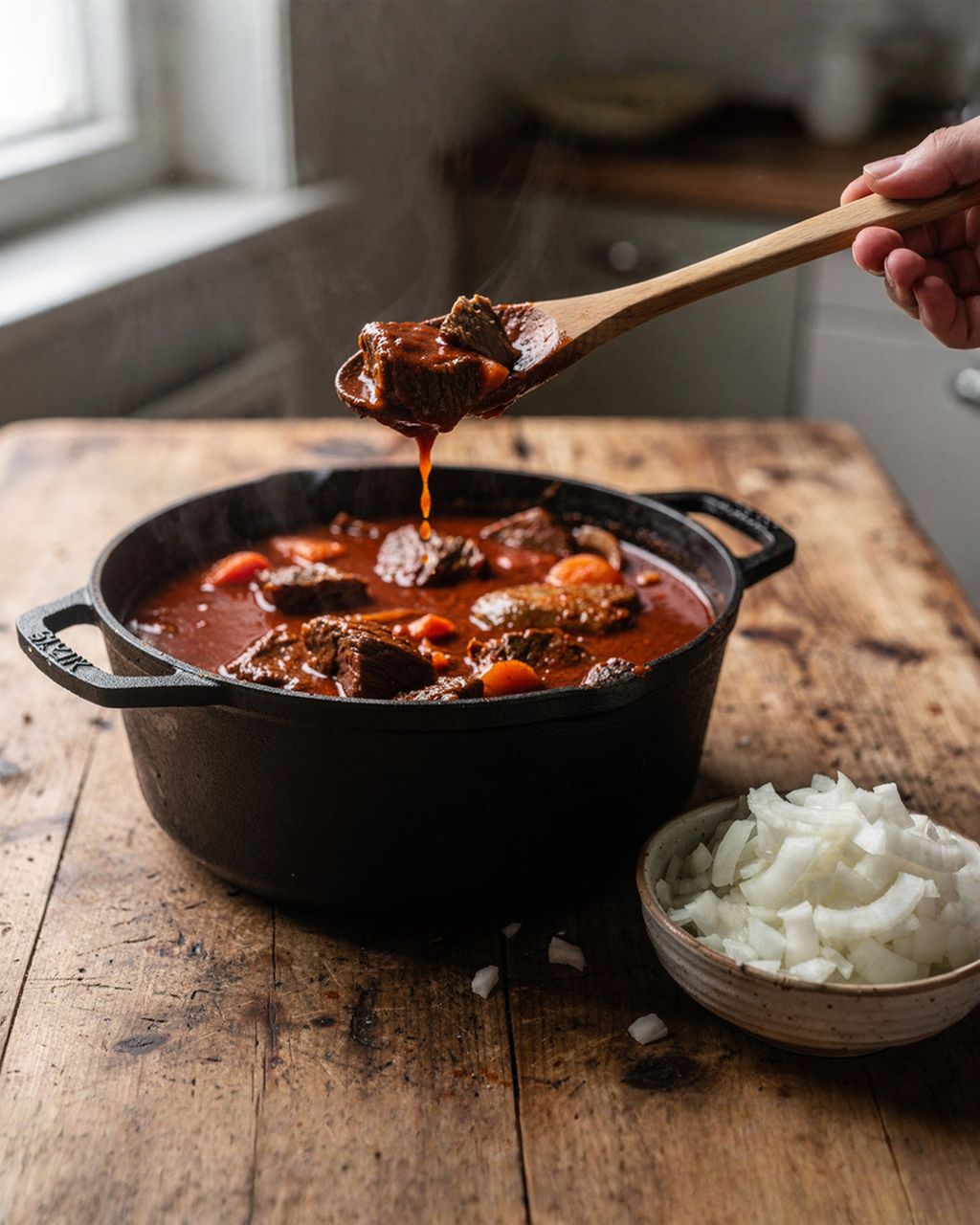
Goulash goes into the freezer with no adjustments at all, for example classic beef goulash. How long it keeps in the fridge and how to reheat it is covered in how long goulash keeps in the fridge and freezer.
Tomato sauce and tomato soup without rice. Tomatoes and onions freeze without any trouble. Freeze tomato sauce without cream and add the cream when reheating. For tomato soup with rice, freeze just the soup and cook the rice fresh.
Sauces thickened with flour or roux, such as the base for svíčková. Vegetables blended with the starch from the flour hold together. Freeze svíčková as a base without cream and add the cream when reheating.
Cream sauces and soups, soups with potatoes and chunky vegetable soups freeze with adjustments: you leave out the problem ingredient or blend it after thawing.
Cream sauces and soups: dill, mushroom, Szegedin goulash, paprikash. It's best to freeze the base without cream and add the cream when reheating. If the sauce already contains cream, it often splits and you'll have to blend it (method below). For mushroom soup or mushroom sauce you can also freeze the mushrooms on their own, as described in how to freeze mushrooms.
Soups with potatoes: bramboračka (Czech potato soup), creamy milk and potato soup. Chunks of potato turn mealy and spongy. A blended soup hides this.
Chunky vegetable soup: zucchini and green beans go soft. Just blanch the vegetables briefly so they stay firm to the bite.
Szegedin goulash, paprikash and dill sauce freeze best as a base without cream. Add the cream (and for dill sauce, fresh dill) when reheating.
Szegedin goulash: braise the meat with the sauerkraut and paprika, thicken with flour and freeze. After thawing, heat it through and soften it with cream mixed with a little flour.
Paprikash: same method. Finished paprikash with cream usually separates a little after thawing, but blending or whisking fixes it.
Dill sauce: dill loses its aroma in the freezer. Freeze the sauce without it and add chopped dill at the end of reheating. If you're making dill sauce from the classic recipe, cook a double batch of the base and freeze half. It works the same way for dill soup.
It doesn't pay to freeze kulajda, soups with egg, soups with noodles, rice or semolina, and sauces thickened with starch alone. For most of them it's enough to leave out the problem ingredient and add it fresh.
Kulajda: cream, potatoes, poached egg and vinegar. You won't find a worse combination for the freezer.
Soups with egg: egg whites turn rubbery after thawing.
Soups with noodles, rice or semolina: they keep absorbing liquid and overcook. Freeze the soup without them and cook the side fresh.
Sauces thickened with starch alone (cornstarch such as Gustin or Maizena, or potato starch such as Solamyl): after thawing they release water and turn jelly-like.
Seasonal baking plans, tested recipes and kitchen tricks that save you time. Unsubscribe in one click.
Cream sauce splits after thawing because ice crystals break the emulsion of fat and protein, and the two then separate. Cream is tiny droplets of fat dispersed in water and coated in protein. When freezing, crystals grow from the water and pierce the coating of the droplets, so after thawing the sauce is grainy, has greasy pools floating in it or releases whey. It has nothing to do with food safety; it's purely a matter of texture.
The less fat, the worse it gets. Milk and cooking cream (around 12%) almost always split, while whipping cream (30–33%) holds up much better.
Acidity speeds up splitting. Sauerkraut in Szegedin goulash, vinegar in kulajda, wine in a sauce: acid and freezing together curdle the protein reliably.
Flour helps. The starch from a roux coats the fat droplets and holds the sauce together. A sauce thickened with flour splits less than a cream soup thickened with cream alone.
If your sauce splits while cooking, that's a different problem with a different cause. It's covered in cream sauce has split: why and how to rescue it.
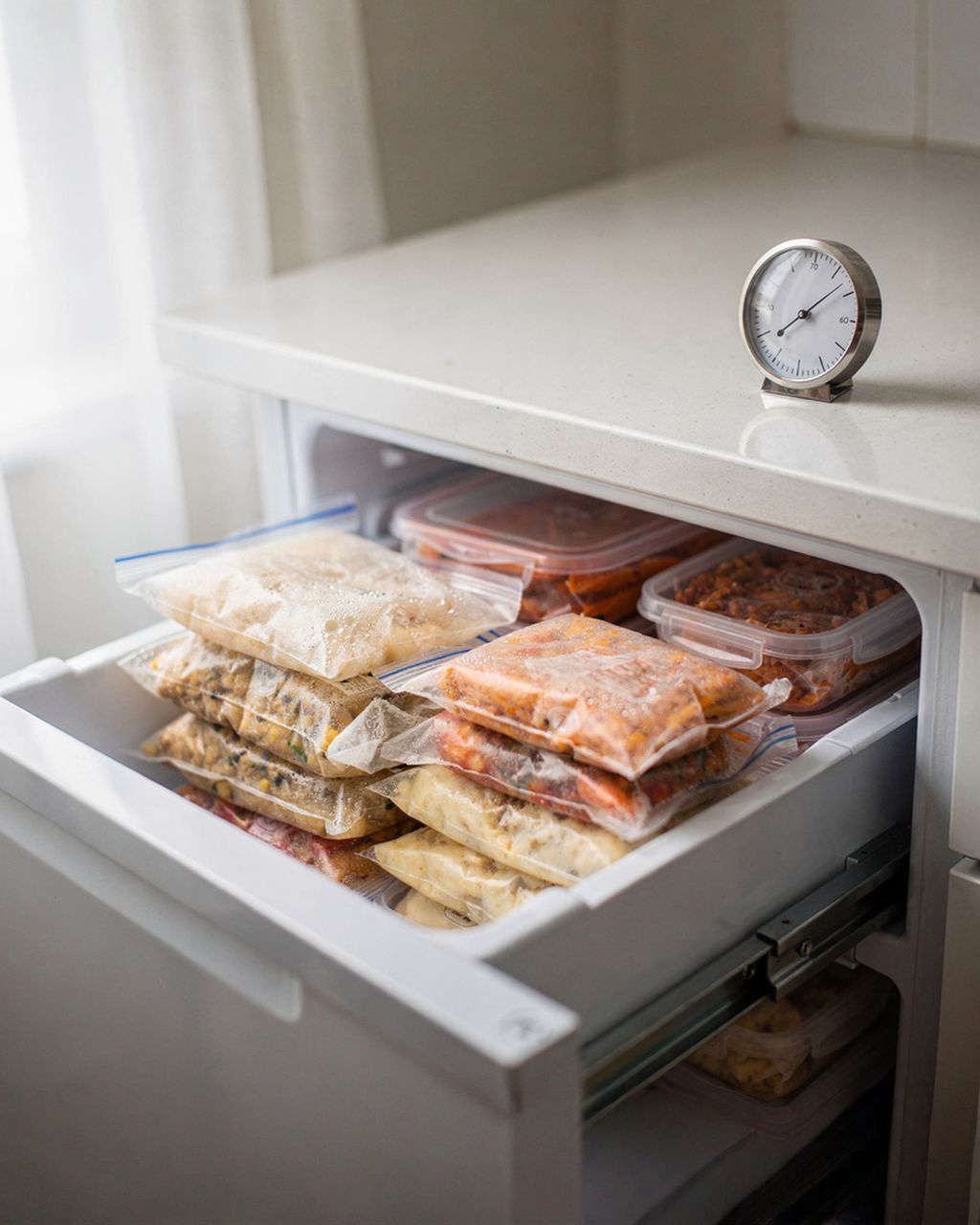
Cool the soup quickly, divide it into portions in shallow containers or bags and freeze it. According to the UK Food Standards Agency (FSA), put it in the fridge within one to two hours of cooking, letting it cool at room temperature in the meantime. A hot pot doesn't belong in the freezer. The Food Safety Information Center of the Czech Ministry of Agriculture recommends freezing only cooled dishes, because a warm pot also warms the other food in the freezer.
Cool it quickly. Stand the pot in a sink of cold water and stir now and then. A big pot cools slowly, so divide the soup into shallow bowls.
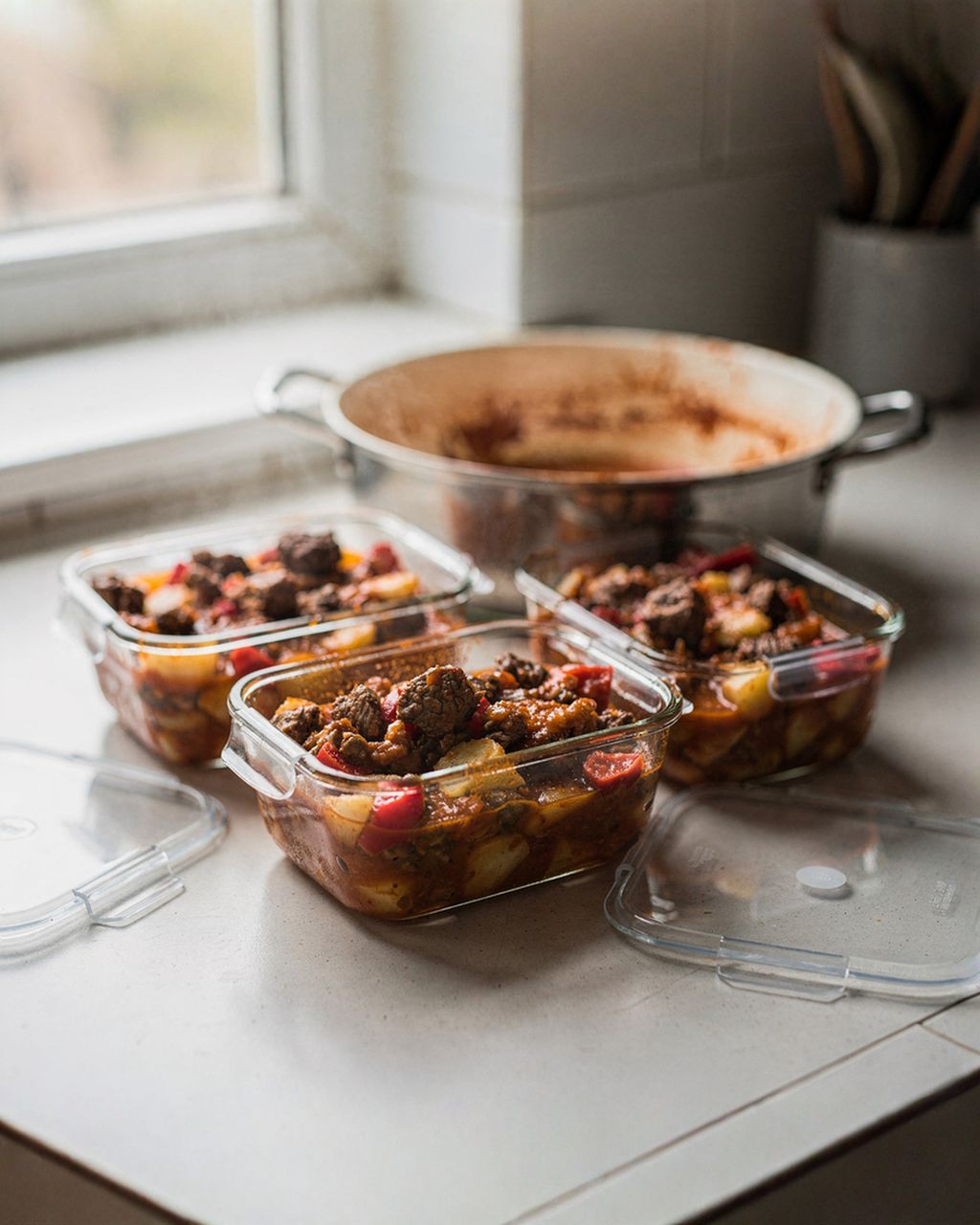
Portion it. Freeze as much as you'll eat in one go. Don't refreeze thawed soup, so you don't have to reheat a liter for one bowl.
Leave some room. Water expands by roughly a tenth when it freezes, so don't fill the container to the brim, or the lid will pop.
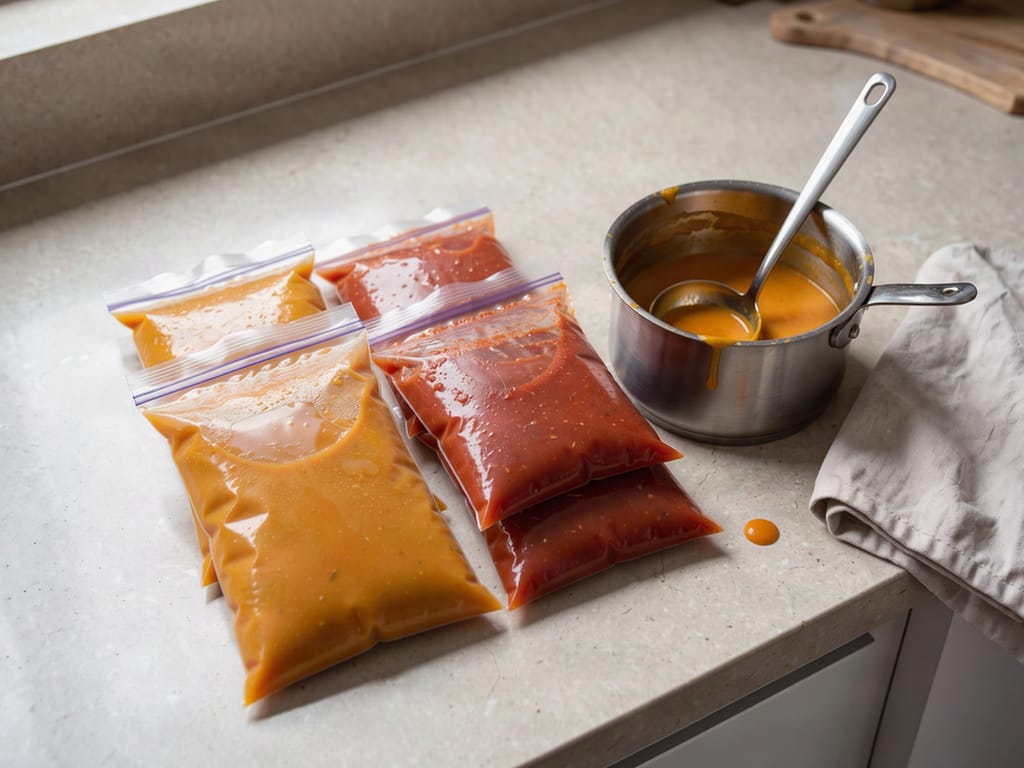
Freeze bags flat. A flat bag freezes faster, can stand in the freezer like a file folder and thaws faster than a block from a tub.
Label it. Name and date. In two months you won't be able to tell whether it's pumpkin or carrot.
According to the FSA, the freezer should be at around −18°C (0°F). The US agency USDA/FSIS gives 2–3 months of good quality in the freezer for soups and stews. After that the soup doesn't go bad, but it loses aroma and the texture gets worse. How to pack food and how long other foods keep is covered in storing food in the freezer.
Thaw soup in the fridge the day before. If you're in a hurry, tip it frozen straight into a pot and heat it gently with the lid on. Then bring it to a boil, as USDA/FSIS recommends.
From the fridge: the safest and gentlest way. A flat bag thaws faster than a block from a tub.
Frozen into the pot: add a little water so the bottom doesn't scorch, and stir as it loosens. This works mainly for legume and vegetable soups.
In the microwave: in short intervals, stirring. Right afterward, heat the soup until boiling.
Reheat cream soup and sauce in this order: bring the cream-free base to a boil, stirring, then turn the heat down, stir in the cream you left out before freezing and just warm it through. A hard boil after adding the cream is the quickest way to split the soup a second time. Thin legume soup, because it thickened in the freezer. Taste and add salt: the flavor fades a little after thawing and needs acidity or herbs.
The quickest way to fix a split sauce is an immersion blender. It breaks up the fat droplets and the sauce is smooth again. If that isn't enough, a little flour or fresh cream helps.
Blend the sauce with an immersion blender while it's still lukewarm, not boiling.
Thicken it if it's releasing water: stir a teaspoon of all-purpose (plain) flour into cold water, whisk it in and simmer briefly.
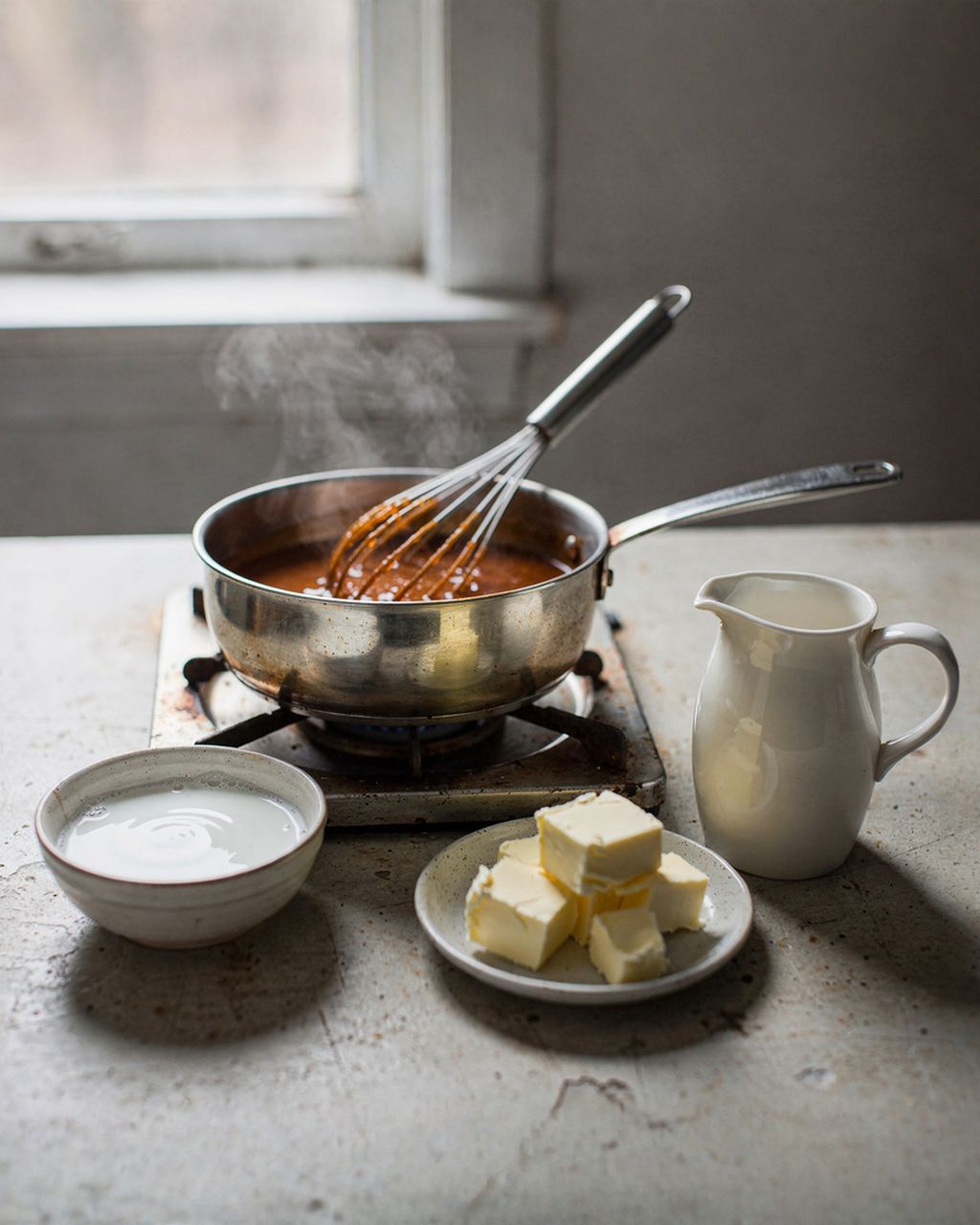
Add fat: a spoonful of fresh whipping cream or a small piece of cold butter stirred in at the end will smooth it.
For sauces with pieces of meat (Szegedin goulash, paprikash), take out the meat first, blend the sauce and put the meat back. You can't rescue kulajda this way, because the egg and potatoes stay rubbery and mealy. That's why it's better not to freeze it.
Add noodles, rice, diced potatoes, egg, cream and fresh herbs to the soup only after thawing. Everything else can be frozen.
Noodles and rice: cook them separately and add them to the bowl.
Potatoes: cook them fresh in the thawed soup, or blend the soup. Cooked potatoes turn mealy in the freezer because ice crystals break their starch cells.
Cream, sour cream, egg yolk to enrich: only at the end of reheating.
Dill, parsley, chives: chopped and fresh, into the finished soup.
If you're cooking soup specifically to stock the freezer, freeze only the base: broth, vegetables or legumes, meat. How long broth keeps on its own is covered in broth in the fridge: how long it keeps.
Yes, you can freeze lentil soup, and it comes through the freezer almost unchanged. It thickens after thawing because the lentils soak up liquid, so thin it with water or broth when reheating and finish with a little vinegar or lemon. USDA/FSIS gives 2–3 months of good quality in the freezer for soups.
Bean soup keeps 3–4 days in the fridge, as USDA/FSIS states for soups and stews. Put it in the fridge within one to two hours of cooking (FSA). If you won't eat it within those days, freeze it: bean soup is one of the soups that freeze best.
It's better not to freeze kulajda (Czech creamy mushroom and dill soup). The cream splits after thawing, the potatoes turn mealy and the poached egg goes rubbery. If you want a stock of it, freeze only the mushroom base, without the dill, cream, potatoes and egg. When reheating, add fresh cream, potatoes and egg, and finish with chopped fresh dill, for example following the kulajda recipe – the best soup with mushrooms.
Yes, borscht freezes very well, just without the sour cream and without potatoes. Add the sour cream at the table and cook fresh potatoes when reheating. Beets and cabbage keep their color and flavor. After thawing, season the borscht with vinegar or lemon, because the acidity fades a little in the freezer.
Yes, pumpkin soup is one of the soups that freeze best, because it's blended and has nothing to lose. Freeze it without cream or coconut milk and add those when reheating. You can cook it following the recipe for pumpkin soup with crispy bacon. Don't put the bacon in the freezer; fry it fresh.
One recipe worth heating the oven for, one tip, and one deal from the shop. Nothing else.