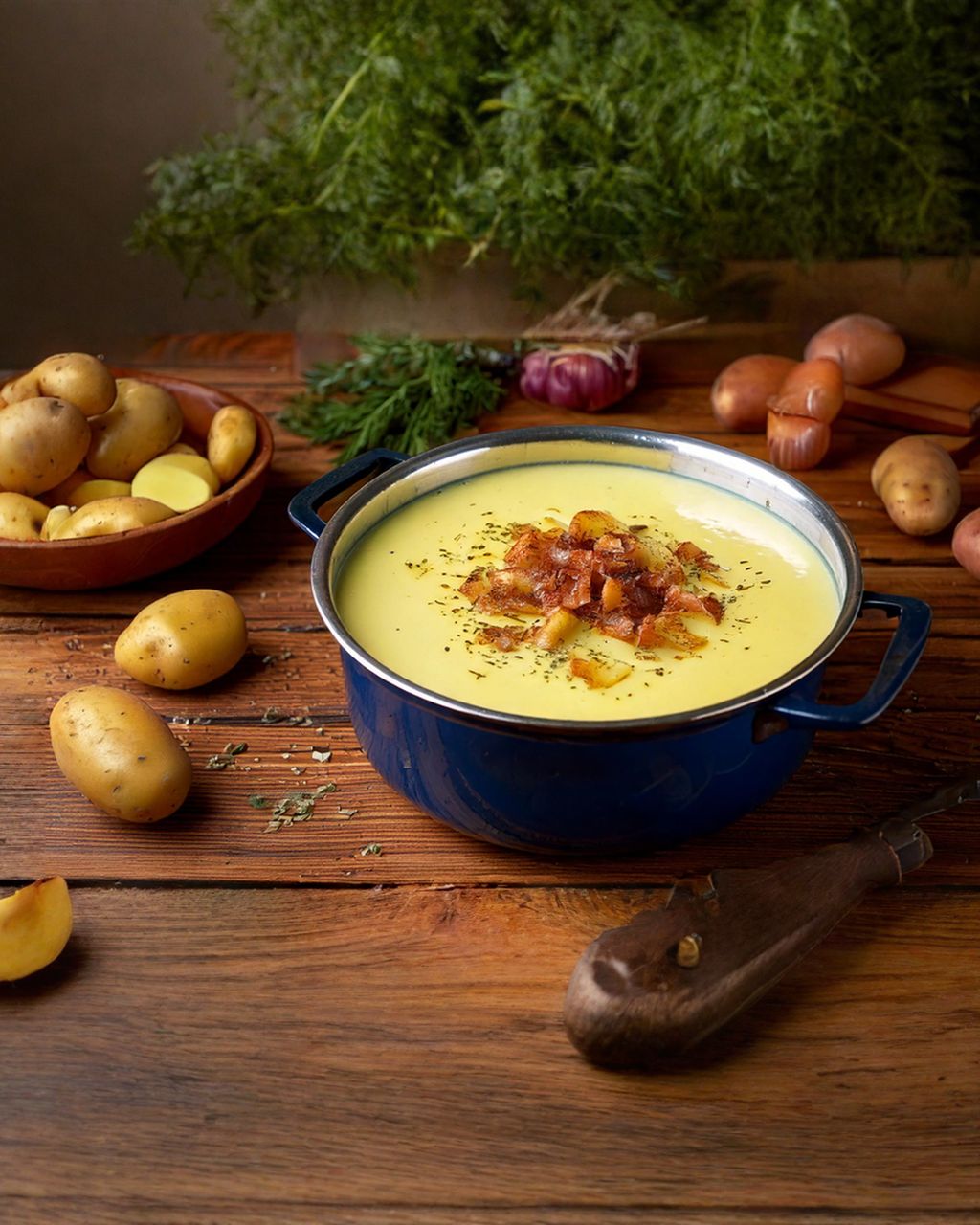
Creamy garlic soup – it'll get you back on your feet
Garlic Soup: A Classic Česnečka Recipe, Variations and Common Mistakes
Updated Sep 26, 2026
Garlic soup lives or dies by one thing: when you add the garlic. Toss it in the pot too early and it boils down into sweet nothingness. Leave it in the pan thirty seconds too long and the whole pot tastes burnt. This article is about getting that moment right — from the classic Czech česnečka with potatoes and marjoram, through a creamy version, to the five mistakes that most often wreck the soup.
You can make garlic soup in 30 minutes from six ingredients: garlic, potatoes, stock, fat, marjoram and caraway. The method is the same whether you're making a thin, brothy česnečka or a thick cream soup.
Potatoes (about 400 g for 4 servings) — peel and cut into cubes no bigger than 1.5 cm. Smaller cubes cook in 12 minutes, larger ones in 25 — and by the time the big ones soften, the garlic will already be overcooked.
Heat the fat over medium heat. Lard keeps the traditional flavour, butter gives it delicacy, olive oil handles higher heat without burning.
Sauté the potatoes for 3–4 minutes, until the edges turn glossy. This step is the one most often skipped, and it's where most of the depth of flavour comes from.
Add the garlic only now — sliced, not crushed through a press. Sauté for 30–60 seconds, just until it smells fragrant. Not a minute longer.
Pour in the stock (1.2 l for 4 servings), add the caraway and simmer for 15–20 minutes covered, until the potatoes fall apart under a fork.
Stir in the marjoram right at the end, off the heat. Boiled, it loses its aroma within a few minutes and leaves nothing but a bitter dried herb behind.
Salt only after adding the stock — most store-bought stock is already salty, and the soup will concentrate further as it simmers and reduces.
One ratio worth remembering: one whole head of garlic per litre of stock. It sounds like a lot, but cooked garlic is far milder than raw — a head simmered into soup tastes sweet and nutty, not sharp.
Seasonal baking plans, tested recipes and kitchen tricks that save you time. Unsubscribe in one click.
Garlic belongs in the pot for 30–60 seconds over medium heat — never at the very start, and never into a screaming-hot pan. The reason is physical: garlic has far less water than onion (about 59% versus 89%) and far more carbohydrate, which turns to sugar quickly in the heat — that's why it browns and burns before onion even has time to turn translucent.
According to culinary science, garlic caramelizes and turns nutty brown up to around 175–180°C. Beyond that point, the sugars in garlic start to burn and turn to carbon — that sharp, scratchy bitterness you know from a scorched pan. There's no fixing it once it happens: the bitterness dissolves into the fat, and the fat then flavours the entire pot.
The second thing most recipes leave out is how you break the garlic down. The flavour compound (allicin) doesn't exist in a whole clove at all — it's only released once you rupture the cell walls, and the more you rupture at once, the more aggressive the flavour:
Sliced — the mildest and sweetest. The best choice for a soup that's going to simmer.
Finely chopped — a middle ground: rounded flavour, but still pronounced.
Crushed through a press — the sharpest and hottest. Not suited to sautéing, since the fine pulp burns before you can do anything about it.
And one trick that makes the biggest difference of all: split the garlic into two batches. Sauté two-thirds at the start and let it simmer with the soup — that builds a sweet, rounded base. Grate the remaining third in raw once the pot is off the heat. The residual heat takes the raw edge off it while leaving the fresh garlic top note that a long simmer would otherwise cook away.
The difference comes down to whether you blend it. Česnečka stays thin, with chunks of potato and bread; the cream version gets blended smooth and softened with cream or cheese. The base and technique are identical for both — they only diverge in the final three minutes.
Classic česnečka is thin and unblended, its body coming from soft, broken-down potato rather than flour or cream. It's cooked in lard, seasoned with caraway and marjoram, and served with croutons or cheese grated straight into the hot bowl.
Its ancestor is oukrop — a soup from a time when potatoes weren't yet a given. It was, quite literally, hot water, garlic, lard, caraway and a stale crust of bread at the bottom of the bowl. If you're out of stock, give it a try: the bread softens and thickens the soup, and it tastes far better than that ingredient list suggests.
You get the cream version by blending the finished soup smooth and softening it with cream or processed cheese. Two things to watch:
Blend briefly. Potatoes contain starch, and over-blending turns them into a sticky, gluey mass. Ten to fifteen seconds with an immersion blender is enough; if the soup starts stringing, it's already too late.
Add cream off the heat. Whipping cream (31%) can handle boiling, but a tangier soured cream will curdle if boiled. Stir it into the soup once it's off the burner, and don't let it come back to a boil.
Pick your cheese based on the result you want. Processed cheese gives that classic thick, rich Czech version; parmesan adds saltiness and umami; smoked cheese turns česnečka into a completely different dish.
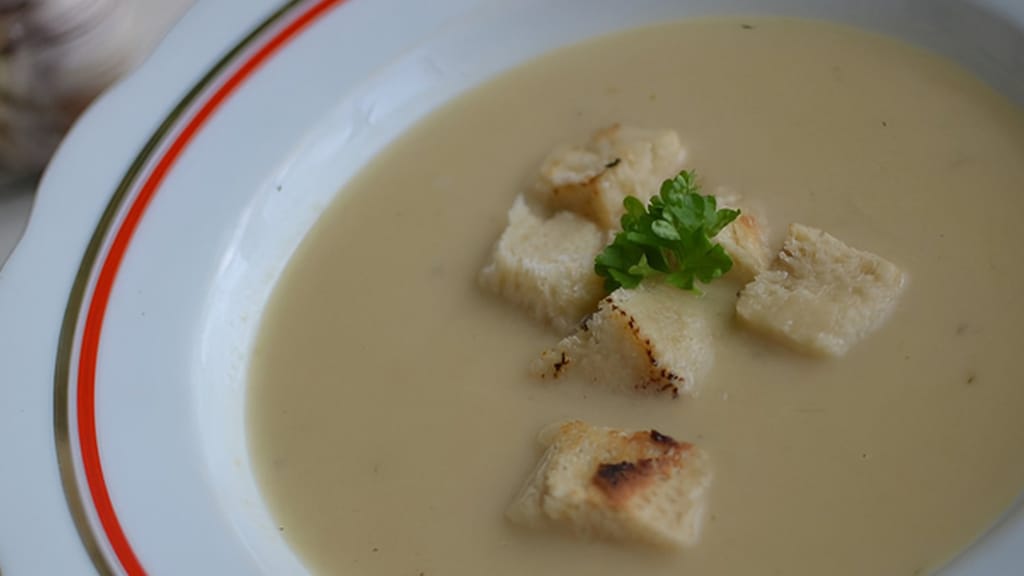
Creamy garlic soup – it'll get you back on your feet
Creamy Česnečka with Potato and Marjoram — a rich version with exact quantities
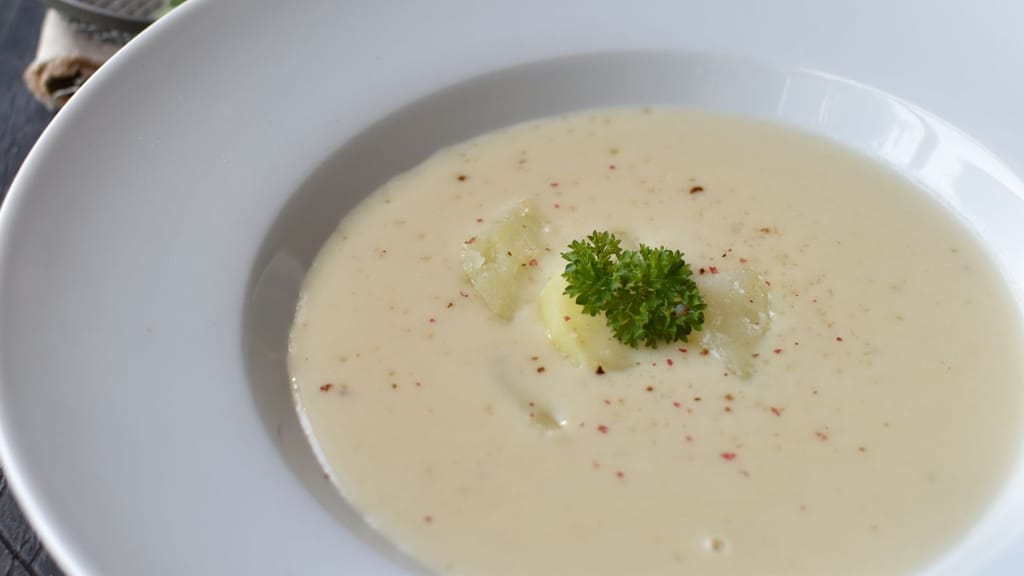
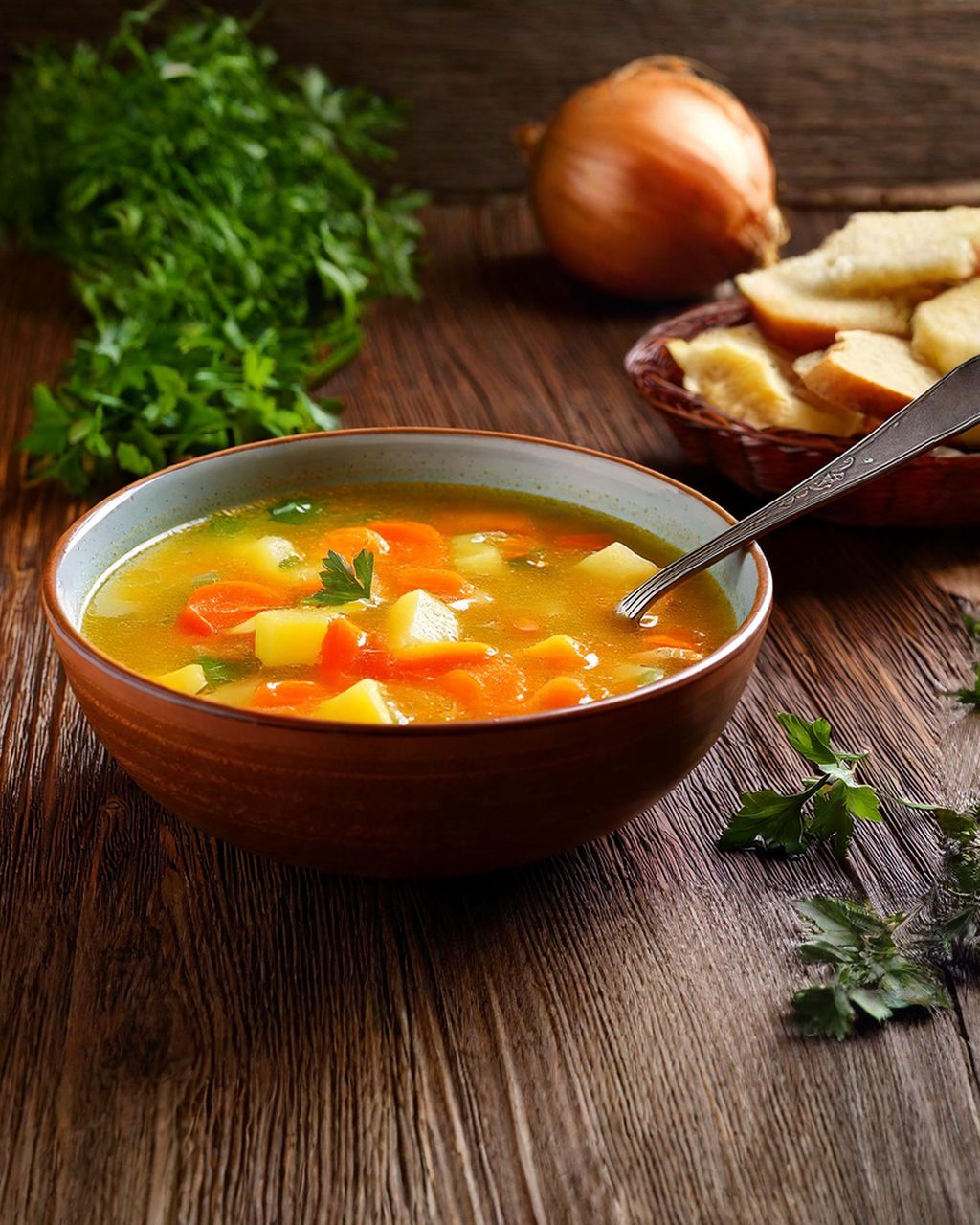
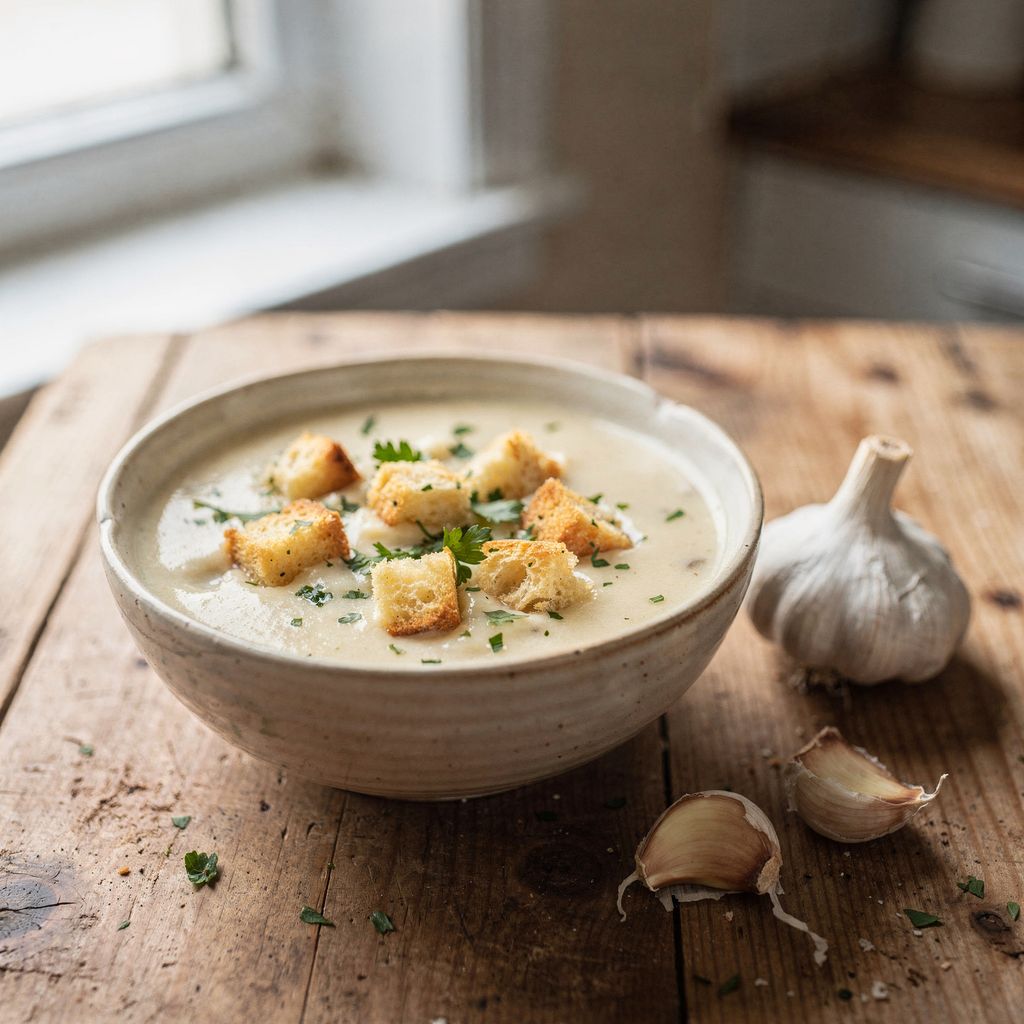
Creamy autumn garlic and potato soup
Creamy Autumn Garlic and Potato Soup — a lighter take, ready in half an hour
You can make vegan garlic soup with vegetable stock and olive oil instead of lard, with the blended potato itself giving the creaminess. For a fuller flavour:
Coconut milk (full-fat, 2–3 tablespoons per serving) softens and lightly sweetens the soup — good if you're also adding chilli.
Nutritional yeast (1–2 tablespoons) adds a savoury, cheesy note that vegan versions otherwise lack.
Blended cooked white beans in place of some of the potato thicken the soup and give it a fuller, richer body.
The three best-known versions are Spanish sopa de ajo, French soupe à l'ail and Czech oukrop. All three grew out of the same need — a warm dish from garlic, fat and stale bread — and each brings its own trick to the table.
Sopa de ajo (Spain) — a Castilian shepherd's soup. The key ingredient is ground pimentón paprika, which adds colour and depth — reach for the smoked pimentón de la Vera and it brings a smoky note too. The other key move is a beaten egg stirred into the boiling soup just before serving. The stale bread is simmered directly in it.
Soupe à l'ail (France) — milder, often made with potato and egg, and sometimes enriched with egg yolk whisked with cream.
Oukrop (Bohemia) — the plainest of all: water, garlic, lard, caraway, bread.
Two things are worth borrowing from the Spanish version for a Czech česnečka too: a pinch of smoked paprika added to the fat with the garlic, and a beaten egg drizzled in a thin stream into the boiling soup. The egg thickens the soup and creates delicate wisps in it, making it heartier without a drop of cream.
The best croutons come from bread that's two or three days stale — fresh bread has too much moisture, so it soaks up the fat and turns soft instead of crisping up. Spread the cubes on a tray in a single layer, since piled-up cubes steam and stay soft, and add salt and herbs only after baking; they'd turn bitter in the oven.
Don't add garlic to croutons before baking, for the same reason you don't add it too early to the pot — it burns. Instead, toss the hot, finished croutons in a bowl with one halved garlic clove, or rub the clove straight over a toasted slice of bread. It tastes more intense, and nothing burns.
One last thing: scatter the croutons at the table, not into the pot. In the soup, they go soft within minutes.
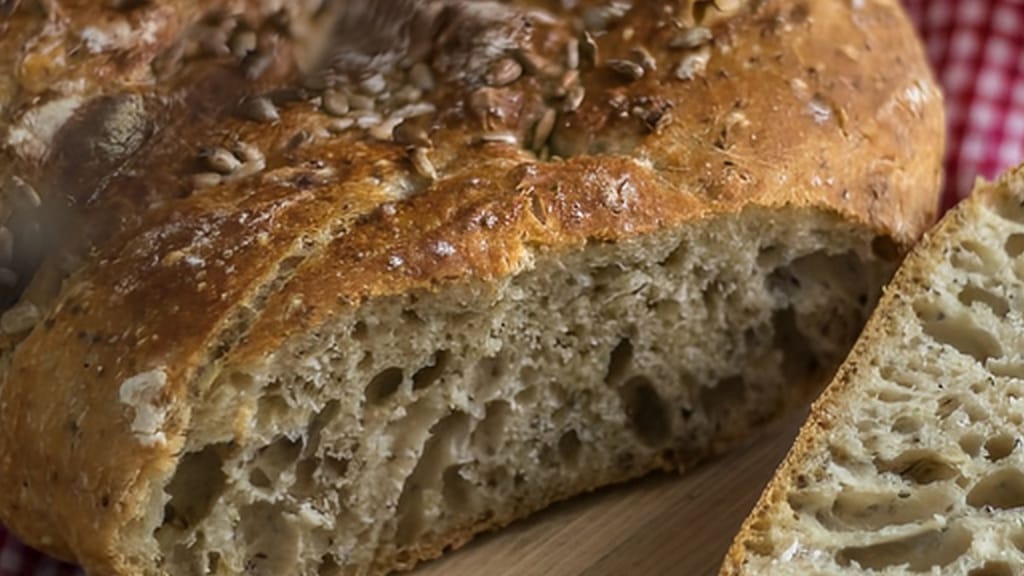
Homemade bread
Homemade bread — the day-old loaf is exactly the right kind of dried-out base for garlic soup croutons
Garlic soup goes wrong almost every time for one of five reasons: burnt garlic, marjoram added too early, over-salting, blending it into a gluey paste, or boiling it too hard. All five can be caught before they happen.
Burnt garlic. The most common mistake, and the only one you can't undo. Sauté over medium heat for 30–60 seconds and pull it off the heat once the slices are honey-coloured, not chestnut brown. If you're unsure, err early — it'll finish cooking in the stock.
Marjoram added too early. Dried marjoram gives up its aroma within two or three minutes, then just turns bitter. It belongs in the soup off the heat, right before serving. Caraway, on the other hand, is sturdy and can simmer with the soup the whole time.
Over-salting. Stock is salty on its own, the soup thickens and concentrates as it simmers, and cheese or croutons add still more salt at the table. Salt only right at the very end, after the cream and the cheese. If you overdo it, dilute the soup with unsalted stock or water in stages and add acidity — a spoonful of cream, a dash of vinegar or lemon. It won't reduce the saltiness, but it'll mask it.
Blending it into paste. Potato starch turns gluey and stringy if you over-blend it. Blend for 10–15 seconds with an immersion blender, no longer, and never in a food processor with sharp blades — that breaks the starch down completely.
Boiling too hard. The soup should only gently bubble. A hard boil breaks the potato down into a cloudy mess and evaporates so much liquid that a soup that was seasoned correctly at the start is over-salted twenty minutes later.
Serve garlic soup very hot, and finish seasoning it in the bowl — garlic loses its aroma fast, and lukewarm česnečka tastes flat.
What works on the plate:
Grated cheese in the bottom of the bowl, with the soup poured over it so it melts in. Better than cheese sprinkled on top.
A drizzle of good olive oil or a spoonful of lard straight into the bowl — fat carries aroma and opens up the flavour.
Fresh chives or parsley added at the table, not into the pot.
Half a hard-boiled egg or a poached egg, if the soup is meant to be a main course.
Garlic soup keeps for 3 days in the fridge in a sealed container. It freezes well, but only the version without cream — frozen cream splits once thawed and leaves the soup grainy. So freeze the base before you enrich it (it keeps for 3 months), and stir in the cream or cheese only when reheating. The potato base can also turn grainy on its own after freezing; just give it a quick blend after reheating and it'll come back together. The soup tends to taste stronger the next day, once the flavours have had time to meld; if it seems flat, just stir in a little freshly grated garlic.
Cut the garlic roughly in half and skip the raw, grated garlic stirred in at the end — that's what gives the soup its sharp, biting top note, and it's usually what kids object to. Instead of slicing it, drop whole peeled cloves into the stock, let them simmer until soft, then fish them out before serving: the flavour stays sweet and rounded, with no heat at all. It's worth crushing or grinding the caraway seeds so kids don't bite into whole ones, and a spoonful of cream or a slice of processed cheese will soften the sharpness even further. Croutons and grated cheese on top turn it into a soup that even garlic-shy kids will eat.
The closest substitute is dried granulated garlic, at about 1/4 teaspoon per clove, added straight to the stock. It lacks the bright top note of fresh garlic, but once the soup has simmered, the difference barely shows. Garlic powder is milder and turns bitter quickly, so add it right at the end. Jarred chopped garlic, on the other hand, doesn't work for sautéing — it's packed in liquid, so it steams in the fat instead of browning.
Yes — stale bread, white beans or a roux will all thicken it just as well. Bread is the most traditional route: a few slices tossed into the stock break down and thicken the soup, exactly as in the original oukrop. Blended cooked white beans give you creaminess without the gluey texture potatoes can bring. A light roux made from a tablespoon of butter and a tablespoon of flour also works, though it will give the soup a floury note, so let it simmer for at least 10 minutes.
Mint leaves, a raw apple or a green salad eaten right after the meal work best; parsley is the traditional choice. Dairy helps too — full-fat milk works better than skim, and it's most effective when drunk alongside the meal rather than after. That's why garlic soup is traditionally served with cheese, and why the parsley on top isn't just decoration. Once a clove has started to sprout, the whole thing tastes sharper — not just the green shoot. For soup, reach for a clove that hasn't sprouted; pulling out the shoot won't fix that.
One recipe worth heating the oven for, one tip, and one deal from the shop. Nothing else.