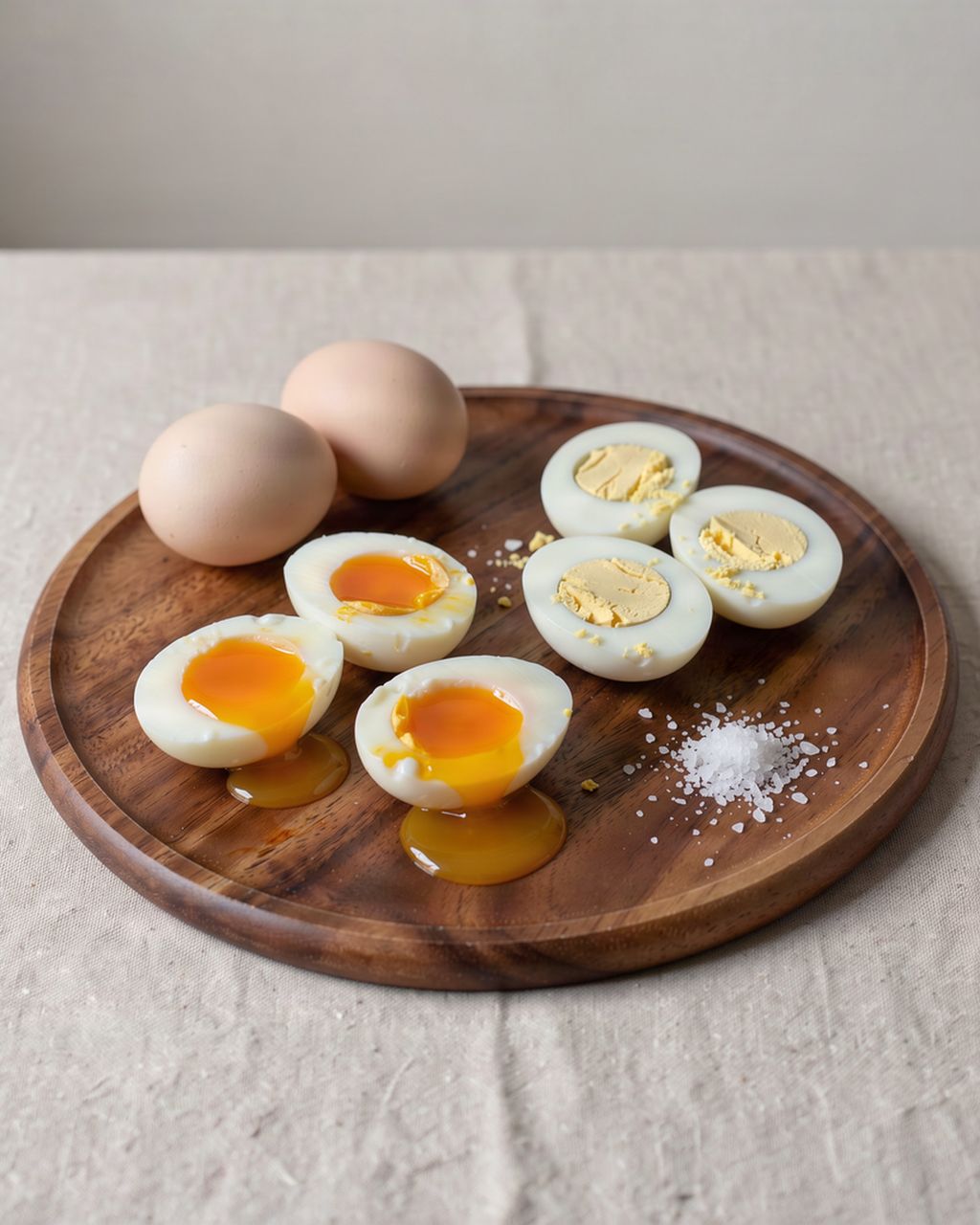
Simple chocolate cake
Cake Recipes: Easy Beginner Cake, Birthday, Chocolate, Mascarpone Fruit Cake and No-Bake
Cake recipes that really work come down to five steps: the cake layers, syrup, filling, assembly and chilling. Once you have those down, you can make a birthday cake, a chocolate cake or a fruit cake, and if you don't want to turn on the oven, you can put together a no-bake cake from ladyfingers. Below you'll find a quick guide by occasion, experience and time, the cake-building process step by step, and tested recipes from our catalog, including how long a cake with cream filling keeps.
For a first cake, reach for a no-bake ladyfinger cake or a cake made with wafer sheets. For a birthday, go for a sponge with mascarpone filling. If you have a whole weekend and want to show off, choose a classic like Sachertorte. What matters most is the chilling time, not the difficulty: even the simplest cake needs a few hours in the fridge.
A quick guide by situation (times are totals, including chilling, as given in each recipe):
Complete beginner, no oven, ready by evening: wafer sheet cake with fruit, about 2.5 hours.
Complete beginner, no oven, made the evening before: No-Bake Fruit Ladyfinger Cake, overnight.
Quick bake, one pan, no cutting of layers: Easy Chocolate Cake, about 1 hour 25 minutes.
A fruit cake that bakes together with its filling: Summer Quark and Fruit Cake, about 1 hour 10 minutes.
Birthday, slightly more advanced, an afternoon of work: Caramel Sponge Cake, about 2 hours 20 minutes.
Kids' party, lots of patience: Rainbow Kids' Cake with six layers, over 9 hours.
New Year's Eve or a festive table, advanced: Sachertorte (the cake layer chills overnight) or Swedish Almond Cake with praline.
You'll find the whole collection of cakes, cake layers and decorating ideas in the cakes and decorating category. The rest of this article walks through all these cakes and the method they share.
How to soften gingerbread that’s gone hard, when to fill Linzer cookies and how to tell the carp is done. One recipe and one tip a week. Unsubscribe in one click.
Every layer cake is built the same way: 1. cake layers, 2. syrup, 3. filling, 4. assembly, 5. chilling. What differs is what the cake layers are made of and which filling goes on them. When you know why you do each step, you can fix a mistake before it turns into a collapsed or sliding cake.
The cake base is the structure of the cake, and for a start three types are enough: a baked sponge, a pressed cookie base, and ready-made ladyfingers that soften in the filling.
A classic sponge rests on a simple ratio: weigh the eggs in their shells, then weigh out the same amount of sugar and flour. For a round 26 cm (10 in) pan, our recipes call for batter made with 6 eggs, and for a 30 cm (12 in) pan, 8 eggs. Whip the yolks with the sugar and a little hot water into a thick, pale foam, whip the whites separately to stiff peaks, and fold both together with the flour gently, with a spatula, from the bottom up. Why the ratio and the whipping matter so much is covered in detail in the article sponge cake batter: ingredient ratio and whipping.
Three rules that make or break a sponge:
For a tall sponge made with 6–8 eggs in a 26–30 cm (10–12 in) pan, don't open the oven during the first half hour, unless the recipe says otherwise. A rush of cooler air will make it collapse. Thin layers that bake in just a few minutes follow the time in the recipe.
Check doneness with a skewer pushed into the center: it must come out clean and dry.
Cut it only when completely cool, ideally after cooling on a wire rack. A warm sponge crumbles and tears.
A cookie base is the no-whipping route: crush the cookies, mix them with melted butter and press them into a pan lined with parchment paper using the bottom of a glass. It holds together when the mixture doesn't fall apart after you squeeze it in your palm. Grease the pan for a baked cake layer with fat and dust it with flour; how to do it with different materials is in the guide how to grease a baking pan.
Only a dry cake layer needs syrup, typically a classic sponge; moist chocolate, carrot or almond layers don't need it at all. The simplest cake syrup is sugar and water at 1:1, simmered briefly until the sugar dissolves and cooled completely.
Apply it to each layer with a brush or spoon, a little at a time and evenly. The sponge should be softened, not soggy: if it's oversoaked, it will slide under the filling and the bottom layer will go limp. You can flavor it with lemon zest, vanilla or weak coffee; keep the splash of rum for a cake that only adults will eat.
A fruit glaze also works in place of syrup. Sachertorte uses one made from apricot jam simmered with rum until slightly thickened: a thicker glaze spreads well, doesn't soak entirely into the cake, and still moistens it from the inside.
The filling determines both the flavor and the stability of the cake. The most rewarding is mascarpone filling, which holds its shape, handles fruit and won't curdle unless you overwhip it. Alongside it are whipped cream made from 33% whipping cream, quark filling, chocolate ganache and a buttercream made on a cooked base.
Mascarpone with sour cream and powdered sugar: just whisk it through or beat it briefly with a mixer. Whipping mascarpone for long makes it grainy and the filling curdles.
Whipped cream: whip the cream well chilled, to stiff peaks, until firm marks remain after the whisk. On its own it softens in a cake, so it's often combined with mascarpone; whip the mascarpone in last, at the lowest speed, just until combined.
Ganache: bring the cream to a boil, take it off the heat, break the chocolate into it, let it stand for five minutes and then stir to a glossy, smooth mixture.
Buttercream: beat softened butter for 5–10 minutes into a white foam and whip in a completely cooled cooked base in parts. A warm base would melt the butter.
How much filling you need for your pan and number of layers, you can work out from the chart how much filling for a cake. And when you're deciding which filling suits under fondant, under fruit or for decorating, the overview types of cake fillings will help.
Assemble the cake cold: cooled cake layers, chilled filling, and between the tiers feel free to return it to the fridge for ten minutes. Heat is the biggest enemy of a straight cake.
A method that works for most baked cakes:
Cut the cake layer horizontally with a long, sharp knife into as many layers as its height allows. Move the knife slowly and turn the cake as you cut.
Place the bottom layer cut side up, brush it with syrup if needed and spread an even layer of filling over it.
Place the fruit in the middle of the filling, not right to the edge. At the edge it would be pushed out under the weight of the next layer.
Turn the last layer smooth bottom side up, and you get a flat top.
Cover the whole cake with a thin layer of filling to catch the crumbs, chill it, and only then apply the final layer.
Assemble no-bake cakes directly in a springform pan with a removable side, wrapping the sides with a strip of parchment paper or acetate cake collar. The set cake then comes out with smooth sides. How to smooth the cake, pipe decorations and avoid ruining it is shown in the guide cake decorating for beginners.
A baked cake with filling needs at least 2–3 hours in the fridge, a no-bake ladyfinger cake 8 hours up to a whole day. Chilling isn't extra waiting; it's the last step of the recipe: the filling sets, the ladyfingers absorb moisture and the cake can be sliced cleanly.
According to the recipes in our catalog: a wafer sheet cake needs 2 to 3 hours of chilling, or even overnight. A no-bake ladyfinger cake with sour cream needs at least 8 hours, and one with mascarpone ideally a full 24 hours. The Sachertorte cake layer chills until the next day, at least 8 hours, and only then is it sliced and glazed.
To slice a chilled cake, dip a sharp knife in hot water before each cut and wipe it. A warm blade glides through filling and glaze, and the glaze won't crack.
The easiest cake is one you don't bake, or bake just once without cutting the layers. For a first try we recommend two: the wafer sheet cake and the chocolate cake with a cookie base.
The wafer sheet cake with fruit and mascarpone needs just six ingredients and no oven. Whip the mascarpone with sour cream and powdered sugar, spread it on the first wafer sheet and cover with sliced strawberries. Continue with the other wafers; between the layers you can put grated dark chocolate instead of fruit. Coat the sides with the filling too and leave the cake in the fridge for at least two to three hours while the wafers soften.
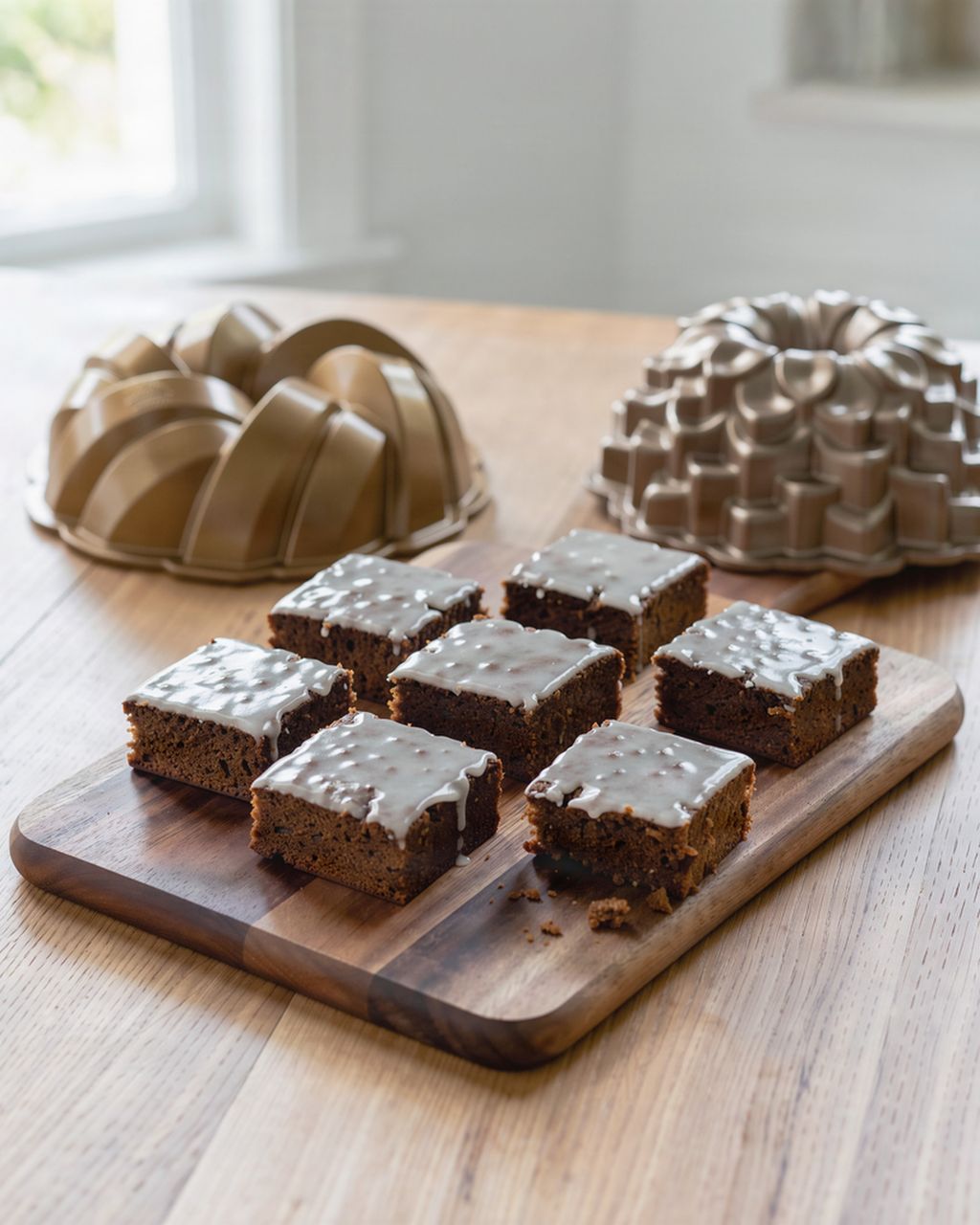
The easy chocolate cake has a base of cookies mixed with melted butter, which you pre-bake for about 10 minutes at 160 °C (320 °F). Pour over it a filling of ricotta, mascarpone and egg yolk, into which you mix chocolate melted with butter in a water bath, and bake for 30 minutes at 180 °C (350 °F); this way the yolk is cooked through in the oven. Put the cooled cake in the fridge and finally pour over chocolate melted with cream. The recipe wants the filling ingredients at room temperature, otherwise the chocolate in the filling seizes into lumps.
The most common beginner mistakes and how to avoid them:
Rushing the chilling: cutting a warm cake makes it slide apart. Plan for chilling from the start.
Overwhipped mascarpone: whip only until combined.
Wet fruit: dry strawberries after rinsing, or they'll release water into the filling.
A small pan for a big batch: stick to the diameter the recipe gives.
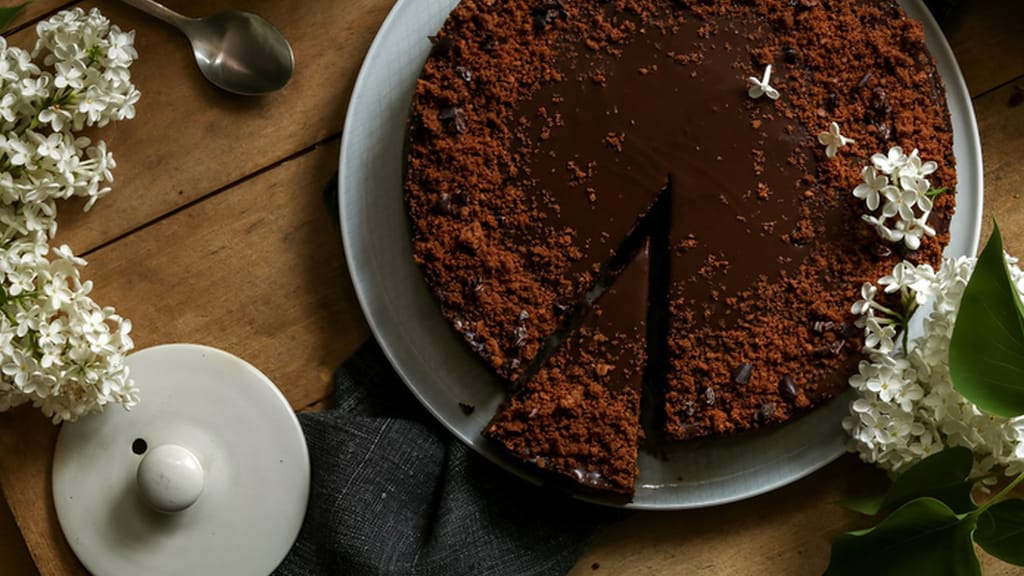
Simple chocolate cake
Easy chocolate cake with a cookie base and ricotta and mascarpone filling
The best birthday cake to build at home is a sponge in a 26 cm (10 in) pan, cut into two or three layers and spread with mascarpone filling; according to our recipes, a pan that size gives eight servings. For a party for adults we recommend the caramel cake, for kids a colorful cake, which we'll come to below.
The caramel cake combines a sponge made with 6 eggs and finely ground hazelnuts with a salted caramel cream. Caramelize the sugar in a stainless steel pot (nonstick coating isn't suited to such high heat), take it off the heat, stir in the butter and salt and add the hot cream a little at a time; the caramel bubbles up fiercely as you do. Whip the cooled caramel with softened butter for about 8 minutes into a pale foam and then whip in the mascarpone. Melted sugar is much hotter than boiling water, so don't touch or taste it, and watch the color, because it goes from amber to bitter in a moment.
How to plan a birthday cake so it isn't stressful:
The day before: bake the cake layers, let them cool completely, wrap them in plastic wrap and keep them in the fridge. Chilled, they cut more easily.
Morning of the party: cook the caramel or make the filling, assemble the cake and chill it.
Afternoon: finish decorating and keep it in the fridge until serving.
If you want a shaped cake, such as a soccer ball for a little soccer player, a car or a book, the guide cake shaped like a ball, car or book will help. You'll find decorating ideas for milestone birthdays in the articles birthday cake for a woman and cake for a man. And if you're celebrating the end of the year, take a look at the New Year's Eve cake with the number 2027, which will last until midnight.
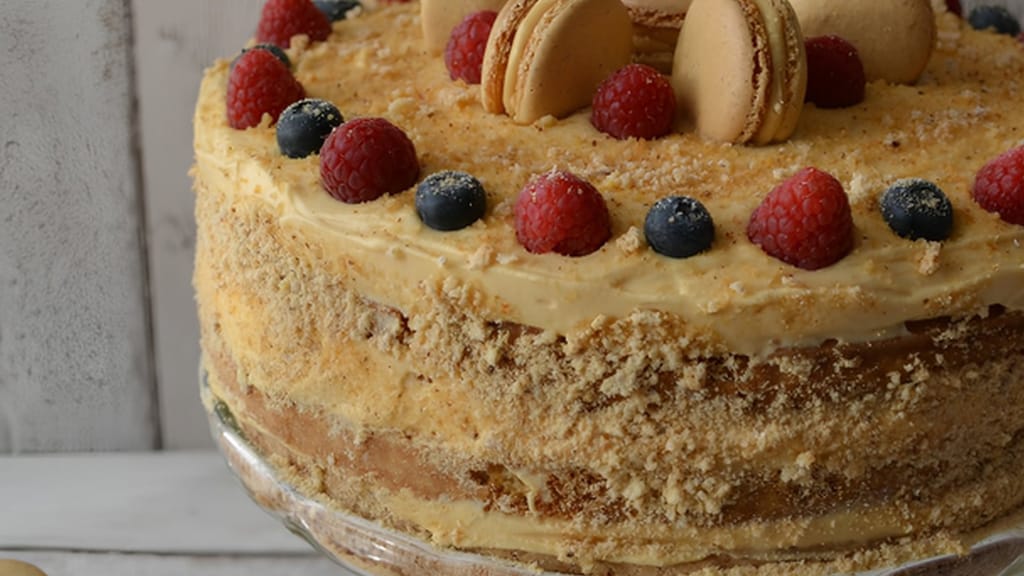
Caramel cake
Caramel cake made with hazelnut sponge and caramel and mascarpone cream
You can make a chocolate cake in three ways: a dense one from a single pan, a sponge with chocolate cream, or one with a cookie base and a filling baked in the pan. You already know the last one, the simplest, from the beginners' section; here are the other two.
The chocolate cake with apricot jam is mixed in one bowl. Melt dark chocolate with butter in the microwave in short bursts, mix the sugar with the eggs, add the chocolate, coffee and yogurt, and finally briefly stir in the flour with baking powder. Bake at 160 °C (320 °F) for about 40 minutes, until a skewer comes out without raw batter. Cut the cooled cake in half, spread it with apricot jam and pour over chocolate melted with cream.
The chocolate cake for lovers is a festive version on a sponge in a 26 cm (10 in) pan. The filling is made from chocolate melted in hot cream, which you let cool and whip in parts into mascarpone with cream. Spread each layer first with strawberry jam or chocolate spread, then with a tall layer of filling, and pour chocolate glaze over the finished cake, setting strawberries, blueberries and hazelnuts on it.
One thing applies to all of them: choose chocolate for a cake by taste, not by the packaging. Dark chocolate with a higher cocoa content gives the filling depth and balances the sweetness of mascarpone, while milk chocolate is milder and sweeter. You'll find more variations, including a cake with fruit and the Viennese classic, in the article chocolate cake: easy recipe, with mascarpone and Sacher.
A fruit cake with mascarpone comes in two forms: baked, where the filling bakes together with the cake layer and the fruit sits on top, and layered, where you place the fruit between layers of filling. Mascarpone suits fruit because it is rich and dense: it handles the juice of strawberries and the tartness of raspberries and won't curdle.
The summer cake with mascarpone and quark is the baked version, and you can make it in under an hour and a half. Whip the eggs with cane sugar into a thick foam and stir in softened butter and flour with baking powder; the batter comes out thick, and that's as it should be, because it carries the filling and fruit. Spread over the batter a filling of quark, egg yolk and sugar, into which you whip mascarpone by the spoonful, arrange strawberries, blueberries and raspberries on top and bake at 180 °C (350 °F) for about 45–50 minutes. It's done when the filling in the center only trembles slightly and a skewer at the edge comes out dry. To be safe, measure the center of the filling with a probe thermometer; because of the yolk it should reach at least 71 °C (160 °F).
What to do about fruit in winter, when you're looking for this cake for a January celebration:
Frozen berries release juice as they thaw. Don't put them in the filling between the layers, as it would turn watery; instead, cook them down with a little sugar into a sauce.
For decoration, choose fruit that holds its shape: mandarins, kiwi, pomegranate, grapes.
Place cut fruit on the cake only just before serving, or it will release juice into the filling.
Dry every fruit thoroughly after washing.
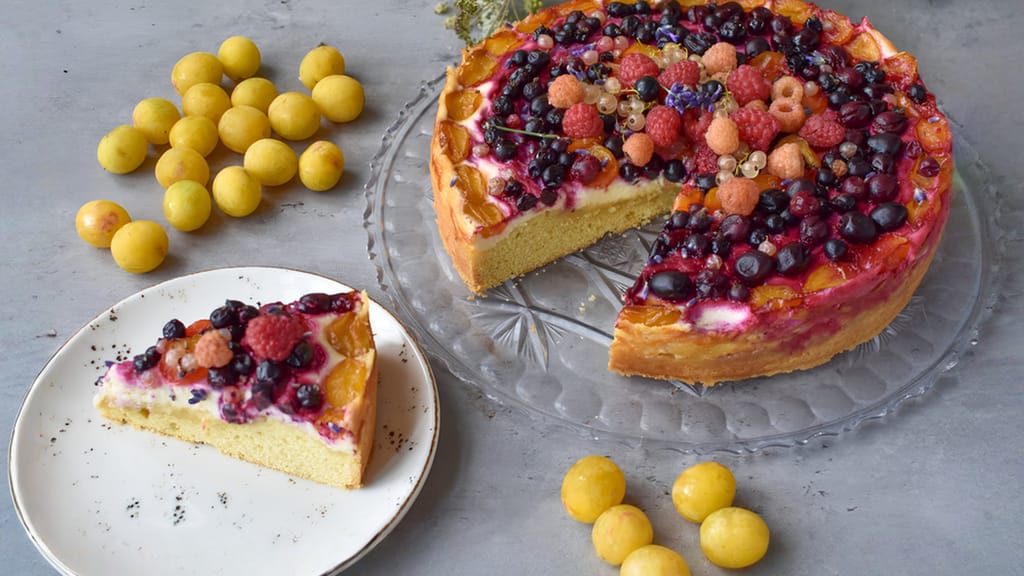
Summer cake with mascarpone, curd cheese and a mountain of fresh fruit
Summer cake with mascarpone and quark: a fruit cake that bakes together with its filling
A no-bake cake is assembled in a pan from ladyfingers, filling and fruit, and sets in the fridge overnight. It's the most reliable cake for beginners: nothing collapses, nothing burns, and all you need is time.
The no-bake fruit cake is the shortest recipe of all, just three steps. Whip flavored quark-style yogurt with sour cream and whipping cream into a smooth, slightly thickened filling; don't add sugar, because the sweet yogurt sweetens the filling by itself. In a pan with the sides lined with parchment paper, alternate ladyfingers, filling, strawberries with blueberries and more filling, and leave it all in the fridge overnight.
The no-bake strawberry ladyfinger cake rests on a filling of sour cream and whipping cream, sweetened with agave syrup and flavored with vanilla, which you whip for about 3 minutes until it thickens. Line the bottom of the pan with ladyfingers rounded side up and layer a third of the filling with sliced strawberries and another layer of ladyfingers. The cake needs at least 8 hours, ideally overnight, so the ladyfingers absorb moisture from the filling and the cake can be sliced cleanly.
The no-bake fruit cake with mascarpone and ladyfingers is firmer and creamier. Whip chilled cream with powdered sugar to stiff peaks and, at the lowest speed, whip in sour cream with mascarpone, just until combined. Layer ladyfingers, filling, raspberries and strawberries, cover the cake and leave it in the fridge, ideally for a full 24 hours. Finally, pour over a raspberry sauce made from cooked-down raspberries pressed through a sieve.
The most common problem with no-bake cakes is a hard ladyfinger base. What helps is more filling on the bottom layer and longer chilling, not soaking the ladyfingers in milk, after which the cake slides apart. You'll find more no-bake ideas, including ones in glasses, in the article no-bake desserts from cookies, ladyfingers and mascarpone.
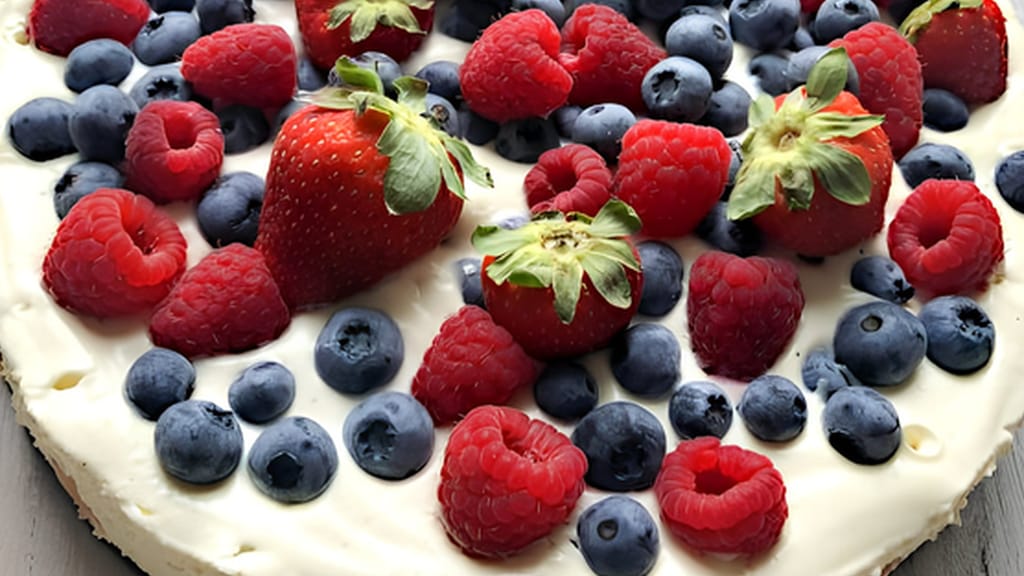
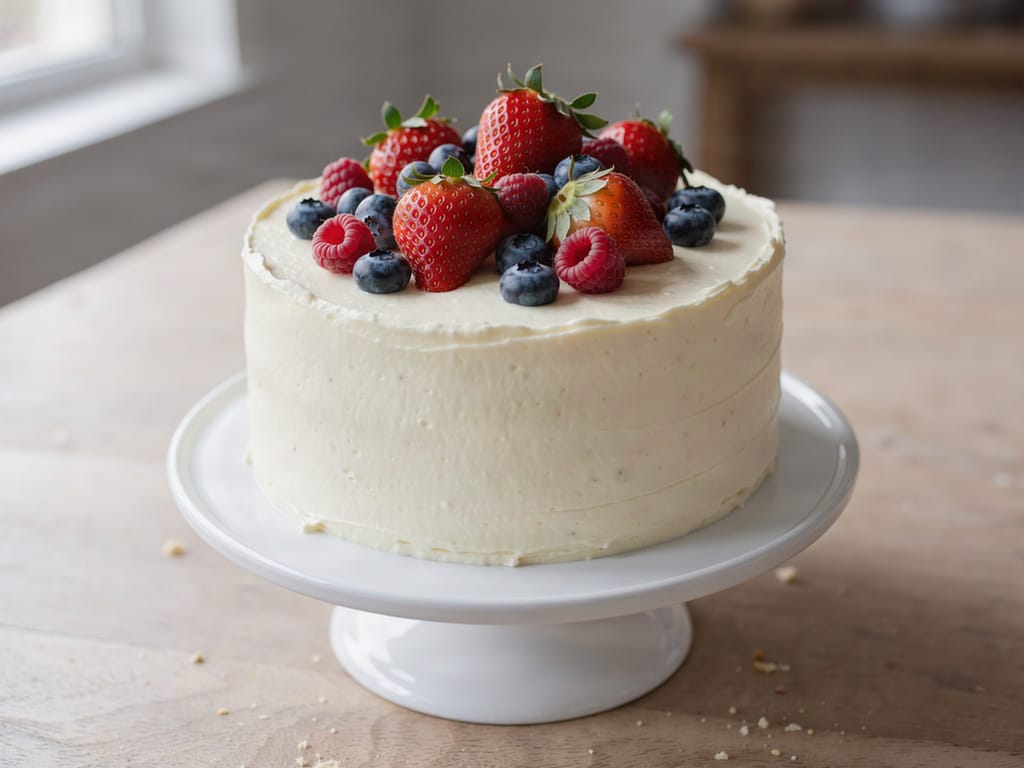
No-bake fruit cake
No-bake fruit ladyfinger cake with quark-style yogurt filling, strawberries and blueberries
A kids' cake should above all be colorful, soft and alcohol-free, so don't soak the cake layers in rum syrup, and keep the filling mild and light. Kids like best what they see when the cake is cut: colorful layers, fruit, sprinkles.
The rainbow kids' cake is exactly that. Separate the eggs, whip the yolks with sugar into a thick foam and the whites with a pinch of salt to stiff peaks; combine them with sifted flour mixed with baking powder and the oil. Divide the batter among six bowls and color each with a different gel food coloring, a little at a time on the tip of a skewer, because gel colors are very strong. Bake each layer separately for about 7 minutes at 180 °C (350 °F), spread the cooled layers with mascarpone, sour cream and powdered sugar filling, and let the cake rest in the fridge.
Tips for a kids' party:
For a little girl, or for a softer look, choose pastel shades: just use less coloring.
Keep the filling plain white, so the colorful layers stand out most beside it.
Put fruit or sugar sprinkles on top only just before serving, or the sprinkles will bleed color into the filling.
A smaller cake with more tiers looks more festive than a large, low one and is easier to cut into kids' portions.
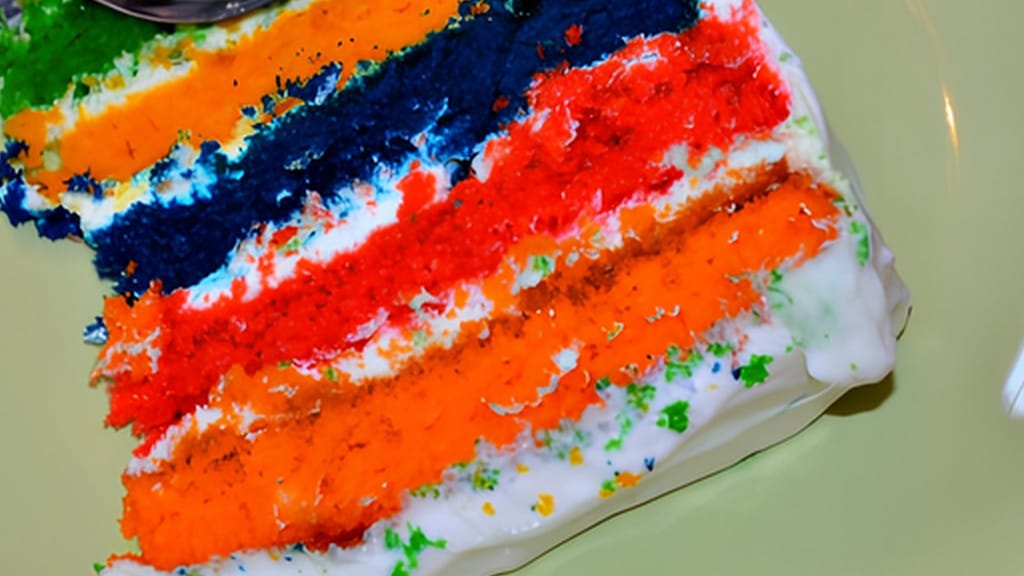
Colorful rainbow kids' cake
Rainbow kids' cake with six colored layers and white mascarpone filling
Classic cakes that have been baked for decades are demanding mainly in time and precision, not in ingredients. The reward is a cake that holds up on a festive table and tastes even better the next day.
Sachertorte is a dense chocolate cake layer with apricot glaze and a glossy chocolate icing. Melt the chocolate with butter, stir in yolks whipped with sugar and then alternately fold in stiff egg whites and flour. Bake in a 26 cm (10 in) pan at 200 °C (400 °F) for the first 10 minutes with the oven door propped open by a wooden spoon, then close the door, after another twenty minutes reduce to 180 °C (350 °F) and bake for 15–30 minutes more; the gap lets some of the heat out and the cake won't dome in the middle. The next day, cut it in half, spread with the jam and rum glaze and pour over an icing of sugar syrup cooked to 110 °C (230 °F; use a candy thermometer) and chocolate.
The Swedish almond cake has no flour in the cake layer: it's whipped egg whites with powdered sugar and ground almonds, baked in a 21 cm (8 in) pan at 170 °C (340 °F) for about 25–30 minutes. The filling is a textbook cooked base: you cook yolks into hot cream with sugar, stirring constantly, until the cream reaches at least 71 °C (160 °F; measure with a probe thermometer), then whip the cooled cream in parts into fluffy butter. Cut the cake layer into two, spread with the filling and almond praline in caramel, and chill the cake in the fridge.
Carrot cake rests on a moist cake layer of grated carrot that needs no syrup, and on a fresh cream cheese frosting. We're still preparing the recipe. How to make a frosting that holds on the cake layer you can already find in the article cream cheese frosting for carrot cake.
A cake with mascarpone, whipped cream or quark filling belongs in the fridge, and we recommend eating it within 2–3 days. Outside the fridge, at room temperature, it should stand for 2 hours at most: the US food safety agency FSIS advises refrigerating perishable food within 2 hours, and within 1 hour in heat above 32 °C (90 °F). According to FSIS, the fridge should be at 4 °C (40 °F) or below.
What that means in practice at a party:
Take the cake out of the fridge only for slicing, not an hour before the guests arrive.
Slice it, serve it and put the rest straight back in the fridge; don't leave it on the table until the end of the evening.
Transport it in a cooler bag or a cool car, by the shortest route.
At a New Year's Eve buffet, don't leave the cake out all night; serve it in portions.
Did you have cake left over after the holidays, or do you want to bake the cake layers ahead? What can be frozen and how to thaw a cake so the filling doesn't curdle is described in the guide how to freeze a cake.

One Way
Piping Bags 30x17 cm, 100 Pack
JEM
JEM Piping Tip Open Star #18Yes, a cake with cream filling is often better on the second day, because the layers absorb moisture and the filling settles. Bake the layers fully and let them cool, wrap them in plastic wrap and refrigerate. Keep the assembled cake with mascarpone or whipped cream filling in the fridge and eat it within 2–3 days. No-bake ladyfinger cakes even need a night in the fridge, so always make them a day ahead.
You can replace mascarpone in a filling with a mix of sour cream and whipped cream, or with quark (tvaroh, a Czech fresh curd cheese) or quark-style yogurt. That filling is lighter and tangier but less firm, so it suits mainly no-bake ladyfinger cakes that set in the fridge overnight. Under heavier fruit or on the sides of a layer cake, mascarpone is more stable.
Mascarpone cream most often curdles from overwhipping. Whip mascarpone only briefly, just until combined with the other ingredients, and when adding it to whipped cream, switch to the lowest speed. Warm chocolate or a cooked base can also make it curdle, so let both cool first.
A tall sponge made with 6–8 eggs most often collapses when you open the oven during the first half hour of baking and cooler air gets in. Other causes are an egg yolk foam that wasn't whipped enough, egg whites that don't hold a peak, and mixing in the flour for too long, which knocks out the air. For a sponge in a 26–30 cm (10–12 in) pan, test with a skewer only after 30 minutes, unless the recipe says otherwise; thin layers follow the time in the recipe.
For a cake in a 26 cm (10 in) pan, our recipes count on eight servings. A taller layer cake can be cut into thinner slices and will go further, and children's portions can be about half the size. For a big party, it's easier to bake two cakes than one in a giant pan, which is harder to bake through.
One recipe worth heating the oven for, one tip, and one deal from the shop. Nothing else.