Blueberry pudding
Cornstarch vs. Potato Starch: The Difference, How Much to Use in Pudding, Cream and Sauce, and What to Substitute
Cornstarch and potato starch both thicken liquids, but each does it differently. Potato starch thickens sooner and turns clear and glossy, but it thins out again with longer cooking and whisking. Cornstarch needs to boil briefly, looks matte, and sets as it cools into a firm cream you can slice. So reach for potato starch in sauces and cornstarch in pudding and cake filling. Below you'll find grams per 500 ml, how to avoid lumps, why pudding turns runny, and what to use when you run out of starch.
Cornstarch is more reliable for creams and puddings that need to hold their shape once cooled, while potato starch is quicker and better for sauces, pan juices and fruit glazes. Both are almost pure starch with no protein or fat, so they thicken about twice as strongly as all-purpose (plain) flour and add no flavor of their own. The difference lies in the size and structure of the starch granules, and you'll see it right away in the pot:
Thickening temperature: potato granules swell sooner, so a sauce thickens even before it boils. Cornstarch reaches full thickness only once the mixture briefly boils. Exact figures vary among food sources; in the kitchen it's enough to know that cornstarch needs bubbles and potato starch doesn't.
Appearance: potato starch gives a clear, glossy thickening, cornstarch a milky, cloudier and more matte one. In milk pudding you won't notice, but in strawberry sauce or a glossy stir-fry sauce you will.
Longer cooking and whisking: swollen potato granules are huge and fragile. If you keep cooking the sauce or whisk it, they burst, and the sauce thins out and turns stringy. Cornstarch needs a minute or two of boiling and handles it without trouble.
Cooling: cornstarch sets into a firm gel as it cools, one that holds a clean cut. Potato starch stays softer and stretchier and sets less.
Freezing: neither plain starch handles repeated freezing well. After thawing, the gel breaks down and weeps water, the cream turns grainy and liquid pools at the bottom of the bowl.
Reheating: a cornstarch sauce or cream reheats slowly with stirring without trouble. Heat a potato starch sauce only until hot and don't boil it long again; if it thins, thicken it again with a teaspoon of starch mixed in cold water.
In one sentence: use potato starch for sauces, pan juices and fruit glazes, and cornstarch for pudding, cake cream and fillings. You can almost always swap them, but use about one fifth less potato starch than cornstarch and expect the differences described above.
One recipe and one tip every Thursday until the end of the year. Unsubscribe in one click.
For the holidays: the morning of December 24, carp roasting times by size and December 31, New Year’s Eve canapés.
For 500 ml of liquid, count on roughly 15–20 g of starch for a pourable sauce, 35–40 g for pudding in bowls and 50–60 g for a cream you can slice. Always use about one fifth less potato starch than cornstarch. Specifically:
Pourable sauce (coats meat, runs off a spoon): cornstarch 15–20 g, potato starch 12–15 g.
Pudding (holds on a spoon, just wobbles in the bowl): cornstarch 40 g, potato starch 30–35 g.
Sliceable cream (filling for cakes, slices and větrníky, holds a clean cut): cornstarch 50–60 g. Potato starch doesn't really belong here, since the cream turns stringy and is harder to slice; if you have nothing else, use 45 g and firm the cream up with gelatin.
Measure starch by weight. A level tablespoon of cornstarch weighs roughly 8–10 g and a teaspoon about 3 g, and a spoon is never scooped the same way twice.
These numbers apply to milk or stock. Acidic liquids such as fruit juice or wine thicken less, so add about one fifth more starch and stir in the lemon juice only after cooking. A lot of sugar slows thickening, so cook a little longer. Egg yolks thicken too, so a cream with three to four yolks can take a few grams less starch.
Always mix starch into cold liquid first, and only then pour this slurry into the hot liquid. Dry starch sprinkled straight into a hot sauce seals on the surface at once, leaving dry lumps with floury centers inside that no spoon will break up.
For every tablespoon of starch, use 3–5 tablespoons of cold water or milk and stir until the slurry is smooth and as thick as pouring cream.
Stir it again right before pouring it in. Within a minute the starch settles on the bottom as a hard layer, and you'd mostly be pouring water into the pot.
Bring the hot liquid down to a gentle simmer and pour in the slurry in a thin stream, whisking the whole time.
Let cornstarch bubble for a minute or two while stirring, and potato starch only until it thickens. Undercooked starch tastes cloudy and slightly floury.
Judge the thickness only a moment after taking it off the heat, since starch keeps thickening as it cools.
For pudding and cream with egg yolks, the method is similar, only the order changes. Whisk the starch with the yolks and sugar, pour hot milk into them while stirring constantly so the yolks warm gradually and don't curdle, and return the mixture to the pot. The whole process step by step, including a chocolate version, is covered in the article homemade pudding from starch, no packet.
If lumps do form, more stirring won't save it. A fine sieve or a short pass with an immersion blender will.
Pudding most often thins for three reasons: the enzyme in the yolks didn't get enough heat, the pudding was cooked too long or too vigorously, or it was stirred once it had begun to set. Less often, the cause is acid cooked together with the starch, or too little starch and an undercooked pudding.
The amylase enzyme in egg yolks: yolks contain an enzyme that breaks down starch. If you only warm a yolk cream and don't let it boil, the enzyme survives and breaks down the starch overnight in the fridge. In the morning you have sweet soup in the bowl. Kitchen chemistry handbooks therefore recommend letting a cream with yolks and starch bubble for a minute or two while stirring constantly. The starch also protects the yolks, so they don't curdle the way they would in a cream without starch.
Overcooking and vigorous whisking: after a while the swollen granules begin to tear and the gel loosens. With potato starch this happens much sooner than with cornstarch.
Stirring after it sets: don't stir pudding that has already started to set in the bowl. You break the gel that has formed, and the pudding stays thinner. Pour it into bowls right after taking it off the heat.
Other, less common causes:
Acid and raw fruit: lemon juice or sour fruit cooked together with starch weakens its strength. Add them only at the end.
Too little starch or an undercooked pudding: if the pudding never properly came to a boil, the starch had no chance to swell fully.
How to rescue a thin pudding: return it to the pot, add a teaspoon of cornstarch mixed in two tablespoons of cold milk for every 250 ml, and boil briefly while stirring.
Cornstarch is the basis of homemade puddings and pastry creams, because it holds its shape once cooled and tolerates a minute of boiling. Three recipes show three different thicknesses: the fraisier cake cream is the firmest, for slicing; the blueberry pudding has the thickness of classic pudding in bowls; and the vanilla cream for buchtičky stays thin for pouring.
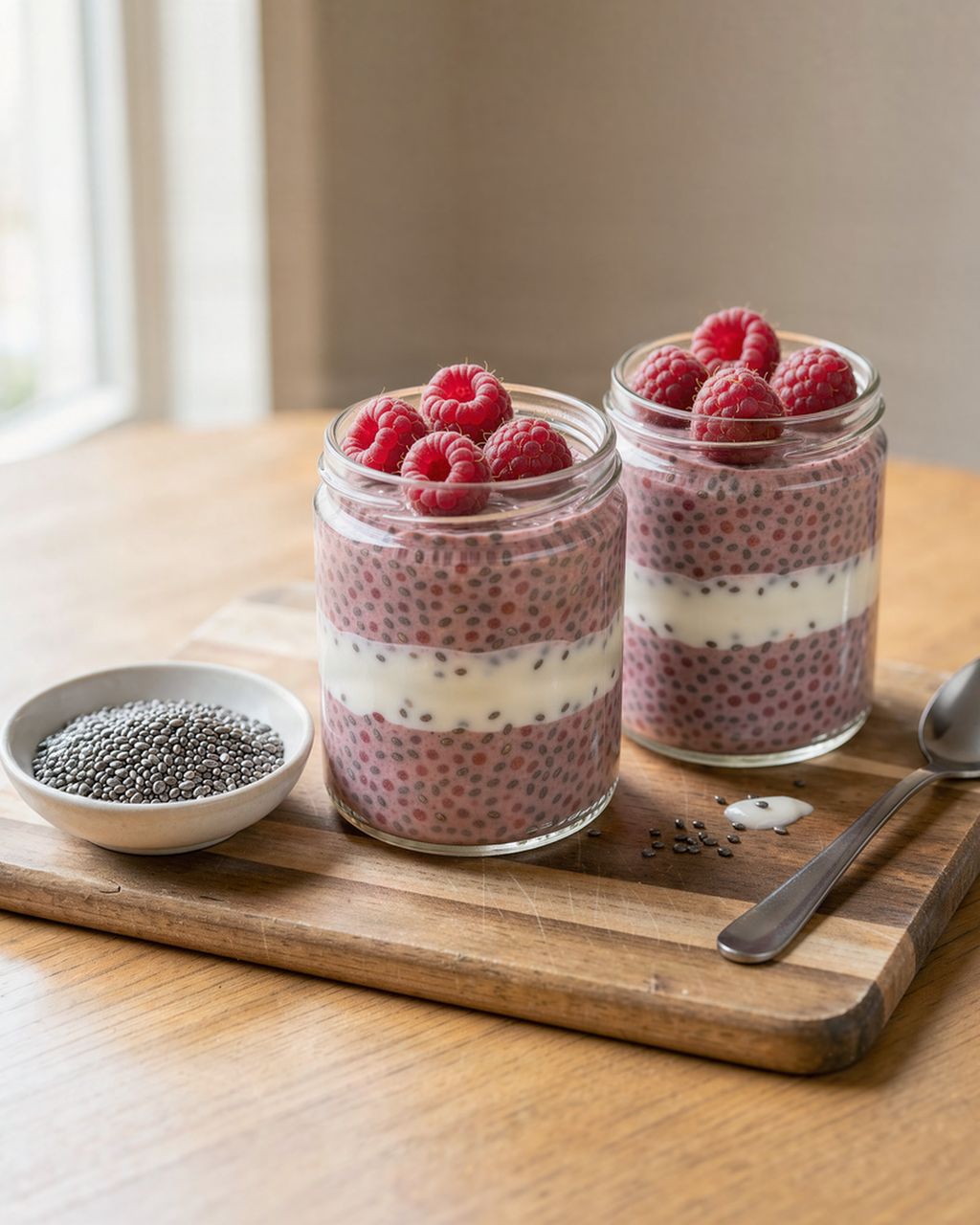
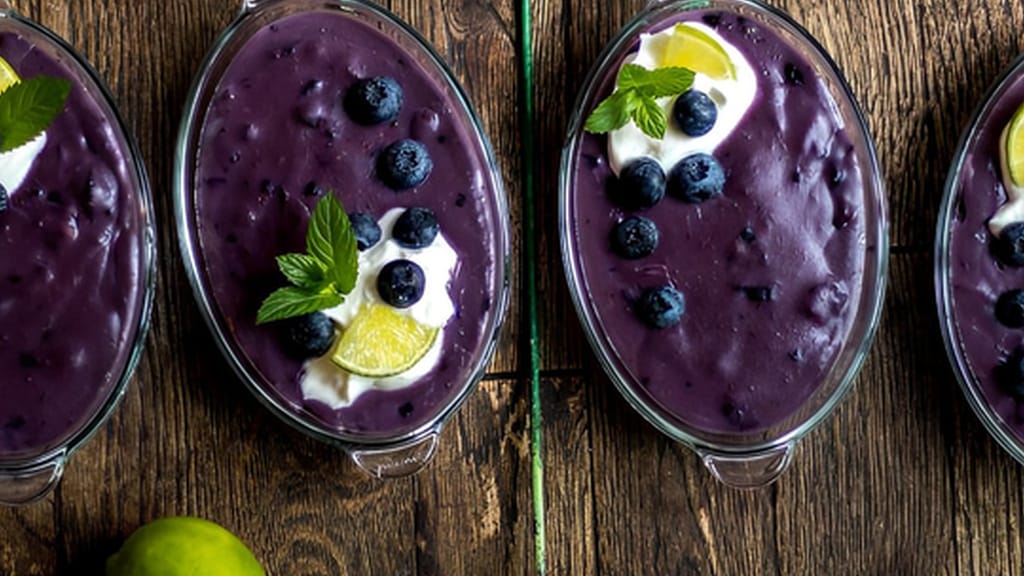
The blueberry pudding has the thickness of classic pudding: 200 ml of milk takes 50 g of cornstarch and five egg yolks, but a large part of the liquid comes from half a liter of blended blueberries. That makes roughly 700 ml of acidic liquid, so per 500 ml it works out to about 35 g of starch, exactly the pudding thickness in the table above. The starch is mixed with the yolks and blueberries while still cold and only then goes into the hot milk; over low heat, stirring constantly, it thickens in about two minutes.
Blueberry pudding
Blueberry pudding made with cornstarch, egg yolks and blended blueberries
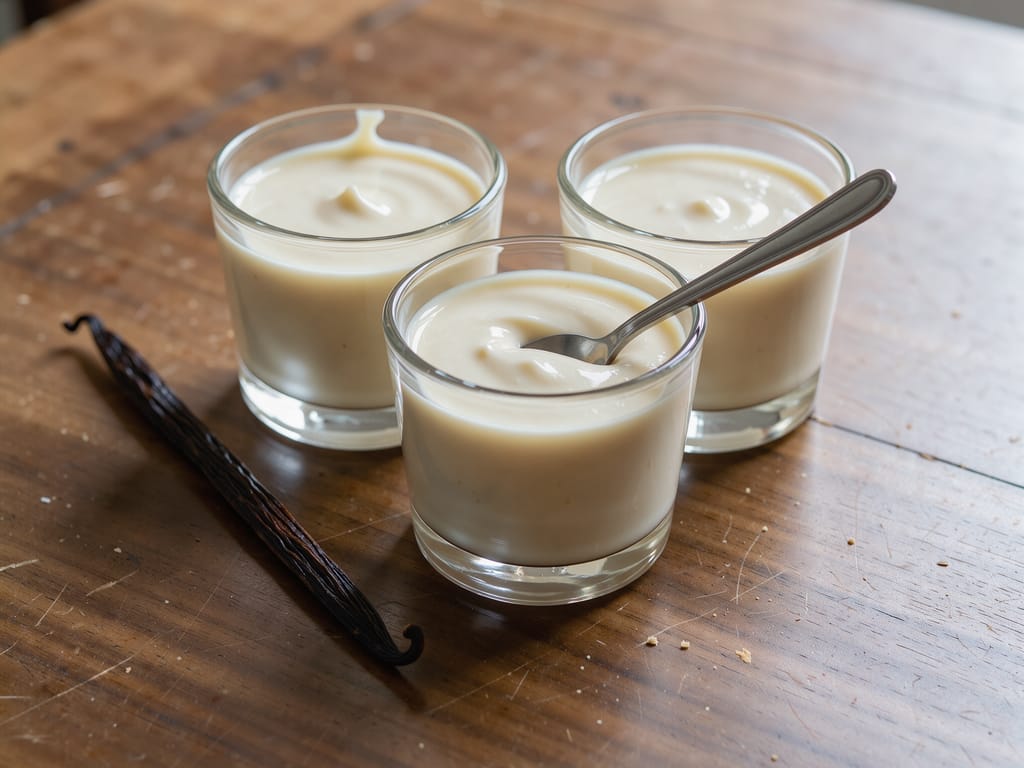
The buchtičky (Czech sweet yeast dumplings) with delicate vanilla cream have a thin cream, for pouring: it needs only 20 g of cornstarch. The recipe uses a liter of milk for the dough and cream together; if roughly 750 ml goes into the cream, that works out to about 13 g of starch per 500 ml, even below the pourable sauce thickness in the table, and the six egg yolks do the rest of the work. The milk is cooked with the starch and vanilla, and the yolks are whisked in only over a water bath, where the cream must not boil or it will curdle; check it with an instant-read thermometer until it reaches at least 71°C (160°F). Because the yolks don't get boiled, serve the cream hot right away over the buchtičky. Leftovers kept overnight in the fridge would thin out because of the amylase in the yolks.
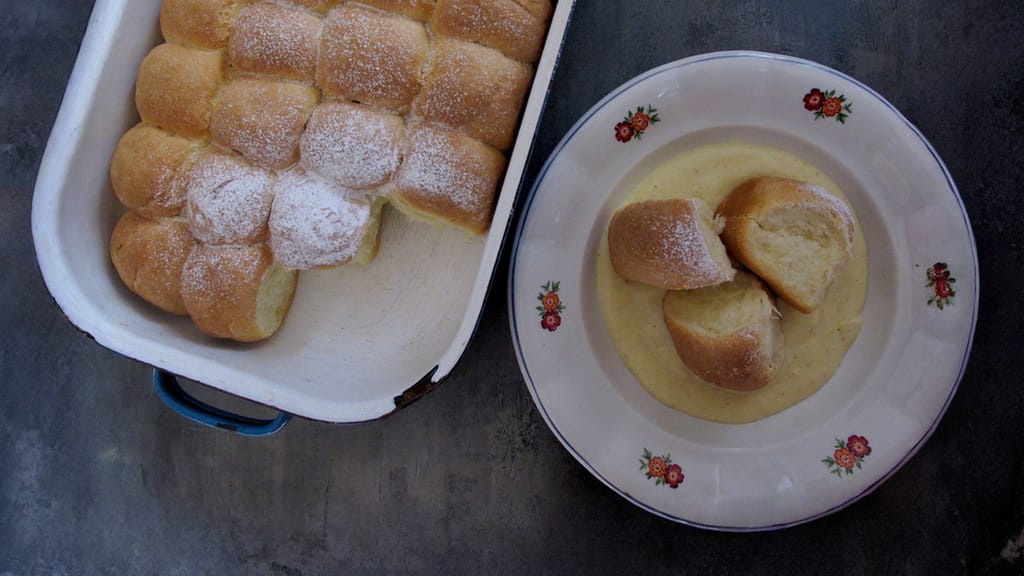
Sweet buns with silky vanilla custard
Buchtičky with thin vanilla cream thickened with cornstarch
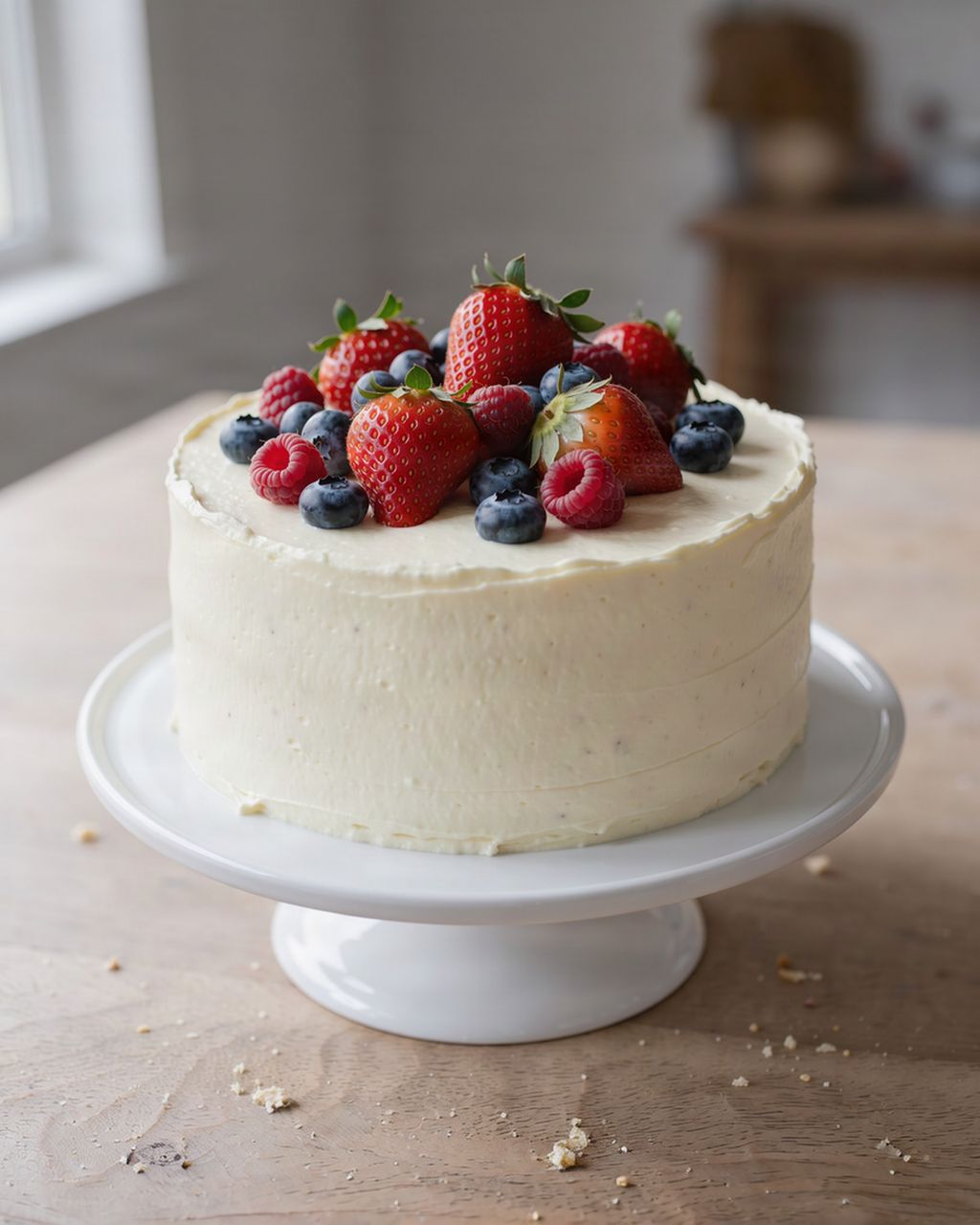
The strawberry fraisier cake needs a cream that holds up a ring of halved strawberries: 30 g of cornstarch for 300 ml of milk and three egg yolks. For 500 ml of milk that works out to 50 g of starch, exactly the thickness of a sliceable cream. The cream cools under plastic wrap pressed directly onto the surface, and in the end gelatin and whipped cream give it its final firmness.
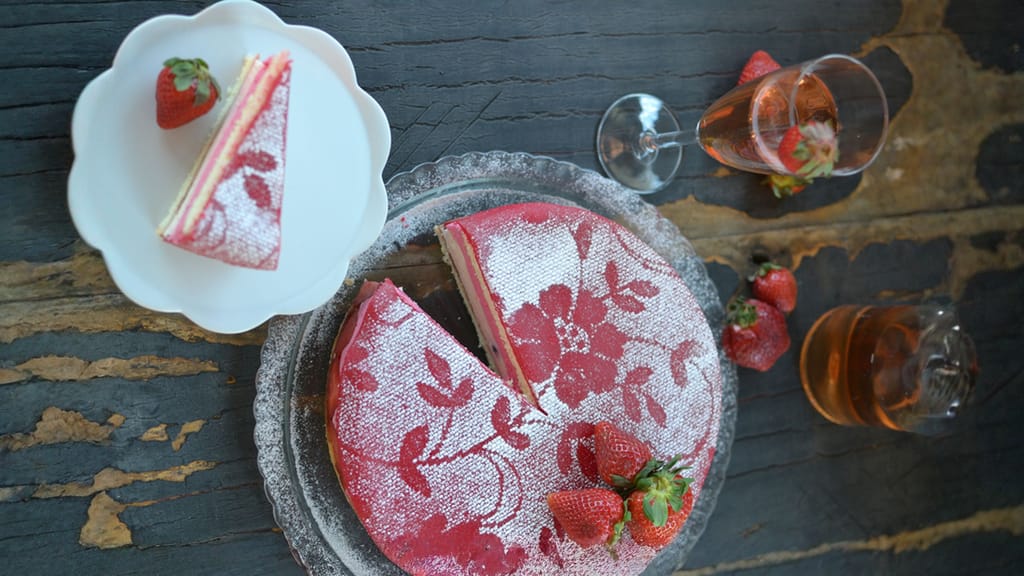
Strawberry fraisier cake
Strawberry fraisier cake with vanilla cream thickened with cornstarch
Potato starch is the fastest route to a smooth, glossy sauce: it thickens in a few minutes and doesn't cloud the sauce. Add it at the end of cooking, when the sauce won't be cooked much longer.
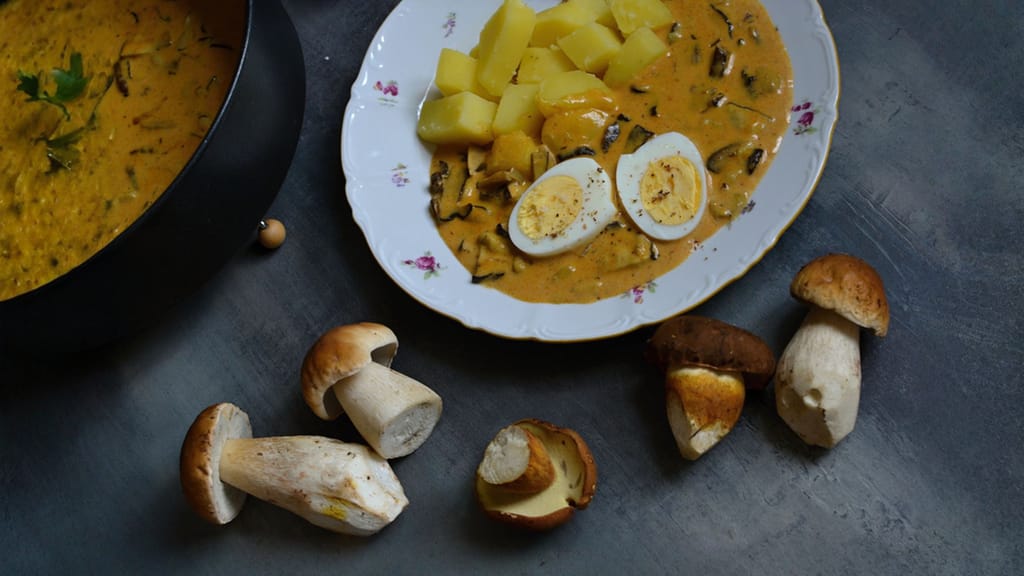
In mushroom sauce with cream, 15 g of potato starch thickens a mixture of two kinds of cream and mushroom liquid. Mix the starch in cold water, about a tablespoon per 50 ml, pour it into the finished sauce while stirring constantly, and heat only until it thickens. Further cooking would thin the sauce again.
Potato starch added an hour before serving and left to bubble the whole time will thin the sauce again. For soups that keep cooking for a long while, cornstarch, a roux or well-cooked potatoes are therefore better. Other ways to get a sauce to the right thickness are covered in the article how to thicken a sauce without flour.
In goulash, starch is only a last resort. Goulash is thickened mainly by onions, browned golden in lard and cooked down during the long stewing. If it's thinner than you want at the end, stir in a tablespoon of potato starch mixed in cold water and cook only until it thickens. If you're cooking it in large quantity ahead of time, divide it into shallow containers, refrigerate within 2 hours and reheat it once before serving until it's piping hot throughout (74°C / 165°F), as recommended by the US food safety service FSIS. You'll find onions, bread and other tricks in the article what to thicken goulash with.
In wok dishes you can replace cornstarch with potato starch (about one fifth less in a sauce, the same amount in a coating), with rice flour for a thin, delicate coating, or with all-purpose flour, which gives a sturdier coating that doesn't crisp as much. Starch has two jobs here: it coats the meat so it stays juicy and the coating crisps, and at the end it thickens the sauce to a shine. Potato starch gives a slightly lighter, crispier coating and a clearer sauce.
The Asian chicken in spicy batter with hot sauce uses 30 g of cornstarch as the first, dry layer of the coating, which the egg and seasoned flour then cling to. The starch dries the surface of the meat, so the coating doesn't slip off and crisps up when fried. The meat is done when an instant-read thermometer in the thickest piece shows 74°C (165°F).
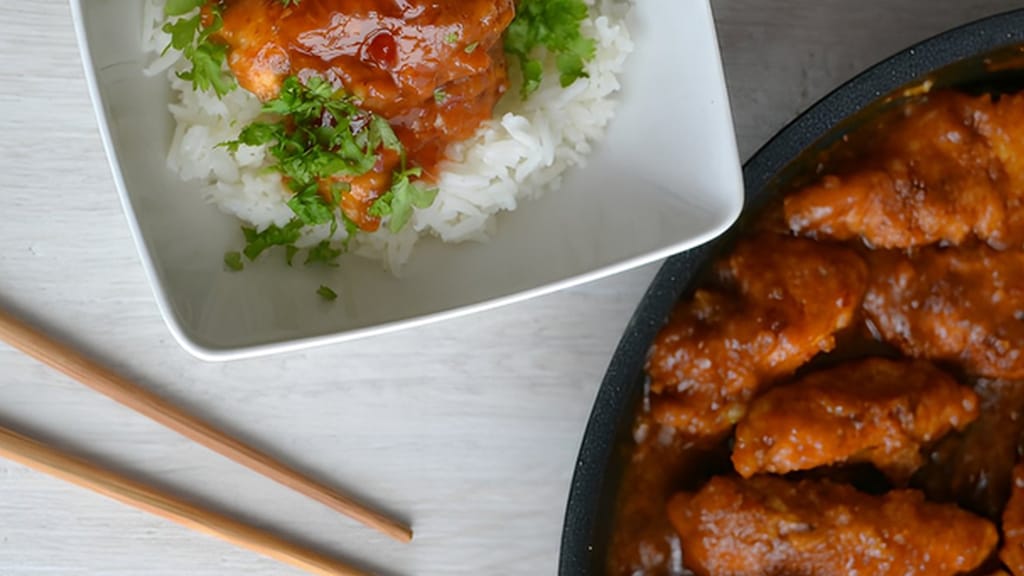
Asian-style chicken in spicy batter with hot sauce
Asian chicken in a coating of cornstarch, egg and seasoned flour
For a marinade for 500 g of sliced meat, roughly 1–2 tablespoons of cornstarch (10–15 g) is enough; for a sauce with 250 ml of liquid, about a tablespoon (8–10 g) mixed in cold water, which matches the pourable sauce in the table above. In the marinade, starch forms a thin layer on the meat that keeps the juices inside during fierce frying; in the sauce, pour it in at the end and let it boil briefly while stirring until the sauce starts to shine. How to marinate the meat, how much starch to put in the sauce and how to season it are covered in the article homemade Chinese-style cooking: how to marinate meat and thicken the sauce with starch.
Starch dilutes the gluten in dough: replace about 10–25% of the flour with starch and bundt cake, sponge cake and linecké (Czech Linzer-style jam cookies) come out more tender, finer and less rubbery. Gluten makes dough elastic, which you want in bread but not in cookies that should crumble on the tongue.
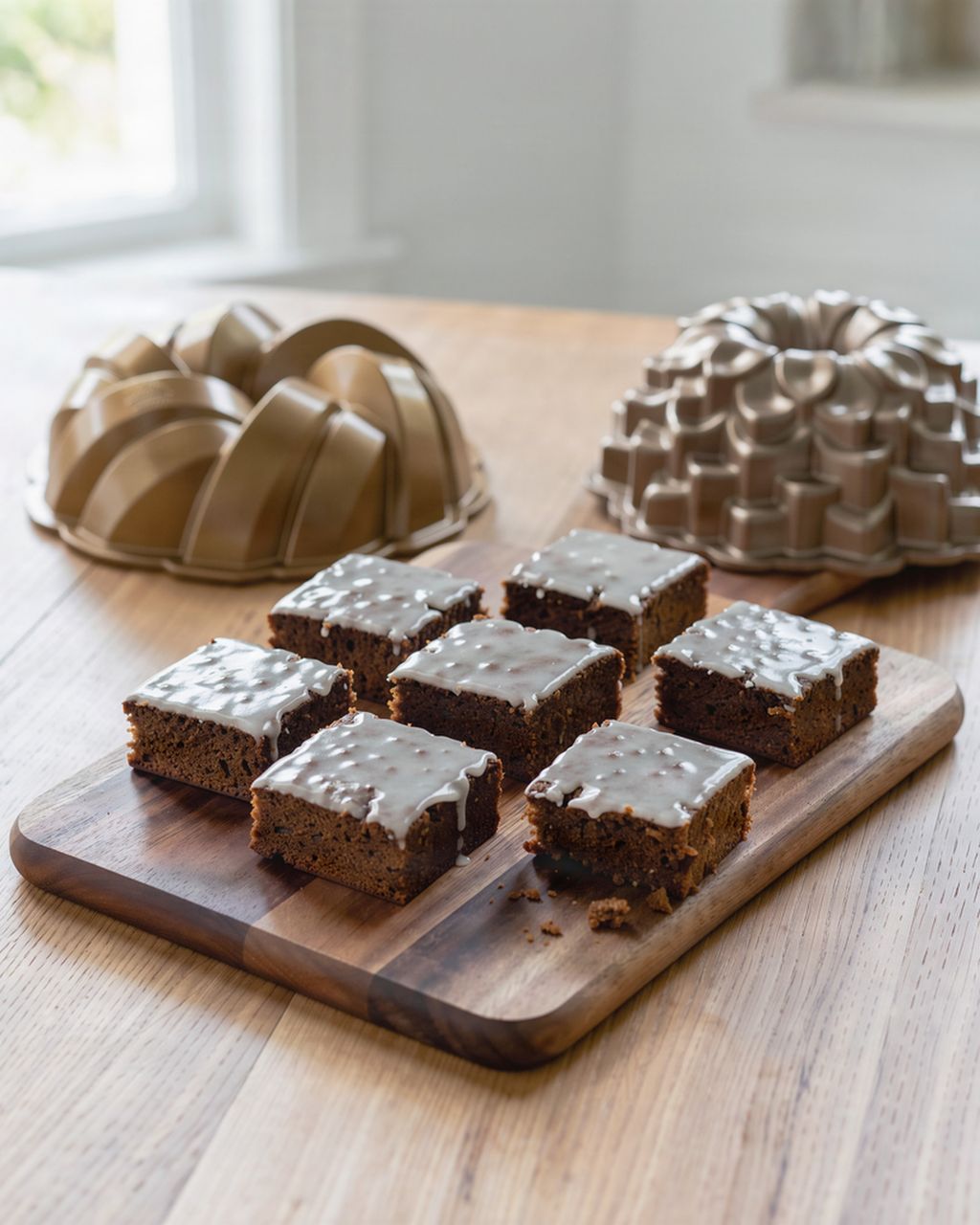
Creamed bundt cake (bábovka): with some starch it has a finer, lighter crumb. A quarter of the flour is commonly replaced. Sift the starch together with the flour and baking powder so it's evenly distributed, and mix it into the creamed base only until combined; the baking stays the same.
Sponge cake: starch gives it a lighter, finer texture, because there's less gluten to stretch while mixing. Sift the flour and starch over the whisked eggs and sugar and fold it in with a spatula using bottom-to-top strokes so the foam doesn't collapse.
Linecké: a smaller share is enough here. In the linecké with salted caramel, 270 g of all-purpose flour goes with 30 g of potato starch, about a tenth. Sift the starch with the flour so it's dispersed before you rub in the cold butter; the dough then comes out tender and crumbles on the tongue.
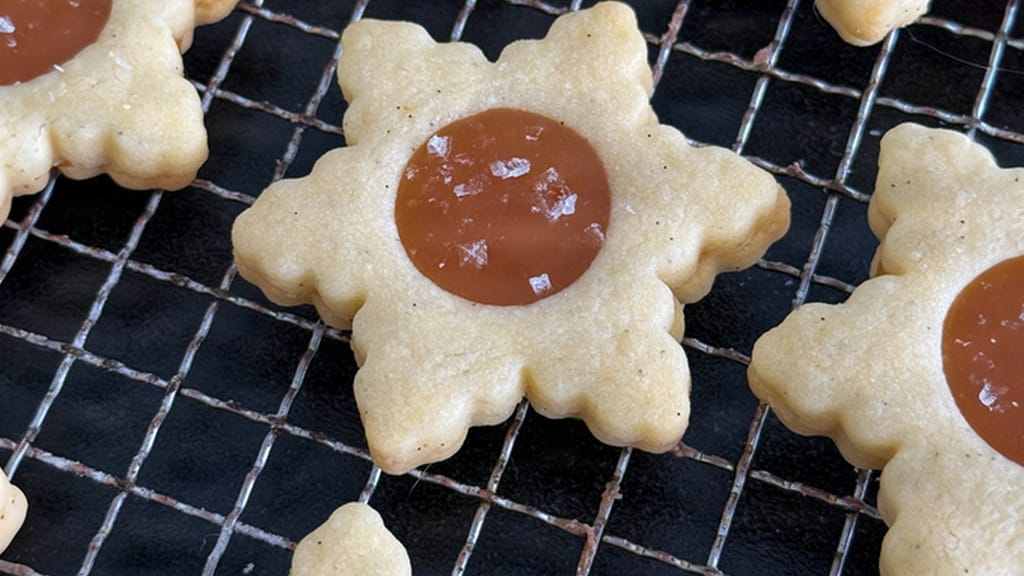
Linzer cookies with salted caramel and flaky sea salt
Linecké with salted caramel: tender dough with potato starch
Cornstarch in a quark filling (quark is tvaroh, a Czech fresh curd cheese) absorbs the water from the quark, so the filling doesn't run during baking and slices cleanly once cooled; for 500 g of quark, a tablespoon (8–10 g) is enough. That's exactly how it works in the grated quark pie. The starch in the filling finishes setting as it cools, so slice the pie only when it's completely cool.
If you want to leave out the flour entirely, that's a different discipline, because starch alone can't hold a dough together. Ratios of flours and starches for gluten-free Christmas baking are covered in the article what to replace flour with in gluten-free Christmas cookies.
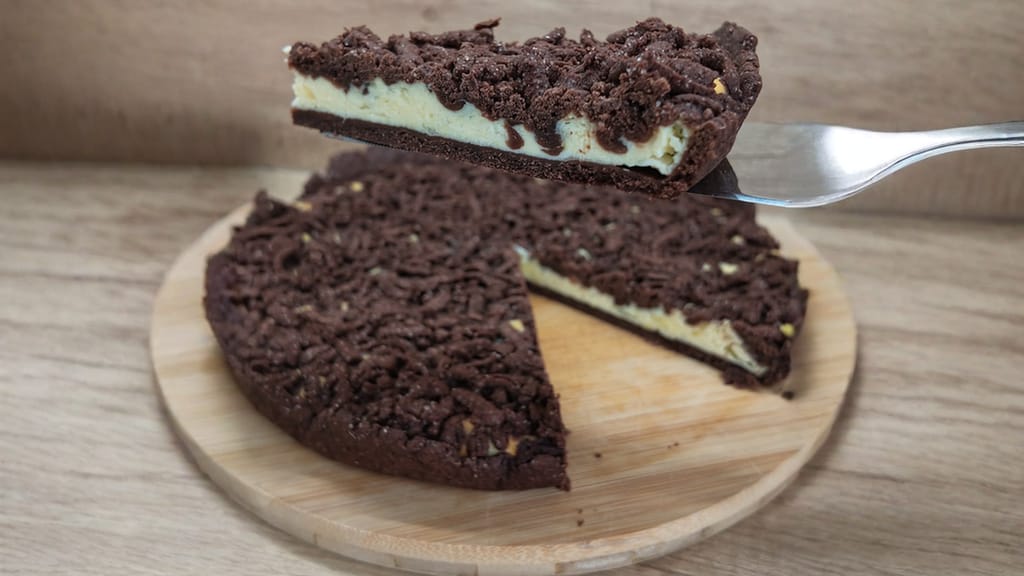
Grated cheesecake cake
Grated quark pie with a filling firmed up with cornstarch
Cornstarch and potato starch can stand in for each other, just use about one fifth less potato starch than cornstarch. You can also reach for rice or wheat starch (roughly the same amount as cornstarch), all-purpose flour (double), a roux, egg yolks or gelatin; each substitute, though, changes the flavor, appearance or the way the mixture sets. More kitchen swaps are in the collection ingredient substitutes.
Rice starch has very fine granules, so it thickens to a creamy, velvety consistency with no graininess and a neutral flavor. Use the same amount as cornstarch; the gel will just be a little softer. Starch from glutinous rice also releases less water after thawing than the others, so it suits sauces you want to freeze.
Wheat starch thickens much like cornstarch, but it is cloudy and the gel is softer, so for a sliceable cream add a little more and cook it a moment longer. It's made from wheat, so for food for someone who can't have gluten, use only packages explicitly labeled gluten-free.
All-purpose flour contains protein as well as starch, so you need roughly double, which is 30–40 g per 500 ml of sauce. Mix it in cold liquid just like starch and cook the sauce for at least 10 minutes, or it will taste floury. The sauce stays matte and creamy. Flour isn't suited to pudding, which would be sticky and heavy.
A roux is flour browned in fat, so it thickens without lumps and adds a nutty flavor. In Czech sauces it's the traditional route, and starch tends to complement it rather than replace it. In the dill sauce with cream, the roux is only briefly heated to keep it pale, and the stock is added to it cold, in batches; that way the flour disperses without lumps, and the sauce then simmers slowly so it doesn't taste floury.
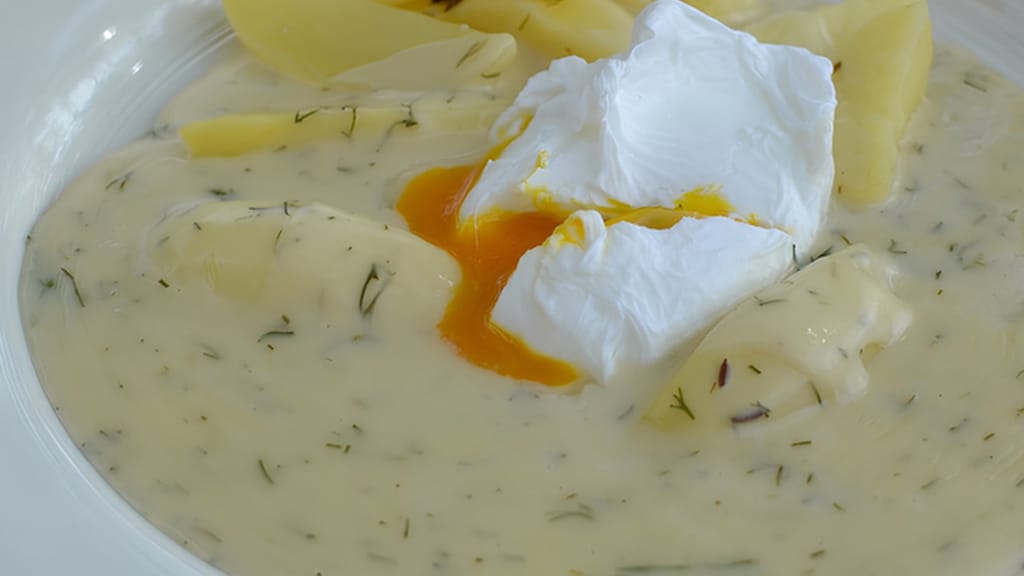
Dill sauce with cream
Dill sauce with cream thickened with a pale roux
Egg yolks thicken a cream even without starch, as in vanilla crème anglaise: roughly 4–6 yolks per 500 ml of milk or whipping cream. Heat the cream while stirring constantly until it coats the spoon, and don't let it boil, or the yolks will curdle into lumps; use an instant-read thermometer to keep it between 71°C and 85°C (160–185°F). The result is silky and rich, but liquid, and it can't be sliced.
Gelatin sets only when cold, so it won't thicken a warm sauce. It suits cases where the cream should set in the fridge: roughly 6–8 g of powdered gelatin per 500 ml gives a softly set cream, and the exact amount depends on the gelatin's strength. Let it bloom in cold water, dissolve it in a warm portion of the cream and stir it into the rest. Gelatin is animal-based; anyone who avoids it can use agar, which sets more firmly and more brittly.
Put cooked pudding or cream in the fridge no later than 2 hours after cooking. The US food safety service FSIS recommends not leaving perishable foods at room temperature for more than 2 hours, and a cream made from milk and egg yolks is one of them.
Cooling quickly: pour the cream into shallow bowls or a wide container, not one tall pot. Press plastic wrap directly onto the surface so no skin forms.
Freezer: starch puddings and creams release water after thawing and turn grainy, so it's better not to freeze them. Freeze a sauce unthickened and thicken it fresh after reheating.
Reheating: heat a sauce thickened with starch slowly while stirring until it's hot throughout. Reheat leftovers to at least 74°C (165°F), and sauces and soups ideally to a boil, according to FSIS. A potato starch sauce can then be thickened again after boiling with a teaspoon of starch mixed in cold water.
Cakes with cream: keep them in the fridge and take them out only right before serving.
Not always: škrobová moučka is a general Czech name for finely ground starch, most often corn or potato, and the type is listed in the ingredients on the package. In Czech stores it is sold in any larger shop, in the aisle with flour, pudding mixes and baking supplies. If a recipe calls for škrobová moučka, use cornstarch in the same amount, or about one fifth less potato starch.
Not quite: Czech vanilla pudding mix is usually cornstarch with flavoring, often also with salt and a coloring that gives it the yellow color; the exact composition varies by product. Instead of one packet for 500 ml of milk, you can use about 40 g of cornstarch and add vanilla, sugar and a pinch of salt. The color will be paler and the flavor more natural. It works the other way around too, just expect a vanilla flavor.
Potato starch suits strawberry or other fruit sauces better, because it keeps them clear and glossy, while cornstarch makes them cloudy. Fruit juice is acidic and thickens less well, so use about one fifth more starch than you would for milk, and stir in the lemon juice only after cooking. Cook the sauce only until it thickens, because further cooking would thin the potato starch again.
No, plain cornstarch and potato starch won't thicken anything cold: the granules swell only in hot liquid, and raw starch also tastes floury. Firm up a cold cream with gelatin, whipped cream or mascarpone. If you need to thicken a cold sauce, heat part of it, thicken it with starch and stir it back in.
Dry cornstarch and potato starch both keep a long time, so go by the best-before date on the package. Store it at room temperature in a dry place, in a sealed container or a well-closed bag, because it absorbs moisture and foreign smells. If it clumps, sift it and mix it in cold water before use as usual.
Potato starch and cornstarch are both made from ingredients that don't contain gluten, but they may be produced in a facility that also processes wheat. If you're cooking for someone who can't have gluten, buy packages explicitly labeled gluten-free. Wheat starch is made from wheat, so the same applies even more strictly.