Egg spread with cheese
How to Boil Eggs: Soft, Jammy, Hard-Boiled and Poached, with Timings, Cold vs. Boiling Water and Peeling
How to boil eggs: lower medium (M) eggs straight from the fridge into boiling water and cook them 4–5 minutes for soft-boiled, 6–7 minutes for jammy and 9–10 minutes for hard-boiled, then chill them right away in ice water. That's half the job done. The other half is the details that decide whether the egg peels cleanly, stays intact in the pot and avoids a gray ring around the yolk. We'll go through it all: timings by egg size, cold vs. boiling water, quail eggs, poached eggs step by step, and how many hard-boiled eggs to cook for Christmas open-faced sandwiches (chlebíčky) and potato salad.
A medium (M) chicken egg (53–63 g) straight from the fridge and lowered into boiling water needs 4–5 minutes for soft-boiled, 6–7 minutes for jammy and 9–10 minutes for hard-boiled. Start timing when the egg goes in, and keep the water at a gentle bubble the whole time, not a rolling boil.
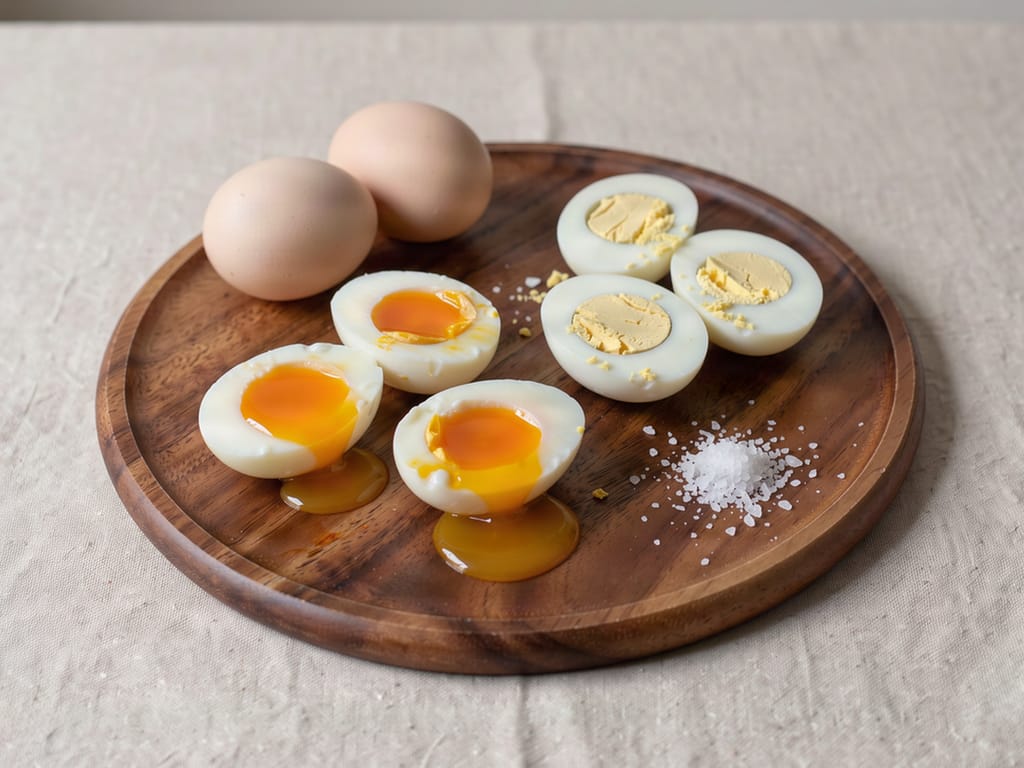
Soft-boiled, 4–5 minutes: white set partly to almost completely, yolk fully runny.
Jammy, 6–7 minutes: white firm, yolk creamy and sticky in the middle and starting to set around the edges.
Hard-boiled, 9–10 minutes: white and yolk firm all the way through, yolk deep yellow and lightly crumbly.
When the time is up, move the eggs straight into a bowl of ice water with a slotted spoon. This stops the cooking. Without it, the eggs keep cooking in their own heat, and in a few minutes a jammy egg turns hard-boiled.
What changes the timing:
Room-temperature eggs: take off about 1 minute, because they start warmer and the center heats through sooner.
Large (L) egg (63–73 g): add about 1 minute; for XL (over 73 g), add 1½ minutes.
Small (S) egg (under 53 g): take off about 1 minute.
Quail eggs: 2 minutes for soft-boiled, 3–4 minutes for hard-boiled.
Starting in cold water: count from the moment the water comes to a boil, and use about 2 minutes less, so roughly 3 minutes for soft-boiled, 4–5 for jammy and 7–8 for hard-boiled.
These times are a guide. They depend on how many eggs you put in the pot, how much water there is and how quickly the water returns to a boil after the cold eggs go in. The more eggs and the less water, the longer it takes for the boil to come back, and the more minutes you add. So with your first batch in a new pot, cut one egg open and fine-tune the time. After that, you've got it for good.
One recipe and one tip every Thursday until the end of the year. Unsubscribe in one click.
For the holidays: the morning of December 24, carp roasting times by size and December 31, New Year’s Eve canapés.
To make soft-boiled eggs, lower eggs from the fridge with a spoon into gently boiling water and cook 4–5 minutes. At 4 minutes the white around the yolk is still jelly-like; at 5 minutes it sets almost completely and the yolk stays runny.
Method:
Bring enough water to a boil in a pot to cover the eggs by at least 1 cm (½ inch).
Turn the heat down so the water just bubbles gently. In a hard boil, the eggs bounce around, knock against the bottom and crack.
Lower the eggs to the bottom on a spoon, one at a time, and let go.
After 4–5 minutes, move them to cold water for a few seconds, just long enough to handle them. Soft-boiled eggs are eaten right away, so you don't need to chill them fully.
Soft-boiled eggs are traditionally served in an egg cup: tap the tip with a spoon, take off the little cap and eat straight from the shell, dipping bread into the yolk. If you like, scoop it into a small glass with a spoon and you have vejce do skla (egg in a glass).
Cook a jammy egg from the fridge 6–7 minutes in boiling water and chill it right away in ice water. At 6 minutes the center of the yolk is runnier; at 7 minutes it's creamy like a thick paste and doesn't run.
Of the three stages, jammy is the most sensitive to accuracy. One minute too long and it's hard-boiled, one minute too short and it's soft-boiled. That's why ice water isn't just a suggestion here but a must: leave the eggs in it at least 3–5 minutes, or residual heat will keep cooking them.
If you put a jammy egg in cold water and cook it with the water from the start, count 4–5 minutes from the moment the water comes to a boil. The result is less predictable, though, because every stove brings water to a boil at a different speed.
A jammy egg is the best egg for bowls and salads. Halved, it holds its shape, but the yolk is soft and works almost like a sauce. It's typically great in grain and vegetable bowls or in ramen.
Hard-boiled eggs take 9–10 minutes in boiling water (counted from adding the eggs straight from the fridge), or 7–8 minutes from the boil if you start in cold water. Then chill them in ice water for at least 10 minutes.
At 9 minutes the yolk is firm but still slightly tender in the center, which is lovely on open-faced sandwiches (chlebíčky) and in spreads. At 10 minutes it's fully firm, crumbly and grates well. Anything beyond 12 minutes is pointless: it doesn't make the egg safer or better, it just turns the white rubbery and brings out a gray-green ring around the yolk.
Hard-boiled eggs suit anything that's sliced, grated or mixed: spreads, salads, open-faced sandwiches, deviled (stuffed) eggs and a snack for the lunchbox.
Put the eggs straight into boiling water if you want precise timing and easy peeling; starting in cold water is more convenient but less precise.
Boiling water: the clock starts when the eggs go in, so the time is the same regardless of stove and pot. The sudden heat shock also helps keep the white from sticking to the membrane under the shell, so the egg peels better. The downside: a cold egg in boiling water occasionally cracks.
Cold water: eggs crack less because they heat up gradually. But the time it takes the water to come to a boil varies with the stove, the pot and the amount of water. The result therefore varies, and the eggs are usually harder to peel.
A practical compromise: let eggs from the fridge sit 10–15 minutes in a bowl of lukewarm tap water to take the chill off, then lower them into boiling water. They crack less and still peel well. Just remember that a warmed egg needs about a minute less.
A green-gray ring around the yolk means the egg was cooked too long or cooled slowly. Food chemists explain it as a reaction between sulfur in the white and iron in the yolk: with prolonged heating, iron sulfide forms and settles right at the boundary between white and yolk.
Such an egg isn't spoiled and is fine to eat. It just tastes and smells more strongly of sulfur, the yolk is dry and the white rubbery. The gray edge also doesn't look great on a sandwich or in a salad.
How to prevent it:
Don't cook hard-boiled eggs longer than 10 minutes (M eggs from the fridge in boiling water).
The water should only bubble gently. A hard boil heats the outer layers needlessly hard.
Chill the eggs in ice water right after cooking. Cooling slowly on the counter is the second most common cause.
Hard-boiled eggs peel most easily when they aren't perfectly fresh, went into boiling water and were chilled in ice water right after cooking. Then the shell and membrane come off in two or three pulls.
Why fresh eggs cling: a very fresh egg has a less alkaline white, which grips the membrane under the shell tightly as it cooks. After a few days in the fridge, the white naturally loses a little carbon dioxide, the alkalinity rises and the membrane lets go more easily. That's why an egg about a week to ten days old peels noticeably better than one laid the day before yesterday. If you keep hens or buy eggs straight from a farm, let them rest a few days before hard-boiling. How long and where raw eggs keep is covered in our article on egg shelf life and storage.
How to peel:
Put the cooked eggs in a bowl of ice water for 10 minutes. The white shrinks a little and pulls away from the shell.
Tap the egg on the counter, first on the blunt end where the air pocket is, then all around, so the shell is cracked like a mosaic.
Start peeling at the blunt end. Get under the membrane, not just under the shell: with the membrane, the shell comes off in big pieces.
Peel under a thin stream of water or right in a bowl of water. Water gets under the membrane and helps separate it.
A trick for many eggs at once: put the cooled eggs in a container with a lid, or back in the pot with a little water, close it and shake hard. The shells crack all over, and then you can nearly just pull them off.
Eggs crack mainly because of temperature shock and knocking against the bottom. A cold shell expands sharply in boiling water, the air in the pocket at the blunt end expands and pushes from inside, and an egg that bumps the pot may also get a hairline crack.
What helps:
Lower the eggs to the bottom on a spoon; never drop them into the water.
After adding the eggs, turn the heat down to a gentle simmer. Eggs bouncing in hard-boiling water smash into each other.
Don't stack eggs in several layers in the pot. Use a single layer, with a little room.
Warm eggs from the fridge for 10 minutes in lukewarm water (and take a minute off the time).
You can prick the blunt end with a pin or an egg piercer. The air from the pocket then escapes and doesn't press on the shell. It helps more with some eggs than others, but it can't hurt.
A spoonful of vinegar or a little salt in the water won't stop cracking. But if an egg does crack, they help the white that leaks through the crack set faster and plug it.
A cracked egg is fine to finish cooking and eat right away, or the same day. It isn't suitable for keeping in the fridge, because bacteria can get in more easily through the crack.
Cook quail eggs in boiling water 2 minutes for soft-boiled, 2½ minutes for jammy and 3–4 minutes for hard-boiled, then chill them right away. They weigh only about 10–12 g, so seconds matter more than minutes.
Lower quail eggs into the water on a spoon or in a strainer, several at a time. They're tiny and get lost in the pot, so keep track of them with a slotted ladle. They're harder to peel than chicken eggs because the membrane is tough and the shell thin: once cooled, put them in a container, shake so the shells crack, then peel under water. Some people soak them first for a few minutes in water with a little vinegar, which eats away at the shell, but plain ice water and patience are enough.
Hard-boiled quail eggs suit canapés, salads and spreads. The yellow egg and Gouda spread calls for six quail eggs hard-boiled for 3 to 4 minutes from the moment the water returns to a boil. The eggs are chilled, grated together with the Gouda and mixed with cream cheese and whole-grain mustard to make a spread that still has pieces in it. It's ready in 15 minutes.
A poached egg is an egg without its shell cooked 3–4 minutes in gently bubbling water with a splash of vinegar: the white sets around the yolk and the yolk stays runny. Three things matter: a fresh egg, water just below a simmer and calm.
Use the freshest egg you can. It has a thick white that holds together. An older egg has more thin white, which spreads out into wisps in the water.
Crack the egg into a small strainer over a bowl and let the thinnest, watery white drain off for a few seconds. Then slide it into a bowl or small cup. This is the trick that turns a ragged egg into a neat one.
In a wide pot, bring at least 7–8 cm (about 3 inches) of water to a boil, add a teaspoon of vinegar and turn the heat down so only tiny bubbles form on the bottom. In a hard boil, the egg tears apart.
Swirl the water gently with a spoon and slip the egg carefully into the middle, as close to the surface as you can.
Cook 3 minutes for a fully runny yolk, 4 minutes for a yolk that's starting to thicken. Don't touch the egg; at most, nudge it gently off the bottom.
Lift it out with a slotted spoon, set it briefly on a paper towel to drain, and serve right away.
For several eggs at once, skip the swirl and slip them side by side into a wide, shallow pan of water just below a simmer. You can also poach eggs ahead: put the finished eggs in ice water, refrigerate, and slip them back into hot water for a minute before serving. For more on shape, vinegar and the microwave version, see our article on poached eggs: how to cook them so they hold their shape.
You can poach an egg without a whirlpool in an oiled ladle or wrapped in plastic wrap, in both cases 3–4 minutes in water just below a simmer.
In a ladle: rub a metal ladle on the inside with a drop of oil, crack an egg into it and lower it so the edges are covered by water just below a simmer. After 30–60 seconds, when the white turns opaque and firms up, carefully tip the egg out of the ladle into the water and finish cooking, 3–4 minutes in total.
In plastic wrap: line a small bowl with plastic wrap that can take hot water, crack an egg into it, gather the wrap into a pouch, squeeze out the air and tie it right above the egg. Cook the pouch in boiling water 3–4 minutes. The egg comes out teardrop-shaped and doesn't spread.
That's exactly how kulajda with mushrooms, dill and a poached egg is made: eggs wrapped in plastic wrap cook 3 minutes, rest two minutes, and go into the soup only once it's in the bowl.
The avocado toast with a poached egg is cooked in plastic wrap in a similar way, here for 4 minutes in gently bubbling water. Meanwhile you spread nut bread with cream cheese, top it with slices of ripe avocado, add the egg, season with salt and pepper and drizzle with balsamic glaze. Breakfast is ready in 15 minutes.
For chlebíčky (Czech open-faced sandwiches) and potato salad, hard-boil the eggs 10 minutes, chill them in ice water and slice them only once they're completely cold from the fridge. A warm yolk smears on the knife and crumbles, while a cold one keeps the slice together.
How many eggs to cook:
Chlebíčky: one M egg gives you roughly 4–5 nice slices with yolk in an egg slicer. The end slices are almost all white, so save them for a spread. For 20 chlebíčky with two slices each, count on 8–10 eggs.
Potato salad: family recipes differ, but 3–5 hard-boiled eggs per kilo (2.2 lb) of potatoes is common. If you like a distinctly eggy salad, go ahead and add more.
For slicing: the cleanest slices come from a wire egg slicer. If you don't have one, use a thin sharp knife and dip it in hot water and wipe it between cuts. For the salad, dice the eggs last and fold them in gently so the yolk doesn't smear into the mayonnaise.
You can boil the eggs a day or two ahead to leave yourself one less worry on Christmas Eve. Peeled or unpeeled, they keep 7 days in the fridge, but unpeeled eggs hold their flavor and moisture better; put peeled ones in a closed container in the fridge so they don't dry out or absorb odors. How to plan fully topped chlebíčky so they don't turn soggy by evening is covered in our article on chlebíčky made a day ahead. Potatoes, dressing and proportions for Christmas salad are in the article on potato salad. And if you have eggs left over after the salad and chlebíčky, turn them into a spread; there's an overview in spreads: recipes for bread and chlebíčky.
Refrigerate hard-boiled eggs within 2 hours of cooking and eat them within 7 days, whether in the shell or peeled. That's the guidance of the US food safety service, FSIS.
In the shell: the shell protects the white from drying out and from odors, so unpeeled eggs are best for keeping. Store them in a container or bowl in the fridge, not in the door, where the temperature fluctuates.
Peeled: always in a closed container in the fridge. The unprotected white dries quickly, turns rubbery and absorbs whatever is next to it in the fridge.
At room temperature: 2 hours at most in total, including the time the egg sits on the table or on chlebíčky. Painted Easter eggs or festive eggs that have sat on the table all day no longer belong on the menu.
Freezer: whole hard-boiled eggs aren't suitable for freezing; after thawing, the white turns rubbery and weeps water.
Eat a cracked egg or an egg with a damaged shell the same day.
Hard-boiled eggs belong in egg spread, leafy salads, quinoa bowls and breakfast bao buns; poached and fried eggs go on risotto, lentils, toast and eggs Benedict. You'll find more ideas in the collection of recipes with dairy and eggs and in the overview of what to cook with eggs.
Hard-boiled eggs work best in spreads, salads and bowls.
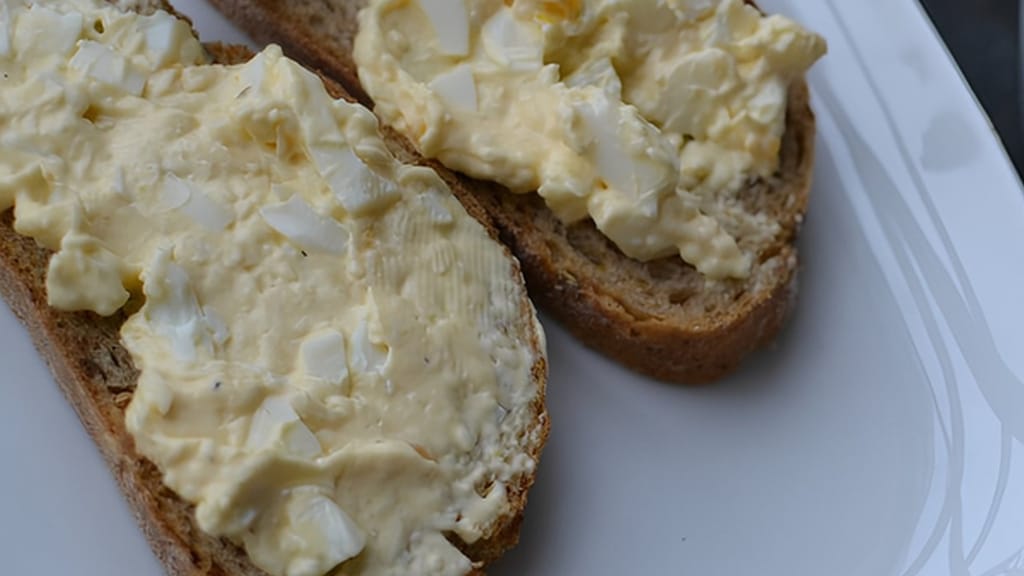
Egg spread with cheese needs seven hard-boiled eggs, cooled and peeled. Mash the yolks with a fork with mustard, mayonnaise and the traditional pomazánkové máslo (a Czech soft dairy spread, not butter), finely chop the whites and add them with grated Gouda. Season with salt, pepper, a pinch of sweet paprika and sliced spring onion. Store the finished spread in the fridge in a container with a lid and spread it on bread, rolls and chlebíčky.
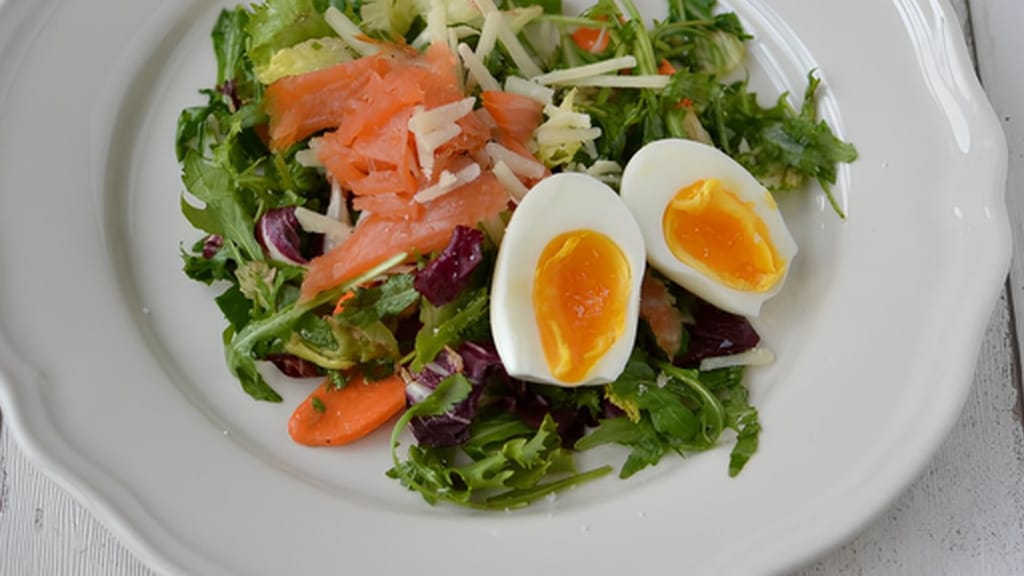
Summer salad with salmon and eggs is ready in 16 minutes. Tear washed and well-dried iceberg lettuce leaves into a bowl, add torn smoked salmon, eggs boiled ahead of time and Parmesan. The dressing is just oil whisked with salt and pepper, and at the end you sprinkle the salad with fine flaky sea salt that crunches on the leaves.
You assemble the quinoa Buddha bowl with egg, chickpeas and vegetables in 29 minutes. On top of the quinoa go broccoli cooked until tender, thin slices of carrot, mung bean sprouts, rinsed chickpeas and a halved egg. The recipe leaves it up to you whether to hard-boil or soft-boil the egg, and recommends hard-boiled for pregnant women and small children; a jammy egg is great here too. Season with hummus.
The breakfast bao buns with egg and orange mayonnaise are a weekend project of 160 minutes. The boiled egg goes in last, on top of the filled pockets with cilantro; cook it using the timings above, however you like it best.
Egg spread with cheese
Egg spread with cheese made from seven hard-boiled eggs
Poached and fried eggs work best on top of hot dishes: on risotto, lentils, toast and eggs Benedict.
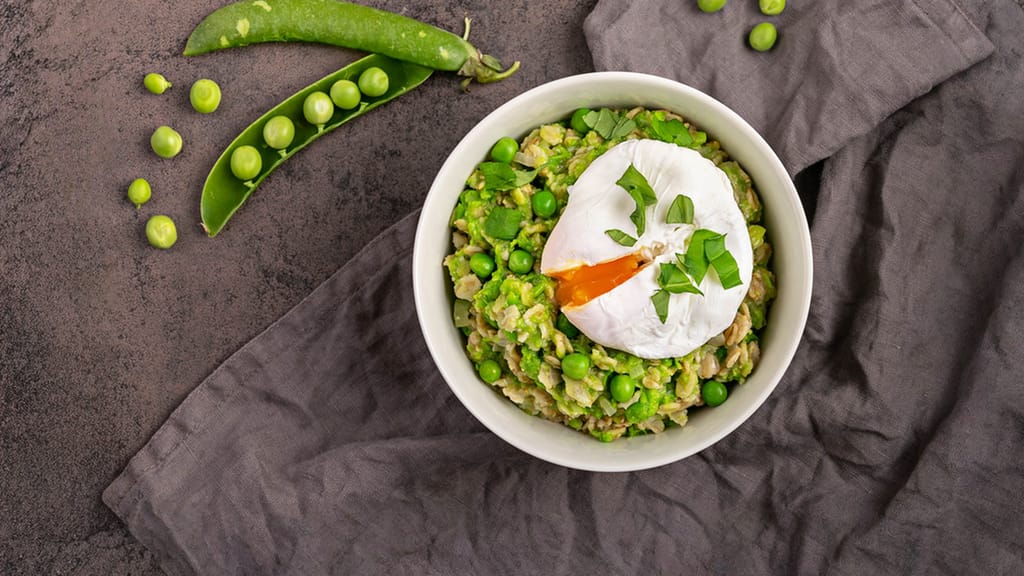
Pea oat risotto with a poached egg is a quick dinner for one in 27 minutes. Soften a shallot in a little oil, briefly toast rolled oats with it, add water and cook until tender. Blend two thirds of the peas, leave the rest whole and stir both into the oats. On top goes an egg poached in a swirl of water with a splash of vinegar, cooked 3–4 minutes.
Sour lentils with a fried egg takes planning, because the lentils soak at least 8 hours. Then you cook them until tender, stir in sour cream and vinegar, or thicken them with a roux. Finally, fry onion until golden and fry eggs in a pan, letting the white set completely.
Croque madame: baked toast with ham, cheese and egg is ready in 39 minutes. The egg here isn't boiled but fried: place a sunny-side-up egg with a runny yolk on the finished baked toast; for pregnant women and small children, cook it longer until the yolk sets.
Crack the egg into a mug with a little water, pierce the yolk, cover it and heat in bursts of about 30 seconds until the white sets. Never microwave an egg in its shell: the steam inside can't escape, and the egg can burst, even a moment after you take it out or when you cut into it and the hot yolk squirts out. Times vary with microwave power, so keep a close eye on your first try.
Put whole eggs in the air fryer basket and cook at roughly 150–160°C (300–320°F) for about 13–15 minutes for hard-boiled, or 8–10 minutes for soft-boiled, then chill them right away in ice water. Air fryers vary quite a bit in power, so cut open one egg from your first batch to check. The shell may turn brown in places, which doesn't affect the taste.
Spin the egg on the counter: a hard-boiled egg spins quickly and smoothly like a top, while a raw or barely cooked one wobbles and slows down soon, because the liquid inside sloshes around. If you stop the spinning egg with a finger for a moment and let go, a hard-boiled egg stays still, while a raw one starts moving again by itself. This can't reliably tell a jammy egg from a hard-boiled one. Only the right timing does that.
In English, a jammy egg is most often called a jammy egg or a medium-boiled egg. A soft-boiled egg is a soft-boiled egg and a hard-boiled egg is a hard-boiled egg. A poached egg is a poached egg.
Vejce do skla is a soft-boiled egg that you scoop out of its shell with a spoon into a small glass and eat with a spoon, for example with butter, salt, chives and bread. Cook it 5 minutes in boiling water so the white is set and the yolk is runny, and peel it right away while it's still warm.
Eggs Benedict is a poached egg with a runny yolk set on a toasted or steamed half of a bun with ham or another meat, topped with hollandaise sauce made from egg yolks and melted butter. The eggs are poached 2–3 minutes in water just below a simmer with a splash of vinegar, a little shorter than a regular poached egg because the yolk should be as runny as possible. The sauce is whisked over steam until it thickens and a thermometer reads at least 71°C (160°F), or it is made with pasteurized yolks. Because of the runny yolks, it isn't suitable for pregnant women, small children, seniors and people with weakened immunity.