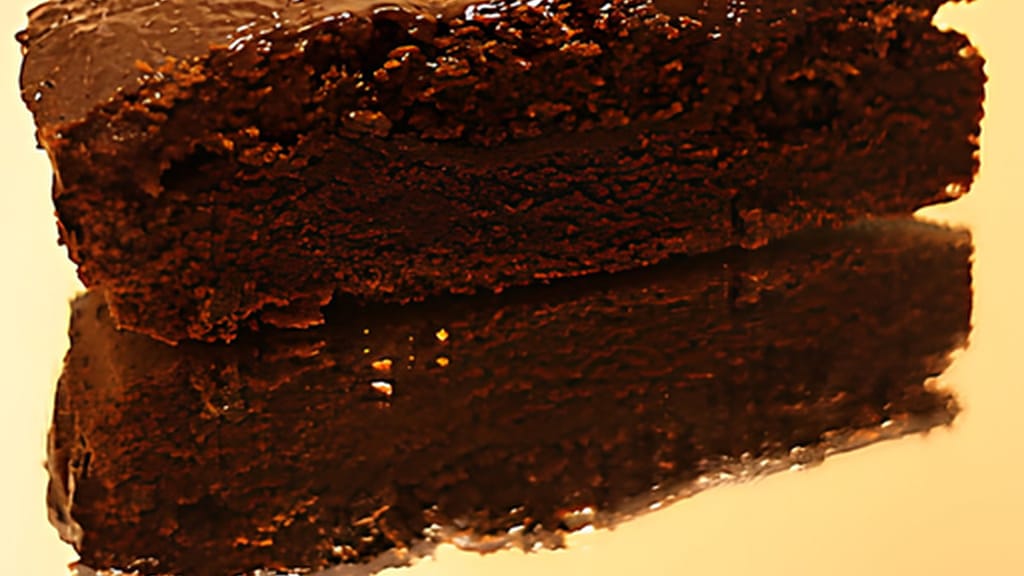
Chocolate cake with apricot jam
Chocolate Cake: Easy Recipe, with Mascarpone, Sachertorte and Fruit
Updated Nov 20, 2026
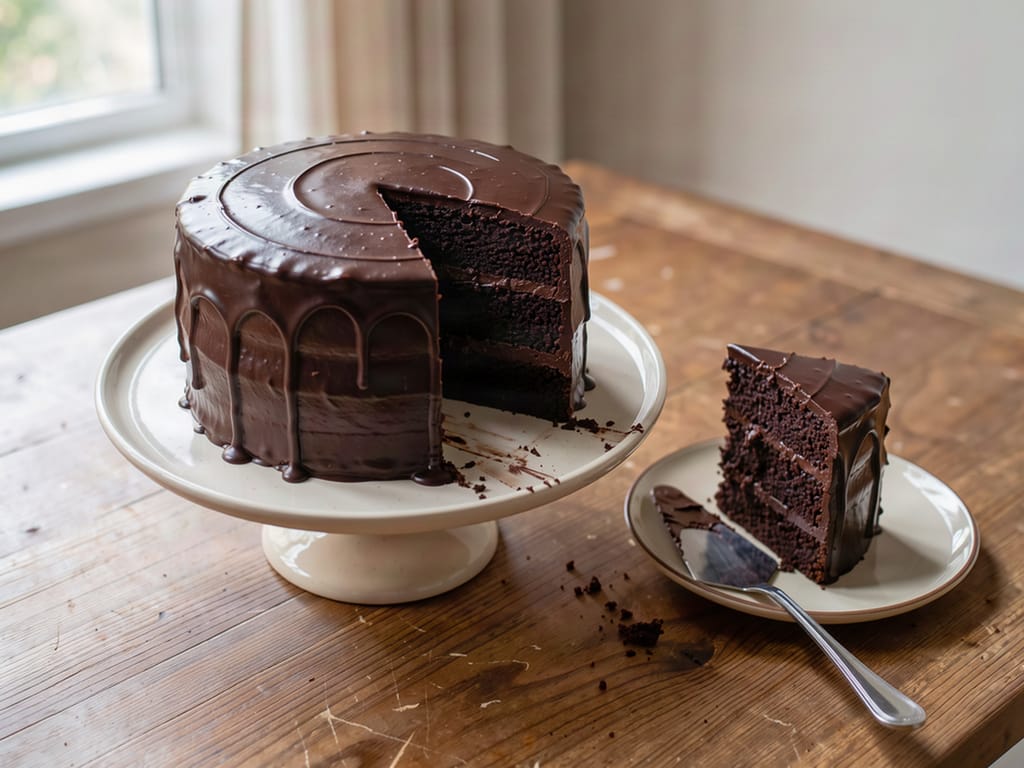
You can bake a chocolate cake at home without any pastry training. You just need to know which cake base you want and what you'll use to fill it. The fastest is a dense cake with apricot jam, ready in 70 minutes. The most festive is a tiered cake with mascarpone and raspberry pralines, and the most classic is Sachertorte. Below you'll find six recipes from our kitchen, each with the method in a nutshell, plus two bonuses and the tricks that keep the cake from drying out and the cream from splitting.
Choose your chocolate cake by how much time you have: for a weekday, a dense cake with apricot jam in 70 minutes; for a celebration, a tiered cake with mascarpone and raspberries; for a classic, Sachertorte. Here's an overview, with a detailed section on each cake further down:
For a weekday: chocolate cake with apricot jam, 70 minutes, one pan.
With a short bake: easy chocolate cake on a cookie base with mascarpone and ricotta, 85 minutes.
With fruit: the most chocolatey cake with pomegranate and almonds, just under 4 hours.
For a date night or birthday: chocolate cake for lovers with strawberries and mascarpone cream, a little over 3 hours.
For a big celebration: tiered chocolate cake with mascarpone and raspberry pralines, almost 10 hours including chilling.
The Viennese classic: Sachertorte with an apricot layer, the cake chills until the next day.
And two bonuses: an Easter chocolate cake with mascarpone cream that you can bake any time of year, and a chestnut chocolate cake with a flour-free batter.
They all rest on the same foundation. Chocolate and cocoa give flavor, fat and moisture (butter, yogurt, cream) give tenderness, and a cream of chocolate and cream holds the layers together. Once you understand these three roles, you can bake any of them and know where you can bend the rules.
How to soften gingerbread that’s gone hard, when to fill Linzer cookies and how to tell the carp is done. One recipe and one tip a week. Unsubscribe in one click.
The quickest route to a truly chocolatey cake is the chocolate cake with apricot jam: one bowl, one pan, and you're done in 70 minutes. The cake is dense and moist, the apricot adds tartness, and the dark chocolate glaze adds shine.
How to make it: preheat the oven to 160°C (320°F). Melt the butter with broken-up dark chocolate in the microwave in short bursts, stirring in between so the chocolate doesn't scorch. Pour 120 ml of water over the coffee. In a bowl, mix the sugar with three eggs, add the melted chocolate and butter, the coffee and the yogurt, and finally fold in all-purpose (plain) flour mixed with baking powder, only until it disappears. Bake for about 40 minutes, let it cool completely, cut it in half horizontally, spread with apricot jam and pour over a glaze of dark chocolate and cream.
Why it works:
Coffee doesn't overpower the chocolate; it just adds depth and a bitter edge.
Yogurt adds moisture and gentle tartness, so the cake isn't cloyingly sweet.
You fold in the flour only briefly. Long mixing develops gluten in the batter and the crumb turns dense and tough.
The lower temperature of 160°C (320°F) gives the dense batter time to bake through in the middle before the edges dry out.
It's done when a skewer inserted in the center comes out without raw batter, at most with a few moist crumbs. Don't expect a completely dry skewer with this type of cake, as that would mean you've overbaked it. And slice it only once it has cooled all the way: a warm cake crumbles and the jam soaks into it.
Chocolate cake with apricot jam
Quick chocolate cake with apricot jam in 70 minutes
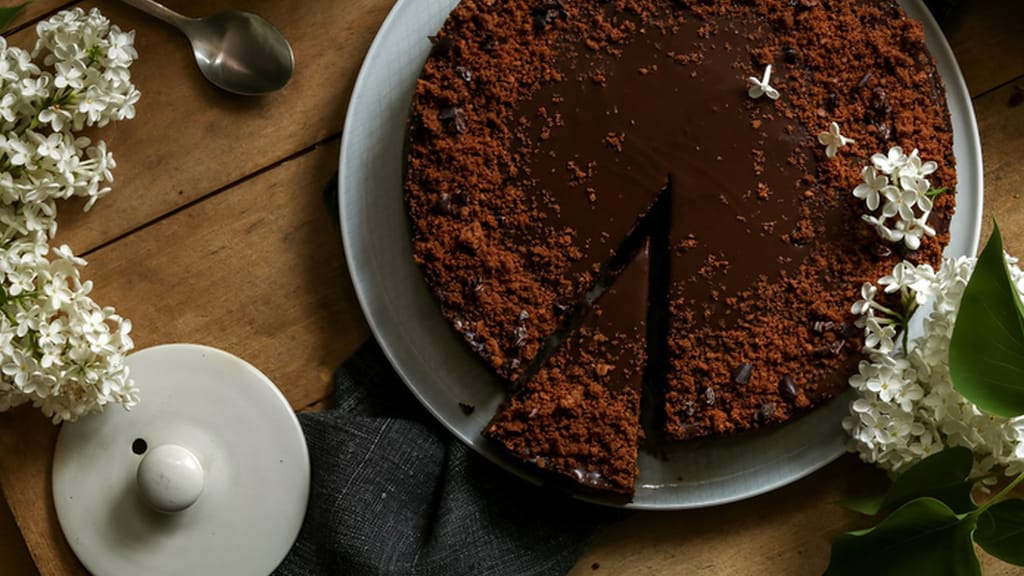
This easy chocolate cake is really more of a chocolate cheesecake: a crisp cookie base, a creamy baked layer and smooth chocolate on top. For the base, crush 160 g of plain cookies without filling, mix them with melted butter, press into a pan lined with parchment paper and prebake for about 10 minutes at 160°C (320°F).
The filling is made of ricotta, mascarpone and an egg yolk, all at room temperature, and you stir in baking chocolate melted in a double boiler with butter and cooled. Pour the mixture onto the base and bake for 30 minutes at 180°C (350°F). Cold ingredients wouldn't combine smoothly with the chocolate, so take them out of the fridge ahead of time.
Once it has cooled, put the cake in the fridge. Meanwhile, melt chocolate with whipping cream in a double boiler, let it cool and pour it over the cold cake. You can decorate it with crushed cookies or crushed cocoa nibs. The recipe takes 85 minutes in total.
Simple chocolate cake
Easy chocolate cake with mascarpone and ricotta on a cookie base in 85 minutes
Three types of cake base suit a chocolate cake: cocoa sponge, a dense chocolate cake, and a moist cake made with baking soda and yogurt. Each behaves differently, so each suits a different cream.
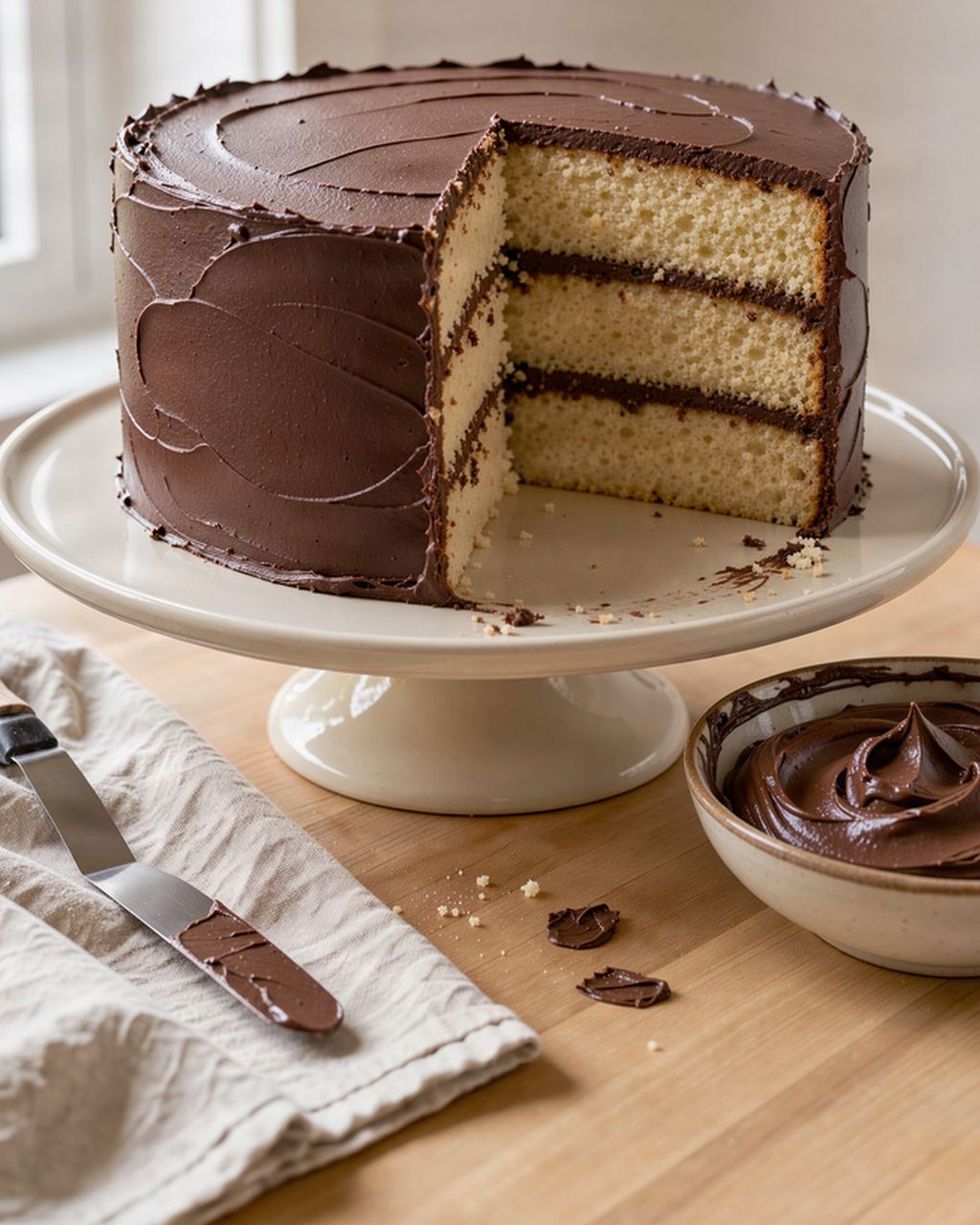
Cocoa sponge is fluffy and light, soaks up cream well and can be cut into thin layers. It suits tall cakes with mascarpone.
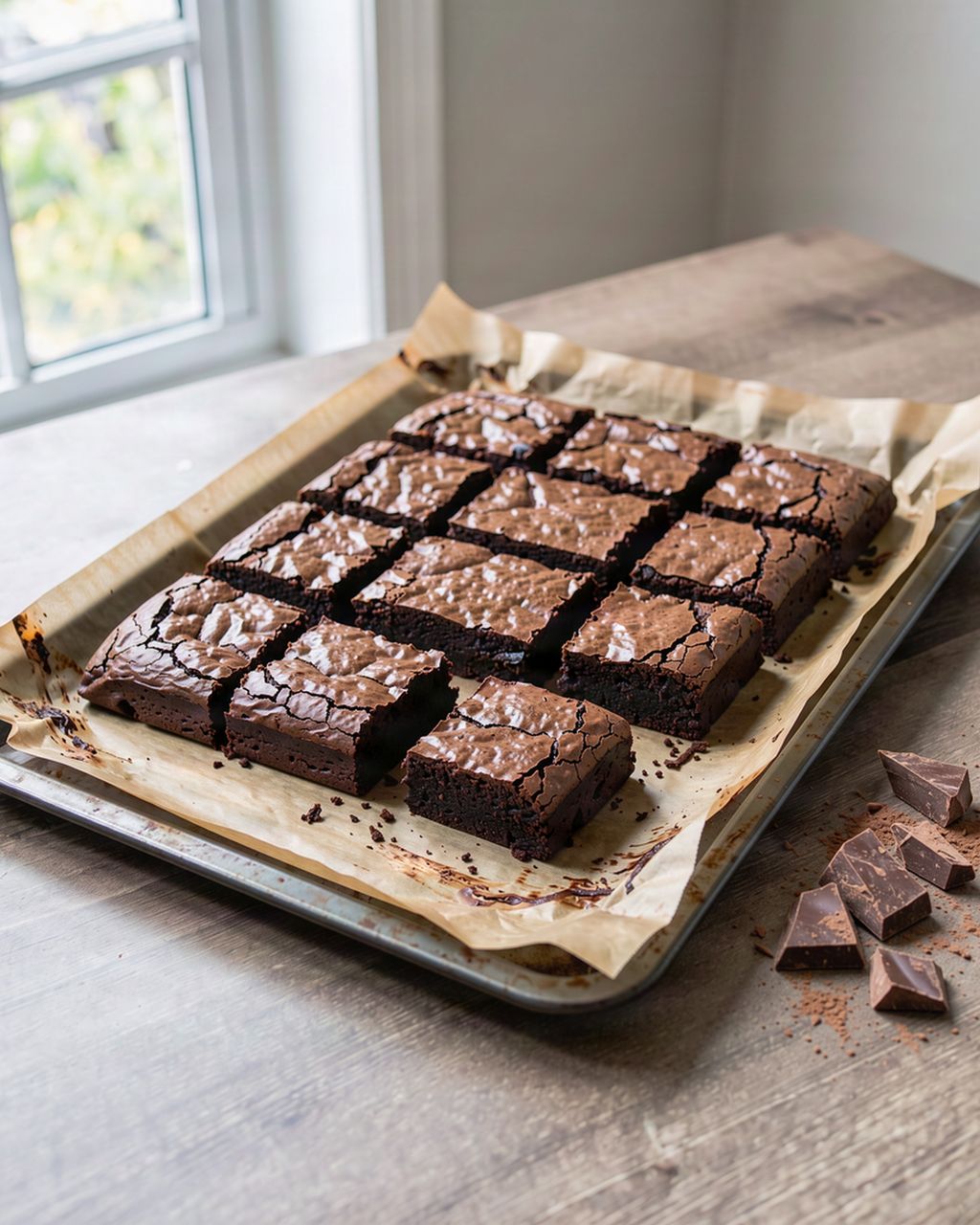
A dense chocolate cake made from melted chocolate and butter is almost as tender as brownies. It needs only a thin layer of jam and a glaze.
A moist cake with baking soda and yogurt is quick and forgiving. It can handle a thick ganache and fruit on top.
For the sponge, a simple ratio applies: weigh the eggs in their shells and weigh out the same amount of sugar and semi-coarse flour (Czech polohrubá, slightly grittier than all-purpose). For the chocolate version you replace part of the flour with cocoa; in our tiered cake recipe it's 50 g of flour swapped for 50 g of cocoa. The yolks are whisked with sugar and hot water until the foam thickens and turns pale, and the whipped egg whites are folded in with a spatula from the bottom up, not with a whisk. The air bubbles in the whites carry the whole cake, and a whisk would break them.
Don't open the oven during the first 30 minutes of baking a sponge. A rush of cooler air would make it collapse and leave a dense streak in the middle. Only then test the center: a baked sponge springs back and a skewer comes out clean and dry.
A dense cake, on the other hand, relies on chocolate. You melt it with butter, add yolks whipped with sugar, and finally the whipped whites and flour. The batter has little flour, so it holds its shape mainly thanks to the eggs and the set chocolate. That's why, after baking, you leave it to cool undisturbed for a long time.
In the yogurt cake, baking soda reacts with the acidic yogurt. It starts working right after mixing, so don't let the batter sit; put it straight into the oven.
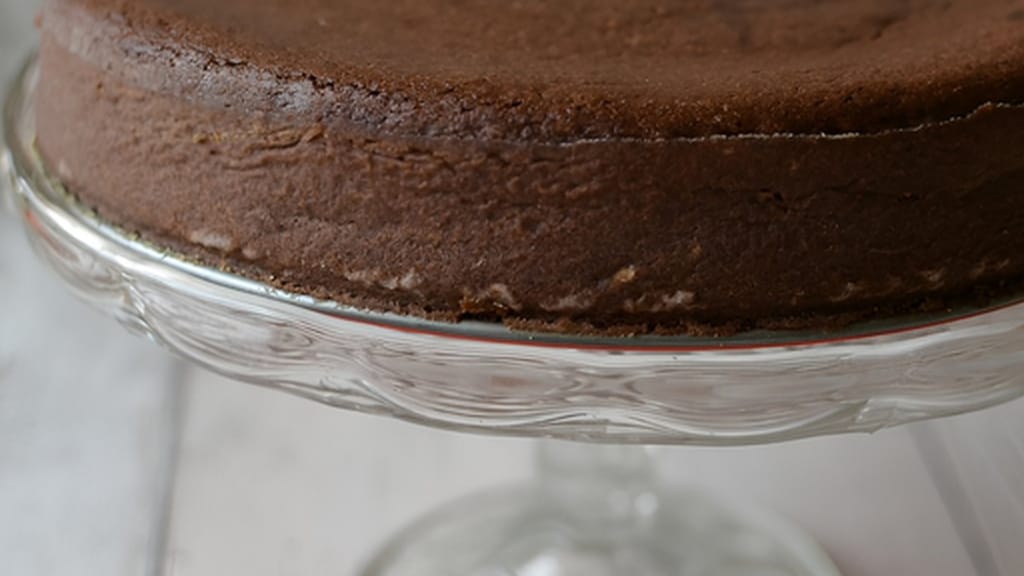
A bonus for a completely different direction: the chestnut chocolate cake has a flour-free batter. Baked chestnuts are blended with almonds and milk into a paste, combined with chocolate melted with butter and with yolks whisked with sugar, and finally whipped whites are folded in. It bakes for 25–30 minutes at 170°C (340°F), and when you nudge the pan, the center should still ripple gently; it firms up as it cools. Because of the eggs, a thermometer inserted in the middle should read at least 71°C (160°F), even if the center still jiggles.
Chocolate chestnut cake
Flour-free chestnut chocolate cake
The mascarpone cream for a chocolate cake is made in two steps: first you make a ganache of cream and chocolate, let it cool, and only then whip it into the mascarpone in portions. The cream is thick, holds its shape between the layers and tastes distinctly of chocolate, not just sweetness.
Ganache is always made the same way. Bring 33% whipping cream to a boil, take it off the heat, break the chocolate into it and leave it to melt undisturbed for five minutes. Then stir it smooth with a whisk. In our recipes, creams most often use dark chocolate with 85% cocoa, and glazes use 70% dark chocolate, which is slightly milder and gets a better shine.
What most often goes wrong with the cream:
Warm ganache. The mascarpone loosens in it and the cream stays runny. The ganache should be lukewarm, almost cold.
Long whipping. The mascarpone starts to curdle into grains. Whip only until the cream thickens.
Too much air. A fluffy cream slides between the layers. In the tiered cake recipe, the finished cream is stirred once more with a wooden spoon so some of the air escapes and the cream firms up.
Low-fat cream. For ganache and whipping, reach for cream with 33% fat; with less fat the cream won't set.
The bonus Easter chocolate cake shows the quantities: ganache from 400 g of cream and 400 g of dark chocolate, whipped after cooling into 750 g of mascarpone, is enough for four to five layers. You can bake it any time of year.
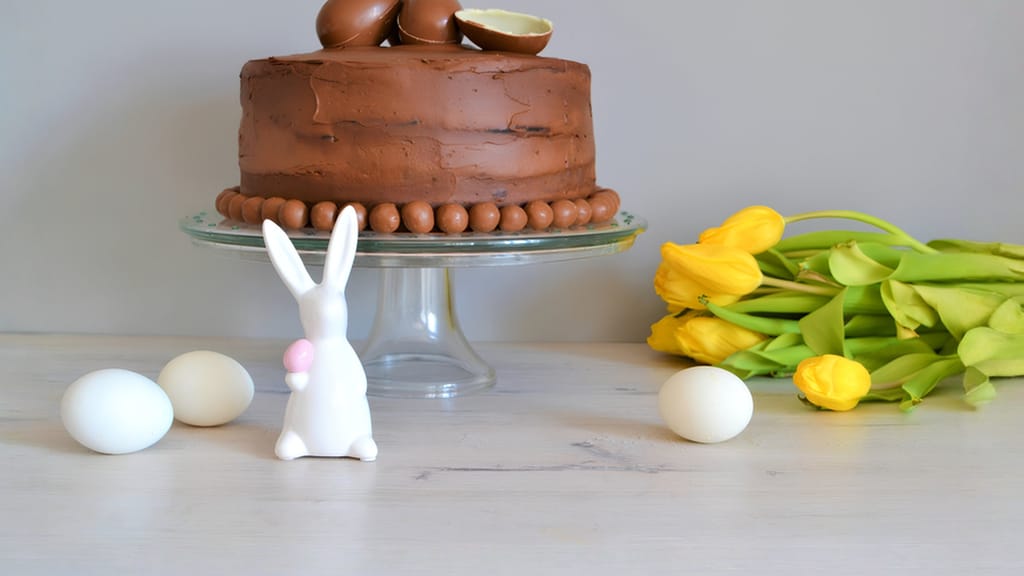
Easter chocolate cake
Easter chocolate cake with mascarpone cream and chocolate ganache
Raspberries and dark chocolate are among the surest pairings in pastry: the tartness of the raspberries cuts through the rich cream, so the cake doesn't feel heavy. Our most elaborate version is the chocolate cake with mascarpone and raspberry pralines, a three-tier celebration cake that will take up almost a whole day.
The layers are cocoa sponges made from 480 g of eggs and the same weight of sugar, baked in three ovenproof pots because the cake grows upward rather than outward. They bake at 175°C (350°F) for about 45 minutes. There are two creams: a lighter one made from ganache, butter whipped with powdered sugar and a whole kilogram of mascarpone, and a darker one made from ganache with sour cream, which joins the bottom layers. Each cake is cut horizontally twice, the layers are spread with raspberry jam and cream, and the tiers are left to set in the fridge for 3 to 4 hours, or overnight if you like.
Then you assemble the cake, support the tiers with wooden dowels pushed into the lower tiers, cover the sides with cream and drag a fork through it to make horizontal grooves. Finally, ganache goes on the sides and 12 raspberry pralines on top.
A few rules for raspberries in chocolate cake in general:
Put raspberries into the cream as jam, not fresh. Fresh ones release juice and the cream around them thins out.
Add fresh raspberries on top only at the end, ideally just before serving, and pat them gently dry first.
Raspberry jam spread directly on the cake layer also works as a barrier: the cream doesn't soak into the sponge.
How to handle frozen raspberries and other berries in baking is covered in our article on what to bake with frozen fruit.
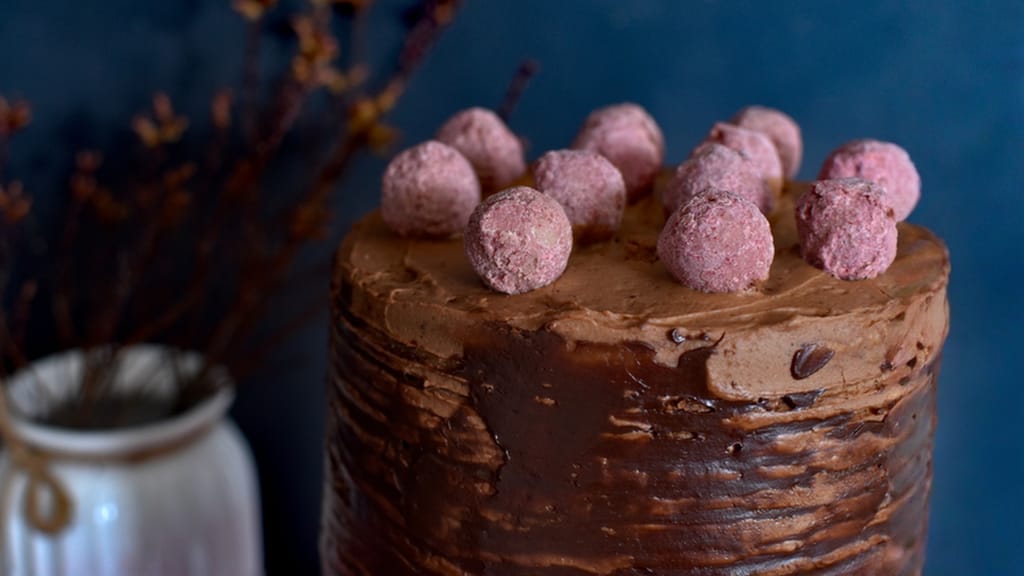
Chocolate cake with mascarpone and raspberry pralines
Tiered chocolate cake with mascarpone and raspberry pralines for a big celebration
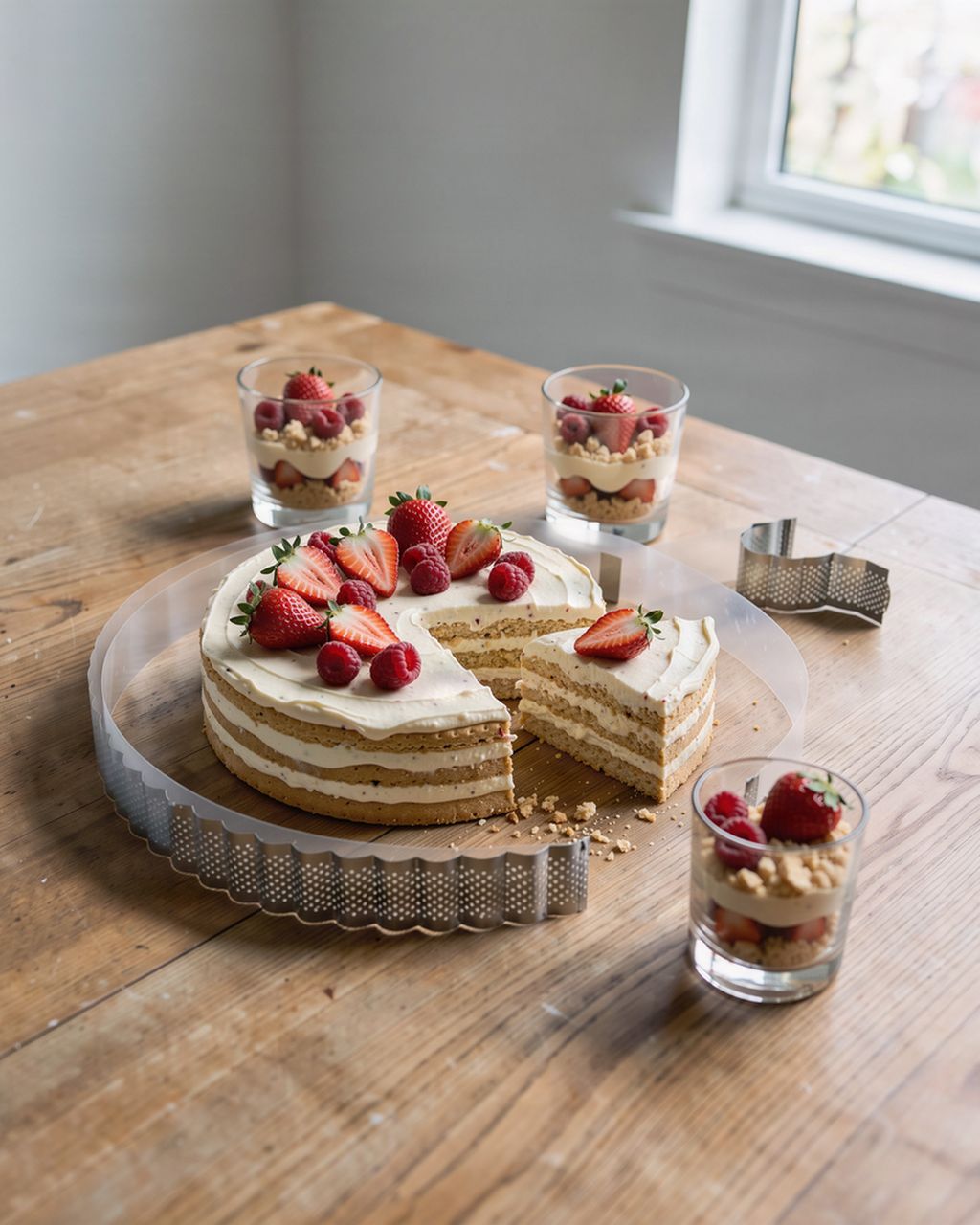
For a chocolate cake with strawberries, the best choice is the chocolate cake for lovers with strawberries and mascarpone: cocoa sponge, mascarpone and chocolate cream, strawberry jam between the layers, and strawberries with blueberries in a glossy glaze. It's ready in a little over three hours.
The sponge is made from six eggs, sugar, semi-coarse flour and cocoa, with hot water whisked into the yolks. It bakes in a 26 cm (10 in) pan at 175°C (350°F), or 160°C (320°F) in a fan oven, for 30 to 50 minutes depending on its height, and you don't open the oven for the first 30 minutes. The cream is a ganache of dark chocolate and cream, which after cooling you whip in portions into mascarpone with cream; taste it, and sweeten it to your liking.
Cut the cooled cake into as many layers as its height allows. Spread each layer first with strawberry jam or chocolate hazelnut spread, then with a thick layer of cream. The top gets a glaze of cream and 70% dark chocolate. Let it cool for a while so it thickens a little and doesn't all run down the sides, then set the strawberries and blueberries into the setting glaze. Finally, sprinkle the cake with hazelnuts.
Rinse the strawberries before decorating and dry them thoroughly, as drops of water would leave matte spots on the glaze. Halve large berries; leave smaller ones whole with the stem on. They hold better on the cut side and the cake looks richer.
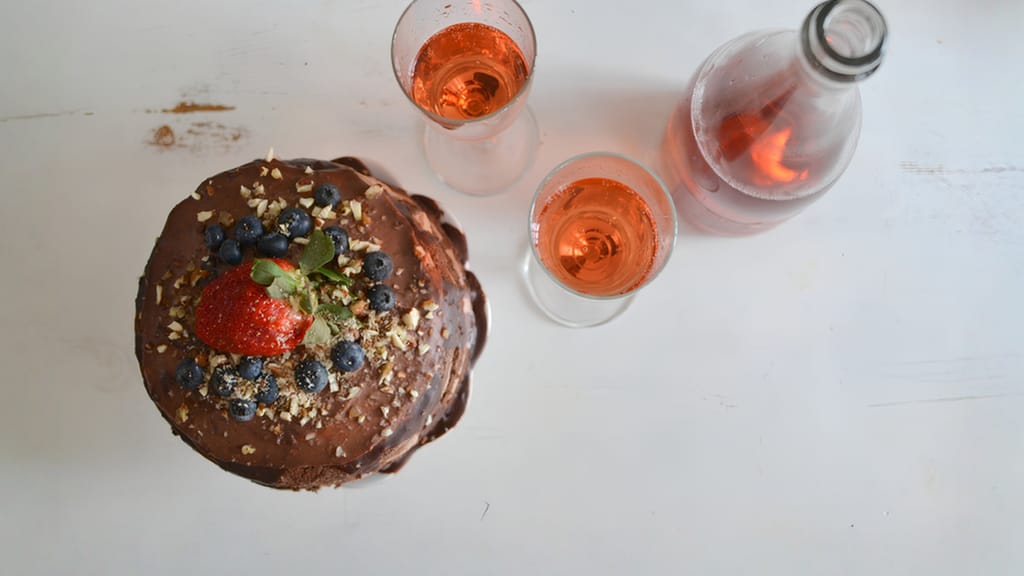
Chocolate cake for sweethearts
Chocolate cake with strawberries and mascarpone: cocoa sponge, strawberry jam, and strawberries with blueberries in glaze
Tart, bold fruit suits chocolate cake best: raspberries, strawberries, sour cherries, apricots, pomegranate and blueberries. Tartness balances the rich cream and the bitterness of the chocolate, whereas sweet, watery fruit tends to get lost in chocolate.
Where to put the fruit:
In the cream and between the layers as jam or preserves. It stays in place and doesn't release juice.
Fresh on top, set into a glaze that is still setting. The fruit catches in it and doesn't slide off.
In the batter only fruit with little water. Juicy fruit leaves wet patches in the cake.
The most chocolatey cake with pomegranate shows how to use fruit as decoration. Eggs and brown cane sugar are whisked into a pale foam, and melted, no-longer-hot butter-flavored vegetable fat is poured in gradually while you keep whisking. Then comes a dry mixture of semi-coarse flour, cocoa, salt and baking soda, and the yogurt, and the batter bakes into two layers, each for 35 minutes at 175°C (350°F).
Both the cream and the glaze are ganache of dark chocolate and cream, only the glaze has more cream, so it is thinner and runs down the sides on its own. You spread the cream on one layer, top it with the second and pour the still-hot glaze over the whole cake. Immediately sprinkle on sliced almonds and pomegranate seeds while the glaze is tacky. Pomegranate is ideal with chocolate: the seeds don't release juice, they crunch, and their tartness freshens the cake.
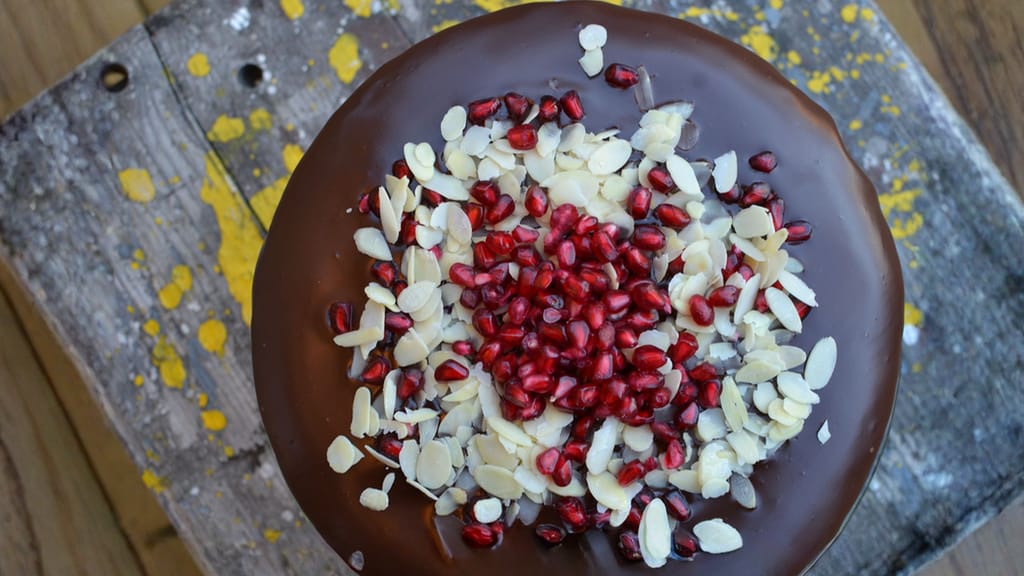
Chocolate cake with pomegranate
The most chocolatey cake with pomegranate and almonds under glossy ganache
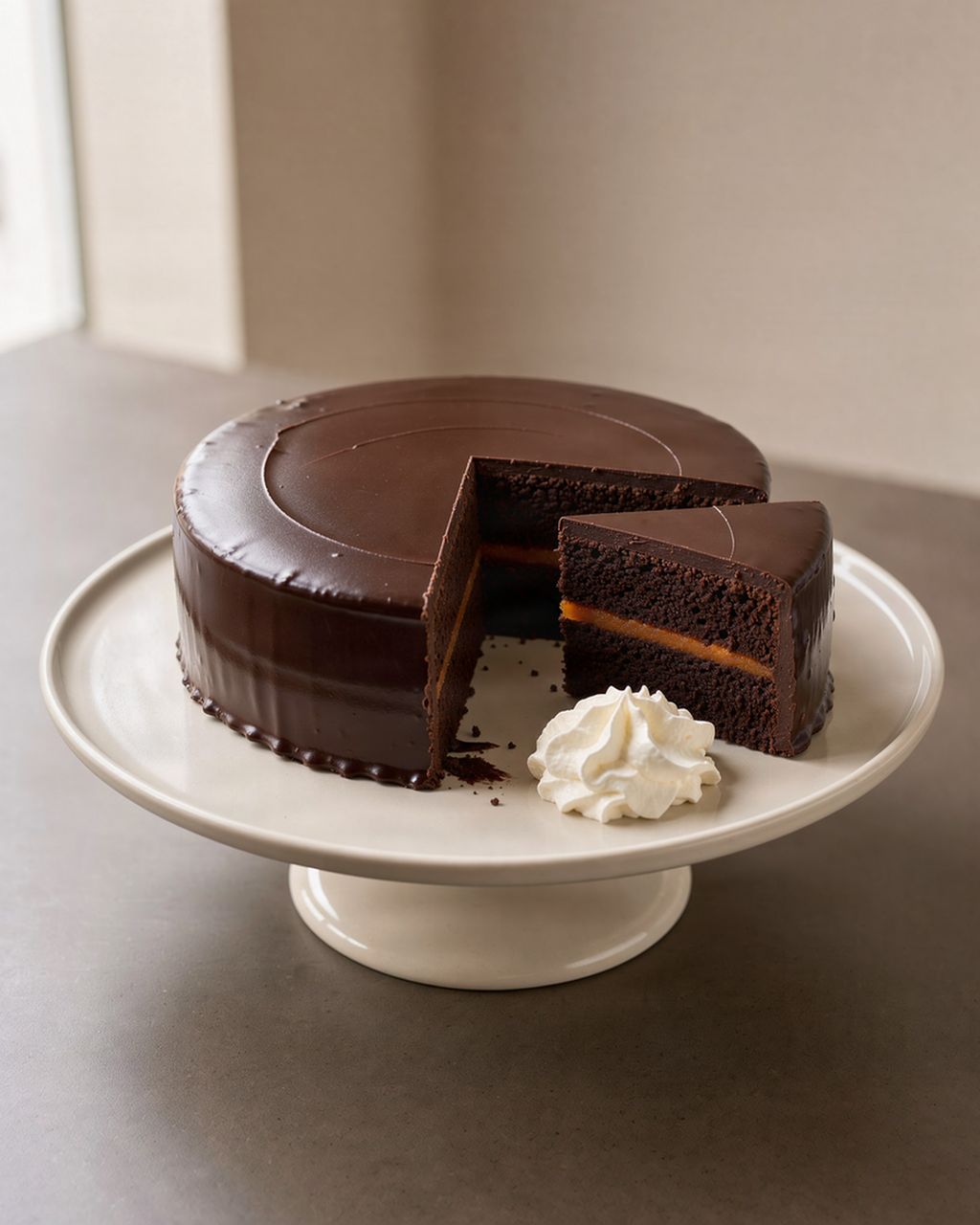
Sachertorte is a Viennese classic made of a dense chocolate cake, apricot jam and a hard chocolate glaze. According to the best-known version, it was invented in 1832 by a sixteen-year-old apprentice pastry cook, though historians point out that this story appeared only decades later. It makes no difference to the flavor.
The method from the recipe for Sachertorte, the Viennese chocolate specialty: melt dark chocolate in a double boiler with butter, whisk the yolks with sugar into a pale foam and whip the whites to stiff peaks. Fold the whites and semi-coarse flour alternately into the chocolate mixture, about three times, with a spatula from the bottom up. Pour the batter into a 26 cm (10 in) springform pan and put it in an oven heated to 200°C (400°F). Don't close the oven door fully; wedge a wooden spoon between the door and the oven. Some of the heat escapes, so the cake rises gradually and doesn't dome in the middle. Then bake at 200°C (400°F) for another 20 minutes, lower the temperature to 180°C (350°F) and bake for another 15 to 30 minutes; every oven bakes differently, so keep an eye on the cake.
Turn the cake out upside down onto a rack so the top is flat for the glaze, and let it cool until the next day, at least 8 hours. Then slice it in layers, brush the layers, top and sides with apricot jam cooked with rum, and pour over a glaze made from a sugar syrup boiled to 110°C (230°F), into which you stir the chocolate. Without a thermometer, go by the thickness of the syrup.
We cover the cake, the apricot layer and the glaze in detail in the article Sachertorte: cake, apricot layer and glaze.
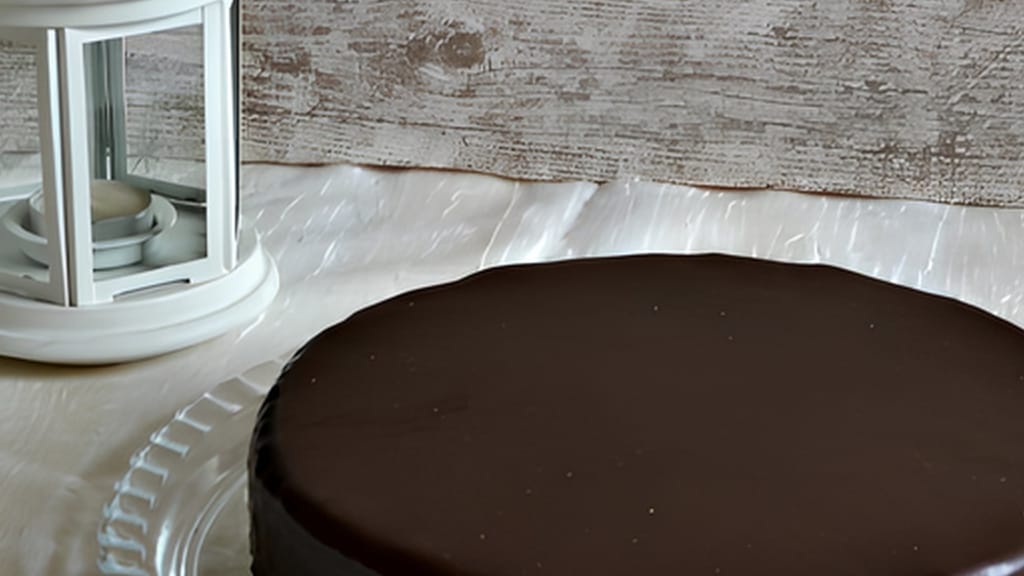
Sacher torte – the classic viennese chocolate cake
Sachertorte: dense chocolate cake, apricot jam with rum and a glossy chocolate glaze
Most failed chocolate cakes come down to one of five causes: an overbaked cake, opening the oven, slicing while warm, warm cream and overheated chocolate. All of them are easy to avoid.
Overbaked cake. A chocolate cake darkens, so you can't judge doneness by color. Go by a skewer and the time in the recipe, and make the first check a few minutes early. A dense cake may have a few moist crumbs on the skewer; a sponge may not.
Opening the oven with a sponge. Keep it closed for the first 30 minutes, otherwise the sponge collapses and a hardened streak stays in the middle.
Slicing and filling while warm. A warm cake tears and the cream runs on it. Let it cool completely, ideally on a rack where air circulates underneath too.
Warm cream or ganache. Mascarpone melts in the warmth and buttercream loosens. Ganache has to cool before whipping, and the cream then goes in the fridge before you start working with it.
Overheated chocolate. In a double boiler, the bottom of the bowl shouldn't touch the water, and in the microwave you heat in short bursts and stir in between. Overheated chocolate thickens, clumps and turns bitter, and can't be fixed.
If the cake sinks in the middle, it's usually down to opening the oven or an underbaked center. Cream and glaze hide a dip, so you can save the cake: level the top with a knife and turn the cake over so the flat bottom faces up, just as with Sachertorte.
A chocolate cake with cream is best baked a day ahead: the cake cools, the cream between the layers sets and the cake then slices cleanly. Of our recipes, this applies to Sachertorte, whose cake chills for at least 8 hours, and the tiered raspberry cake, whose tiers set for 3 to 4 hours or overnight.
How to plan the work:
On the first day, bake the cake and let it cool completely on a rack. A warm one crumbles and the cream would run on it.
In the evening, cut the cake into layers, spread with jam and cream, and put it in the fridge.
On the day of serving, pour the glaze over the cake or decorate it. Add fresh fruit as late as possible.
Slice with a long, sharp knife that you dip in hot water and wipe before each cut. A warm blade glides through the glaze and cream, and nothing cracks or drags. For ways to decorate a cake, from grooves on the sides to chocolate drips, see the article on decorating a chocolate cake.
For a chocolate cake, reach for dark chocolate with 70 to 85% cocoa and unsweetened cocoa powder. Milk chocolate is too sweet and soft for the cake and the cream, and its flavor gets lost.
In our recipes, dark chocolate with 85% cocoa is mostly used in cakes and ganache, where the flavor should be as pronounced as possible, and 70% dark chocolate for glazes. The easy cake on a cookie base uses baking chocolate, which melts easily. Cocoa gives the cake color and depth and replaces part of the flour in a sponge, so weigh it exactly.
How to choose a specific chocolate by cocoa and fat content is covered in our article on which chocolate to buy for brownies and chocolate cake. And if you have some chocolate left over after the cake, you'll find inspiration in our overview of what to bake with chocolate.
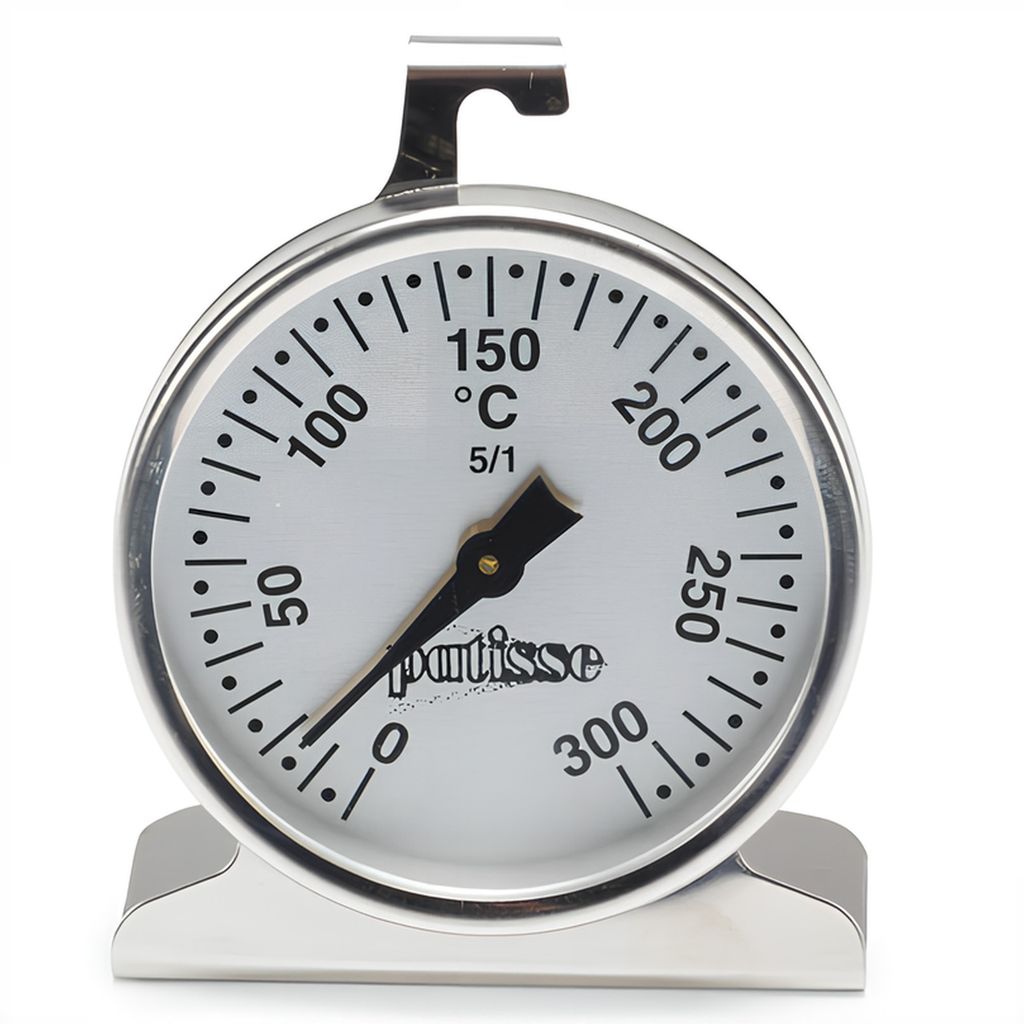
Patisse
Patisse Oven ThermometerUse sour cherries that are well drained and dried, and put them between the layers in the cream or on top in the setting glaze. Let jarred cherries drain thoroughly in a sieve and pat them dry with a paper towel; pit fresh ones first. Between the layers, spread them over a thick layer of mascarpone cream, which holds them in place, and on top, set them into the glaze while it is still tacky. We are still preparing a finished recipe for chocolate cake with sour cherries.
Yes, a dense chocolate cake can be baked with a batter that has no flour at all, for example our chestnut chocolate cake. Baked chestnuts are blended with almonds and milk into a paste, combined with chocolate melted with butter and with egg yolks whisked with sugar, and finally whipped egg whites are folded in. It bakes for 25 to 30 minutes at 170°C (340°F), and the center should stay slightly moist. Because of the eggs, a thermometer inserted in the middle should read at least 71°C (160°F), even if the center still jiggles. The recipe dusts the pan with semi-coarse flour (Czech polohrubá, slightly grittier than all-purpose), so if you want to avoid flour entirely, line the pan with parchment paper instead.
You can replace part of the mascarpone in a chocolate cake with ricotta, or swap it for a lighter cream made from cream and chocolate. Our easy chocolate cake on a cookie base uses ricotta and mascarpone half and half, and the filling is baked. For a lighter cream, make a chocolate mousse: heat dark chocolate with whipping cream to 45–50°C (113–122°F), let it cool to about 40°C (104°F), then gently fold in whipped cream in portions. This cream is less firm, so spread it thinner between the layers and let the cake set properly in the fridge.
For a round pan 26 cm (10 in) in diameter, make the sponge with 6 eggs; for a 30 cm (12 in) pan, use 8 eggs. Weigh the eggs in their shells and weigh out the same amount of sugar and semi-coarse flour, part of which you replace with cocoa. When you change the number of eggs, the other ingredients change in the same ratio, so the batter always turns out the same.
Yes, a cooled chocolate cake layer can be frozen, which saves you a day of work before a celebration. Let the cake cool completely, wrap it tightly in plastic wrap and freeze it whole, not sliced. Thaw it wrapped in the fridge so no condensation forms on it, and fill it only once it has thawed. It's better not to freeze the mascarpone cream or the finished decorated cake, as the cream could release water after thawing.
One recipe worth heating the oven for, one tip, and one deal from the shop. Nothing else.