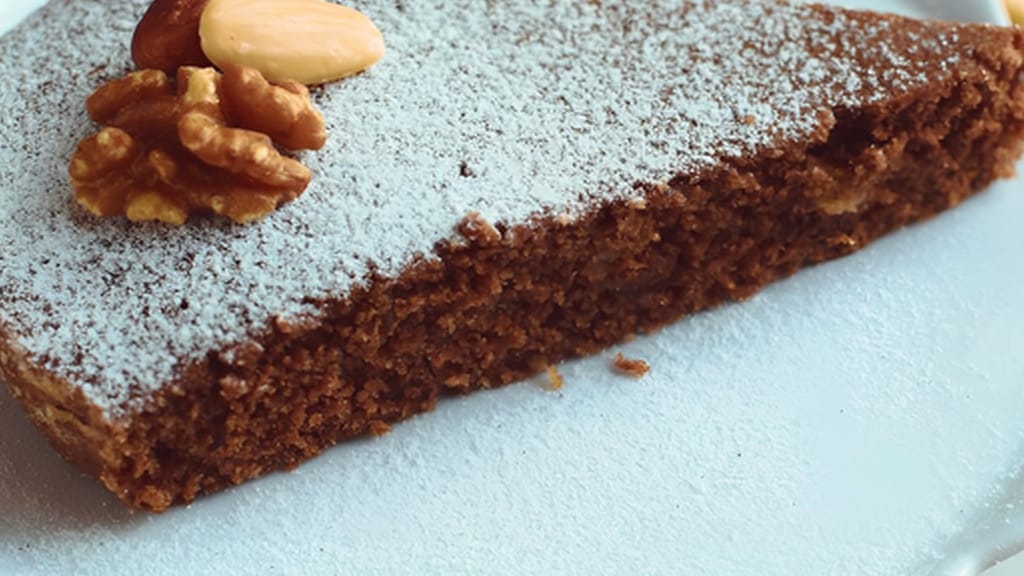
Lactose-free sheet pan gingerbread cake
Moist Perník (Czech Gingerbread Sheet Cake): Recipe and Variations
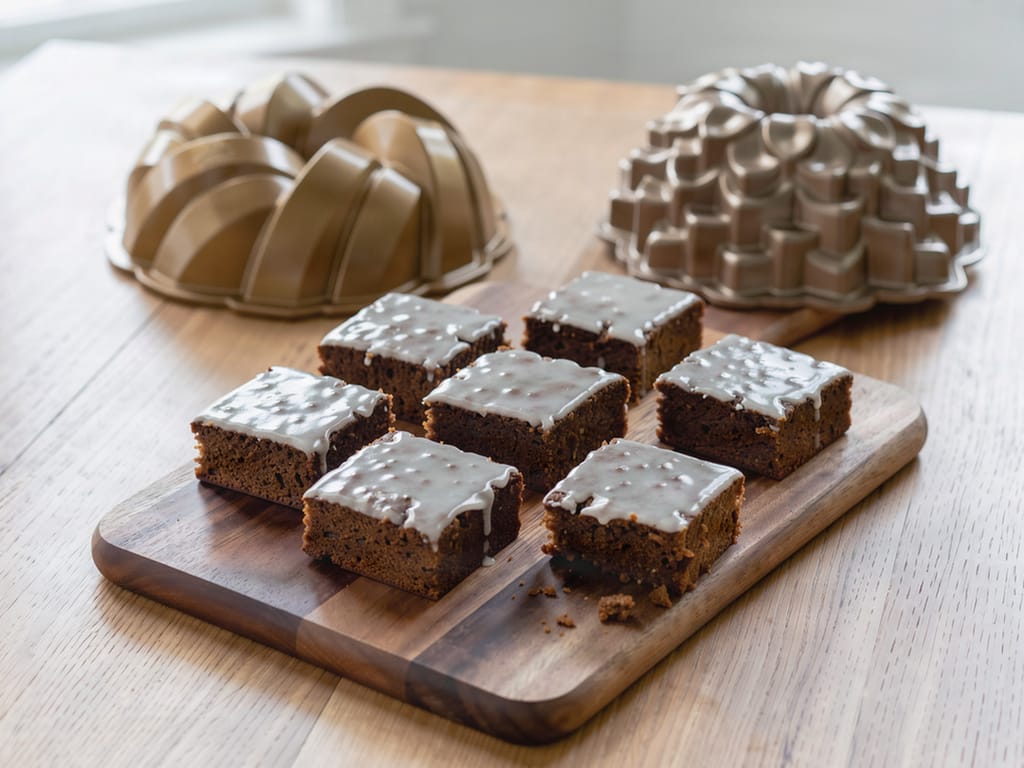
A perník (Czech gingerbread cake) that is still moist on day three rests on five things: baking soda paired with an acidic ingredient to activate it (plum butter, buttermilk, kefir), honey or molasses to hold in moisture, enough liquid fat, a short bake, and an overnight rest under plastic wrap. Below you'll find the base ratio for a sheet-pan perník and why it works, then tried-and-true variations: cup-measure perník, perník with plum butter (povidla), with apples and with zucchini, plus perník bundt cake, roll and muffins. Where we have a tested recipe, we link to it; where we don't, you get the technique and the ratios.
Perník is moist when it holds on to its water and the batter rises evenly. Five things make that happen:
baking soda together with something acidic (plum butter, buttermilk, kefir, yogurt, honey or natural cocoa),
honey or molasses, which hold in moisture,
liquid fat, usually oil, instead of whipped butter,
a short bake: take it out the moment a skewer comes out dry, not ten minutes later,
an overnight rest, wrapped up.
Baking soda is alkaline, and without an acid it lifts the batter only weakly and leaves a soapy taste. It really starts to leaven when it meets an acid, with which it releases carbon dioxide. The Canadian open textbook on baking ingredients (Ingredients, BCcampus) lists honey, molasses and natural (non-alkalized) cocoa among such acidic partners, and buttermilk and plum butter belong there too. Dutch-process cocoa is alkalized, behaves neutrally and does not activate soda. When the acid is missing, the same source says, the crumb turns yellow and tastes of soda. That's why perník made with buttermilk and plum butter comes out darker, fluffier and without a soapy taste.
Honey does the other half of the job. The sugars in honey attract water, so perník with honey goes stale more slowly than perník made with granulated sugar alone, and honey also adds deeper color and aroma. Oil stays liquid after cooling, which is why a perník made with oil is softer than one made with butter, which firms up when cold.
Cocoa gives the dark color and a slightly bitter note, while gingerbread spice gives the aroma. Both go in with the flour so they spread evenly and leave no lumps in the batter.
The last trick is the simplest and the one most often skipped: wrap the baked, cooled perník in plastic wrap and leave it until the next day. The moisture from the center spreads toward the edges, the spices meld and the surface softens. Cut it hot and you get dry edges and a gummy center. If your perník still turns out hard or rubbery, we go through all the causes in why sheet-pan perník is hard and how to fix it.
One note: this is about perník as a sheet cake, not cut-out gingerbread cookies. Those have a stiff dough that is rolled out and baked for a few minutes, and you'll find the full method in our guide to gingerbread cookie dough.
How to soften gingerbread that’s gone hard, when to fill Linzer cookies and how to tell the carp is done. One recipe and one tip a week. Unsubscribe in one click.
A basic perník for a 25 × 35 cm (10 × 14 in) pan rests on 400 g of flour, 250 ml of buttermilk, 150 ml of oil, 2 eggs and 1 teaspoon of baking soda with 1 teaspoon of baking powder. The full ratio for a pan with a higher rim:
400 g semi-coarse flour (Czech polohrubá, slightly grittier than all-purpose) or all-purpose (plain) flour,
180–200 g sugar (half of it can be brown),
2 eggs,
250 ml buttermilk, kefir or milk,
150 ml oil,
3 tablespoons honey,
3 tablespoons plum butter (povidla, a thick Czech plum spread),
2 tablespoons cocoa,
1–2 tablespoons gingerbread spice,
1 teaspoon baking soda and 1 teaspoon baking powder.
The method is simple: mix the dry ingredients in one bowl and the wet in another, combine them and stir only until the dry flour disappears. Bake at 170–175 °C (340–350°F) for about 30–35 minutes. It's done when the surface springs back after a light press and a skewer inserted in the center comes out dry.
Why it works this way: buttermilk and plum butter supply the acid for the soda, and the baking powder is insurance in case there's too little acid (for example if you use plain milk). Oil at roughly 150 ml per 400 g of flour keeps a wrapped perník soft for at least three days. If you use milk instead of buttermilk, cut the baking soda to half a teaspoon and raise the baking powder to a whole packet, otherwise the perník will taste of soda.
Semi-coarse flour makes the perník a touch more crumbly and firm, all-purpose a finer and moister one. The difference is small, so use whichever you have at home. Overmixing makes a big difference, though: the longer you stir the batter after adding the flour, the more gluten develops and the tougher the perník gets. A wooden spoon and a few strokes are enough.
Soda starts reacting as soon as it touches liquid. So don't let the batter stand; put it straight into the oven. It's the baked perník that rests, never the raw batter.
Lactose-free sheet-pan perník relies on coconut milk instead of cow's milk and a lactose-free fat. It suits Advent and Christmas baking, when you want something fragrant on the table but have no time for another batch of Christmas cookies.
Our lactose-free sheet-pan perník is ready in 50 minutes. The fat is just melted and left to cool to lukewarm so it doesn't curdle the eggs. Semi-coarse flour is mixed with baking powder beforehand, and the batter also takes almonds and hazelnuts, gingerbread spice and cocoa. It bakes at 170 °C (340°F) for 25 minutes, in a round or square pan greased with fat and dusted with flour.
Once cool, you finish the perník with melted baking chocolate and shredded coconut. If it's to stay lactose-free, check the labels so the chocolate contains no milk and the fat is lactose-free, as the recipe advises.
Lactose-free sheet pan gingerbread cake
Lactose-free sheet-pan perník with coconut milk and nuts, ready in 50 minutes
Put chocolate icing on completely cooled perník, and sugar glaze on lukewarm perník so it soaks in slightly. On a sheet-pan perník an icing is almost a must, because it protects the surface from drying out. Classic chocolate, white sugar and lemon glaze, with ratios and timing, are all covered in icing for sheet-pan perník.
Cup-measure perník is measured by the cup instead of weighed, so you can bake it even without a kitchen scale. We don't have a finished cup-measure perník recipe on Yumsto yet, so here is the technique and a tested ratio.
Take one 250 ml cup and stick with it throughout. The ratio:
2 cups semi-coarse flour (Czech polohrubá, slightly grittier than all-purpose),
1 cup sugar,
1 cup milk or buttermilk,
½ cup oil,
2 eggs,
2 tablespoons honey, 1 tablespoon cocoa, 1 tablespoon gingerbread spice,
1 packet baking powder (12 g); with buttermilk you can replace half of it with ½ teaspoon baking soda.
Whisk the eggs with the sugar, pour in the milk, oil and honey, then add the flour mixed with the cocoa, spices and leavening. Pour the batter into a smaller greased pan (about 25 × 30 cm / 10 × 12 in) and bake at 175 °C (350°F) for about 25–30 minutes, until a skewer comes out dry.
The most common mistake with cup-measure perník is the flour. A cup scooped straight from the bag, shaken down and packed can hold a good fifth more flour than a cup you fill by spoon and level off. The perník then comes out dry. Spoon the flour into the cup and just sweep off the top with a knife. Measure the milk and oil with the same cup so the ratio holds.
Perník with plum butter (povidla) is moister and darker, because plum butter brings water, sugar and the acid for the soda all at once. A few spoonfuls of plum butter is the easiest way to make perník moist with no other tricks.
Our whole-grain spelt perník is built on exactly that. For 400 g whole-grain spelt flour and 100 g all-purpose wheat flour it uses 60 g plum butter, 60 g honey, 200 ml sunflower oil, two eggs and 250 ml milk. It's leavened with baking powder, and coarsely chopped walnuts go into the batter. It bakes in a pan with a higher rim at 160 °C (320°F) for 50 to 60 minutes; the lower temperature and longer time suit whole-grain flour, which needs more time to bake through without drying out on top.
If your plum butter is very stiff and doesn't blend in completely, don't worry. After baking, the bits of plum butter in the batter make the moist, dark spots you want in a perník.
You can also put plum butter on top: cut the baked slab in half horizontally, spread the bottom half with plum butter mixed with a little rum or orange juice, put the top back on and leave it to rest overnight. This softens the perník, and you add the icing the next day.
Jam instead of plum butter works, just keep in mind that it's thinner and sweeter. Use a tablespoon less and choose a tarter kind, such as currant or apricot, so the soda has something to react with.
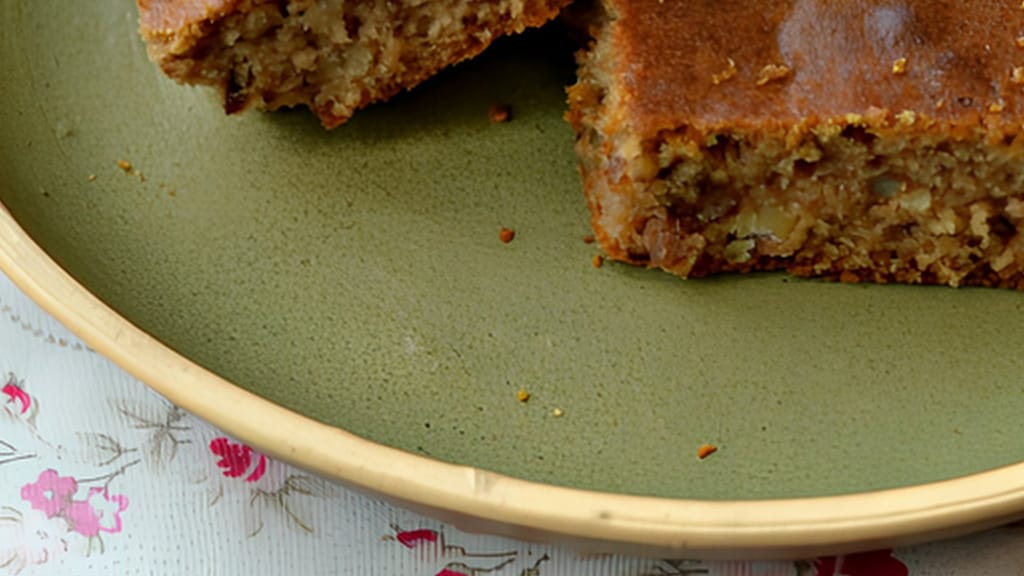
Wholemeal spelt gingerbread cake
Whole-grain spelt perník with honey, plum butter and walnuts
Both apple perník and zucchini perník are moister thanks to the fruit or vegetable, which releases water into the batter as it bakes.
For a zucchini version we have a summer zucchini perník with blackberries. The zucchini isn't grated: a large, even overgrown zucchini is peeled, seeded and blended smooth with the eggs, molasses, brown sugar and melted fat. The dry mix has all-purpose and whole-grain spelt flour, baking powder and baking soda, cocoa, ground coffee, gingerbread spice and chia seeds. The batter is poured into a pan greased and dusted with coconut, blackberries are pressed into the top, and it bakes at 165 °C (325°F) for 30–35 minutes. Molasses and cocoa make the perník very dark, so nobody will guess there's zucchini in it.
We don't have an apple perník recipe on Yumsto yet, so here is the technique. Add 300–400 g of coarsely grated apples to the base ratio (weight after squeezing). Lightly squeeze the grated apples in your hands, otherwise the perník stays gummy at the bottom, and reduce the liquid in the batter by 50–60 ml of buttermilk. Add a teaspoon of cinnamon to the spices. The other route is to slice the apples thinly and arrange them on top of the batter before baking; they bake in and the perník gets an apple-pie-style top. Grated apples in the batter add 5–10 minutes to the bake, so always test with a skewer.
Always measure grated apples after squeezing. The difference in water between juicy and mealy apples is big, and it decides whether the perník comes out moist or raw in the middle.
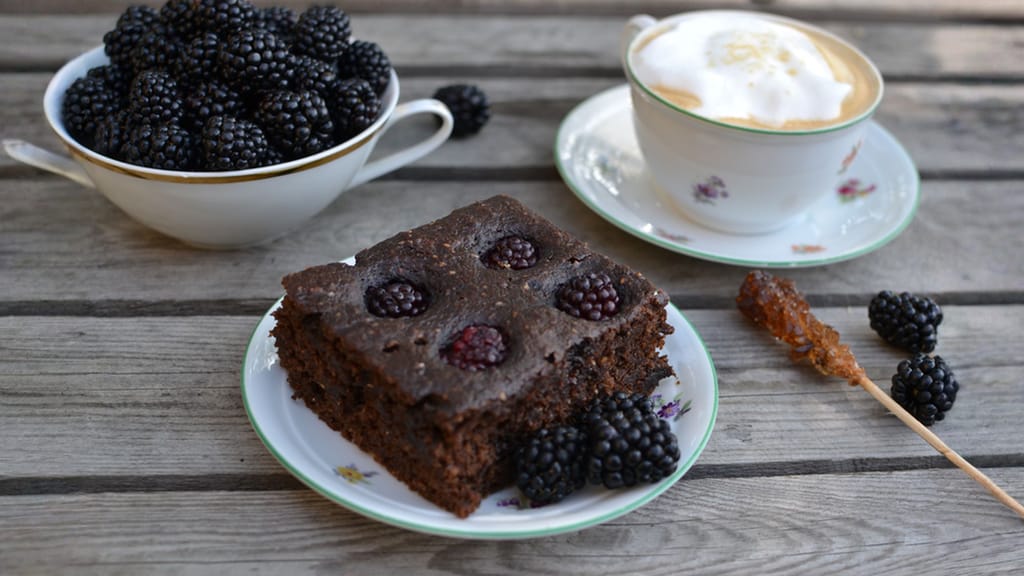
Summer zucchini gingerbread with blackberries
Summer zucchini perník with blackberries, molasses and spelt flour
Perník bundt cake is the same gingerbread batter baked in a tall pan, just a little thicker and baked longer at a lower temperature. We don't have a finished perník bundt cake recipe on Yumsto yet, but the method comes straight from the base ratio.
What to change compared with sheet-pan perník:
Cut the milk or buttermilk by about a quarter. A thicker batter rises upward and won't sink in the middle.
Bake at 160–170 °C (320–340°F) for 45–60 minutes. A tall pan needs time for the center to bake through before the edges darken.
Grease the pan thoroughly with fat and dust it with flour or breadcrumbs, especially in the crevices. Gingerbread batter with honey and plum butter sticks to the pan more than a light bundt cake.
Leave the cake in the pan for 10–15 minutes after baking, then turn it out onto a rack.
Tried-and-true variations: perník bundt with apples (grated, squeezed apples, see above), with plum butter (two tablespoons in the batter or a ribbon of plum butter in the middle between two layers of batter), with nuts (a handful of chopped walnuts tossed in a tablespoon of flour so they don't sink), with plums (the plum pieces also tossed in flour) and with quark (tvaroh, a Czech fresh curd cheese). The quark version is made like a marble cake: pour gingerbread batter and quark filling (quark, egg, sugar, vanilla) into the pan in alternating layers and run a skewer through once. Kefir in place of buttermilk behaves the same way, just a little thicker.
Testing with a skewer is a must for a bundt cake, and you push it into the highest point, where the batter bakes longest.
A perník roll is a thin gingerbread sponge baked like a sponge cake, rolled while warm and filled with plum butter or cream. We don't have a tested perník roll recipe on Yumsto yet, so here is the technique.
The batter for a roll has to be springy, not moist and dense like sheet-pan perník. So it isn't made with oil and buttermilk but whipped like a sponge cake: beat the eggs (4–5) with the sugar into a thick, pale foam, stir in a tablespoon of honey and finally fold in, with strokes from the bottom up, the flour mixed with cocoa, gingerbread spice and a pinch of baking soda. Spread it on a pan lined with parchment paper in a layer about 1 cm thick and bake at 180–190 °C (350–375°F) for 8–12 minutes. The sheet must not darken at the edges; as soon as the surface springs back, it's done.
Right after baking, flip the sheet onto a clean kitchen towel dusted with powdered sugar, peel off the paper and roll it up together with the towel. Leave it to cool like this. The sheet remembers the shape and won't crack when you fill it. Then unroll it, spread on the filling and roll it up again, this time without the towel.
Fillings:
Plum butter with nuts: mix the plum butter with a little rum and sprinkle with chopped walnuts. The roll keeps at room temperature and gets softer every day.
Plum butter with pears: add a finely diced ripe pear to the plum butter, ideally briefly stewed.
Cream: whipped whipping cream mixed with mascarpone or quark, or a caramel cream made from butter and caramelized condensed milk.
A cream-filled roll needs at least two hours in the fridge so the filling sets and the roll can be sliced.
Perník muffins are gingerbread batter baked in paper liners, so they're ready in about half an hour and you don't have to slice them. We don't have a perník muffin recipe on Yumsto yet, but you can easily bake them from the base ratio.
Half the base ratio makes about 12 muffins. Keep the batter a little thicker (take out a tablespoon or two of liquid) so the muffins dome. Fill the liners two-thirds full and bake at 180 °C (350°F) for 18–22 minutes. They're done when a skewer inserted in the center comes out dry. With muffins it's doubly true that you mustn't overmix: combine the dry and wet parts with a wooden spoon in just a few strokes and leave the lumps.
What to add so they aren't boring:
grated, squeezed apples, or a small apple cube in each liner,
a teaspoon of plum butter or tart jam in the center, between two layers of batter,
plums cut into pieces and tossed in flour,
a quark filling (quark with egg and sugar) as in a quark koláč,
chopped dark chocolate,
a mashed ripe banana in place of part of the oil: the muffins will be denser and sweeter, so reduce the sugar.
If you want cup-measure muffins, use the ratio from the cup-measure perník and the same times as above.
Homemade gingerbread spice smells stronger than store-bought, because you grind it fresh and decide the proportions yourself. On Yumsto we have two routes.
Homemade gingerbread spice is quick, ready in 12 minutes. Cloves, allspice, anise, star anise, black pepper and a chopped vanilla bean are ground fine, then ground cinnamon, ground ginger and freshly grated nutmeg are added. Store the mix in a tightly closed jar in a dry, dark place away from the stove.
Gingerbread spice: the best fragrant recipe goes a step further. The whole spices (star anise, allspice, anise, fennel, cloves, coriander, cardamom seeds and cinnamon sticks) are first toasted in a dry pan for 2–3 minutes until fragrant. Then they're tipped onto a cold plate and left to cool completely so they don't steam in the grinder, ground and sifted. Finally, ground ginger and freshly grated nutmeg are added.
If you don't have gingerbread spice on hand, what to use instead of gingerbread spice will help. And if you're lost on how gingerbread, Christmas and other blends differ, take a look at the overview of Christmas spices.
For sheet-pan perník use 1–2 tablespoons of spice per 400 g of flour. Freshly ground homemade spice is stronger, so start at the lower end and judge the strength by smell. Don't taste raw batter with eggs and flour.
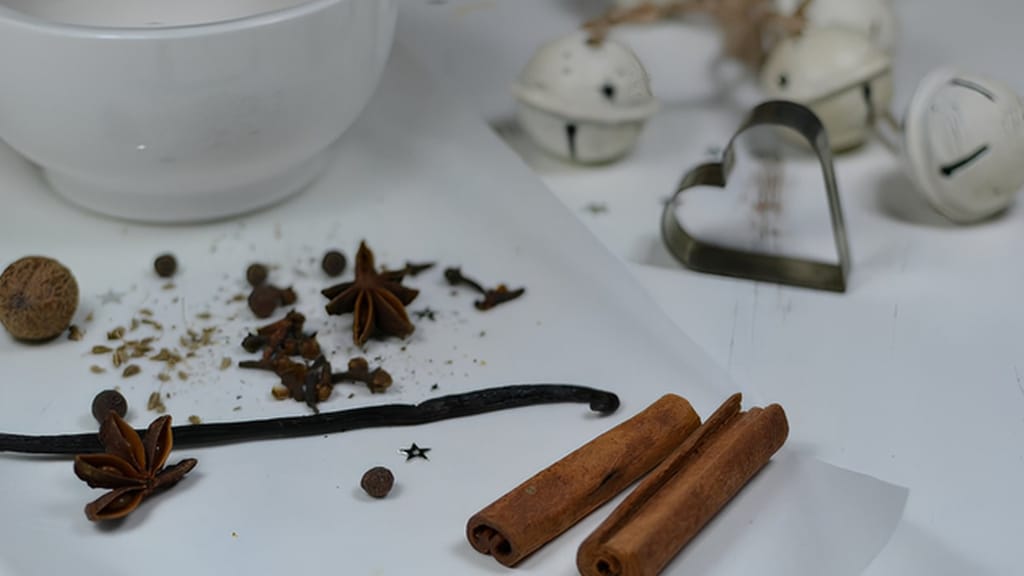
Homemade gingerbread spice mix
Homemade gingerbread spice from cloves, star anise, anise, cinnamon and ginger in 12 minutes
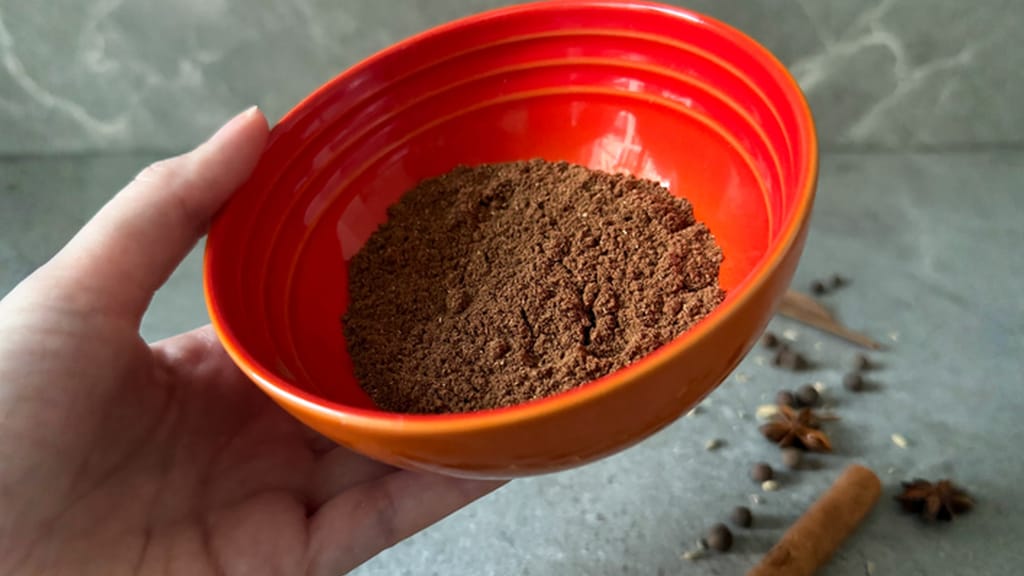
Homemade gingerbread spice: the best fragrant recipe
Fragrant gingerbread spice from whole spices toasted in a dry pan
Sheet-pan perník without a cream filling stays moist for at least three days wrapped in plastic wrap at room temperature; perník with cream belongs in the fridge and should be eaten within 2 days. Store it well wrapped in plastic wrap or in a closed tin; the second day is usually better than the first, because the moisture spreads and the spices meld. The fridge doesn't suit perník without cream: in the cold it hardens faster than at room temperature.
A few practical rules:
Cut it only once cooled, and ideally only the next day.
Press cut pieces back together, cut side in, so they don't dry out.
Cover the whole surface with icing; it protects the perník better than plastic wrap.
Perník with cream, whipped cream or a quark filling belongs in the fridge, just like the roll above.
Perník can be frozen. Wrap it unglazed in plastic wrap and then put it in a bag so it doesn't pick up freezer odors. Thaw it in its wrapping at room temperature so the condensation collects on the wrap, not on the perník. Finish the icing after thawing.
If perník goes hard after a few days, don't throw it out. Blitz it into crumbs and use them the way honey cake layers are used in honey cake balls (the method is just below), or wrap it overnight in plastic wrap with a piece of apple, which gives it back a bit of moisture.
Blitz hardened perník into crumbs, mix them with a cream and shape into balls, just as honey cake balls (medovníkové koule) are made. It's a no-bake Advent tip for when there's no time left for another tray of Christmas cookies, and it tastes like honey cake without the layering.
The method is shown in our recipe for honey cake balls, last-minute Christmas cookies. First a stiff dough is worked from all-purpose flour, baking soda, eggs, honey, powdered sugar and fat, flat rounds are made from it (they needn't be pretty) and baked at 180 °C (350°F) for about 15 minutes. Once cool, they're broken up and blitzed fine, with some of the crumbs set aside for coating. The rest is mixed with a cream of softened butter and caramelized condensed milk, the mixture goes into the fridge for two hours and then is shaped into balls rolled in the crumbs. Crumbs from hardened perník go in place of the baked rounds.
If the taste of honey dough hooks you and you want to tackle the whole cake, how long to bake the layers of honey cake and how to tell they're done are in honey cake: how long to bake the layers.
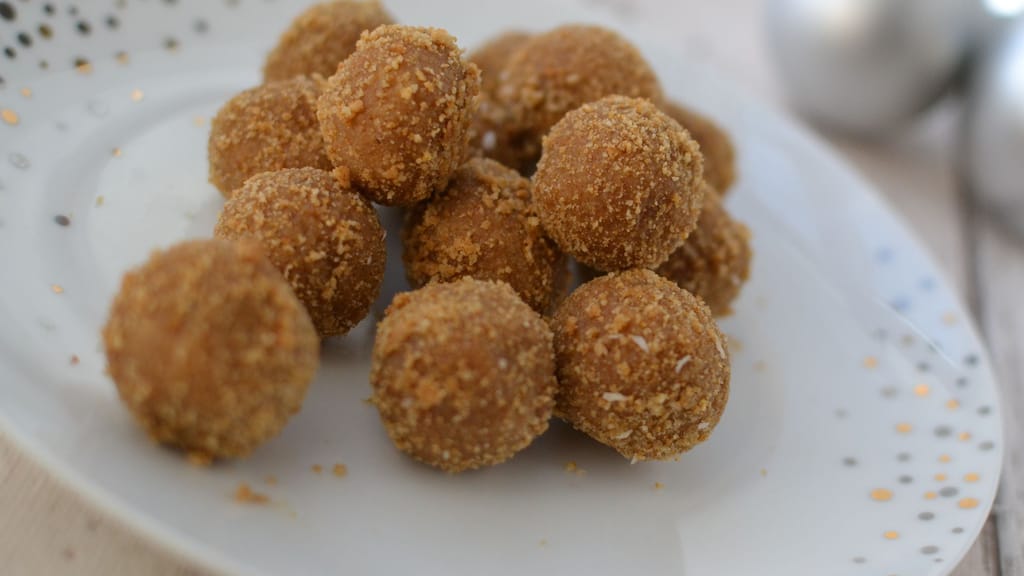
Honey cake balls - last-minute christmas treats
Honey cake balls made from honey cake layers and caramel cream

Nordic Ware
Bundt Pan - Braided
Nordic Ware
Bundt Pan - BlossomPerník most often sinks in the middle because it's underbaked inside or contains too much leavening. Too much baking soda or baking powder makes the batter shoot up fast, and then the center collapses. Stick to 1 teaspoon of baking soda per 400 g of flour, don't open the oven during the first half of baking, and take the perník out only when a skewer inserted in the center comes out dry.
Perník tastes of baking soda when the batter lacks an acid for the soda to react with. Unreacted soda gives the crumb a soapy taste and a yellowish color. Bake with buttermilk, kefir or plum butter (povidla), and if you use plain milk, cut the baking soda to half a teaspoon and add baking powder.
Replace buttermilk in perník with kefir, plain white yogurt thinned with a little milk, or milk with a tablespoon of lemon juice left to stand for five minutes. All three bring the acid that baking soda needs. If you use plain milk, cut the baking soda to half a teaspoon and add baking powder.
Yes, you can make perník with baking powder alone, but it comes out lighter in color and a little denser. Baking soda in an acidic batter darkens the perník and gives it its typical fluffy crumb. Without soda, use a whole packet of baking powder (12 g) per 400 g of flour and add an extra tablespoon of cocoa for color.
You can make perník with either all-purpose (plain) flour or semi-coarse flour (Czech polohrubá, slightly grittier than all-purpose), and the difference is small. All-purpose flour gives a finer, moister crumb; semi-coarse gives a slightly more crumbly, firmer one. Whole-grain spelt flour works too, but it absorbs more liquid, so the perník needs a lower temperature and a longer bake.
Use a baking sheet with a rim at least 4 cm (about 1.5 in) high; for the base ratio with 400 g of flour, about 25 × 35 cm (10 × 14 in). The batter should sit about 1.5 cm deep in the pan. For a large oven-size sheet, increase the ratio by half, otherwise the perník will be thin and dry out.
One recipe worth heating the oven for, one tip, and one deal from the shop. Nothing else.