Soft honey gingerbread cookies that never go hard
Why Gingerbread Cookies Crack on Top and How to Bake Them Smooth
Updated Nov 3, 2026
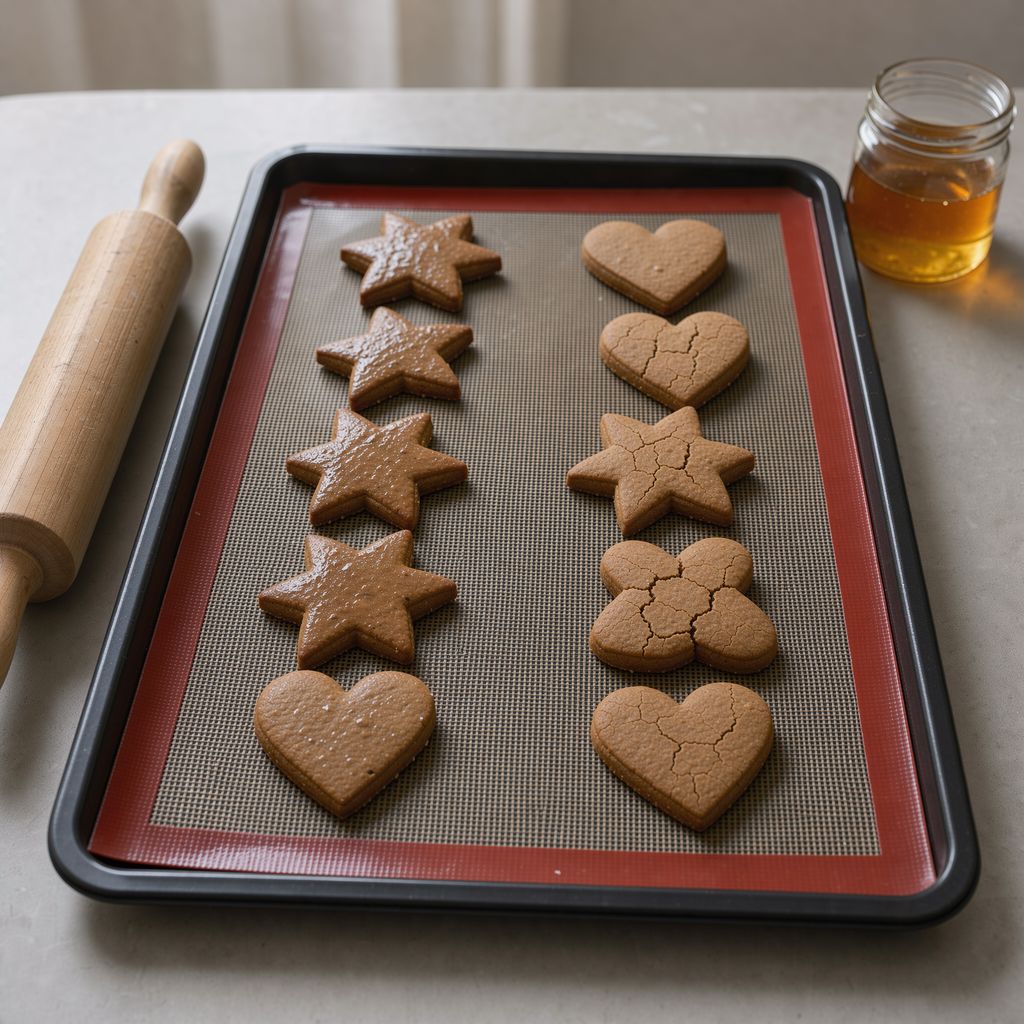
Gingerbread cookies crack on top when the surface sets in the oven before the dough underneath has finished rising. The usual culprits are dry dough with extra flour, baking powder instead of baking soda, or an oven that's too hot. For smooth cookies, use rested, pliable dough with no more than one level teaspoon of baking soda per 500 g of flour, roll it out without extra flour, and bake at 160–170 °C (320–340 °F). Below you'll find all six causes and how to tell which one is yours.
Gingerbread cookies crack when their surface firms up and dries out before the dough underneath has finished rising. The gas from the leavening has nowhere to go and splits the crust. There are usually six possible causes:
Dry dough with extra flour – from dusting the surface or from "rescuing" sticky dough.
Baking powder instead of baking soda, or too much leavening.
Oven temperature that's too high – the surface sets before the cookie has finished taking shape.
Cold or unrested dough – tiny cracks from rolling open up in the oven.
A dried-out surface – cut-out cookies sat out in the air for too long.
Thick cookies and overbaking – a thick cookie domes more and cracks, and an overbaked one dries out.
You can tell which cause is yours from the way the cracks look. Let's go through them one by one.
A network of tiny cracks all over the surface almost always means there's too much flour in the dough. Dry dough has no elasticity, so when it lifts in the oven, the surface tears instead of stretching.
Don't dust with extra flour. Roll the dough out between two sheets of baking paper or on a work surface that's only lightly floured. Every handful of extra flour gets worked into the sheet of dough.
Chill sticky dough instead of adding flour. It's sticky because it's warm, not because it's short on flour.
Re-roll the scraps no more than twice. A little flour gets worked in each time, and they dry out.
For how to handle gingerbread dough from mixing to baking tray, see our article on gingerbread cookie dough.
A domed center with one big crack is typical of gingerbread cookies leavened with baking powder, or with too much baking soda. Baking powder leaves the dough neutral, so the gluten sets sooner, and the gas, with no room to spread sideways, pushes upward and splits the crust. Baking soda, on the other hand, leaves the dough alkaline, so the cookie spreads a little and the surface stays smooth.
Use baking soda in gingerbread, not baking powder.
Stick to no more than one level teaspoon of baking soda (roughly 4–5 g) per 500 g of flour. A heaped teaspoon can easily be double that.
Stir the baking soda into warm honey, or sift it with the flour, so no lumps are left in the dough.
To learn why baking soda belongs in gingerbread and what it does to color and softness, read our article on baking soda in gingerbread instead of baking powder.
Gingerbread cookies that crack mostly around the edges and come out darker on top than you'd like are baking at too high a temperature. Honey dough browns quickly, and the surface sets before the cookie has finished taking shape.
Bake at 160–170 °C (320–340 °F) with top and bottom heat, or at 150–160 °C (300–320 °F) with a fan. A fan dries out the surface more, which is why the temperature is lower.
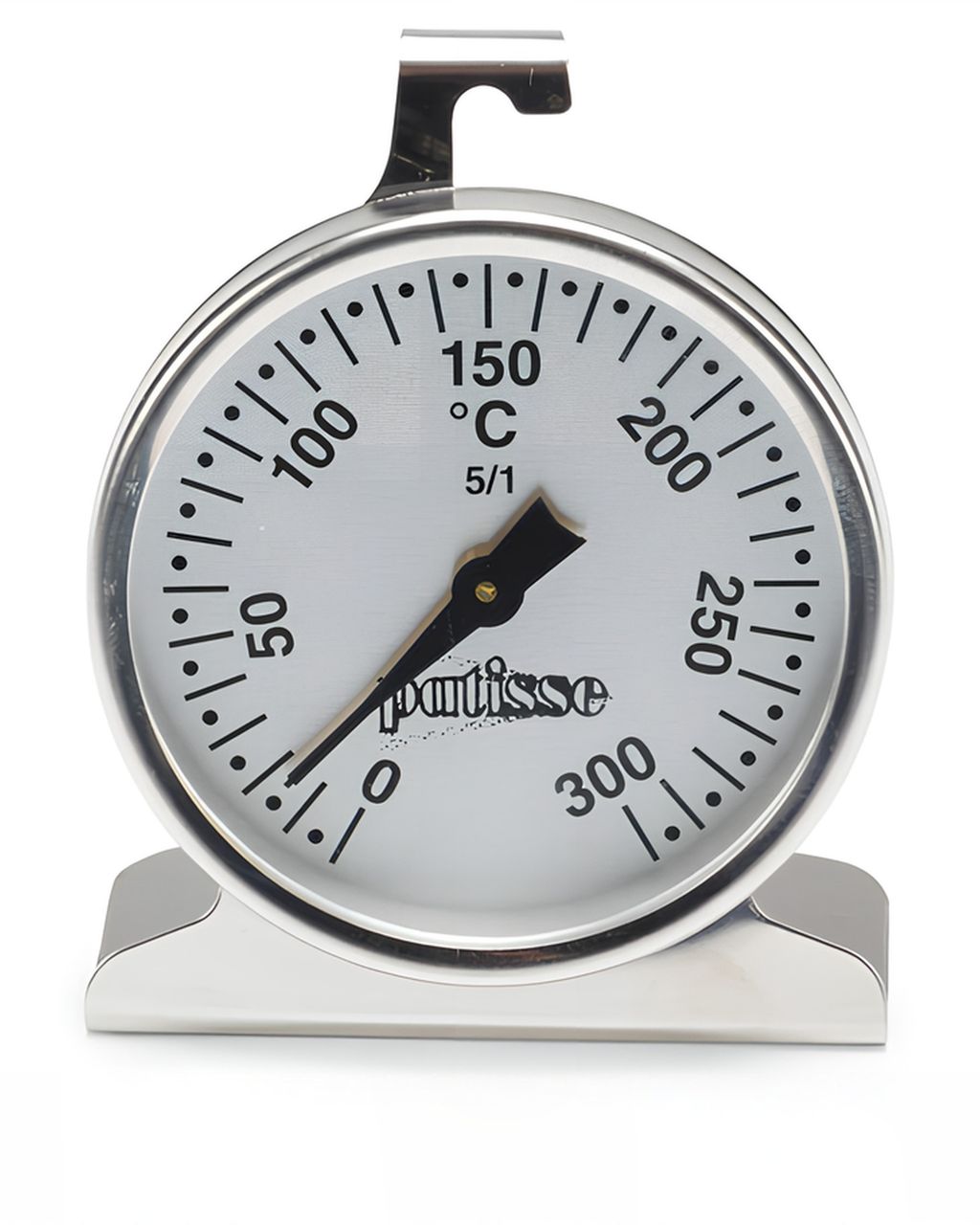
Check your oven. Home ovens commonly differ from the dial setting by 10–20 °C (about 20–35 °F). If your cookies crack even at the "right" temperature, measure it with an oven thermometer.
Put the tray in the middle of the oven, not on the top rack near the heating element.
You'll find times and temperatures by thickness in our article on what temperature to bake gingerbread cookies at.
Cracks that follow the edge or run inward from it were already there from rolling. Dough straight from the fridge is hard and breaks under the rolling pin, and the tiny cracks you can barely see on the raw sheet open up in the oven.
Let the dough warm up a bit before rolling so it's cool but pliable. When you press it with a finger, it should give, not crack.
Let it rest at least overnight, or even 2–3 days. The flour absorbs moisture from the honey, and the dough becomes more elastic.
Press small cracks in the sheet back together right away and smooth them with a finger while the dough is still raw.
To find out why gingerbread dough cracks as early as rolling and how to mend it, see the section on cracking in our article on gingerbread cookie dough.
Gingerbread cookies that sat out in the air for a long time after cutting have a dried-out surface, and even a small lift in the oven will tear it. And the thicker the cookie, the more it domes in the middle.
Cover the cut-out cookies with cling film if you're not baking them right away, or put them in the fridge.
Brush them just before baking with beaten egg or milk. The surface stays softer and the cookies come out shiny. You'll find which glazes work in our article on what to brush gingerbread cookies with so they shine.
Roll the dough out to 3–4 mm (about 1/8 inch). Thicker cookies bake longer and dome more.
Don't overbake them. Take them out as soon as the surface turns matte and feels slightly springy to the touch. For how to tell for sure, see our article on how to tell when gingerbread cookies are done.
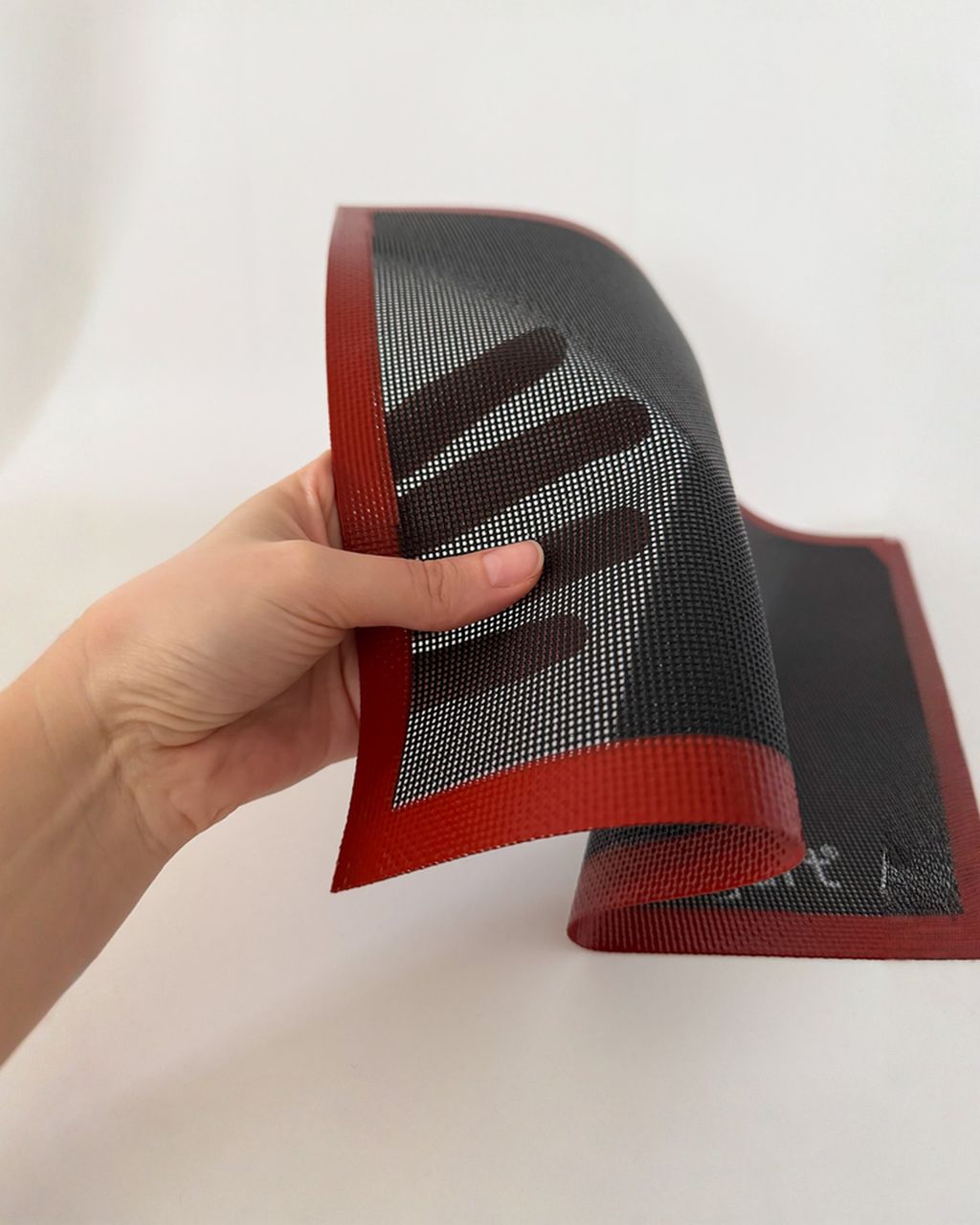
On a perforated silicone baking mat, gingerbread cookies bake more evenly from underneath and around the edges, so you don't have to wait for the center to finish while the edge dries out.
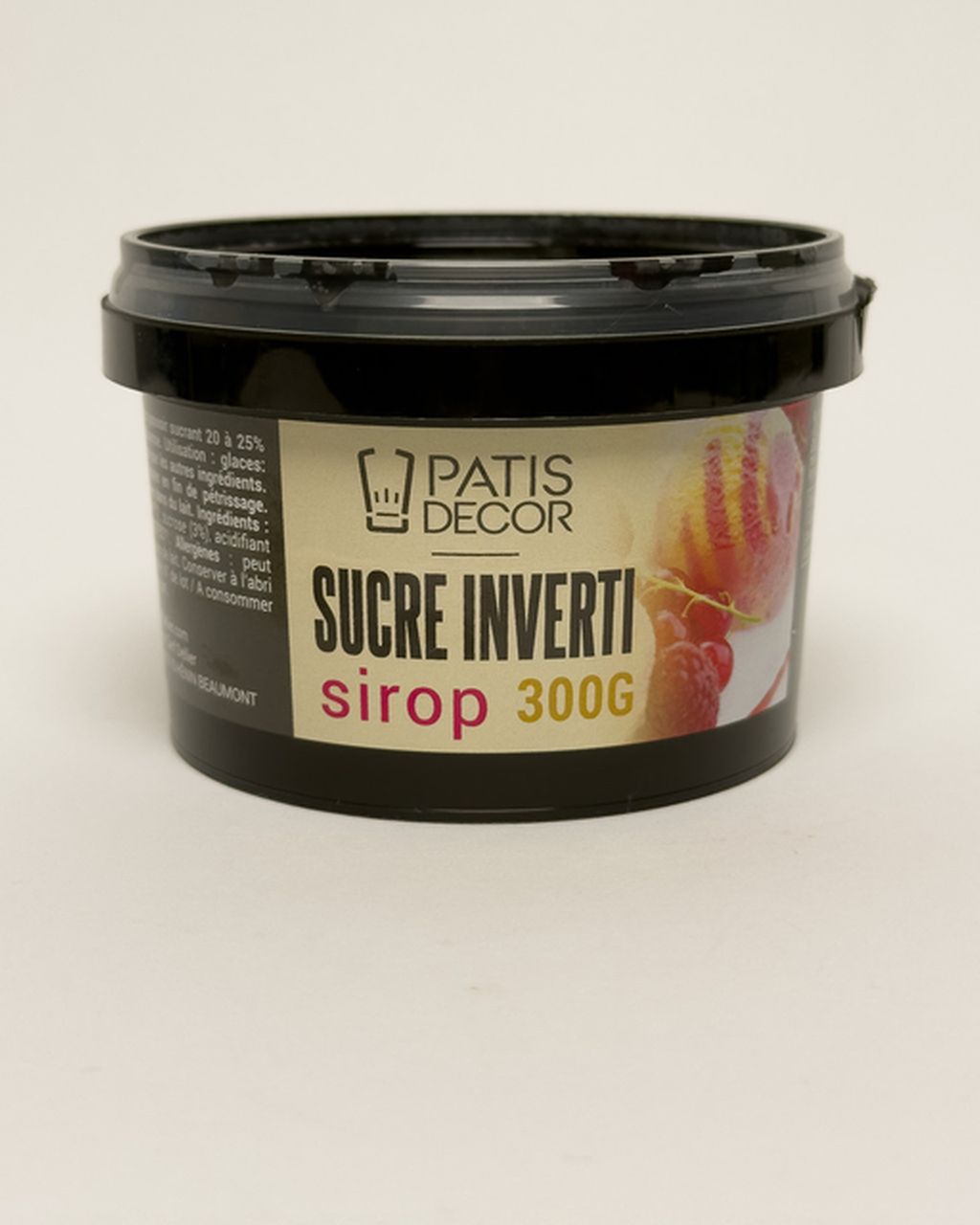
Dough in which you replace 25–50% of the sugar with invert sugar syrup is softer and dries out less, so the surface of the cookies stays more flexible. Invert syrup is a mixture of glucose and fructose that binds water, much like honey.
Start with a third in gingerbread: for a recipe with 250 g of sugar, use roughly 80 g of invert syrup and 170 g of sugar.
Liquid syrup contains water, so the dough will be a bit softer. Chill it well before rolling.
Don't use it for Christmas tree ornament cookies or gingerbread house pieces. They go soft, absorb moisture, and can snap on the string.
You can find it with us as liquid invert sugar for baking. For how much to use in other doughs, see our article on invert sugar instead of sugar. More baking syrups and sugars are in the sugars and syrups category.
Cracked gingerbread cookies taste just fine, so all you need to do is cleverly hide the cracks. Three options:
Flood them with icing. A thicker flood icing fills in the cracks, and once it dries you won't see them. For consistency and method, see our article on icing for gingerbread cookies.
Sandwich them together. Put two cookies together with plum butter or jam, cracked sides facing in; our article on filled gingerbread cookies explains how.
Let them soften. In a tin with a source of moisture, gingerbread cookies soften and tiny cracks close up within a few days.
Note that icing that cracks is a different problem from a cookie that cracks; that one is covered in our article on why icing cracks on gingerbread cookies. And if your cookies spread instead, take a look at our article on why gingerbread cookies spread while baking.
Try everything above on a tried-and-true honey dough that rolls out and decorates well:
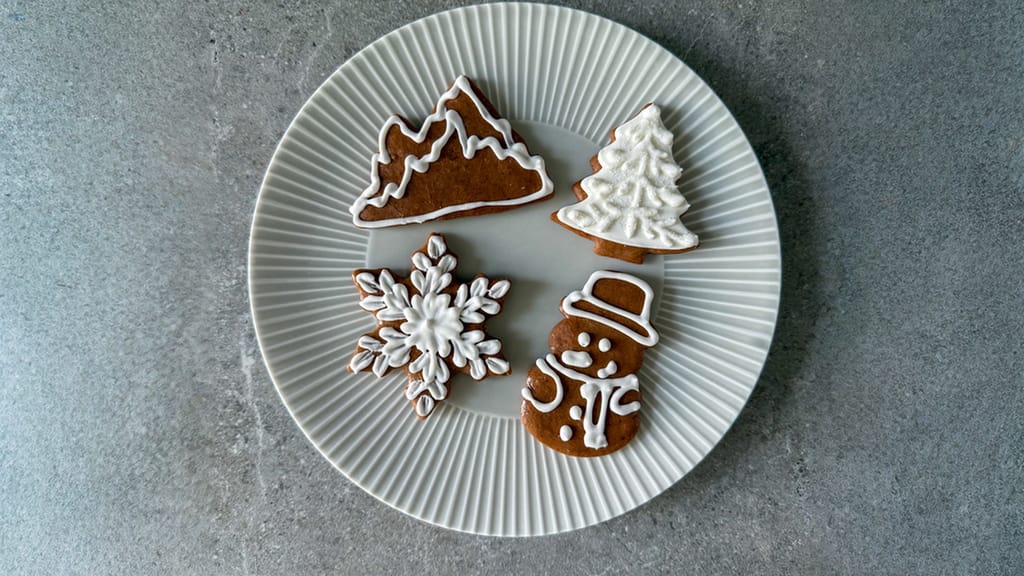
Soft honey gingerbread cookies that never go hard
Soft honey gingerbread cookies that don't go hard: a tried-and-true gingerbread dough
Yes. A fan oven dries out the surface faster, so the cookies crack more easily. If you use one, lower the temperature to 150–160 °C (300–320 °F) and bake no more than two trays at a time. With top and bottom heat at 160–170 °C (320–340 °F), the surface usually stays smoother.
A little, yes. Honey holds moisture, so the dough stays softer. But too much honey makes the cookies spread in the oven and lose their shape. A more reliable approach is to skip the extra flour on the work surface, let the dough rest, and bake at 160–170 °C (320–340 °F).
You can. Spread a flood icing over the cracked surface so it fills in the cracks. Don't pipe fine outlines on a cracked cookie, because the icing line would break up in the cracks.
Most often it's because of flour added while rolling out, or an oven that runs hotter than its dial says. The recipe assumes the exact amount of flour and the stated temperature. Dusting the surface with extra flour and an oven that's off by 10–20 °C (about 20–35 °F) are enough for the surface to set before the cookie has finished taking shape.
One recipe worth heating the oven for, one tip, and one deal from the shop. Nothing else.