How Long Does Potato Salad Last in the Fridge
Why Your Potato Salad Is Watery and How to Fix It
Why Your Potato Salad Is Watery and How to Fix It
Updated Nov 3, 2026
Potato salad usually turns watery because of pickles and pickle brine that went in without being squeezed out, potatoes cut while still warm, and salt that draws the juice out of the vegetables. To fix it, drain off the liquid, let the salad drain in a sieve in the fridge, stir in a few cooked, cold potatoes or a hard-boiled egg, and adjust the dressing at the very end. Keep it cold the whole time.
Why Potato Salad Gets Watery: 7 Causes
Potato salad releases water for seven common reasons: pickles and brine, salted onion, warm potatoes, overcooked or floury potatoes, wet cooked vegetables, a thin dressing, and salt added too early.
Pickles and brine. Jarred pickles are full of liquid. If you chop them and don't squeeze them out, they release it into the salad within a few hours.
Onion. Chopped, salted onion lets out juice, just like raw apples or celery.
Warm potatoes. Steam from warm potatoes condenses in the bowl and turns a creamy dressing thin.
Overcooked or floury potatoes. A potato that has fallen apart releases starch and water, so the salad ends up gluey and wet at the same time.
Wet vegetables. Carrot, parsley root or peas cooked in water and not drained well bring water straight into the bowl.
Thin dressing. Plain yogurt releases whey, and light mayonnaise has more water than the classic kind.
Salt added too early. Salt draws water out of everything it touches. The longer the salad sits salted, the more water collects at the bottom.
Pickles, Brine and Onion: The Main Source of Water
Pickles and onion are the most common culprits, so deal with them first. Squeeze the chopped pickles in your hands or in a kitchen towel, chop the onion finely and add it along with the dressing, not before.
Pickle brine belongs in the salad for flavor, but measure it by the spoonful, not the ladleful. Start with 1–2 tablespoons per kilogram (about 2 lb) of potatoes, let the salad rest for an hour, and only then adjust. Grate fresh apples or raw celery just before mixing and squeeze them out the same way as the pickles.
Potatoes: Cold and Firm
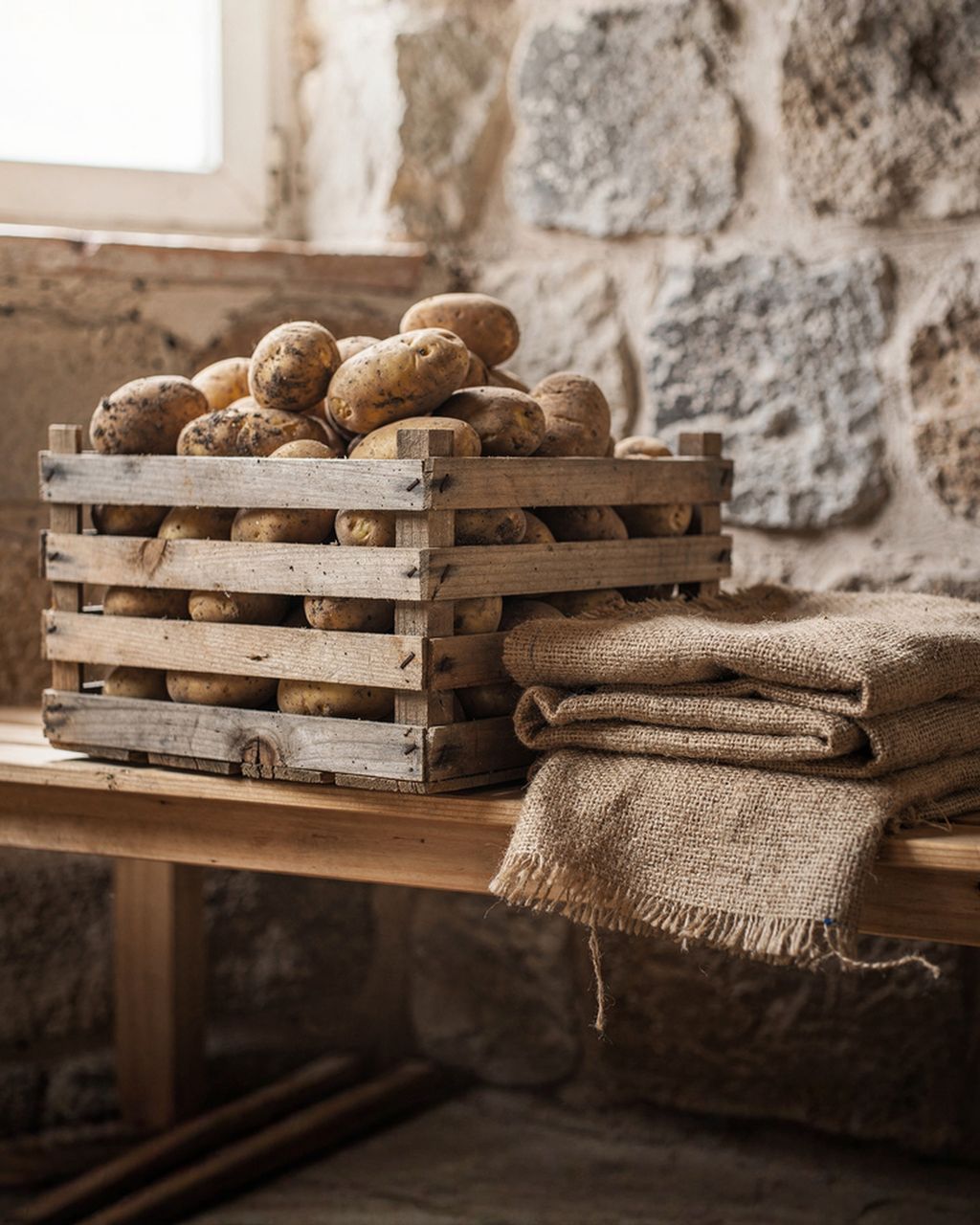
For a salad that doesn't weep, you need firm, waxy (type A) potatoes, boiled in their skins and fully cooled. Warm potatoes give off steam and turn smeary, and overcooked ones fall apart. It works best to cook them the day before and cut them cold from the fridge.
The exception is a warm yogurt-based salad that is deliberately mixed while the potatoes are still warm, like our fresh potato salad. There the potatoes soak up the dressing, so make it a little thicker.
Mayonnaise, Yogurt or Tartar Sauce?
The salad that releases the least water is the one made with classic store-bought mayonnaise. Yogurt, tartar sauce and light mayonnaise contain more water and will release it over time.
Yogurt: choose a thick one (Greek style), or let plain yogurt drain for 1–2 hours in a sieve lined with a kitchen towel in the fridge. Add it to the salad only on the day you serve it.
Homemade mayonnaise from raw egg yolks: the salad is thick, but it keeps in the fridge for only 1–2 days. The article How Long Does Potato Salad Last in the Fridge explains why.
Tartar sauce and light mayonnaise: better for adding flavor than as the only dressing.
How to Fix Watery Potato Salad
You can rescue watery potato salad in four steps: pour off the liquid, let the salad drain, add something dry, and adjust the dressing at the very end.
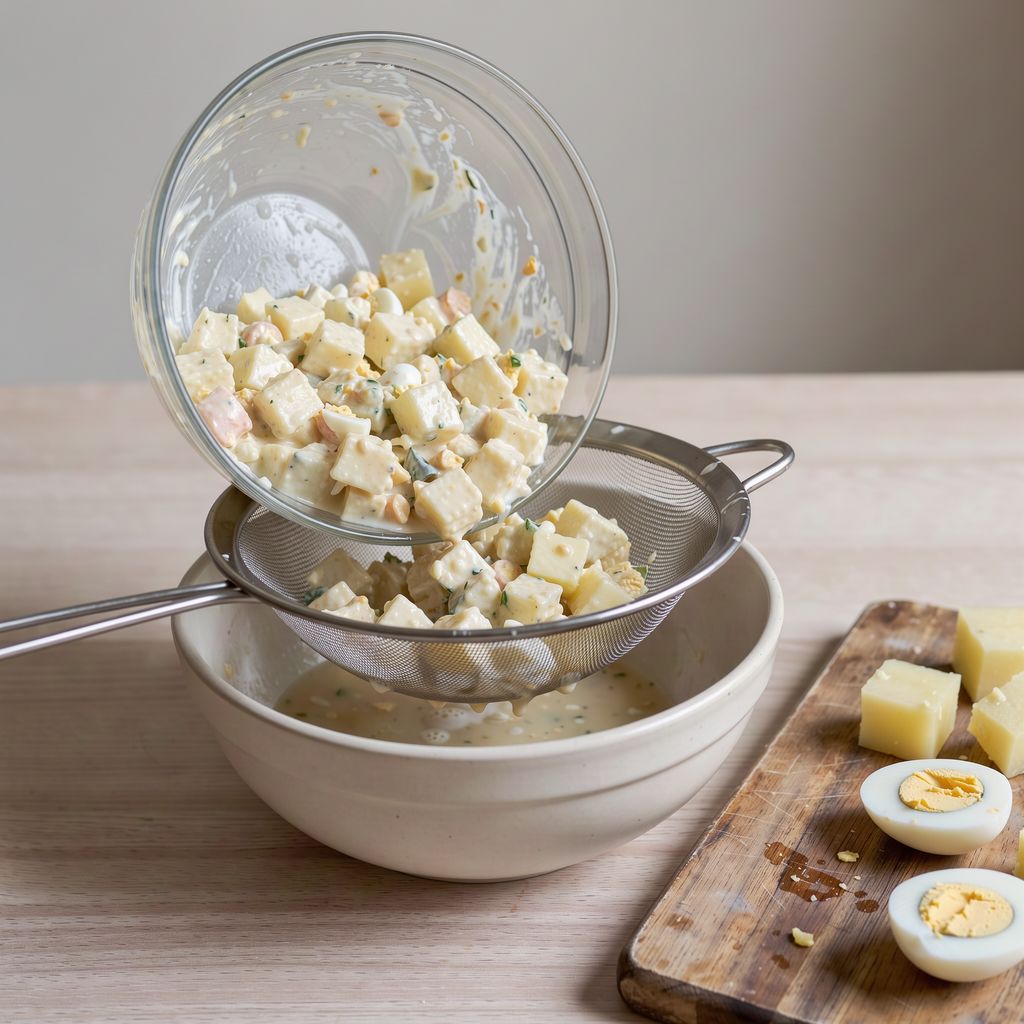
Pour off the water. Tilt the bowl and carefully pour off the liquid from the bottom, or move the salad to a large sieve over a bowl and let it drain for 15–30 minutes – in the fridge, not on the counter.
Add dry ingredients. A few cooked, cold potatoes cut into cubes or 1–2 hard-boiled eggs will soak up the excess moisture and thicken the salad. A spoonful or two of mashed cooked potato helps as well.
Adjust the dressing. Only now add a spoonful of mayonnaise and taste. Add salt and brine carefully, since both will draw out more water.
Let the salad rest. An hour or two in the fridge, and the potatoes will soak up what's left in the bowl.
Never thicken the salad with flour or starch, and don't heat it. And if the salad sat on the table for more than two hours while you were rescuing it, don't try to save it – throw it out. The same goes for a salad that smells sour or yeasty, is past its date, or has mayonnaise that has curdled into little grains: there, the water isn't a cooking mistake but a sign of spoilage.
How to Make Potato Salad That Won't Turn Watery, Even the Next Day
A salad that doesn't release water has cold potatoes, squeezed-out pickles, well-drained vegetables, and salt added only with the dressing. A plan for December 23rd:
Boil the potatoes in their skins the day before and put them in the fridge.
Cook the vegetables, drain them in a sieve and let them cool.
Chop the pickles and onion and squeeze them out.
Mix the vegetables with the dressing, season, and gently fold in the potatoes last.
Divide the salad among shallow containers and put it in the fridge right away. In a shallow layer it cools faster.
More Potato Salad Articles
Frequently asked questions
Why is potato salad watery the next day?
Potato salad is often watery the next day because salt and brine drew the juice out of the pickles, onion and potatoes overnight, and it settled at the bottom. Before serving, pour off the liquid, stir the salad and, if needed, add a spoonful of mayonnaise. Next time, squeeze the pickles dry and add the salt along with the dressing. But if the salad smells sour or is past its date, don't try to rescue it. Throw it out.
Why is potato salad mushy or gluey?
Potato salad turns gluey when the potatoes are floury, overcooked or cut while still warm. The broken-down starch then blends with the dressing into a sticky mass. Gluey salad can't be fixed, but next time use firm, waxy (type A) potatoes, boil them in their skins and cut them cold.
How much pickle brine should I put in potato salad?
Start with 1–2 tablespoons of pickle brine per kilogram (about 2 lb) of potatoes. Let the salad rest in the fridge for an hour, taste, and only then add more if you need it. Brine adds tang, but every extra spoonful means more water at the bottom of the bowl.
Can I thicken watery potato salad with breadcrumbs?
Don't thicken potato salad with breadcrumbs. They soak up liquid and swell into a pasty mass that tastes like soggy bread. A few cooked, cold potatoes or a diced hard-boiled egg work much better, once you've poured off the liquid.
Want tips like this every Thursday?
One recipe worth heating the oven for, one tip, and one deal from the shop. Nothing else.