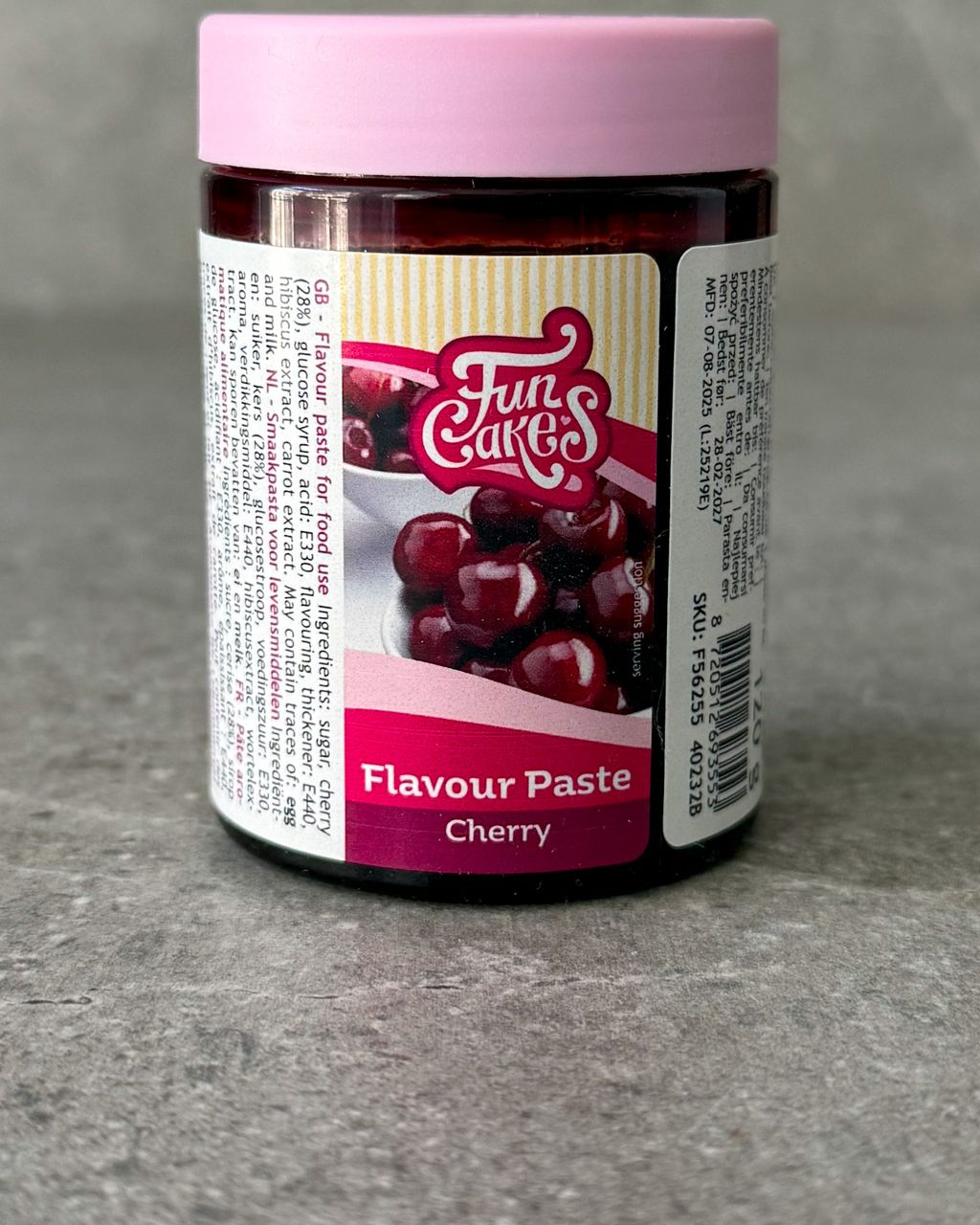
FunCakes Cherry Flavouring Paste for Creams & Batters (120 g)
Filled Gingerbread Cookies: What to Fill Them With and How to Sandwich Them So They Stay Soft
Updated Oct 17, 2026
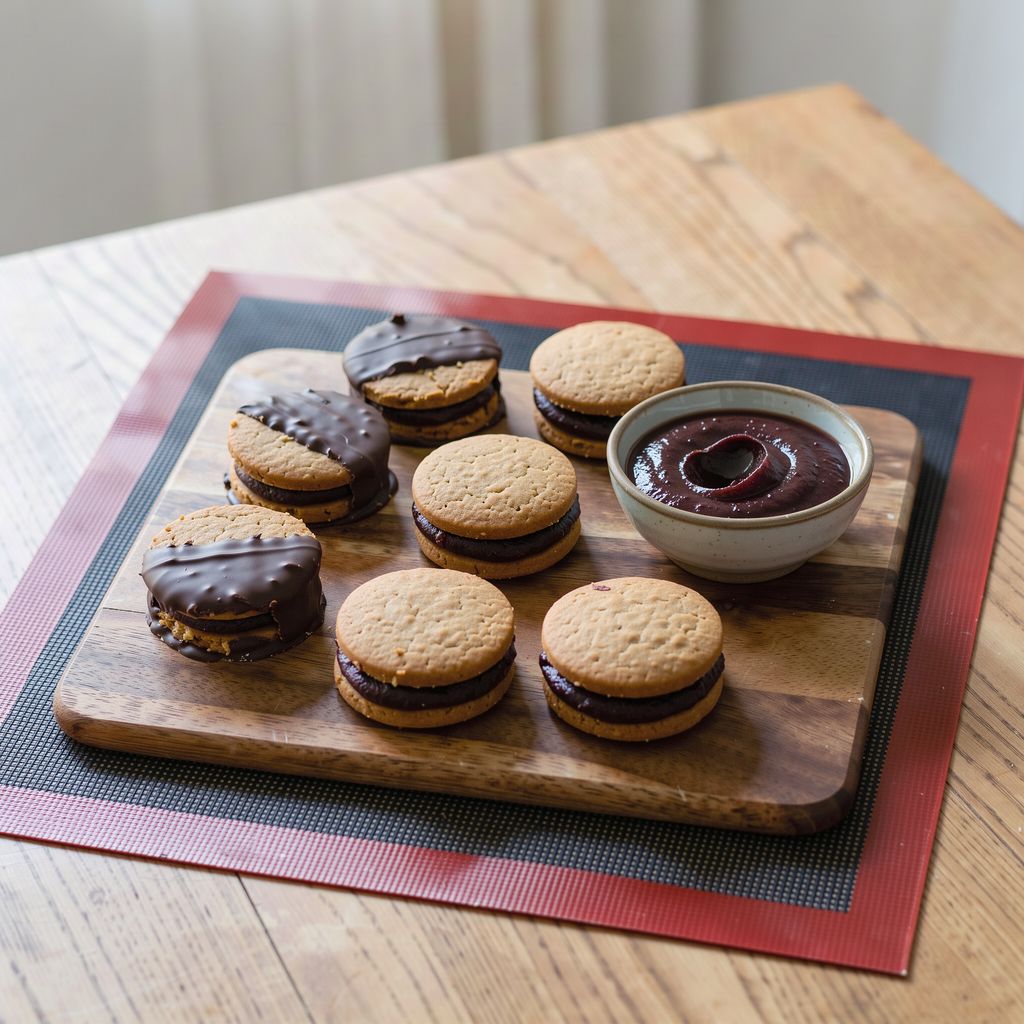
Filled gingerbread cookies hold together best with thick plum butter (povidla): it won't soak in or run, and in 1–3 days in a closed tin it softens the gingerbread from the inside. Jam works too, but only if you cook it down properly, and you can make a cherry filling from plum butter or thick jam flavored with cherry paste. Sandwich cooled halves of the same size, keep the filling 3–4 mm from the edge, and finish by sealing the edge with chocolate, which keeps the cookie from drying out.
The most reliable fillings for filled gingerbread cookies are thick plum butter (povidla), followed by cooked-down jam and a cherry filling made from plum butter or jam. What matters is thickness: the more water a filling contains, the faster the gingerbread turns soggy and the shorter the cookies keep.
Plum butter – the least water and a rich flavor that doesn't clash with gingerbread spices. You don't need to adjust anything.
Jam or marmalade – milder and fruitier, but runnier. Without thickening, it soaks in and the edges slide apart.
Cherry filling – the festive option. Fresh cherries are too watery for it, so the base has to be thick.
It all starts with a good gingerbread dough that stays pliable after baking, such as soft gingerbread cookies or tender honey gingerbread that doesn't go hard.
Plum butter is the best filling for gingerbread cookies because it's cooked for a long time without gelling agents, so it has little water and plenty of fruit solids. The gingerbread slowly draws moisture from it but doesn't turn mushy.
The right thickness: a spoonful of plum butter on a plate holds its shape and doesn't spread.
If store-bought plum butter is runny, simmer it for 5–10 minutes, stirring constantly, to evaporate the water.
If it's coarse or stiff, stir in a spoonful of rum or lemon juice so it spreads smoothly.
It tastes best with homemade plum butter, which has a natural tartness that balances the sweetness of the gingerbread nicely.
Use only thick jam in gingerbread cookies. Regular jam has more water than plum butter, and under the weight of the top half it squeezes out to the sides. The fix is simple:
Press the jam through a sieve to remove any pieces and seeds (currant, raspberry).
Simmer it over low heat until it has reduced by about a quarter and a spoon leaves a trail on the bottom of the pot.
Let it cool. Only cooled jam shows its true thickness.
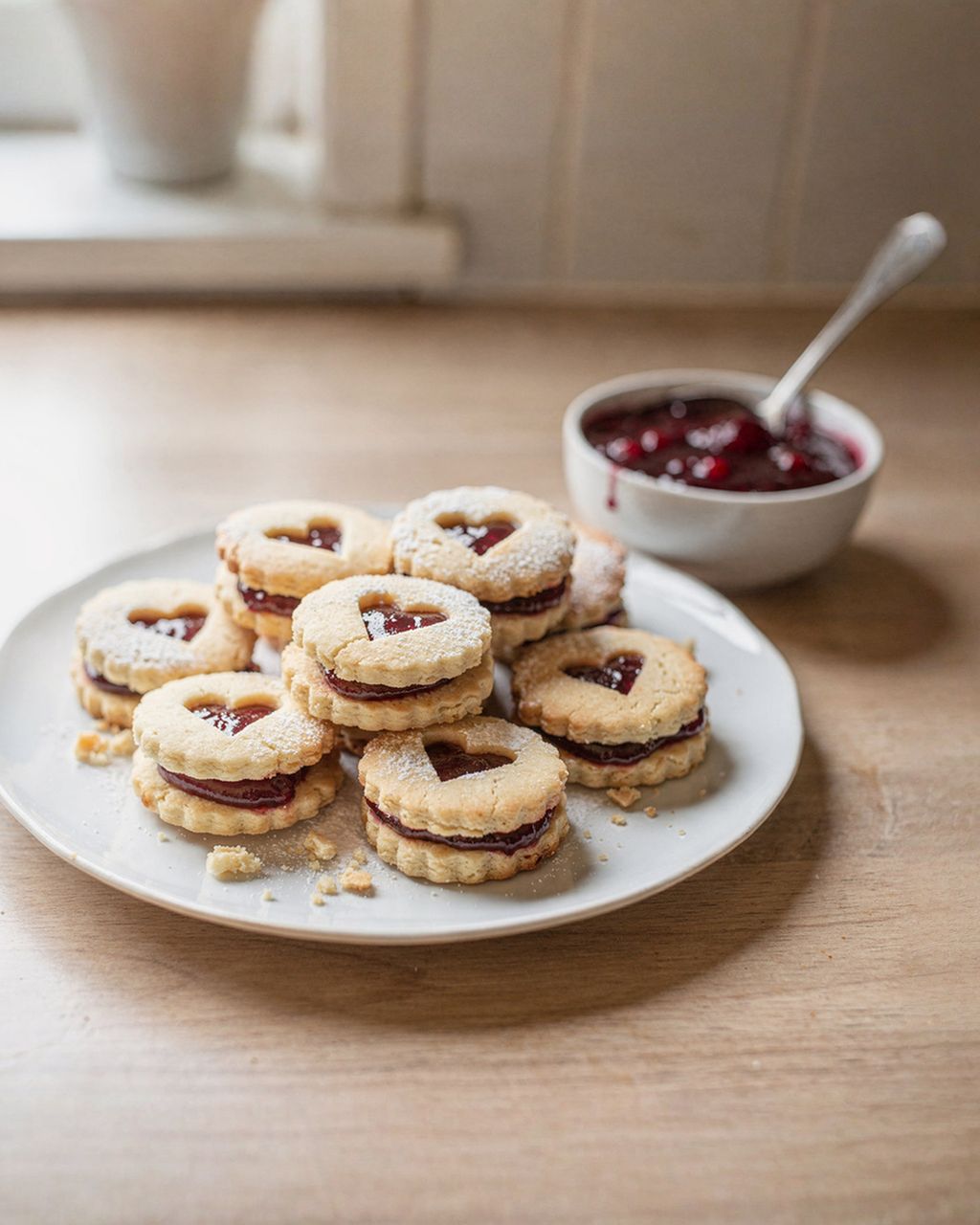
Tart jams (currant, apricot) suit gingerbread better than sweet strawberry. For more detail on choosing and spreading jam for linzer cookies, see our article on what to fill linzer cookies with. The principle is the same, except gingerbread can handle a stronger flavor.
Make a cherry filling for gingerbread cookies from a thick base (plum butter or cooked-down sour cherry or cherry jam) and add the cherry flavor in concentrated form. Fresh or canned cherries would bring water into the filling.
Flavoring paste: FunCakes cherry flavoring paste is concentrated, so it doesn't thin the filling. Start with about a teaspoon (5 g) per 100 g of plum butter and add a little at a time until the flavor is right. It's strong and tints the filling red as well.
Dried cherries or sour cherries: finely chopped, they add texture and tartness, and because they're dried, they don't thin the filling.
A drop of cherry liqueur or rum deepens the flavor, but don't use more than a spoonful per 200 g of filling.
The paste is convenient, not essential: dried sour cherries in plum butter make an honest cherry filling even without it.
Sandwich filled gingerbread cookies from cooled halves of the same size and thickness, with the filling in the middle and a clear border around it. Here's how:
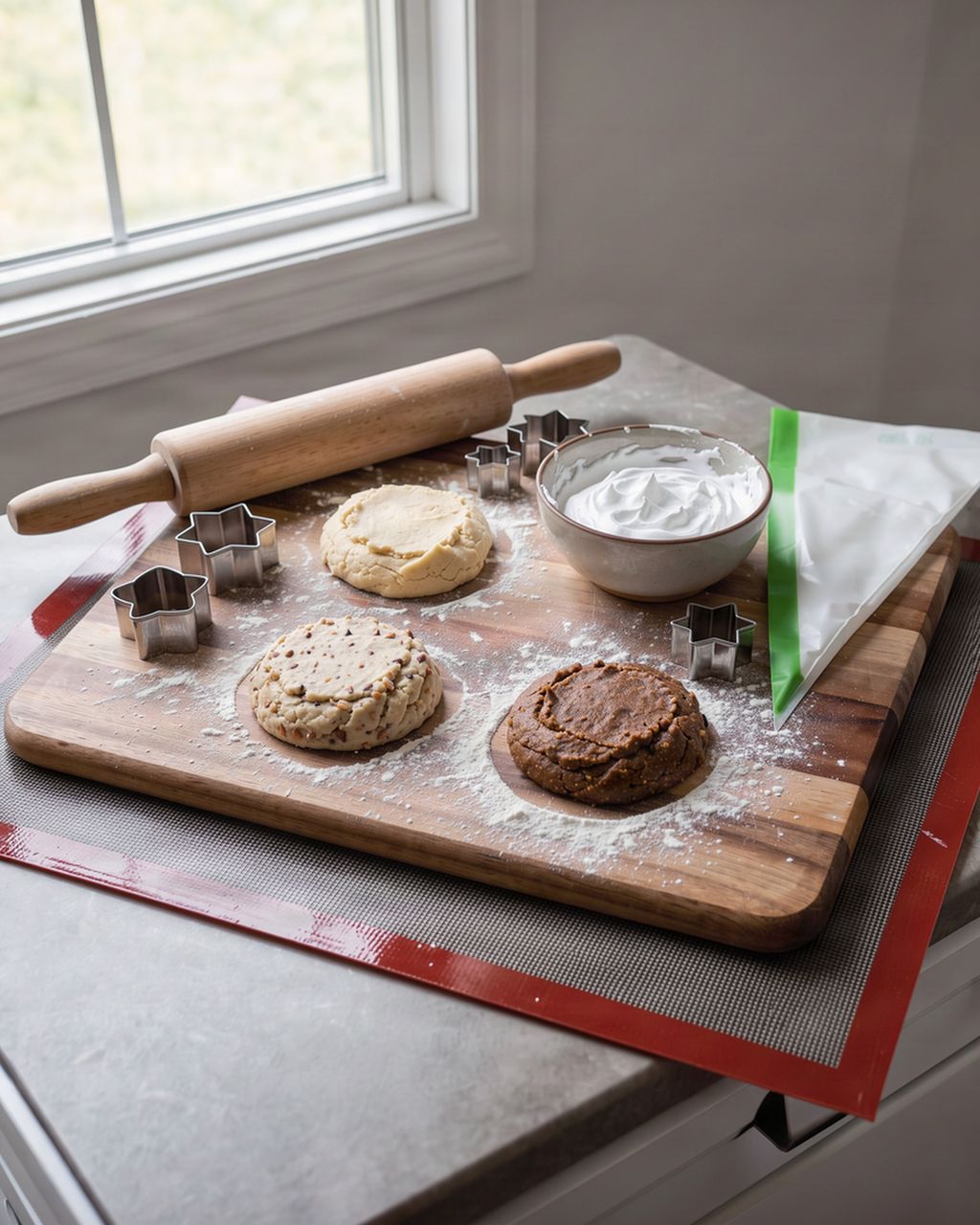
Cut out pairs. Cut each shape twice with the same cutter and bake the halves side by side so they come out the same height. The ideal dough thickness is 3–4 mm per half.
Let the halves cool completely. Warm gingerbread is fragile, and the filling would soak right into it.
Take the right amount. For a cookie 5 cm in diameter, about a teaspoon (5–7 g) of filling is enough. More will squeeze out, and less won't hold the halves together.
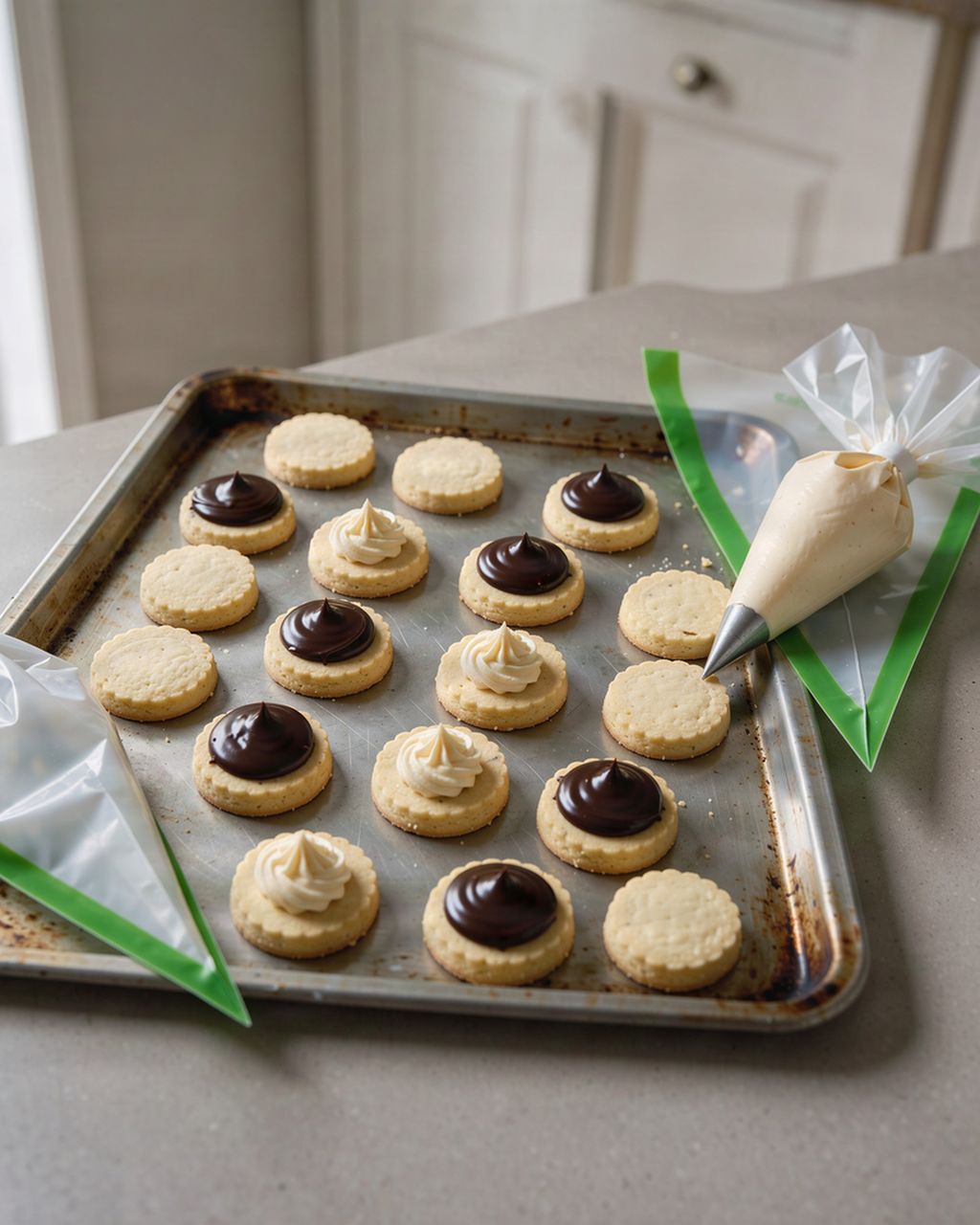
Spread the bottom half. Put the filling on the underside (the flat side) of one half and leave a 3–4 mm border.
Cover and press gently, again with the flat side facing in. The filling will spread out to the edge.
Let them set. Lay the sandwiched cookies side by side and leave them for a few hours (ideally overnight) before dipping them or packing them into a tin.
It helps to warm the filling slightly. Lukewarm plum butter spreads more easily, and the halves hold more firmly once it cools.
Fill gingerbread cookies after baking. It's more reliable, and the filling keeps its flavor. Filling before baking (two raw layers of dough with filling between them) only works with very thick plum butter and a firmly sealed edge.
After baking: the halves bake evenly, the filling doesn't burn, and you can combine different fillings.
Before baking: press the edges together with a fork or brush them with egg white, otherwise the filling will bubble out in the oven at 170–180 °C (340–355 °F). Don't use jam this way, because it almost always leaks.
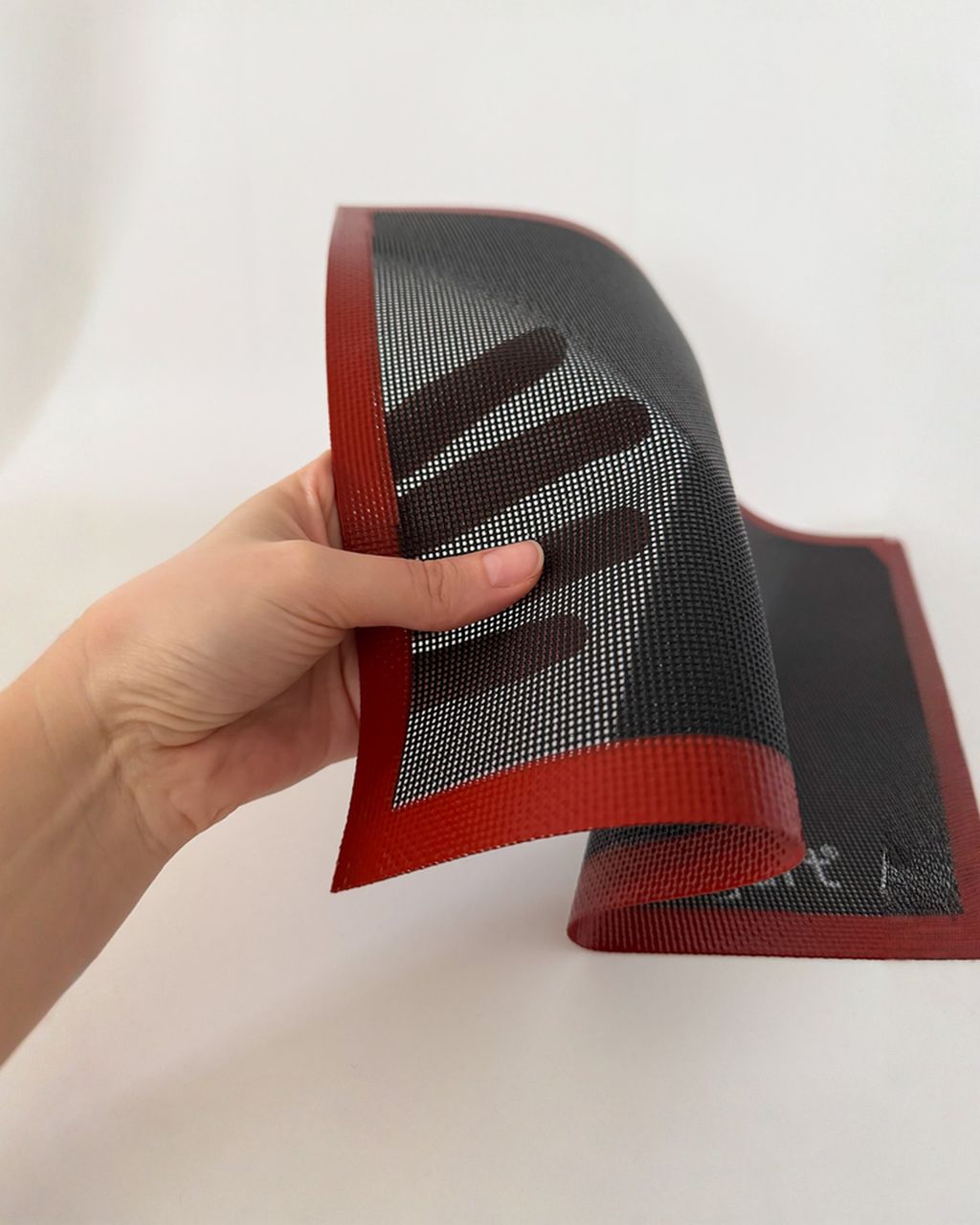
However you bake, the halves need the same color and thickness. A perforated silicone baking mat lets hot air through from underneath too, so the bottoms don't brown before the tops and the cookies spread less. Parchment paper works as well, but keep an eye on the bottoms. We cover temperatures by thickness in our article on what temperature to bake gingerbread cookies at.
Filled gingerbread cookies usually soften in 1–3 days in a well-sealed tin at room temperature. That's much faster than unfilled ones, which can need two to three weeks. The filling gives them moisture from the inside.
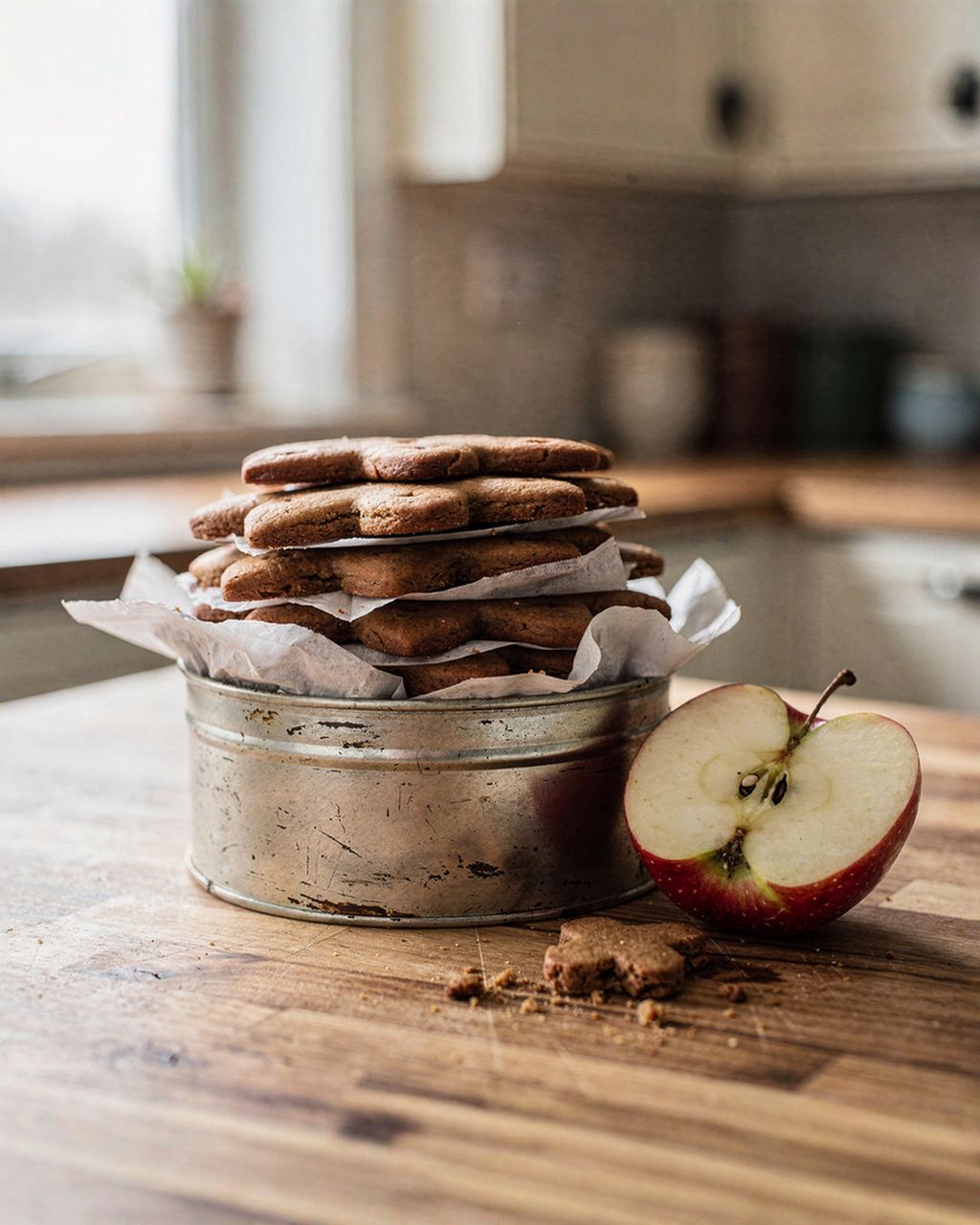
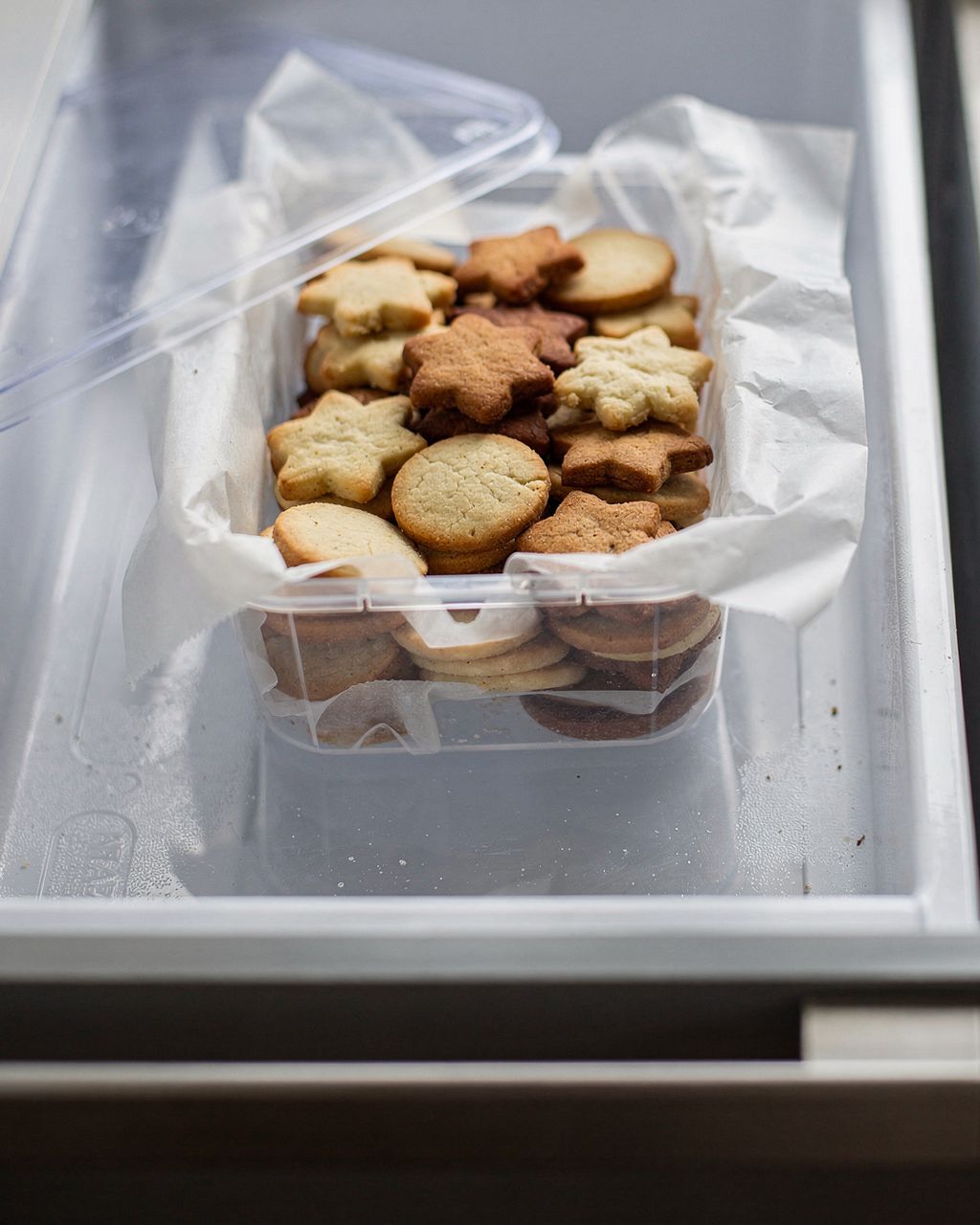
The tin must seal tightly. Use a metal tin or a jar with a lid, with the cookies layered between sheets of parchment paper.
Don't put them in the fridge. In the cold, gingerbread softens more slowly and dries out.
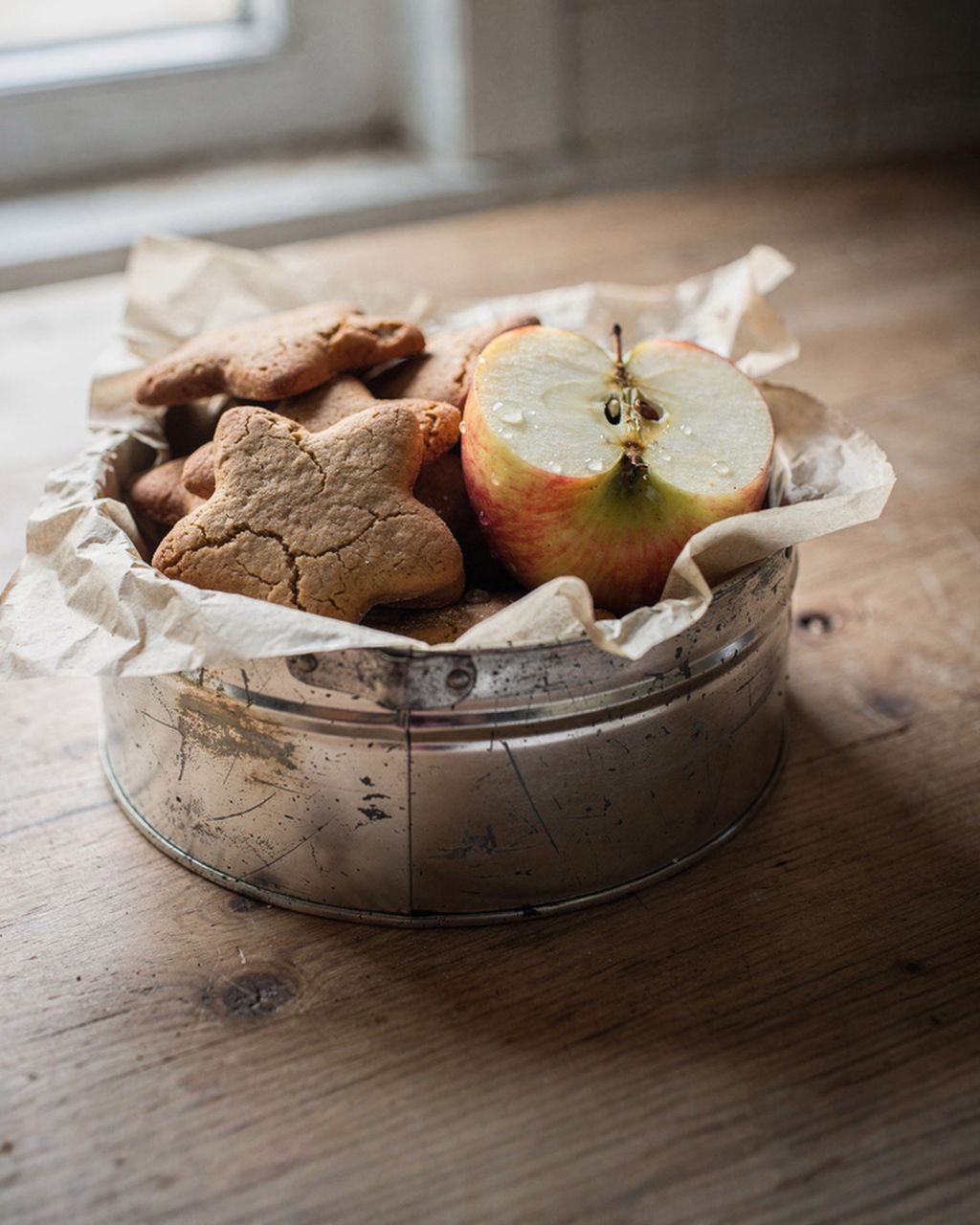
Use apple with care. A slice of apple in the tin speeds up softening, but filled gingerbread cookies usually don't need it, and the added moisture shortens their shelf life. If you do use one, replace it after 1–2 days.
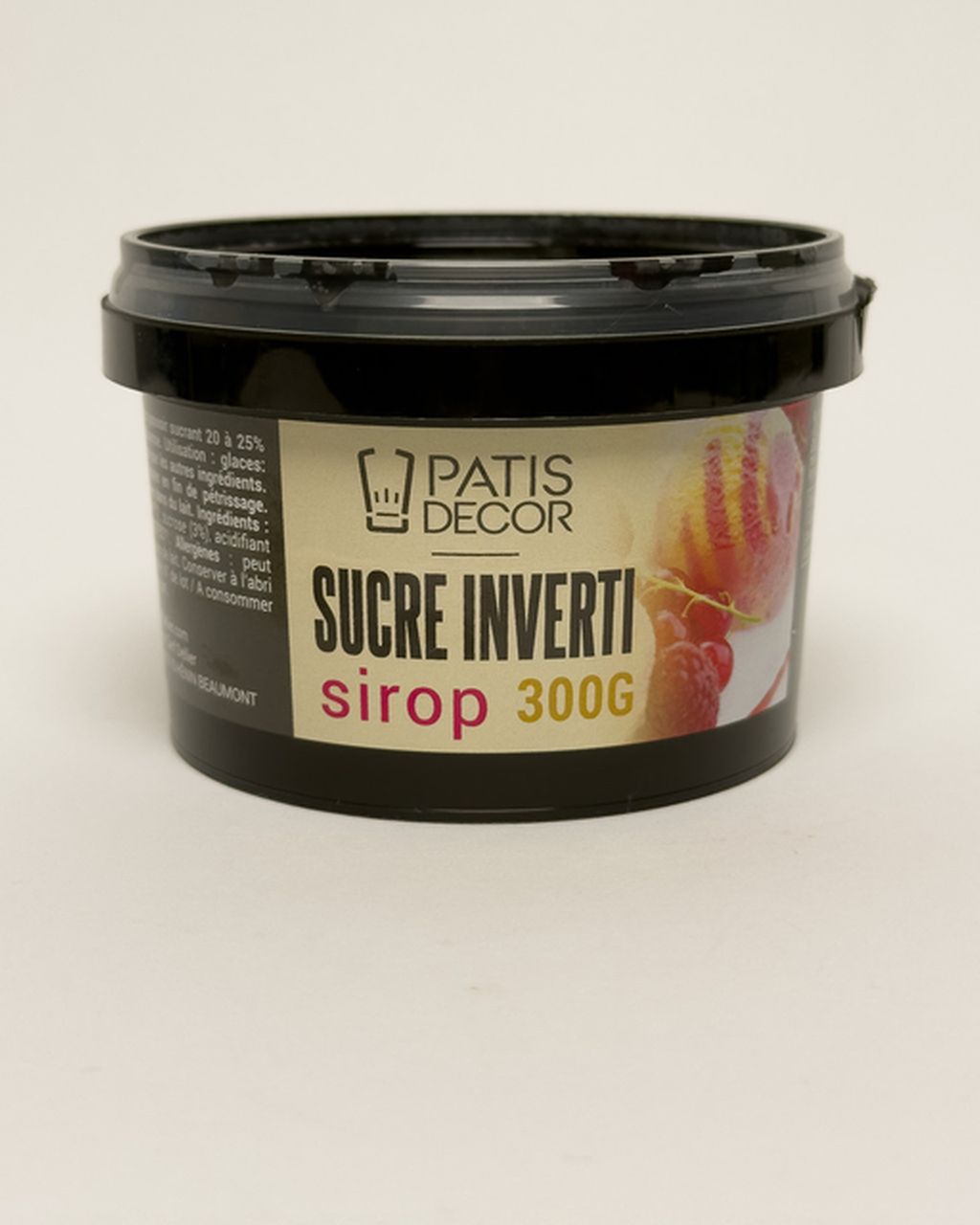
If you want your gingerbread soft right away and for a long time, invert sugar helps. It's a mixture of glucose and fructose that, according to food sources, binds moisture more strongly than ordinary sugar, which is why it's added to industrial gingerbread. You can use liquid invert sugar for baking in two ways:
in the dough, replace 10–20% of the sugar with invert sugar. You'll notice it most in recipes that rely mainly on granulated sugar (honey is itself largely invert sugar, so the effect is smaller in honey dough),
in the filling, stir in a spoonful (about 20 g) per 200 g of plum butter or jam. The filling then won't dry out or crystallize at the edges.
We look at why gingerbread goes hard and how to bring it back in a separate article: why gingerbread cookies go hard and how to make them soft.
Dip filled gingerbread cookies in chocolate only once the filling has set (ideally the day after sandwiching), and dip mainly the edge. The chocolate seals it, so the filling doesn't dry out and the cookie stays soft longer.
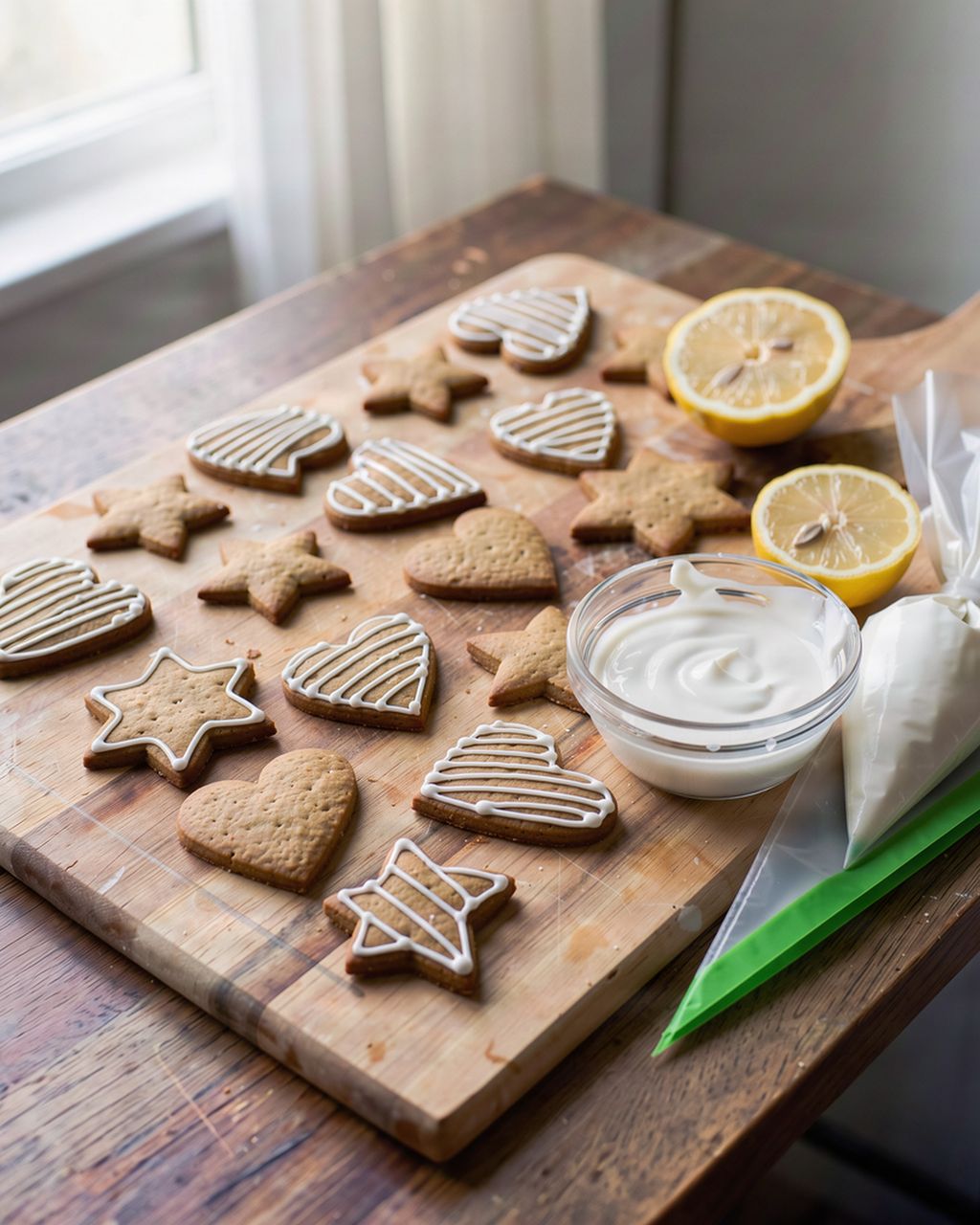
Dip the cookie halfway or just along one side, let it drip, and set it on parchment paper. While the chocolate is still wet, you can top it with chopped nuts or dried sour cherries, which hint at what's inside.
Dark chocolate is best for filled gingerbread cookies. It balances the sweetness of the fruit filling and goes best with gingerbread spices. You can choose from two types:
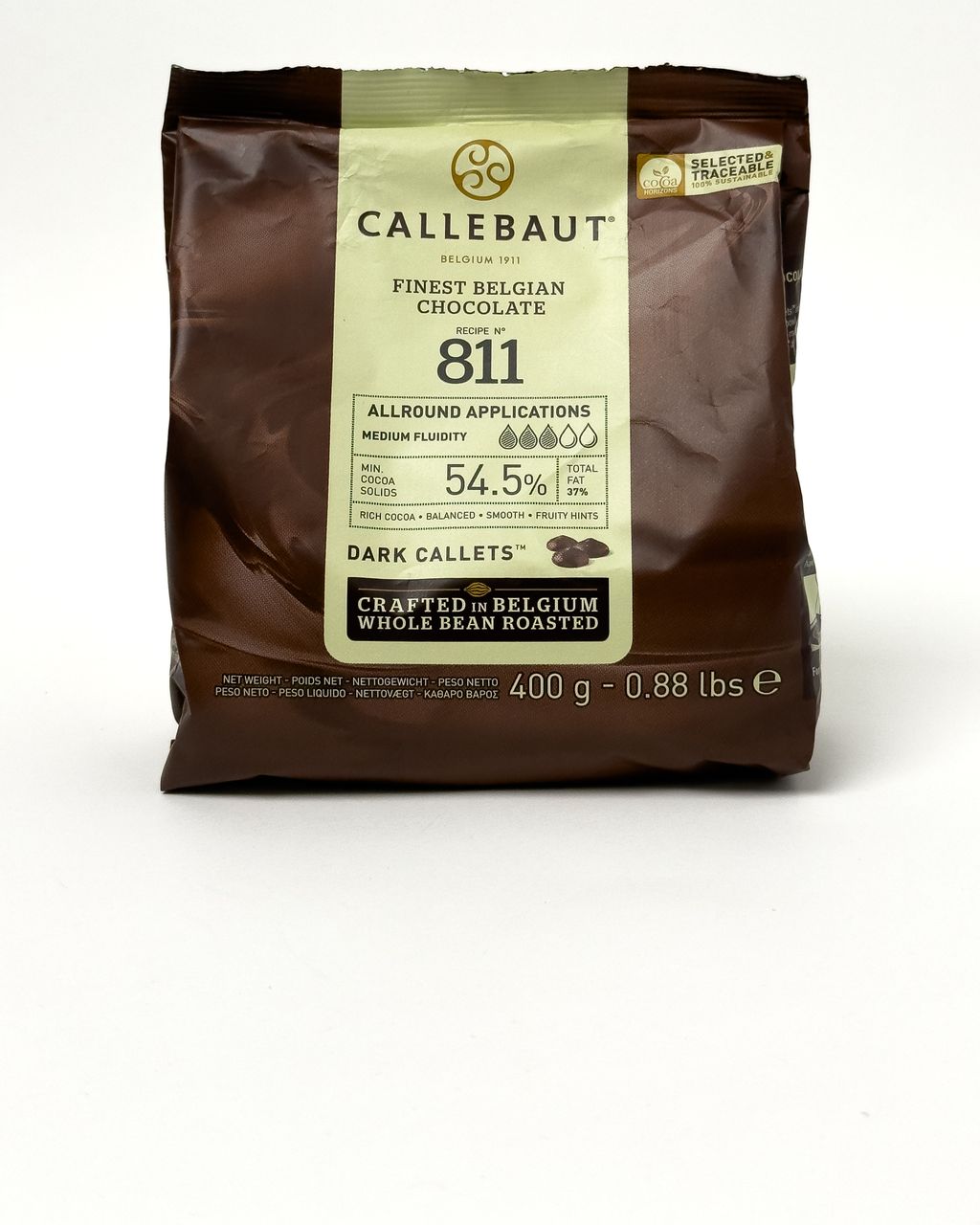
Real chocolate, ideally couverture (labeled "chocolate coating" on the package, with a higher share of cocoa butter) – the best flavor and shine, but it must be tempered, otherwise it turns gray and sticky. For example, Callebaut 811 dark chocolate in callets is easy to temper, because the callets are easy to weigh and melt.
Cocoa coating – it doesn't need tempering and always sets, but the flavor is weaker and waxier. It's worth it when you're dipping a lot at once with kids.
The easiest way to temper dark chocolate for dipping gingerbread cookies is the seeding method: melt two thirds to 45–50 °C (113–122 °F), then cool it with the remaining third to a working temperature of 31–32 °C (88–90 °F).
Melt two thirds of the chocolate to 45–50 °C (113–122 °F).
Stir in the remaining third of the callets and keep stirring until the chocolate drops to 31–32 °C (88–90 °F). That's the working temperature Callebaut gives for dark chocolate.
Drop a little onto parchment paper. Within a few minutes it should set glossy and streak-free.
Don't thin tempered chocolate with oil, or it will lose its shine and snap.
Filled gingerbread cookies made with plum butter keep for about 2–3 weeks in a closed tin in a cooler room (up to 18 °C / 64 °F). With cooked-down jam, count on 1–2 weeks, because jam has more water. A chocolate edge extends their shelf life.
Baking ahead? Bake the halves up to 2 weeks in advance, store them dry, and sandwich them only 1–2 weeks before Christmas.
Never store filled gingerbread cookies in a warm spot near a radiator, because the filling will start to ferment.
Open the tin and check every week. If filled gingerbread cookies smell fermented or have a white or green coating on the filling, throw them all out.
You'll find more on tins and layering in our article how to store gingerbread cookies so they soften. And if you're putting together a whole platter, you'll find more inspiration and ingredients in the Christmas cookies category.
Yes, filled gingerbread cookies can be frozen for up to 2–3 months, ideally without the chocolate. Wrap them airtight and thaw them in a closed tin at room temperature so no condensation forms on them. Dip them in chocolate only after thawing.
You can, but the gingerbread will hardly soften, because a fatty spread adds no moisture. It suits cookies that are already soft. If you want the filling to soften the gingerbread, put a thin layer of plum butter under the chocolate spread.
The closest substitute is honey, which, like invert sugar, is largely a mixture of glucose and fructose. Add a spoonful per 200 g of plum butter, and expect it to change the flavor of the filling slightly.
Sandwich filled gingerbread cookies about 1–2 weeks before Christmas. They soften in 1–3 days and, with plum butter, then keep for 2–3 weeks. You can bake the halves earlier and store them dry. Just fill them within this window.
Don't give children filled gingerbread cookies with rum or liqueur in the filling. The alcohol doesn't cook off, because the cookies are filled after baking. For a batch for kids, leave out the alcohol and balance the filling's tartness with lemon juice.
One recipe worth heating the oven for, one tip, and one deal from the shop. Nothing else.