Three-Step Breading, Done Right: How to Get a Crust That Actually Stays Put
Why Fried Carp Falls Apart and How to Bread It So the Coating Stays On
Updated Nov 3, 2026
Carp usually falls apart in the pan because the flesh is wet, the oil is too cool, or the pieces get flipped too often. Pat the portions thoroughly dry before breading, coat them in the classic three-step breading (plain flour, beaten egg, breadcrumbs), let the coating rest for 5–10 minutes, and fry in oil heated to 170–180 °C (340–355 °F). Fry each side just once, about 3–4 minutes depending on thickness, and turn the pieces with a spatula, not a fork.
Fried carp falls apart for six reasons: wet flesh, cold oil, a crowded pan, too much turning, pieces cut across the scored areas, and fish that wasn't thawed properly.
Wet flesh. Water between the fish and the flour turns to steam in hot oil and blows the coating off.
Cold oil. Below 160 °C (320 °F), the coating doesn't set. It soaks up fat and turns soft, and the fish stews in it and falls apart.
A crowded pan. Every piece cools the oil. Add too many at once and the temperature drops, so you end up with the same problem as cold oil.
Turning and nudging. The coating only holds once it has set. If you flip a piece after a minute, you tear it off.
Pieces cut across the scored areas. A scored fillet only holds together thanks to the skin. If you cut a piece from the middle of the scored section, with no skin on it, it will fall apart.
Poorly thawed carp. Fish thawed on the counter or in warm water keeps releasing water while it fries.
Before breading, pat the carp dry, salt it, and pat it dry again after 15–30 minutes. The salt draws water out of the surface, which you then blot up with a paper towel.
Portions: cut them to an even thickness, about 1.5–2 cm (½–¾ inch), and always with the skin on.
Scored fillets: cut between the scores, so that each piece stays attached to an unbroken strip of skin.
Frozen portions: thaw them overnight in the fridge and dry them especially carefully before breading.
Ice-cold fish fries unevenly: the coating is done while the center is still cold. Take it out of the fridge a little while before breading, but don't leave it on the counter for hours.
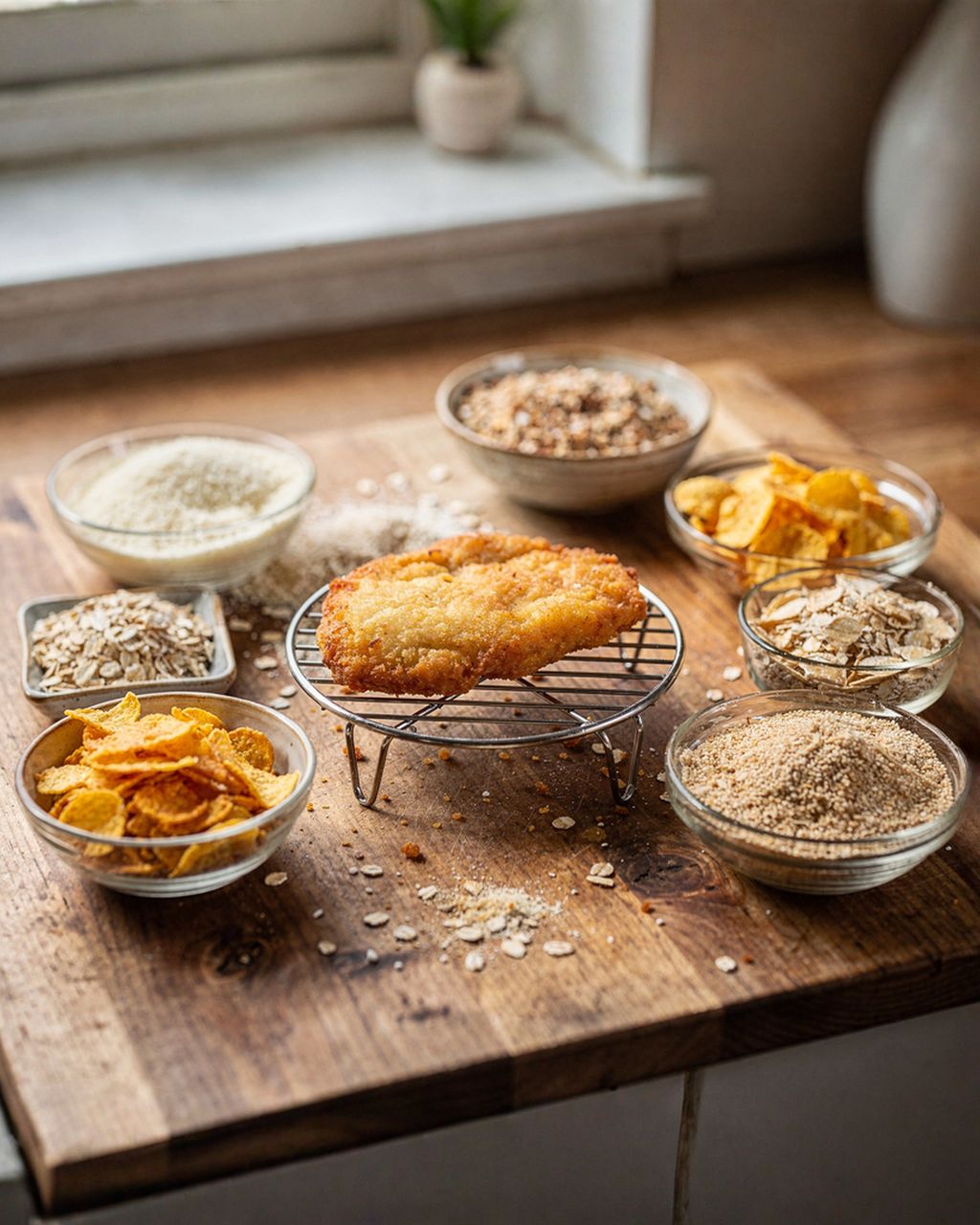
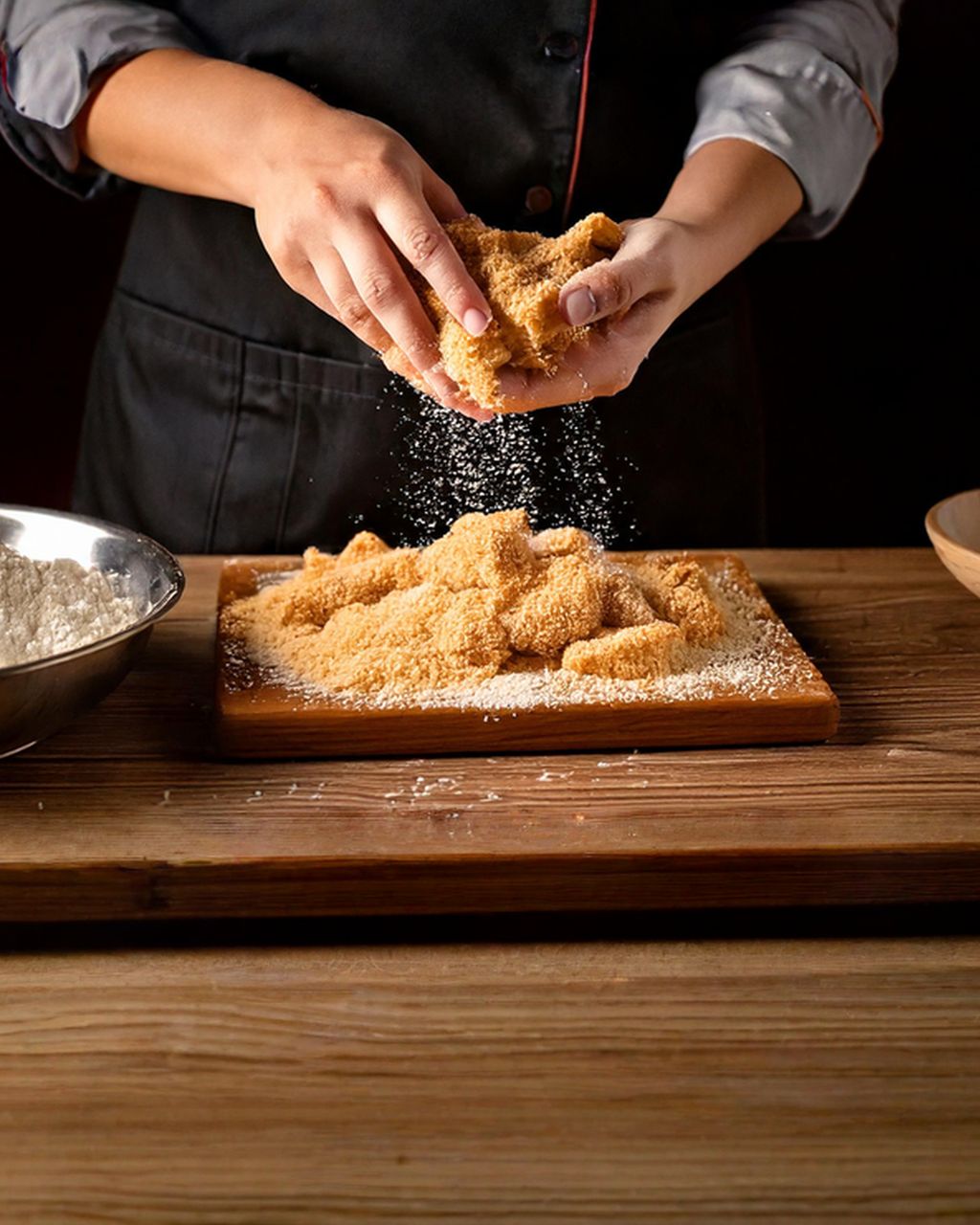
Coat the carp in a thin layer of plain flour, then beaten egg, then breadcrumbs, pressing the crumbs on with your palm. Then let it rest on a rack for 5–10 minutes so the coating can set.
Flour: coat the piece on all sides and shake off the excess. The flour soaks up any leftover moisture and gives the egg something to cling to. A thick layer of flour, though, turns into a paste that peels off.
Egg: beat it with a pinch of salt and a spoonful of milk or water so it's a little thinner and coats the fish evenly. Let the excess drip off.
Breadcrumbs: lay the piece in the crumbs, sprinkle more over the top and press down with your palm. On scored pieces, press the crumbs into the cuts too.
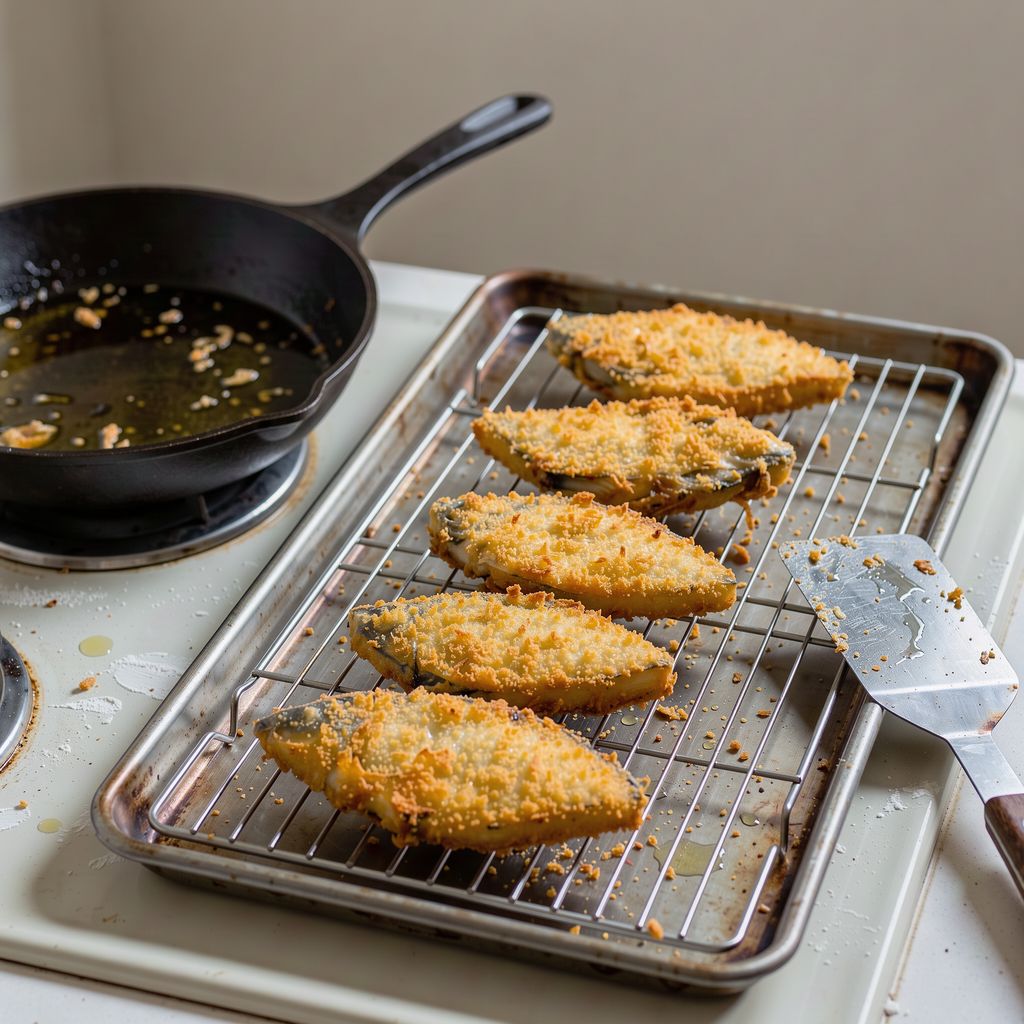
Resting: put the breaded pieces on a rack and leave them for 5–10 minutes. Meanwhile the crumbs absorb the egg and stick. Use a rack, not a plate, or the underside will turn damp.
For a detailed look at the method, read Three-Step Breading, Step by Step: How to Get a Crisp Crust That Won't Fall Off. If you run out of breadcrumbs, 9 crunchy substitutes will help.
Fry carp in oil heated to 170–180 °C (340–355 °F). At this temperature, the coating sets quickly and the fish finishes cooking inside in the steam the coating holds in.
With a thermometer: measure right in the oil, and wait between batches for the temperature to recover.
Without a thermometer: dip the end of a wooden spoon into the oil. If small bubbles immediately rise around it, the oil is ready. A cube of bread should turn golden in about a minute.
Oil: choose an oil that handles high heat, such as rapeseed, sunflower or deep-frying oil. Frying in lard is traditional too.
Amount: the oil should come about halfway up the piece. If you shallow-fry in just a few spoonfuls, the coating only cooks through where it touches the pan.
Batches: put only as many pieces in the pan as will leave some space between them.
Fry a piece of carp 1.5–2 cm (½–¾ inch) thick for 3–4 minutes per side, and flip it only once, when the underside is golden brown and the coating releases from the pan on its own.
Start skin side up, with the flesh side in the oil. The fleshy side sets, and the piece holds together when you turn it.
Flip with a spatula slid under the whole piece. You can use a fork only to steady the top. Poking a fork into the coating lets oil seep in.
It's done when the coating is golden brown and the flesh inside is white and opaque, flaking easily with a fork. With a probe thermometer, look for at least 63 °C (145 °F) in the center, which is the figure the US agency USDA FSIS gives for fish.
After frying, put the pieces on a rack, not on top of each other. Stacked on paper, they steam and the coating goes soft. Keep them in the oven at 80–100 °C (175–210 °F) until serving.
The coating peels off carp when there's moisture or too much flour between the flesh and the crust. How it peels tells you the cause:
The coating puffs up like a bubble and falls off: the fish was wet. Next time, dry it twice.
The coating is greasy and soft: the oil was cold, or there were too many pieces in the pan.
The coating comes off in one sheet: too thick a layer of flour, or egg that didn't drip off.
Bare patches: the crumbs weren't pressed on, or the pieces didn't get time to rest.
The coating browns before the fish is cooked: the oil is too hot, or the piece is too thick. Turn the heat down, or finish the piece in the oven for a few minutes after frying.
If you don't want a three-step breading, coat the fish in batter. It sticks even to more delicate flesh and doesn't need to rest. For inspiration, try the recipe for pike in almond batter. You can skip frying altogether with fish fillets with a crispy crust, which bake in the oven.
Don't bread carp a day ahead. Overnight, the breadcrumbs soak up moisture from the fish, and the coating then peels off while frying. It's best to bread the fish in the morning or a few hours before frying, lay the pieces side by side on baking paper and keep them in the fridge. Fry them just before dinner.
You can fry carp in either oil or lard. What matters most is the temperature of 170–180 °C (340–355 °F). Vegetable oil (rapeseed, sunflower or deep-frying oil) is neutral and easy to work with, while lard gives a traditional flavor and a deeper color. Don't fry carp in butter, as it will burn at this temperature.
Reheat fried carp in the oven at 180 °C (350 °F) for about 10 minutes on a wire rack, until it's hot all the way through. Don't use the microwave. The rack lets air circulate under the piece too, so the coating dries out and crisps up again. In a microwave, the coating steams and turns rubbery.
For pan-frying carp, you need enough oil to come about halfway up the pieces. For portions 1.5–2 cm (about ½–¾ inch) thick, that means roughly 1 cm (about ½ inch) of oil. In a 28 cm (11 inch) pan, that's about 0.5–0.6 liters (roughly 2–2½ cups). Too little oil quickly loses heat, and the coating only cooks through in patches.
One recipe worth heating the oven for, one tip, and one deal from the shop. Nothing else.