Soft honey gingerbread cookies that never go hard
Why Gingerbread Icing Cracks (and How to Stop It)

Updated Oct 6, 2026
Why does icing on gingerbread cookies crack? Almost always because the cookie underneath is still on the move: picking up moisture, softening and expanding, while the dried egg-white icing on top is rigid as glass and simply won't budge. On top of that, there are mistakes with the icing itself: it's too stiff, piped on too thick, full of air bubbles, or left to dry too fast. We'll go through all seven causes and the fix for each. We won't repeat the icing recipe here — you'll find it in our [guide to perfect gingerbread icing](/en/articles/jak-pripravit-dokonalou-polevu-na-pernicky-tipy-a-triky).
Icing on gingerbread cookies cracks mainly because the cookie underneath is still changing shape, plus a few icing-side issues: a layer that's too thick or too stiff, trapped air, too much acid, drying too fast, movement, or temperature shock. Here are the causes, starting with the most common:
You're decorating cookies that are too fresh, or they soften up again after you've iced them.
The icing is too stiff, or you've piped on too much of it.
There's too much air in the icing because you whisked it instead of stirring.
There's too much lemon juice, or the sugar-to-egg-white ratio is off.
The icing dries too fast: next to a radiator, in the oven, under a hairdryer.
The cookies get moved before the icing has fully set: carrying them around, stacking them, bending them.
Temperature shock: freezer, thawing, a cold pantry followed by a warm living room.
The first cause is the most common, and the one people overlook most. Icing rarely cracks on its own — it cracks because the cookie underneath it changes shape.
Only decorate cookies once they're completely cool, ideally the day after baking. Experienced bakers happily let their gingerbread rest for several days. Fresh gingerbread is still releasing and absorbing moisture, and it keeps shrinking slightly in the first few hours — icing piped onto a warm cookie will crack and flake off.
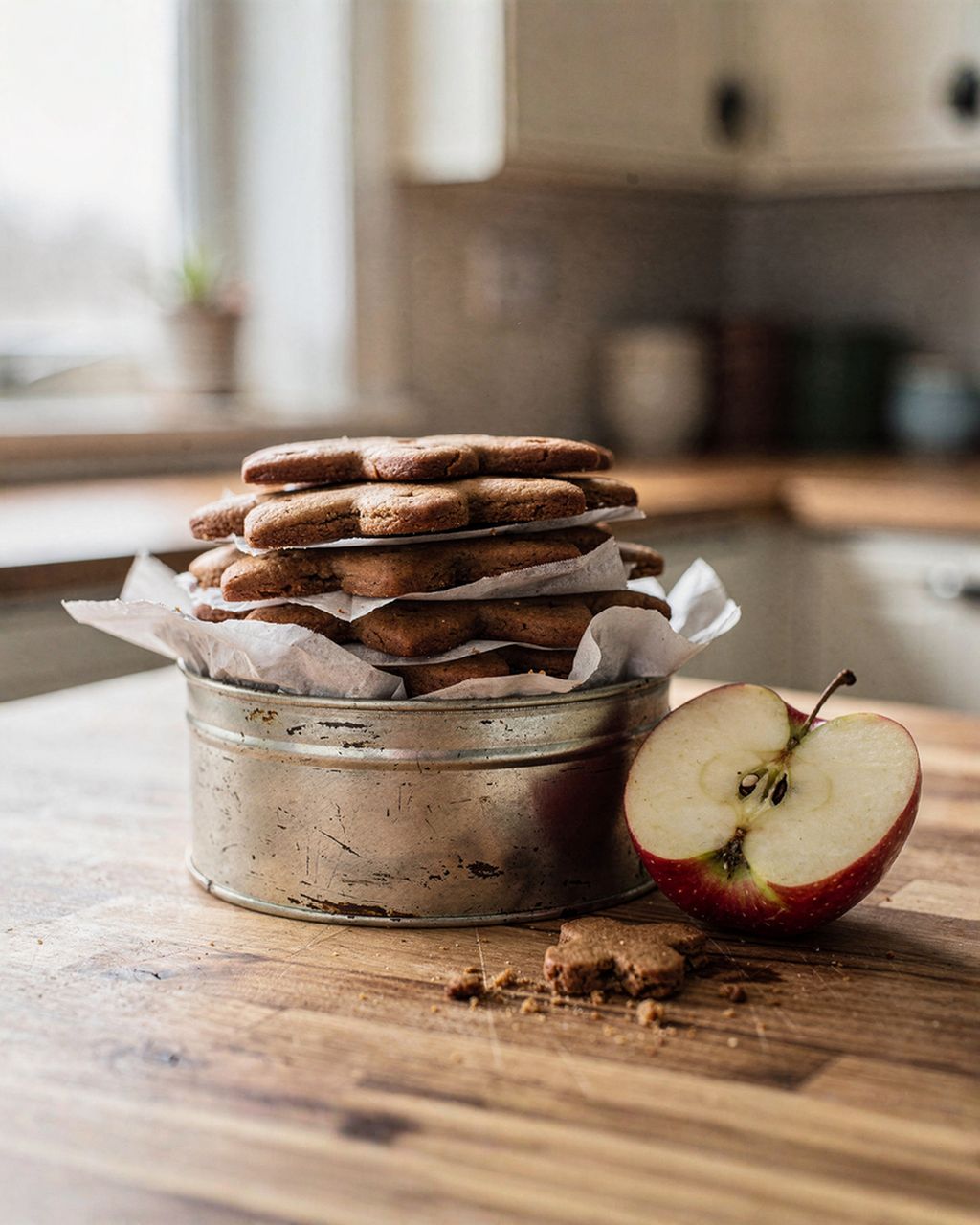
The second trap is softening. Cookies soften up when they pull moisture from the air or from an apple slice tucked in the tin. As they do, they swell ever so slightly, and set icing simply can't handle that kind of movement. So the order matters:
Soften first, decorate second. If you want soft gingerbread, let it soften before you ice it. For the how-to, see our guide on how to store gingerbread cookies so they soften.
Don't add moisture once they're decorated. No apple slice in the tin, no damp cloth. The icing would pick up the moisture too and start turning sticky.
Choose a dough that softens on its own. A honey-based dough like our soft honey gingerbread that stays tender or extra-soft gingerbread cookies will soften within a few days without any tricks, so you end up icing cookies that have already stopped "working."
One more thing: the cookies need to be fully baked through. An underbaked centre keeps softening under the icing, and that's exactly where it cracks. For the signs of a properly baked cookie, see our article on how to tell when gingerbread cookies are done.
Soft honey gingerbread cookies that never go hard
Soft honey gingerbread that stays tender and softens before you even decorate it
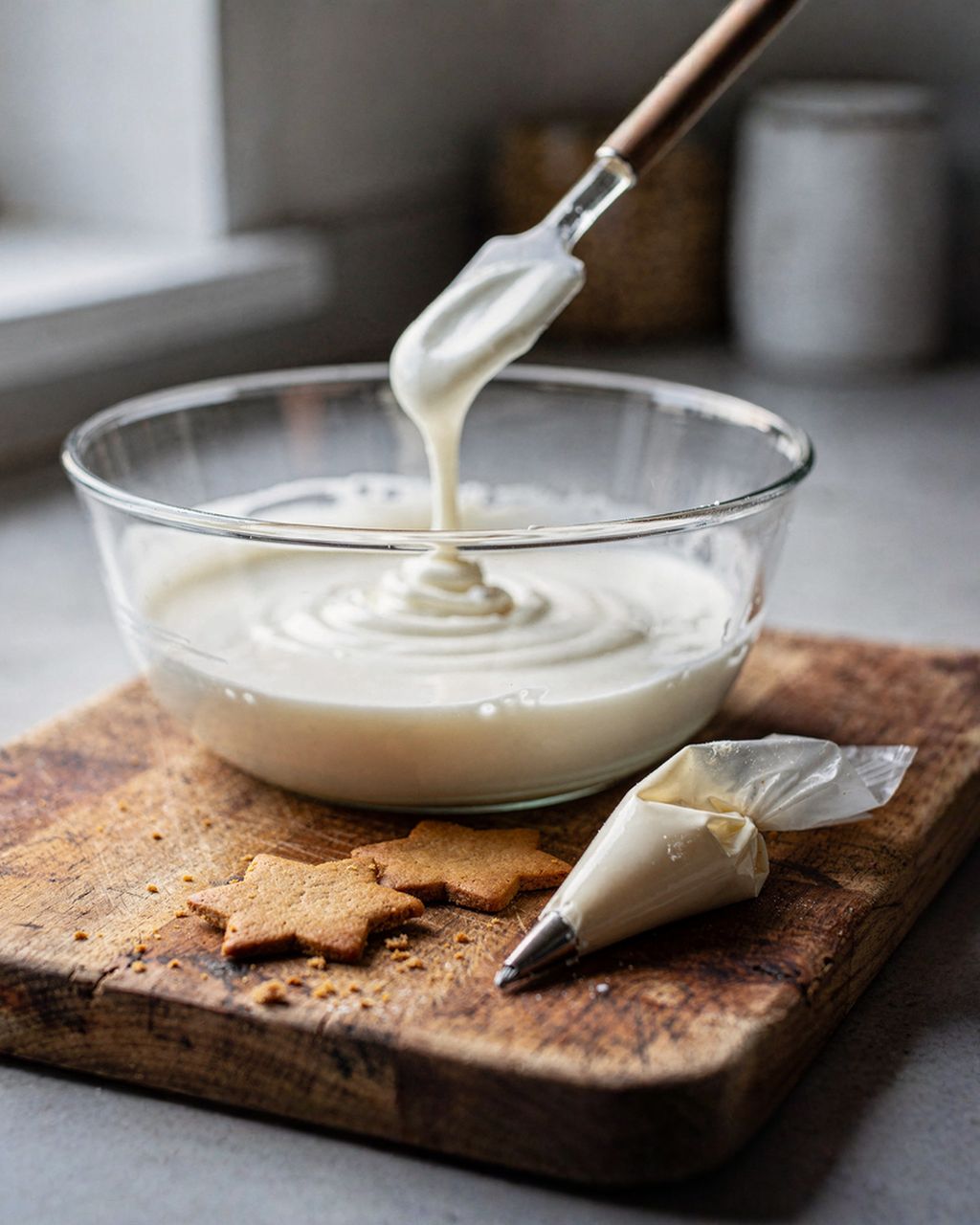
Icing for outlining should be stiffer, icing for flooding should be looser, and either way it should go on in a thin, 1–2 mm layer. Icing that's too stiff won't spread out properly, so it sits in lumps, and thick patches dry unevenly: the surface sets before the inside does, and when the inside then dries and shrinks, the top crust cracks.
For outlining: the icing should hold its shape, with the peak dropping only slightly when you lift the spoon out.
For flooding: a line drawn through the icing's surface should disappear in about 10–15 seconds.
Layer thickness: roughly 1–2 mm. A thick dome of icing cracks far more than a thin film.
If your icing turns out too stiff, or too runny, fixing it is quick work — we cover that in our article on royal icing that's too thin or too thick. Just don't add sugar or water blindly by the spoonful; go drop by drop and a little at a time.
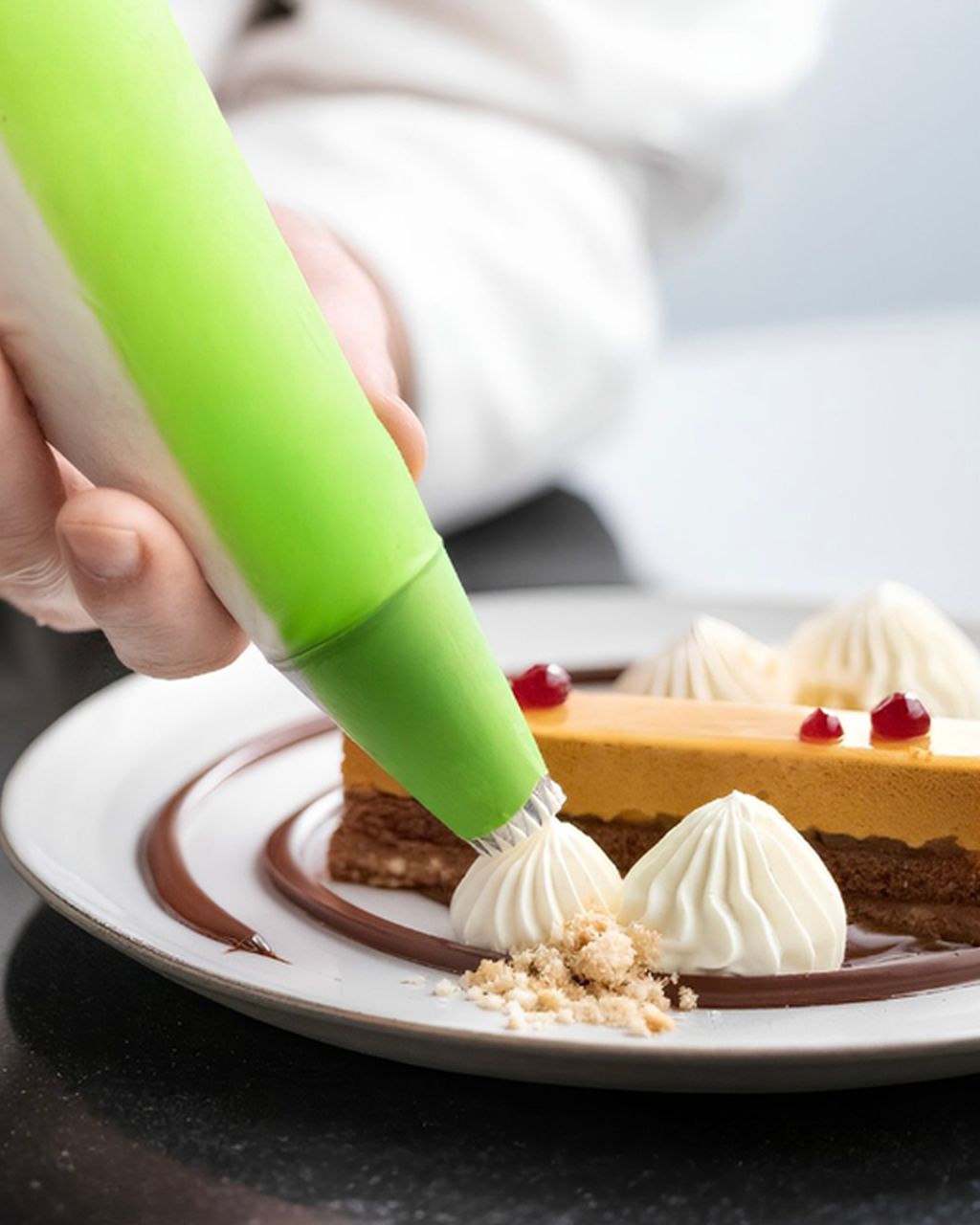
Whipped icing cracks because the air bubbles trapped inside it leave behind a porous, brittle crust once it dries. That's why you stir royal icing rather than whisk it. A whisk works a lot of tiny bubbles into the mixture. The icing ends up lighter and fluffier and looks lovely at first, but once it dries it's full of tiny pores inside. That kind of crust is fragile, and it cracks and crumbles, sometimes at the very first touch.
Stir with a spoon or spatula, or use a stand mixer on its lowest speed with the flat beater (not the whisk attachment).
Let the icing rest under plastic wrap for 10–15 minutes so bubbles can rise to the top, then give it one or two gentle stirs.
Pop any bubbles that surface on flooded areas straight away with a toothpick, while the icing is still wet.
Per egg white, use roughly 200–250 g (1¾–2 cups) of icing sugar and 5–10 drops of lemon juice (no more than about ½ teaspoon). The acid helps the egg white set and keeps the icing nice and white, but too much of it makes dried icing harder and more brittle. Squeeze half a lemon into icing made from a single egg white, and you're pretty much asking for cracks.
Sugar: start at around 200 g per egg white and add it a spoonful at a time until you reach the consistency you need. For outlining, aim for the higher end; for flooding, stay lower or thin the icing out with water, drop by drop.
Lemon: 5 drops per egg white is usually enough — never go above ½ teaspoon.
Consistency has the final say. Eggs vary in size (an egg white weighs roughly 30–40 g), so treat these numbers as a starting point, not a rule.
Sift the icing sugar first — lumps left in the icing create weak spots, and that's exactly where cracks will form.
Dry the icing slowly, flat and undisturbed, at room temperature. Cracks most often appear where the top layer dries before the bottom one does, and unnecessary handling of the cookies only makes it worse.
Keep it away from heat. No spot near a radiator, above the oven, or under a hairdryer. A surface that dries fast over a still-wet interior will crack.
Lay them flat and leave them be. Set the cookies on a tray or board and don't move them until the icing has set. Moving them breaks the thin crust that's formed in the meantime, leaving ripples and cracks behind.
Give it time. Thin outlines are dry to the touch after about an hour, but flooded areas need 6–12 hours. Let cookies dry out overnight before stacking or packing them away.
Never dry icing in the oven. Even a switched-off oven with the door open won't help — the icing loses its shine and the crust cracks easily.
Icing on frozen gingerbread cracks when you thaw it too quickly or unwrap it while it's still cold. Moisture condenses on a cold cookie. That moisture first softens the icing on the surface, and once the cookie dries out again, the icing either cracks or turns blotchy and dull. The same thing can happen if you move cookies straight from a cold pantry into a warm, heated room.
Ideally, freeze gingerbread cookies undecorated and ice them only after they've thawed.
If you do freeze them already decorated, thaw them inside a closed container and only open it once the contents have reached room temperature.
You'll find the full step-by-step method in our article on how to freeze Christmas cookies and dough.
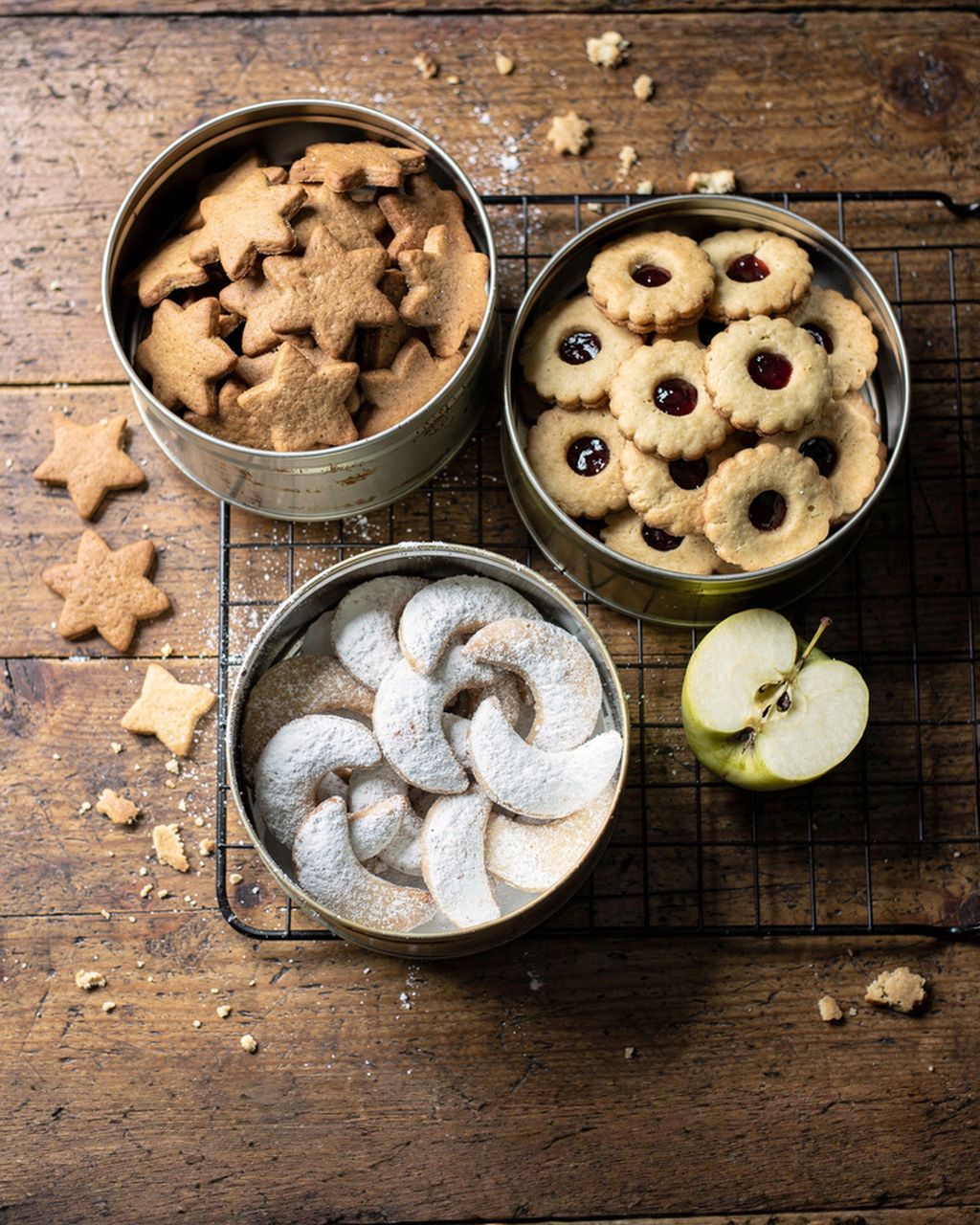
Decorated gingerbread cookies need storing the same way as any other Christmas cookies — see our guide on how to store Christmas cookies. Just bear in mind each type behaves differently: gingerbread softens over time, whereas linzer cookies are meant to stay crisp.
You can't repair cracked icing on gingerbread, but you can hide the crack under a new bit of decoration. Dried icing won't bond back together. If you dab fresh icing over a crack, you'll usually just end up with another layer that cracks again within a day. Here's what actually works:
Decorate over the crack. A thin line of stiffer icing drawn across it, some dots, or a lacy pattern — the crack ends up looking like part of the design.
Stick decorations over it. A drop of icing will hold sugar pearls, sprinkles, or edible glitter in place. Our article on what to decorate Christmas cookies with covers which decoration suits which cookie, and you'll find more inspiration among more Christmas cookie articles and recipes.
If the icing is lifting off entirely, peel it away, let the cookie rest for a day, and re-ice it in a thinner layer.
And above all: a gingerbread cookie with cracked icing tastes exactly the same as one without. It's not fit for a gift box, but it's perfectly fine on a plate with your tea.
Yes, ready-made royal icing cracks for exactly the same reasons as homemade egg-white icing. A packet mix does take care of the sugar-to-egg-white ratio for you, and it usually doesn't contain much acid. But it still comes down to how thick you mix it, how heavily you pipe it on, and whether the cookie underneath is still softening.
To some extent, yes: a little glycerine makes dried gingerbread icing a bit softer and less brittle. You only need a tiny amount, around ½ teaspoon of glycerine per icing made with one egg white. Any more slows down setting and leaves the icing sticky. It won't solve the problem of moisture the cookie absorbs from underneath, though — soften first, then decorate, still applies.
Yes, sugar icing without egg white actually cracks even more easily, because once it dries it forms a thin, brittle sugar crust with no protein to hold it together. It works better as a thin all-over glaze on a cookie than for outline decorating.
Icing flakes off in chunks when it has nothing to grip onto on the surface. Usually that's because the cookie is dusted with flour from rolling out the dough, is greasy, or was still warm when it was decorated. Brush off any flour from baked cookies with a dry pastry brush before icing, and only decorate once they're fully cool, ideally the next day.
One recipe worth heating the oven for, one tip, and one deal from the shop. Nothing else.